Resposta rápida: Lavadora de pisos vs. Varredora de pisos
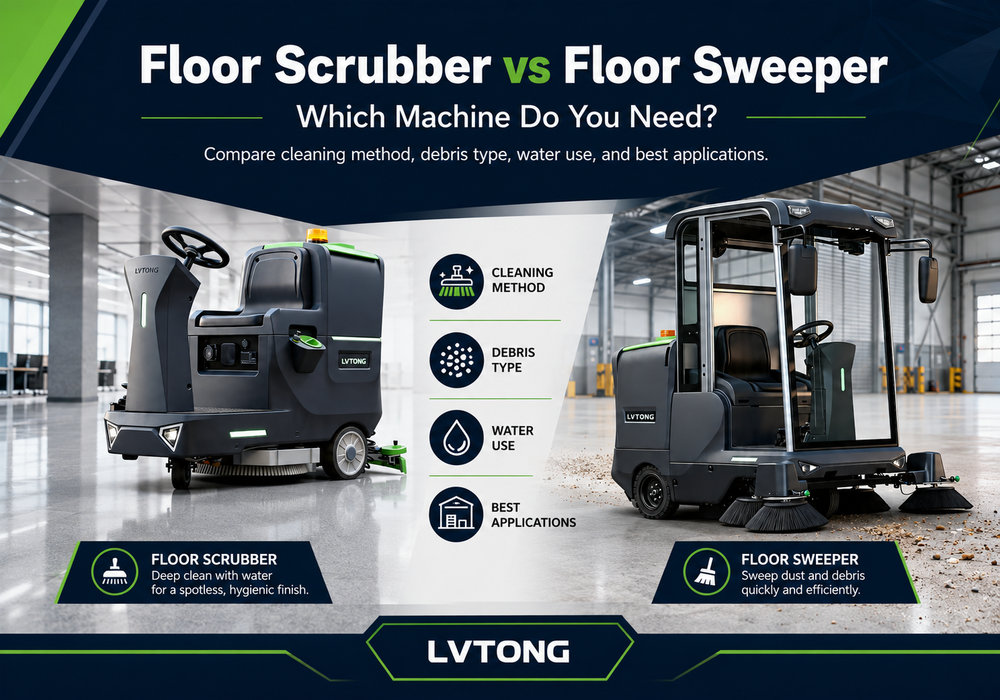
Uma varredora de pisos recolhe detritos soltos e secos, como poeira, areia, folhas, lascas de metal e resíduos de embalagens. Uma lavadora de pisos aplica água ou solução de limpeza, agita a sujeira incrustada e recolhe a água suja através de um rodo e um sistema de aspiração.
Use uma vassoura de chão para detritos secos. Use uma lavadora de pisos para graxa, derramamentos, marcas de pneus e resíduos pegajosos. Se o piso contiver detritos soltos e sujeira oleosa ou incrustada, varra primeiro e esfregue depois.
Lavadora de pisos vs. Varredora de pisos: Comparação rápida
Uma varredora de pisos recolhe detritos soltos e secos, como poeira, areia, folhas, lascas de metal e resíduos de embalagens. Uma lavadora de pisos aplica água ou solução de limpeza, agita a sujeira incrustada e recolhe a água suja através de um rodo e um sistema de aspiração.
Use uma vassoura de chão para detritos secos. Use uma lavadora de pisos para graxa, derramamentos, marcas de pneus e resíduos pegajosos. Se o piso contiver detritos soltos e sujeira oleosa ou incrustada, varra primeiro e esfregue depois.
| Comparação | Varredora de chão | Lavadora de pisos |
|---|---|---|
| Objetivo principal | Recolha os detritos soltos | Lavar e limpar profundamente os pisos |
| Método de limpeza | Varredura a seco | Lavagem úmida e recuperação de águas residuais |
| Ideal para | Pó, areia, folhas, lascas e resíduos de embalagens. | Graxa, derramamentos, marcas de pneus e resíduos pegajosos |
| Utiliza água | Geralmente não | Sim |
| Componentes principais | Escovas laterais, escova principal, funil e filtro | Tanque de solução, plataforma de escovas, rodo e tanque de recuperação |
| Coleta de resíduos | Detritos secos entram em uma tremonha | A solução suja entra em um tanque de recuperação. |
| Resultado final | O chão está varrido, mas não lavado. | O chão é lavado e deixado quase seco. |
| Uso interno | Sim | Sim |
| Uso externo | Comum | Depende das condições do piso e do esgoto. |
| Principais peças de desgaste | Vassouras, filtros e saias de proteção contra poeira | Escovas, almofadas e lâminas de rodo |
| Requisito de pré-limpeza | Geralmente não é necessário | Detritos grandes e soltos devem ser removidos primeiro. |
| Pode substituir o outro? | Não | Não |
O que é uma lavadora de pisos?
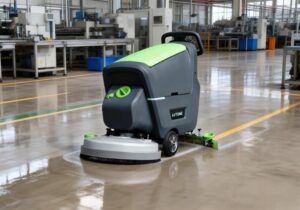
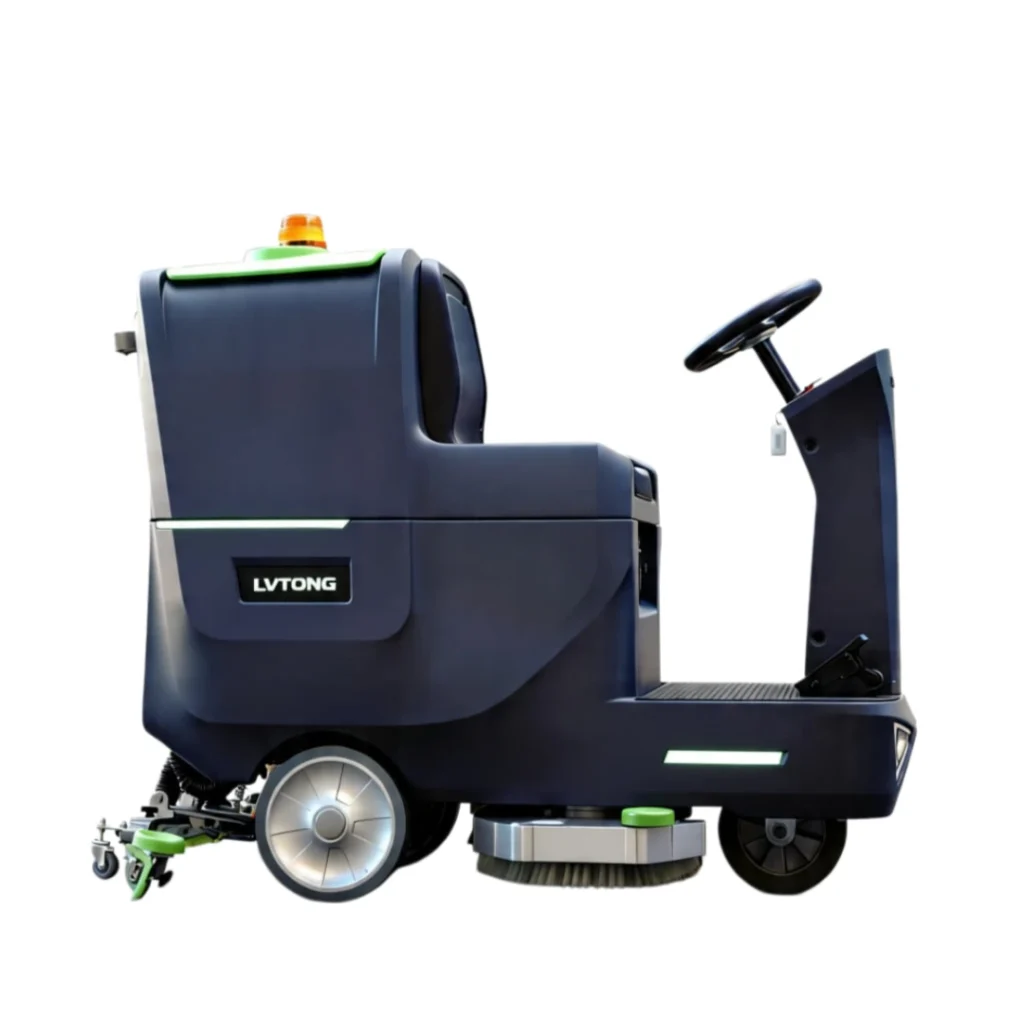
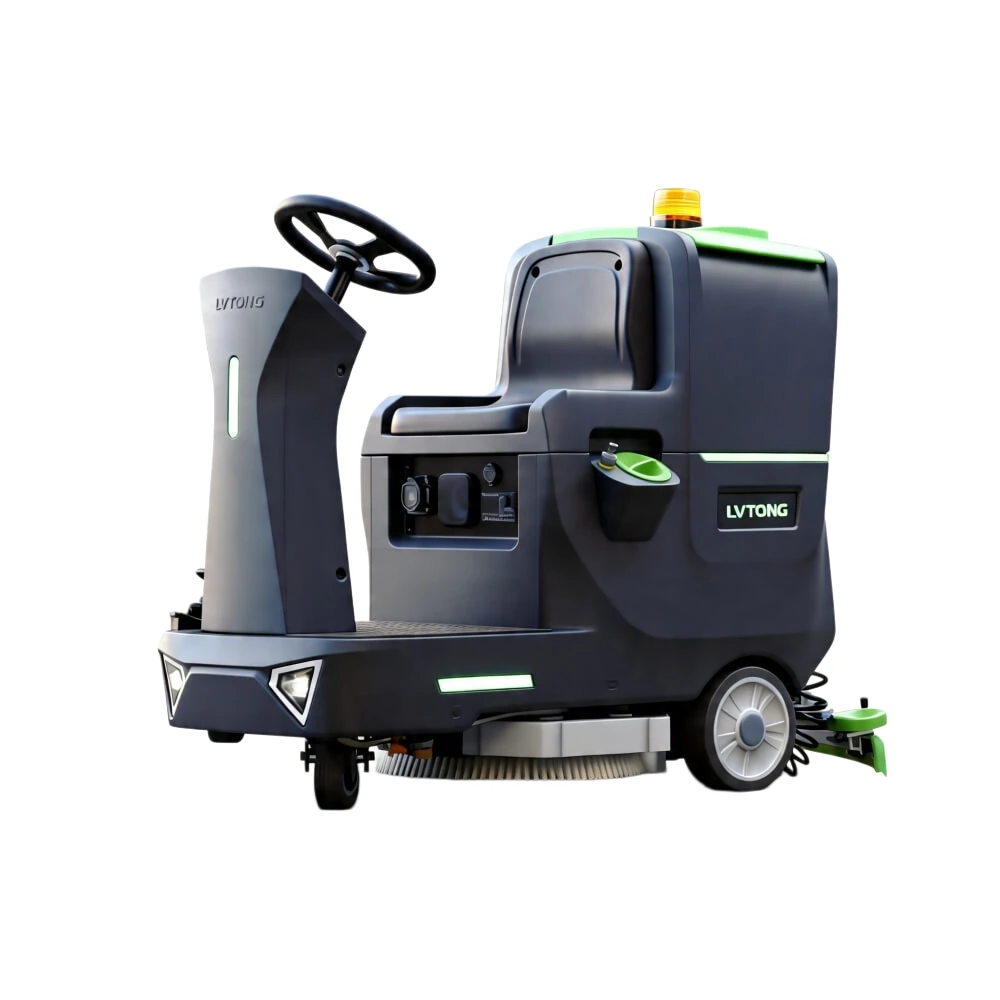
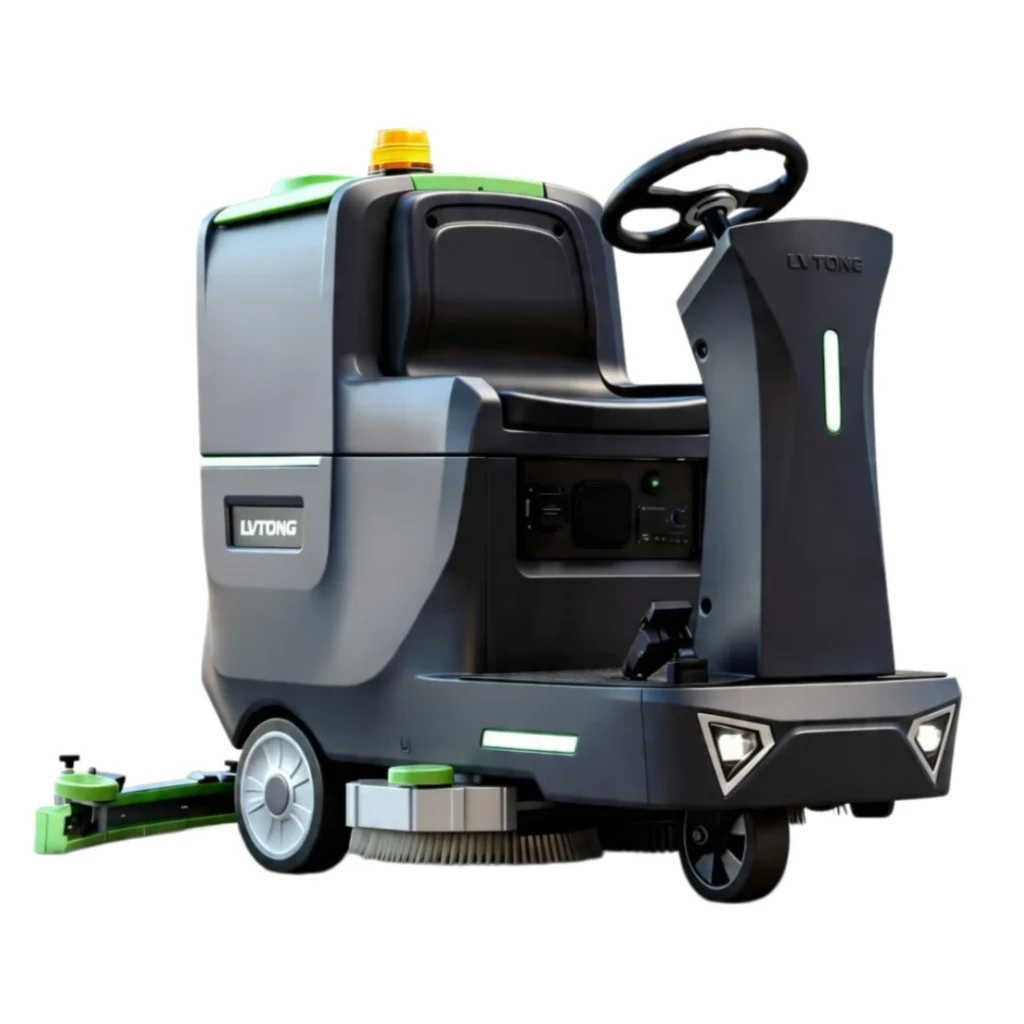
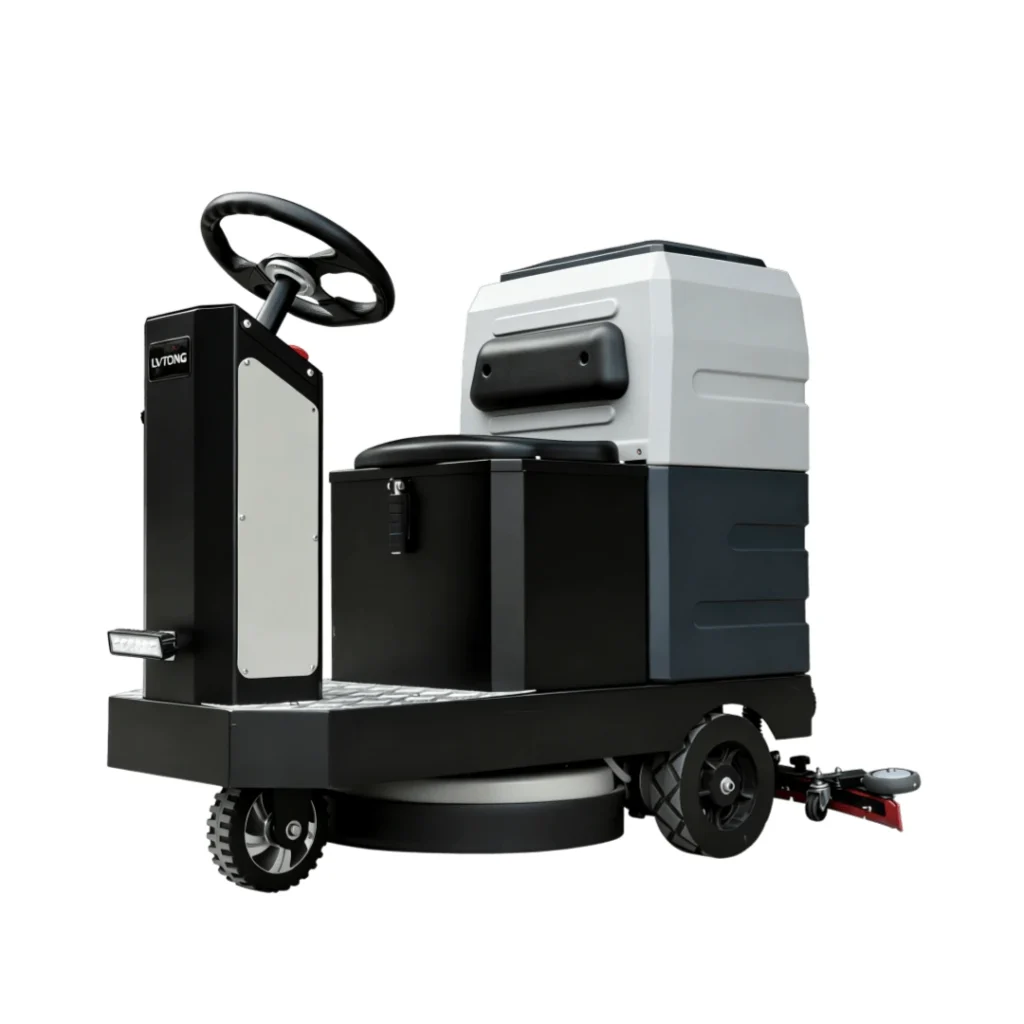
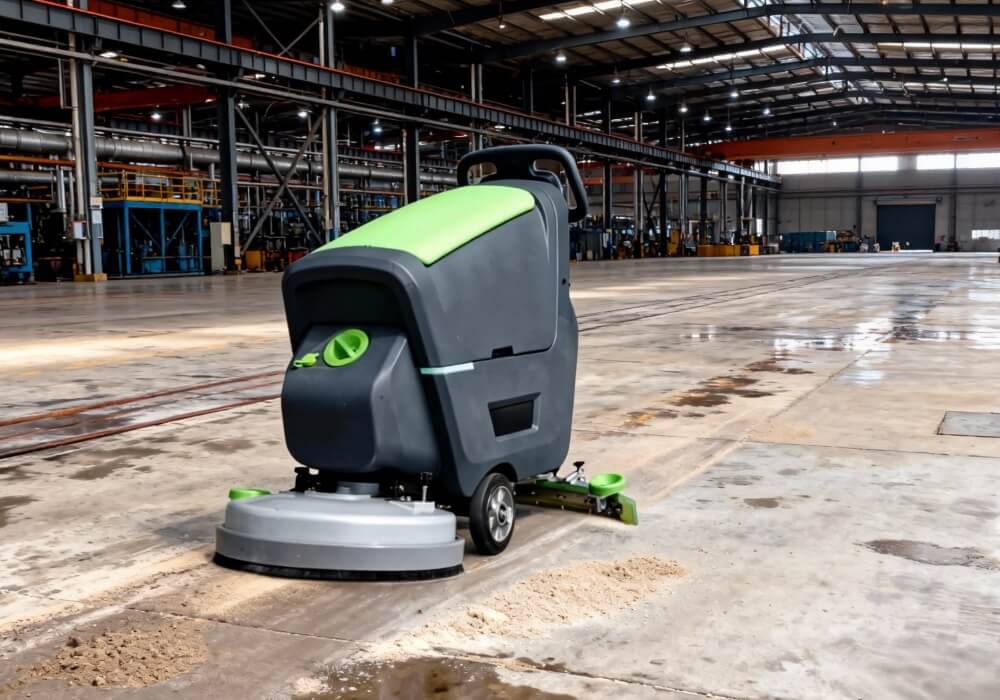
Uma lavadora de pisos é uma máquina de limpeza a úmido que aplica água ou solução de limpeza, agita o piso com escovas ou discos rotativos e recolhe a água suja através de um rodo traseiro e um sistema de aspiração.
As lavadoras de piso são projetadas para remover graxa, líquidos derramados, marcas de pneus, resíduos de alimentos e outras sujeiras aderidas à superfície do piso. Normalmente, deixam o piso quase seco, embora a quantidade real de água absorvida dependa das condições do piso, do ajuste do rodo, da velocidade da máquina e da manutenção.
Componentes principais
- Tanque de solução
- Plataforma de escovas cilíndrica ou de disco
- Escovas ou almofadas de limpeza
- Rodo traseiro
- Motor de vácuo
- Tanque de recuperação
Melhores aplicativos
- Oficinas de fabricação
- Instalações de processamento de alimentos
- Instalações farmacêuticas e eletrônicas
- áreas de estacionamento subterrâneo
- Pisos comerciais com graxa, derramamentos ou marcas de pneus.
Limitação principal
Não se deve esperar que uma lavadora de pisos recolha grandes quantidades de detritos soltos. Pedras, restos de embalagens, pedaços de metal e poeira pesada devem normalmente ser varridos antes da lavagem com água.

O que é uma vassoura de chão?
Uma varredora de pisos é uma máquina de limpeza a seco projetada para coletar detritos soltos de pisos duros. Escovas laterais movem a sujeira para o centro da máquina, enquanto uma escova principal transfere os detritos para um reservatório. Um sistema de filtragem ajuda a controlar a poeira suspensa durante a operação.
As vassouras mecânicas são mais eficazes para remover poeira, areia, folhas, resíduos de embalagens, pedras pequenas e outros materiais soltos. Normalmente, elas não lavam o piso nem removem graxa incrustada e resíduos pegajosos.
Componentes principais
- Escovas laterais
- Vassoura cilíndrica principal
- funil de detritos
- Filtro de poeira
- Saias antipoeira
- Sistema de acionamento e direção
Melhores aplicativos
- Armazéns
- Centros logísticos
- pátios de fábrica
- Áreas de estacionamento
- Estradas ao ar livre
- Ambientes empoeirados com areia e detritos soltos.
Limitação principal
Uma vassoura mecânica não substitui a lavagem com água quando o piso contém óleo, derramamentos, marcas de pneus ou contaminação pegajosa.
Como escolher entre uma lavadora de pisos e uma varredora de pisos
Escolha uma lavadora de pisos para remover graxa, derramamentos e sujeira pegajosa.
Sugestão de seleção:
Escolha uma lavadora de pisos quando o principal problema for graxa, óleo, resíduos à base de água, marcas de pneus ou sujeira incrustada na superfície do piso. A máquina lava a superfície e recolhe a solução contaminada em um único processo.
Uma lavadora de pisos manual costuma ser mais prática em áreas pequenas ou congestionadas, enquanto uma lavadora de pisos com operador a bordo é mais adequada para pisos grandes e abertos e para cronogramas de limpeza frequentes.
Cenários aplicáveis:
- Oficinas mecânicas e automotivas
- Áreas de processamento de alimentos
- Instalações farmacêuticas e eletrônicas
- áreas de estacionamento subterrâneo
- Pisos comerciais acabados
Escolha uma vassoura de chão para poeira, areia e detritos soltos.
Recomendações de seleção:
Escolha uma vassoura de chão quando a principal contaminação consistir em materiais soltos e secos, como poeira, areia, folhas, resíduos de embalagens, pequenas pedras ou lascas de metal.
As varredoras elétricas são adequadas para armazéns e instalações logísticas internas, enquanto as varredoras maiores, com operador a bordo, podem ser usadas em vias de acesso a fábricas, estacionamentos e áreas industriais externas.
Cenários aplicáveis:
- Armazéns, centros de logística
- Estradas da fábrica
- Parques ao ar livre, áreas de estacionamento
- Materiais de construção, áreas de processamento de hardware
Varra primeiro e esfregue depois para contaminação mista.
Solução recomendada:
Quando um piso contém tanto detritos soltos quanto contaminação oleosa ou pegajosa, utilize um processo de limpeza em duas etapas.
- Comece varrendo para remover poeira, areia, pedras e detritos maiores.
- Esfregue em seguida para remover gordura, derramamentos e sujeira incrustada.
Remover os detritos soltos antes de esfregar protege o sistema de escova e rodo, reduz o risco de entupimentos e permite que a lavadora se concentre na limpeza úmida.
Cenários típicos de aplicativos:
- Fábricas de manufatura industrial pesada
- Linhas de produção automotiva e de autopeças
- Oficinas de operação mista de múltiplos processos
O que é uma máquina combinada de varrição e lavagem?
Uma máquina combinada de varrição e lavagem realiza varrição a seco e lavagem a úmido em uma única operação. Normalmente inclui vassouras de varrição, um reservatório de detritos, escovas de lavagem, tanques de solução e recuperação e um sistema de rodo.
As máquinas combinadas podem reduzir a necessidade de duas passagens de limpeza separadas em grandes instalações industriais. No entanto, elas geralmente são maiores, mais caras e mais complexas de manter do que uma varredora ou lavadora de pisos de uso específico.
Uma lavadora cilíndrica com uma pequena bandeja de detritos não deve ser automaticamente considerada uma máquina combinada de varrição e lavagem. Sua capacidade de coleta de detritos geralmente é mais limitada.

8 principais diferenças entre uma lavadora de pisos e uma varredora de pisos
1. Processo de limpeza
Uma varredora de pisos utiliza escovas e fluxo de ar para coletar detritos secos em um reservatório. Uma lavadora de pisos aplica solução de limpeza, agita o piso e recolhe a água suja em um tanque separado.
2. Tipo de solo e detritos
As varredoras são projetadas para materiais soltos, como poeira, areia, folhas e resíduos de embalagens. As lavadoras são projetadas para graxa, derramamentos, marcas de pneus e sujeira incrustada na superfície.
3. Uso da água
A maioria das varredoras de piso funciona sem água, embora algumas máquinas utilizem uma névoa leve para controlar a poeira. As lavadoras de piso requerem água ou solução de limpeza e, portanto, precisam de pontos de abastecimento e descarte de efluentes.
4. Sistema de Coleta de Resíduos
Uma varredora armazena detritos secos em uma tremonha. Uma lavadora de gases coleta o líquido contaminado em um tanque de recuperação por meio de seu sistema de rodo e vácuo.
5. Compatibilidade com o piso
Ambas as máquinas podem operar em diversas superfícies de pisos rígidos. A escolha deve ser baseada nas condições do piso, acabamento da superfície, tipo de contaminação, compatibilidade com escovas ou discos de limpeza e se o uso de água é permitido.
6. Produtividade na limpeza
As varredoras podem recolher detritos soltos rapidamente em grandes áreas sem precisar parar para o descarte da água. As lavadoras de gases combinam lavagem e recuperação de águas residuais em uma única passagem, mas a produtividade é afetada pela capacidade do tanque, vazão da água, rotatividade e descarte de águas residuais.
7. Requisitos de manutenção
A manutenção da varredora inclui a escova principal, as escovas laterais, os filtros de pó, as saias laterais e o reservatório. A manutenção da lavadora de pisos inclui as escovas ou discos, as lâminas do rodo, os filtros de solução, os tanques, as mangueiras e o sistema de aspiração.
8. Custo Total de Propriedade
As varredoras podem ter custos menores com água e produtos químicos, enquanto as lavadoras podem reduzir a mão de obra em situações onde a limpeza úmida regular é necessária. O custo total depende do preço de compra, da utilização, dos consumíveis, da substituição da bateria, da manutenção, da mão de obra e do número de passagens de limpeza necessárias.

Lavadora de pisos vs. varredora de pisos por aplicação
| Aplicativo | Equipamentos recomendados | Razão |
|---|---|---|
| Armazém empoeirado | Varredora de chão | Recolhe pó, resíduos de embalagens e detritos soltos. |
| Armazém com marcas de pneus e derramamentos. | Varra primeiro, depois esfregue. | Requer remoção de detritos secos e limpeza úmida. |
| Oficina de fabricação com óleo | lavadora de pisos | Remove gordura e resíduos aderidos |
| Pátio da fábrica ou estrada ao ar livre | Varredora de chão | Adequado para areia, folhas e detritos soltos ao ar livre. |
| Instalação de processamento de alimentos | lavadora de pisos | Suporta limpeza úmida e recuperação de águas residuais. |
| Centro logístico | Varredor ou ambos | Depende dos detritos e das condições do derramamento. |
| Estacionamento subterrâneo | Ambos podem ser necessários. | Poeira e areia podem coexistir com marcas de pneus e derramamentos. |
| Instalações industriais pesadas | Máquinas separadas ou unidade combinada | A contaminação mista pode exigir varrição e esfregação. |
O tipo de instalação, por si só, não determina a máquina correta. A decisão deve ser baseada na contaminação que precisa ser removida.
Erros comuns na seleção de equipamentos de limpeza
Com base na nossa experiência em apoiar compradores de equipamentos de limpeza industrial, os seguintes erros de seleção são comuns:
Escolher apenas pelo preço
Um preço de compra mais baixo não garante um custo de limpeza menor. Mão de obra, materiais de consumo, manutenção e a necessidade de passagens adicionais de limpeza também devem ser considerados.
Focando na área do piso, mas ignorando o layout.
A dimensão total do edifício é menos útil do que a área efetivamente higienizável, a largura dos corredores, o espaço para manobras e o número de obstáculos.
Escolher apenas pelo material do piso
Epóxi, concreto e azulejo geralmente podem ser limpos por qualquer uma das máquinas. O tipo de contaminação e o resultado desejado costumam ser mais importantes.
Esperar que uma única máquina lide com todos os contaminantes.
Uma varredeira não consegue remover graxa incrustada, enquanto uma lavadora de pisos não deve ser usada como substituta para a coleta de detritos secos de grande porte.
Ignorando a manutenção e a disponibilidade de peças
Antes de comprar, confirme a disponibilidade de escovas, filtros, lâminas de rodo, baterias, suporte técnico e peças de reposição.

Conclusão
Uma lavadora de pisos e uma varredora de pisos executam tarefas de limpeza diferentes e não devem ser consideradas máquinas intercambiáveis.
Escolha uma varredeira de piso quando o principal problema for poeira solta, areia, folhas, restos de embalagens ou outros detritos secos. Escolha uma lavadora de piso quando o piso contiver graxa, derramamentos, marcas de pneus ou contaminação pegajosa. Quando ambos os tipos de sujeira estiverem presentes, varra primeiro e esfregue depois.
Antes de selecionar o equipamento, avalie o tipo de contaminação, a área útil do piso, a largura dos corredores, as condições internas ou externas, a disponibilidade de água, a frequência de limpeza e os requisitos de manutenção. Instalações com grandes áreas de contaminação mista também podem considerar uma máquina combinada de varrição e lavagem ou um processo de limpeza com duas máquinas.
Perguntas frequentes
Qual é a principal diferença entre uma lavadora de pisos e uma varredora de pisos?
Uma varredora de pisos recolhe detritos secos e soltos em um reservatório. Uma lavadora de pisos aplica água ou solução de limpeza, agita a sujeira aderida e recolhe a água suja. As varredoras são usadas para poeira e detritos; as lavadoras são usadas para graxa, derramamentos e sujeira pegajosa.
Devo varrer antes de usar uma lavadora de pisos?
Sim, quando o piso contém pedras, areia, resíduos de embalagens ou grandes quantidades de detritos soltos. Varrer primeiro protege a escova, o rodo e o sistema de recolhimento da lavadora, além de melhorar o resultado da limpeza a úmido.
Uma lavadora de pisos consegue recolher detritos secos?
Algumas lavadoras cilíndricas podem coletar pequenas partículas em uma bandeja de detritos, mas uma lavadora padrão não substitui uma vassoura de piso. Detritos grandes ou pesados devem ser removidos antes da lavagem.
Uma vassoura de chão consegue remover óleo e graxa?
Não. Uma vassoura mecânica pode recolher materiais secos, mas não consegue remover óleo, graxa ou resíduos pegajosos incrustados na superfície. Esses contaminantes normalmente exigem uma lavadora de pisos e uma solução de limpeza adequada.
Qual máquina é melhor para um armazém?
Uma varredora é adequada para armazéns com predominância de poeira, areia e resíduos de embalagens. Uma lavadora de pisos é mais indicada para locais onde derramamentos, marcas de pneus e sujeira incrustada são comuns. Armazéns com contaminação mista podem necessitar de ambas as máquinas.