Quick Answer: Floor Scrubber vs Floor Sweeper
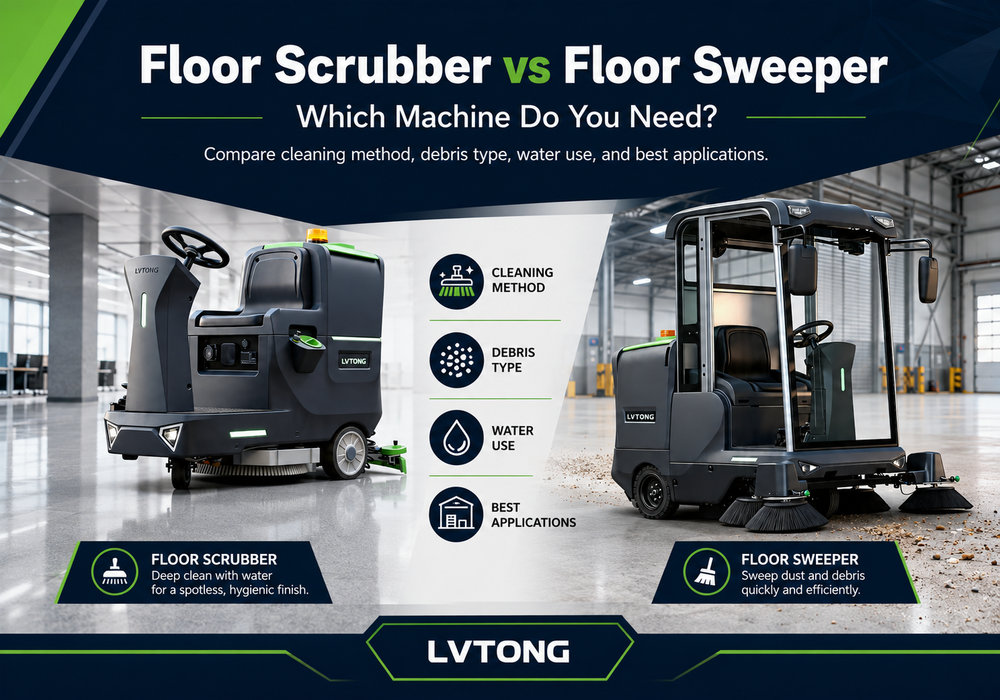
A floor sweeper collects loose, dry debris such as dust, sand, leaves, metal chips and packaging waste. A floor scrubber applies water or cleaning solution, agitates stuck-on dirt and recovers the dirty water through a squeegee and vacuum system.
Use a floor sweeper for dry debris. Use a floor scrubber for grease, spills, tire marks and sticky residue. If the floor contains both loose debris and oily or bonded soil, sweep first and scrub second.
Floor Scrubber vs Floor Sweeper: Quick Comparison
A floor sweeper collects loose, dry debris such as dust, sand, leaves, metal chips and packaging waste. A floor scrubber applies water or cleaning solution, agitates stuck-on dirt and recovers the dirty water through a squeegee and vacuum system.
Use a floor sweeper for dry debris. Use a floor scrubber for grease, spills, tire marks and sticky residue. If the floor contains both loose debris and oily or bonded soil, sweep first and scrub second.
| Comparison | Floor Sweeper | Floor Scrubber |
|---|---|---|
| Primary purpose | Collect loose debris | Wash and deep-clean floors |
| Cleaning method | Dry sweeping | Wet scrubbing and wastewater recovery |
| Best for | Dust, sand, leaves, chips and packaging waste | Grease, spills, tire marks and sticky residue |
| Uses water | Usually no | Yes |
| Main components | Side brushes, main broom, hopper and filter | Solution tank, brush deck, squeegee and recovery tank |
| Waste collection | Dry debris enters a hopper | Dirty solution enters a recovery tank |
| Final result | Floor is swept but not washed | Floor is washed and left nearly dry |
| Indoor use | Yes | Yes |
| Outdoor use | Common | Depends on floor and wastewater conditions |
| Main wear parts | Brooms, filters and dust skirts | Brushes, pads and squeegee blades |
| Pre-cleaning requirement | Usually not required | Large loose debris should be removed first |
| Can replace the other? | No | No |
What Is a Floor Scrubber?
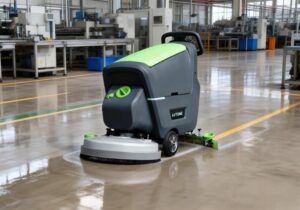
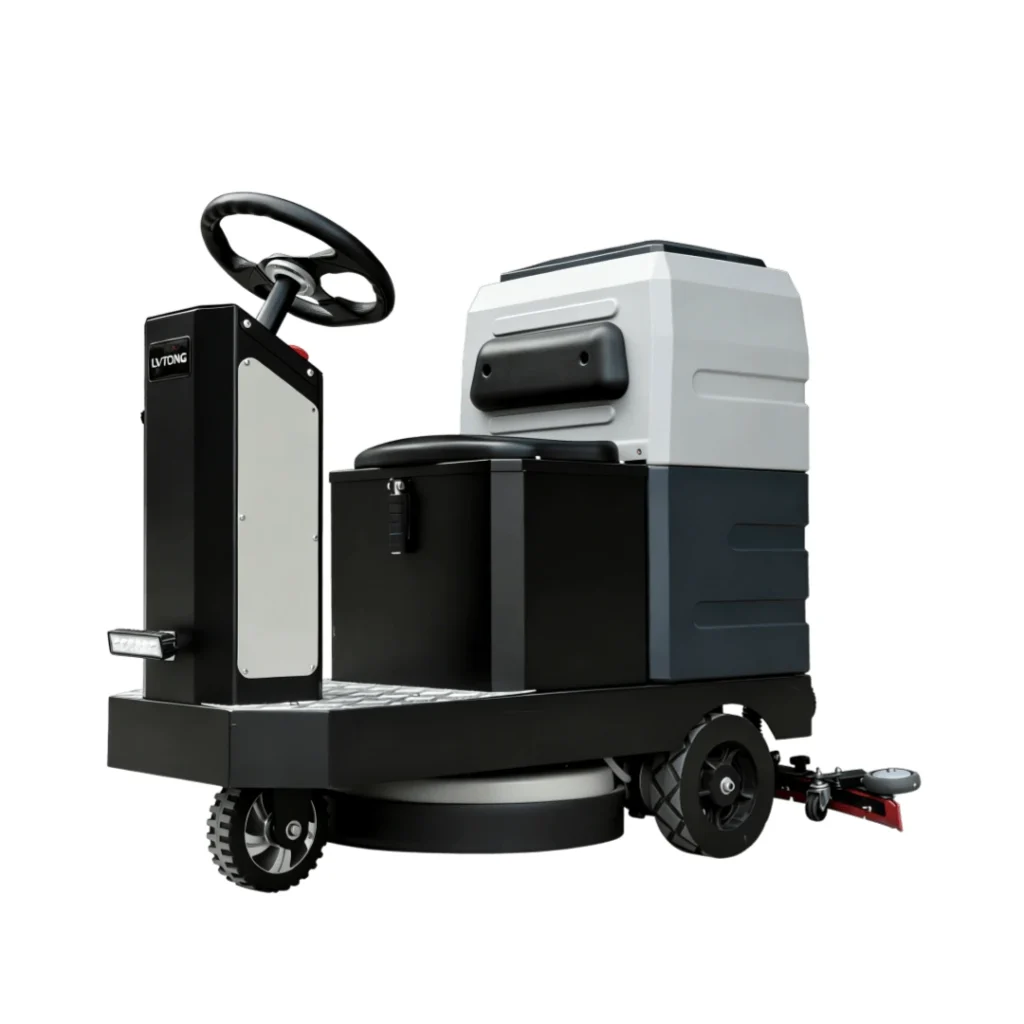
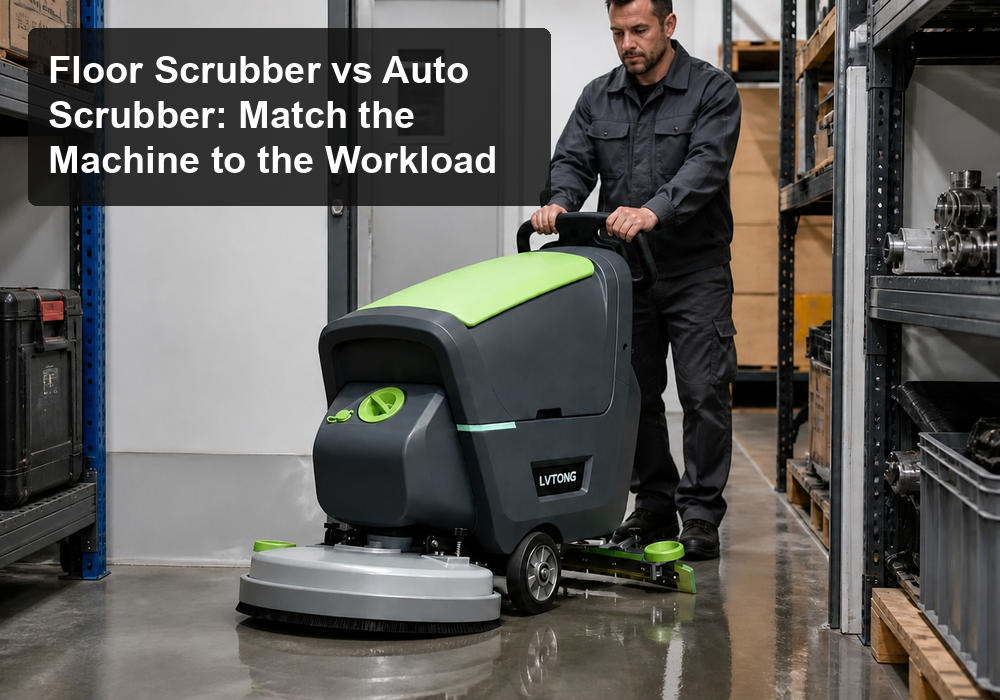
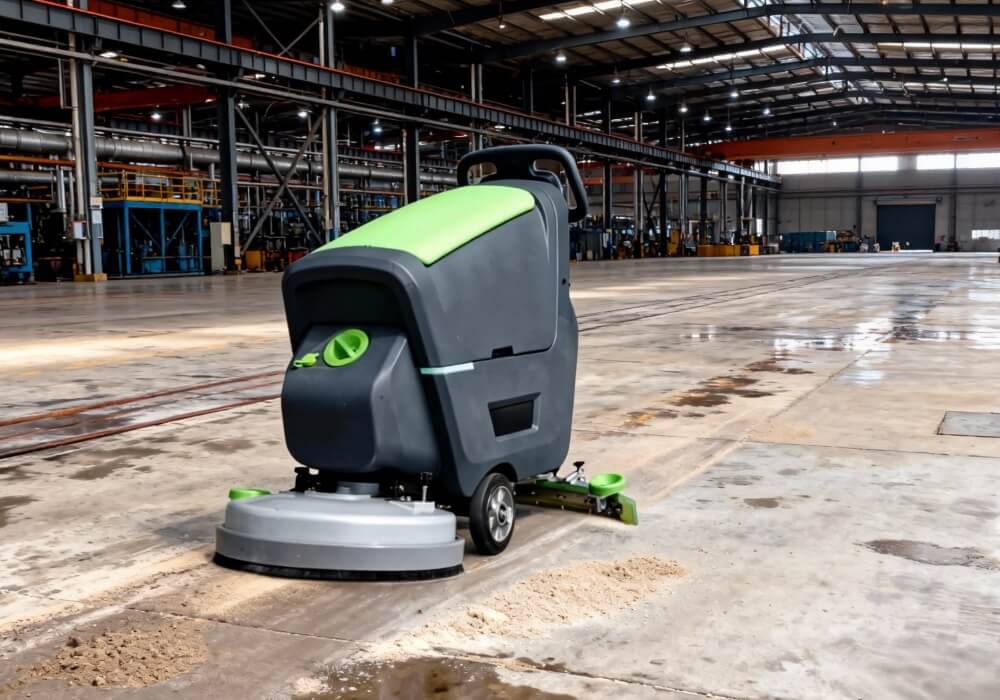
A floor scrubber is a wet-cleaning machine that applies water or cleaning solution, agitates the floor with rotating brushes or pads, and recovers the dirty water through a rear squeegee and vacuum system.
Floor scrubbers are designed to remove grease, liquid spills, tire marks, food residue and other dirt that is attached to the floor surface. They normally leave the floor nearly dry, although actual water recovery depends on the floor condition, squeegee adjustment, machine speed and maintenance.
Main Components
- Solution tank
- Disc or cylindrical brush deck
- Cleaning brushes or pads
- Rear squeegee
- Vacuum motor
- Recovery tank
Best Applications
- Manufacturing workshops
- Food-processing facilities
- Pharmaceutical and electronics facilities
- Underground parking areas
- Commercial floors with grease, spills or tire marks
Main Limitation
A floor scrubber should not be expected to collect large quantities of loose debris. Stones, packaging waste, metal pieces and heavy dust should normally be swept before wet scrubbing.

What Is a Floor Sweeper?
A floor sweeper is a dry-cleaning machine designed to collect loose debris from hard floors. Side brushes move dirt toward the center of the machine, while a main broom transfers the debris into a hopper. A filtration system helps control airborne dust during operation.
Floor sweepers are most effective for dust, sand, leaves, packaging waste, small stones and other loose materials. They do not normally wash the floor or remove bonded grease and sticky residue.
Main Components
- Side brushes
- Main cylindrical broom
- Debris hopper
- Dust filter
- Dust-control skirts
- Drive and steering system
Best Applications
- Warehouses
- Logistics centers
- Factory yards
- Parking areas
- Outdoor roads
- Dusty environments with sand and loose debris
Main Limitation
A floor sweeper cannot replace wet scrubbing when the floor contains oil, spills, tire marks or sticky contamination.
How to Choose Between a Floor Scrubber and Floor Sweeper
Choose a Floor Scrubber for Grease, Spills and Sticky Dirt
Selection Suggestion:
Choose a floor scrubber when the main problem is grease, oil, water-based residue, tire marks or dirt attached to the floor surface. The machine washes the surface and recovers the contaminated solution in one process.
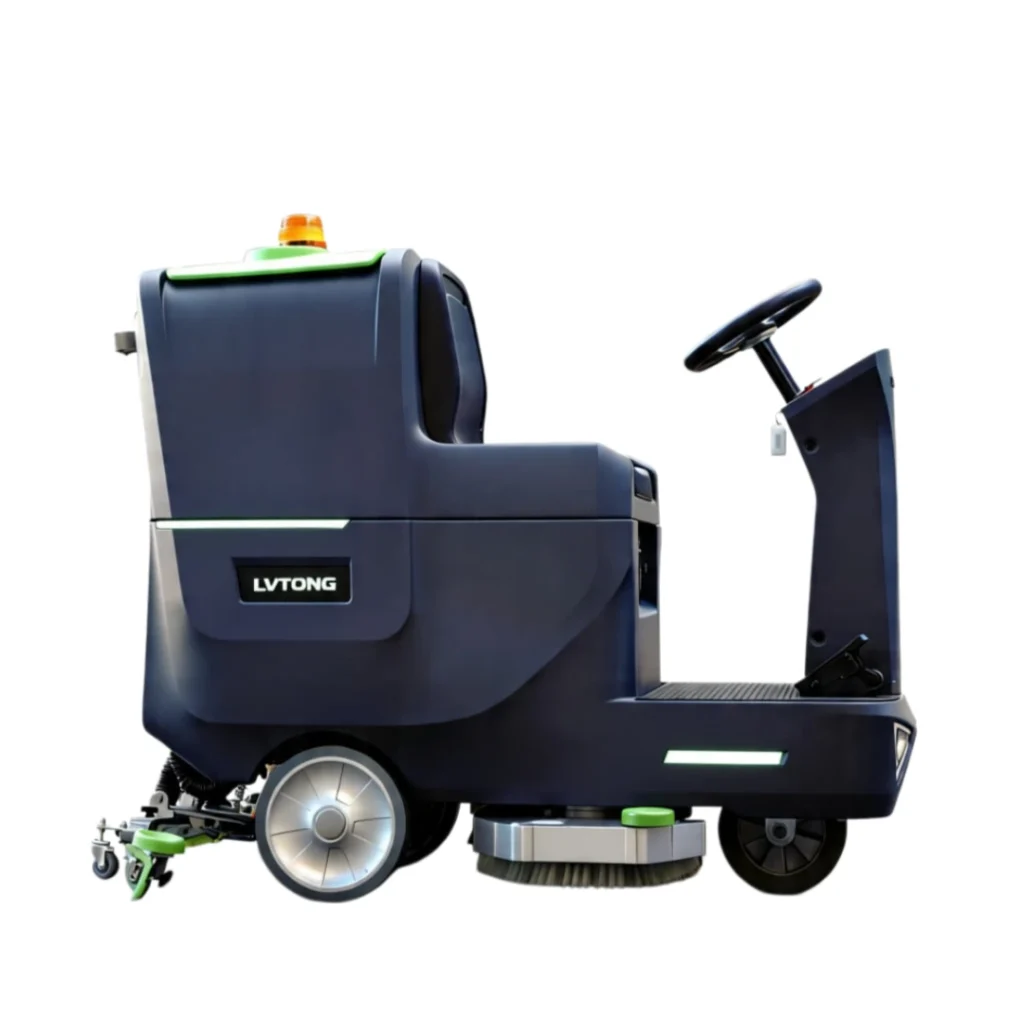
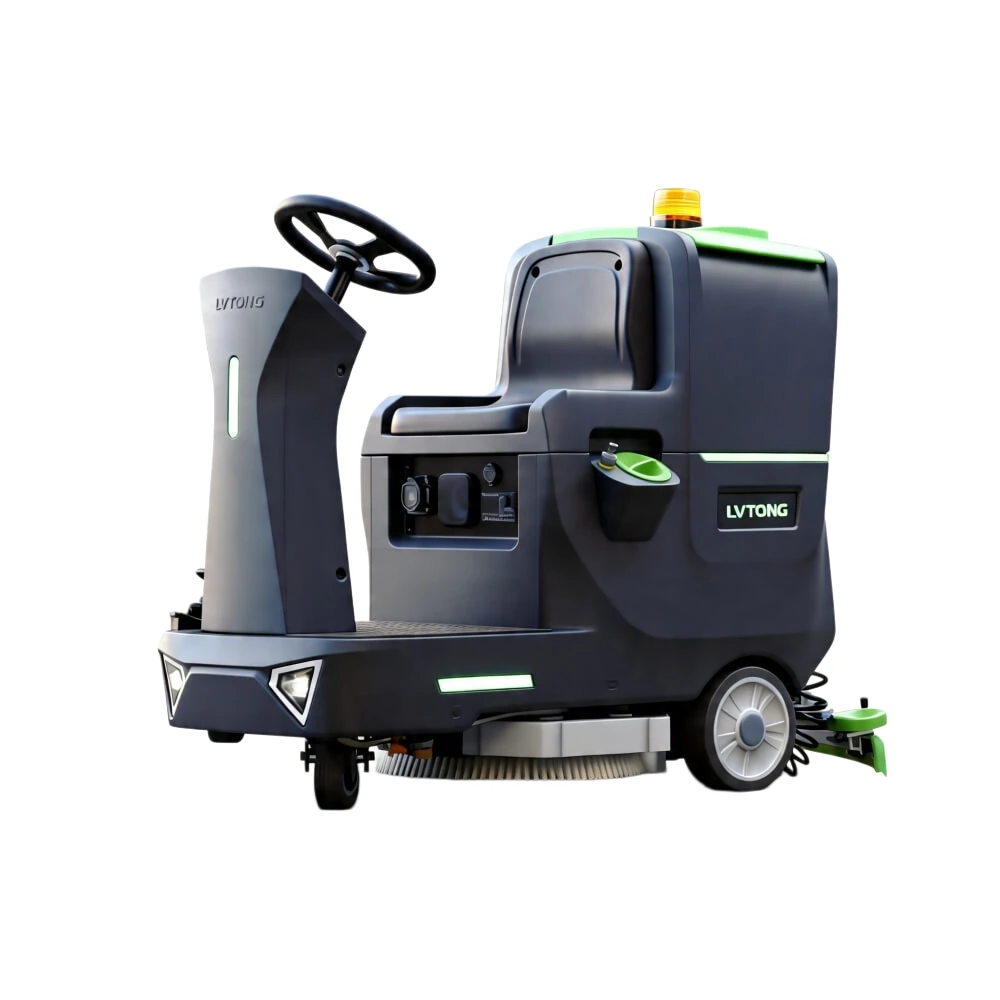
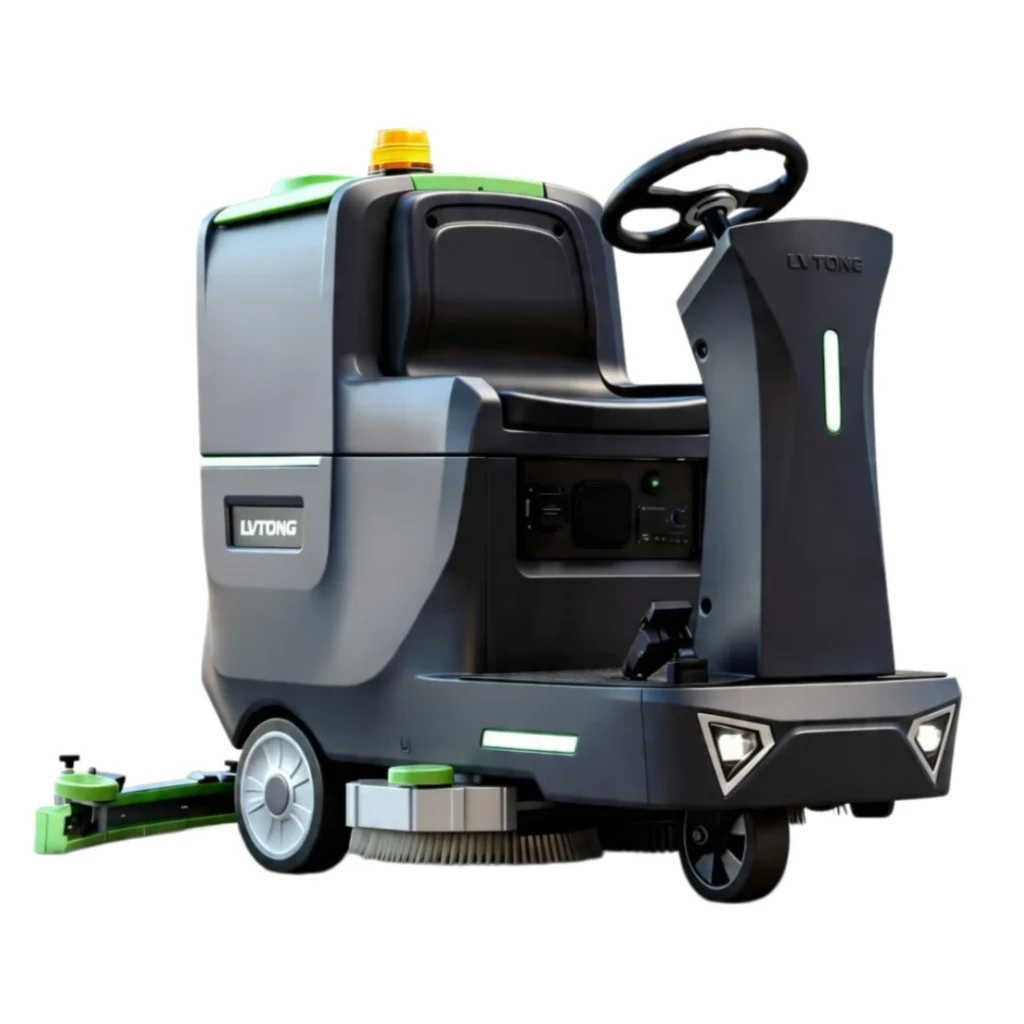
A walk-behind scrubber is usually more practical in small or congested areas, while a ride-on scrubber is better suited to large, open floors and frequent cleaning schedules.
Applicable Scenarios:
- Machinery and automotive workshops
- Food-processing areas
- Pharmaceutical and electronics facilities
- Underground parking areas
- Finished commercial floors
Choose a Floor Sweeper for Dust, Sand and Loose Debris
Selection Recommendations:
Choose a floor sweeper when the main contamination consists of loose, dry materials such as dust, sand, leaves, packaging waste, small stones or metal chips.
Electric sweepers are suitable for indoor warehouses and logistics facilities, while larger ride-on sweepers can be used on factory roads, parking areas and outdoor industrial sites.
Applicable Scenarios:
- Warehouses, logistics centers
- Factory roads
- Outdoor parks, parking areas
- Building materials, hardware processing areas
Sweep First and Scrub Second for Mixed Contamination
Recommended Solution:
When a floor contains both loose debris and oily or sticky contamination, use a two-stage cleaning process.
- Sweep first to remove dust, sand, stones and larger debris.
- Scrub second to remove grease, spills and bonded dirt.
Removing loose debris before scrubbing protects the brush and squeegee system, reduces the risk of blockages and allows the scrubber to focus on wet cleaning.
Typical Application Scenarios:
- Heavy industrial manufacturing plants
- Automotive and auto parts production lines
- Multi-process mixed operation workshops
What Is a Sweeper-Scrubber Combination Machine?
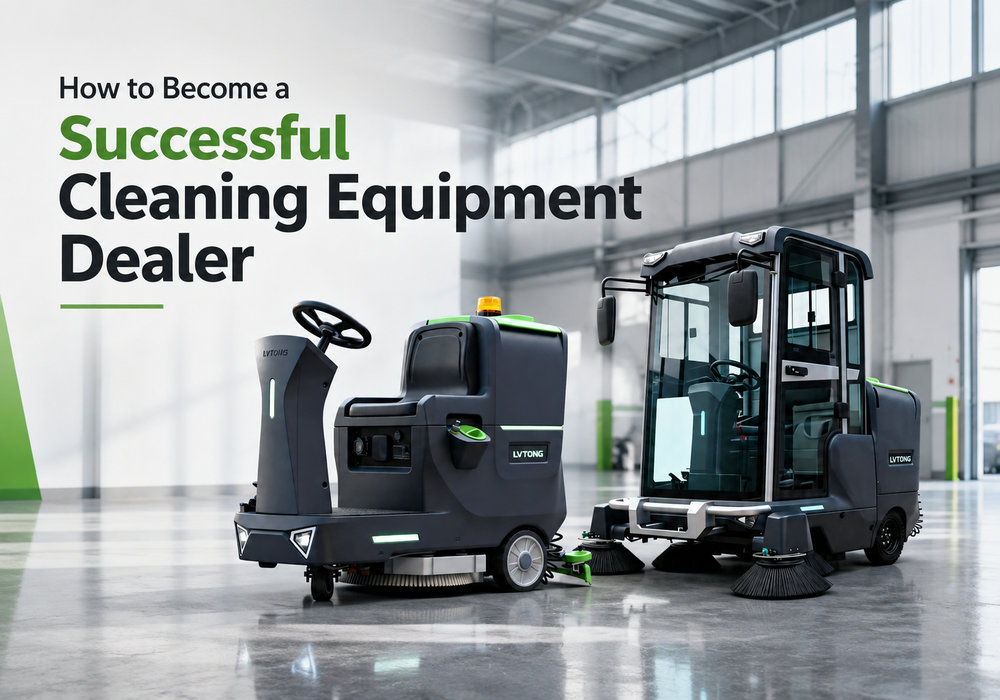
A sweeper-scrubber combination machine performs dry sweeping and wet scrubbing in one operating pass. It normally includes sweeping brooms, a debris hopper, scrubbing brushes, solution and recovery tanks, and a squeegee system.
Combination machines can reduce the need for two separate cleaning passes in large industrial facilities. However, they are generally larger, more expensive and more complex to maintain than a single-purpose sweeper or scrubber.
A cylindrical scrubber with a small debris tray should not automatically be treated as a full sweeper-scrubber combination machine. Its debris-collection capacity is usually more limited.

8 Key Differences Between a Floor Scrubber and Floor Sweeper
1. Cleaning Process
A floor sweeper uses brushes and airflow to collect dry debris into a hopper. A floor scrubber applies cleaning solution, agitates the floor and recovers dirty water into a separate tank.
2. Soil and Debris Type
Sweepers are designed for loose materials such as dust, sand, leaves and packaging waste. Scrubbers are designed for grease, spills, tire marks and dirt attached to the surface.
3. Water Use
Most floor sweepers operate without water, although some machines use a light mist for dust control. Floor scrubbers require water or cleaning solution and therefore need filling and wastewater-disposal points.
4. Waste Collection System
A sweeper stores dry debris in a hopper. A scrubber collects contaminated liquid in a recovery tank through its squeegee and vacuum system.
5. Floor Compatibility
Both machines can operate on many hard-floor surfaces. Selection should be based on floor condition, surface finish, contamination type, brush or pad compatibility and whether water use is permitted.
6. Cleaning Productivity
Sweepers can collect loose debris quickly across large areas without stopping for water disposal. Scrubbers combine washing and wastewater recovery in one pass, but productivity is affected by tank capacity, water flow, turning and wastewater disposal.
7. Maintenance Requirements
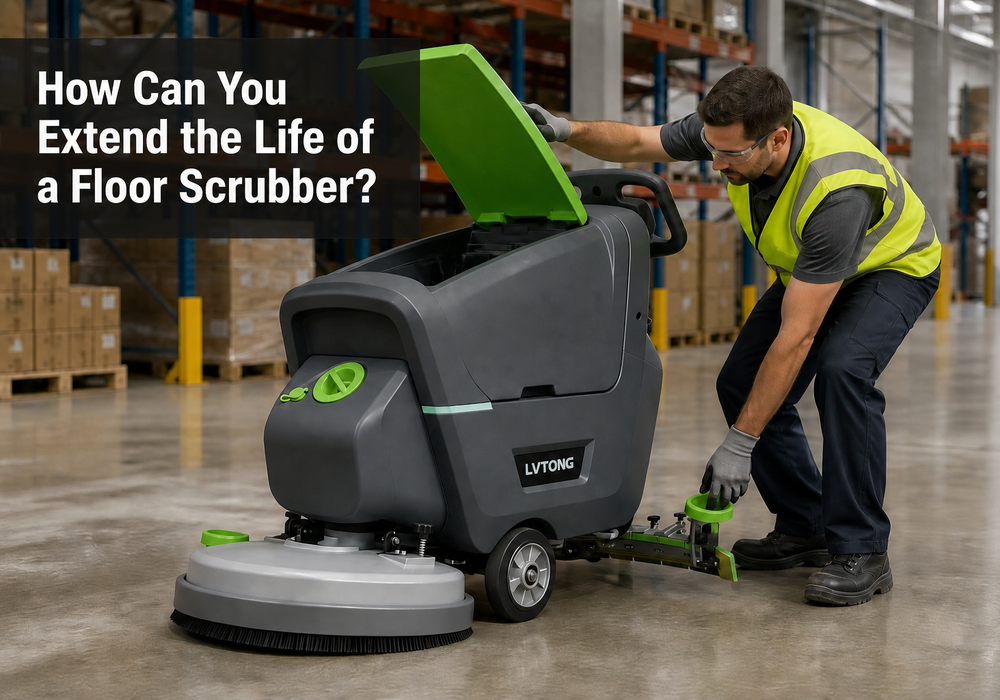
Sweeper maintenance includes the main broom, side brushes, dust filters, skirts and hopper. Scrubber maintenance includes brushes or pads, squeegee blades, solution filters, tanks, hoses and the vacuum system.
8. Total Cost of Ownership
Sweepers may have lower water and chemical costs, while scrubbers can reduce labor where regular wet cleaning is necessary. Total cost depends on purchase price, utilization, consumables, battery replacement, maintenance, labor and the number of cleaning passes required.

Floor Scrubber vs Floor Sweeper by Application
| Application | Recommended Equipment | Reason |
|---|---|---|
| Dusty warehouse | Floor sweeper | Collects dust, packaging waste and loose debris |
| Warehouse with tire marks and spills | Sweep first, then scrub | Requires dry debris removal and wet cleaning |
| Manufacturing workshop with oil | Floor scrubber | Removes grease and bonded residue |
| Factory yard or outdoor road | Floor sweeper | Suitable for sand, leaves and loose outdoor debris |
| Food-processing facility | Floor scrubber | Supports wet cleaning and wastewater recovery |
| Logistics center | Sweeper or both | Depends on debris and spill conditions |
| Underground parking area | Both may be required | Dust and sand may coexist with tire marks and spills |
| Heavy industrial facility | Separate machines or combination unit | Mixed contamination may require sweeping and scrubbing |
The facility type alone does not determine the correct machine. The decision should be based on the contamination that must be removed.
Common Mistakes in Selecting Cleaning Equipment
Based on our experience supporting industrial cleaning-equipment buyers, the following selection mistakes are common:
Choosing by Price Alone
A lower purchase price does not guarantee a lower cleaning cost. Labor, consumables, maintenance and the need for additional cleaning passes must also be considered.
Focusing on Floor Area but Ignoring Layout
Total building size is less useful than actual cleanable area, aisle width, turning space and the number of obstacles.
Choosing by Floor Material Alone
Epoxy, concrete and tile can often be cleaned by either machine. The contamination type and desired result are usually more important.
Expecting One Machine to Handle Every Contaminant
A sweeper cannot remove bonded grease, while a scrubber should not be used as a substitute for collecting large dry debris.
Ignoring Maintenance and Parts Availability
Before purchasing, confirm the availability of brushes, filters, squeegee blades, batteries, technical support and replacement parts.

Conclusion
A floor scrubber and floor sweeper perform different cleaning tasks and should not be treated as interchangeable machines.
Choose a floor sweeper when the main problem is loose dust, sand, leaves, packaging waste or other dry debris. Choose a floor scrubber when the floor contains grease, spills, tire marks or sticky contamination. When both types of soil are present, sweep first and scrub second.
Before selecting equipment, evaluate the contamination type, usable floor area, aisle width, indoor or outdoor conditions, water availability, cleaning frequency and maintenance requirements. Facilities with large mixed-contamination areas may also consider a sweeper-scrubber combination machine or a two-machine cleaning process.
FAQ
What is the main difference between a floor scrubber and floor sweeper?
A floor sweeper collects loose, dry debris into a hopper. A floor scrubber applies water or cleaning solution, agitates attached dirt and recovers the dirty water. Sweepers are used for dust and debris; scrubbers are used for grease, spills and sticky soil.
Should I sweep before using a floor scrubber?
Yes, when the floor contains stones, sand, packaging waste or large amounts of loose debris. Sweeping first protects the scrubber’s brush, squeegee and recovery system and improves the wet-cleaning result.
Can a floor scrubber pick up dry debris?
Some cylindrical scrubbers can collect small particles into a debris tray, but a standard scrubber is not a replacement for a floor sweeper. Large or heavy debris should be removed before scrubbing.
Can a floor sweeper remove oil and grease?
No. A floor sweeper can collect dry materials but cannot wash bonded oil, grease or sticky residue from the surface. These contaminants normally require a floor scrubber and a compatible cleaning solution.
Which machine is better for a warehouse?
A sweeper is suitable for warehouses dominated by dust, sand and packaging debris. A scrubber is better where spills, tire marks and bonded dirt are common. Warehouses with mixed contamination may need both machines.