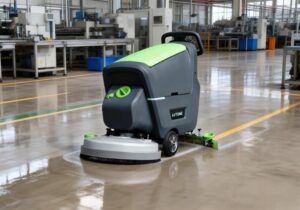
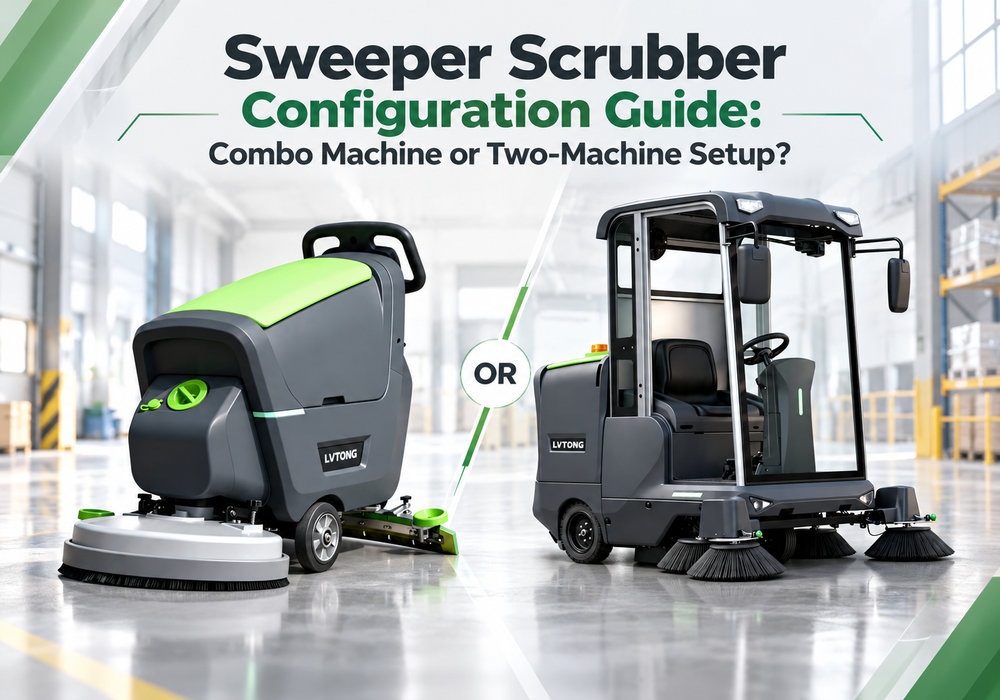
Kurzantwort: Welche ist die beste handgeführte Scheuersaugmaschine?
Die beste Scheuersaugmaschine ist das Modell, das zu Ihrer Betriebsgröße, Bodenart, Reinigungsrichtung, Tankkapazität, Akkulaufzeit, Bürstensystem und Ihren Anforderungen an die Wasserrückgewinnung passt. Für kleine und mittlere Gewerbeflächen ist eine kompakte Scheuersaugmaschine mit starker Saugkraft und guter Manövrierbarkeit meist die beste Wahl. Bei strukturierten Böden, starker Verschmutzung oder Fugen empfiehlt sich ein Modell mit höherem Anpressdruck und dem passenden Bürstentyp.
Die Wahl der besten Scheuersaugmaschine erfordert mehr als nur einen Vergleich von Maschinengröße und Anschaffungspreis. Ein geeignetes Modell sollte zu Ihrer Reinigungsfläche, Bodenbeschaffenheit, dem Verschmutzungsgrad, der Reinigungsfrequenz, der Akkulaufzeit, dem Tankvolumen, dem Bürstensystem und der Wasserrückgewinnungsleistung passen. Für kleine und mittlere Gewerbebetriebe sind Scheuersaugmaschinen oft die erste Wahl, da sie eine hohe Reinigungsleistung bieten und gleichzeitig leicht in Gängen, Regalen, Maschinen und engen Ecken zu manövrieren sind.
Dieser Leitfaden erklärt, wie man handgeführte Scheuersaugmaschinen anhand der Reinigungsbreite, der Produktivität im praktischen Einsatz, des Anpressdrucks, des Bürstentyps, der Tankgröße, der Batterietechnologie, der Abstreiferleistung, der Bodenart und des langfristigen Betriebswerts vergleichen kann.
In den meisten gewerblichen Einrichtungen wird die beste handgeführte Scheuersaugmaschine eher durch die Reinigungsroute, den Zustand des Bodens, die Manövrierfähigkeit, die Wasserrückgewinnung und die Gesamteffizienz des Betriebs bestimmt als durch die Maschinengröße oder den Kaufpreis allein.
Anleitung zur Verwendung dieser handgeführten Scheuersaugmaschine
Dieser Leitfaden richtet sich an Facility Manager, Reinigungsunternehmen, Lagerbetreiber, Schulwartungsteams, Supermarktmanager und Einkäufer, die eine praktische Scheuersaugmaschine für kleine und mittlere Reinigungsbereiche auswählen müssen.
Anstatt eine Maschine nur nach Preis, Tankgröße oder Reinigungsbreite auszuwählen, sollten Käufer mit der tatsächlichen Reinigungsstrecke beginnen.
Vor dem Vergleich der Modelle Folgendes prüfen:
Reinigbare Bodenfläche.
Schmalste Gang- oder Türöffnungsbreite.
Raum um Regale, Maschinen, Theken oder Möbel herum nutzen.
Bodenbeläge wie Beton, Epoxidharz, Fliesen, Vinyl oder polierte Böden.
Hauptsächliche Bodenart, wie z. B. Staub, Fett, Reifenspuren, Lebensmittelreste oder alltäglicher Schmutz.
Tägliche Reinigungshäufigkeit und verfügbare Reinigungszeit.
Akkulaufzeit und Ladebedingungen.
Anforderungen an Wasserrückgewinnung und Trocknung.
Die beste handgeführte Scheuersaugmaschine ist diejenige, die zu den Gegebenheiten Ihrer Einrichtung passt, in einem Arbeitsgang effektiv reinigt, das Schmutzwasser zuverlässig auffängt und sich auch bei langfristiger Nutzung leicht warten lässt.
Was zeichnet die beste handgeführte Scheuersaugmaschine aus?
Eine Scheuersaugmaschine ist eine kompakte Bodenreinigungsmaschine, die von einer Person bedient wird, die hinter dem Gerät hergeht. Sie trägt Reinigungslösung auf, schrubbt den Boden mit einer Bürste oder einem Pad und saugt das Schmutzwasser in einem Arbeitsgang mit einem Abzieher und einem Saugsystem ab. Das beste Modell ist nicht immer das größte; entscheidend ist die Maschine, die zu den Gegebenheiten des Betriebs, dem Bodentyp, der Reinigungsroute und der Arbeitsbelastung des Bedieners passt.
Eine handgeführte Scheuersaugmaschine führt üblicherweise drei Reinigungsvorgänge in einem Arbeitsgang aus:
| Funktion | Was es bewirkt | Warum das wichtig ist |
|---|---|---|
| Lösungsbereitstellung | Gibt sauberes Wasser und Reinigungsmittel auf den Boden ab. | Hilft dabei, Schmutz, Fett, Staub und Flecken zu lösen. |
| Mechanische Schrubbung | Verwendet Scheiben-, Zylinder- oder Orbitalbürsten, um die Oberfläche zu bearbeiten. | Verbessert die Reinigungsleistung auf Beton, Fliesen, Epoxidharz, Vinyl und Fugen |
| Wasserrückgewinnung | Nutzt Vakuumsaugtechnik und einen Abzieher, um schmutziges Wasser aufzusammeln. | Sorgt für trockenere, sicherere und schneller wieder begehbare Böden. |
Begehbare Scheuersaugmaschine im Vergleich zum herkömmlichen Wischmopp
Eine handgeführte Scheuersaugmaschine wird häufig als Alternative zur herkömmlichen Reinigung mit Wischmopp und Eimer in gewerblichen und industriellen Anlagen eingesetzt.
| Reinigungsfaktor | Traditioneller Wischmopp | Begehbare Scheuersaugmaschine | Warum das wichtig ist |
|---|---|---|---|
| Reinigungsprozess | Manuelles Wischen, Abspülen und wiederholter Wasserwechsel | Lösungszufuhr, mechanische Wäsche und Schmutzwasserrückgewinnung in einem Arbeitsgang | Reduziert wiederholte manuelle Arbeiten und verbessert die Reinigungskonsistenz. |
| Reinigungsgeschwindigkeit | Langsamer für große Flächen oder wiederholte tägliche Reinigung | Schneller und gleichmäßiger für gewerbliche Böden | Hilft Einrichtungen dabei, in kürzerer Zeit mehr Fläche zu reinigen. |
| Trocknungszeit | Längere Trocknungszeit und höheres Risiko durch nasse Böden | Schnellere Wasserrückgewinnung und kürzere Trocknungszeit | Verbessert die Sicherheit auf den Fußböden in stark frequentierten Einrichtungen |
| Reinigungsqualität | Hängt stark vom Aufwand des Bedieners und dem Zustand des Wischmopps ab. | Gleichmäßigerer Bürstendruck, bessere Wasserkontrolle und schnellere Wasserrückgewinnung | Liefert stabilere Ergebnisse über verschiedene Betreiber hinweg. |
| Arbeitsintensität | Erfordert mehr körperliche Anstrengung und wiederholte manuelle Arbeit | Verringert die Ermüdung des Bedieners bei der täglichen Bodenreinigung | Geeignet für Schulen, Krankenhäuser, Supermärkte, Büros und Werkstätten |
| Wasser- und Chemikalienkontrolle | Weniger kontrolliert und oft unbeständig | Einfachere Steuerung des Wasserdurchflusses und des Reinigungsmittelverbrauchs | Hilft dabei, Abfall zu reduzieren und wiederholbare Reinigungsstandards aufrechtzuerhalten. |
| Hygienemanagement | Schmutziges Wischwasser kann den Schmutz auf dem Boden verteilen. | Das verschmutzte Wasser wird in den Auffangtank geleitet. | Unterstützt die Reinigung von Böden in professionellen Umgebungen |
| Bester Anwendungsfall | Sehr kleine Bereiche, punktuelle Reinigung oder gelegentliche Reinigung | Schulen, Krankenhäuser, Supermärkte, Restaurants, Büros, Werkstätten und kleine Lagerhallen | Hilft Käufern bei der Entscheidung, wann sich der Einsatz einer Scheuersaugmaschine als Ersatz für das manuelle Wischen lohnt. |
Für professionelle Reinigungsanlagen ist eine handgeführte Scheuersaugmaschine nicht nur ein Reinigungsgerät. Sie trägt zu einer gleichmäßigeren Reinigung bei, reduziert die Ermüdung des Bedieners, senkt das Risiko von Nässe auf dem Boden und erleichtert die tägliche Bodenpflege.
Wichtige Spezifikationen, die Sie vor dem Kauf einer Scheuersaugmaschine vergleichen sollten
Beim Vergleich von Scheuersaugmaschinen sollten Käufer nicht nur die Reinigungsbreite berücksichtigen. Die beste Maschine sollte ein ausgewogenes Verhältnis von Produktivität, Manövrierfähigkeit, Wasserrückgewinnung, Bürstenleistung, Akkulaufzeit und Wartungsfreundlichkeit aufweisen.
| Spezifikation | Was zu überprüfen ist | Am besten geeignet für |
|---|---|---|
| Reinigungspfadbreite | 17–34 Zoll je nach Modellgröße | Breitere Wege steigern die Produktivität; schmalere Wege verbessern die Manövrierfähigkeit |
| Produktivität in der Praxis | Die Produktivität liegt aufgrund von Wenden, Nachfüllen und Hindernissen üblicherweise unter dem theoretischen Wert. | Hilft dabei, die tatsächliche Reinigungszeit abzuschätzen. |
| Abwärtsdruck | Leichter Druck für die tägliche Reinigung; höherer Druck für starke Verschmutzungen | Beton, Fliesen, Fugen, Reifenspuren und fettige Böden |
| Tankkapazität | Größe des Lösungs- und Rückgewinnungstanks | Größere Tanks reduzieren die Häufigkeit des Nachfüllens und Entleerens. |
| Akkulaufzeit | Laufzeit pro Ladung und Ladezeit | Lange Schichten, Reinigung mehrerer Zonen und Anlagen mit begrenzten Ausfallzeiten |
| Bürstentyp | Scheiben-, Zylinder- oder Orbitaldeck | Passen Sie die Maschine an die Bodenoberfläche und den Bodenpegel an. |
| Abzieherleistung | Gebogener oder V-förmiger Abzieher, Material des Abziehblatts, Einstellmethode | Starke Wasseraufnahme und weniger nasse Streifen |
| Wartungszugang | Zugang zu Bürste, Abzieher, Batterie, Filter und Tank | Reduziert Ausfallzeiten und Wartungsaufwand |
Reinigungspfadbreite und Produktivität in der Praxis
Die theoretische Produktivität gibt an, wie viel Bodenfläche eine Scheuersaugmaschine unter idealen Bedingungen reinigen kann. Sie lässt sich mit folgender Formel abschätzen:
Theoretische Produktivität (ft²/h) = Fahrweg (in) × Betriebsgeschwindigkeit (mph) × 5.280 ÷ 12
In realen Anlagen ist die tatsächliche Produktivität in der Regel geringer, da die Bediener Zeit für Wenden, Anfahren von Hindernissen, Nachfüllen von Reinigungsmitteltanks, Entleeren von Schmutzwassertanks und Wechseln von Bürsten oder Pads benötigen. Aus diesem Grund sollten Käufer sowohl die theoretische Produktivität als auch die tatsächlichen Reinigungsrouten vergleichen, bevor sie sich für eine handgeführte Scheuersaugmaschine entscheiden.
Anpressdruck und Schrubbleistung
Der Anpressdruck gibt an, wie stark die Bürste oder das Pad auf den Boden drückt. Geringer Anpressdruck eignet sich für die tägliche Reinigung glatter, versiegelter Böden, während höherer Anpressdruck für rauen Beton, Reifenspuren, fettigen Schmutz, strukturierte Fliesen und Fugen sinnvoll ist.
Mehr Druck ist jedoch nicht immer besser. Empfindliche Böden erfordern möglicherweise weichere Pads, geringeren Druck und das richtige Reinigungsmittel, um Oberflächenschäden zu vermeiden.
Abzieherleistung und Wasserrückgewinnung
Die Saugleistung und die Form des Abstreifers beeinflussen, wie viel Schmutzwasser die Maschine nach dem Schrubben aufnehmen kann. Eine hohe Wasseraufnahme reduziert das Risiko von nassen Böden, verhindert Streifenbildung und ermöglicht eine schnellere Wiederinbetriebnahme gereinigter Bereiche. Beim Vergleich von Scheuersaugmaschinen sollten Sie neben der Saugleistung auch die Form des Abstreifers, das Material der Abstreifklingen und die Einstellbarkeit berücksichtigen.
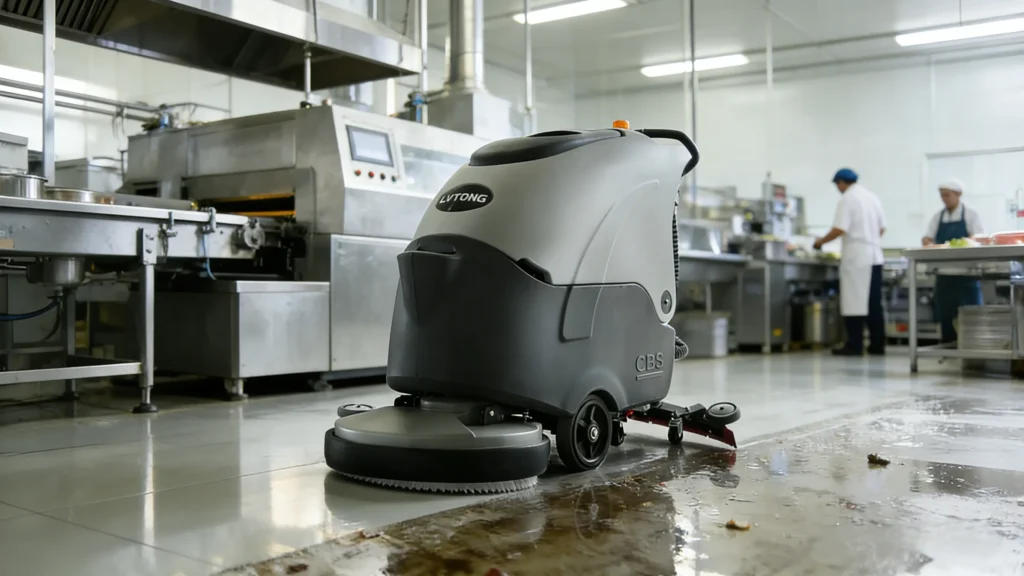
Warum handgeführte Scheuersaugmaschinen ideal für kleine und mittlere Räume sind
Selbstfahrende Scheuersaugmaschinen sind besonders nützlich in Betrieben, in denen Wendigkeit wichtiger ist als maximale Fahrgeschwindigkeit. Sie werden häufig in Lagerhallen, Supermärkten, Restaurants, Schulen, Krankenhäusern, Werkstätten, Lebensmittelverarbeitungsbetrieben und Gebäuden mit Gängen, Geräten, Regalen oder unterteilten Räumen eingesetzt.
| Herausforderung für die Einrichtung | Warum eine handgeführte Scheuersaugmaschine hilft |
|---|---|
| Enge Gänge | Kompakte Maschinen können sich auch durch engere Gänge bewegen |
| Regale, Möbel oder Maschinen | Die Bediener können Hindernisse präziser umfahren. |
| Gemischte Grundrisse | Selbstfahrende Scheuersaugmaschinen passen sich besser an wechselnde Routen an. |
| Kleine Lagerflächen | Einfacher zu parken, zu lagern und zu warten |
| Ecken und Kanten | Besserer Zugang als bei vielen größeren Aufsitzmaschinen |
| Mittlere Reinigungsrouten | Bietet eine höhere Produktivität als manuelles Wischen, ohne dass viel Wendefläche benötigt wird. |
Für kleine und mittlere Gewerbeflächen bieten handgeführte Scheuersaugmaschinen ein praktisches Gleichgewicht zwischen Reinigungseffizienz, Maschinensteuerung, Lagerungskomfort und Bedienerflexibilität.
Checkliste für die Reinigung von beengten Räumen
Handgeführte Scheuersaugmaschinen sind besonders nützlich, wenn eine Standard- oder Aufsitz-Scheuersaugmaschine die Reinigungsstrecke nicht sicher befahren kann. In beengten Bereichen ist die Manövrierfähigkeit in der Regel wichtiger als die maximale Reinigungsbreite.
| Abgeschlossener Reinigungsbereich | Häufige Beispiele | Worauf Käufer achten sollten | Warum das wichtig ist |
|---|---|---|---|
| Türöffnungen | Lagerräume, Küchen, Büros, Krankenzimmer, Schulflure | Vergleichen Sie die Maschinenbreite mit der schmalsten Türöffnung. | Prüft, ob die Scheuersaugmaschine sicher in den Reinigungsbereich einfahren kann. |
| Enge Gänge | Verkaufsregale, Lagerregale, Supermarktregale, Lagerräume | Messen Sie den Abstand zwischen Regalen, Gestellen, Theken oder Maschinen. | Verhindert Kollisionen, schlechtes Kurvenfahren und ineffiziente Reinigung |
| Wendebereiche | Korridorenden, Ecken, Kassenbereiche, Werkstattdurchgänge | Prüfen Sie, ob sich die Scheuersaugmaschine ohne wiederholtes Rückwärtsfahren drehen lässt. | Hilft dabei, die Auswahl einer Maschine zu vermeiden, die die Route nicht reibungslos absolvieren kann. |
| Lager- und Ladebereich | Geräteräume, Reinigungsräume, Lagerecken, Back-of-House-Bereiche | Bitte prüfen Sie die Größe des Lagerraums, den Ladeort und die Belüftung. | Gewährleistet, dass die Maschine sicher geparkt, geladen und gewartet werden kann. |
| Hindernisse | Möbel, medizinische Geräte, Paletten, Displays, Maschinen, Gastronomieausstattung | Identifizieren Sie feste und bewegliche Hindernisse entlang der Reinigungsroute | Ermittelt, ob eine kompakte, handgeführte Scheuersaugmaschine erforderlich ist. |
| Bodenverkehr | Kunden, Patienten, Studenten, Arbeiter, Gabelstapler oder Servierwagen | Berücksichtigen Sie Reinigungszeit, Fußgängerverkehr und Trocknungsanforderungen. | Beeinträchtigt die Sicherheit des Bedieners, die Trocknungsgeschwindigkeit und den täglichen Reinigungsplan |
| Bodenoberfläche | Fliesen, Beton, Epoxidharz, Vinyl, polierter Boden oder beschichteter Boden | Wählen Sie den Bürsten- oder Padtyp passend zum Bodenbelag. | Verbessert die Reinigungsleistung und verringert das Risiko von Bodenbeschädigungen |
| Bodentyp | Staub, Essensreste, Fett, Fußabdrücke, Reifenspuren oder alltäglicher Schmutz | Prüfen Sie, ob die Maschine über einen geeigneten Bürstendruck und eine ausreichende Wasserrückgewinnung verfügt. | Gewährleistet, dass der Schrubber die eigentliche Verunreinigung effektiv entfernen kann. |
Für beengte Räume eignet sich eine kompakte, handgeführte Scheuersaugmaschine mit zuverlässiger Wasserrückgewinnung, die schmale Bereiche sicherer und effizienter reinigen kann als eine übergroße Maschine.
Wie Sie Ihre Einrichtung vor der Auswahl einer Scheuersaugmaschine richtig vermessen
Vor der Anschaffung einer handgeführten Scheuersaugmaschine sollten Käufer die tatsächliche Reinigungsstrecke ausmessen und sich nicht nur auf die gesamte Bodenfläche verlassen.
Eine kompakte Scheuersaugmaschine muss in der Lage sein, in die Reinigungszone einzufahren, den engsten Gang zu passieren, sicher zu wenden und zum Lager- oder Ladebereich zurückzukehren, ohne Wände, Regale, Türen, Maschinen oder Möbel zu beschädigen.
| Messpunkt | Was zu messen ist | Warum das wichtig ist |
|---|---|---|
| schmalste Türöffnung | Messen Sie die nutzbare Öffnung innerhalb des Türrahmens, einschließlich Griffe, Schienen oder anderer Hindernisse. | Prüft, ob die Scheuersaugmaschine in Räume, Küchen, Kliniken, Lagerräume oder Flure einfahren kann. |
| Schmalster Gang | Messen Sie den engsten Abstand zwischen Regalen, Gestellen, Theken, Maschinen, Betten oder Paletten. | Verhindert Kollisionen und eine verminderte Reinigungseffizienz auf engen Wegen |
| Drehraum | Prüfen Sie, ob die Scheuersaugmaschine an Korridorenden, Ecken, Kassenbereichen, Werkstätten und Ladeflächen wenden kann. | Eine Maschine, die durch einen Gang fahren kann, kann dennoch ausfallen, wenn sie nicht sicher wenden kann. |
| Lagerbereich | Messen Sie den Lagerraum, den Ladebereich und den Platzbedarf für Befüllung, Entleerung und Wartung aus. | Gewährleistet, dass die Maschine nach Gebrauch geparkt, aufgeladen, entleert und überprüft werden kann. |
| Reinigungsroutenlänge | Schätzen Sie die tatsächliche Reinigungsstrecke, die die Bediener täglich zurücklegen, und nicht nur die Gebäudegröße. | Hilft dabei, Tankkapazität, Akkulaufzeit, Arbeitsbelastung des Bedieners und tatsächliche Produktivität zu vergleichen. |
| Bodenverkehr | Prüfen Sie, ob die Reinigung in der Nähe von Kunden, Patienten, Schülern, Mitarbeitern, Gabelstaplern oder Servierwagen stattfindet. | Hilft bei der Entscheidung über Maschinengröße, Trocknungsleistung, Geräuschpegel und Reinigungsplan |
Die beste Scheuersaugmaschine für beengte Platzverhältnisse ist nicht immer das kleinste Modell. Es ist die Maschine, die in die engste Stelle des Gebäudes passt und gleichzeitig genügend Reinigungsbreite, Tankkapazität, Akkulaufzeit und Wasserrückgewinnung für die tägliche Reinigungsroute bietet.
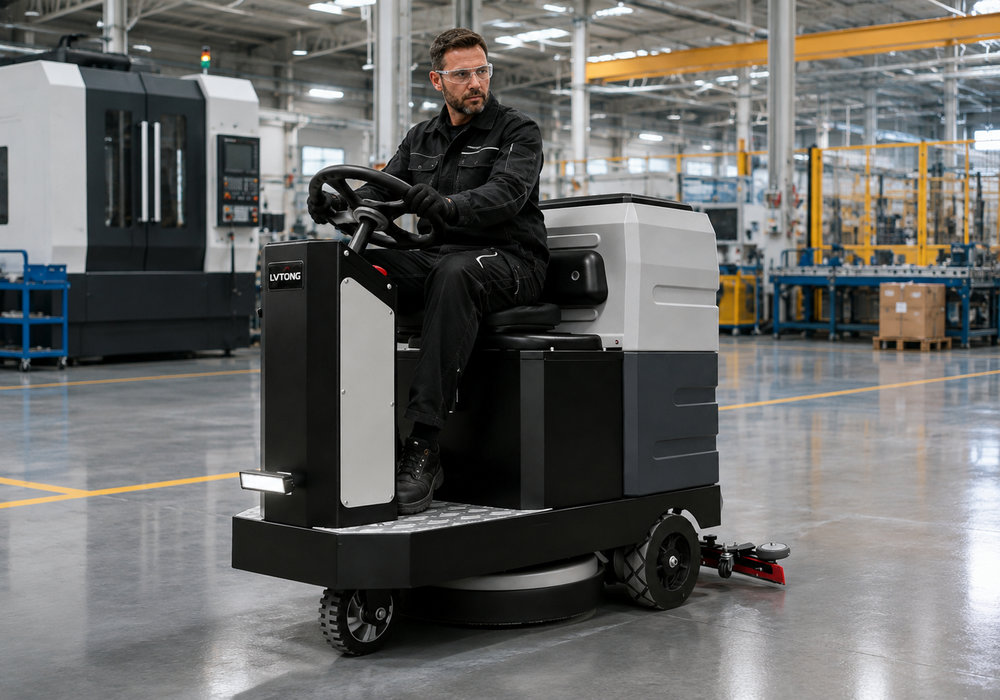
Fallstudie zu handgeführten Scheuersaugmaschinen: Effizienz der Lagerreinigung
Ein regionales Distributionslager musste täglich Reifenspuren und Feinstaub von polierten Betonböden entfernen. Die manuelle Reinigung erforderte lange Arbeitszeiten und führte oft dazu, dass die Böden über längere Zeiträume nass blieben.
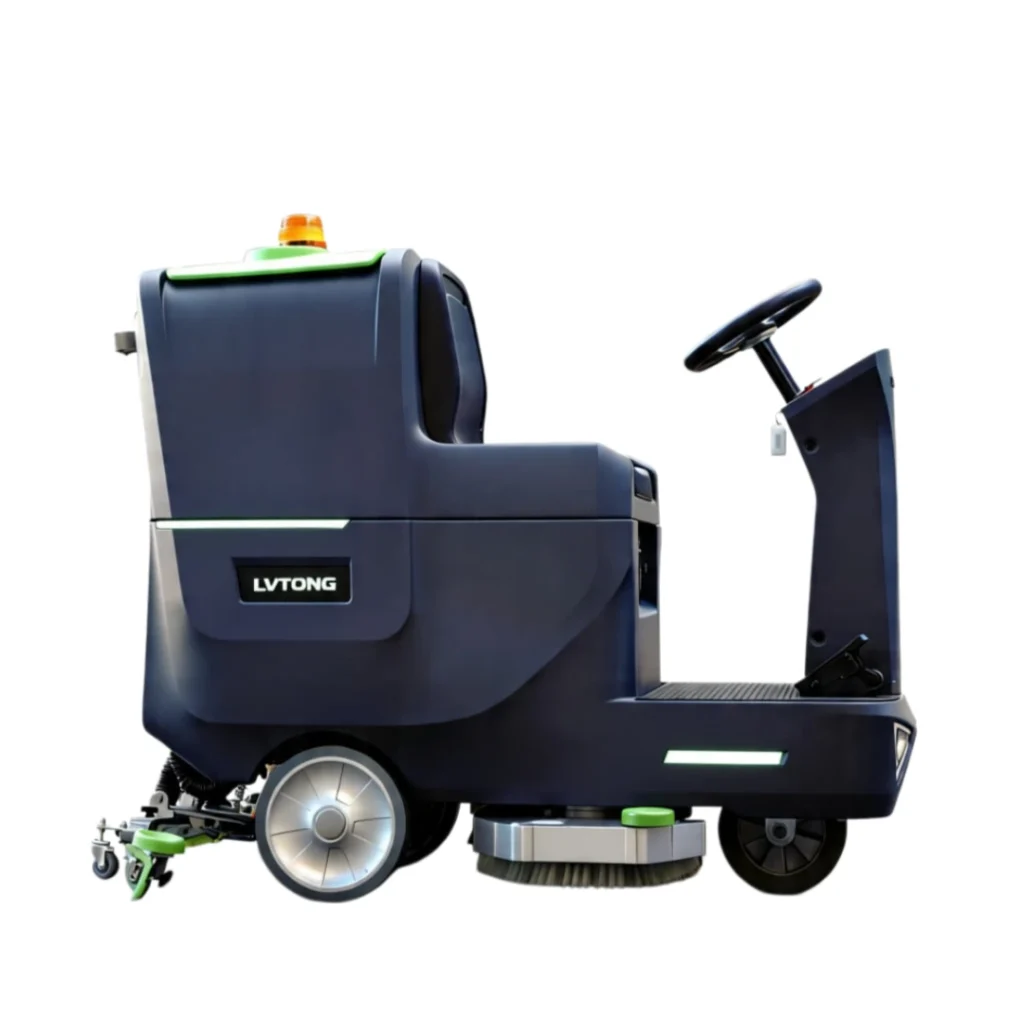
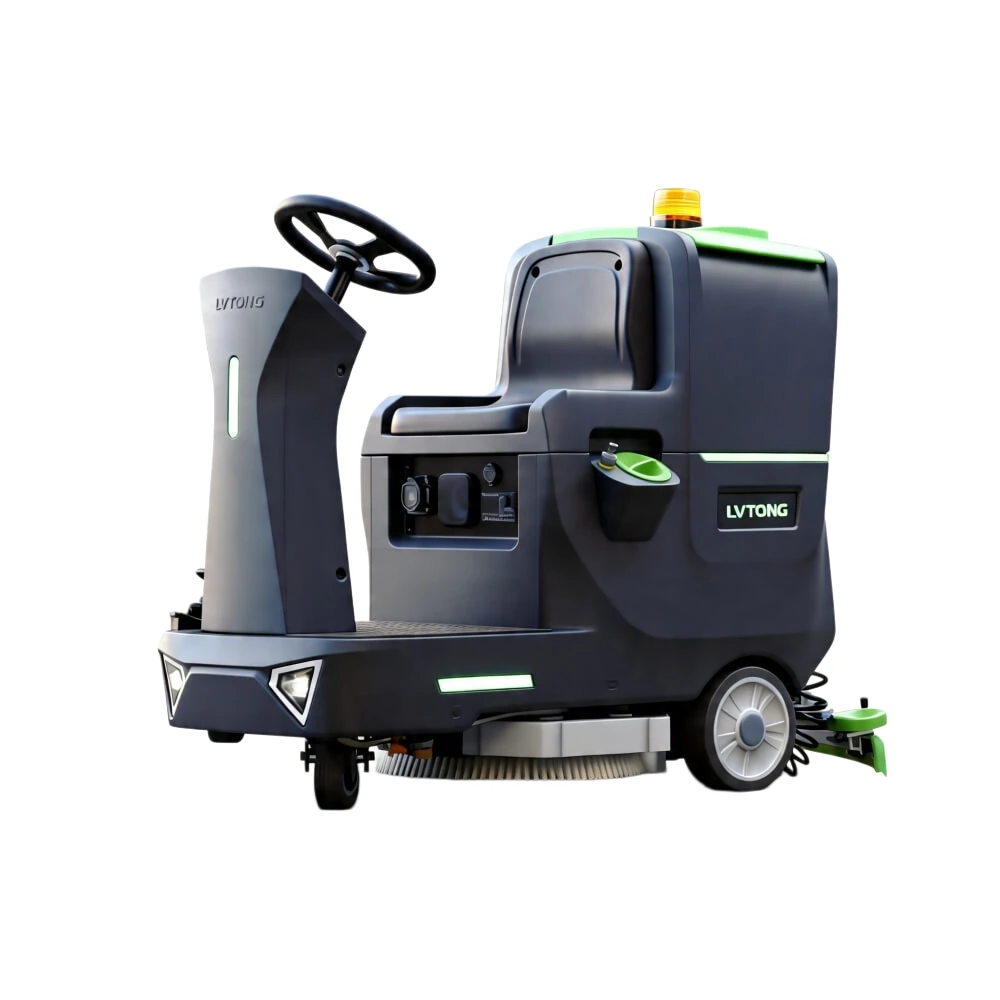
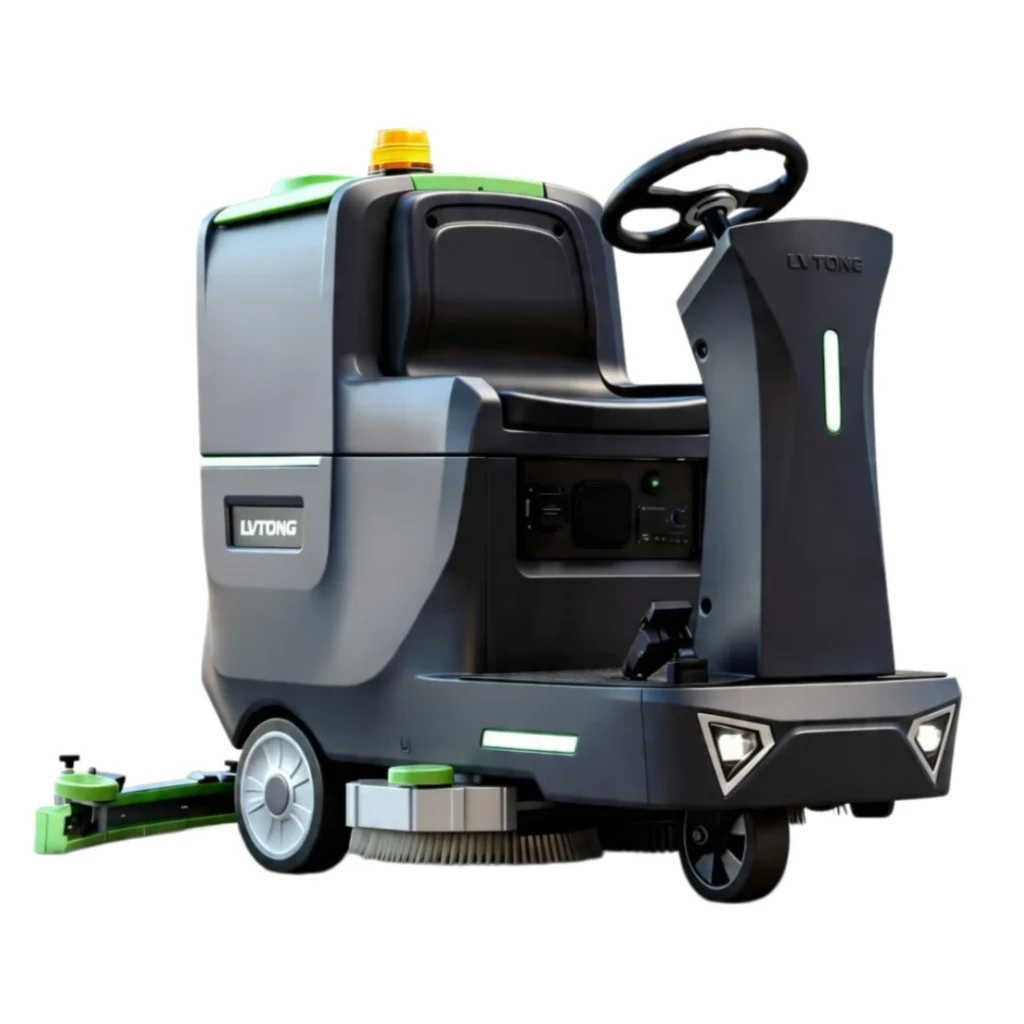
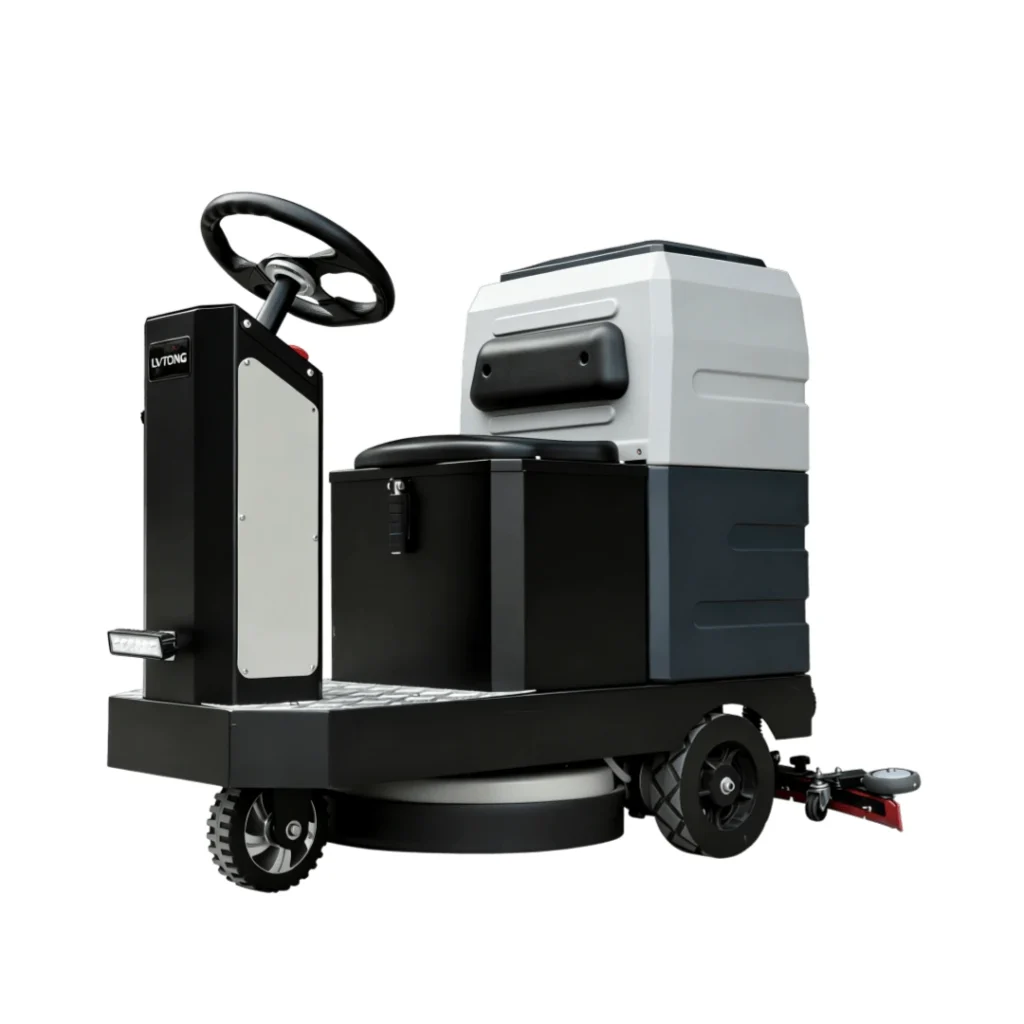
Lösung: Die Einrichtung nutzte eine LVTONG LT-S530X Aufsitz-Scheuersaugmaschine mit einem 530 mm breiten Reinigungsweg, großvolumigen Tanks und einer hochdichten Scheibenbürste.
Zu den beobachteten Verbesserungen zählten:
- Kürzere tägliche Reinigungszeit im Vergleich zum manuellen Wischen
- Bessere Entfernung von eingewachsenen Reifenspuren und Feinstaub
- Schnellere Wasserrückgewinnung durch Vakuumansaugung und gebogene Abstreiferkonstruktion
- Sauberere und trockenere Böden nach jeder Reinigungsrunde
- Geringere körperliche Belastung für das Reinigungspersonal
Dieses Beispiel zeigt, warum Käufer nicht nur die Reinigungsbreite, sondern auch den Bürstentyp, das Tankvolumen, die Saugleistung und die Manövrierfähigkeit im Alltag vergleichen sollten.
Handgeführte oder Aufsitz-Scheuersaugmaschine: Welche sollten Sie wählen?
Handgeführte und Aufsitz-Scheuersaugmaschinen erfüllen unterschiedliche Reinigungsanforderungen. Die richtige Wahl hängt von der Bodenfläche, dem Grundriss, der Reinigungsroute, der Arbeitsbelastung des Bedieners und dem verfügbaren Stauraum ab.
| Faktor | Begehbare Scheuersaugmaschine | Aufsitz-Scheuersaugmaschine |
|---|---|---|
| Bedienerposition | Der Bediener geht hinter der Maschine her | Der Bediener sitzt auf der Maschine. |
| Am besten geeignet für | Kleine und mittlere Räume, Gänge, Zimmer und Hindernisse | Große, offene Flächen und lange Reinigungsrouten |
| Wendigkeit | Höher | In engen Räumen tieferlegen |
| Produktivität | Mittel bis hoch | Höher in großen offenen Bereichen |
| Stauraum | Kleiner | Größer |
| Ermüdung des Bedieners | Mäßig, abhängig von der Streckenlänge | Niedriger bei langen Schichten |
| Vorabkosten | Normalerweise niedriger | Normalerweise höher |
| Beste Wahl, wenn | Die Anlage weist enge Kurven, Regale, Ausrüstung oder unterteilte Räume auf. | Die Anlage verfügt über weitläufige, offene Böden und lange, durchgehende Reinigungsrouten. |
Wählen Sie eine handgeführte Scheuersaugmaschine, wenn Wendigkeit, Zugänglichkeit und flexible Reinigungsrouten wichtiger sind. Entscheiden Sie sich für eine Aufsitz-Scheuersaugmaschine, wenn die Reinigungsfläche groß und offen ist und maximale Produktivität über lange Schichten erforderlich ist.
Handgeführt oder mit dem Auto aufsitzbar: Entscheidungstabelle für die jeweilige Einrichtung
| Anlagenzustand | Besserer Ausgangspunkt | Grund |
|---|---|---|
| Kleine Räume, schmale Gänge oder abgetrennte Bereiche | Begehbare Scheuersaugmaschine | Leichter zu drehen, zu lagern und in kompakten Layouts zu steuern. |
| Einzelhandelsgeschäfte, Supermärkte und Kassenbereiche | Kompakte, handgeführte Scheuersaugmaschine | Bessere Manövrierbarkeit um Regale, Auslagen und Kunden herum |
| Schulen, Kliniken, Büros und Flure | Begehbare Scheuersaugmaschine | Geeignet für kontrollierte Fahrstrecken, geräuscharme Reinigung und schnelle Wasserrückgewinnung |
| Kleine Lagerhallen und Werkstätten | Begehbare Scheuersaugmaschine | Funktioniert gut in der Nähe von Regalen, Maschinen, Paletten und Ladebereichen. |
| Mittelgroße Anlagen mit gemischten offenen und engen Bereichen | Handgeführter oder kompakter Aufsitz-Scheuersaugroboter | Die Wahl hängt von der Streckenlänge, dem Wenderaum und der Arbeitsbelastung des Fahrers ab. |
| Große, offene Lagerhallen, Fabriken und Logistikzentren | Aufsitz-Scheuersaugmaschine | Höhere Produktivität, größere Tanks und geringere Ermüdung des Bedieners auf langen Strecken |
| Einrichtungen mit sowohl offenen Hallen als auch kleinen Räumen | Hybrid-Reinigungsflotte | Aufsitz-Scheuersaugmaschinen eignen sich für offene Flächen, während handgeführte Scheuersaugmaschinen enge Bereiche reinigen. |
Eine handgeführte Scheuersaugmaschine ist in der Regel die richtige Wahl, wenn Flexibilität, Zugänglichkeit und gründliche Reinigung im Vordergrund stehen. Eine Aufsitz-Scheuersaugmaschine ist in der Regel die richtige Wahl, wenn die Anlage über lange, offene Fahrwege verfügt und die Reduzierung des Arbeitsaufwands oberste Priorität hat.
Wann eine Hybrid-Scrubberflotte sinnvoll ist
Einige große Gewerbe- oder Industrieanlagen sollten sich nicht nur für einen Maschinentyp entscheiden.
Eine hybride Reinigungsflotte kann effizienter sein, wenn der Standort sowohl weitläufige, offene Flächen als auch viele kleine oder beengte Bereiche umfasst.
Beispielsweise kann eine Aufsitz-Scheuersaugmaschine große Flure, Lagerhallen, Parkplätze oder Produktionshallen reinigen, während eine handgeführte Scheuersaugmaschine Toiletten, Aufzüge, Ecken, Kassenbereiche, Gerätebereiche, Lagerräume und enge Durchgänge reinigen kann.
Diese Strategie hilft Anlagenbetreibern, Produktivität und Präzision in Einklang zu bringen. Die Aufsitz-Scheuersaugmaschine verbessert die Reinigungsgeschwindigkeit in offenen Bereichen, während die handgeführte Scheuersaugmaschine die Reinigungsqualität in beengten Räumen sichert.
Eine Hybridflotte ist in folgenden Fällen eine Überlegung wert:
Das Gebäude verfügt sowohl über offene Hallen als auch über abgetrennte Räume.
Die Bediener verlieren Zeit durch den Wechsel zwischen großen und kleinen Bereichen.
Eine große Aufsitzmaschine kann Ecken, Kanten oder beengte Bereiche nicht erreichen.
Die Reinigung muss innerhalb eines begrenzten täglichen oder nächtlichen Reinigungsfensters abgeschlossen sein.
Die Einrichtung möchte den Arbeitsaufwand reduzieren, ohne dabei auf eine gründliche Reinigung zu verzichten.
Wichtige Komponenten einer leistungsstarken, handgeführten Scheuersaugmaschine
Eine leistungsstarke, handgeführte Scheuersaugmaschine zeichnet sich nicht durch ein einzelnes Merkmal aus. Käufer sollten das Tanksystem, das Bürstendeck, den Akku, das Antriebssystem, den Abstreifer und die Wartungsfreundlichkeit gemeinsam bewerten.
Tankgröße und Nachfüllhäufigkeit
Die Tankgröße beeinflusst, wie oft die Bediener zum Nachfüllen und Entleeren anhalten müssen. Ein größerer Frischwassertank ermöglicht längere Reinigungsrouten, während ein größerer Schmutzwassertank mehr Schmutzwasser vor der Entsorgung auffängt. Für kleine Anlagen reichen unter Umständen kompakte Tanks aus. In mittelgroßen Gewerbegebieten können größere Tanks Ausfallzeiten reduzieren und die Reinigungseffizienz steigern.
| Panzerfunktion | Warum das wichtig ist |
|---|---|
| Lösungstank | Enthält sauberes Wasser und Reinigungsmittel zum Schrubben |
| Auffangbehälter | Sammelt Schmutzwasser nach der Saugrückgewinnung |
| Größere Tankkapazität | Reduziert Nachfüll- und Ablassvorgänge |
| Leichtes Ablaufen dank Design | Spart dem Bediener nach der Reinigung Zeit. |
| Chemikaliendosiersystem | Hilft dabei, den Waschmittelverbrauch zu kontrollieren und eine gleichmäßige Reinigungswirkung zu erzielen. |
Bürsten- und Decktypen für handgeführte Scheuersaugmaschinen
Für unterschiedliche Bodenbeläge und Reinigungsaufgaben werden verschiedene Bürsten- und Decktypen verwendet.
| Decktyp | Beste Anwendung | Wichtigste Vorteile |
|---|---|---|
| Scheibenbürste / Pad | Tägliche Reinigung von glatten Beton-, Epoxid-, Vinyl- und versiegelten Böden | Kostengünstig, vielseitig, wartungsarm |
| Zylindrische Bürste | Strukturierte Böden, Fliesen und Fugen, unebene Oberflächen, leichter Schmutz | Reinigt und sammelt leichten Schmutz in einem Arbeitsgang. |
| Orbitaldeck | Tiefenreinigung, Entfernung von Lacken, chemische Reduzierung | Nutzt Vibration für gleichmäßigen Kontakt und kann den Chemikalienverbrauch reduzieren |
| Einzelbürstendeck | Kompakte Räume und effiziente tägliche Reinigung | Einfache Struktur, geringer Wartungsaufwand und einfache Bedienung |
Bei Einrichtungen mit Fliesen, Fugen, unebenen Böden oder strukturierten Oberflächen spielt der Bürstentyp eine besonders wichtige Rolle. Eine Scheibenbürste eignet sich für viele glatte Böden, während zylindrische oder Orbitalbürstensysteme auf raueren Oberflächen oder tieferen Verschmutzungen bessere Ergebnisse erzielen können.
Hocheffiziente, einbürstenbestückte, handgeführte Scheuersaugmaschinen
Eine einbürsteige, handgeführte Scheuersaugmaschine ist oft eine praktische Wahl für kleine und mittlere Gewerbebetriebe. Sie verfügt über ein einfacheres Scheuerdeck, ist leichter zu warten und gut manövrierfähig in Gängen, Räumen und engen Durchgängen.
Für Käufer, die eine hocheffiziente Einbürsten-Scheuersaugmaschine suchen, ist es entscheidend, Reinigungsbreite, Bürstendruck, Wasserrückgewinnung, Akkulaufzeit und Tankkapazität zu vergleichen, anstatt nur auf die Maschinengröße zu achten.
Energie- und Antriebssysteme
Bei handgeführten Scheuersaugmaschinen kommen je nach Anwendungsbereich unterschiedliche Antriebssysteme zum Einsatz.
| Antriebsart | Beschreibung | Am besten geeignet für |
|---|---|---|
| Handbuch | Der Bediener steuert und schiebt die Maschine. | Nutzung auf kleinem Raum und für ein begrenztes Budget |
| Pad-Assist-Antrieb | Die Bürstenrotation hilft, die Maschine vorwärts zu bewegen. | Mittlere tägliche Reinigungsrouten |
| Selbstfahrender Antrieb | Das angetriebene Antriebssystem bewegt die Maschine | Größere Strecken, längere Schichten und geringere Fahrerermüdung |
Für längere Strecken sind selbstfahrende Scheuersaugmaschinen oft komfortabler, während für kleinere Anlagen kompakte manuelle oder mit Padunterstützung ausgestattete Modelle ausreichen können.
Die Leistung des Abziehers und die Wasserrückgewinnung sind genauso wichtig wie die Bürste.
Käufer achten oft auf Bürsten, Pads und die Reinigungsbreite, doch die Leistung des Abziehers ist genauso wichtig. Ein gut konstruierter, gebogener oder V-förmiger Abzieher hilft, Schmutzwasser nach dem Schrubben aufzufangen und so nasse Stellen, Streifen und Rutschgefahr zu reduzieren.
Beim Vergleich von Scheuersaugmaschinen sollten Sie auf das Material der Abstreiflippe, die Einstellmethode, den Austauschprozess und die Eckenreinigung achten. Weiche Gummilippen eignen sich für glatte Böden, während robustere Materialien für ölige oder abrasive Umgebungen besser geeignet sind.
Eine unzureichende Wasseraufnahme kann Streifen, feuchte Stellen und Sicherheitsrisiken verursachen. Deshalb sollte eine optimale Scheuersaugmaschine effektives Schrubben mit starker Saugkraft und zuverlässigem Abstreiferkontakt kombinieren.
Akkulaufzeit und Ladeoptionen für handgeführte Scheuersaugmaschinen
Die Akkuleistung beeinflusst die Reinigungsdauer des Geräts vor dem Aufladen. Käufer sollten Laufzeit, Ladezeit, Wartungsaufwand und langfristige Akkukosten vergleichen.
| Akku-Typ | Typische Laufzeit | Wartung | Vorabkosten | Am besten geeignet für |
|---|---|---|---|---|
| Nassblei-Säure | 3–4 Stunden | Hoher Wert; Wasserprüfung erforderlich | Untere | Budgetsensibler Betrieb mit Wartungspersonal |
| AGM / versiegelte Batterie | 4–5 Stunden | Niedrig | Medium | Standardmäßige gewerbliche Reinigung |
| Lithiumbatterie | 5–6+ Stunden | Minimal | Höher | Hochleistungseinrichtungen, schnelleres Laden und Reinigung im Mehrschichtbetrieb |
Die Akkulaufzeit sollte mit der tatsächlichen Reinigungsstrecke verglichen werden. Eine Maschine mit langer Laufzeit ist nur dann sinnvoll, wenn Tankkapazität, Bürstensystem und Wasserrückgewinnungsleistung den Anforderungen der Anlage entsprechen. Bei der Reinigung im Mehrschichtbetrieb oder an Standorten mit geringen Ausfallzeiten können handgeführte Scheuersaugmaschinen mit Lithium-Ionen-Akkus Lade- und Wartungsunterbrechungen reduzieren.
Viele Betriebe entscheiden sich mittlerweile für handgeführte Scheuersaugmaschinen mit wartungsfreien Akkusystemen, da diese dazu beitragen, den Ladedruck, den Wartungsaufwand und die Ausfallzeiten während der täglichen Reinigung zu reduzieren.
Die Batterieauswahl sollte dem Reinigungsplan entsprechen.
Die Wahl des Akkus sollte sich danach richten, wie und wann die Maschine benutzt wird.
Für gelegentliche oder seltene Reinigungen kann eine AGM- oder geschlossene Batterie ausreichend sein, da sie weniger Wartung benötigt als nasse Blei-Säure-Batterien und die anfänglichen Investitionskosten in Grenzen hält.
Für stark frequentierte Einrichtungen, Reinigungsbetriebe im Mehrschichtbetrieb, Supermärkte, Krankenhäuser, Schulen, Logistikzentren und Standorte mit kurzen Ladefenstern sind Lithiumbatterien möglicherweise praktischer, da sie ein schnelleres Laden, einen geringeren Wartungsaufwand und eine flexiblere Nutzung während des Tages ermöglichen.
Käufer sollten vergleichen:
Ladezeit.
Voraussichtliche Laufzeit pro Schicht.
Kosten für den Batteriewechsel.
Wartungsanforderungen.
Bedingungen im Laderaum.
Ob eine Teilladung erforderlich ist.
Ob die Scheuersaugmaschine über mehrere Schichten hinweg eingesetzt werden muss.
Eine längere Akkulaufzeit ist nur dann sinnvoll, wenn die Maschine auch über ein ausreichendes Tankvolumen, eine geeignete Bürstenleistung und eine zuverlässige Wasserrückgewinnung für die tatsächliche Reinigungsstrecke verfügt.
Die besten handgeführten Scheuersaugmaschinen nach Bodenart
Mit der richtigen Bürste, dem richtigen Pad, dem richtigen Druck und dem richtigen Reinigungsmittel können handgeführte Scheuersaugmaschinen viele gewerbliche Bodenbeläge reinigen.
| Bodenart | Empfohlene Konfiguration | Warum |
|---|---|---|
| Glatter Beton | Scheibenbürste oder Pad | Geeignet zur täglichen Staub- und Schmutzentfernung |
| Polierter Beton | Weiche Unterlage und optimale Wasserrückgewinnung | Hilft dabei, Streifen und Oberflächenschäden zu vermeiden. |
| Epoxidharzboden | Scheibenbürste oder weiches Pad | Sorgt für ein sauberes Erscheinungsbild bei kontrolliertem Druck |
| Fliesen und Fugen | Zylindrische Bürste oder höherer Anpressdruck | Verbessert den Kontakt mit Fugen und strukturierten Oberflächen |
| Vinylboden | Weiches Pad oder leichte Bürste | Schützt weichere Bodenbeläge |
| Fettige Böden | Starke Saugkraft, geeignete Bürste und das richtige Reinigungsmittel | Verbessert die Sicherheit und die Wasserrückgewinnung |
| Rauher oder strukturierter Boden | Zylindrische Bürste | Erreicht unebene Oberflächen effektiver |
Die optimale Vorgehensweise hängt vom Zustand des Bodens ab. Glatte, versiegelte Böden benötigen in der Regel weniger Druck, während rauer Beton, Fliesenfugen und fettige Böden oft ein stärkeres Schrubben und eine bessere Wasseraufnahme erfordern.
Testberichte zu handgeführten Scheuersaugmaschinen: Worauf Käufer achten sollten
Beim Lesen von Testberichten zu Scheuersaugmaschinen oder beim Vergleichen von Anbieterempfehlungen sollten Sie sich auf die praktische Leistung konzentrieren und nicht nur auf Markennamen oder Preis achten. Ein zuverlässiger Testbericht sollte beschreiben, wie sich die Maschine bei realen Reinigungsaufgaben schlägt, nicht nur unter Idealbedingungen.
| Bewertungsfaktor | Was zu überprüfen ist |
|---|---|
| Reinigungsergebnis | Entfernt es Staub, Reifenspuren, Fett oder Fugenmörtel in einem Arbeitsgang? |
| Trocknungsleistung | Hinterlässt der Abzieher Streifen oder nasse Stellen? |
| Akkulaufzeit | Kann die Maschine den gesamten Reinigungsvorgang pro Akkuladung abschließen? |
| Tankkapazität | Muss der Bediener zu oft anhalten, um Wasser nachzufüllen oder Wasser abzulassen? |
| Wendigkeit | Kann es Regale, Maschinen, Türen und Ecken drehen? |
| Bürstensystem | Passt es zu Beton-, Fliesen-, Epoxid-, Vinyl- oder Strukturböden? |
| Wartung | Sind Bürsten, Abzieher, Batterien und Filter leicht auszutauschen? |
| Kundendienst | Sind Ersatzteile und technischer Support verfügbar? |
Diese Checkliste hilft Käufern, handgeführte Scheuersaugmaschinen anhand realer Betriebsanforderungen und nicht nur anhand der beworbenen Produktivität zu bewerten.
Checkliste für die Vorführung vor Ort vor dem Kauf
Vor dem Kauf einer Scheuersaugmaschine sollten Käufer die Maschine unter realen Arbeitsbedingungen testen und sich nicht nur auf die Angaben im Katalog verlassen.
Überprüfen Sie während der Demonstration Folgendes:
Passt die Maschine durch die engste Türöffnung oder den schmalsten Gang?
Kann es sicher um Regale, Maschinen, Betten, Theken oder Paletten herummanövrieren?
Entfernt die Bürste oder das Pad tatsächlich Schmutz, Fett, Staub oder Reifenspuren?
Nimmt der Abzieher das Schmutzwasser streifenfrei und ohne nasse Stellen zu hinterlassen auf?
Kann der Bediener die Maschine während der gesamten Reinigungsstrecke komfortabel steuern?
Wie oft muss die Maschine zum Nachfüllen oder Entleeren anhalten?
Ist der Geräuschpegel für die Reinigung tagsüber akzeptabel?
Sind Bürsten, Abzieherblätter, Batterien und Filter leicht zu überprüfen und auszutauschen?
Kann der Lieferant nach der Lieferung Ersatzteile, Schulungen und technischen Support anbieten?
Eine Scheuersaugmaschine sollte nach Möglichkeit immer im tatsächlichen Reinigungsbereich getestet werden. Das beste Modell ist dasjenige, das den Boden gleichmäßig reinigt, zur geplanten Route passt und sich nach dem Kauf leicht warten lässt.
Vorführungs-Ergebnisliste für handgeführte Scheuersaugmaschinen
Bei einer Produktvorführung sollten Käufer die verschiedenen Scheuersaugmaschinen unter identischen Bedingungen vergleichen. Verwenden Sie nach Möglichkeit denselben Bodenbelag, dieselbe Verschmutzungsart, dieselbe Reinigungsroute und dieselbe Bedienergeschwindigkeit.
| Testbereich | Was zu überprüfen ist | Gutes Ergebnis |
|---|---|---|
| Zugang | Passt die Maschine durch die engste Türöffnung und den schmalsten Gang? | Der Scheuersaugwagen bewegt sich kollidationsfrei und ohne wiederholtes Umpositionieren durch die Strecke. |
| Abbiegen | Kann es um Ecken, Regale, Theken, Paletten, Betten oder Maschinen manövrieren? | Der Bediener kann Kurven sicher und reibungslos durchführen. |
| Reinigungsergebnis | Entfernt die Bürste oder das Pad tatsächlich Schmutz, Fett, Fußabdrücke, Reifenspuren oder Lebensmittelreste? | Der Boden ist nach einem normalen Reinigungsdurchgang sichtbar sauberer. |
| Wasserrückgewinnung | Nimmt der Abzieher das Schmutzwasser streifen- und fleckenfrei auf? | Der gereinigte Boden trocknet schnell und ist sicherer für den Verkehr. |
| Laufzeit | Reicht die Batterie für die geplante Reinigungsroute aus? | Der Scheuersaugroboter bearbeitet die erforderliche Fläche ohne unerwartete Ladeunterbrechung. |
| Tankkapazität | Wie oft muss der Bediener sauberes Wasser nachfüllen oder verschmutztes Wasser ablassen? | Tankstopps unterbrechen den normalen Reinigungsplan nicht zu häufig |
| Bedienerkomfort | Kann der Bediener die Maschine während der gesamten Fahrt komfortabel steuern? | Bedienelemente, Griffposition, Sicht und Lenkgefühl fühlen sich praktisch an |
| Geräuschpegel | Ist die Maschine für die Reinigung tagsüber in öffentlichen oder bewohnten Räumen geeignet? | Der Lärm stört weder Kunden, Patienten, Studenten, Büroangestellte noch Mitarbeiter. |
| Wartungszugang | Können Bürsten, Pads, Abzieher, Batterien, Filter und Tanks problemlos überprüft werden? | Die tägliche Wartung kann nach der Benutzung schnell erledigt werden. |
| Lieferantenunterstützung | Kann der Lieferant Ersatzteile, Schulungen und technische Beratung anbieten? | Käufer wissen, wie sie nach der Lieferung Unterstützung erhalten können. |
Eine Vorführung sollte beweisen, dass die Maschine für die reale Reinigungsumgebung geeignet ist. Die richtige Scheuersaugmaschine sollte effektiv reinigen, das Wasser zuverlässig auffangen, in die vorgegebenen Reinigungswege passen und nach dem Kauf wartungsarm sein.
Häufige Fehler bei der Auswahl einer Scheuersaugmaschine
Selbst erfahrene Käufer wählen mitunter die falsche Maschine, wenn sie sich nur auf ein einziges Merkmal konzentrieren. Vermeiden Sie diese häufigen Fehler vor dem Kauf einer Scheuersaugmaschine.
| Fehler | Warum das wichtig ist |
|---|---|
| Auswahl nur durch Bereinigung der Pfadbreite | Ein breiterer Weg kann die Manövrierfähigkeit in engen Räumen verringern. |
| Tankgröße außer Acht gelassen | Kleine Tanks können die Häufigkeit des Befüllens und Entleerens erhöhen. |
| Fokus ausschließlich auf die Akkulaufzeit | Die Laufzeit ist weniger sinnvoll, wenn das Tank- oder Bürstensystem nicht zur Route passt. |
| Verwendung des falschen Bürstentyps | Die falschen Bürsten können Böden beschädigen oder den Schmutz nicht richtig entfernen. |
| Übersehen des Abzieherdesigns | Unzureichende Wasseraufnahme hinterlässt Streifen und nasse Stellen. |
| Kauf nur nach Preis | Billige Maschinen weisen möglicherweise eine schwächere Ersatzteilversorgung und eine kürzere Lebensdauer auf. |
| Bedienkomfort ignorieren | Schwer zu bedienende Maschinen beeinträchtigen die Reinigungskonsistenz |
| Überprüfung der Ersatzteilversorgung | Bürsten, Abzieher, Filter und Batterien müssen langfristig verfügbar sein. |
Die gesamten Betriebskosten sind wichtiger als der Kaufpreis.
Eine Scheuersaugmaschine sollte nicht allein nach ihrem Anschaffungspreis beurteilt werden. Ein vermeintlich günstiges Gerät kann sich als teuer erweisen, wenn es den Arbeitsaufwand erhöht, den Boden nass hinterlässt, häufig nachgefüllt werden muss, das falsche Bürstensystem verwendet oder nur eingeschränkte Ersatzteilversorgung gewährleistet ist.
Professionelle Käufer sollten die gesamten Betriebskosten vergleichen.
| Kostenfaktor | Worauf Käufer achten sollten | Warum das wichtig ist |
|---|---|---|
| Arbeitszeit | Wie lange benötigt der Bediener, um die tägliche Reinigungsroute abzuschließen? | Eine schnellere Reinigung kann wiederholte manuelle Arbeiten reduzieren und die Reinigungseffizienz verbessern. |
| Nachfüll- und Entleerungszeit | Wie oft muss der Bediener anhalten, um sauberes Wasser nachzufüllen oder das Rückgewinnungswasser abzulassen? | Häufige Stopps verringern die praktische Produktivität. |
| Batteriekosten | Um welchen Batterietyp handelt es sich, wie lange ist die Laufzeit, wie lange dauert das Aufladen und wie hoch sind die Kosten für einen Ersatzakku? | Die Batterieleistung beeinflusst die tägliche Verfügbarkeit und die langfristigen Kosten. |
| Kosten für Bürste und Pad | Sind für diesen Bodentyp geeignete Bürsten oder Pads erhältlich? | Die Verwendung ungeeigneter Verbrauchsmaterialien kann die Reinigungsqualität beeinträchtigen oder Böden beschädigen. |
| Kosten der Abzieherklinge | Sind Ersatzklingen einfach zu kaufen und auszutauschen? | Mangelhafte Abzieherleistung kann zu nassen Böden und Sicherheitsrisiken führen. |
| Wartungszeit | Können die Bediener Tanks, Bürsten, Filter und Abzieher schnell reinigen? | Einfache Wartung trägt dazu bei, Ausfallzeiten zu reduzieren. |
| Verfügbarkeit von Ersatzteilen | Sind Batterien, Ladegeräte, Filter, Schläuche, Bürsten und Abzieher nach dem Kauf erhältlich? | Teileverzögerungen können die Funktionsfähigkeit der Maschine beeinträchtigen. |
| Serviceunterstützung | Bietet der Lieferant Bedienungshinweise, Fehlerbehebung und Kundendienst an? | Der Support beeinflusst die langfristige Zuverlässigkeit und das Vertrauen der Nutzer. |
Die wertvollste Scheuersaugmaschine ist nicht einfach die günstigste. Sie ist diejenige, die die Reinigungszeit verkürzt, die Wartungskosten senkt, die Böden trockener hält und für den täglichen Einsatz bereitsteht.
Welche LVTONG-Scheuersaugmaschine sollten Käufer genauer unter die Lupe nehmen?
LVTONG bietet handgeführte Scheuersaugmaschinen für unterschiedliche gewerbliche und industrielle Reinigungsanforderungen an.
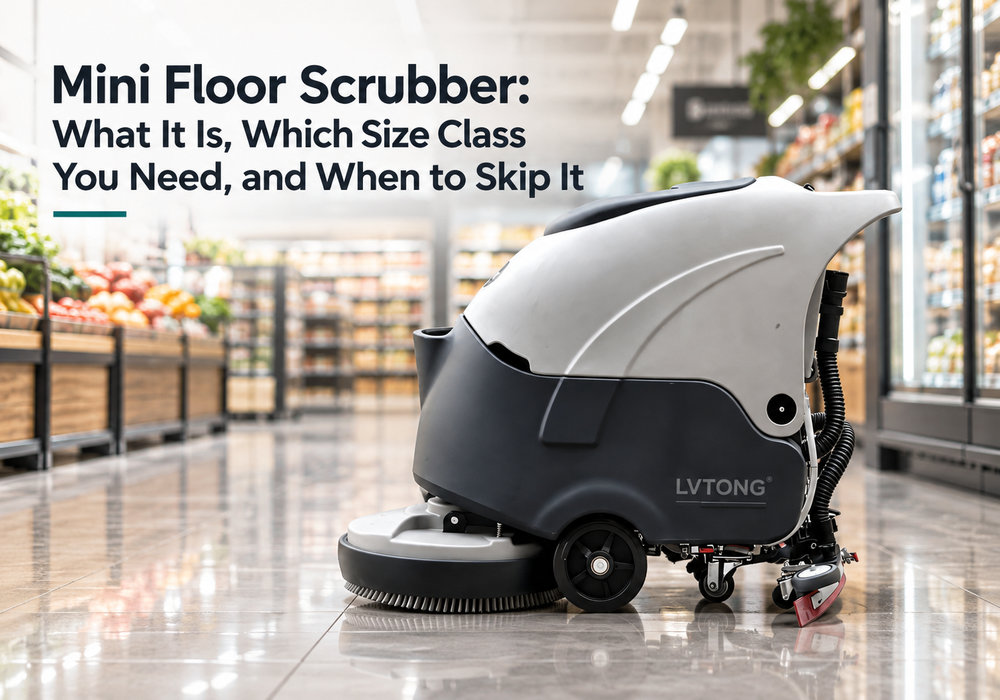
Für kompakte Gewerbeflächen, schmale Gänge, Restaurants, Schulen, kleine Supermärkte und leichte tägliche Reinigungsarbeiten können Käufer kompakte, handgeführte Modelle wie den Q5 in Betracht ziehen.
Für Fabriken, Werkstätten, Lagerhallen, Krankenhäuser, Supermärkte und mittelgroße Gewerbebetriebe, die eine höhere Reinigungsleistung, ein größeres Tankvolumen und eine zuverlässige Wasserrückgewinnung benötigen, können Käufer Modelle wie die folgenden vergleichen: LT-S530X.
Bevor Sie ein Angebot anfordern, bereiten Sie bitte Ihre Reinigungsfläche, Gangbreite, Bodenmaterial, Verschmutzungsart, Reinigungshäufigkeit, erforderliche Akkulaufzeit und die bevorzugte Bürsten- oder Padkonfiguration vor.
Sie können auch LVTONG besuchen Kategorie der handgeführten Scheuersaugmaschinen um verfügbare Modelle, Spezifikationen und geeignete Anwendungsbereiche zu vergleichen.
Welche Informationen sollten Sie angeben, bevor Sie ein Angebot für eine Scheuersaugmaschine anfordern?
Um LVTONG die Empfehlung einer geeigneten Scheuersaugmaschine zu erleichtern, sollten Käufer praktische Reinigungsinformationen angeben, anstatt nur nach einem allgemeinen Preis zu fragen.
| Zu liefernde Informationen | Beispieldetails | Warum es hilft |
|---|---|---|
| Anlagentyp | Schule, Krankenhaus, Supermarkt, Restaurant, Lagerhalle, Werkstatt, Büro oder Logistikeinrichtung | Hilft dabei, die Maschine an die Reinigungsumgebung anzupassen. |
| Reinigbare Bodenfläche | Gesamtfläche, die pro Tag oder pro Schicht gereinigt wird | Hilft dabei, die Reinigungswegbreite, das Tankvolumen und die Akkulaufzeit abzuschätzen. |
| Schmalster Gang oder Türöffnung | Türbreite, Gangbreite, Korridorbreite oder Wendefläche | Hilft dabei, die Empfehlung einer zu großen Maschine zu vermeiden. |
| Bodenbelag | Beton, Epoxidharz, Fliesen, Vinyl, polierter Boden, Fugenmörtel oder beschichteter Boden | Hilft bei der Auswahl von Bürstentyp, Padtyp und Druckstufe |
| Hauptbodentyp | Staub, Fett, Reifenspuren, Lebensmittelreste, Fußabdrücke, alltäglicher Schmutz oder Industrieboden | Hilft dabei, Bürstendruck, Reinigungsmittelverbrauch und Wasserrückgewinnung optimal aufeinander abzustimmen. |
| Reinigungshäufigkeit | Gelegentliche, tägliche, mehrmals tägliche oder mehrschichtige Reinigung | Hilft bei der Beurteilung des Batterietyps und des Wartungsbedarfs |
| Verfügbare Reinigungszeit | Reinigung tagsüber, Reinigung nachts, kurzes Reinigungsfenster oder Reinigung außerhalb der Geschäftszeiten | Hilft bei der Festlegung von Geräuschpegel, Trocknungsgeschwindigkeit und Laufzeitanforderungen |
| Lager- und Ladebedingungen | Lagerraumgröße, Ladebereich, Belüftung und Stromversorgung | Hilft dabei, die Eignung von Akku und Ladegerät zu bestätigen |
| Anforderungen an den Bediener | Manuelle Führung, Pad-Unterstützung, Selbstantrieb oder geringere Ermüdung des Bedieners | Hilft dabei, den Maschinenbedienungsstil an die Arbeitsbelastung des Personals anzupassen. |
| Zielmarkt | Land, Spannungsanforderungen, Dokumentationsbedarf und Erwartungen an den Kundendienst | Hilft bei der Bestätigung von Konfigurations-, Liefer- und Supportanforderungen |
Durch die Bereitstellung dieser Informationen kann LVTONG eine handgeführte Scheuersaugmaschine empfehlen, die optimal zu den Gegebenheiten der Einrichtung, den Reinigungsaufgaben und dem Betriebsplan passt.
Sie können auch LVTONGs Bewertungen einsehen. Kategorie der handgeführten Scheuersaugmaschinen um verfügbare Modelle, Spezifikationen und geeignete Anwendungsbereiche zu vergleichen.
Häufig gestellte Fragen zu Scheuersaugmaschinen
Welche ist die beste handgeführte Scheuersaugmaschine?
Die beste Scheuersaugmaschine ist das Modell, das zu Ihrer Betriebsgröße, Bodenart, Verschmutzungsgrad, Reinigungshäufigkeit, Akkulaufzeit, Tankkapazität, Bürstentyp und Ihren Anforderungen an die Wasserrückgewinnung passt. Für die meisten kleinen und mittelgroßen Gewerbeflächen ist ein kompaktes Modell mit starker Saugkraft, einfacher Manövrierbarkeit und geeignetem Bürstendruck eine praktische Wahl.
Wie wähle ich die beste Scheuersaugmaschine aus?
Vergleichen Sie Reinigungsbreite, Tankgröße, Akkulaufzeit, Bürstentyp, Anpressdruck, Abstreiferleistung, Wartungszugänglichkeit und Kundendienst. Die richtige Maschine sollte zu Ihren Gängen, Türen, Lagerflächen und Ihrem täglichen Reinigungsplan passen.
Welche Größe sollte meine handgeführte Scheuersaugmaschine haben?
Kleine Räume benötigen in der Regel kompakte Maschinen mit schmalen Reinigungswegen. Mittelgroße Gewerbeflächen erfordern unter Umständen einen breiteren Reinigungsweg und größere Tanks. Die Maschine sollte breit genug sein, um die Produktivität zu steigern, aber dennoch schmal genug, um durch Türen, Gänge und enge Bereiche zu passen.
Sind handgeführte Scheuersaugmaschinen für Lagerhallen geeignet?
Ja. Mitfahrende Scheuersaugmaschinen eignen sich gut für kleine und mittlere Lagerhallen, insbesondere dort, wo die Mitarbeiter um Regale, Paletten, Maschinen, Türen und Ladebereiche herum reinigen müssen. Für sehr große, offene Lagerhallen kann eine Aufsitz-Scheuersaugmaschine effizienter sein.
Worin besteht der Unterschied zwischen einer handgeführten Scheuersaugmaschine und einer Aufsitz-Scheuersaugmaschine?
Eine handgeführte Scheuersaugmaschine wird von einer Person bedient, die hinter der Maschine hergeht und eignet sich daher besser für enge Bereiche und flexible Routen. Eine Aufsitz-Scheuersaugmaschine ermöglicht es dem Bediener, auf der Maschine zu sitzen und ist in der Regel besser für große, offene Flächen und lange Reinigungsschichten geeignet.
Welche Bodenarten kann eine Scheuersaugmaschine reinigen?
Mit der richtigen Bürste oder dem passenden Pad können handgeführte Scheuersaugmaschinen Beton, Epoxidharz, Fliesen, Fugen, Vinyl, polierten Beton und viele versiegelte Gewerbeböden reinigen. Empfindliche Böden erfordern möglicherweise weichere Pads und einen geringeren Anpressdruck.
Wie wichtig ist die Leistung des Abziehers?
Die Leistung eines Abziehers ist sehr wichtig, da sie bestimmt, wie viel Schmutzwasser nach dem Schrubben aufgenommen wird. Ein guter Abzieher trägt dazu bei, nasse Streifen, Rutschgefahr und Trocknungszeiten zu reduzieren.
Ist eine Scheuersaugmaschine besser als manuelles Wischen?
Für die meisten Gewerbebetriebe ja. Eine handgeführte Scheuersaugmaschine kann in einem Arbeitsgang schrubben, das Schmutzwasser auffangen und den Boden trocknen. Dies trägt zur Steigerung der Reinigungseffizienz bei und reduziert gleichzeitig die Ermüdung des Bedieners und das Risiko nasser Böden.
Welcher Akku eignet sich am besten für eine handgeführte Scheuersaugmaschine?
Lithiumbatterien werden aufgrund ihrer langen Betriebsdauer, der Möglichkeit zum schnellen Laden und des geringen Wartungsaufwands bevorzugt. AGM-Batterien bieten ein ausgewogenes Verhältnis zwischen Kosten und Wartungsaufwand, während Nassbatterien mit Blei-Säure-Technologie weiterhin für kostenbewusste Betriebe mit regelmäßigen Wartungsintervallen geeignet sind.
Kaufempfehlungen
Unterschiedliche Einrichtungen erfordern unterschiedliche handgeführte Scheuersaugmaschinen.
- Wählen Sie eine kompakte, handgeführte Scheuersaugmaschine, wenn Ihre Einrichtung über schmale Gänge, mehrere Räume oder begrenzten Lagerraum verfügt.
- Wählen Sie ein selbstfahrendes Modell, wenn die Bediener mehrere Stunden am Tag reinigen und eine geringere körperliche Anstrengung benötigen.
- Wählen Sie ein Lithium-Batteriemodell für den Mehrschichtbetrieb oder wenn schnelles Laden wichtig ist.
- Für strukturierte Böden, Fugen oder stark verschmutzte Flächen wählen Sie ein Modell mit zylindrischer Bürste.
- Für glatte Beton-, Epoxid-, Vinyl- und allgemeine tägliche Reinigungsarbeiten eignet sich ein Scheibenbürstenmodell.
Fazit: So wählen Sie die richtige Scheuersaugmaschine aus
Bei der Wahl der besten Scheuersaugmaschine geht es nicht darum, das größte oder teuerste Gerät auszuwählen. Die richtige Wahl hängt von der Größe Ihrer Einrichtung, der Bodenart, der Reinigungsroute, dem Tankvolumen, der Akkulaufzeit, dem Bürstensystem, dem Anpressdruck, der Leistung der Abstreifer, dem Wartungsaufwand und dem langfristigen Kundendienst ab.
Für enge Gänge, kleine Räume, Restaurants, Schulen, Supermärkte, Werkstätten und mittelgroße Gewerbeflächen bietet eine handgeführte Scheuersaugmaschine ein optimales Verhältnis von Reinigungsleistung und Wendigkeit. Für größere, offene Flächen mit langen Reinigungswegen können Käufer auch Aufsitz-Scheuersaugmaschinen in Betracht ziehen.
LVTONG bietet handgeführte Scheuersaugmaschinen für verschiedene Reinigungsbereiche, Bodenoberflächen und Betriebsanforderungen an. Kontaktieren Sie das LVTONG-Team für eine raumspezifische Empfehlung, die auf die Raumaufteilung Ihrer Einrichtung, die Reinigungshäufigkeit und den Zustand Ihres Bodens abgestimmt ist..