Floor scrubber parts keep cleaning machines running smoothly - these pieces handle daily use, repairs, plus upkeep. Knowing how they work helps avoid breakdowns, plan, or catch issues early, which means less idle time and better results on the job.
Here’s a clear look at key sections of a scrubber, highlights top replacement items such as the squeegee blade, shares a step-by-step care routine, along with quick fixes when things go wrong. Perfect for supervisors, service workers, or buyers who manage fleet performance and need reliable machine uptime.
What Exactly Are Floor Scrubber Parts & Why Do They Matter?
Floor scrubber components form the core of these tough machines, working together to apply solution, wipe surfaces, and also pull off dirty liquid. Parts that degrade - say, pads or squeegees - require regular replacement, while key elements like motors and tanks are made to endure.
The four primary component groups include:
- Solution delivery system
- Scrubbing mechanism
- Recovery system
- Power and control systems
Figuring out these pieces matters - especially when planning upkeep or buying new ones later. Every part affects how well the machine cleans and keeps running without issues. Not sure what kind of gear suits your needs? Knowing design differences helps, like checking our guide on Industrial Floor Scrubbers: How to Choose for Max 2025 Efficiency & Savings?
The Critical Role of Wear Items: Squeegees and Brushes
Which piece on a floor scrubber gets swapped out most often?
Squeegee blades, along with scrubbing pads, wear out fast since they touch floors while machines clean. Most places swap them every few months if used a lot. How long parts last depends on what they’re made of and how tough the job is. Rules from the industry help decide which materials work best under heavy use.
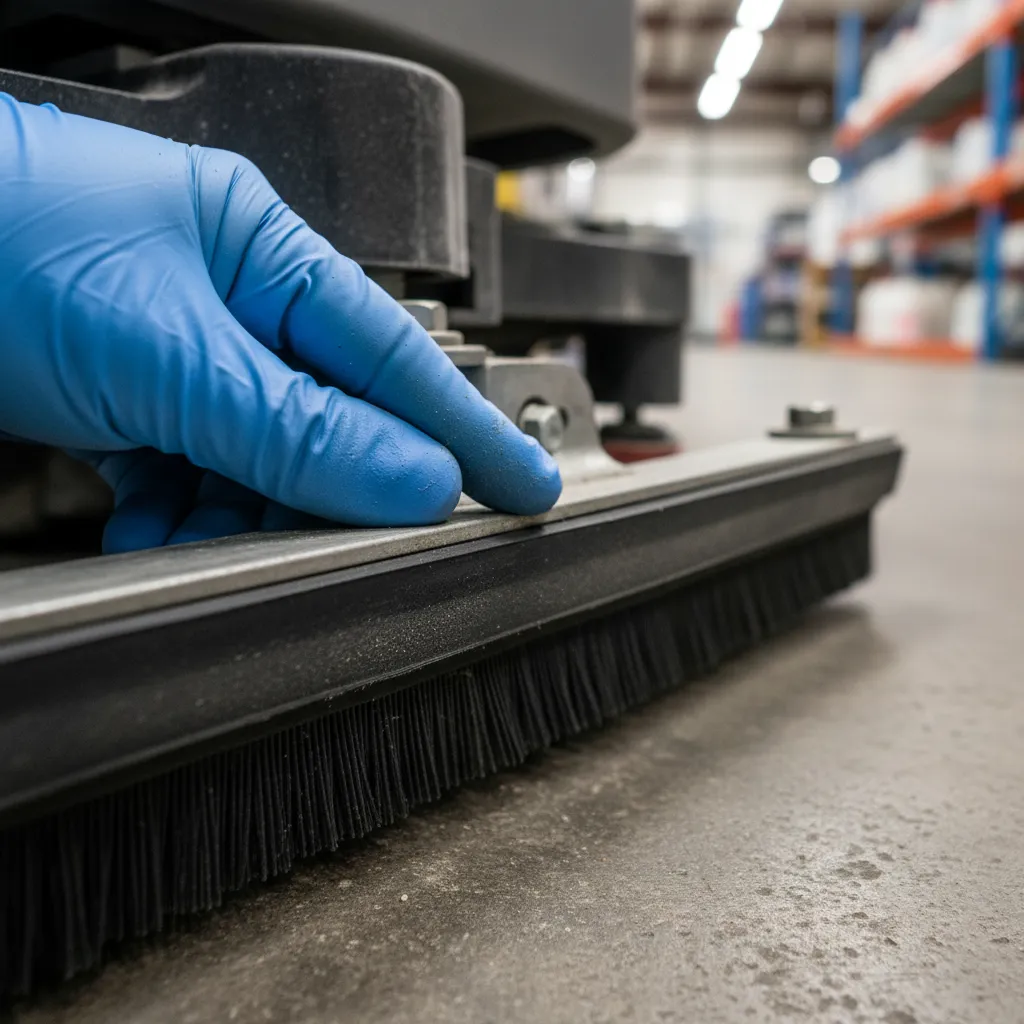
The items swapped out most often are these:
- Squeegee blades help pull water away - swap them out if they start leaving streaks or develop cracks
- Scrubber brushes or pads wear down with use. A new brush has long, uniform bristles. As a rule of thumb, when the bristles have worn down to less than 1.5 cm (about half an inch), the brush loses its effectiveness and should be replaced. Uneven wear also indicates a problem with brush pressure or deck leveling.
- Vacuum motor filters need swapping out once they look clogged - or if the suction feels way weaker than usual
Brush and pad options include:
- Soft brushes for delicate surfaces
- Medium brushes for general cleaning
- Stiff brushes for heavy soiling
- Polishing pads for finish maintenance
- Stripping pads for coating removal
Understanding Key Scrubber Components: Tanks, Batteries, and Motors
What’s the usual lifespan of a floor scrubber battery before swapping it out?

The life of a floor scrubber’s battery relies mostly on what type it is, along with how often you use it. When cared for properly, one might handle between 1,200 and 1,500 recharges - roughly equaling three to five years if used every day.
- Lead-Acids like AGM or Gel types usually last 500 to 1,000 rounds. Charging matters - a sloppy routine weakens them fast. Missing full recharges cuts life short.
- Lithium-ion (Li-ion): While more expensive upfront, Li-ion batteries can exceed 2,000-3,000 cycles, support opportunity charging (charging during short breaks without damaging the battery), and are often governed by standards like UL 2271 (Standard for Batteries for Use In Light Electric Vehicle Applications) for safety and performance.
Check battery ends now and then - stick to proper charging steps if you want them to last longer. Battery lifespan’s usually rated using rules made for heavy-duty mobile gear. Big places running large automatic equipment need to know their power needs well - look at our details about ride-on floor scrubbers, since those run on bigger batteries.
For example, for robust performance, consider LVTONG's LT-860X ride-on scrubber, which features durable lithium batteries for extended cycles and minimal downtime.
The wiring on walk-behind or ride-on scrubbers needs to meet strict safety rules - this keeps shocks and sparks from happening. In North America, check that parts or whole units have been approved by an NRTL - those labs know what they're doing. You'll usually see these labels popping up:
- UL (Underwriters Laboratories): Key standards include UL 583 for "Electric-Battery-Powered Industrial Trucks" and UL 1017 for "Vacuum Cleaners, Blower Cleaners, and Household Floor Finishing Machines."
- ETL (Intertek) or CSA (CSA Group): These organizations test to the same UL standards and are equally recognized.
When talking about how well cleaning works, ISSA usually sets what’s seen as standard practice across the field. Referring to their guidelines gives your point more weight.
Key Component Specifications: Walk-Behind vs. Ride-On Models
Specifications vary significantly between machine types. Here’s a typical comparison:
| Component | Typical Spec (Walk-Behind) | Typical Spec (Ride-On) | Key Peformance Indicator (KPI) |
|---|---|---|---|
| Solution/Recovery Tanks | 40-80 Liters | 100-200+ Liters | Capacity (Liters): Determines refill/empty frequency. |
| Vacuum Motor | 0.5 HP ( 370W) @ 24V | 0.75-1.0 HP ( 560−750W) @ 36V | Water Lift (inches) / Airflow (CFM): Stronger suction. |
| Brush Motors | 1 x 0.75 HP ( 560W) | 2 x 1.0-1.5 HP ( 750−1120W) | Brush RPM & Down Pressure (lbs): Scrubbing aggression. |
| Batteries | 24V System (e.g., 2x12V) | 36V System (e.g., 6x6V) | Amp-Hours (Ah): Defines runtime per charge. |
Note: These values are industry averages. Always consult your specific model's technical manual.
For example, LVTONG's LT-S560X walk-behind model features a 24V system with 200Ah batteries, offering up to 5 hours of runtime—ideal for mid-sized warehouses.
A Preventive Guide to Floor Scrubber Maintenance
Regular care helps avoid sudden breakdowns while making machines last longer. Sticking to maker’s rules - which usually match common industry habits - keeps motors running smoothly over time. Trade organizations often share tips on how to maintain rugged cleaning gear, so it works well. If your space has narrow paths and needs compact tools, check service plans made for small walk-behind units instead.
| Frequency | Tasks | Components |
|---|---|---|
| Daily | Visual inspection | Squeegees, brushes, solution levels |
| Weekly | Deep cleaning | Tanks, filters, battery terminals |
| Monthly | System check | Motors, belts, electrical connections |
| Quarterly | Comprehensive service | All mechanical systems |
Identifying and Repairing Common Failures
1. Water Streaking
- Problem: Water or grime drips behind the unit.
- Diagnosis & Solution: Inspect how worn the squeegee blade.
- Check the squeegee: when down, the ends ought to curve a bit outward. Tweak the tilt and height dials till it’s right. Make sure the back edge presses flat and steady on the surface.
- Inspect the Vacuum System: Need this stuff: a screwdriver - also, grab some gloves to stay safe.
- Make sure the vacuum tube’s tightly attached to the cleaning head - also check the waste bin cover’s closed tight. Often, gunk blocks the tube opening on the lid; just clean out whatever’s stuck there.
2. Poor Scrubbing Performance
Check how hard the brush pushes: Lots of units let you change this - like 50, 100, or 150 pounds. When doing regular floor upkeep on sealed tiles, go with just 50 pounds - it works fine, plus it makes the brush last longer. But if you're scrubbing off old wax or tackling grimy concrete, bump it up to 150 pounds. Begin low unless more force is clearly necessary.
Problem: Floors still look grimy even after cleaning.
Diagnosis & Solution:
Look at brush wear: inspect bristles - swap them out when shorter than 1.5 cm.
Original Insight: Beyond Part Cost - Calculating the Total Cost of Downtime
When a floor scrubber fails, the cost extends far beyond the replacement part. Understanding this "Total Cost of Downtime" justifies investment in quality parts and preventive maintenance.
Consider this scenario:
- Labor Rate: $20/hour
- Scrubber Cleaning Rate: 25,000 sq. ft./hour
- A critical $100 vacuum motor fails. The replacement part takes 4 hours to arrive and install.
The calculation:
Downtime Cost=(Labor Rate×Downtime Hours)+Lost Productivity Cost+Part Cost
Downtime Cost=($20×4 hours)+(Uncleaned Area Impact)+$100
The immediate cost is $180, not including the safety risks of an uncleaned floor or the cost of diverting other staff to manual cleaning. A single failure can easily cost 2-3 times the price of the part itself. This is why a small inventory of critical wear items (squeegees, brushes, filters) is a smart investment, not an expense.
Choosing the Right Replacement Parts for Optimal Performance
OEM vs. Aftermarket Parts: A Risk-Benefit Analysis
Though OEM and good-quality replacement pieces work fine, pick carefully based on your needs. Instead of rushing, weigh what matters most - durability or savings. For some, brand-new factory bits make sense; others find solid third-party versions do just as well. It’s less about which is better overall - and more about timing, use, and budget.
- When it comes to key pieces - think motors, controllers, or battery chargers - it’s best to stick with original manufacturer parts. These match exactly how they should in size, shape, and performance, so everything works smoothly with the system's electronics and code. What matters more? Official electrical bits pass strict safety checks - like UL 583 - which helps avoid accidents or legal trouble down the line. Swapping in an unapproved component might cancel out your warranty, plus put your insurance at risk.
- With wear items - think squeegees, brushes, or filters - well-made aftermarket pieces might save you money while still working just fine. Still, check if the seller lists clear details like what kind of bristles the brush uses or how firm the squeegee is meant to handle your job.
Partner with LVTONG for Lasting Reliability
Knowing what makes up a floor scrubber, plus how to care for it, helps machines last longer while keeping cleaning steady. Ready to maximize your cleaning efficiency and minimize downtime?
Need a specific part or expert advice? Contact the LVTONG service team today. Our experts can help you select the exact component for your needs.`
Explore our full range of industrial floor scrubbers to find a machine built for reliability.