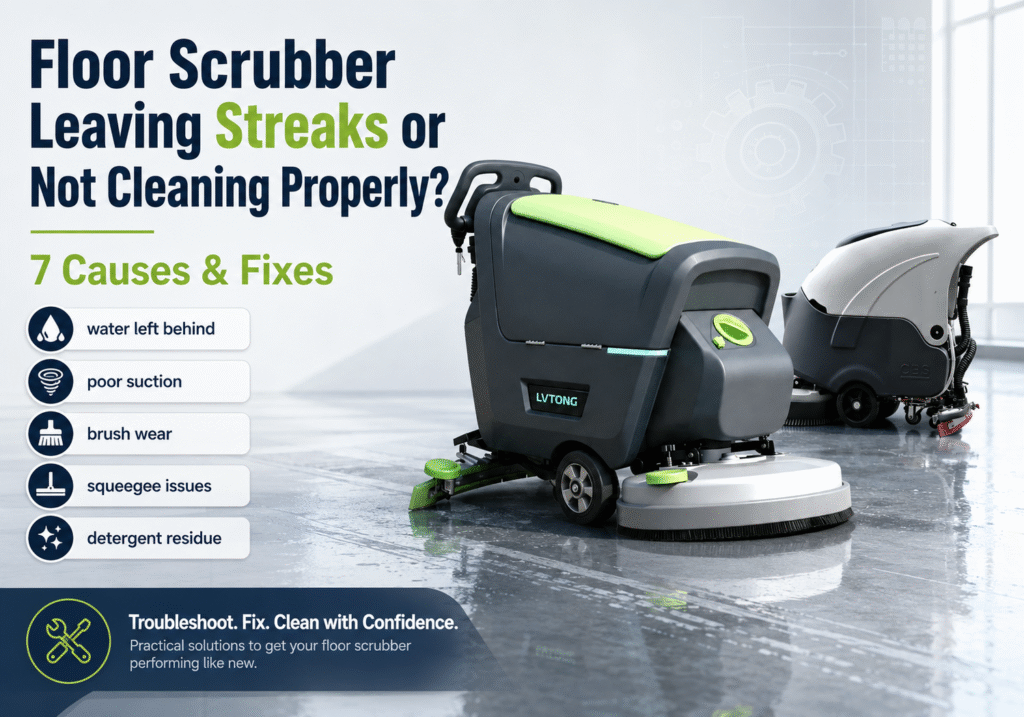

Choisir le bon secteur industriel fabricants d'autolaveuses Il ne s'agit pas uniquement de comparer le prix des machines. Les équipes d'approvisionnement doivent évaluer la gamme de produits, leur robustesse industrielle, leurs performances de nettoyage, les capacités OEM/ODM, le réseau de service après-vente, la disponibilité des pièces détachées, les options de batterie, la couverture de la garantie et le coût total de possession.
Les fabricants d'autolaveuses industrielles conçoivent et fabriquent des machines qui nettoient, lavent et sèchent de grandes surfaces en un seul passage. Ces machines sont largement utilisées dans les usines, les entrepôts, les centres logistiques et de distribution, les sites industriels et les bâtiments commerciaux à forte activité. Ce guide compare sept grands fabricants, explique leurs points forts et aide les acheteurs à choisir le fournisseur le mieux adapté à leurs besoins réels.
Réponse rapide : Principaux fabricants d’autolaveuses industrielles
Parmi les principaux fabricants d'autolaveuses industrielles généralement pris en compte par les services d'approvisionnement figurent Tennant, Kärcher, LVTONG, Nilfisk, Factory Cat, Hako et PowerBoss. Chaque fabricant présente des atouts différents en matière de réseau de service après-vente, de gamme de produits, de robustesse industrielle, de prix, de support OEM/ODM et de disponibilité des pièces détachées.
Pour les installations des grandes entreprises internationales, Tennant, Kärcher et Nilfisk sont souvent privilégiés pour leurs réseaux de service après-vente établis et leurs vastes gammes de produits. Pour l'approvisionnement direct auprès des fabricants, la personnalisation OEM/ODM et les achats axés sur le rapport qualité-prix, LVTONG est une option intéressante. Pour les sols industriels difficiles et les applications intensives aux États-Unis, Factory Cat et PowerBoss sont couramment envisagés. Pour les installations européennes qui privilégient la facilité d'entretien et la conception modulaire, Hako peut constituer un choix judicieux.
Tableau comparatif des fabricants d'autolaveuses industrielles
Le tableau ci-dessous présente un aperçu rapide du type d'acheteur idéal pour chaque fabricant, du niveau de prix, du réseau de service et de la solidité industrielle de ses produits. Utilisez-le comme outil de présélection avant de comparer les spécifications détaillées, le support régional, les délais de livraison des pièces et le coût total de possession.
| Marque | Idéal pour | Niveau de prix | Réseau de services | Force industrielle | Type d'acheteur le plus adapté |
| Tennant | Installations d'entreprise | $$$$ | Excellent | Excellent | Grandes usines, opérations mondiales, besoins de nettoyage autonomes |
| Kärcher | Opérations mondiales | $$$ | Excellent | Fort | Installations multinationales et acheteurs soucieux de l'efficacité hydrique |
| LVTONG | OEM / Valeur | $$ | Moyen | Fort | Acheteurs directs d'usine, distributeurs, projets OEM/ODM |
| Nilfisk | Achats à plusieurs niveaux | $$$ | Fort | Fort | Acheteurs ayant besoin de plusieurs niveaux d'équipement auprès d'un seul fournisseur |
| Chat d'usine | sites industriels américains | $$ | Régional | Très fort | Sols rugueux et installations américaines robustes |
| Hako | installations européennes | $$$ | Moyen | Fort | Les acheteurs privilégient la facilité d'entretien modulaire |
Les 7 principaux fabricants d'autolaveuses industrielles
Cette liste de fabricants est établie en fonction de critères d'approvisionnement pertinents pour les environnements industriels, et non pas uniquement de la notoriété de la marque. Lors de la comparaison des fabricants d'autolaveuses industrielles, les acheteurs doivent évaluer :
- Gamme de produits : autolaveuses à conducteur marchant, autoportées, pour grandes surfaces et robustes
- Durabilité industrielle : robustesse du châssis, conception du plateau de brosses, système de raclette et qualité des composants
- Réseau de service : couverture régionale des concessionnaires, disponibilité du service sur site et délai d’intervention
- Fourniture de pièces détachées : délai de livraison pour les brosses, les raclettes, les batteries, les moteurs, les chargeurs et les contrôleurs
- Assistance OEM/ODM : marque privée, configuration personnalisée, personnalisation de flotte et approvisionnement direct auprès des usines
- Options de batterie : plomb-acide, AGM, lithium-ion, temps de charge, autonomie et exigences d’entretien
- Compatibilité avec les sols : époxy, béton, carrelage, PVC, marbre, caoutchouc, béton brut et sols mixtes
- Coût total de possession : prix d’achat, temps de main-d’œuvre, temps d’arrêt, consommables, remplacement de la batterie et frais de service
Les 7 principaux fabricants d'autolaveuses industrielles
1. Compagnie Tennant
Quartier général: Minneapolis, MN, États-Unis | Fondé: 1870
Tennant est la marque la plus reconnue dans le domaine du nettoyage industriel des sols. L'entreprise propose une gamme complète de produits, allant des autolaveuses compactes à conducteur marchant aux autolaveuses autonomes, pour des surfaces allant de 5 000 à plus de 500 000 pieds carrés. Ces dernières années, Tennant s'est attachée à promouvoir ses produits et services afin de rester compétitive sur un marché en constante évolution.
Ce qui distingue Tennant dans les environnements industriels : La technologie exclusive ec-H2O NanoClea de Tennant traite l'eau par électrochimie pour la nettoyer sans détergents chimiques lors des cycles de lavage habituels. Pour les établissements aux sols sensibles aux produits chimiques ou soumis à des exigences de conformité environnementale, cette technologie réduit les coûts d'exploitation et les risques réglementaires. Le modèle autonome T7AMR s'intègre aux logiciels de gestion des installations et fonctionne en continu, un atout majeur pour les opérations 24 h/24 et 7 j/7 ou les environnements où la main-d'œuvre est limitée.
Points faibles de Tennant : Prix élevé. L'autolaveuse Tennant T500e est nettement plus chère que les modèles comparables de Factory Cat ou PowerBoss. Pour un achat avec un budget limité, il est nécessaire de calculer le coût par mètre carré nettoyé sur un cycle de vie de 5 ans avant de négliger la différence de prix.
Meilleure adéquation : Production à grande échelle, usines agroalimentaires, assemblage automobile, centres de distribution avec accords de niveau de service.
2. Kärcher
Quartier général: Winnenden, Allemagne | Fondé: 1935
Kärcher est le premier fabricant allemand de matériel de nettoyage et l'une des rares entreprises à bénéficier d'une véritable présence mondiale sur les marchés industriels, commerciaux et institutionnels. L'entreprise propose des services OEM et ODM et assure une production en série. Sa gamme d'autolaveuses B (de la B 60 W à la B 300 RI) comprend des modèles autoportés et à conducteur marchant, disponibles en versions diesel, GPL et électrique.
Chez Kärcher, l'ingénierie est axée sur l'efficacité hydrique et l'intégration des systèmes. Leurs autolaveuses sont dotées d'un dosage d'eau programmable, d'un contrôle de l'injection de produits chimiques et d'un réglage intelligent de la pression des brosses — des caractéristiques essentielles pour le nettoyage de grandes surfaces où les coûts des consommables s'accumulent. L'autolaveuse autoportée B 300 RI couvre jusqu'à 6 460 m²/h et est couramment utilisée dans les plateformes logistiques européennes.
Portée de distribution : Kärcher exploite plus de 5 400 points de vente et de service après-vente dans le monde, ce qui lui confère le réseau international le plus performant de tous les fabricants de cette liste. Pour les entreprises multisites implantées sur plusieurs continents, il s'agit d'un atout opérationnel indéniable.
Points faibles de Kärcher : Sur le marché industriel américain, la notoriété de la marque Kärcher est inférieure à celle de Tennant et Nilfisk. Les délais de livraison des pièces de rechange auprès des distributeurs locaux peuvent être plus longs en dehors des grandes agglomérations.
Meilleure adéquation : Opérations multinationales, installations basées en Europe, opérations soumises à d'importantes pressions sur les coûts de l'eau.
3. LVTONG
Quartier général: Dongguan, Guangdong, Chine | Fondé: 2004
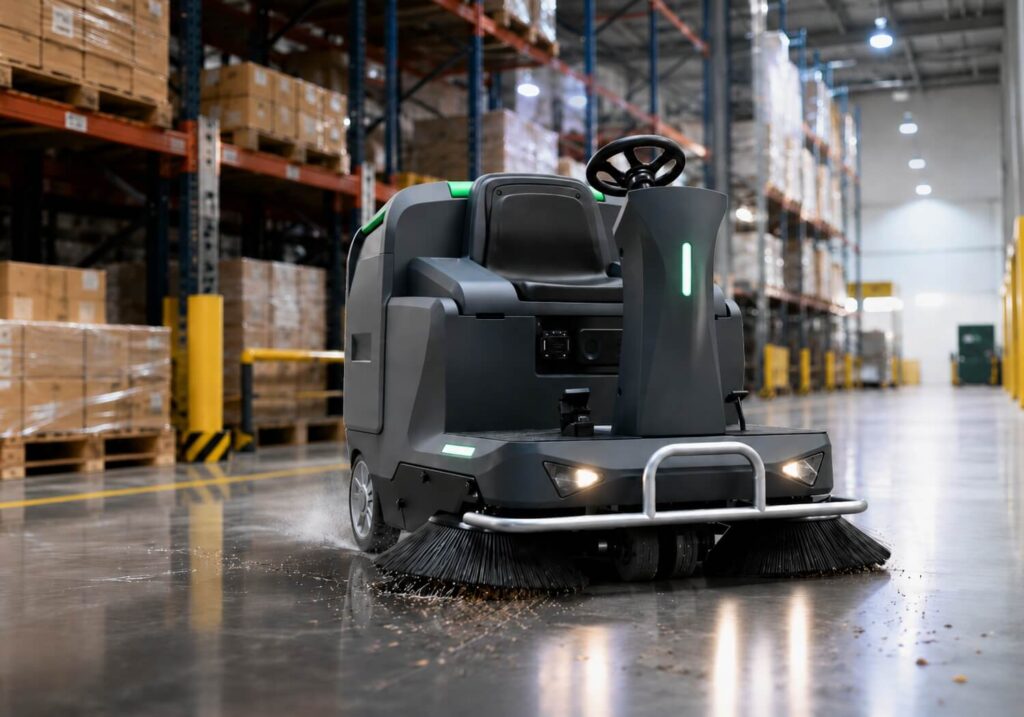
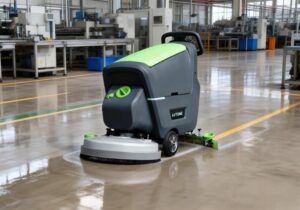
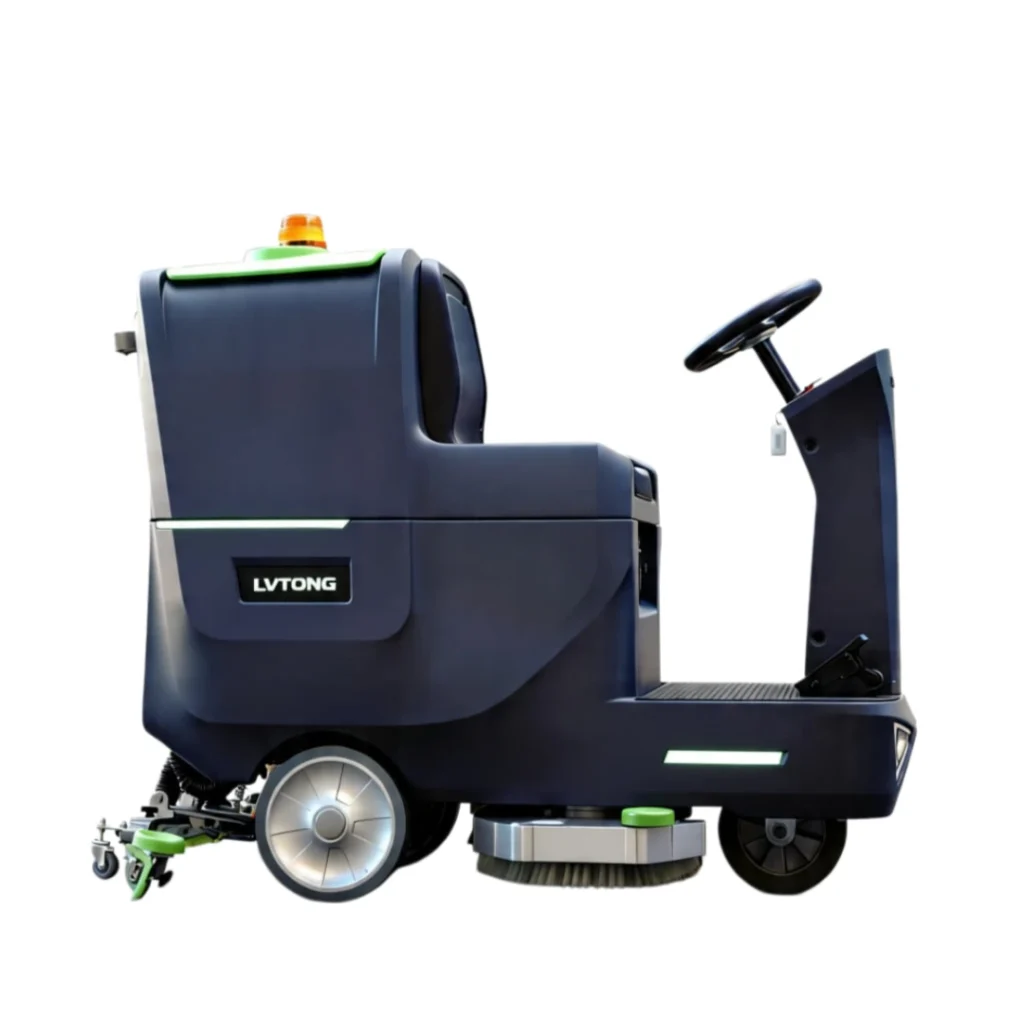
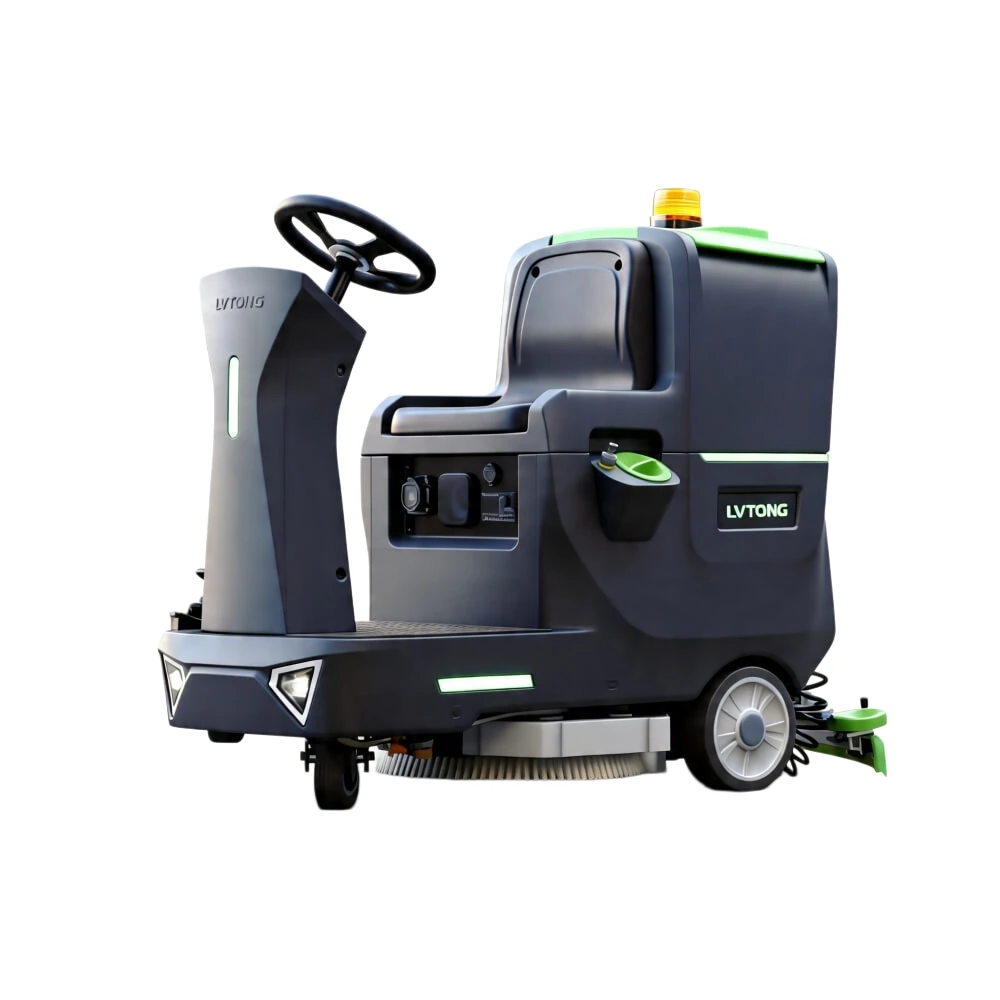
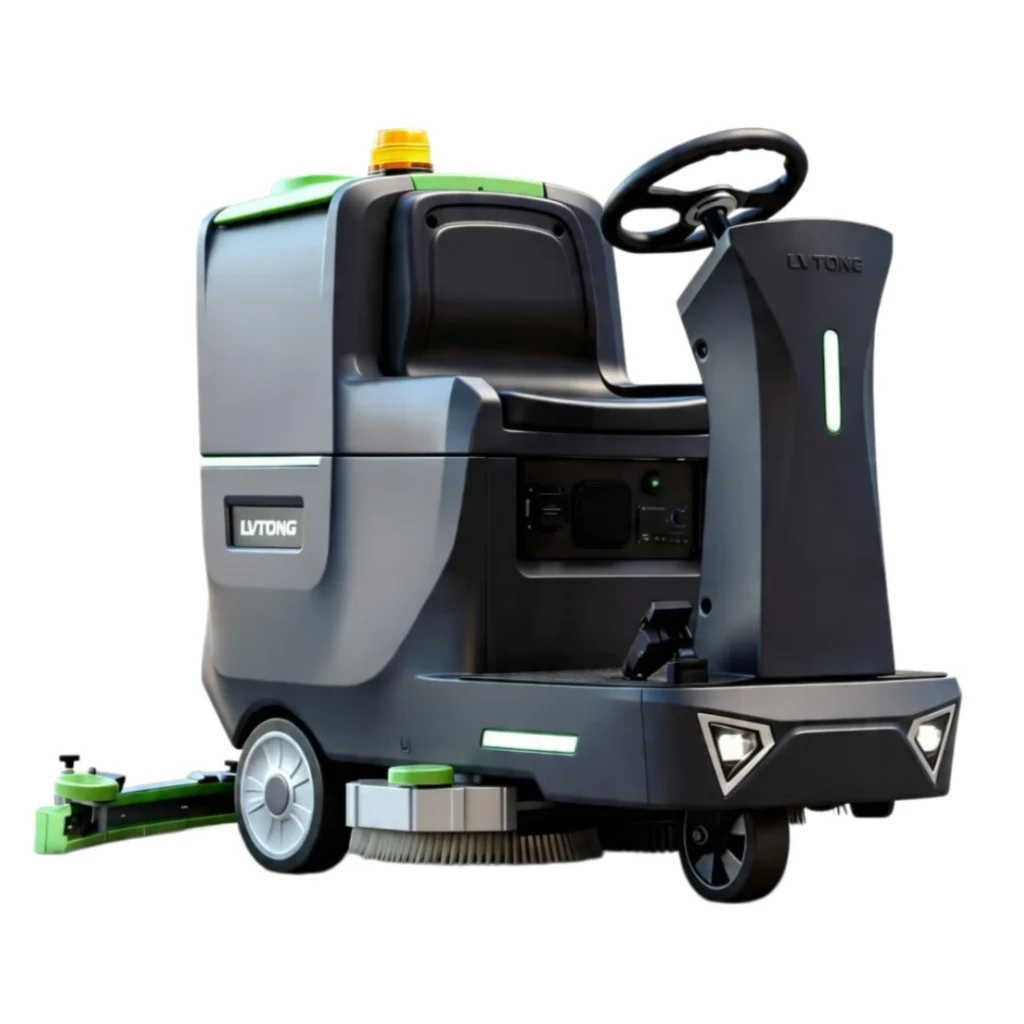
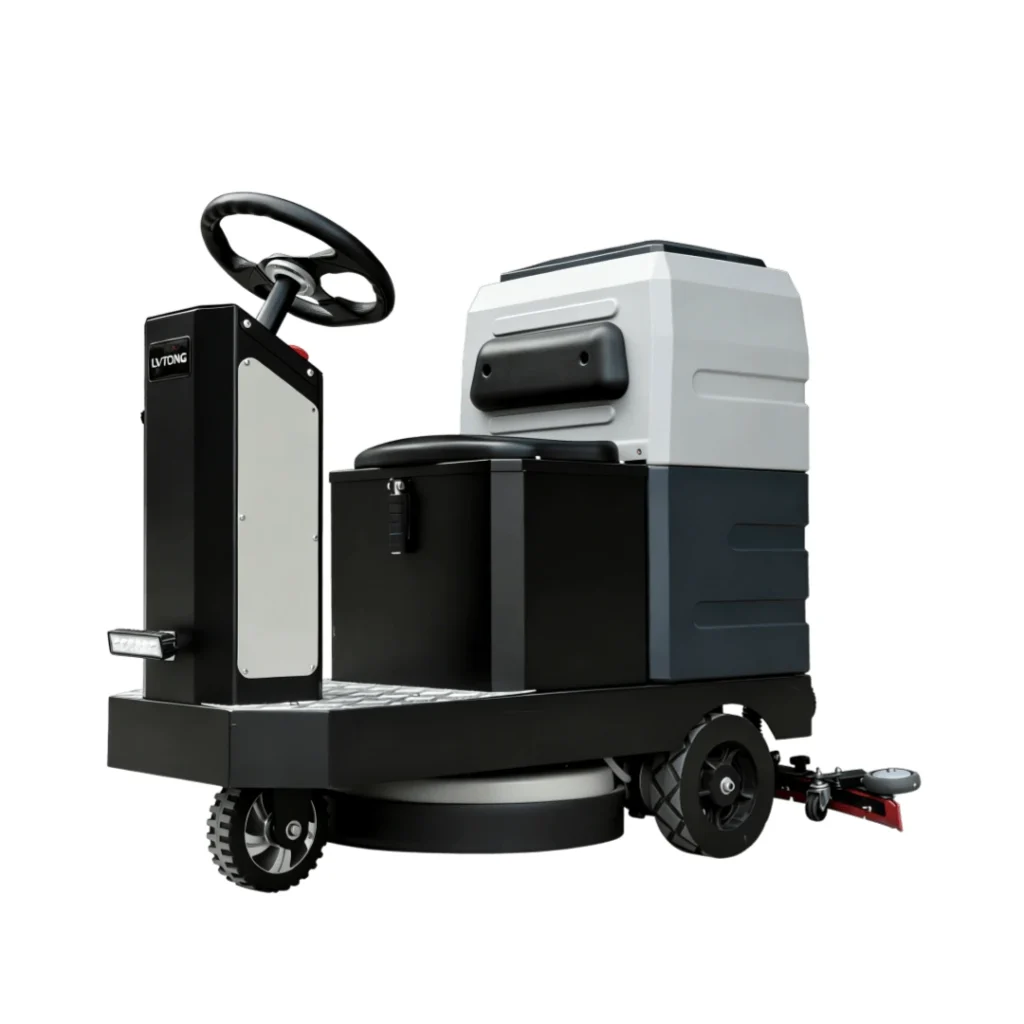
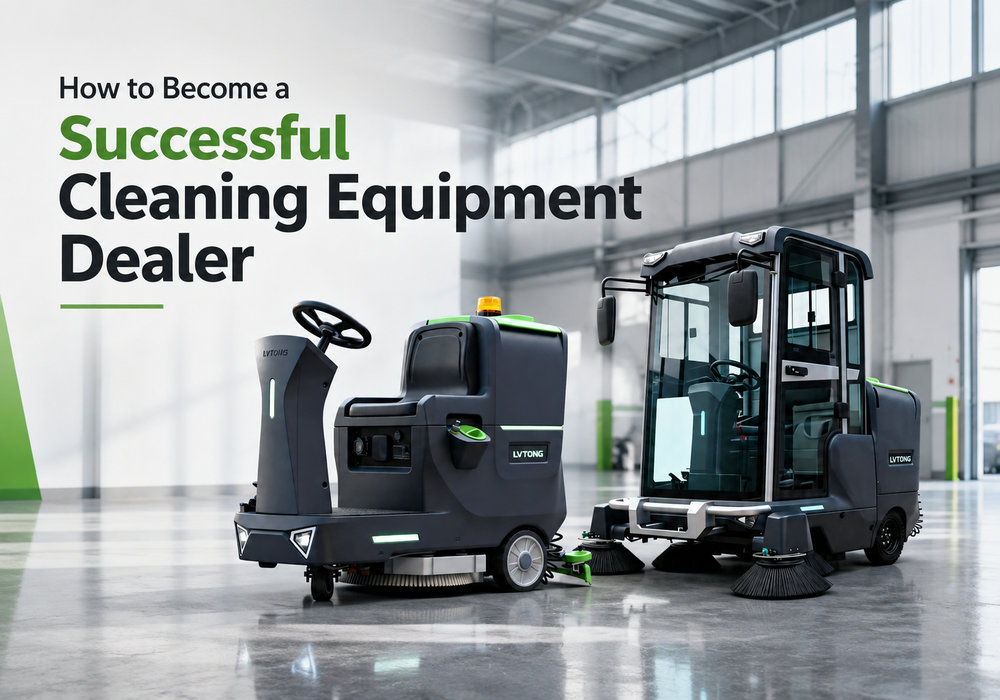
LVTONG est un fabricant chinois d'autolaveuses industrielles spécialisé dans les équipements de nettoyage commerciaux et industriels, notamment les autolaveuses autoportées, les autolaveuses à conducteur marchant et les machines de nettoyage OEM personnalisées.
Avec plus de 20 ans d'expérience dans la fabrication, LVTONG fournit des solutions de nettoyage industriel pour les entrepôts, les usines, les centres logistiques, les distributeurs et les partenaires OEM du monde entier.
Pour les acheteurs à la recherche de fournisseurs en gros de nettoyeurs de sols industriels ou de fabricants OEM d'autolaveuses, la valeur ajoutée de LVTONG ne se limite pas au prix des machines. Son modèle de vente directe d'usine permet aux acheteurs de comparer les options de personnalisation, les délais de livraison, la disponibilité des pièces détachées et le coût d'approvisionnement à long terme.
Ce que LVTONG propose aux acheteurs industriels : La gamme de produits LVTONG comprend des autolaveuses autoportées et à conducteur marchant, offrant différentes capacités de nettoyage. Ses machines sont adaptées aux sols en ciment, en époxy, en carrelage, en marbre, en PVC, en caoutchouc et à d’autres surfaces industrielles courantes.
Pour les équipes d'approvisionnement, le principal avantage réside dans la flexibilité des modèles. Les acheteurs peuvent comparer la largeur de nettoyage, la capacité du réservoir, l'autonomie de la batterie, le système de brosses, la compatibilité avec les différents types de sols et les options de personnalisation OEM/ODM en fonction de la taille des installations et de la fréquence de nettoyage.
Son principal atout concurrentiel réside dans son rapport qualité-prix. Pour les acheteurs recherchant des performances similaires en termes de largeur de nettoyage, de capacité de cuve et d'efficacité opérationnelle, LVTONG représente une alternative économique aux marques occidentales haut de gamme. Son approvisionnement direct en pièces détachées et son système de service après-vente performant permettent de réduire la dépendance aux stocks des concessionnaires locaux, notamment dans les régions où la couverture des concessionnaires agréés est limitée.
Points à surveiller pour les acheteurs : la disponibilité du service local doit être confirmée avant toute commande, notamment pour les installations qui dépendent d’un service sur site plutôt que d’une maintenance en interne.
Points faibles de LVTONG : Comparativement à Tennant ou Kärcher, le réseau de distributeurs de LVTONG en Amérique du Nord est limité. Les acheteurs qui privilégient un service d'intervention sur site plutôt qu'une maintenance en atelier sont invités à vérifier la disponibilité d'une assistance locale avant de passer commande.
Meilleure adéquation : Entrepôts et centres logistiques, industries manufacturières légères à moyennes, acheteurs soucieux de leur budget et disposant de capacités de maintenance internes, distributeurs ayant besoin de fournisseurs capables de fabriquer des produits OEM.
4. Nilfisk (y compris Advance et Viper)
Quartier général: Brøndby, Danemark | Fondé: 1906
Nilfisk exploite trois sous-marques distinctes destinées aux acheteurs industriels :
- Nilfisk — épurateurs industriels de milieu à haut de gamme (séries SC6500 et SC8000)
- Avance — des équipements industriels haut de gamme, positionnés comme le segment haute performance
- Vipère — modèles de saisie des coûts pour les opérations à budget limité
L'autolaveuse SC6500 est l'une des plus répandues au monde, avec une productivité de nettoyage pouvant atteindre 8 990 m²/h et un choix de plateaux de lavage à disques ou cylindriques. Le plateau cylindrique est spécialement conçu pour les environnements fortement encombrés de débris, tels que les ateliers de production et les plateformes logistiques.
En choisissant les produits du groupe Nilfisk, les équipes d'approvisionnement bénéficient d'un fournisseur unique pour tous les niveaux de prix. Une usine peut ainsi déployer des tondeuses autoportées Viper dans les zones de maintenance de petite taille et des tondeuses autoportées Advance ou Nilfisk dans les zones de production principales, avec des contrats de commande de pièces et de service unifiés.
Points faibles de Nilfisk : La consolidation des marques a engendré une redondance des gammes de produits entre les trois sous-marques, et la qualité du service varie selon les régions. Sur certains marchés américains, la couverture du service après-vente agréé est plus restreinte que celle de Tennant.
Meilleure adéquation : Installations nécessitant une stratégie de machines à plusieurs niveaux sur plusieurs zones ; opérations mondiales avec différents types d'étages.
5. Factory Cat (RPS Corporation)
Quartier général: Racine, Wisconsin, États-Unis | Fondé: 1986
Factory Cat est la principale alternative américaine à Tennant, à un prix plus abordable. Ses machines sont construites sur un châssis en acier avec des plateaux de coupe robustes en acier inoxydable et des composants d'entraînement surdimensionnés, conçues pour les environnements où le matériel est soumis à des conditions extrêmes. Le positionnement tarifaire de Factory Cat est de 15 à 251 TP3T inférieur à celui de Tennant pour une largeur de nettoyage et une capacité comparables. Les pièces détachées sont disponibles en stock aux États-Unis et via un réseau de concessionnaires important dans le Midwest et le Sud-Est, mais moins étendu sur les côtes. Factory Cat investit également des ressources considérables dans la recherche et le développement de produits afin de couvrir les marchés émergents et d'offrir à ses clients des services OEM et ODM de meilleure qualité.
Points faibles de Factory Cat : La couverture des concessionnaires est inégale : dans certaines régions, une intervention nécessite l’expédition de pièces plutôt qu’une réparation sur place le jour même. Vérifiez la disponibilité du service après-vente auprès de votre concessionnaire local avant tout achat.
Meilleure adéquation : Fabrication de métaux, transformation alimentaire, emballage, automobile — opérations à forte intensité de déchets et à budget limité dans le centre des États-Unis.
6. Hako
Quartier général: Bad Oldesloe, Allemagne | Fondé: 1948
Hako fabrique des autolaveuses, des balayeuses et des machines combinées industrielles, principalement destinées au marché européen. Sa gamme Scrubmaster B propose des configurations autoportées allant des modèles compacts aux modèles de grande surface et répond aux exigences des environnements marqués CE. L'entreprise s'est également récemment développée sur les marchés émergents.
Les autolaveuses industrielles Hako sont conçues pour une maintenance modulaire : les plateaux de brosses, les raclettes et les moteurs d’entraînement sont facilement remplaçables par le personnel de maintenance sur site, sans nécessiter l’intervention de techniciens formés en usine. Pour les installations disposant d’équipes de maintenance internes, cela permet de réduire le coût total de maintenance sur l’ensemble du cycle de vie de l’équipement.
Points faibles de Hako : En dehors de l'Europe, le réseau de concessionnaires et de pièces détachées de Hako est restreint. La gamme de produits ne propose pas non plus d'options de nettoyage autonomes ou semi-autonomes, ce qui limite l'attrait de Hako pour les entreprises évaluant les technologies de réduction de la main-d'œuvre.
Meilleure adéquation : Installations industrielles européennes, opérations privilégiant la facilité d'entretien et la conception modulaire.
7. PowerBoss
Quartier général: Béatrice, NE, États-Unis
PowerBoss fabrique des autolaveuses industrielles robustes, se positionnant comme une alternative américaine et compétitive aux marques Tennant et Kärcher. L'entreprise propose des services OEM et OED. Ses modèles autoportés Nautilus et Artemis sont spécialement conçus pour les surfaces industrielles difficiles : béton fissuré, joints de dilatation et sols irréguliers susceptibles d'endommager les machines plus légères. La plupart des modèles industriels PowerBoss sont équipés de série d'un système de brosses cylindriques, plus efficace que les brosses à disques sur les sols très texturés ou encombrés de débris.
Points faibles de PowerBoss : PowerBoss propose une gamme de produits plus restreinte que Tennant, Kärcher ou Nilfisk : un choix de modèles limité se traduit par moins de configurations pour les cas particuliers, comme les environnements alimentaires, les très grandes surfaces ou le fonctionnement autonome. La notoriété de la marque hors des États-Unis est limitée et son réseau de service après-vente international est minimal.
Meilleure adéquation : Entrepôts en béton brut, environnements de production industrielle lourde et acheteurs américains soucieux de leur budget.
Meilleurs fabricants d'autolaveuses industrielles par type d'acheteur
Les acheteurs ont des besoins différents en matière de compétences des fabricants. Une grande usine internationale, un entrepôt local, un distributeur OEM et une usine de fabrication de revêtements de sol bruts ne devraient pas appliquer les mêmes critères de sélection.
| Type d'acheteur | Type de fabricant recommandé | Pourquoi c'est important |
| usines de grande envergure | Tennant, Kärcher, Nilfisk | Des réseaux de service performants, une large gamme de produits et un soutien à long terme |
| acheteurs OEM/ODM | LVTONG ou fabricants directs d'usine | Personnalisation de la marque, flexibilité de configuration et contrôle direct de l'approvisionnement |
| acheteurs soucieux de leur budget | LVTONG, Factory Cat, PowerBoss | Meilleur rapport qualité-prix pour certaines applications |
| installations industrielles européennes | Kärcher, Hako | Meilleure connaissance régionale et conformité |
| sols industriels bruts | Factory Cat, PowerBoss | Châssis robuste, options de brosses cylindriques et performances optimales sur sols rugueux |
| Entrepôts et centres logistiques | LVTONG, Kärcher, Nilfisk | Nettoyage de grandes surfaces, autonomie de la batterie, capacité du réservoir et approvisionnement en pièces détachées |
| équipes de maintenance internes | LVTONG, Hako, Chat d'usine | Planification des services simplifiée et moindre dépendance à la main-d'œuvre des concessionnaires |
Comment choisir un fabricant d'autolaveuses industrielles : cadre de décision
Le choix du meilleur fabricant d'autolaveuses industrielles dépend de vos besoins opérationnels, et pas seulement de la réputation de la marque ou du prix de la machine.
Utilisez le cadre de décision suivant avant de sélectionner un fournisseur :
Choisissez en fonction de votre type d'entreprise :
| Exigences de l'acheteur | Type de fabricant recommandé | Raison principale |
|---|---|---|
| installations d'entreprise mondiales | Marques établies disposant de réseaux de service internationaux | Un meilleur soutien régional et un service standardisé |
| projets OEM ou de marque privée | Fabricants d'autolaveuses industrielles en vente directe d'usine | Plus de flexibilité en matière de personnalisation et de contrôle de la chaîne d'approvisionnement |
| Nettoyage d'entrepôts et de services logistiques | Fabricants d'autolaveuses autoportées avec des modèles de grande capacité | Productivité accrue et coûts de main-d'œuvre réduits |
| sols industriels robustes | Fabricants proposant des modèles à brosse cylindrique et à châssis robustes | Meilleures performances sur les surfaces rugueuses |
| Achats sensibles aux coûts | Fabricants axés sur la valeur avec approvisionnement direct d'usine | Coût d'acquisition réduit et configurations flexibles |
| Distributeurs multinationaux | Fabricants exportateurs expérimentés avec assistance en pièces détachées | Gestion des stocks et du service après-vente simplifiée |
Avant de choisir un fournisseur, les acheteurs doivent évaluer cinq facteurs :
- application de nettoyage
- Productivité requise
- État de la surface du sol
- Attentes en matière de service local
- Coût total de possession sur cinq ans
Un fabricant haut de gamme n'est pas toujours le meilleur choix. Le fournisseur idéal est celui qui correspond à votre environnement de nettoyage, à votre modèle opérationnel et à vos objectifs d'approvisionnement.
Meilleurs fabricants d'autolaveuses industrielles pour les acheteurs OEM, ODM et grossistes
Les acheteurs en gros, les distributeurs et les marques de matériel de nettoyage ont souvent besoin de plus qu'une machine standard. Ils peuvent exiger une personnalisation de leur marque, des couleurs sur mesure, différentes configurations de batterie, une compatibilité avec les tensions locales, des kits de pièces détachées et des quantités de commande flexibles.
Lors du choix d'un fabricant d'autolaveuses OEM ou ODM, comparez :
- capacité de production de l'usine
- Options de personnalisation de marque et de marque privée
- quantité minimale de commande
- Cycle de livraison
- Fourniture de pièces détachées
- Documentation technique
- Conditions de garantie
- Délai de réponse après-vente
- Expérience des marchés d'exportation
- Capacité à prendre en charge les modèles d'autolaveuses à conducteur marchant et autoportées
Pour les acheteurs qui s'approvisionnent directement auprès des fabricants, le prix unitaire le plus bas n'est pas le seul critère. Un fournisseur fiable doit également garantir la disponibilité des pièces détachées, des conditions de garantie claires, un support technique et la continuité des modèles sur le long terme.
Autolaveuses à brosse simple ou à double brosse pour les usines et les centres logistiques
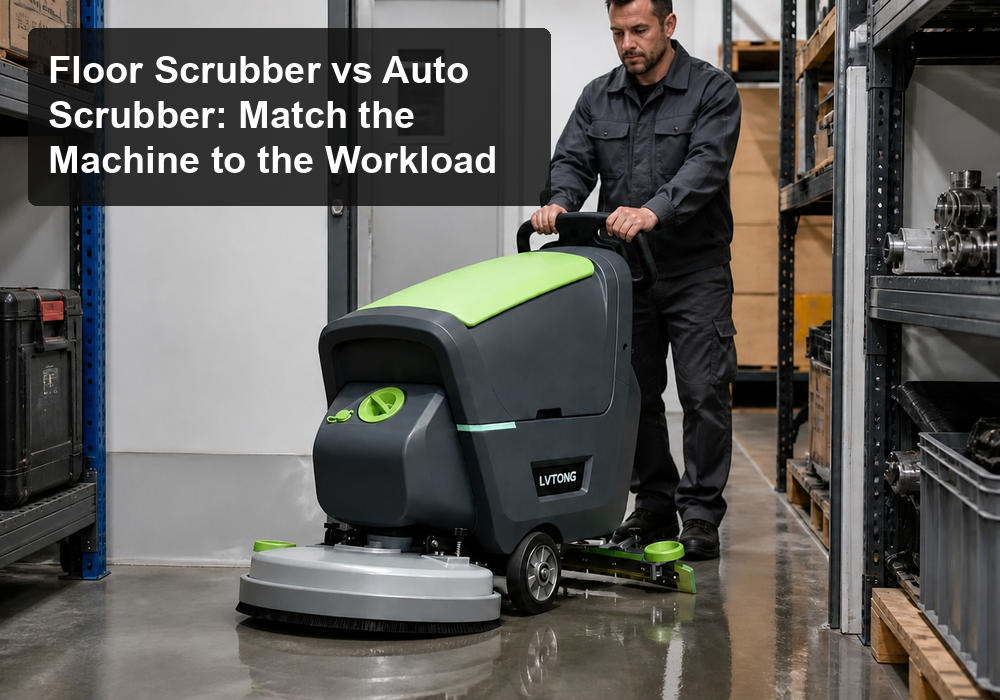
Certains acheteurs recherchent des autolaveuses à brosse unique pour les sites industriels, tandis que d'autres ont besoin d'autolaveuses à double brosse pour les centres logistiques. Le choix optimal dépend de la surface à nettoyer, du type de sol, du niveau de salissure, de la largeur des allées et de l'efficacité requise.
| Type de machine | Idéal pour | Avantage clé |
| Autolaveuse de sol à brosse unique | Petites et moyennes installations industrielles, allées étroites, fréquence de nettoyage réduite | Coût inférieur, utilisation plus facile, meilleure maniabilité |
| Autolaveuse de sol à double brosse | Centres logistiques, grands entrepôts, installations de distribution, nettoyage à haute fréquence | Largeur de nettoyage accrue, productivité supérieure, meilleure couverture des grandes surfaces |
Pour les sites industriels à configuration compacte ou présentant divers obstacles, une autolaveuse à brosse unique peut s'avérer plus facile à utiliser. En revanche, pour les centres logistiques aux allées larges, aux grandes surfaces et aux cycles de nettoyage fréquents, une autolaveuse à double brosse permet de réduire le temps de nettoyage et d'améliorer la productivité.
Avant de choisir, renseignez-vous auprès du fabricant sur la largeur de nettoyage, la pression de la brosse, la capacité du réservoir, l'autonomie de la batterie, la compatibilité avec les sols, le coût de remplacement de la brosse et les scénarios d'utilisation recommandés.
Éléments à évaluer avant de choisir un fabricant d'autolaveuses industrielles
Zone de nettoyage, temps de cycle et productivité de la machine
Commencez par calculer la surface totale nettoyable de votre installation et le créneau horaire disponible pour le nettoyage. Cela vous permettra de déterminer si vous avez besoin d'une autolaveuse autoportée, d'une autolaveuse à conducteur marchant, d'un modèle à une seule brosse, d'un modèle à deux brosses ou de plusieurs machines pour différentes zones de nettoyage. Une autolaveuse à conducteur marchant de 122 cm de large, avec un débit de 8 360 m²/h, nettoie un entrepôt de 28 000 m² en un seul poste ; une autolaveuse à conducteur marchant de 51 cm de large nécessite quatre fois plus de temps pour couvrir la même surface. Définissez d'abord le débit requis, puis filtrez les machines en fonction de la largeur de nettoyage et de la capacité de la cuve.
La capacité du réservoir influe directement sur la fréquence des arrêts pour le remplissage de solution ou la vidange des réservoirs de récupération. Pour les cycles de nettoyage continus de plus de 60 minutes, privilégiez les modèles autoportés équipés de réservoirs de solution d'une capacité supérieure à 80 litres. Les arrêts fréquents interrompent les cycles de nettoyage, réduisent la productivité réelle par rapport à la productivité nominale et augmentent le temps de travail.
La productivité nominale (pi²/h) indiquée sur une fiche technique correspond rarement à la productivité réelle. Dans un centre de distribution de 285 000 pi² que nous avons évalué, la productivité nominale de 90 000 pi²/h annoncée par le fabricant s'est traduite par une productivité réelle d'environ 62 000 pi²/h, une fois pris en compte les obstacles liés aux rayonnages, deux remplissages de réservoir et un changement de batterie. Lors du dimensionnement de la machine, prévoyez un débit nominal de 60 à 700 TP3T, et non de 1 000 TP3T.
Type de sol, plateau de brosses et performance de nettoyage
Le type de revêtement de sol détermine le choix du plateau de brossage. Les plateaux à disques sont performants sur les surfaces lisses et scellées, comme les revêtements époxy, le béton poli et le carrelage. Les plateaux à brosses cylindriques pénètrent dans la texture du sol, aspirent les débris et sont plus performants sur le béton irrégulier, rugueux ou non scellé. Utiliser un type de plateau inadapté réduit l'efficacité du nettoyage et accélère l'usure des brosses. Avant de passer commande, vérifiez la configuration de plateau recommandée par le fabricant pour votre type de surface.
L'état du sol est également important. Les joints de dilatation, les fosses, les siphons et les dommages superficiels influent sur le contact de la raclette et la récupération d'eau. Les machines dotées d'une pression de raclette réglable et d'un système de lames flexibles sont plus performantes sur les sols présentant des conditions variables que les modèles à géométrie fixe.
Les acheteurs regrettent souvent les entrepôts à sols mixtes. Un centre de distribution avec lequel nous avons collaboré comportait trois zones de sol distinctes : de l’époxy dans la zone de préparation des commandes, du béton ciré dans les allées de rayonnage et des carreaux de terre cuite dans les quais de chargement. L’équipe d’exploitation avait initialement prévu d’utiliser une seule machine à disques pour toutes les zones, ce qui a entraîné une nette dégradation de la qualité de nettoyage des carreaux de terre cuite dès le premier mois. La solution consistait soit à utiliser deux machines avec des plateaux différents, soit une seule machine certifiée par le fabricant pour les trois types de surfaces.
Sécurité, récupération de l'eau et conformité réglementaire
Les travaux sur sol mouillé présentent des risques de glissade. Norme générale de l'OSHA pour l'industrie La réglementation impose aux employeurs de maintenir les surfaces de circulation propres et sèches et de gérer les risques liés au nettoyage. Les machines équipées de systèmes de raclette arrière efficaces et de réservoirs de récupération de grande capacité réduisent le temps d'exposition des sols mouillés. Pour les établissements soumis aux inspections de l'OSHA, la documentation des performances de récupération de votre autolaveuse est essentielle pour garantir la conformité.
Les opérateurs d'engins autoportés relèvent de OSHA 1910.178 (Chariots élévateurs) pour la formation et la certification — cet aspect est souvent négligé dans les cahiers des charges. Les procédures de maintenance impliquant l'entretien des batteries ou des moteurs relèvent de cette compétence. OSHA 1910.147 (Consignation/Étiquetage). Les installations de batteries lithium-ion doivent faire référence à NFPA 855 pour les exigences en matière de stockage et de recharge.
À quoi ressemble réellement une citation de l'OSHA ?
Un établissement pour lequel nous avons effectué une mission de conseil a été mis en demeure à deux reprises en 18 mois pour des accidents de glissade dus à un séchage incomplet du sol après le nettoyage. La cause profonde n'était pas la machine, mais le calendrier de remplacement de la raclette.
L'ancien propriétaire avait prolongé la durée de vie des pales de 90 à plus de 180 jours pour réduire les coûts, ce qui avait entraîné une baisse de l'efficacité de la récupération d'eau à environ 70 %. La réparation a coûté 1 400 $ en pales. Les deux contraventions ont engendré des frais d'environ 28 000 $ en amendes et en frais juridiques.
Lorsque vous évaluez un fabricant, renseignez-vous précisément sur le prix et les délais de livraison des lames de raclette ; il s’agit du consommable le plus important et le moins coûteux de la machine, et celui qui est le plus susceptible de dégrader silencieusement vos performances en matière de sécurité.
Modèle d'approvisionnement : Fabricant direct vs Marque distribuée par un concessionnaire
C’est la dimension d’évaluation que la plupart des équipes d’approvisionnement négligent — et c’est souvent le principal facteur d’écart de coûts sur 5 ans.
La plupart des marques atteignent les consommateurs finaux via des réseaux de distribution à plusieurs niveaux. Chaque niveau augmente la marge et crée une dépendance pour les pièces et le service après-vente vis-à-vis des stocks et de la main-d'œuvre des distributeurs locaux. Pour les entreprises américaines ou européennes implantées sur un seul site et bénéficiant d'un réseau de distributeurs locaux étendu, ce modèle est performant : il permet de bénéficier de contrats de service sur site, d'une disponibilité immédiate des pièces détachées et d'une relation de confiance pour la gestion des demandes ultérieures.
Pour les opérations multisites, les déploiements sur les marchés émergents ou les acheteurs nécessitant des configurations OEM/ODM, les fabricants en vente directe éliminent les marges des distributeurs et offrent un support technique direct. Un service sur site local moins établi est proposé en contrepartie d'un coût d'acquisition nettement inférieur et d'une maîtrise de la chaîne d'approvisionnement.
Là où cette dimension détermine réellement l'achat
Un prestataire logistique régional exploitant 14 centres de distribution dans quatre pays d'Asie du Sud-Est a mené une évaluation de sa flotte fin 2024. Il a évalué Kärcher (via un concessionnaire de Singapour), Nilfisk (via un distributeur de Hong Kong) et une option directe d'usine.
Trois éléments ont fait échouer leur modèle de distribution par concessionnaires :
- Les délais de livraison pour les marques occidentales étaient de 90 à 120 jours via des distributeurs régionaux, contre environ 35 jours en vente directe d'usine.
- En Indonésie et aux Philippines, le délai de réponse des concessionnaires des villes de deuxième niveau pour les pièces détachées était en moyenne de 5 à 9 jours ouvrables, ce qui rendait les contrats de service sur site pratiquement inutiles.
- L'apposition de la marque de l'entreprise sur la flotte nécessitait une quantité minimale de commande (QMC) de 50 à 100 unités auprès des marques occidentales, mais était possible avec une QMC d'une seule unité auprès du fournisseur direct usine. L'écart de coût total d'acquisition (environ 45 à 501 TP3T) a permis de financer un stock de pièces détachées pré-approvisionné pour trois ans sur chaque site, ce qui a résolu de manière structurelle le problème de délai d'intervention.
Cette dimension n'est pertinente que dans certains cas particuliers : sites multiples, flottes de véhicules, équipementiers ou zones géographiques à faible couverture de concessionnaires. Pour une usine unique du Midwest américain, les marques distribuées par les concessionnaires restent la solution idéale. Il convient d'adapter le modèle d'approvisionnement à l'implantation opérationnelle, et non au prix le plus bas.
Disponibilité des pièces détachées et réseau de service
Avant tout achat, demandez la liste des revendeurs et centres de service agréés du fabricant pour votre région. La distance jusqu'au centre de service le plus proche et les délais moyens de livraison des pièces détachées sont aussi importants que les caractéristiques techniques de la machine. Une machine avec un délai d'intervention de deux jours est plus fiable qu'un modèle moins cher dont les pièces détachées doivent être livrées sous quatre semaines.
Demandez le délai de livraison des moteurs d'entraînement et des chargeurs de batterie, et pas seulement des balais et des raclettes. Les consommables sont disponibles partout ; les composants de la transmission, en revanche, sont souvent introuvables. Nous avons vu des entreprises se retrouver avec une autolaveuse hors service pendant 5 à 7 semaines, faute de moteur d'entraînement en stock régional, alors que le kit de balais pour la même machine était expédié du jour au lendemain. Le délai de livraison de la transmission est le véritable indicateur de la qualité d'un réseau de service. Si un fournisseur est incapable de vous donner un délai de livraison pour un moteur d'entraînement en un seul appel, considérez qu'il est plus long qu'il ne le laisse entendre.
Technologie de la batterie, autonomie et exigences de charge
Les batteries au plomb (à électrolyte liquide, AGM) restent courantes dans les machines d'entrée de gamme. Elles nécessitent un entretien régulier (remplissage d'eau, ventilation pour le dégazage pendant la charge) et un remplacement tous les 3 à 5 ans. Les batteries lithium-ion se chargent en 2 à 3 heures contre plus de 8 heures pour les batteries au plomb, tolèrent les charges d'appoint sans perte de capacité et ont une durée de vie de 8 à 10 ans. Les installations au lithium doivent également être évaluées en fonction de NFPA 855 pour les exigences relatives aux zones de recharge et UL 583 pour la certification des chariots industriels à batterie.
L'argument décisif porte rarement sur la durée de vie des batteries, mais plutôt sur le temps consacré à leur entretien. Une équipe de maintenance qui effectue l'entretien hebdomadaire de six machines à batteries au plomb consacre environ 2,5 heures par semaine à cette tâche, soit environ 130 heures par an. Avec les batteries au lithium, ce temps d'entretien est quasiment nul. Si l'on ajoute les économies réalisées sur la ventilation de la zone de charge, le retour sur investissement est souvent atteint en moins de 36 mois, même pour une production en une seule équipe. Il est essentiel d'effectuer ce calcul explicitement lors de la présentation du dossier d'achat ; la fiche technique seule ne suffira pas à convaincre.
Coût total de possession sur 5 ans
Le prix unitaire est le critère le moins fiable pour choisir un fabricant.. Calculez le coût total de possession sur 5 ans : prix d’achat de la machine, remplacement de la batterie (plomb-acide entre la 3e et la 5e année ; lithium rarement dans les 5 ans), consommables pour brosses et raclettes, contrats de service annuels, temps de travail de l’opérateur et coût estimé des temps d’arrêt.
Une usine d'emboutissage de métaux du Wisconsin (65 000 pieds carrés, un seul quart de travail, béton scellé rugueux avec beaucoup d'huile et de débris de copeaux de métal) a effectué un TCO sur 5 ans sur trois options :
- une marque américaine haut de gamme à conducteur marchant (acquisition d'environ $14 500)
- une alternative américaine robuste (~$11 200)
- une option directe d'usine (~$7 300).
Sur le papier, la marque haut de gamme semblait la plus chère. Sur une période de 5 ans, c'est l'option américaine robuste qui s'est avérée la plus avantageuse, et ce pour deux raisons :
- Un plateau de brosses cylindriques conçu pour les débris métalliques a prolongé la durée de vie des brosses d'environ 40% sur cette surface spécifique.
- Un concessionnaire local situé à 145 km a assuré un contrat de niveau de service (SLA) de 48 heures pour les pièces, éliminant ainsi les coûts liés aux temps d'arrêt que l'option directe avec l'usine ne pouvait pas égaler pour ce cas d'utilisation sur un seul site et avec beaucoup de débris.
Le coût total de possession (TCO) n'est pas un classement universel ; il dépend de l'empreinte opérationnelle. Effectuez le calcul en fonction de votre situation réelle, et non par rapport à une moyenne sectorielle.
FAQ des fabricants d'autolaveuses industrielles
1. Qui sont les principaux fabricants d'autolaveuses industrielles ?
Parmi les fabricants d'autolaveuses industrielles les plus réputés, citons Tennant, Kärcher, LVTONG, Nilfisk, Factory Cat, Hako et PowerBoss. Le choix le plus adapté dépend de la taille de vos installations, du type de sol, de votre budget, de vos besoins en matière de service après-vente, de la disponibilité des pièces détachées et de votre préférence pour un support OEM/ODM ou un approvisionnement direct auprès du fabricant.
2. Que dois-je rechercher chez un fabricant d'autolaveuses industrielles ?
Il convient de comparer la gamme de produits, la largeur de nettoyage, la capacité du réservoir, l'autonomie de la batterie, le système de brosses, la compatibilité avec différents types de sols, le réseau de service après-vente, les délais de livraison des pièces détachées, les conditions de garantie, les capacités OEM/ODM et le coût total de possession. Pour les acheteurs industriels, la réactivité du service après-vente et la disponibilité des pièces détachées peuvent être aussi importantes que le prix de la machine.
3. Quel fabricant d'autolaveuses est le meilleur pour les acheteurs OEM ou ODM ?
Les acheteurs OEM et ODM devraient privilégier un fabricant direct proposant des services de personnalisation, de marque privée, une capacité de production stable, une expérience à l'export, un service de pièces détachées et des options de configuration flexibles. Pour les distributeurs et les marques de matériel de nettoyage, l'approvisionnement direct auprès des fabricants permet de réduire les coûts liés aux intermédiaires et d'optimiser la chaîne d'approvisionnement.
4. Les fabricants d'autolaveuses qui vendent directement d'usine sont-ils meilleurs que les revendeurs ?
Les fabricants qui vendent directement depuis l'usine proposent des coûts d'acquisition plus bas, des options de personnalisation, un approvisionnement direct en pièces détachées et un meilleur contrôle des exigences OEM/ODM. Les concessionnaires, quant à eux, offrent un service local plus performant, des réparations sur site plus rapides et une assistance régionale. Le choix de la meilleure option dépend de votre situation géographique, de vos capacités de maintenance, de la taille de votre flotte et de vos attentes en matière de service.
5. Quelle autolaveuse est la meilleure pour les centres logistiques : à brosse unique ou à double brosse ?
Pour les grands centres logistiques aux allées larges et aux cycles de nettoyage fréquents, une autolaveuse à double brosse offre généralement une meilleure productivité et une couverture plus étendue. Pour les petites usines, les zones compactes ou les allées étroites, une autolaveuse à brosse unique peut s'avérer plus économique et plus facile à manœuvrer.
6. À quelle fréquence les autolaveuses industrielles nécessitent-elles un entretien ?
Les pièces consommables doivent être inspectées toutes les 50 à 100 heures de fonctionnement, selon l'état du sol et la quantité de débris. La fréquence d'entretien des batteries dépend de leur composition chimique : les batteries au plomb nécessitent un contrôle hebdomadaire du niveau d'eau et une charge d'égalisation ; les batteries lithium-ion ne requièrent pratiquement aucun entretien. Les intervalles d'entretien mécanique complet sont généralement de 500 à 1 000 heures.
7. Quel fabricant d'autolaveuses industrielles est le meilleur pour les acheteurs OEM ?
Les acheteurs OEM doivent privilégier les fabricants proposant des services de personnalisation, de marque privée, une capacité de production stable, une documentation technique, un service de pièces détachées et une expérience à l'export. Les fabricants en vente directe sont généralement plus flexibles pour les projets sur mesure.
8. Dois-je acheter directement auprès du fabricant de laveuses de sols ou auprès d'un revendeur local ?
Les fournisseurs directs d'usine proposent généralement des prix plus avantageux, des options de personnalisation et un accès direct à l'assistance technique. Les concessionnaires locaux peuvent assurer un service sur site plus rapide. Le choix optimal dépend de votre situation géographique, de vos capacités de maintenance et de vos besoins en matière de service.
9. Quelles questions dois-je poser à un fabricant d'autolaveuses industrielles avant d'en acheter une ?
Les acheteurs doivent se renseigner sur la capacité de production, les conditions de garantie, la disponibilité des pièces détachées, les options de batterie, la productivité du nettoyage, les capacités OEM, les délais de livraison et le service après-vente.
10. Comment comparer les fabricants d'autolaveuses industrielles ?
Comparez les fabricants en fonction des performances de la machine, de l'expérience d'application au sol, des capacités de service, du support OEM, de la disponibilité des pièces de rechange et du coût total de possession sur cinq ans plutôt qu'en fonction du seul prix d'achat.
Conclusion : Choisir le bon fabricant d'autolaveuses industrielles
Choisir le bon fabricant d'autolaveuses industrielles est un investissement à long terme. Le meilleur fournisseur n'est pas toujours celui qui propose le prix le plus bas ni la marque la plus connue. Il est essentiel de comparer les performances de nettoyage, la compatibilité avec différents types de sols, le réseau de service après-vente, les délais de livraison des pièces détachées, la technologie des batteries, le support OEM/ODM, les conditions de garantie et le coût total de possession.
Tennant et Kärcher sont d'excellentes options pour les acheteurs privilégiant l'infrastructure de service, la technologie et le support à long terme. Nilfisk est utile pour les acheteurs ayant besoin de plusieurs niveaux d'équipement auprès d'un seul fournisseur. LVTONG peut être un choix judicieux pour les acheteurs soucieux des coûts, les projets OEM/ODM, l'approvisionnement direct auprès des fabricants et les opérations disposant d'une capacité de maintenance interne. Factory Cat et PowerBoss conviennent aux sols industriels difficiles et aux applications américaines intensives. Hako dessert les installations européennes qui privilégient la facilité d'entretien sur site et la conception modulaire.
Avant tout achat, sélectionnez deux ou trois fabricants en fonction de la taille de vos locaux, du type de sol, de la fréquence de nettoyage, de votre budget et de la disponibilité du service après-vente dans votre région. Demandez une démonstration dans vos conditions de nettoyage réelles, vérifiez les délais de livraison des pièces détachées, examinez les conditions de la batterie et de la garantie, et calculez le coût total de possession sur 5 ans avant de prendre votre décision finale.