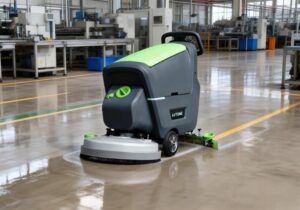
Notre équipe a visité des entrepôts, des usines et des supermarchés, et nous constatons régulièrement les mêmes problèmes de nettoyage de sols difficiles. La plupart se répartissent en sept catégories : poussière de béton, huiles et graisses, traces de pneus de chariots élévateurs, dommages chimiques, poussières fines, risques de glissade et usure des revêtements. D'après notre expérience, la clé est d'identifier précisément le problème, puis d'utiliser la machine, le tampon ou la brosse, la solution de nettoyage et la fréquence de nettoyage appropriées. Ce guide décrit chaque problème et la méthode la plus efficace pour le résoudre.
Pourquoi le nettoyage des sols industriels est différent
Les sols industriels sont soumis à des conditions que les espaces commerciaux ne connaissent jamais : circulation intense de chariots élévateurs, fuites d’huile de machines, exposition à des produits chimiques, copeaux de métal et des dizaines de milliers de mètres carrés à nettoyer dans des délais très courts.
La plupart des installations comportent plusieurs types de sols : béton brut dans l’entrepôt, époxy dans la production, béton poli dans les zones clients et carrelage dans les zones agroalimentaires ou pharmaceutiques. Chaque type de sol nécessite un protocole de nettoyage spécifique.
Les 7 problèmes les plus courants liés au nettoyage des sols industriels
Chaque établissement présente sa propre version de ces sept problèmes. Voici à quoi chacun ressemble sur le terrain, ce qui le provoque et comment le résoudre sans l'aggraver.
1. Poussière de béton et silice en suspension dans l'air

Les signes classiques : une fine brume grise qui revient des heures après le balayage, des empreintes de pas visibles tout l'après-midi et une trace crayeuse là où reposaient les cartons sur le sol.
La cause est l'usure mécanique : les pneus des chariots élévateurs et le frottement des palettes abrasent la pâte de ciment en surface, et la dalle continue de libérer des particules. Les anciens directeurs d'usine appellent cela la “ sueur du béton ”. Ce n'est pas qu'un problème esthétique. La silice cristalline respirable est présente. Conforme aux normes OSHA à 50 µg/m³ Sur une période de travail de 8 heures, le balayage à sec est l'un des moyens les plus rapides de le disperser dans l'air.
Voici les solutions qui fonctionnent, dans cet ordre : arrêter de balayer à sec le sol nu, densifier ou sceller la dalle, passer à une autolaveuse autoportée pour l’entretien humide quotidien.
2. Taches d'huile, de graisse et de liquide de refroidissement

Fuites hydrauliques sous une presse, suintement de liquide de refroidissement d'une machine à commande numérique, halo noir persistant autour d'un compresseur : le béton poreux absorbe les hydrocarbures pétroliers comme une éponge. On nettoie la zone, et tout semble normal pendant une heure, puis l'huile remonte à la surface et la tache est de nouveau noircie à midi.
La solution est mécanique, et non pas l'ajout de produits chimiques par-dessus :
- Pré-pulvériser avec un dégraissant alcalin puissant (pH 11–13) à pleine concentration.
- Laisser reposer 5 à 10 minutes — suffisamment longtemps pour soulever le produit, mais pas assez longtemps pour le sécher.
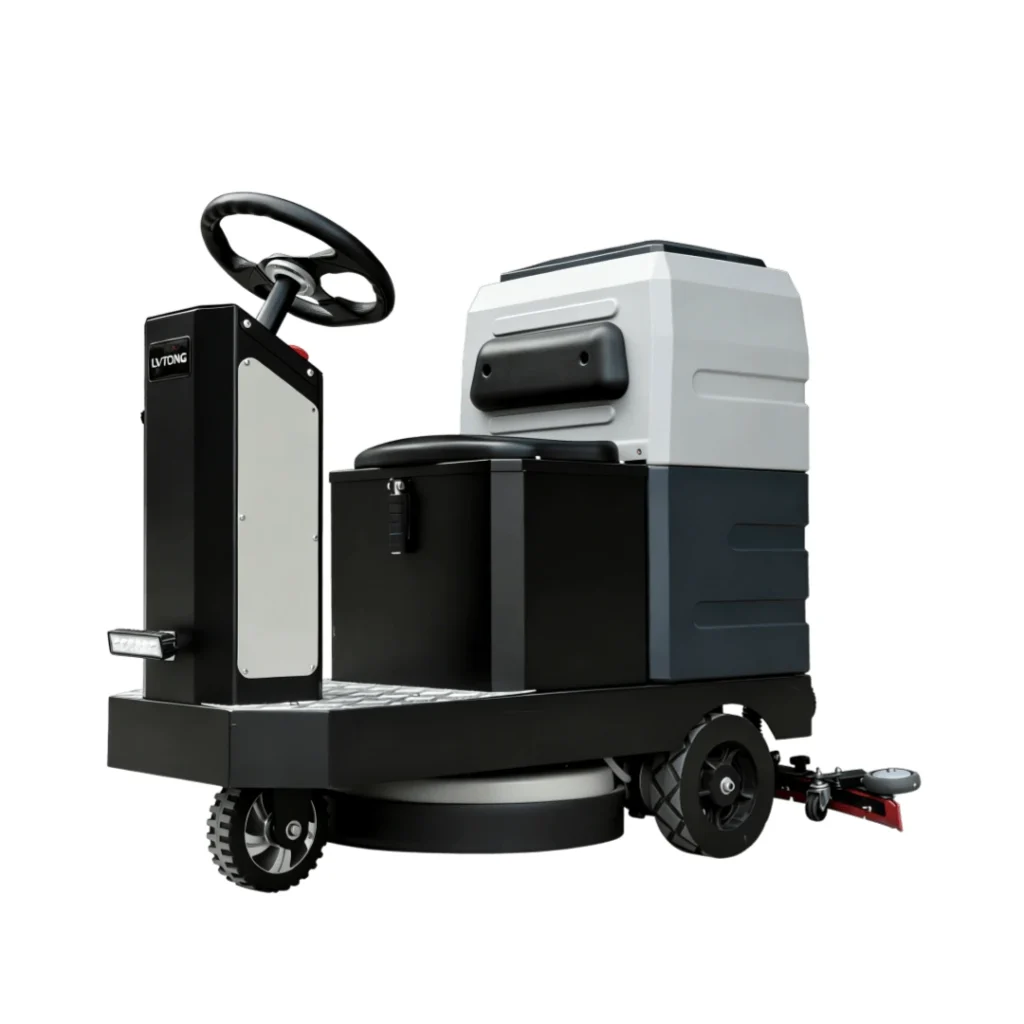
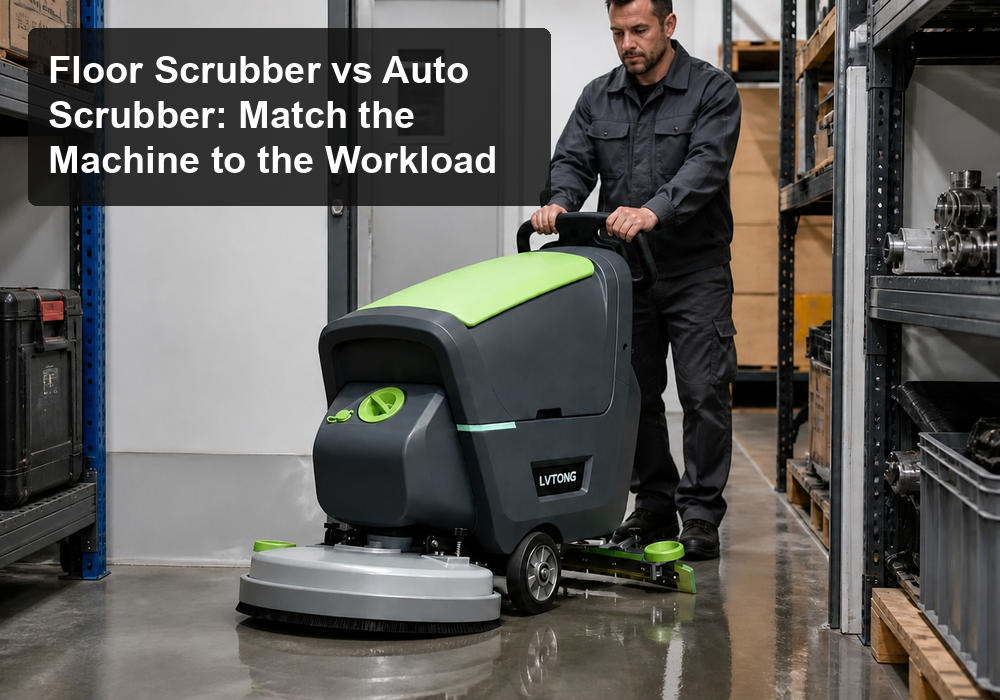
- Frottez avec une brosse cylindrique. Les poils projettent le dégraissant dans les pores d'une manière que les disques démaquillants ne peuvent pas. Autolaveuse autoportée Q5 Il se comporte bien dans les espaces restreints des machines.
- Récupération par raclette lors du même passage avant le redépôt d'huile.
Les vieilles taches nécessitent généralement deux applications. Il n'y a pas de solution miracle.
3. Traces de pneus de chariot élévateur et traînées noires

Placez-vous à un virage à 90 degrés près d'un quai et vous les verrez : des arcs noirs là où les pneus arrière frottent à chaque pivot du conducteur.
Le mécanisme en cause est la migration des plastifiants : les agents plastifiants contenus dans le caoutchouc des pneus se liquéfient sous l’effet de la chaleur de friction et adhèrent à la surface du sol. Sur du béton nu, le résultat est inesthétique. Sur de l’époxy, c’est pire : un chariot élévateur chaud stationné toute la nuit peut arracher le revêtement avec son pneu en démarrant. Ce phénomène, appelé “ collage par pneu chaud ”, indique que le revêtement se détériore.
Choisissez l'outil adapté au type de sol avant de frotter :
| Type de plancher | Pré-pulvérisation | Outil de nettoyage | Éviter |
|---|---|---|---|
| Béton nu | Dégraissant alcalin ou D-limonène | Brosse en polypropylène ou tampon rouge | — |
| Époxy / revêtement | D-limonène seulement | serviette rouge ou blanche | Tampon noir, alcalin |
| Béton poli | D-limonène seulement | Coussin blanc | coussinets noirs ou verts |
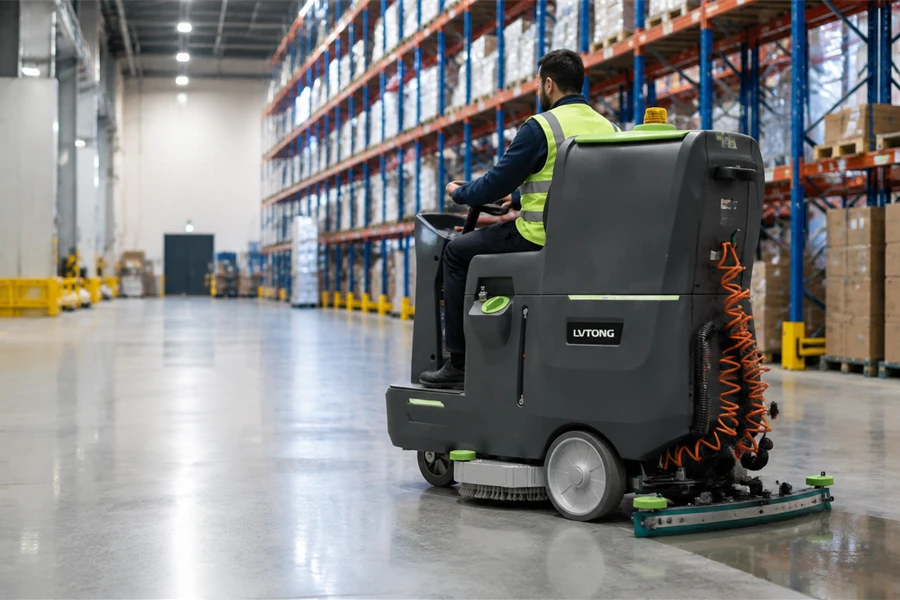
Pour des trajectoires de virage prévisibles dans un grand entrepôt, l'exécution du Autolaveuse autoportée LT-S560X Un brossage hebdomadaire avec une brosse cylindrique permet d'éviter que les marques ne s'installent.
4. Déversements de produits chimiques et surfaces gravées
L'acide de batterie laisse un halo de piqûres. Une flaque de solvant ternit le polissage en un cercle parfait. Un nettoyant caustique laissé toute la nuit rend la surface rugueuse.
Le facteur déterminant, c'est le temps. Le béton étant alcalin (pH ~12,5), les déversements acides réagissent avec la matrice cimentaire et dissolvent le liant. Une fois attaqué, le dommage est quasiment irréversible ; il est donc essentiel d'intervenir en amont. Des stations d'absorbant granulaire, disposées tous les 30 mètres d'allée de production, ainsi que des fiches de données de sécurité (FDS) affichées, permettent de gagner un temps précieux en cas d'incident. À long terme, un scellant pénétrant ou un époxy résistant aux produits chimiques transforme une intervention de cinq minutes en un nettoyage de cinq minutes.
5. Risques de glissade et de chute

Le danger ne réside pas dans la tache humide évidente, mais dans le sol qui paraît sec alors qu'il ne l'est pas. Les sols nettoyés à la serpillière restent glissants pendant 15 à 20 minutes après le passage du seau, et chutes de même niveau figurent systématiquement parmi les trois principales causes de réclamations pour blessures dans les entrepôts.
Deux types de défaillances spécifiques sont à l'origine de la plupart des incidents :
- La serpillière comme outil principal. Une serpillière redistribue l'eau contaminée et laisse un film savonneux en séchant. C'est ce film qui rend le sol glissant pendant des heures.
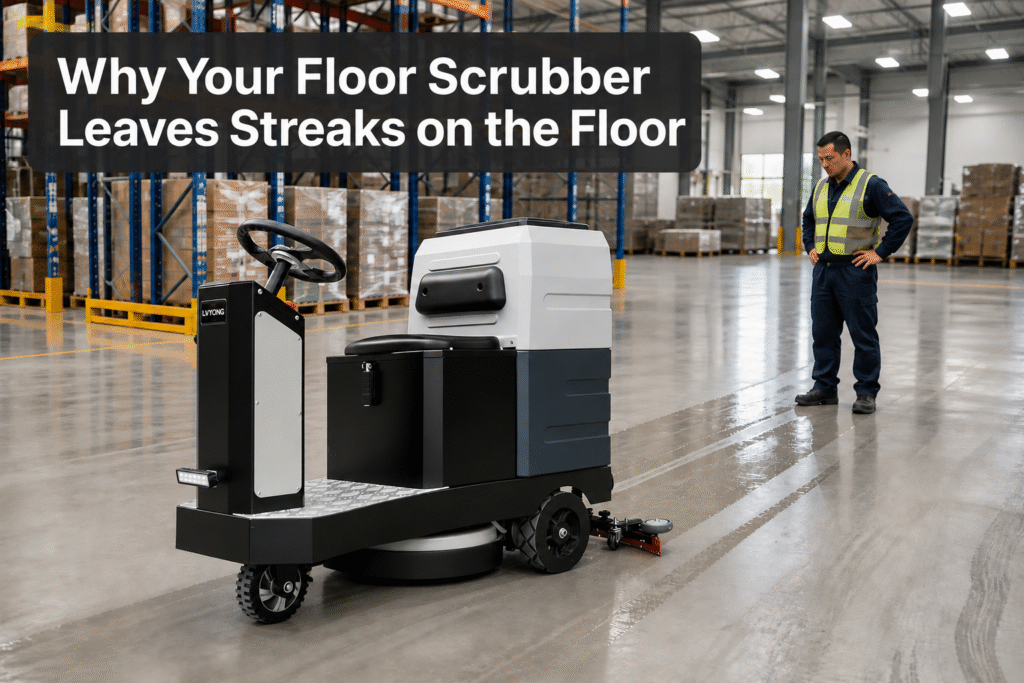
- Lames de raclette usées. L'élément d'entretien le plus souvent négligé dans le nettoyage industriel. Une lame ébréchée laisse une trace de solution à chaque passage : elle paraît sèche de loin, mais glissante de près.
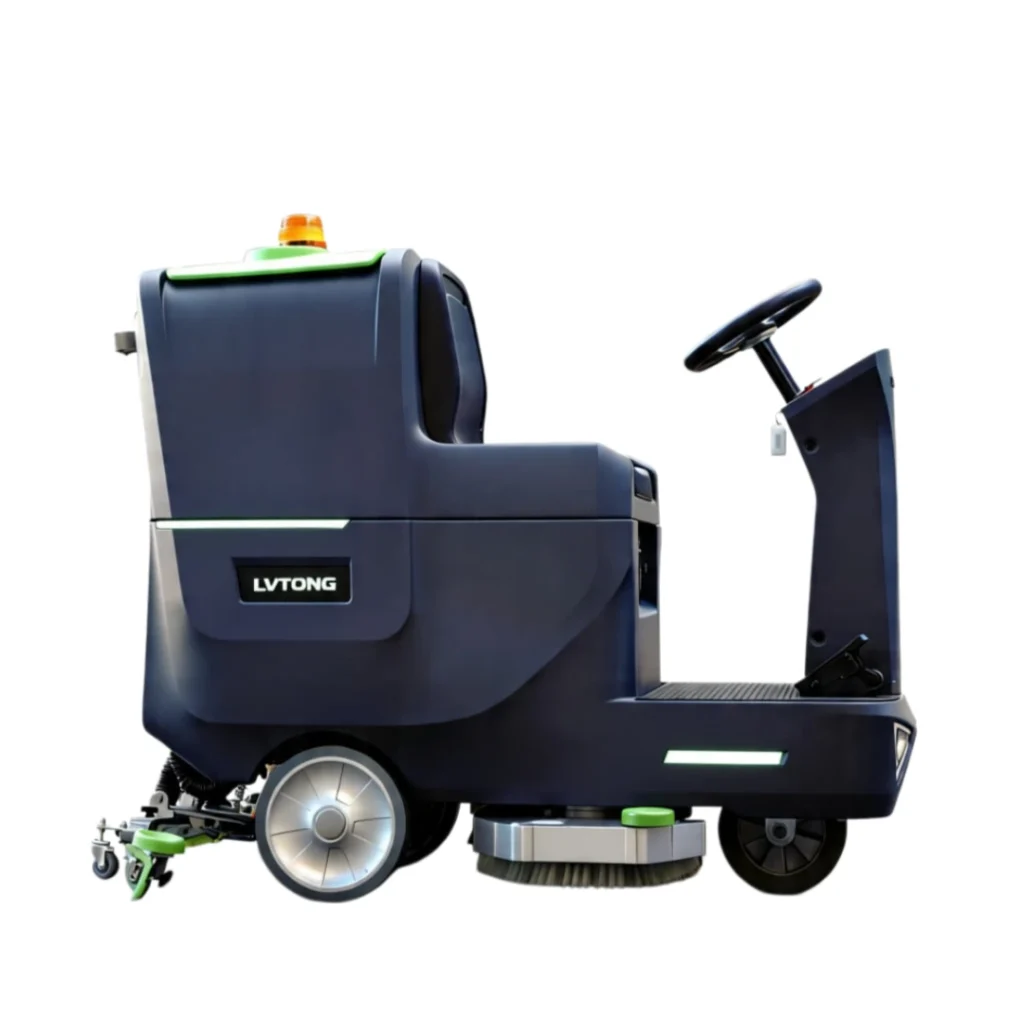
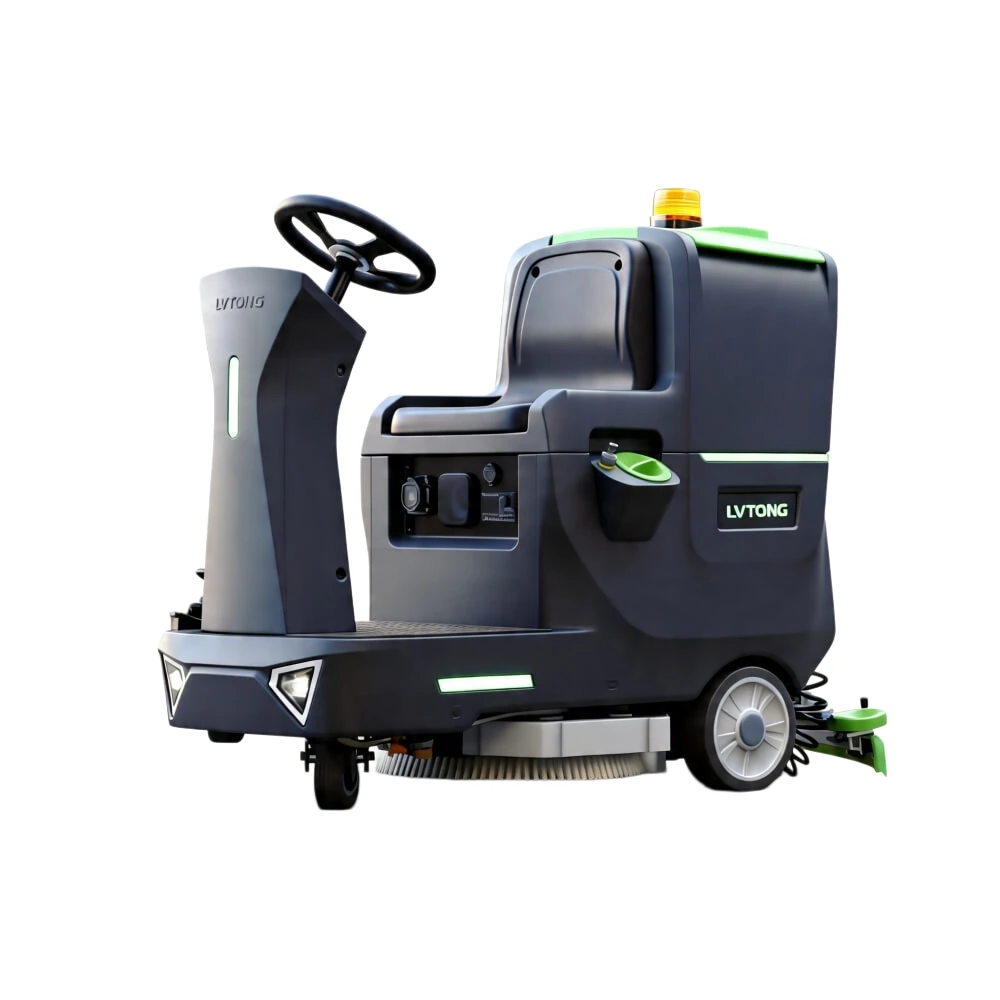
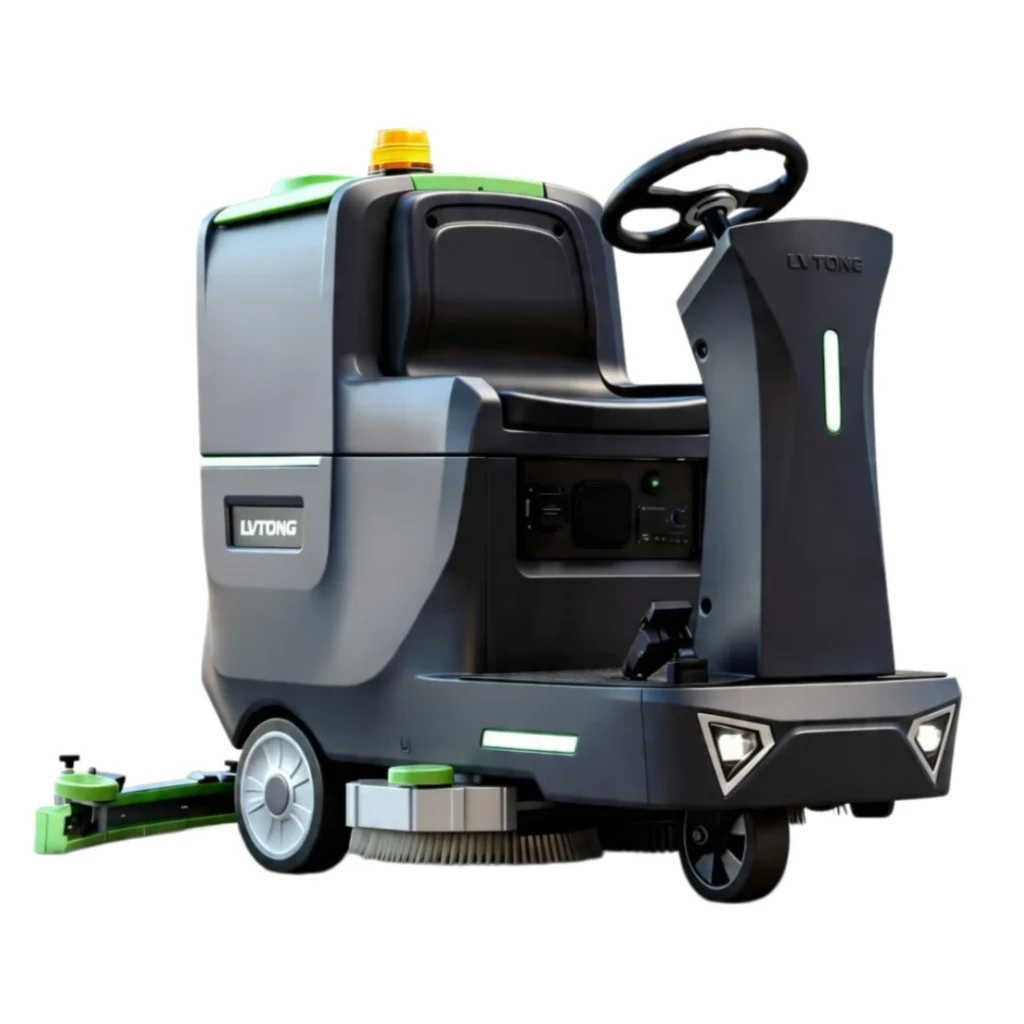
Solution : remplacer les serpillières par des brosses de nettoyage à l’aspirateur adaptées et faire pivoter les lames de la raclette tous les 60 à 90 jours en cas d’utilisation intensive. Une autoportée plus grande comme la LT-S710X ou LT-S860X dégage le sol pour qu'il soit praticable en deux à trois minutes.
6. Revêtements endommagés ou qui s'écaillent
Vous avez dépensé une somme importante pour un revêtement époxy ou du béton poli, et 18 mois plus tard, il se décolle sur les voies de circulation ou s'use sous les rayonnages. Les dégâts ne sont généralement pas spectaculaires : il s'agit d'un nettoyage inadéquat, répété chaque semaine. Trois causes expliquent la quasi-totalité des défaillances de revêtement :
- Mauvaise chimie. Pour les travaux d'entretien courant, il est déconseillé d'utiliser des produits dont le pH est inférieur à 6 ou supérieur à 11 au contact d'un sol revêtu. Privilégiez un pH neutre (7–9).
- Mauvaises protections. Les tampons noirs ou bruns sont conçus pour décaper la cire. Sur le béton poli, ils enlèvent la surface lisse. Tampons rouges, blancs ou en fibres naturelles uniquement.
- Humidité sous la dalle. L'apparition de cloques circulaires ou le décollement du revêtement par endroits après un week-end humide indiquent un problème. Un test d'humidité au chlorure de calcium avant toute nouvelle application est indispensable.
Pour un revêtement existant défectueux : frotter délicatement avec un produit à pH neutre et prévoir une rénovation complète – incluant la gestion de l’humidité – dès que possible.
7. Le nettoyage manuel inefficace entraîne une hausse des coûts de main-d'œuvre
Les chiffres parlent d'eux-mêmes :
| Méthode | Couverture | Opérateurs |
|---|---|---|
| Balai et seau | ~3 000 pi²/h | 2 |
| Autolaveuse autoportée | 15 000 à 25 000 pi²/h | 1 |
| Autolaveuse autoportée | 30 000 à 60 000+ pi²/h | 1 |
Pour un entrepôt de 4 645 m², le calcul devient vite complexe. Main-d'œuvre à 1 400 000 £/heure × 4 agents de nettoyage × 8 heures × 5 jours = 160 heures/semaine, soit environ 1 400 000 £/an avant charges sociales. Une autolaveuse manuelle, dont le prix avoisine les 50 000 £, est amortie en 6 à 12 mois à cette échelle. Une autolaveuse autoportée, en 12 à 18 mois. Ensuite, la rentabilité est assurée pendant 8 à 10 ans (durée de vie moyenne de la machine). De plus, le personnel est réaffecté à des tâches à plus forte valeur ajoutée, les sinistres diminuent car le sol reste plus sec entre les cycles, et le sol lui-même dure plus longtemps car le nettoyage mécanique est plus doux qu'avec des balais à poils durs.
Taille approximative :
- 5 000 à 25 000 pi² → accès direct (Q5, LT-S530X)
- Plus de 25 000 pieds carrés de plancher ouvert → chevauchée (V6, LT-S710X, LT-S860X)
- Débris secs importants avant le passage des engins humides → balayeuse autoportée couplée à une autolaveuse
Conseil: Avant d'évaluer le prix d'une machine, effectuez un suivi précis des heures de nettoyage pendant une semaine. Le nombre réel est généralement de 20 à 400 heures supérieur au budget prévu ; c'est là que réside le véritable retour sur investissement.
La pile de nettoyage de sols industriels modernes
La résolution des sept problèmes se résume à quatre choix identiques. Trouvez les quatre bons et le plancher se répare tout seul.
Adaptez la machine à la superficie.
| Taille de l'installation | Équipement recommandé | Productivité approximative |
|---|---|---|
| Moins de 5 000 pieds carrés / allées étroites | balai manuel ou autolaveuse compacte autoportée | Jusqu'à environ 10 000 pi²/h |
| 5 000 à 25 000 pieds carrés | Autolaveuse-sécheuse autoportée | 15 000 à 25 000 pi²/h |
| Plus de 25 000 pieds carrés, aménagement ouvert | Autolaveuse autoportée | 30 000 à 60 000+ pi²/h |
| sol mixte sec et humide, grand entrepôt | Combinaison balayeuse-laveuse | Nettoyage en un seul passage |
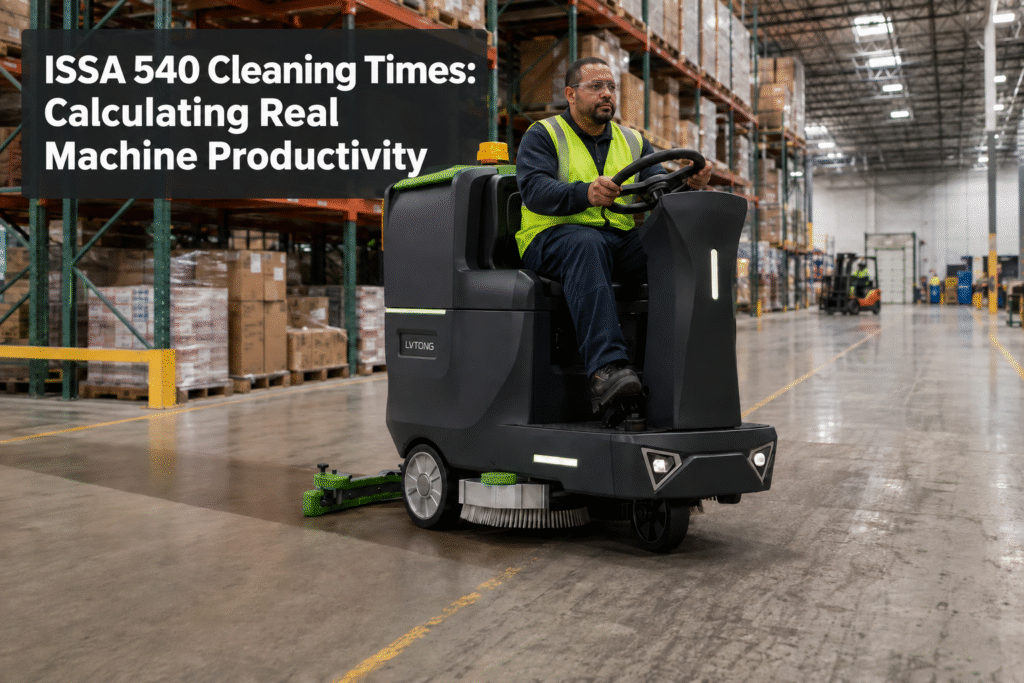
Pour les allées étroites et les rayonnages, une autolaveuse autoportée est la solution idéale. Pour les entrepôts ouverts de plus de 2 300 m², une autolaveuse autoportée est généralement rentabilisée en quelques mois.
Faire correspondre la chimie au sol
| Type de sol | Chimie recommandée |
|---|---|
| Poussière habituelle, circulation légère | nettoyant à pH neutre |
| Huile, graisse, liquide de refroidissement | dégraissant alcalin |
| Dépôts minéraux, efflorescence | Nettoyant acide (béton nu uniquement) |
| Résidus organiques (aliments, sang) | Nettoyant enzymatique |
| marques de pneus de chariot élévateur | dissolvant à base de D-limonène |
Choisissez le tampon ou la brosse adapté au sol.
| Tampon / brosse | Idéal pour |
|---|---|
| coussinets blancs/rouges | Nettoyage de routine des sols revêtus, polis et scellés. |
| Coussinets verts | Frottage modéré, décapage léger. |
| Coussinets noirs | Décapage agressif uniquement sur les surfaces brutes ou non finies. |
| Brosses cylindriques | Béton rugueux ou texturé ; balayer et frotter en un seul passage. |
| balais à disque | Surfaces lisses ; agitation plus profonde que les tampons. |
Méthode de nettoyage en une étape versus en deux étapes
- Une étape : Application de la solution et récupération en un seul passage. Plus rapide, convient à l'entretien courant des sols légèrement sales.
- Deux étapes : Appliquer la solution, laisser agir, puis récupérer. Plus long, mais indispensable pour les sols très sales, les traces de pneus et l'huile incrustée.
Élaboration d'un calendrier de nettoyage durable

Un planning écrit transforme le nettoyage ponctuel en une méthode systématique. L'exemple ci-dessous constitue un point de départ pour un entrepôt de 50 000 pieds carrés avec un trafic modéré de chariots élévateurs.
| Fréquence | Tâches |
|---|---|
| Par quart de travail | Nettoyer les déversements localement ; balayer les plaques de quai et les allées à fort passage. |
| Tous les jours | Balayer toute la surface ; frotter les allées à fort passage. |
| Hebdomadaire | Nettoyer entièrement le sol ; dégraisser les points de retournement des chariots élévateurs |
| Mensuel | Nettoyage en profondeur ; remplacer les lames et les tampons de raclette usés |
| Trimestriel | Inspection des revêtements ; réétanchéité si nécessaire ; entretien complet de l'équipement |
Erreurs courantes qui aggravent l'état des sols
- Frotter sans balayer au préalable. Environ 801 TP3T de terre d'entrepôt sont constituées de particules sèches. Le brossage permet de les incorporer.
- Mauvais tapis de sol sur un revêtement de sol. Les tampons noirs décapent le béton poli et l'époxy terne.
- Laisser sécher le produit nettoyant sur le sol. Récupérez toujours pendant la fenêtre de récupération.
- Détergent trop concentré. Les résidus de savon attirent davantage de saletés — la cause la plus fréquente du problème “ le sol n’a jamais l’air propre ”.”
- Pas de programme écrit. Sans cela, le nettoyage en profondeur devient réactif et coûteux.
Quand faire appel à de l'aide ou moderniser son équipement
Si le nettoyage représente le poste de dépenses le plus important de votre établissement, si votre équipe ne peut pas terminer en un quart de travail, ou si les traces de pneus de chariots élévateurs et l'huile sont visiblement en train de gagner la bataille, le calcul penche généralement déjà en faveur de l'acquisition d'une autolaveuse.
Voici un exemple concret : un entrepôt de distribution alimentaire, qui utilisait auparavant des équipes de nettoyage manuelles (serpillières et seaux) pour le travail de nuit, a remplacé le lavage manuel par une autolaveuse autoportée que nous avons configurée en fonction de la configuration de ses allées et du type de sol. D'après leurs retours, ce qui prenait auparavant une journée complète à un agent d'entretien est désormais réalisé en deux heures environ par un seul opérateur. La consommation de produits chimiques a diminué et les zones glissantes près du quai de chargement, où la graisse et l'eau transportées représentaient un risque important, ont disparu. Même type de sol, même effectif, moins de sinistres.
C'est le schéma qui se dégage dans la plupart des cas. installations logistiques et de distribution Nous travaillons avec ce type de machine. La première est amortie en quelques mois. Le second retour sur investissement se manifeste discrètement au cours des huit à dix années suivantes : moins de réclamations pour glissades, moins de dépenses en produits chimiques et des sols dont la finition dure plus longtemps.
L'équipe d'ingénierie de LVTONG peut effectuer une évaluation gratuite du site et recommander la configuration adaptée à votre type de plancher, à votre superficie et à votre profil de sol. contacter LVTONG pour une recommandation de machine.
Obtenez une évaluation de site gratuiteConclusion
Le nettoyage des sols industriels devient plus simple lorsqu'on le considère non plus comme une tâche unique, mais comme sept problèmes distincts nécessitant sept solutions adaptées. Diagnostiquer le problème, choisir la machine, le produit chimique, le disque et la fréquence de nettoyage : les luttes récurrentes contre la poussière, l'huile, les traces de pneus et les risques de glissade se transforment alors en entretien courant plutôt qu'en crises. Les entreprises qui adoptent cette approche réduisent leurs coûts de main-d'œuvre, prolongent la durée de vie de leurs sols et respectent les normes de sécurité au travail sans effort supplémentaire.
FAQ
À quelle fréquence faut-il nettoyer les sols industriels ?
Le balayage ou l'aspiration quotidiens constituent la base, avec un nettoyage humide quotidien dans les allées à fort trafic, hebdomadaire dans les zones à trafic moyen et mensuel à trimestriel pour les nettoyages en profondeur.
Quelle est la meilleure façon de nettoyer un sol en béton industriel ?
Un processus en deux étapes. D'abord, balayer ou aspirer pour éliminer les particules sèches, puis frotter avec une autolaveuse en utilisant un nettoyant adapté au type de saleté : pH neutre pour les travaux courants, dégraissant alcalin pour les taches d'huile.
Autolaveuse à conducteur marchant ou autoportée — laquelle choisir ?
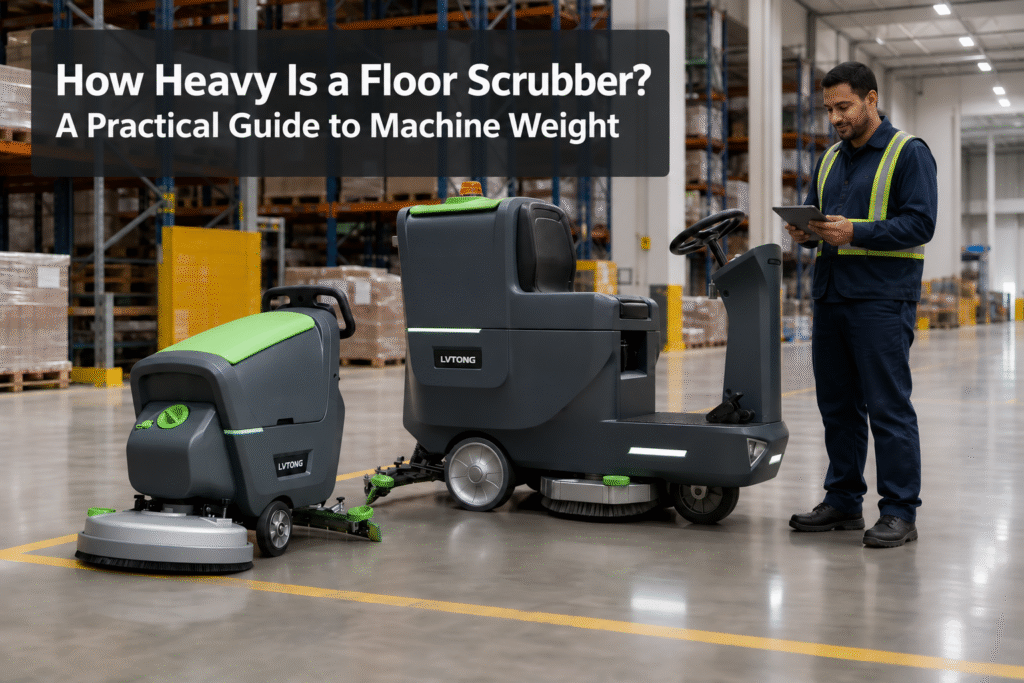
Choisissez la machine adaptée à la surface à nettoyer. Les autolaveuses autoportées conviennent aux allées étroites et aux espaces de moins de 930 m² de surface libre. Les autolaveuses autoportées classiques nettoient 2 à 4 fois plus vite et sont plus économiques au-delà de ce seuil.
Pourquoi les pneus laissent-ils des marques noires sur le béton, et sont-elles permanentes ?
La plupart des marques disparaissent ; celles profondément incrustées peuvent rester. Les marques de pneus sont dues à la migration de plastifiants : les additifs du caoutchouc ramollissent sous l’effet de la chaleur et adhèrent à la surface. Les marques superficielles s’enlèvent avec un dégraissant et un frottement. Les marques imprégnées dans le béton non scellé ou causées par l’adhérence des pneus chauds sur l’époxy peuvent être partielles ou permanentes et nécessiter un ponçage ou une nouvelle couche de protection.
Comment enlever les traces de pneus de chariot élévateur sur le sol d'un entrepôt ?
Vaporisez au préalable un nettoyant pour traces de pneus à base de D-limonène ou un dégraissant alcalin, laissez agir 5 à 10 minutes, frottez avec une brosse en polypropylène ou un tampon rouge ou vert sur une autolaveuse, puis essuyez avec la raclette.
Comment puis-je éviter les traces de pneus et réduire les coûts de nettoyage ?
Trois mesures permettent d'effectuer la majeure partie du travail : sceller le sol avec un scellant pénétrant ou un époxy/polyaspartique correctement installé ; former les conducteurs à éviter les virages brusques et placer des tapis aux points de virage ; et maintenir le sol propre.
Les nettoyants à pH neutre sont-ils toujours sans danger pour les sols industriels ?
Oui pour l'entretien courant, non pour les salissures importantes. Un pH neutre convient au nettoyage quotidien des sols revêtus, scellés et polis. Il ne permet pas d'éliminer les traces d'huile ou de pneus tenaces ; pour ces dernières, il est nécessaire d'utiliser des dégraissants alcalins ou des produits à base de D-limonène.