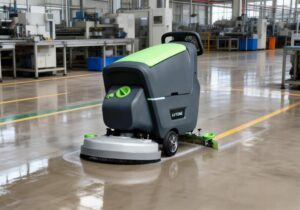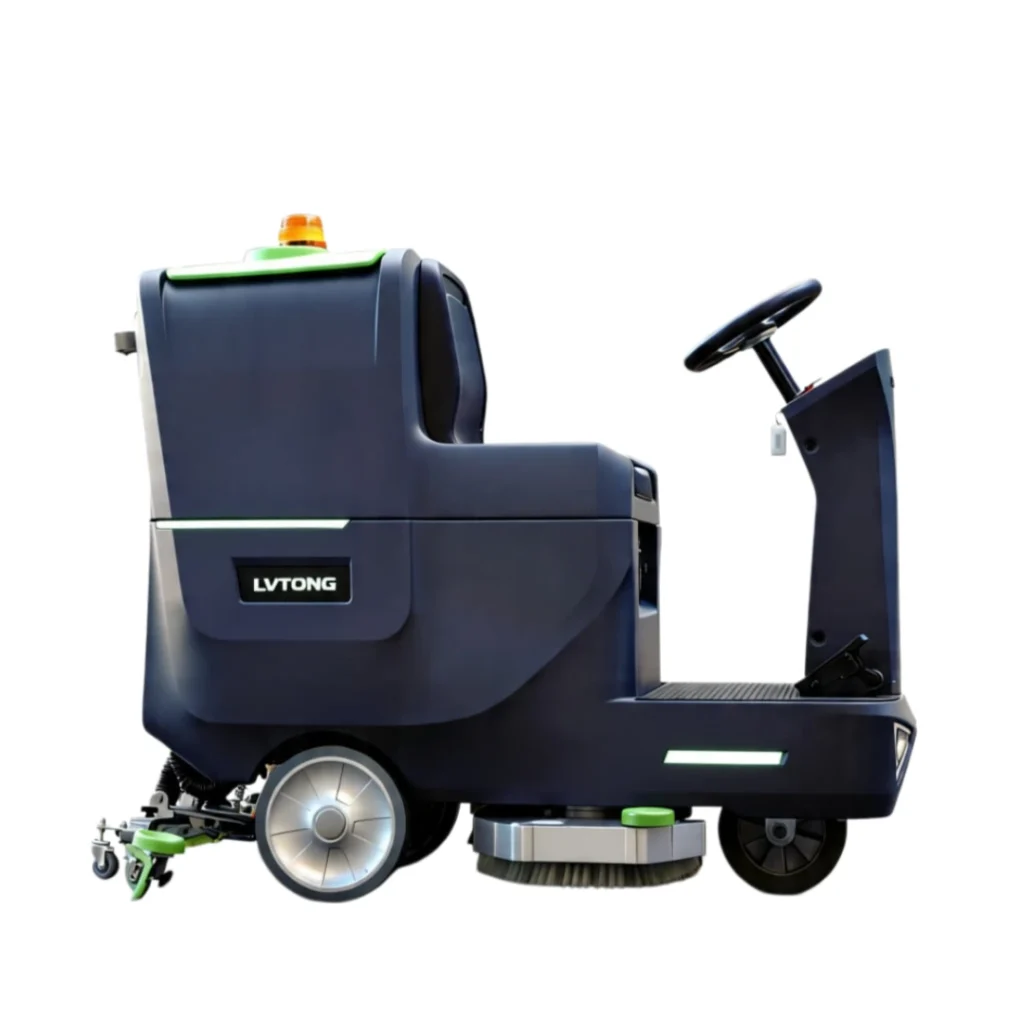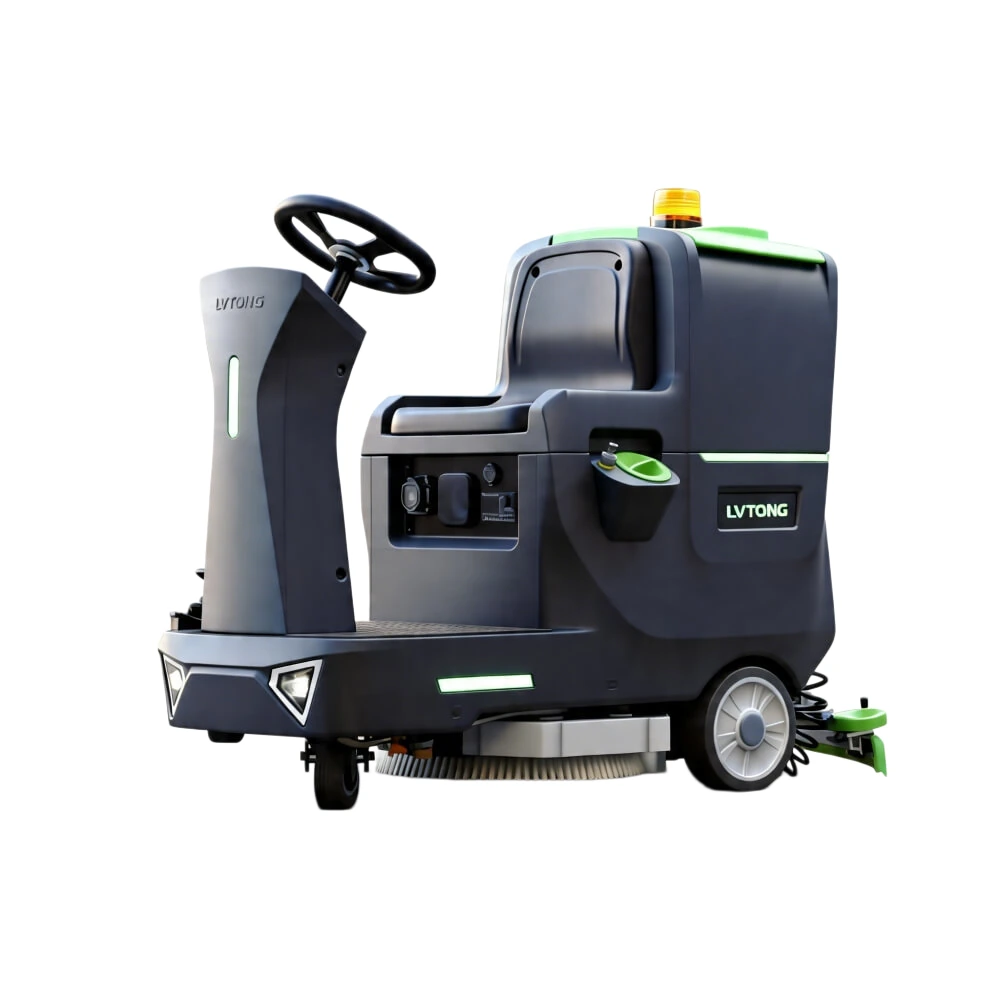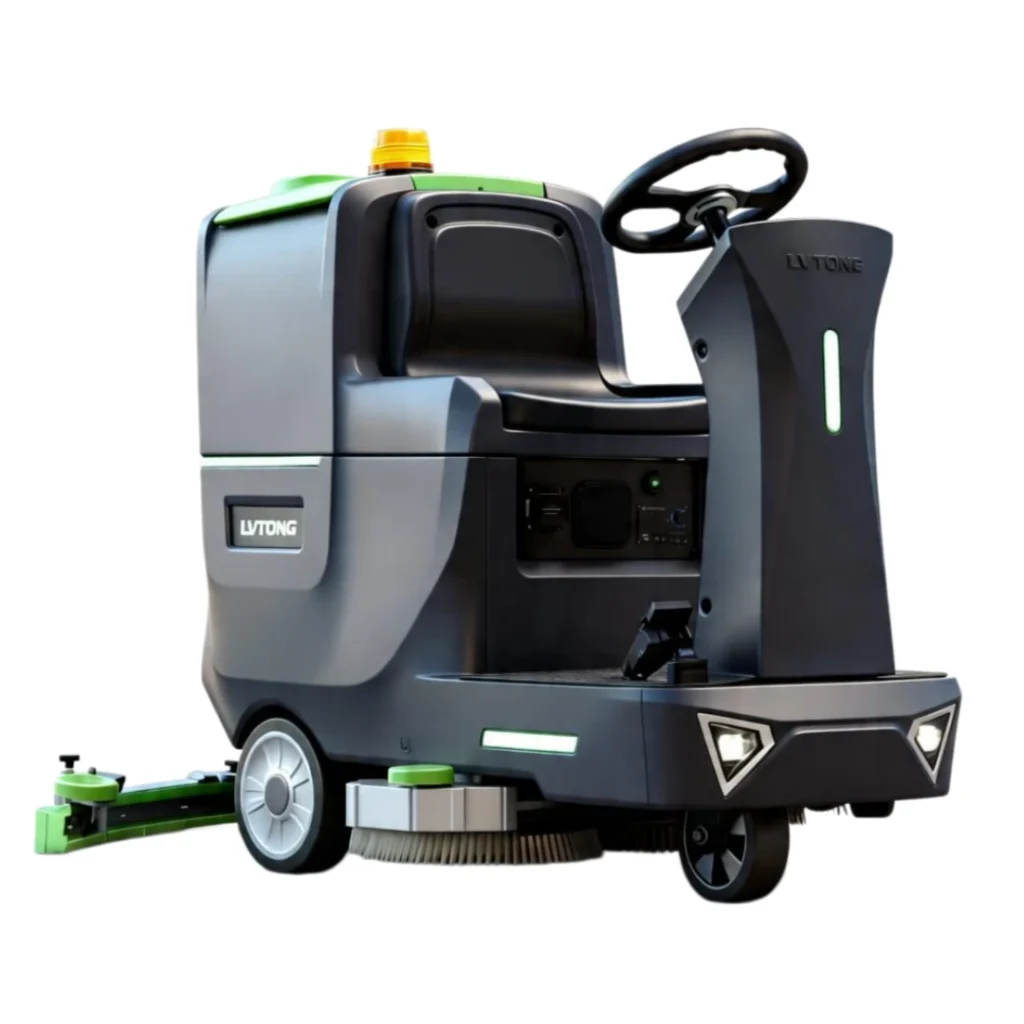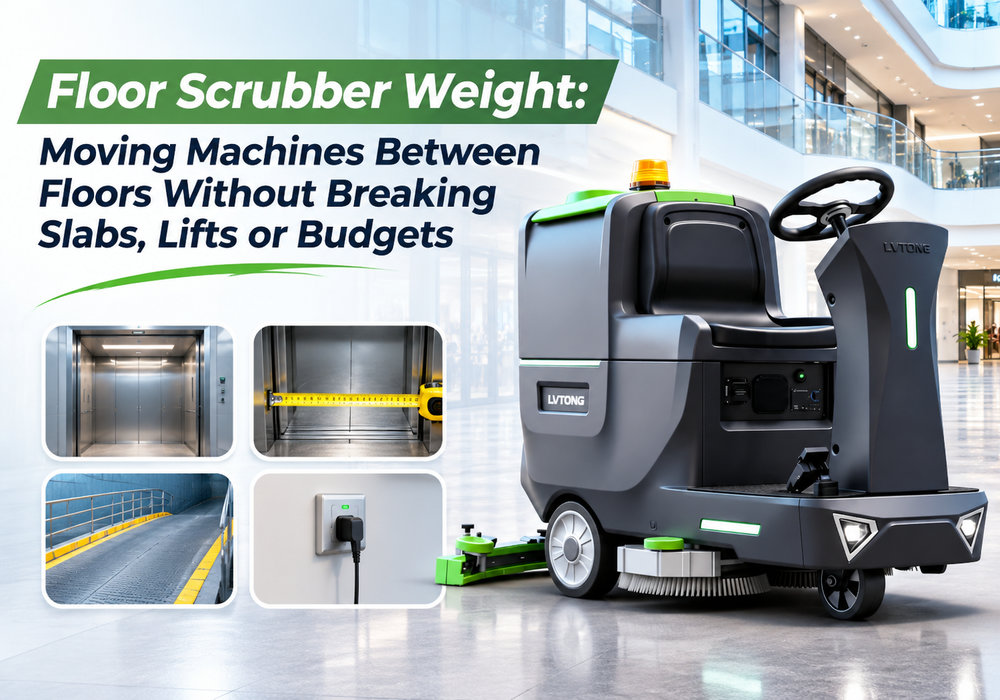
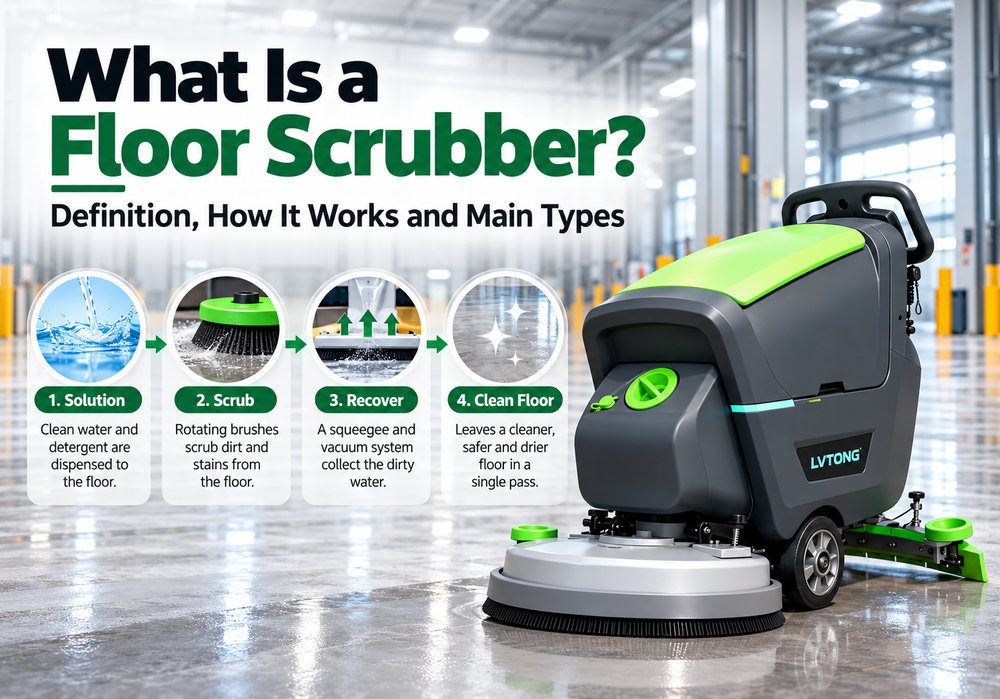
In a single-level warehouse, nobody asks what a machine weighs. In a shopping mall, an office tower or a hospital, the question comes before the price: can this machine ride the elevator, cross the slab and get up the loading ramp at all? That question is answered by one number most buyers never request — the floor scrubber weight in working condition, not the dry figure printed on the quotation. This guide turns that number, and three more around it, into a pre-order checklist.
Réponse rapide
Working weight, not price, decides whether one floor scrubber can serve every floor of your building. Before you order a machine for a multi-floor facility, confirm four numbers:
- Working weight = machine weight + full tanks (1 L of water ≈ 1 kg) — the dry weight on a quote sheet understates the real load.
- Elevator geometry — cab width, depth, door clear width and rated load must fit the machine plus operator.
- Ramp force — on an 8% slope, roughly 8% of working weight must be held or driven by someone or something.
- Per-floor storage — stairs are not a transport route, so every floor needs either its own machine or a lift-served storage point.
The sections below turn these four numbers into a six-line vertical transport specification you can paste into a purchase order.
Why Weight Is the First Number in Multi-Floor Buildings
In multi-floor facilities the working weight of a floor scrubber shapes the whole cleaning plan before cleaning performance enters the conversation.
A machine that cannot travel between floors must be duplicated, stored and secured on every level it serves. That multiplies capital cost, charging points and service visits. A machine that can travel, by contrast, turns one well-equipped unit into a fleet of one. The deciding constraints are physical: the rated load of the freight elevator, the carrying capacity of the slab, the slope of the ramps between levels, and the finished dimensions of the machine itself. Buyers who discover these constraints after delivery end up parking a scrubber on a landing it cannot legally leave — a common outcome in older buildings retrofitted with modern equipment.
Malls are the classic case: one open ground level, upper retail floors, service corridors and parking decks, each with different slab ages and lift access. Our guide des autolaveuses de centre commercial covers the cleaning side of that layout; this page covers the transport side it can only mention in passing.
Working Weight: Machine Weight Plus the Water You Carry
The number on the quotation is a dry weight; the number your elevator and slab actually carry is the machine plus every litre of water in both tanks.
Water is heavy — 1 L of it is almost exactly 1 kg. A walk-behind scrubber with a 62 L solution tank and a 65 L recovery tank carries up to roughly 127 kg of water when both are full. On a ride-on machine the gap is wider still, and the operator’s weight rides along too. That is why the honest question to a supplier is not “how much does it weigh” but “what is the working weight with full tanks”. Illustrative ranges:
| Classe machine | Typical dry weight | Typical water on board | Illustrative working weight |
|---|---|---|---|
| Compact walk-behind (50 cm class) | 80–150 kg | 100–130 kg (both tanks full) | ≈ 200–280 kg plus operator |
| Mid ride-on (85 L class) | 300–450 kg | 150–175 kg | ≈ 470–650 kg plus operator |
| Large ride-on / sweeper-scrubber | 500–900 kg | 200–300 kg | ≈ 700–1,200 kg plus operator |
These ranges are illustrative planning figures, not product claims. Every manufacturer publishes its own; LVTONG publishes complete per-model specification sheets on request — see the LT-S530X autoporté et Tondeuse autoportée LT-S560X pages, and ask us for the working-weight figure of any model you shortlist. The same logic links tank size to purchase decisions, as our compact scrubber guide shows for the horizontal case.
Floor Loading: What the Slab Can Actually Take
For almost every modern commercial slab, a floor scrubber’s concentrated wheel loads are far below design capacity — the exceptions are old buildings, damaged bays and cantilevered structures.
Floor scrubber floor loading sounds alarming but usually resolves in the buyer’s favour. Typical office and retail slabs are designed for distributed loads in the range of 2.5–5 kN/m² (illustrative; local codes govern). A 300 kg machine spreads its weight through four small wheel contact patches, which concentrates load — yet even concentrated, the pressures involved sit well below what a slab designed for public assembly can carry. The real screening questions are three: Is this bay part of an older structure whose design documents no longer exist? Is there visible cracking, spalling or previous overload? Does the route cross a cantilevered balcony, loading dock lip or raised platform? If any answer is yes, ask the building’s structural engineer before the machine arrives. The Institut américain du béton publishes the evaluation frameworks professionals use for exactly these existing-structure questions.
Elevator Geometry: Measure the Cab, Not the Shaft
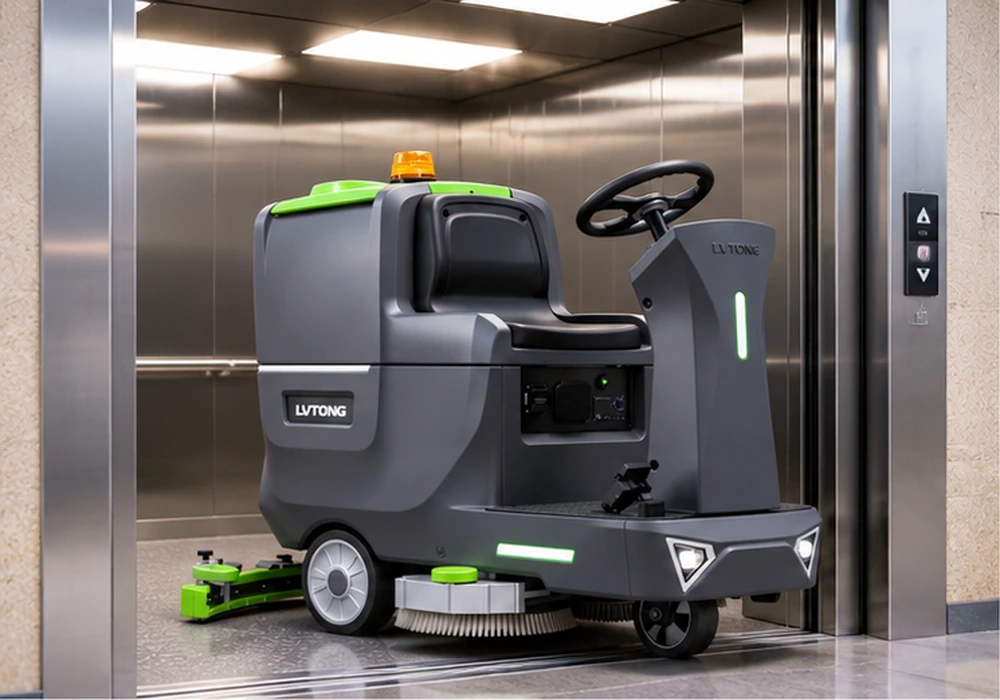
A machine fits an elevator only when cab width, cab depth, door clear width and rated load all clear the machine’s dimensions with the operator inside.
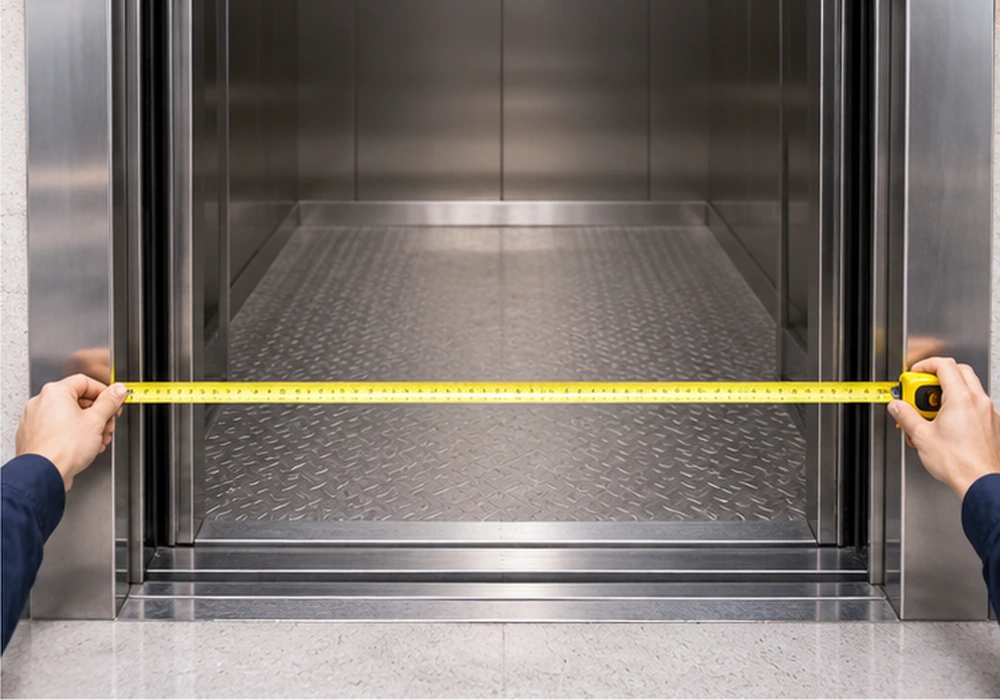
Grab a tape measure before you grab a catalogue. The checklist that matters:
- Cab internal width and depth against the machine’s
floor scrubber dimensions— length with squeegee and handle, width across brushes, and height to the top of the steering column or seat. - Door clear width — the narrowest point of the journey, and the one most often mismeasured because door leaves overlap the frame opening.
- Rated load — machine working weight plus the operator who must ride along on every trip.
- Cab floor and threshold condition — a 30 mm threshold can stop a low-clearance machine that the cab itself would accept.
So, will a floor scrubber fit in an elevator? Frequently yes in a service or freight lift, sometimes in a large passenger lift, and reliably not in a standard residential cab — which is why the measurement checklist, not optimism, should decide it.
Ramps and Slopes: The Force Math Nobody Does
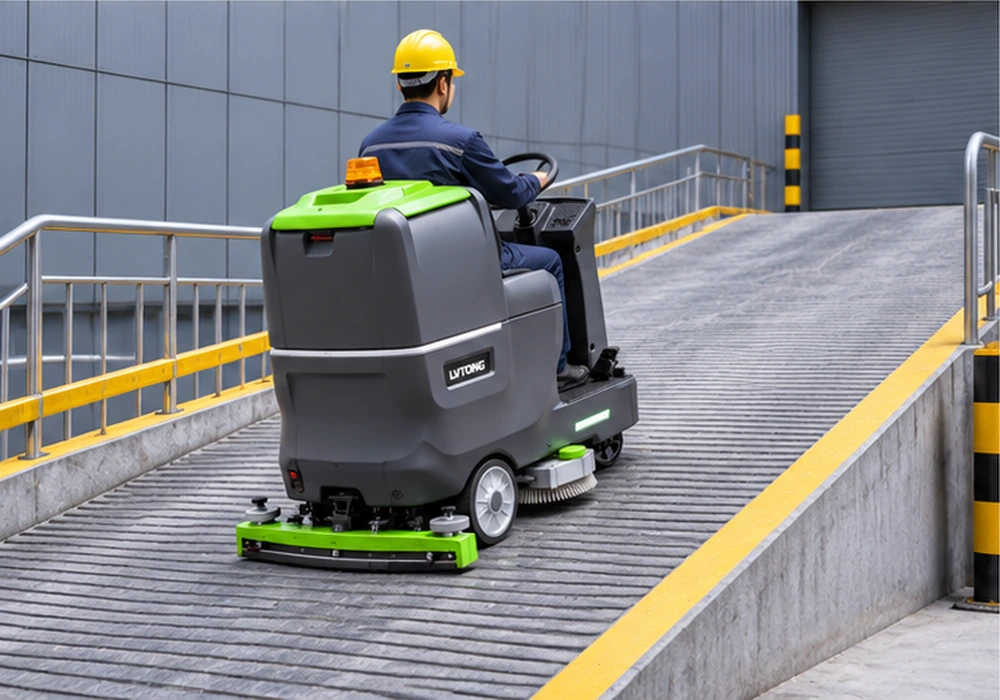
On an 8% ramp, about 8% of working weight turns into a downhill force someone or something must hold — do that arithmetic before choosing walk-behind.
Building access ramps commonly sit near a 1:12 slope (8.3%, about 4.8°). The physics is linear: slope force ≈ floor scrubber weight × sin(angle). A 250 kg working weight on an 8% slope produces roughly 20 kg of force along the ramp; a 500 kg ride-on produces roughly 40 kg. Ergonomic guidance typically places safe sustained push or pull for one person near the 25 kg mark (illustrative), which means the upper half of the weight table above is already a two-person or powered-drive job on any real ramp. Floor scrubber ramp requirements therefore belong in the specification, not in the delivery day: ask the manufacturer for the model’s rated gradient — climb and, more importantly, controlled descent with brakes — and match it to the slopes on your route. Walking surfaces and ramps in US workplaces fall under OSHA 29 CFR 1910 Subpart D, and slip resistance on those ramps is the domain of the Institut national de sécurité des sols. Machine-side safety requirements for powered floor treatment machines are framed by CEI 60335-2-72.
Stairs Are Not a Transport Route
No class of floor scrubber can be carried up a working staircase safely — treat stairs as a hard exclusion, not a challenge.
A 200 kg plus machine, partly filled with water, on a stair flight with one operator, is a dropped-machine and injured-person scenario waiting for a date. Manufacturers’ manuals exclude stairway transport; insurance and workplace-safety logic exclude it independently. If a level can only be reached by stairs, that level needs its own smaller machine, a different cleaning method, or no machine at all. The honest statement of this limit is part of any specification conversation: LVTONG’s line-up spans walk-behind and ride-on machines precisely so that each floor’s plan can be matched to a machine that never needs to climb.
One Machine per Floor or Cross-Floor Dispatch?
Dispatching one machine across floors only pays when lift journeys are few, short and scheduled — otherwise duplication is cheaper than the transport it replaces.
Two operating models exist, and the arithmetic between them is simple:
| Modèle | Convient lorsque | Costs to accept |
|---|---|---|
| Single machine, cross-floor dispatch | Few lift trips per shift; machine stored on the busiest floor; lift route under 10 minutes round trip (illustrative) | Transport time, lift wear, ramp exposure, scheduling dependency on the elevator |
| One machine per floor (or per zone) | Multiple floors need daily scrubbing; lift is shared with public traffic; floors have independent storage and charging points | Capital duplication, more chargers, more service points |
How to move a floor scrubber between floors without regret is mostly a scheduling question: count the lift journeys a realistic week needs, price the duplication alternative, and let the totals pick the model.
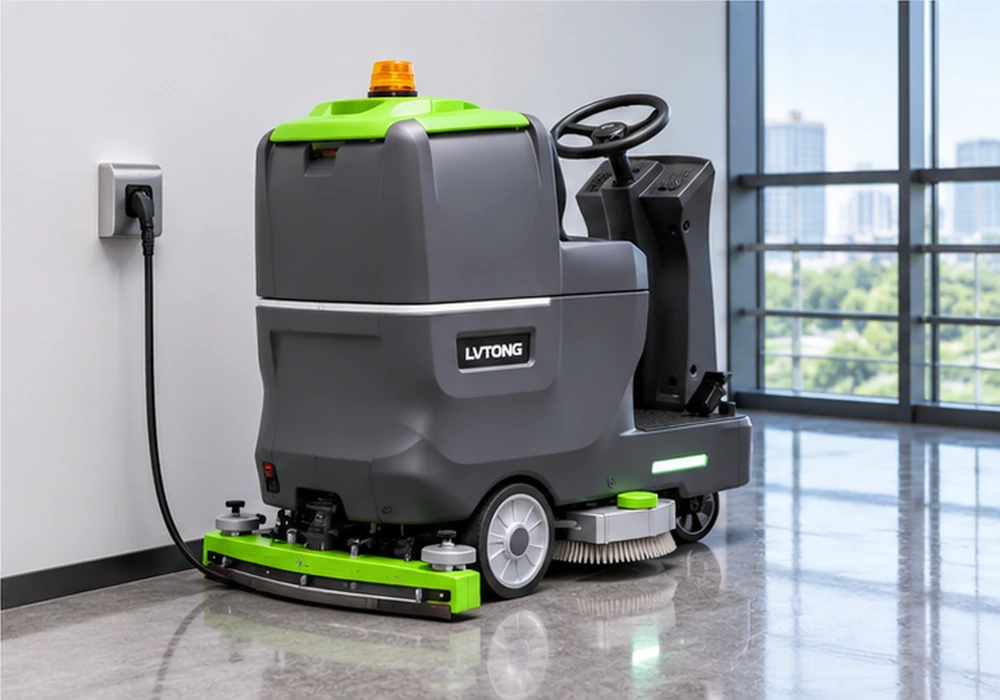
Protecting the Slabs You Ride On
Non-marking wheels and clean tyres protect floor finishes better than any post-cleaning repair.
Multi-floor buildings often mix surface types: polished terrazzo in lobbies, sealed concrete in parking decks, resilient flooring in upper corridors. Three practices keep every surface presentable. First, specify non-marking, non-staining wheel and roller materials and keep them clean — an embedded grit particle marks more than wheel chemistry ever will. Second, respect joints and expansion gaps: small wheels crossing badly damaged joint edges can spall the arrises, so route around known bad joints until they are repaired. Third, match brush pressure and pad grit to the weakest surface on the route, not the strongest — the polishing-grade finishes are the ones that cannot be lightly repaired.
The Six-Line Vertical Transport Specification
Six specified lines in a purchase order remove every vertical-transport surprise before the machine ships.
| # | Ligne de spécifications | Ce qu'il met en évidence |
|---|---|---|
| 1 | Floor scrubber weight with full tanks — the working weight (kg) | The real elevator and ramp load, not dry weight |
| 2 | floor scrubber dimensions: L × W × H incl. handle, squeegee, seat | Cab fit and door clearance |
| 3 | Wheel material and contact patch; non-marking declaration | Slab and finish protection |
| 4 | Rated gradient — climb and controlled descent (manufacturer figure) | Ramp safety on the actual route |
| 5 | Elevator requirement: min cab W × D, min door clear width, min rated load incl. operator | The building side of the match |
| 6 | Per-floor storage and charging points; no-stair-transport acknowledgement | Operating model and liability clarity |
Send your building’s measurements — cab sizes, ramp slopes, slab age — and request the complete specification sheet with working weight and dimensions for the models you are comparing. Contactez LVTONG for the per-model figures, and pair them with the facility-level checklist in our guide de sélection des installations to close the decision.
Questions fréquemment posées
Will a floor scrubber fit in an elevator?
Often yes in a service or freight lift and sometimes in a large passenger lift. Fit is decided by cab width and depth, door clear width and rated load with the operator aboard — measure all four against the machine’s dimensions before ordering.
How much does a ride on floor scrubber weight add up to in working condition?
Ride-on machines typically start around 300 kg dry (illustrative range) and reach 700–1,200 kg working weight with full tanks and an operator on larger models. Always request the manufacturer’s per-model working-weight figure rather than relying on dry weight.
Can a floor scrubber go up stairs?
No. Stairway transport of a powered scrubber is excluded by manufacturer manuals and basic workplace-safety logic. Floors reachable only by stairs need their own machine or a different cleaning method.
Do I need a reinforced floor to run a floor scrubber?
Usually not. A modern commercial slab carries a scrubber’s wheel loads comfortably. Screening questions target old or damaged slabs, cantilevered structures and raised platforms — if any apply, have the building’s engineer assess the route first.