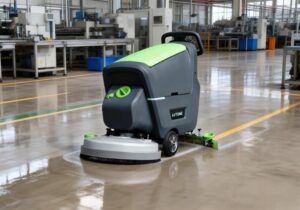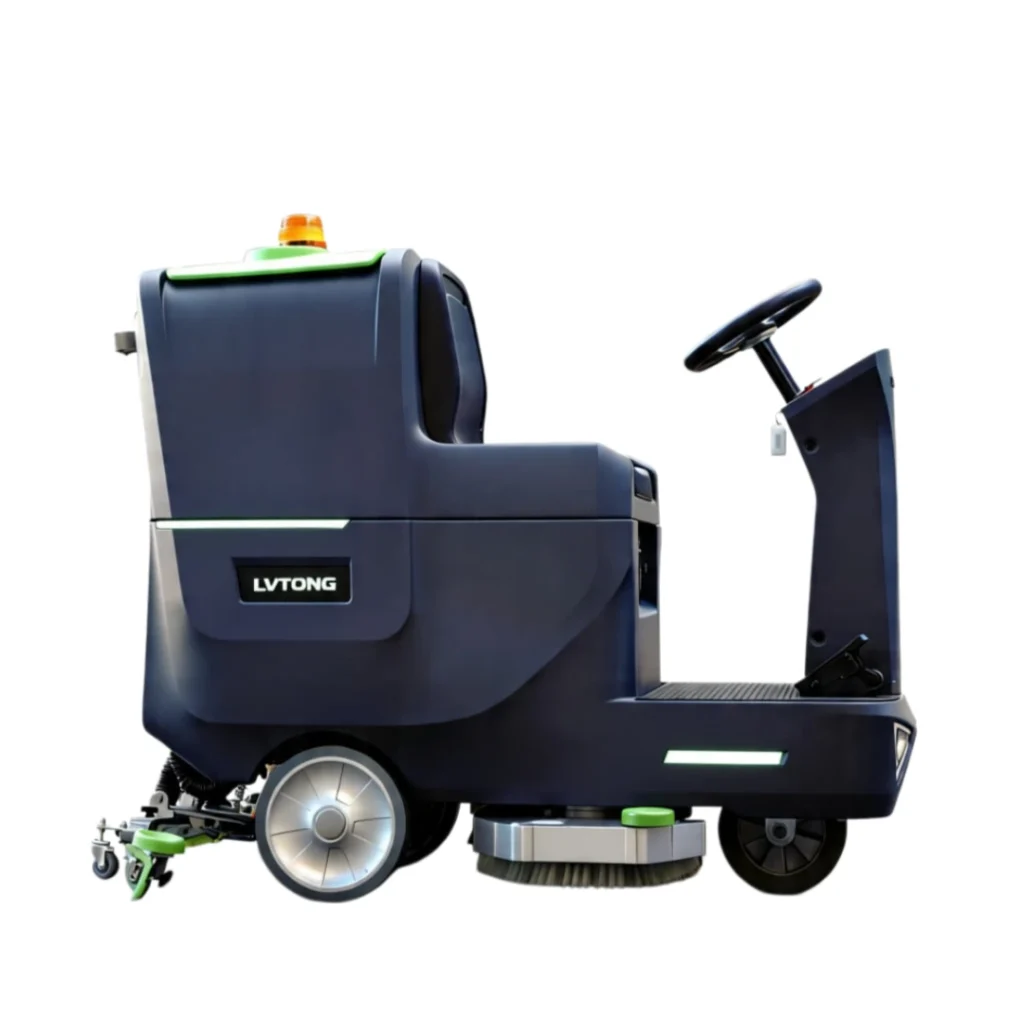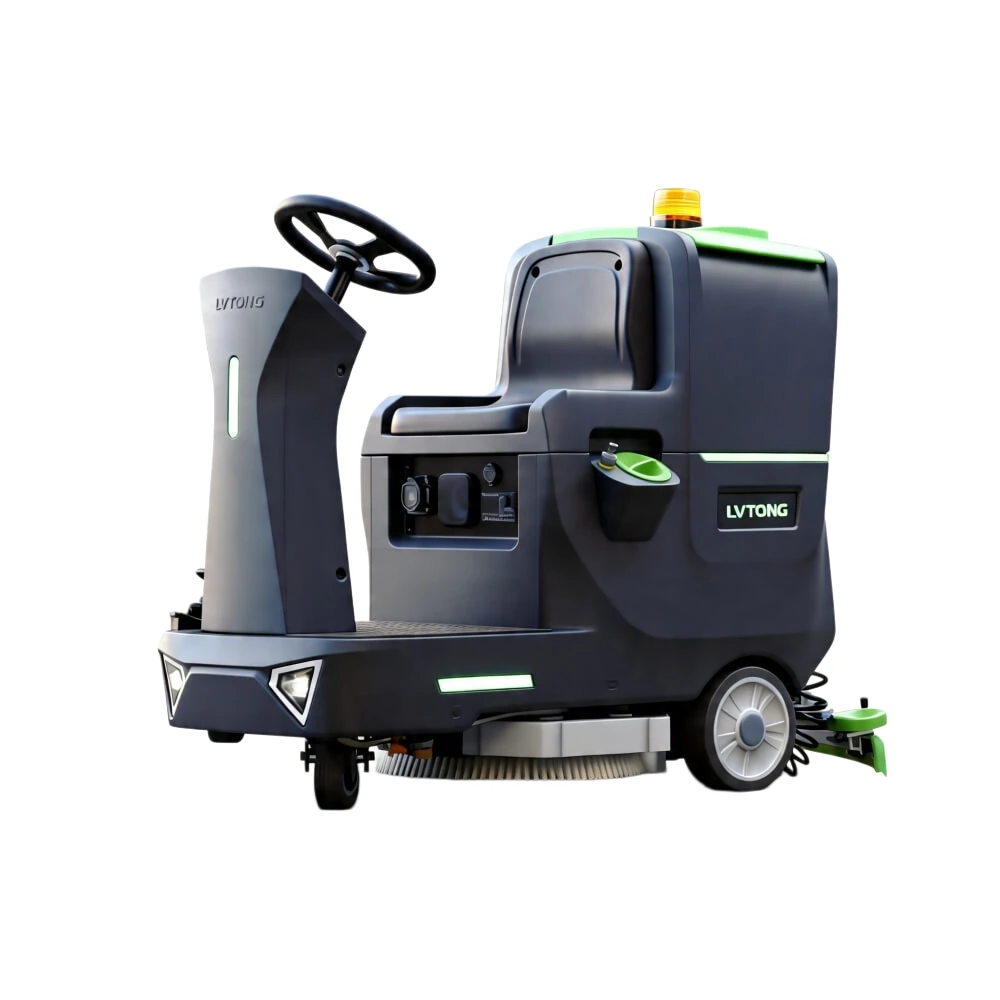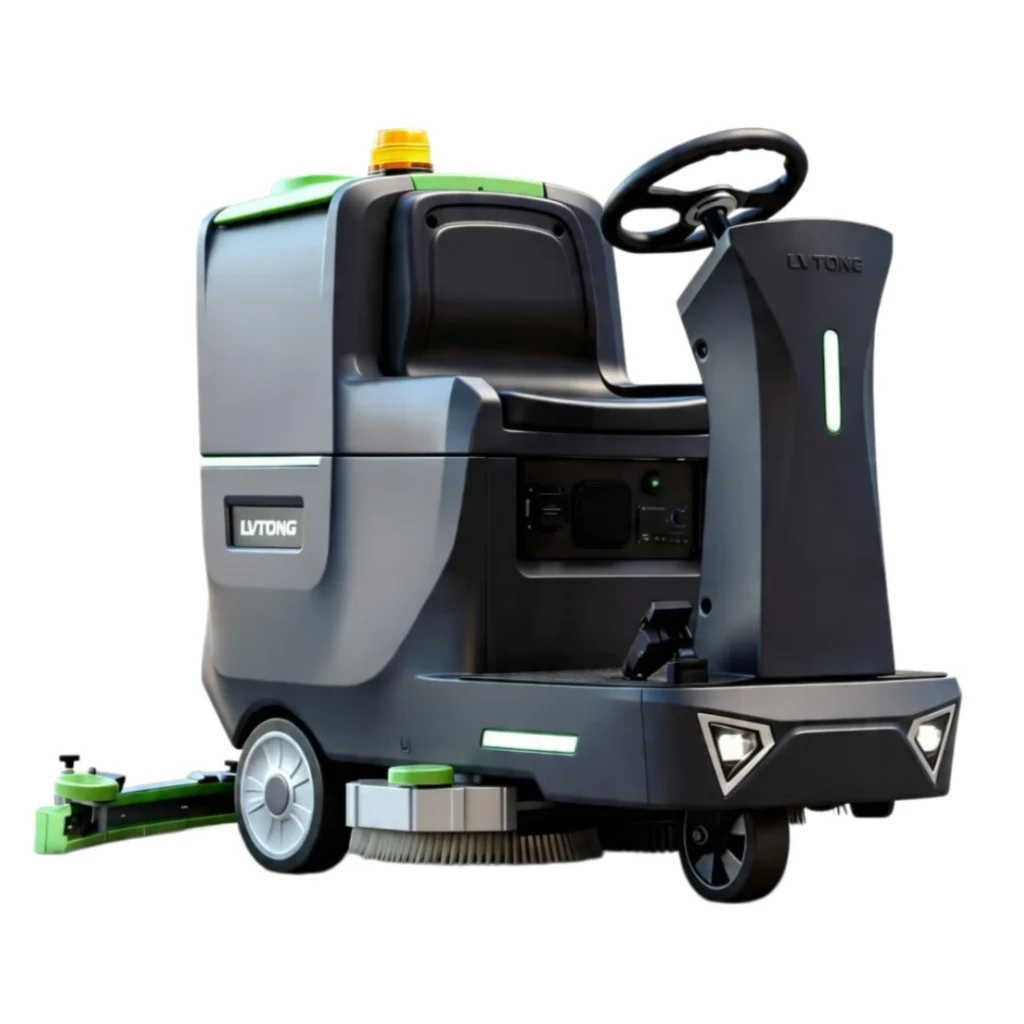
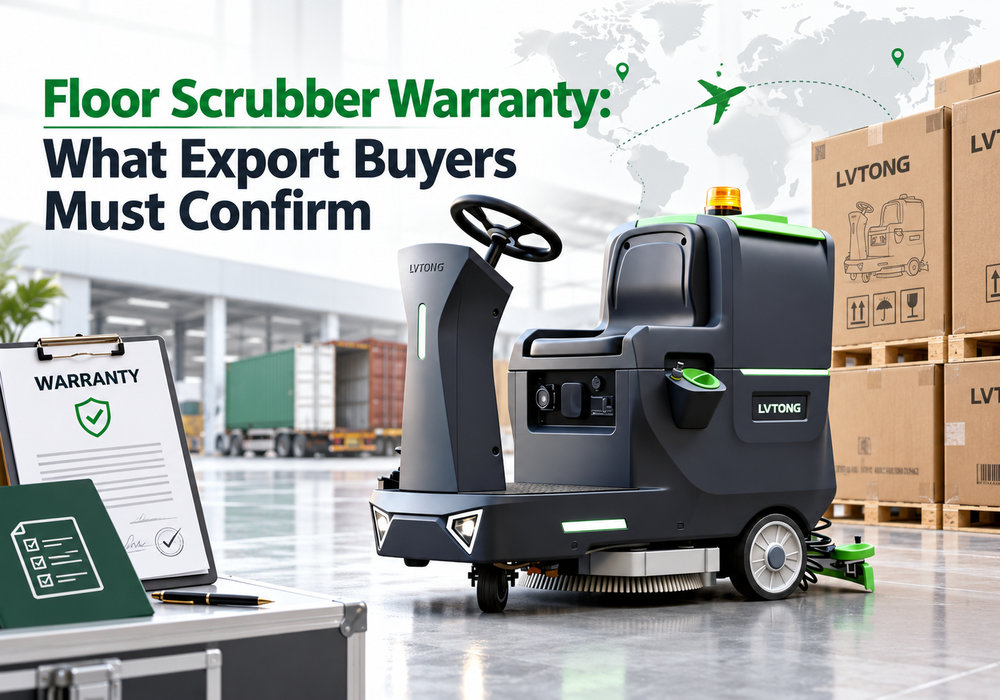
Les autolaveuses autoportées sont conçues pour les établissements qui doivent nettoyer fréquemment de grandes surfaces de sols durs, principalement dégagées. Elles combinent en un seul passage l'application de la solution de nettoyage, le brossage mécanique et la récupération des eaux usées.
Ce guide explique huit avantages pratiques d'une autolaveuse autoportée, ses principales limitations et les conditions qui déterminent si elle constitue un meilleur choix que le nettoyage manuel ou une autolaveuse à conducteur marchant.
Réponse rapide
Le principal avantage d'une autolaveuse autoportée est sa capacité à nettoyer de grandes surfaces avec moins d'heures de travail de l'opérateur, tout en appliquant une pression de brosse, un débit de solution et une récupération des eaux usées constants.
Les autolaveuses autoportées améliorent la productivité, réduisent les déplacements de l'opérateur, diminuent le temps de lavage des sols et limitent les interruptions pour le remplissage. Cependant, elles sont surtout adaptées aux grands espaces ouverts. Dans les petites pièces, les allées étroites et les installations très fréquentées, une autolaveuse à conducteur marchant sera plus appropriée.
Aperçu des avantages d'une autolaveuse autoportée
| Avantage | Avantages commerciaux concrets |
| Productivité accrue | Une plus grande surface au sol peut être nettoyée à chaque quart de travail. |
| demande de main-d'œuvre plus faible | Il se peut que le nombre d'heures de travail de l'opérateur soit réduit. |
| Réduction de la fatigue de l'opérateur | L'opérateur reste assis pendant le nettoyage de grandes surfaces |
| Nettoyage régulier | La pression des brosses, le débit d'eau et la vitesse de déplacement sont plus faciles à contrôler. |
| récupération des eaux usées | Il reste moins d'eau sale sur le sol |
| réservoirs plus grands | Moins de remplissages de solution et d'arrêts pour vider le réservoir de récupération |
| adaptabilité du sol | Les brosses, les tampons et les réglages peuvent être adaptés à différentes surfaces. |
| Contrôle des coûts à long terme | Les utilisateurs réguliers peuvent réduire le coût par mètre carré nettoyé. |
Qu'est-ce qu'une autolaveuse autoportée ?
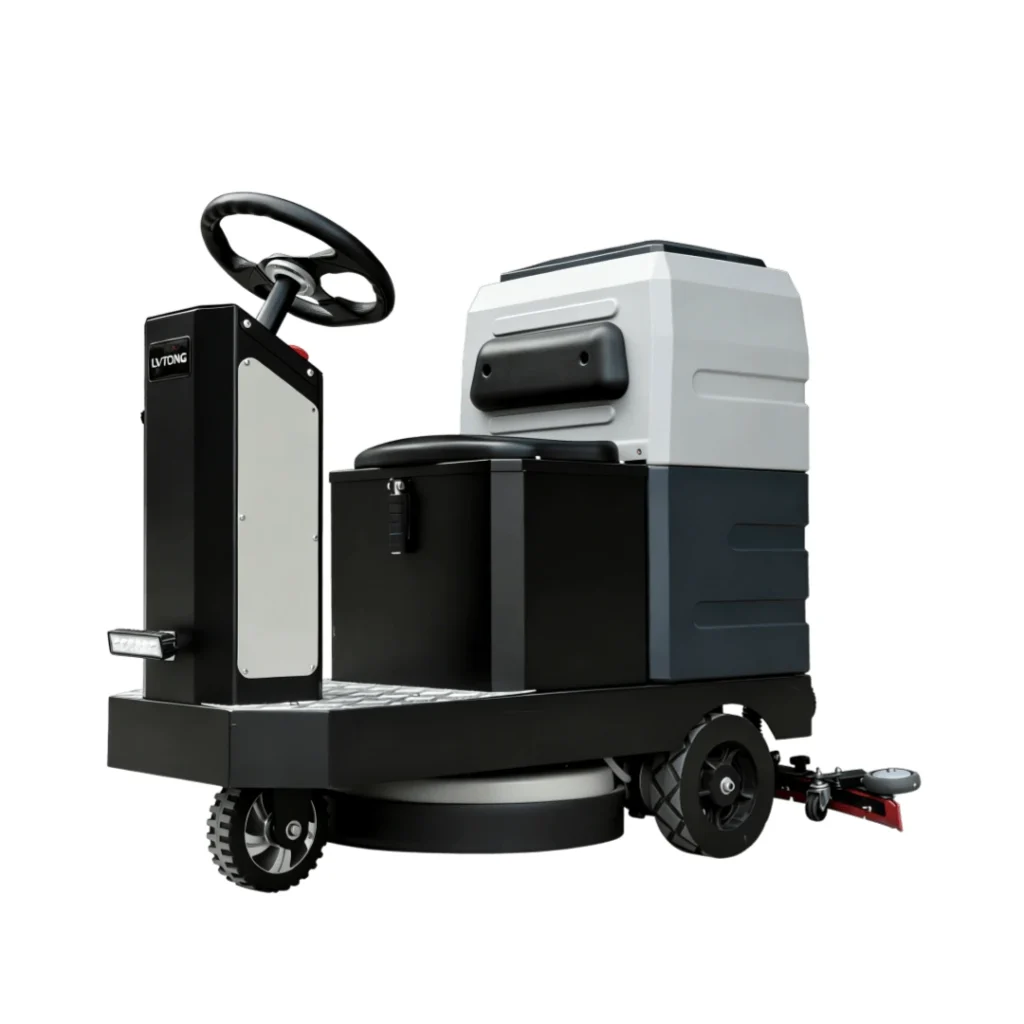
Une autolaveuse autoportée est une machine de nettoyage automatique des sols durs, pilotée en position assise. Elle comprend généralement un réservoir de solution, un plateau de brosses motorisées, un réservoir de récupération, une raclette arrière et un système d'aspiration.
Pendant son fonctionnement, la machine applique une solution nettoyante, déloge la saleté à l'aide de brosses ou de tampons, et récupère l'eau sale dans un réservoir séparé. Ce procédé laisse moins d'eau en surface qu'un nettoyage manuel à l'eau non contrôlé, bien que le rendement de séchage dépende du type de sol, de l'état de la raclette, des réglages de la machine et de la technique d'utilisation.
Les autolaveuses autoportées sont couramment utilisées dans les entrepôts, les usines, les centres logistiques, les aéroports, les centres commerciaux et autres installations disposant de grandes surfaces au sol, principalement ouvertes.
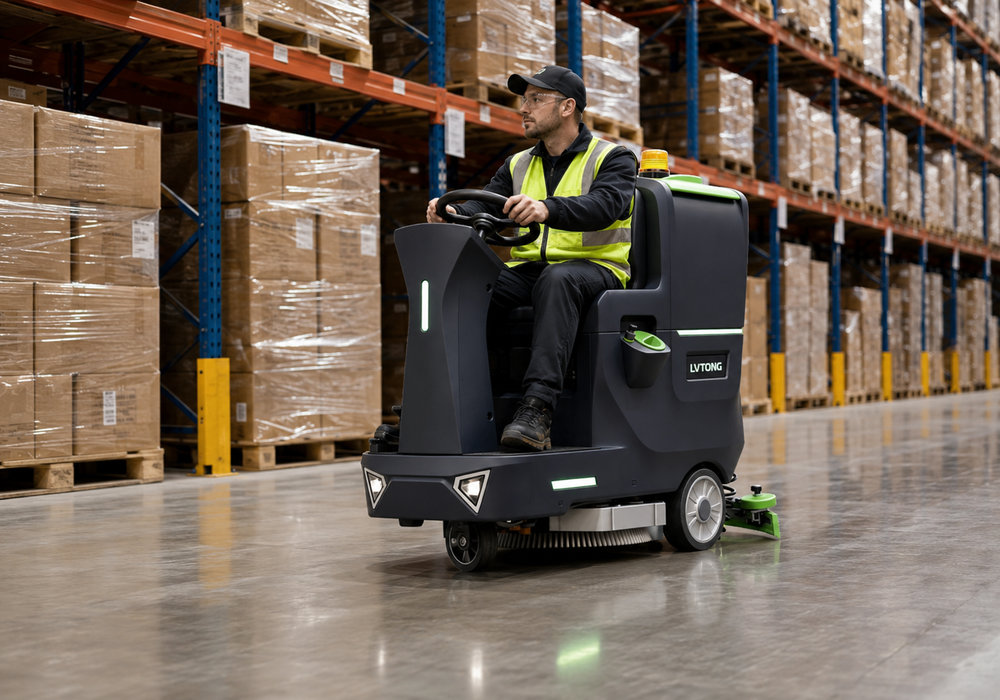
Autolaveuses autoportées vs autolaveuses à conducteur marchant
| Facteur | Autolaveuse autoportée | Autolaveuse à conducteur marchant |
|---|---|---|
| Poste d'opérateur | Assis | Marche derrière la machine |
| Meilleure mise en page | De vastes espaces ouverts | Zones petites ou congestionnées |
| Manœuvrabilité | Moins flexible dans les espaces restreints | Mieux autour des obstacles |
| Capacité typique du réservoir | Généralement plus grand | Généralement plus petit |
| Besoins en stockage | Nécessite plus d'espace | Plus facile à stocker |
| Investissement initial | Généralement plus élevé | Généralement plus bas |
| Confort des longues heures de travail | Plus adapté aux travaux de grande envergure et de longue durée | Nécessite plus de marche |
| Critère de sélection principal | Productivité dans les espaces ouverts | Accès et maniabilité |
8 avantages d'une autolaveuse autoportée
Machine de nettoyage de sols performante, l'autolaveuse joue un rôle essentiel dans l'entretien des sols. Voici ses 8 avantages.
De manière générale, les autolaveuses autoportées sont conçues pour offrir une productivité accrue et des coûts d'exploitation inférieurs à ceux des méthodes de nettoyage traditionnelles.
1. Productivité de nettoyage accrue
Les autolaveuses autoportées permettent de nettoyer de grandes surfaces ouvertes plus rapidement qu'un lavage manuel, car l'opérateur se déplace en continu tandis que la machine distribue la solution, frotte et récupère l'eau sale en un seul passage.
Toutefois, la productivité théorique ne doit pas être considérée comme la productivité réelle par poste. Les manœuvres, les obstacles, le remplissage, l'évacuation des eaux usées, la recharge des batteries et les déplacements entre les zones de nettoyage réduisent tous le rendement pratique.
Lors de la comparaison des machines, évaluez à la fois le taux de nettoyage théorique du fabricant et la productivité pratique attendue dans votre établissement.
Productivité pratique =
surface utile nettoyée ÷ durée totale de fonctionnement
La durée totale de fonctionnement doit inclure :
Nettoyage + retournement + remplissage + vidange + gestion des obstacles
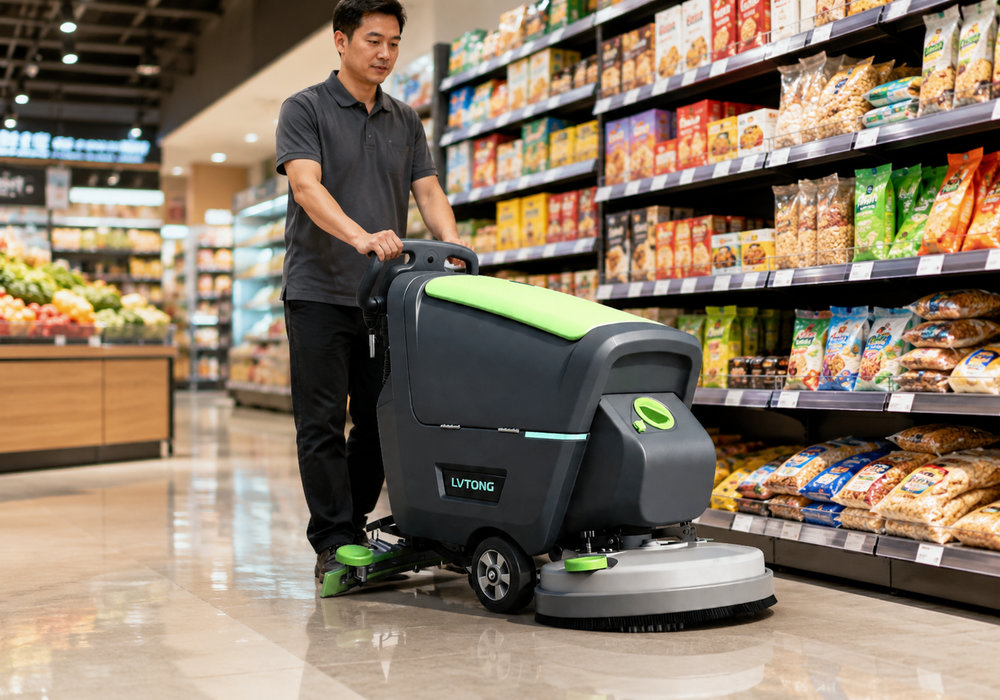
2. Réduction des coûts de main-d'œuvre par zone nettoyée
Une autolaveuse autoportée peut réduire le nombre d'heures de travail nécessaires au nettoyage d'une grande surface. Les économies les plus importantes sont généralement réalisées dans les établissements qui effectuent un nettoyage fréquent, dont les coûts de main-d'œuvre sont élevés et dont les parcours de nettoyage sont longs et dégagés.
Les économies de main-d'œuvre doivent être calculées à partir des temps de travail réels plutôt qu'à partir d'un pourcentage général. Les petites installations ou les installations encombrées peuvent ne pas réaliser les mêmes économies, car le retournement et le nettoyage minutieux des bords prennent plus de temps.
Économies annuelles de main-d'œuvre =
(heures de nettoyage manuel − heures de nettoyage autoporté)
× coût horaire de la main-d'œuvre
× fréquence de nettoyage annuelle
3. Réduction de la fatigue de l'opérateur
Les autolaveuses autoportées permettent aux opérateurs de rester assis tout en nettoyant de grandes surfaces. Comparées au lavage manuel ou à l'utilisation d'une autolaveuse à conducteur marchant sur de longues distances, elles réduisent les efforts de marche, de poussée et de traction nécessaires lors de chaque poste de nettoyage.
Un effort physique réduit peut s'avérer particulièrement précieux dans les entrepôts, les usines, les centres logistiques, les aéroports et autres grandes installations où les opérateurs peuvent passer plusieurs heures à nettoyer. La position assise permet également aux employés de maintenir un rythme de travail plus constant tout au long de leur poste.
Cependant, le confort de l'opérateur ne dépend pas uniquement de la conception de la machine. Le soutien du siège, l'ergonomie des commandes, l'effort de direction, la visibilité, les vibrations, le niveau sonore et la stabilité de la machine influent tous sur l'expérience de conduite. Une formation adéquate est également indispensable pour permettre aux opérateurs d'utiliser la machine en toute sécurité et efficacement.
Lors de la comparaison des autolaveuses autoportées, les responsables d'installations doivent évaluer les caractéristiques ergonomiques suivantes :
- Siège opérateur réglable ou offrant un bon maintien
- Commandes clairement positionnées et faciles à lire
- Direction sans effort
- Bonne visibilité vers l'avant et sur les côtés
- Accès facile pour entrer et sortir de la machine
- Vibrations et bruit de fonctionnement acceptables
- Commandes de sécurité et d'urgence clairement indiquées
Une autolaveuse bien conçue peut réduire les efforts physiques inutiles et rendre les longues journées de nettoyage plus supportables. Toutefois, les entreprises doivent évaluer la conception réelle de la machine et l'environnement de travail plutôt que de supposer que tous les modèles autoportés offrent le même niveau de confort.
4. Des résultats de nettoyage plus constants
Les autolaveuses autoportées offrent des résultats de nettoyage plus homogènes que les méthodes manuelles non contrôlées. La machine permet aux opérateurs de maintenir une pression de brosse, un débit de solution et une vitesse de déplacement relativement constants tout au long du cycle de nettoyage, contribuant ainsi à réduire les irrégularités dues aux changements de technique ou à la fatigue.
Le système de brosses ou de tampons motorisés déloge la saleté, la poussière, la graisse et autres résidus présents sur le sol. Simultanément, le système de raclette et d'aspiration arrière récupère l'eau sale dans un réservoir de récupération séparé. Le fait de combiner le lavage et la récupération des eaux usées en un seul passage permet aux établissements de maintenir un processus de nettoyage plus homogène sur de grandes surfaces.
Toutefois, les performances de nettoyage dépendent toujours de plusieurs facteurs de fonctionnement, notamment :
- matériau et état de la surface du sol
- Type de saleté ou de contamination
- choix de brosse ou de tampon
- Pression des brosses
- compatibilité des solutions de nettoyage
- Réglage du débit d'eau
- vitesse de déplacement de la machine
- État et réglage de la raclette
- Formation des opérateurs
Différents types de contamination requièrent différentes méthodes de nettoyage. Poussières fines, traces de pneus, huile, résidus alimentaires et saletés incrustées peuvent nécessiter des brosses, des tampons, des détergents ou des vitesses de nettoyage différents. Les responsables d'installations doivent donc sélectionner les réglages de la machine en fonction du sol et du niveau de contamination, plutôt que d'utiliser la même configuration pour toutes les zones.
Dans les environnements où l'hygiène est primordiale, une autolaveuse peut éliminer les saletés et les résidus susceptibles de nuire à l'efficacité d'un programme de nettoyage. Toutefois, le nettoyage régulier des sols ne saurait être considéré comme une désinfection, à moins qu'un désinfectant approprié, un temps de contact validé et un protocole d'hygiène documenté ne soient utilisés.
Pour les installations dotées de grandes surfaces fréquemment nettoyées, le principal avantage ne réside pas seulement dans une puissance de nettoyage accrue, mais aussi dans la possibilité d'appliquer un processus de nettoyage plus contrôlé et reproductible sur l'ensemble de la zone de travail.

5. Récupération des eaux usées plus rapide et temps de séjour au sol plus court
Une autolaveuse autoportée applique la solution de nettoyage, frotte le sol et récupère la majeure partie de l'eau sale lors du même passage. La raclette arrière dirige les eaux usées vers l'entrée d'aspiration, tandis que le système d'aspiration les transfère dans le réservoir de récupération.
Ce procédé laisse moins de solution souillée sur le sol qu'un nettoyage manuel à l'eau non contrôlé. La réduction de la quantité d'eau résiduelle en surface permet de diminuer le temps de contact avec l'eau et de remettre plus rapidement les zones nettoyées en état de fonctionnement.
Une récupération plus rapide des eaux usées peut s'avérer particulièrement utile dans les cas suivants :
- Entrepôts avec circulation continue de véhicules et d'employés
- Supermarchés et centres commerciaux
- Installations d'usines et de logistique
- Aéroports et terminaux de transport
- Parking
- Autres zones commerciales à fort trafic
L'efficacité de la récupération d'eau dépend de l'état et du réglage de la machine. Des raclettes usées, des tuyaux d'aspiration obstrués, une vitesse de déplacement excessive, des sols irréguliers ou un réservoir de récupération trop plein peuvent entraîner des résidus d'eau.
Les opérateurs doivent inspecter régulièrement les composants suivants :
- Lames de raclette avant et arrière
- Tuyau d'aspiration et circuit d'aspiration
- Système de flotteur du réservoir de récupération
- Angle de la raclette et contact avec le sol
- performances du moteur d'aspirateur
- Joints d'étanchéité du réservoir de récupération
Il convient donc de décrire une autolaveuse comme laissant le sol presque sec plutôt que complètement ou instantanément sec. Les performances de séchage varient selon la nature du sol, l'état de la machine, sa vitesse de fonctionnement et les conditions environnementales.
Les autolaveuses autoportées peuvent contribuer à réduire l'exposition aux sols mouillés, mais des panneaux d'avertissement et des contrôles d'accès temporaires peuvent tout de même être nécessaires jusqu'à ce que la surface soit complètement sèche.
6. Moins d'arrêts pour le remplissage et la vidange
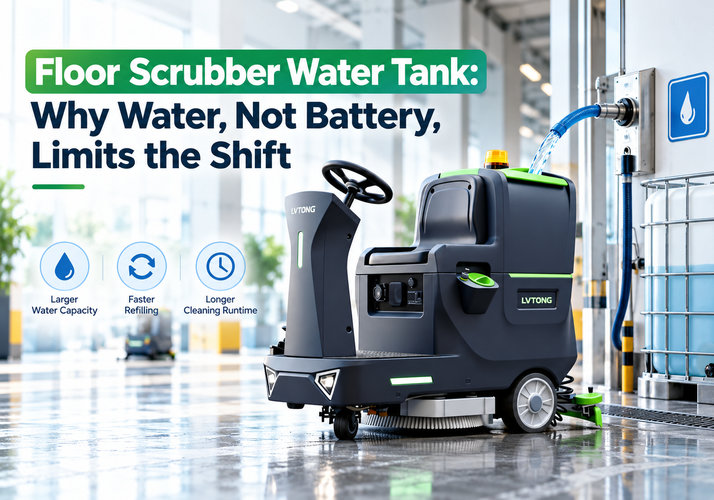
Les autolaveuses autoportées sont généralement équipées de réservoirs de solution et de récupération plus grands que les machines compactes à conducteur marchant. Le réservoir de solution contient l'eau propre et le détergent, tandis que le réservoir de récupération recueille l'eau sale collectée par la raclette et le système d'aspiration.
Des réservoirs de plus grande capacité permettent de réduire les interruptions liées au remplissage de solution propre et à la vidange des eaux usées lors du nettoyage de grandes surfaces. L'opérateur peut ainsi consacrer une plus grande partie de son temps au nettoyage proprement dit, au lieu de faire des allers-retours constants entre la zone de travail et les points de remplissage ou d'évacuation.
Le gain de productivité est particulièrement visible dans les installations dotées de :
- De vastes espaces ouverts
- Longues routes de nettoyage
- Accès limité aux points de remplissage d'eau
- Sites d'élimination des eaux usées éloignés
- Nettoyage fréquent ou en plusieurs équipes
La capacité du réservoir ne doit pas être évaluée indépendamment des autres spécifications de la machine. Les responsables d'installations doivent également prendre en compte la largeur de nettoyage, le débit de solution, l'autonomie de la batterie, l'état du sol et la productivité pratique attendue.
Un réservoir plus grand n'est pas toujours synonyme de meilleure machine. L'ajout d'eau augmente le poids de la machine et peut affecter sa maniabilité, son transport, son stockage et les contraintes de charge au sol. La taille de réservoir la plus adaptée est celle qui permet d'effectuer le nettoyage requis sans rendre la machine inutilement encombrante pour l'établissement.
Les modèles dotés d'un débit de solution réglable ou de modes économiques peuvent également aider les opérateurs à éviter d'utiliser plus d'eau et de détergent que nécessaire. Les économies réelles d'eau et de produits chimiques dépendent des réglages de la machine, de la technique de l'opérateur, du type de contamination et de la méthode de nettoyage remplacée.
Lorsqu'ils comparent des autolaveuses autoportées, les responsables d'installations devraient se poser les questions suivantes :
- Quelle surface utile doit être nettoyée par poste ?
- À quelle fréquence faudra-t-il remplir le réservoir de solution ?
- À quelle fréquence faudra-t-il vider le réservoir de récupération ?
- Où se trouvent les points de remplissage et d'évacuation des eaux usées les plus proches ?
- L'autonomie de la batterie correspond-elle à la durée de fonctionnement prévue du réservoir ?
- La machine peut-elle se déplacer en toute sécurité dans toutes les allées et les portes ?
L’objectif n’est pas simplement de sélectionner les plus grands réservoirs disponibles, mais de réduire les interruptions inutiles tout en conservant une taille et une maniabilité de la machine appropriées.
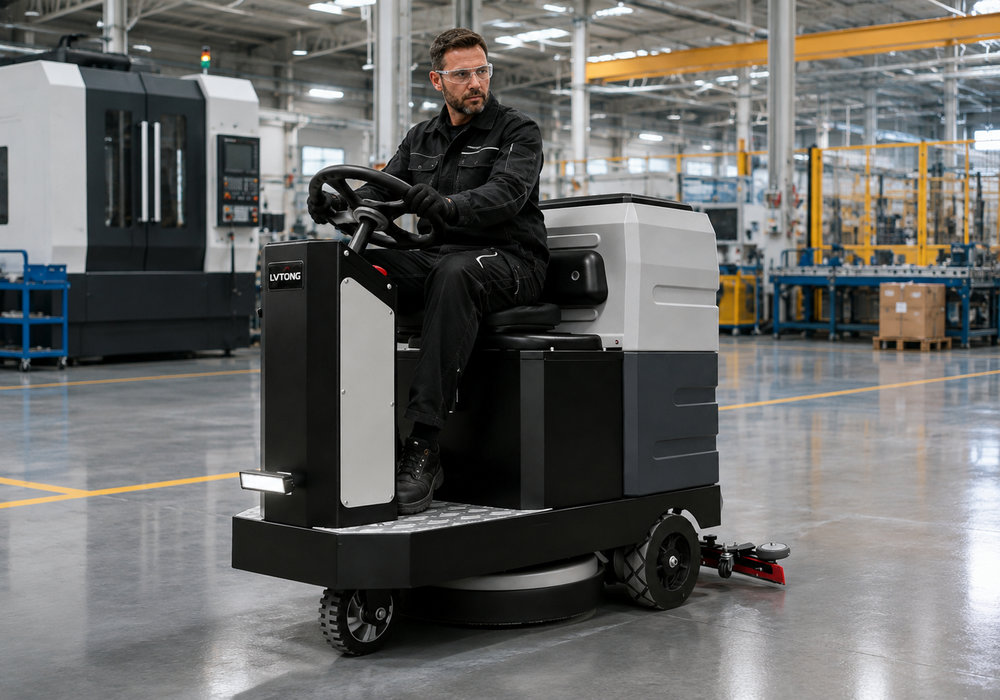
7. Adaptabilité à différentes conditions de sol
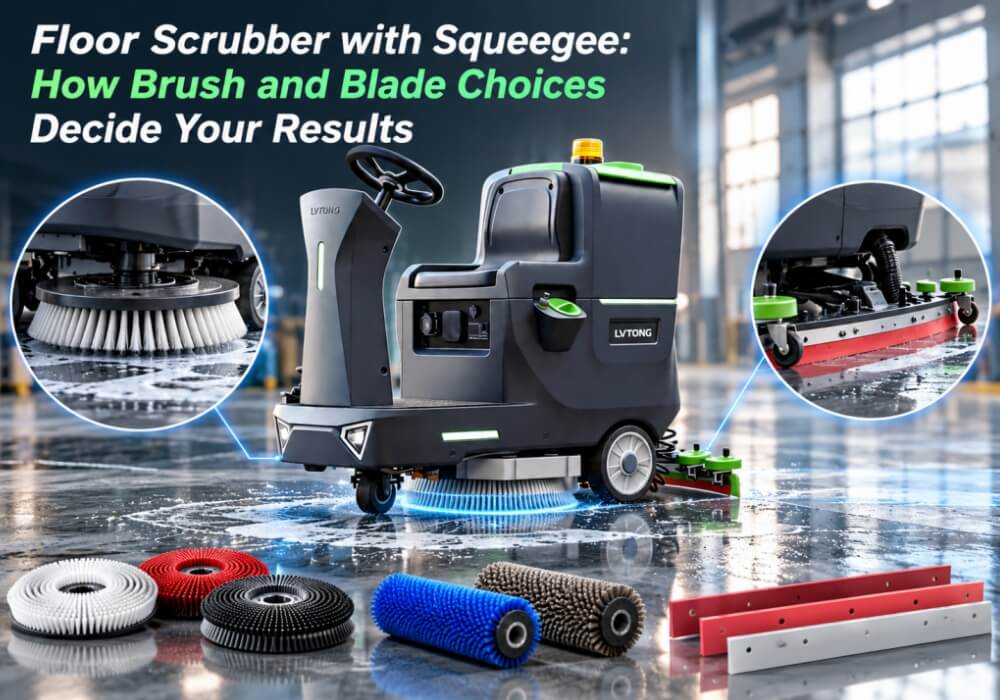
Les autolaveuses autoportées peuvent être équipées de différentes brosses, disques et réglages de fonctionnement pour nettoyer une grande variété de sols durs. Cette polyvalence permet à une seule machine de prendre en charge plusieurs tâches de nettoyage au sein d'un grand bâtiment commercial ou industriel.
Selon la configuration de la machine, les autolaveuses autoportées peuvent être utilisées sur des surfaces telles que :
- Béton scellé
- sols recouverts d'époxy
- Carrelage en céramique
- Revêtement de sol en vinyle
- Terrazzo
- sols commerciaux finis
- Revêtement de sol de sécurité texturé
Le choix du matériel de nettoyage approprié dépend à la fois du revêtement de sol et du type de salissure. Un tampon doux peut convenir à une surface délicate, tandis qu'une brosse plus abrasive sera nécessaire pour les sols texturés ou les salissures industrielles incrustées.
Les opérateurs devront peut-être également procéder à des ajustements :
- type brosse ou tampon
- Pression des brosses
- Débit de la solution
- détergent de nettoyage
- vitesse de déplacement
- Nombre de passages de nettoyage
Une machine performante sur du béton ciré peut nécessiter un disque, une brosse ou un produit chimique différent pour les sols en époxy, en carrelage ou en vinyle. L'utilisation d'un disque trop abrasif, d'une pression excessive sur la brosse ou d'un produit chimique incompatible risque d'endommager le revêtement de sol ou la finition.
Avant de nettoyer un nouveau type de revêtement de sol, les opérateurs doivent consulter les instructions d'entretien du fabricant et tester la brosse, le tampon et le produit chimique sélectionnés sur une petite surface discrète.
Dans les installations présentant des types de sols variés, il convient également de vérifier que la machine permette un changement rapide des brosses ou des disques de nettoyage. Un réglage aisé permet de réduire les temps d'arrêt lors des déplacements de la machine entre les entrepôts, les zones de production, les couloirs et autres zones de nettoyage.
L'adaptabilité d'une autolaveuse autoportée ne signifie pas qu'un seul réglage convient à toutes les surfaces. Son véritable atout réside dans la possibilité de configurer la machine en fonction du sol, du niveau de salissure et du résultat de nettoyage souhaité.
8. Meilleur contrôle des coûts à long terme
Une autolaveuse autoportée permet de réduire le coût par surface nettoyée en combinant l'application de la solution, le nettoyage et la récupération des eaux usées en un seul passage. Cela peut diminuer le temps de travail et améliorer l'efficacité du nettoyage dans les grandes installations soumises à des cycles de nettoyage fréquents.
Toutefois, le coût total ne doit pas se limiter au prix d'achat. Les gestionnaires d'installations doivent également prendre en compte :
-
Travail
-
Électricité
-
Eau et détergent
-
Brosses, tampons et lames de raclette
-
Entretien et réparations
-
remplacement de la batterie
Un calcul simple du délai de récupération est le suivant :
Délai de récupération estimé = Coût d'acquisition total ÷ Économies nettes annuelles
Le retour sur investissement réel dépend de la surface à nettoyer, de la fréquence de nettoyage, du coût de la main-d'œuvre et de l'utilisation de la machine. Correctement choisie, utilisée régulièrement et bien entretenue, une autolaveuse autoportée permet de maîtriser les coûts de nettoyage à long terme.
Limites des autolaveuses autoportées
Limites des autolaveuses autoportées
Les autolaveuses autoportées offrent des avantages importants, mais elles ne constituent pas la meilleure option pour toutes les installations.
Coût initial plus élevé
Les autolaveuses autoportées coûtent généralement plus cher que les autolaveuses compactes à conducteur marchant, car elles comprennent des réservoirs plus grands, des systèmes de traction, des batteries, un siège pour l'opérateur et des commandes plus complexes.
Plus d'espace est nécessaire
La machine nécessite une largeur d'allée suffisante, un espace de manœuvre suffisant, un espace de stockage et un accès à une zone de charge ou d'entretien des batteries appropriée.
Moins maniable dans les zones congestionnées
Les espaces restreints, les petites pièces, les allées étroites et les équipements densément placés peuvent encore nécessiter une autolaveuse compacte ou un nettoyage manuel de précision.
La formation et la maintenance restent nécessaires.
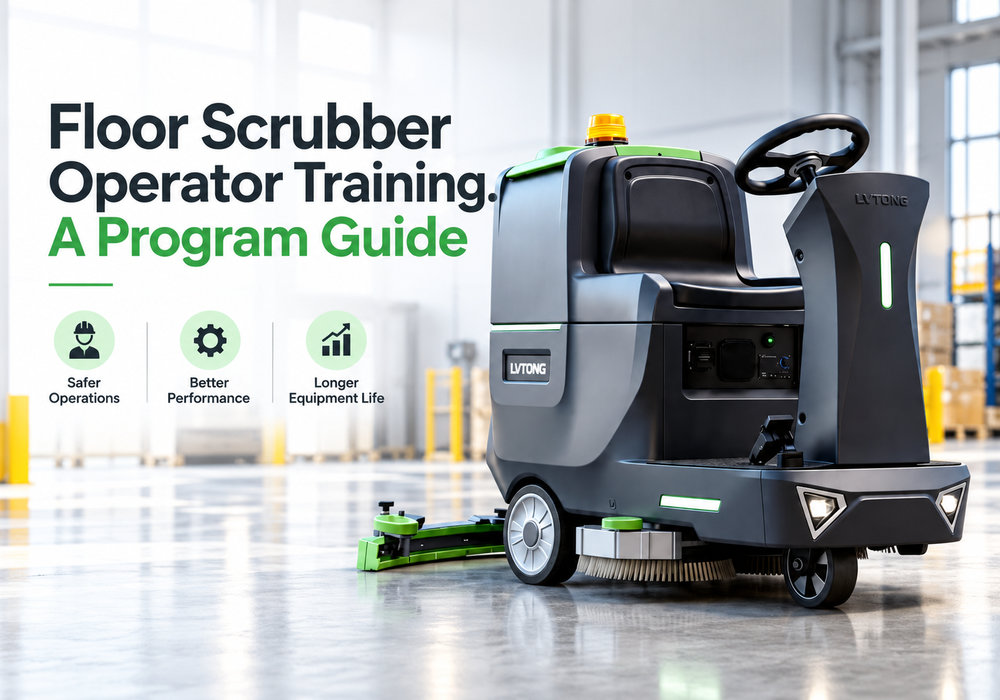
Les opérateurs doivent recevoir une formation sur le débit d'eau, le choix de la brosse ou du tampon, le réglage de la raclette, la charge de la batterie et la conduite en toute sécurité. Les réservoirs, les brosses, les tuyaux et les lames de raclette doivent également être inspectés et nettoyés régulièrement.
L'utilisation détermine la valeur
Une machine de grande taille peut ne pas offrir un rendement intéressant si elle n'est utilisée qu'occasionnellement ou si elle passe une grande partie de son temps de fonctionnement à manœuvrer autour d'obstacles.
Les autolaveuses autoportées sont-elles adaptées aux grands entrepôts ?
Les autolaveuses autoportées sont généralement bien adaptées aux entrepôts disposant de grandes surfaces ouvertes, de cycles de nettoyage fréquents et d'allées suffisamment larges. Elles permettent de réduire les déplacements des opérateurs et de nettoyer de longs trajets en limitant les interruptions pour le remplissage des réservoirs.
Elles peuvent s'avérer moins adaptées lorsque les allées sont étroites, que les palettes obstruent fréquemment le passage ou que le sol comporte de nombreuses zones de nettoyage isolées. C'est pourquoi certains entrepôts utilisent une autolaveuse autoportée pour les zones dégagées et une machine compacte à conducteur marchant pour les quais de chargement, les angles et les allées encombrées.
| facteur d'entrepôt | Favorise les porteurs | Favorise les poussettes |
|---|---|---|
| Grand espace ouvert | Oui | Parfois |
| Allées larges | Oui | Oui |
| Allées étroites | Non | Oui |
| Nettoyage fréquent | Oui | Parfois |
| De nombreux obstacles fixes | Moins adapté | Plus approprié |
| longues journées de nettoyage | Oui | Moins confortable |
| Espace de stockage limité | Non | Oui |
| budget limité | Moins adapté | Plus approprié |
Un nettoyage régulier des sols peut-il prolonger leur durée de vie ?
Un nettoyage régulier permet de protéger les sols durs compatibles en éliminant la poussière abrasive, le gravier, les huiles et les résidus avant que le passage des piétons ne les incruste dans la surface.
Toutefois, l'utilisation d'une machine ne garantit pas à elle seule une durée de vie prolongée des sols. Les résultats dépendent du matériau du sol, du revêtement, de la fréquence de nettoyage, de la compatibilité des produits chimiques, du choix du tampon ou de la brosse et des réglages de l'opérateur. Une pression excessive de la brosse ou l'utilisation d'un produit chimique inadapté peuvent réduire la durée de vie du sol au lieu de l'allonger.
Quand faut-il choisir une autolaveuse autoportée ?
Une autolaveuse autoportée est idéale pour les établissements qui doivent nettoyer fréquemment de grandes surfaces, principalement dégagées. Elle permet de réduire les déplacements de l'opérateur, de couvrir de longs trajets et de récupérer l'eau sale en un seul passage.
Envisagez une autolaveuse autoportée si votre installation dispose de :
- Grandes surfaces ouvertes avec sol dur
- Allées larges et espace de manœuvre suffisant
- exigences de nettoyage quotidiennes ou fréquentes
- longues journées de nettoyage
- coûts de main-d'œuvre élevés
- Nécessité d'une récupération rapide des eaux usées
- espace de rangement et de charge de batterie approprié
Les autolaveuses autoportées sont couramment utilisées dans les entrepôts, les usines, les centres logistiques, les aéroports, les parkings et les grands espaces commerciaux.
Toutefois, la superficie totale du bâtiment ne doit pas être le seul critère. La surface de nettoyage utile, la largeur des allées, le nombre d'obstacles, la fréquence de nettoyage et le budget disponible doivent également être pris en compte avant de choisir une machine.
Quand une autolaveuse autoportée est-elle le meilleur choix ?
Une autolaveuse autoportée peut s'avérer plus pratique pour les installations plus petites ou encombrées où la maniabilité est plus importante que la productivité maximale sur une grande surface.
Choisissez une autolaveuse autoportée lorsque l'établissement dispose de :
- Allées étroites ou petites pièces
- De nombreuses étagères, machines ou obstacles fixes
- Espace de manœuvre et de stockage limité
- exigences de nettoyage peu fréquentes
- Un budget d'équipement plus faible
- Zones nécessitant un nettoyage minutieux des bords et des coins
Certaines grandes installations utilisent les deux types de machines : une autolaveuse autoportée pour les grandes surfaces et une autolaveuse à conducteur marchant pour les allées étroites, les coins et les zones de nettoyage encombrées.
Questions fréquemment posées
Quels sont les principaux avantages d'une autolaveuse autoportée ?
Les principaux avantages comprennent une productivité accrue sur de grandes surfaces, une réduction des heures de marche des opérateurs, une pression de brosse et un débit de solution constants, la récupération des eaux usées, une capacité de réservoir plus importante et une demande de main-d'œuvre réduite par zone nettoyée.
Les autolaveuses autoportées représentent-elles un bon investissement ?
Pour les établissements disposant de grands espaces ouverts et d'un programme de nettoyage fréquent, cet investissement peut s'avérer judicieux. La décision doit reposer sur une analyse mesurable des économies de main-d'œuvre réalisées, de l'utilisation, de la maintenance, des consommables, du remplacement des batteries et du coût total d'acquisition.
Quelle est la taille d'un établissement qui a besoin d'une autolaveuse autoportée ?
Il n'existe pas de seuil universel de surface au sol. La surface utile disponible, la largeur des allées, les obstacles, la fréquence de nettoyage, le coût de la main-d'œuvre et la durée des quarts de travail sont plus importants que la superficie totale du bâtiment.
Une autolaveuse autoportée est-elle meilleure qu'une autolaveuse à conducteur marchant ?
Une autolaveuse autoportée est généralement plus adaptée aux longs trajets de nettoyage en espace ouvert. Une autolaveuse à conducteur marchant est généralement plus maniable dans les petites pièces, les allées étroites et les zones encombrées. Certains établissements ont besoin des deux.
Quels sont les inconvénients d'une autolaveuse autoportée ?
Les principaux inconvénients sont un coût initial plus élevé, des besoins plus importants en espace de stockage et de manœuvre, une maniabilité réduite dans les espaces restreints et la nécessité d'une formation des opérateurs et d'un entretien régulier.
Conclusion
Autolaveuses autoportées Elles offrent le meilleur rapport qualité-prix dans les grandes installations à nettoyage fréquent et dotées de larges zones de circulation dégagées. Leurs principaux avantages sont une productivité accrue, une réduction des déplacements des opérateurs, des paramètres de nettoyage constants, la récupération des eaux usées et une diminution des interruptions de service des cuves.
Elles ne constituent pas systématiquement le choix idéal pour tous les sites. Des allées étroites, de nombreux obstacles, un espace de stockage limité et une faible fréquence de nettoyage peuvent rendre une machine autotractée plus pratique.
Avant de choisir une machine, calculez la surface utile, la largeur des allées, la fréquence de nettoyage, les heures de travail actuelles, la durée de fonctionnement requise et le coût total de possession. Les établissements ayant confirmé un besoin en nettoyage humide de grandes surfaces peuvent comparer les modèles d'autolaveuses LVTONG ou demander une recommandation adaptée à leurs conditions d'exploitation.