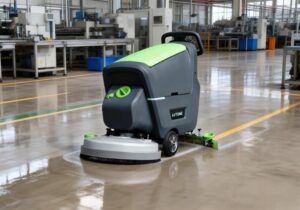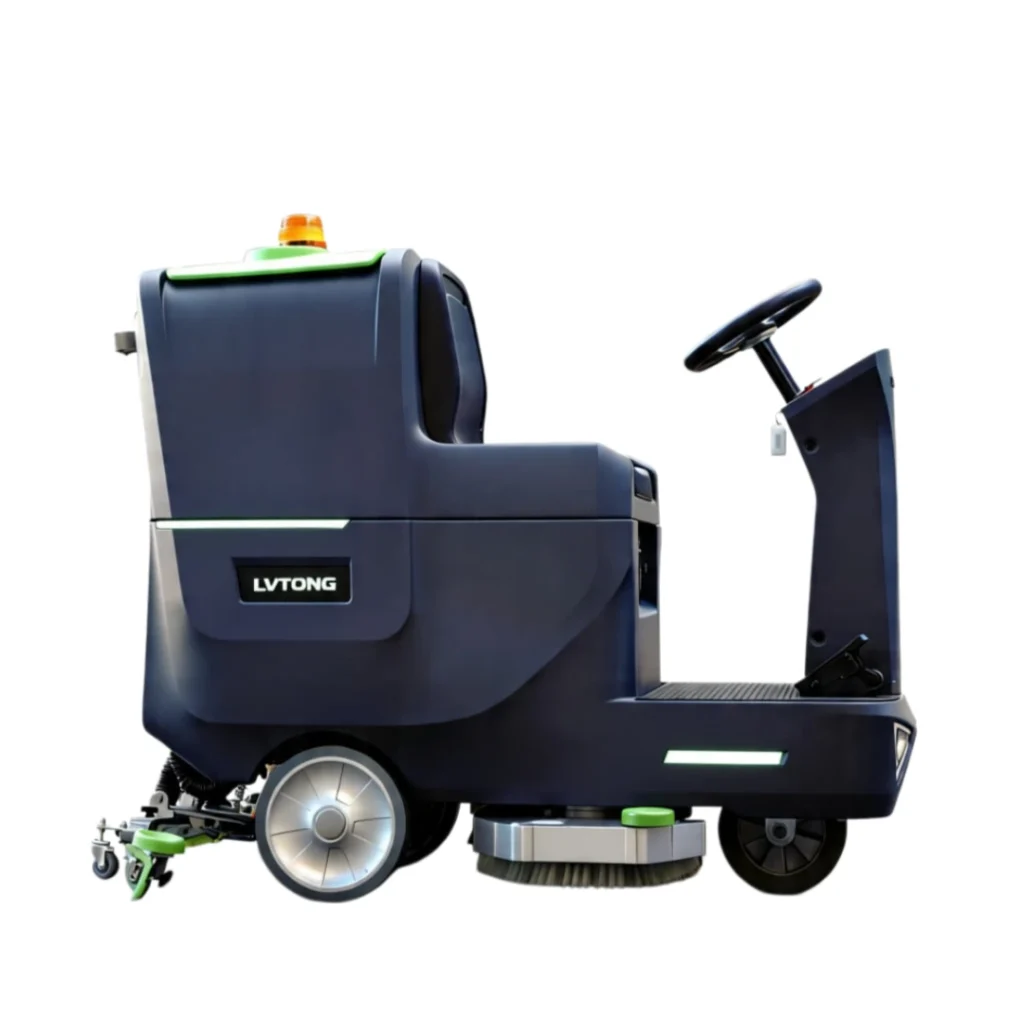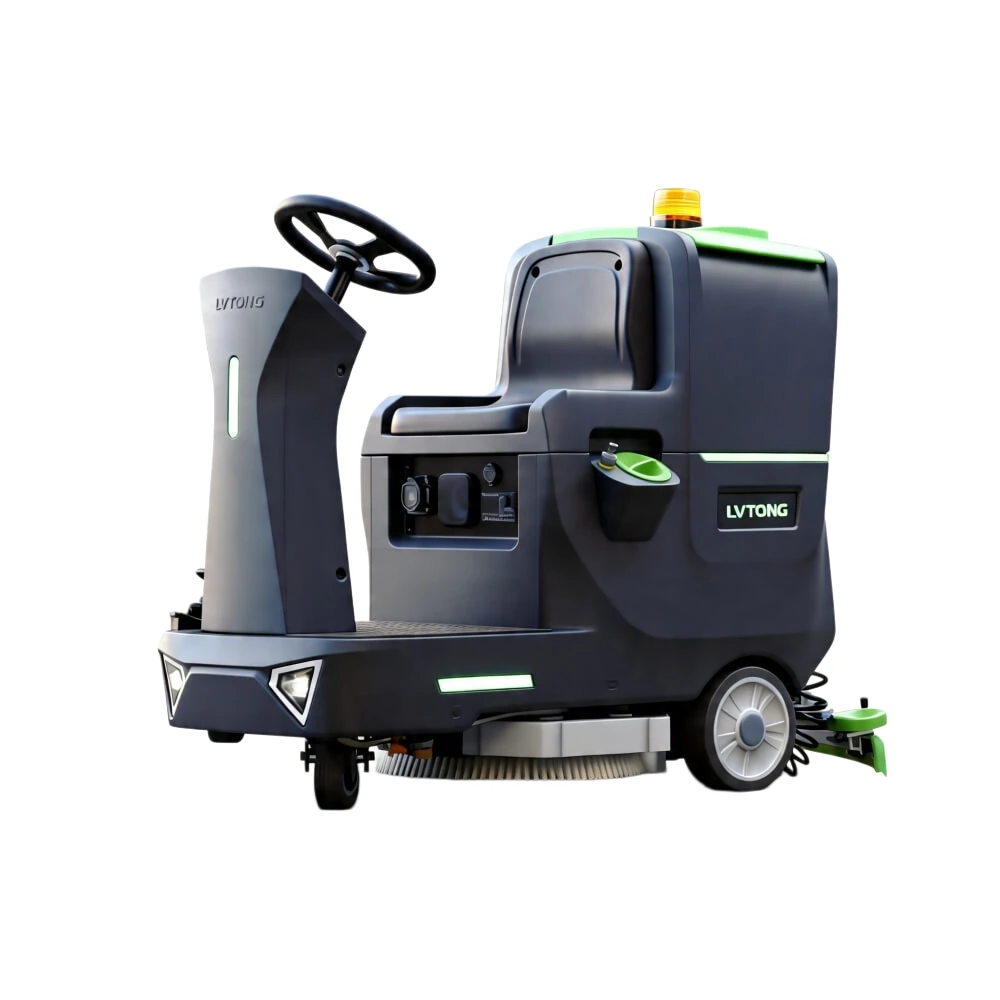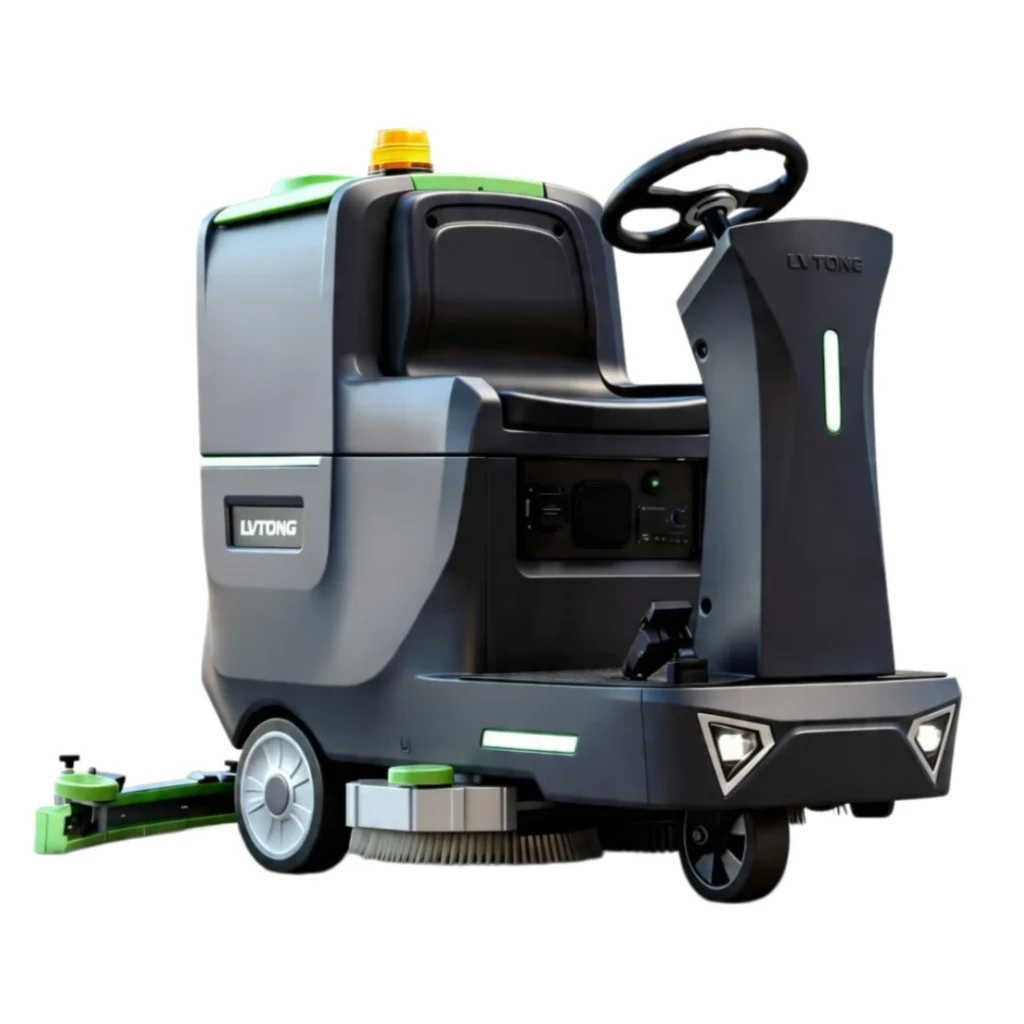
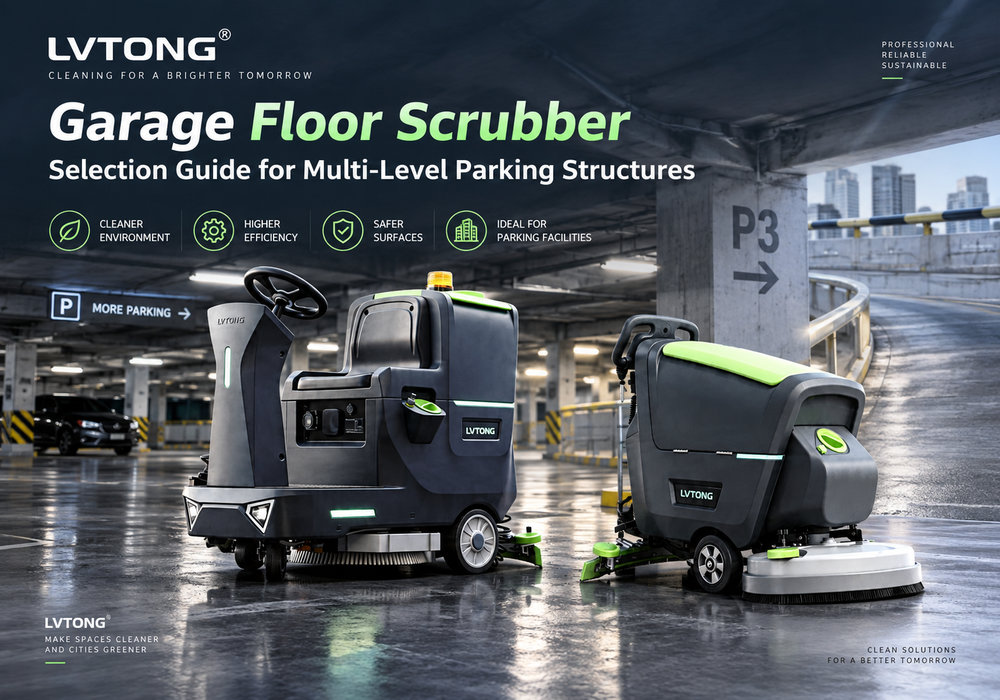
A garage floor scrubber is the machine that lifts the oil film, tire marks and embedded grime a sweeper leaves behind. Choosing one for a multi-level parking structure is harder than choosing one for a warehouse, because ramps, ceiling clearance, switchback turns and wash-water disposal each rule out machine classes before cleaning width even becomes a factor. This guide covers which soils require scrubbing instead of sweeping, how ramp grade and turning radius constrain the decision, and what to measure before you ask a supplier for a specification.
Quick Answer
The best garage floor scrubber depends on the layout. Use a ride-on scrubber for large open decks and a compact walk-behind model for tight ramps and low-clearance areas. Sweep loose debris daily, and scrub oil, tire marks, and bonded grime on a schedule. Always check turning radius, ramp grade, overhead clearance, and water recovery capacity before buying.
What Is a Garage Floor Scrubber and When Is It the Right Machine?
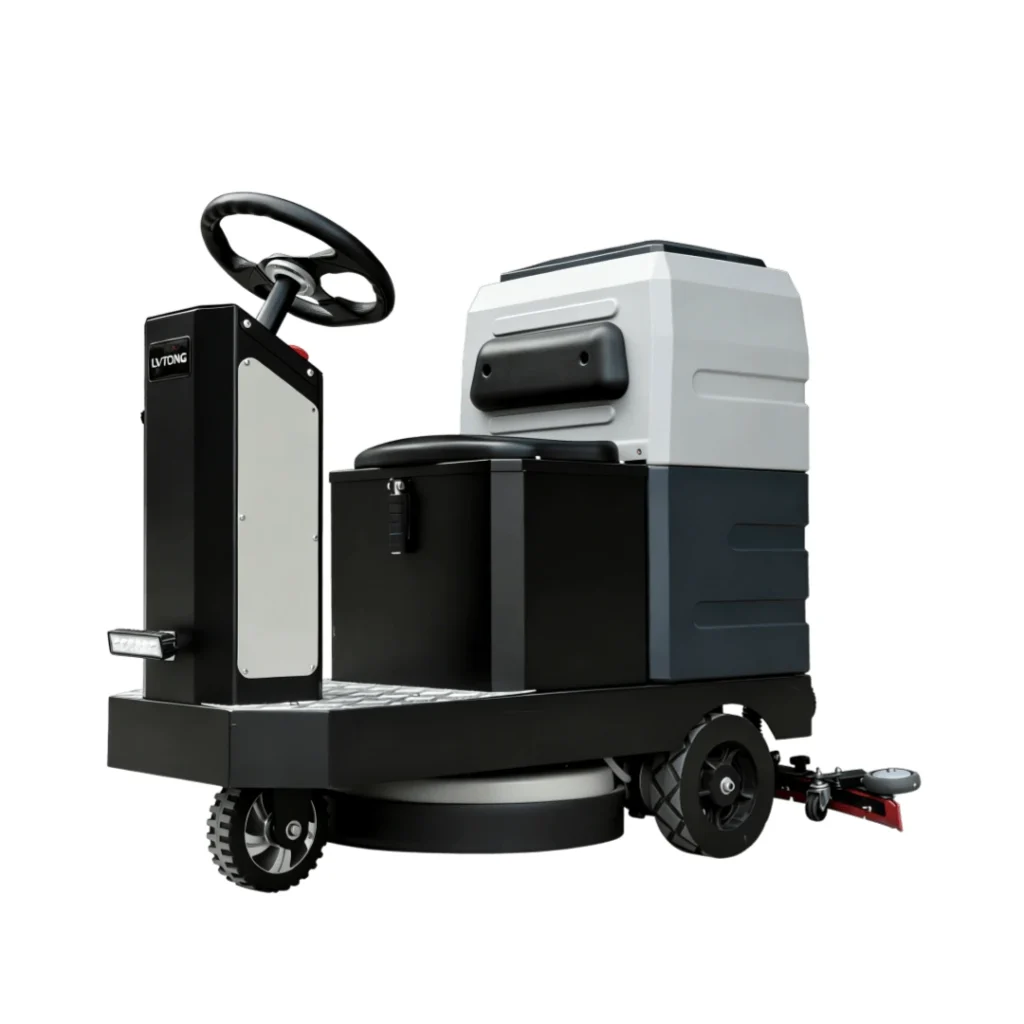
A garage floor scrubber is a ride-on or walk-behind machine that applies water and detergent through a rotating brush or pad, then recovers the dirty water with a squeegee and vacuum system in a single pass. It is the right machine when the soil is bonded to the surface rather than loose on top of it.
Loose material behaves differently from bonded material, and that difference decides the machine class. A sweeper lifts dust, grit, sand, litter and leaves with a rotating side broom and a vacuum or mechanical conveyor. A scrubber dissolves and recovers what sweeping cannot touch: oil drips under parked vehicles, dark tire paths along ramp curves, brake-dust film, and the salt residue that appears after winter sand has been swept away.
Most parking structures need both operations on different frequencies rather than one machine performing both roles. Sweeping is the daily routine because it is fast and works on wet or dry surfaces. Scrubbing is scheduled, because it consumes water, produces contaminated wash water and requires the deck to be clear of vehicles.
| Soil on the deck | What lifts it | Machine class commonly used |
|---|---|---|
| Dust, grit, sand, litter | Dry mechanical pickup + dust control | Ride-on sweeper |
| Oil drips, greasy film | Water + detergent + brush agitation | Scrubber (polyurethane squeegee) |
| Tire marks on ramps and curves | Brush pressure + recovery in one pass | Scrubber, or sweep-then-scrub sequence |
| Brake dust and fine film | Scrubbing, then sealing to prevent re-bonding | Scrubber on a scheduled cycle |
| Winter salt and sand residue | Dry sweep first, then a spring deep scrub | Sweeper daily + scrubber seasonally |
Why Parking Structures Require Different Machine Selection Than Warehouses
A parking structure imposes four constraints that a warehouse floor does not: sloped ramps, limited overhead clearance, wash water that must be captured instead of drained, and an occupied deck that limits when cleaning can happen.
Ramps and switchback turns
Ramp grades in parking structures are commonly engineered in the range of about 10% to 15%, and the difficulty is rarely the climb itself — it is the tight 180-degree turn at the top or bottom of each ramp. Machines with a wide turning radius may need two or three movements to complete that turn, which adds time to every level of the structure. Confirm the manufacturer’s published gradeability before you compare cleaning widths.
Overhead clearance and deck height
Ceiling height varies between structural designs, and it constrains machine height as much as ramp width constrains machine width. A useful habit is to measure the lowest obstruction — pipework, signage, lighting or a beam soffit — rather than the nominal slab-to-slab dimension. For an outdoor floor cleaner machine working apron areas and transitions, clearance is less of an issue than for machines routed onto enclosed decks.
Occupied decks and indoor air quality
An enclosed structure is a shared space, not a factory floor. Where cleaning happens while vehicles and pedestrians are present, the practical filters are noise level and emissions rather than raw productivity. Battery-powered equipment becomes the default choice on enclosed decks for that reason, and switching to an after-hours window usually allows a larger, more productive machine.
Wash water that must be captured
Scrubbing produces water carrying oil, grease, detergent and heavy metals from brake dust. In most US municipalities this water cannot be discharged to a storm drain or surface water without treatment, which means the scrubber’s recovery tank and your disposal route are part of the specification, not an afterthought. Operators typically route it to a sanitary sewer connection or a sedimentation pit, or contract a licensed waste hauler.
Sweeper, Walk-Behind or Ride-On: Matching the Machine to the Deck
Match the machine to the zone it will clean, not to the total square footage of the structure. Large sealed decks suit ride-on machines, tight switchbacks and short levels suit compact walk-behinds, and heavy mixed soil is usually handled by sweeping daily and scrubbing on a schedule.
| Machine class | Where it works in a parking structure | Main limitation |
|---|---|---|
| Ride-on sweeper | Daily dust, grit, winter sand and litter on open decks, apron areas and perimeter roads | Does not remove oil film or tire marks bonded to concrete |
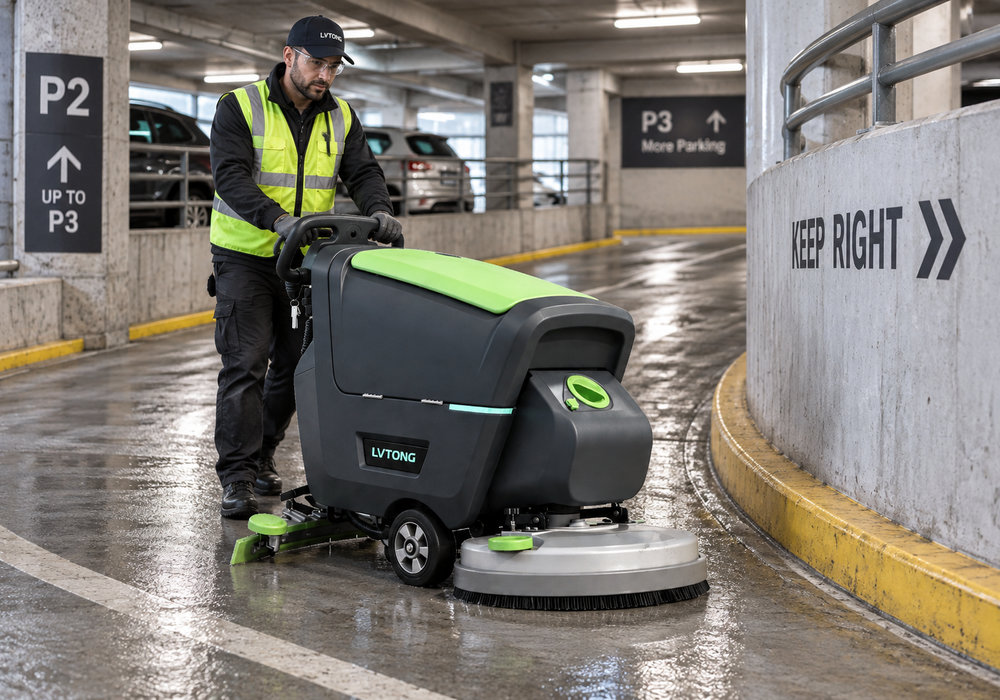
| Compact walk-behind scrubber | Tight ramp turns, short levels, low-clearance areas, column-line and corner cleaning | Lower hourly coverage; operator fatigue on long continuous runs |
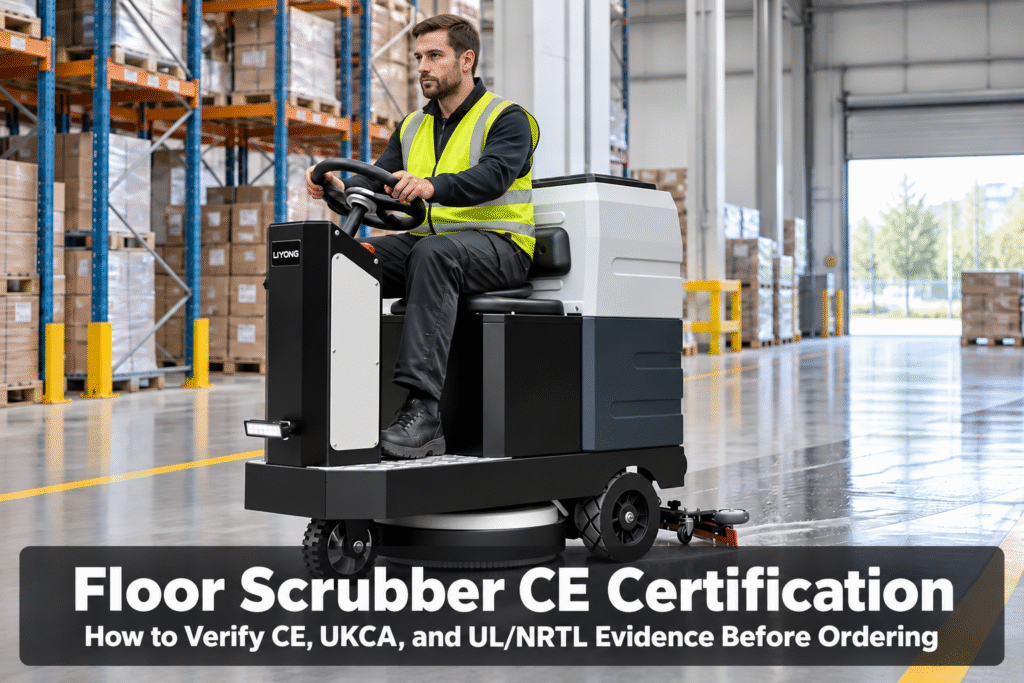
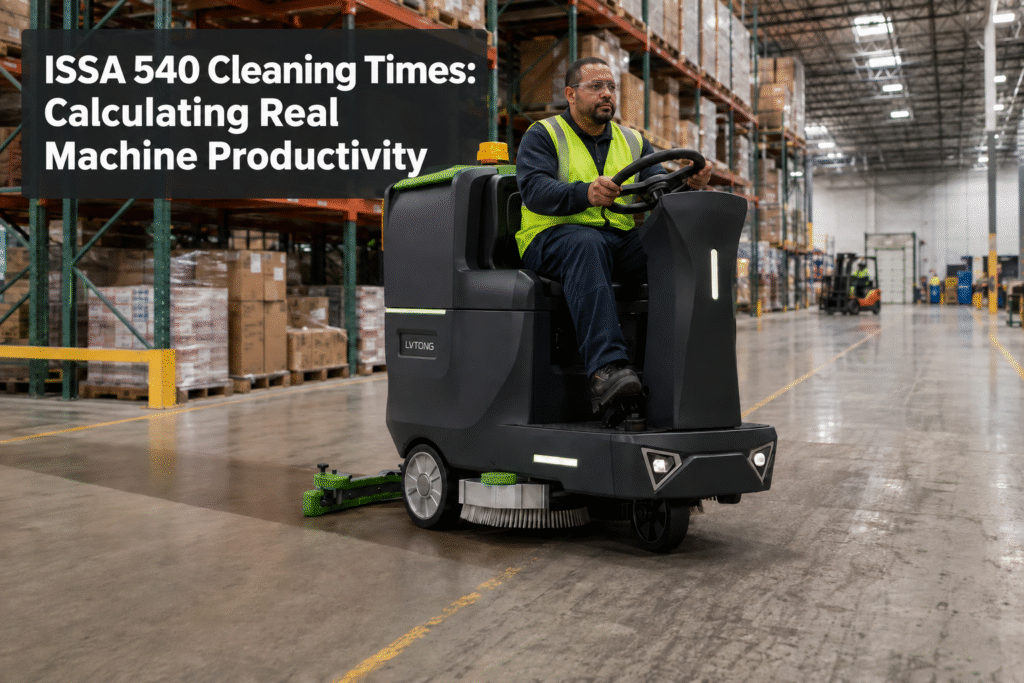
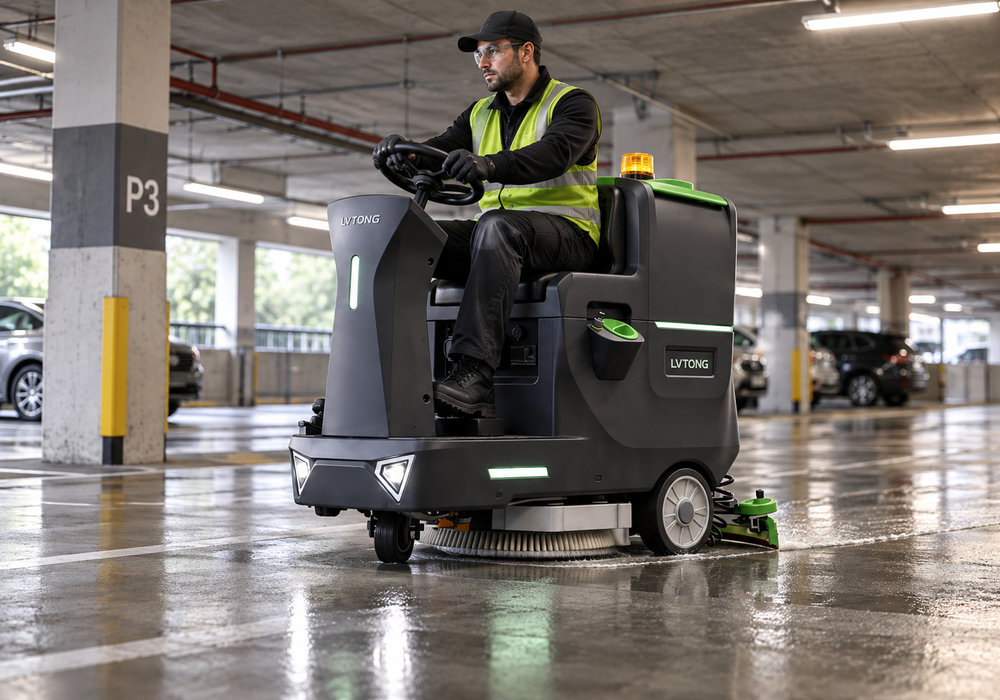
| Ride-on scrubber | Large sealed decks cleaned overnight or between vehicle cycles | Turning radius can exclude it from switchback ramps; needs a fill and discharge point |
| Sweep-then-scrub program | Structures with heavy mixed soil where one pass is not realistic | Two machines to buy, store, charge and maintain |
Walk-behind scrubbers in the compact class are frequently the machine that fits a multi-level structure best, even when a ride-on would clean faster in open space. A walk behind concrete floor cleaner with a narrow deck can be steered through a ramp turn in one movement and still recover water properly, which matters more than nominal cleaning width when the deck is broken up by columns and ramps.
For large sealed decks, a ride-on scrubber with dual disc brushes and a wide squeegee raises hourly coverage and reduces operator workload. Compare the floor scrubber and sweeper range by working width and tank capacity rather than by price band, and check that the machine’s turning radius is quoted for the deck you actually operate.
The sweeping half of the program deserves the same scrutiny. A ride-on sweeper sized for the apron, drive aisles and perimeter roads will carry most of the daily workload, and this ride-on sweeper for parking lots and structures shows how hopper capacity and dust control change the number of passes and stops per shift.
How to Size a Machine for Ramps, Clearance and Water Capacity
Sizing a garage floor scrubber comes down to four measurements: the tightest turn, the steepest ramp, the lowest overhead obstruction, and the largest deck area a single tank fill and battery charge must cover.
Turning radius at switchbacks
Measure the inside dimension of the tightest 180-degree turn, then add working clearance. A machine whose published turning radius exceeds that figure will lose time on every level. Compact walk-behind platforms with a short wheelbase are the usual answer where switchbacks dominate.
Gradeability on ramps
Published gradeability should exceed the measured ramp grade with a margin, because a laden tank and a wet surface both reduce effective climbing ability. Machines engineered for slopes up to about 15% suit typical structure ramps; verify the figure against your own measurement rather than assuming it.
Overhead clearance
Add the operator’s height or the machine’s highest point, including any warning beacon, to the lowest obstruction on the route. Clearance failures usually appear on the level where pipework drops or where a beam soffit is lower than the rest of the structure.
Water and recovery capacity against deck area
Tank capacity determines how often an operator stops to refill and drain, and every stop is unbilled time. On a multi-level structure with no convenient water point, a larger solution and recovery tank pair finishes more of the route on one fill. Recovery capacity should be at least equal to solution capacity, since the machine takes back roughly what it puts down plus the soil it removes.
Sealed vs Unsealed Concrete: Brush, Chemistry and Water
Sealed concrete releases oil and tire marks to a scrubber in one pass. Unsealed, porous concrete absorbs them, so scrubbing alone will not restore the surface and may need sealing or a degreaser pre-treatment first.
Disc or cylindrical brush deck
A disc deck with a pad suits smooth sealed concrete and produces an even finish. A cylindrical brush deck scrubs more aggressively into surface texture and grout lines, which helps where the deck is unsealed or where grit has been ground in by traffic. For light daily cleaning on a sealed deck, disc is usually the better match.
Squeegee blade material where oil is present
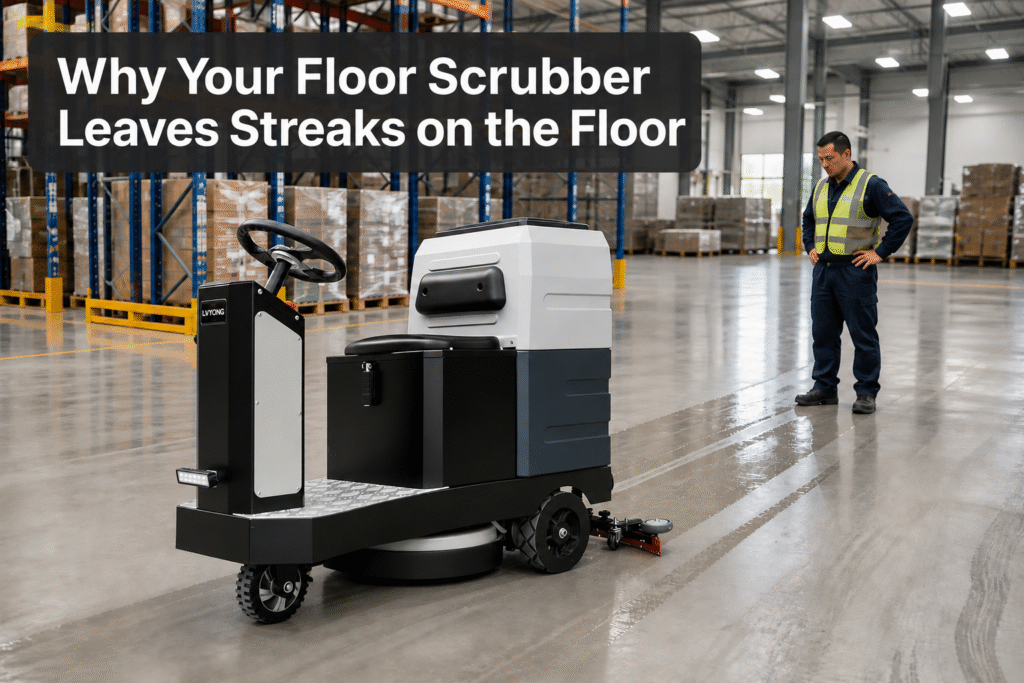
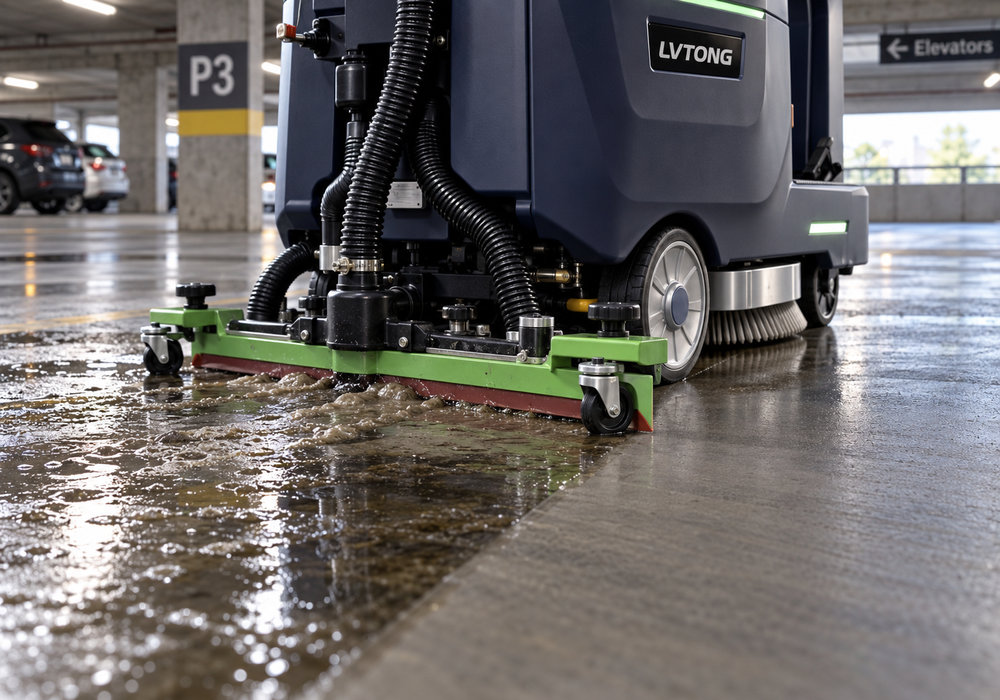
Standard gum rubber blades give the tightest seal on smooth floors but degrade quickly once they contact oil or grease. Decks with regular oil drips are better served by polyurethane blades, which resist swelling and keep recovering water at the edge. Using the wrong blade material is one of the most common causes of an oily smear left behind after a pass that otherwise looked correct.
Sealing as a maintenance decision
Sealing protects the concrete surface so that contaminants stay on top where a scrubber can reach them. Buyers evaluating a long-term cleaning program should treat sealing as part of the cleaning strategy rather than a separate construction project, and should confirm the sealer’s compatibility with the detergent they intend to use.
Managing Wash Water, Oil Residue and Dust in an Enclosed Structure
Scrubber wash water from a parking deck must be captured and disposed of according to local pretreatment rules, because it carries oil, grease, detergent and heavy metals. Sweepers, in turn, need dust suppression wherever the structure sits next to a hospital, hotel or office building.
Plan the disposal route before the machine arrives. Options include a sanitary sewer connection, a sedimentation or intercept pit, a licensed waste hauler, or on-site recycling. Discharge rules vary by municipality and by whether the structure drains to a sanitary or a storm system, so the practical step is to confirm requirements with the local authority and with the site’s drainage engineers. The US EPA’s industrial stormwater requirements are a useful starting point for understanding why wash water is regulated rather than simply drained.
Dust follows the opposite logic. Dry sweeping in a closed structure can lift fine particulate into the air, which matters most where the garage is attached to a hospital, hotel, retail or residential building. Most ride-on sweepers address this with a dust suppression system that introduces fine mist at the hopper or filtration that captures fine particles before they reach the exhaust. Where air quality is the binding constraint, battery-powered equipment avoids exhaust emissions altogether and makes daytime cleaning feasible.
Separating the deck into zones also simplifies both problems. High-traffic ramps and entry aprons accumulate the heaviest oil and grit load and benefit from a fixed deep-clean cycle, while parking bays can be maintained on a lighter rotating schedule. Slip risk on wet or oily surfaces is a recognised workplace hazard, and walking-working surface requirements are the reference point most US facility managers use when documenting a cleaning program.
Decision Criteria: What to Measure Before Requesting a Quote
Suppliers can only recommend a machine class when they have the deck’s physical constraints and soil profile. These eight inputs change the recommendation more than any other information you can send.
- Tightest turn. Inside dimension of the narrowest 180-degree ramp turn, plus clearance.
- Steepest ramp. Measured grade and ramp length, not the nominal design figure.
- Lowest obstruction. Height of the lowest pipework, beam or signage on any cleaning route.
- Narrowest opening. Entry and exit widths and any barrier or gate that the machine must pass.
- Deck condition. Sealed or unsealed concrete, and whether a sealer is planned.
- Soil profile by zone. Where oil, tire marks, grit and salt concentrate across the structure.
- Cleaning window. Occupied or after-hours, and any noise limit that applies.
- Water and power. Fill point, discharge route, and where the machine will be stored and charged.
Adding the structure’s level count, total cleanable area and target cleaning frequency gives a supplier enough to size both the machine and the number of units. Documentation requirements for the destination market — voltage, certification and spare-parts support — are worth stating at the same time, since they affect configuration. Commercial floor treatment machines are typically designed and tested against the IEC 60335-2-72 safety standard, so it is worth asking which standard a candidate machine is declared against. LVTONG builds this information into the specification stage for ODM and private-label programs; the same inputs apply to a ride-on scrubber configured for a large sealed deck.
Common Mistakes in Parking Garage Floor Cleaning
Most specification errors in parking structures come from treating the garage as a single flat floor area, and from choosing equipment before the wash-water route has been resolved.
- Buying a sweeper only. Daily sweeping is the right routine, but oil drips and tire marks will keep accumulating until a scrubber is scheduled.
- Choosing a ride-on for a multi-level deck. Hourly coverage looks better on paper; switchback turns decide whether the machine finishes on time.
- Using gum rubber squeegee blades on oil. The blades swell, the seal fails, and the surface is left with a film.
- Ignoring wash-water disposal. Discharge rules are a site constraint, and retrofitting a solution after delivery is expensive.
- Scrubbing unsealed concrete without preparation. Without a sealer or a pre-treatment step, absorbed oil stays in the pores.
- Underestimating winter loading. Salt and sand carried in on vehicles need a daily sweep and a seasonal deep scrub, not a single annual pass.
- No consumable plan. Brushes and squeegee blades are wear items; confirm local availability before committing to a fleet.
FAQs About Garage Floor Scrubbers
Can a floor scrubber clean a parking garage?
Yes, provided the deck is either sealed or prepared for scrubbing. A scrubber removes oil film, tire marks and brake dust that sweeping cannot lift, and it recovers the wash water for disposal. On older unsealed concrete, expect to combine scrubbing with a degreaser pre-treatment and, ideally, with sealing the surface so future soil stays recoverable.
What is the best machine for cleaning a parking garage floor?
It depends primarily on deck layout and soil type rather than on total area. Large sealed decks suit a ride-on scrubber, tight switchback ramps and low-clearance levels suit a compact walk-behind, and daily dust and grit are best handled by a ride-on sweeper. Most structures combine a sweeper for routine maintenance with a scrubber on a scheduled cycle.
How often should a parking garage floor be scrubbed?
Scrubbing is usually scheduled rather than daily. A common pattern is daily sweeping, with scrubbing weekly to monthly on high-traffic ramps and entry aprons and less frequently on parking bays. Climate changes the answer: a deep scrub after the winter salt season is standard practice in cold regions where de-icing material is tracked indoors.
How do you remove oil stains from a parking garage floor?
Scrubbing with a detergent is the routine method, and it works reliably on sealed concrete because the sealer keeps the oil near the surface. On unsealed concrete, oil penetrates the pores and a scrubber alone may not be sufficient, so plan on a degreaser pre-treatment and possibly surface preparation before the oil is fully removed.
How much does a garage floor scrubber cost?
Cost is driven by machine class, working width, battery type and configuration rather than by a single list figure. Walk-behind and ride-on classes sit in different ranges, and battery chemistry, brush deck type, squeegee material and IoT options all move the number. Send deck dimensions, ramp grades, clearances and soil profile and we will price the specification that fits.
Conclusion
Specifying a garage floor scrubber for a parking structure is a measurement exercise before it is a purchasing decision. The tightest ramp turn, the lowest overhead obstruction, the deck’s surface condition and the wash-water disposal route each narrow the shortlist, and none of them appear in a general cleaning rate table. Resolve those four inputs and the machine class usually selects itself.
For structures with mixed soil, the workable model is a program rather than a product: sweep daily with a ride-on machine for dust, grit and winter loading, then scrub on a schedule for oil film and tire marks. Zones with different traffic loads are worth treating differently, and the entry apron and ramps almost always justify the highest cleaning frequency.
Discuss your application with our engineering team
Send us the number of levels, cleanable deck area, tightest ramp turn and ramp grade, lowest overhead clearance, concrete condition, soil types by zone, and your cleaning window. If you know the discharge route for wash water, include it. We will recommend a machine class, configuration and quantity, and confirm specification, certification requirements and spare-parts support for your market. Distributor and OEM/private-label enquiries are welcome.