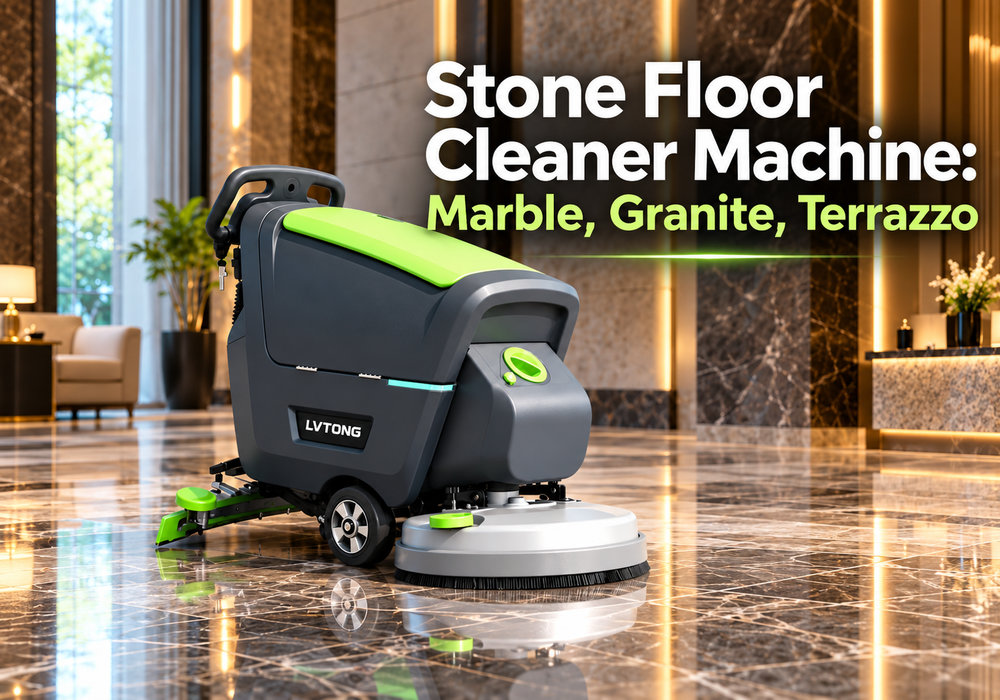
Choosing a scrubber manufacturer is a sourcing decision, not a shopping decision. The price list tells you almost nothing about who will still answer the phone when a fleet of machines needs support in year three. This guide gives you the questions, documents and checks that separate a real factory from a trading company — the same vetting sequence works for a first container or a private-label programme, and it works for any brand you shortlist.
QUICK ANSWER
A scrubber manufacturer should be able to prove three things: that it builds the machine, that it can document it, and that it will support it after the invoice is paid. Ask for production evidence, certification and test documents, and written OEM terms before you discuss price. A real factory answers with documents and an invitation to visit; a trader answers with a discount.
- Verify the role first: manufacturer, assembler or trader — the price difference is small, the risk difference is not.
- Document before price: certification, test reports, battery transport papers, spare-part policy.
- Pay for one inspection at factory or before shipment; it costs less than one wrong container.
- Get OEM terms in writing: moulds, branding, packaging, MOQ logic and exclusivity.
The sequence below follows the order a sourcing file is actually built.
What a Scrubber Manufacturer Actually Sells
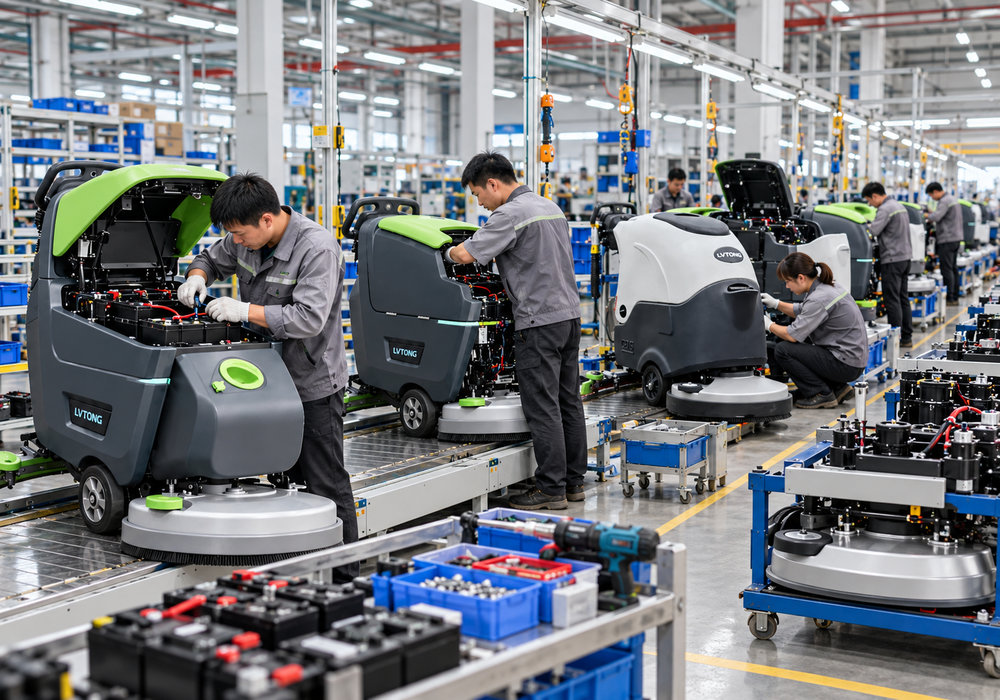
A scrubber manufacturer sells a repeatable production process plus after-sales support — the machine is the output, not the product.
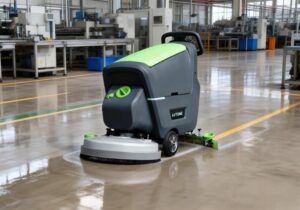
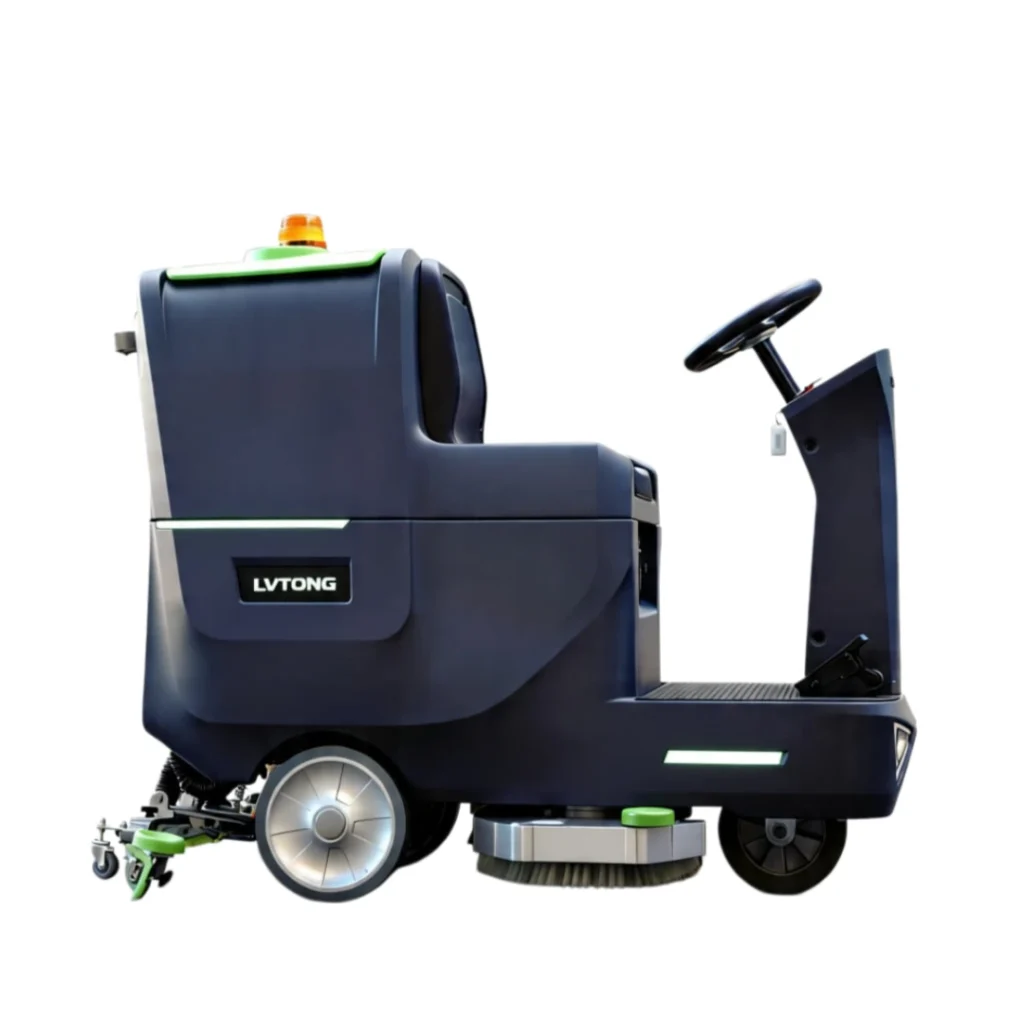
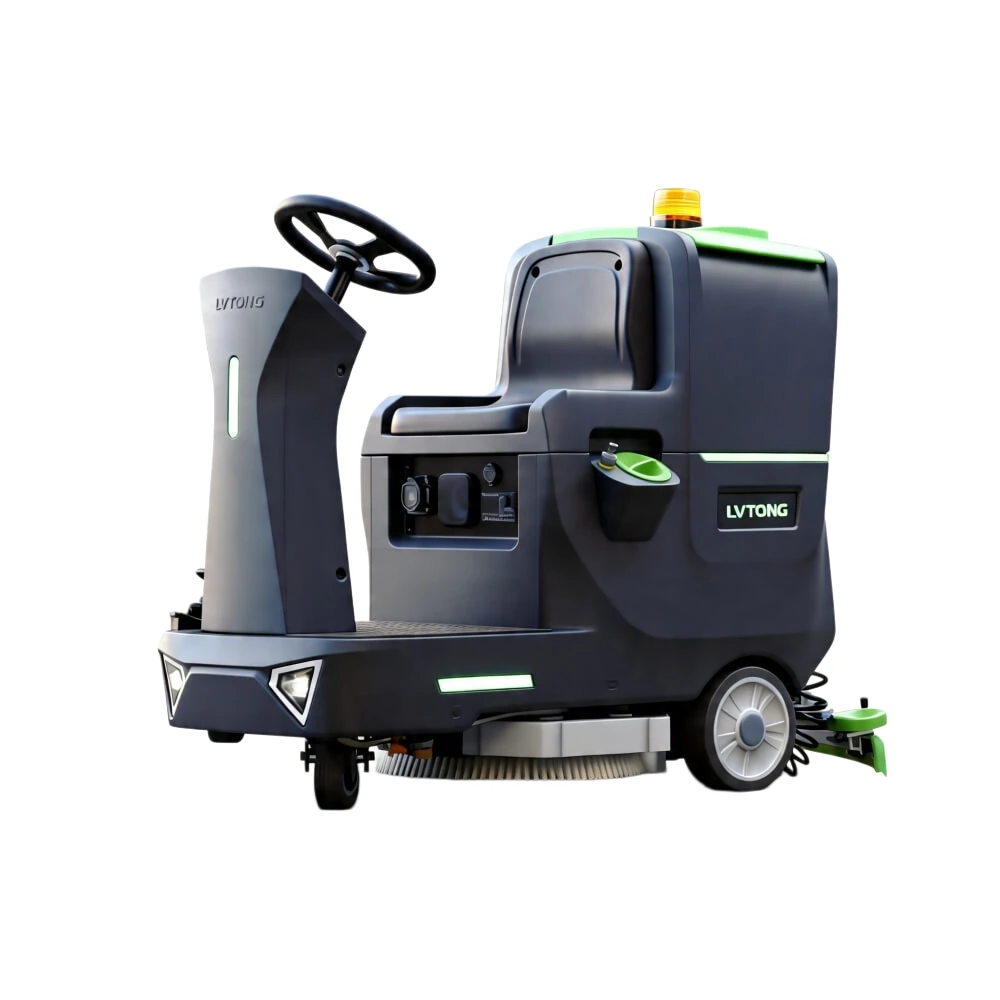
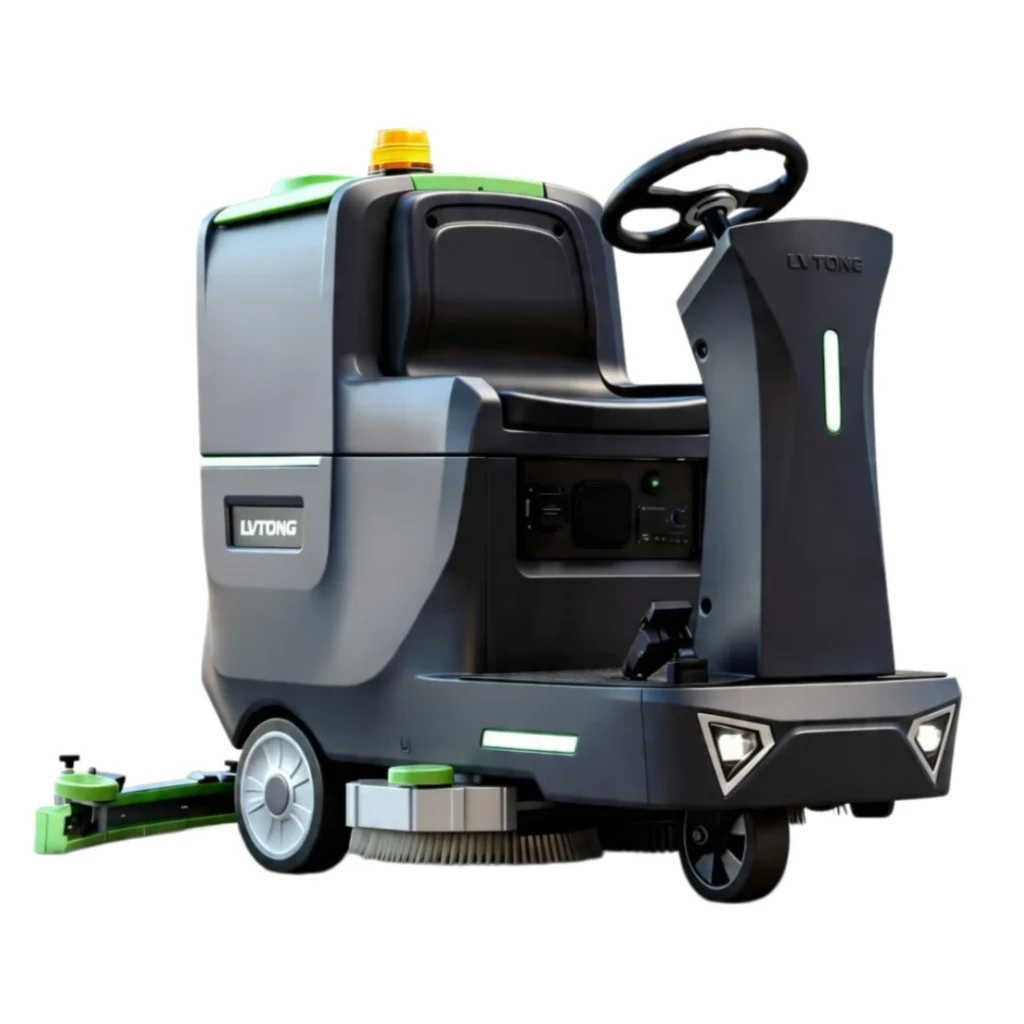
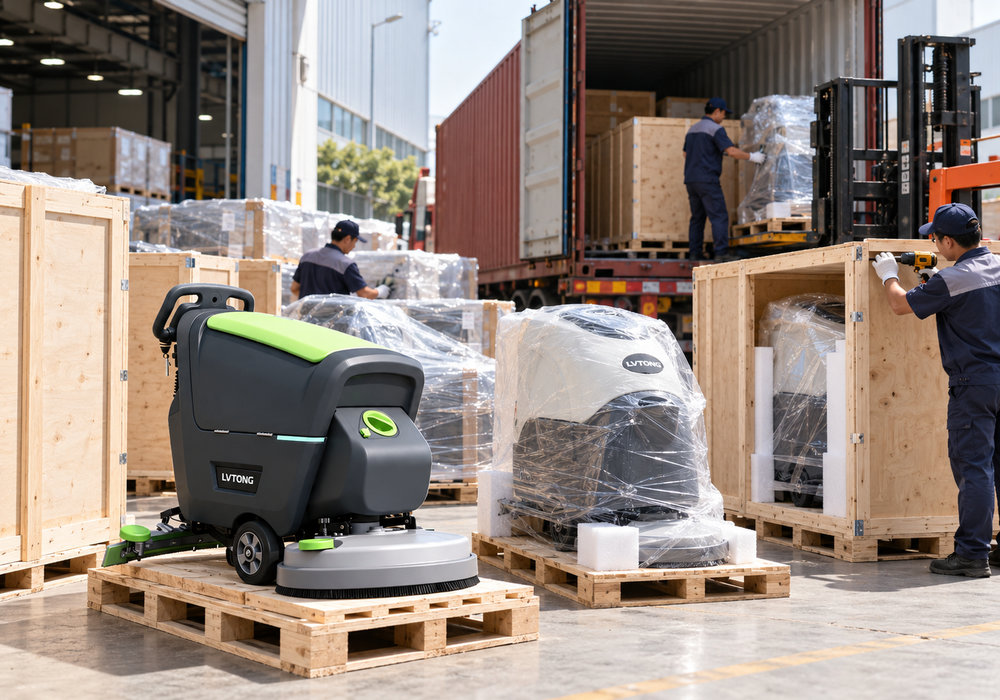
What you are really buying is consistency: the same brush pressure, the same lithium pack, the same squeegee geometry on unit 1 and unit 200. That is a manufacturing capability, and it shows up in how a supplier answers questions about production — in-house assembly, incoming-part checks, end-of-line testing, serial-number tracking. LVTONG, for example, builds its lithium scrubber and sweeper ranges in-house and states that every machine is inspected before delivery, and it cooperates with buyers through factory-direct OEM and private-label programmes. Ask every candidate the same question: walk me through what happens between a component arriving and a pallet leaving. For one worked example of how a manufacturer presents that capability in public, see how LVTONG describes its own manufacturing.
Manufacturer, Trader or Assembler: Telling Them Apart
Knowing how to choose a floor scrubber manufacturer starts with knowing what the company actually is — a trader can still be a good supplier, but the risk profile changes completely.
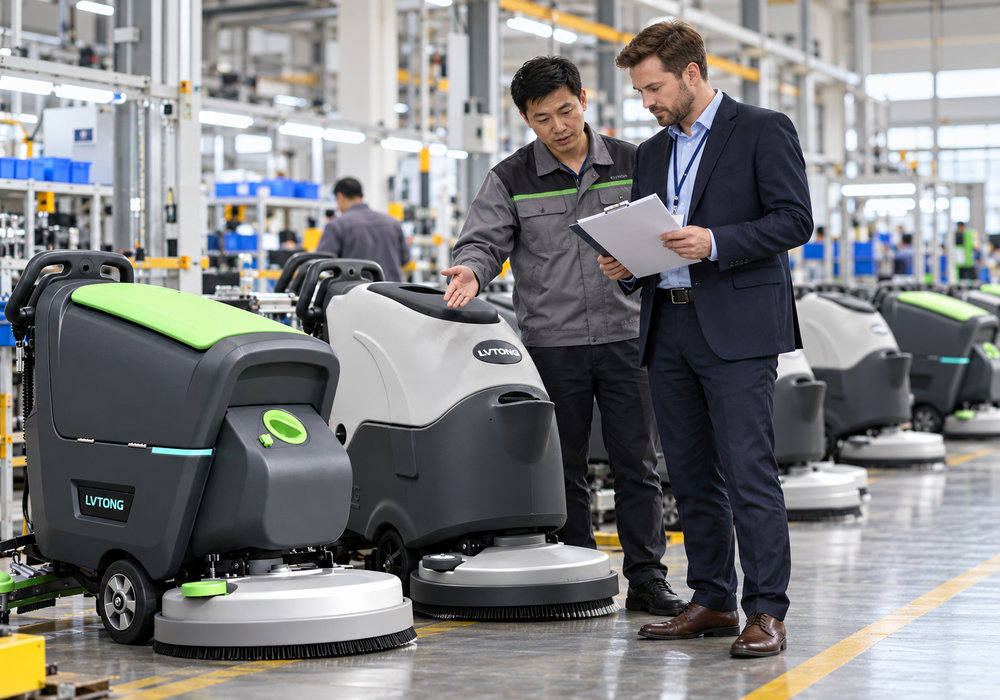
Three roles sit behind most quotes. A manufacturer owns the process, the tooling and often the electronics integration. An assembler buys major sub-assemblies and configures them. A trader sources from one or more factories and adds margin, sometimes adding real value in logistics and local stock. None is automatically wrong — but the same price from a trader means less money went into the machine. Practical tests: ask for the factory address and a live video walk-through rather than a photo library; ask which components are made in-house and which are bought in; ask what happens to your mould or your sticker file if you switch suppliers. Traders hesitate on the last one, factories answer it.
The Documents to Request Before You Ask for a Price
Documents before price: certification, type-test evidence, battery transport papers and a spare-part list tell you more than a quotation ever will.
Treat the list below as supplier due diligence, not paperwork: ask for the certificates that matter in your destination market and read them, rather than accepting “CE certified” as a sentence. Certification marks are issued by recognised bodies — UL and TÜV are the two names most buyers of cleaning equipment will see on electrical and machinery safety paperwork, and both publish searchable databases you can check against a certificate number. For lithium machines, request the UN38.3 test summary for the pack, because it governs whether the battery can travel by air and simplifies sea freight documentation. For a dealer or importer, add the technical file and declaration of conformity. LVTONG’s own position is worth copying as a question to any supplier: available certifications and technical documents depend on the model and the target market — so ask which ones apply to yours, in writing.
Factory Audit and Pre-Shipment Inspection
One paid inspection — at the factory or before shipment — is the cheapest risk control in the whole sourcing file.
A third-party inspection firm such as SGS will visit a factory, sample units from your own order and report on dimensions, function, packaging and carton marking. Two variants exist: a factory audit before you place the order, and a pre-shipment inspection once your machines are built. For a first order, the second is usually the better buy — it verifies your actual goods, not the showroom. Tell the supplier in advance; a factory that builds to standard will welcome it, and one that objects has told you something valuable. Budget it as a line item next to freight, not as an optional extra.
OEM, ODM and Private Label: What Changes, What Doesn’t
Floor scrubber OEM means the machine is yours to define; private label means the machine is theirs with your name on it — the difference is who pays for tooling and who controls the specification.
ODM is the middle path: the factory offers an existing platform, you apply private-label branding, colours and packaging. Across all three models, four terms decide the deal: who owns the tooling or mould, how the minimum order quantity is calculated (by model, by configuration, or by colour), what is included in the brand kit — nameplate, decals, manual, carton marking — and whether you get any territory or exclusivity. Get all four in writing, and separate the one-off tooling invoice from the unit price so that a second order is comparable. If your plan is retail distribution rather than end-user sales, the same terms are what you negotiate with the brand owner.
What Distributors Should Ask That End Buyers Don’t
Distributors buy a business model, not a machine: territory, training, parts flow and marketing support decide whether the agency works.
Beyond the product questions, a distributor needs to know how the brand is protected and how support is delivered. Ask for the territory policy and whether it is exclusive, in writing; who trains your technicians and whether that training is repeated after staff changes; how warranty claims are processed — swap, parts or credit — and with what turnaround; whether marketing assets, spare parts and consumables are available to you in the local market; and what the price ladder looks like at realistic annual volumes. LVTONG publishes its partner programme as the entry point for this conversation, and any supplier worth appointing will answer the same five questions with specifics.
Sample Unit and Pilot Batch: The Cheapest Risk Control
Order one machine, run it hard for a month in the conditions it will actually face, and decide with evidence rather than with a brochure.
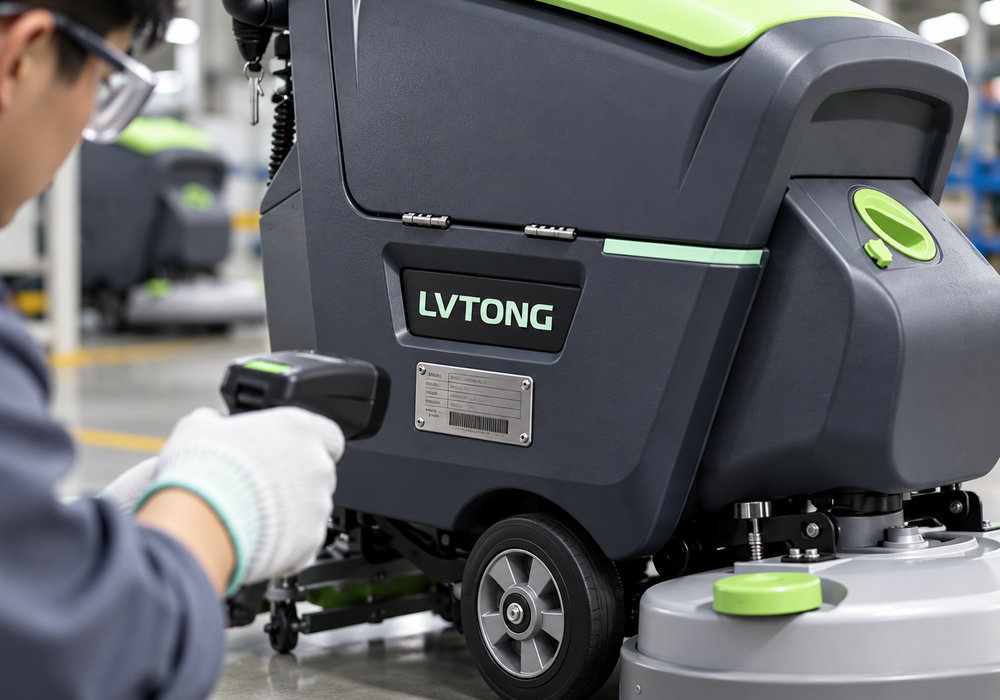
A sample purchase de-risks more than any negotiation. Run the unit on your own floors: check runtime against your shift, water capacity against your routes, squeegee pick-up on your surface, noise near occupied areas, and how easily your staff find the controls. Then open it — look at the battery bay, the wiring run, the strain relief on cables and the fit of the recovery tank cover. Take photos of the nameplate and serial number, and confirm the seller can map that serial to a production record. That is also the point at which you ask where your staff will buy brushes, squeegees and filters in two years, and what they will cost.
Total Cost Beyond the Unit Price
Unit price is the smallest number in the file: tooling, freight, duty, spares and downtime usually decide the five-year bill.
| Cost line | Appears at | Ask the factory |
|---|---|---|
| Tooling / mould (OEM only) | First order | One-off or amortised? Who owns it? |
| Freight, insurance, duty | Every order | FOB / CIF / DDP quote in writing |
| Consumables and spares | Year 1 onwards | Availability, price list, lead time |
| Downtime and warranty claims | Year 2 onwards | Claim process and turnaround |
Run the machine-level arithmetic — energy, labour, water, maintenance — through the floor scrubber cost-effectiveness buyer guide, then add the four sourcing lines above. The comparison that matters is total landed cost per machine, per year, including the risk of the supplier disappearing.
Import Paperwork and Destination Rules
The factory builds the machine; your market sets the paperwork — check the destination requirements before the order, not at the port.
Before you sign, confirm the HS code you will declare, the Incoterms term you are quoting on, and the documents the factory will provide: commercial invoice, packing list, bill of lading, certificate of origin, and the electrical documentation your market expects. Destination authorities publish their own requirements — U.S. importers, for example, work from U.S. Customs and Border Protection guidance on declarations and marking, and battery-containing goods carry extra transport documentation. Ask which documents are standard and which cost extra, and confirm carton marking and labelling against your market’s rules while the order is still editable.
A Twelve-Point Vet Sheet
Twelve checks, one page, sent to every candidate: the answers sort the shortlist faster than any meeting.
- Factory address, and a live video walk-through of the line
- Which components are produced in-house
- Certificates that apply to your market and model, with numbers
- UN38.3 summary for the lithium pack
- End-of-line test record and serial-number traceability
- OEM / ODM / private label options, and who owns the tooling
- MOQ logic by model and configuration
- Production lead time by model and quantity
- Spare-part list, prices and availability term
- Warranty terms and claim process
- Documents included: invoice, packing list, B/L, origin
- Reference customers in a market similar to yours
Scrubber Manufacturer FAQs
Is it cheaper to buy directly from a scrubber manufacturer?
Usually yes, because you remove a layer of margin — but only if you can carry the sourcing work yourself: freight, duty, documentation, spares and support. A good local distributor can cost less in total once those are priced in.
What MOQ should I expect for a private label floor scrubber?
MOQ depends on the model and the level of customisation — colour and decals differ from a new mould. Ask the factory to price the smallest configuration they will run, then scale, instead of pushing for a discount you cannot repeat.
How do I verify a factory I cannot visit?
Use three checks: a live video call from the production floor, a third-party inspection report commissioned on your own order, and certificate verification in the issuing body’s database. Documents and live evidence together are hard to fake.
Should I order a sample before a container?
Yes. One machine, run in your own conditions for a month, exposes the misjudgements a brochure hides — runtime, water capacity, noise and parts quality. Treat it as the cheapest audit you will ever buy.
Documents, evidence, support. Vet the role, verify the paperwork, inspect your own order, and settle OEM terms before price. Once the supplier question is closed, the machine decision is a separate exercise — our floor scrubber selection guide walks through it machine by machine.