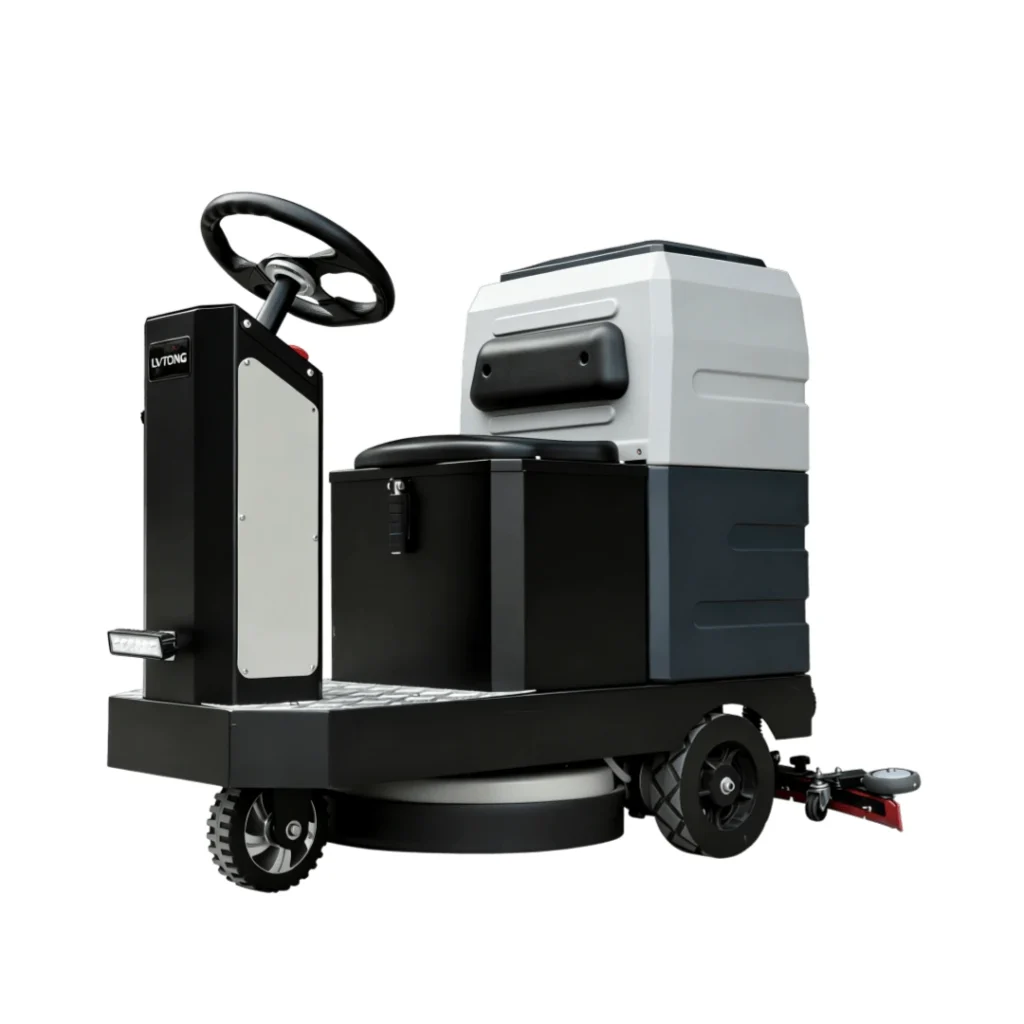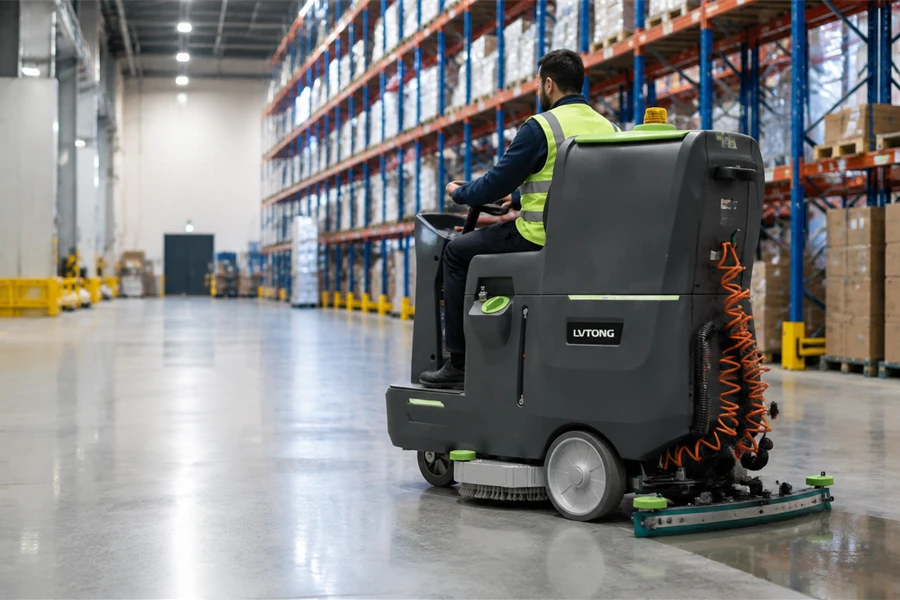
Our team has visited warehouses, factories, and supermarkets, and we consistently encounter the same tough floor cleaning issues. Most fall into seven categories: concrete dusting, oil and grease, forklift tire marks, chemical damage, fine dust, slip hazards, and coating wear. From our experience, the key is to first identify the specific problem, then match it with the right machine, pad or brush, cleaning solution, and cleaning frequency. This guide outlines each issue and the most effective way to address it.
Why Industrial Floor Cleaning Is Different
Industrial floors live under conditions that commercial spaces never face: heavy forklift traffic, machinery oil drips, chemical exposure, metal shavings, and tens of thousands of square feet that have to be cleaned within tight shift windows.
Most facilities also run more than one floor type — bare concrete in the warehouse, epoxy in production, polished concrete in customer-facing zones, and tile in food or pharma areas. Each one needs a different cleaning recipe.
The 7 Most Common Industrial Floor Cleaning Problems
Every facility has its own version of these seven problems. Here’s what each looks like on the floor, what’s actually causing it, and how to fix it without making it worse.
1. Concrete Dusting and Airborne Silica

The classic tell: a fine grey haze that returns hours after sweeping, footprints visible all afternoon, and a chalky outline where boxes rested on the floor.
The cause is mechanical wear — forklift tires and pallet drag abrade the cement paste at the surface, and the slab keeps shedding particles. Old plant managers call it “concrete sweat.” It’s not just cosmetic. Respirable crystalline silica is OSHA-regulated at 50 µg/m³ over an 8-hour shift, and dry sweeping is one of the fastest ways to put it airborne.
What works, in this order: stop dry-sweeping the open floor, densify or seal the slab, switch to a walk-behind scrubber-dryer for daily wet maintenance.
2. Oil, Grease, and Coolant Stains

Hydraulic leaks under a press, coolant drift off a CNC, the slow black halo around a compressor — porous concrete is a sponge for petroleum hydrocarbons. Mop the area and it looks fine for an hour, then the oil wicks back to the surface and the patch is dark again by lunch.
The fix is mechanical, not more chemistry sitting on top:
- Pre-spray with a heavy-duty alkaline degreaser (pH 11–13) at full strength.
- Dwell 5–10 minutes — long enough to lift, not long enough to dry.
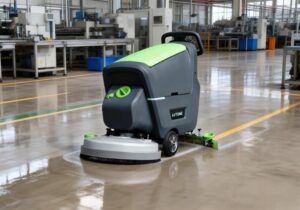
- Scrub with a cylindrical brush head. The bristles flick degreaser into the pores in a way pads can’t. The Lavadora de pisos Q5 handles tight machine bays well.
- Squeegee-recover on the same pass before the oil re-deposits.
Old stains usually need two rounds. There’s no chemistry shortcut.
3. Forklift Tire Marks and Black Streaks

Stand at any 90-degree turn near a dock and you’ll see them — black arcs where the rear tires drag every time the operator pivots.
The mechanism is plasticizer migration: softening agents in tire rubber liquefy under friction heat and bond to the floor surface. On bare concrete it’s ugly. On epoxy it’s worse — a hot forklift parked overnight can lift the coating with the tire when it pulls away. That’s “hot tire pickup,” and it means the coating is failing.
Match the tool to the floor before you scrub:
| Tipo de piso | Pre-spray | Scrubbing tool | Avoid |
|---|---|---|---|
| Bare concrete | Alkaline degreaser or D-limonene | Polypropylene brush or red pad | — |
| Epoxy / coated | D-limonene only | Red or white pad | Black pad, alkaline |
| Polished concrete | D-limonene only | White pad | Black or green pads |
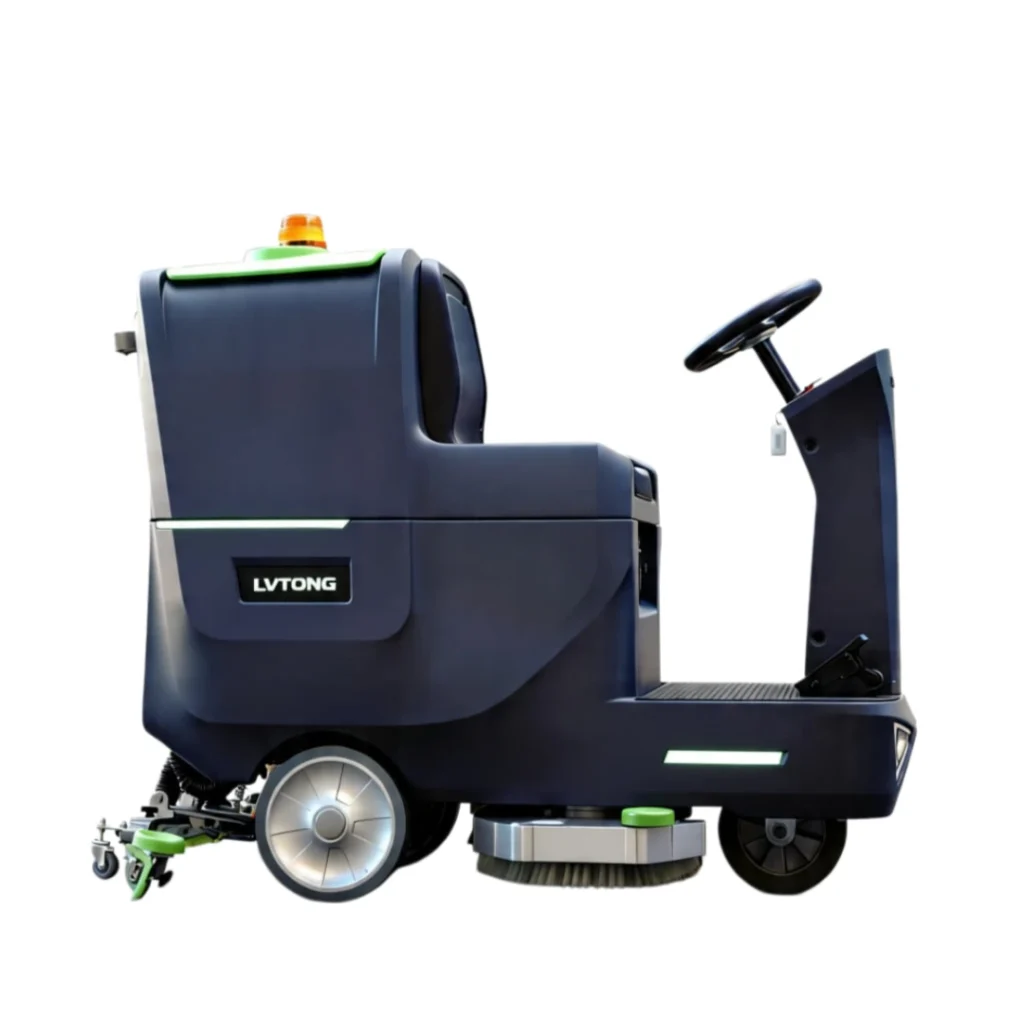
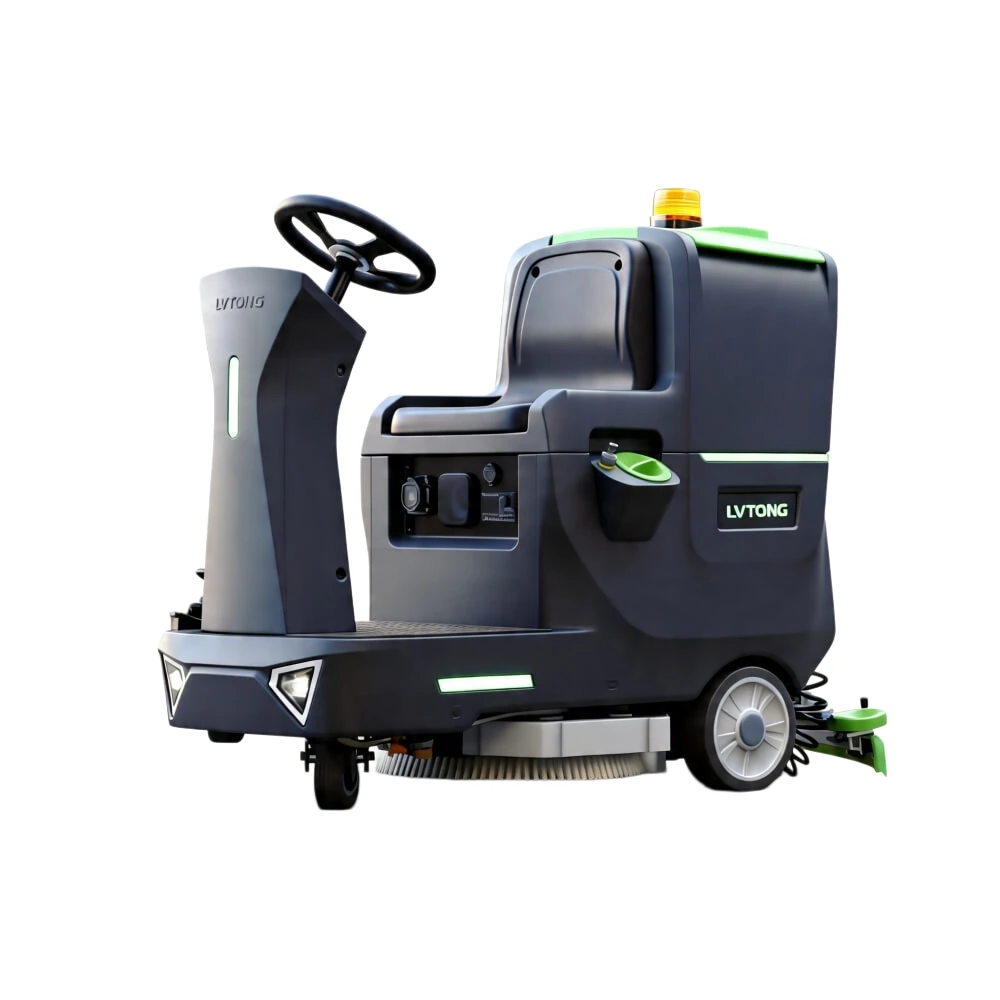
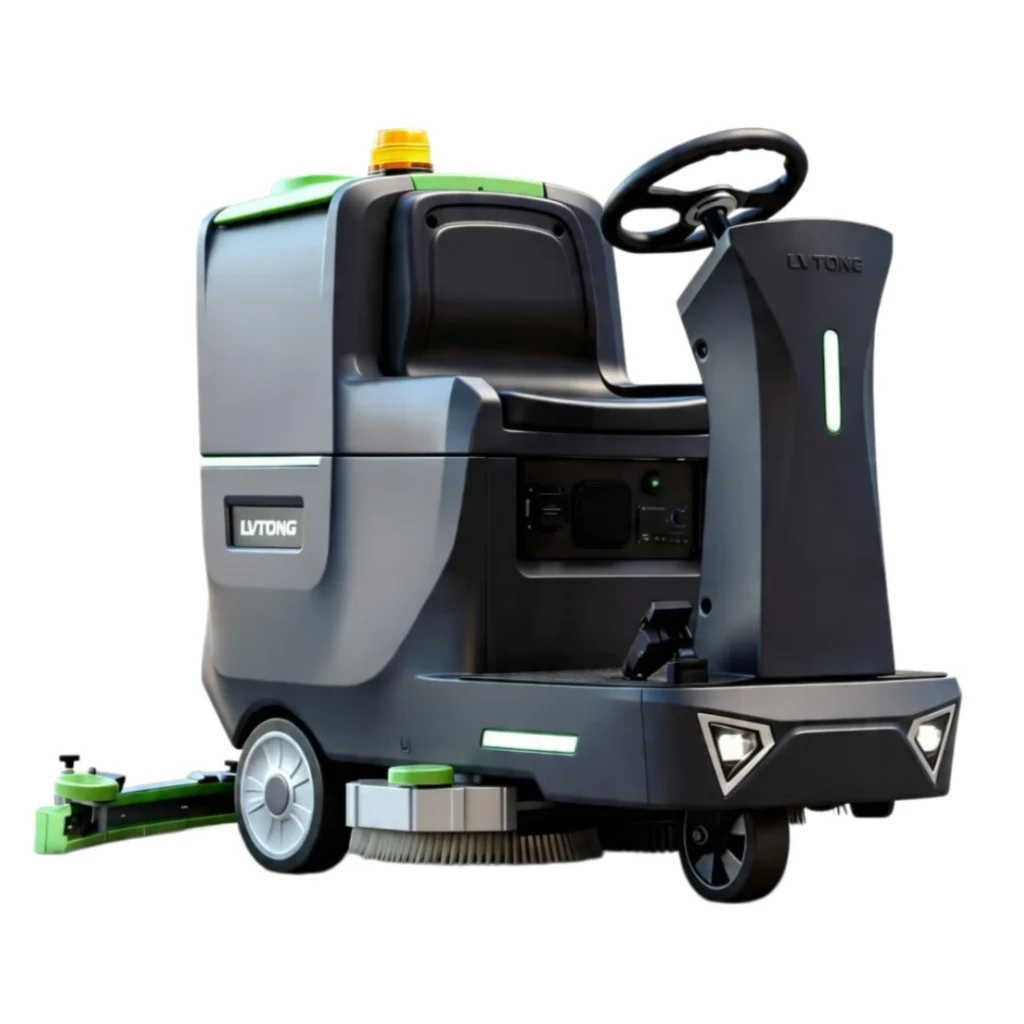
For predictable turning paths in a large warehouse, running the LT-S560X ride-on scrubber weekly with a cylindrical brush keeps marks from setting in the first place.
4. Chemical Spills and Etched Surfaces
Battery acid leaves a pitted halo. A solvent puddle dulls the polish in a perfect circle. Caustic cleaner left overnight roughens the slab.
The unifying factor is time. Concrete is alkaline (pH ~12.5), so acidic spills react with the cement matrix and dissolve binder. Once etched, the damage is essentially permanent — the meaningful work happens before it sets in. Granular absorbent stations every 100 feet of process aisle, plus posted SDS sheets, save real time when something goes wrong. Long-term, a penetrating sealer or chemical-resistant epoxy turns a five-minute response into a five-minute cleanup.
5. Slip-and-Fall Hazards

The dangerous version isn’t the obvious wet patch — it’s the floor that looks dry but isn’t. Mop-cleaned floors stay slick for 15 to 20 minutes after the bucket leaves, and same-level falls are consistently among the top three causes of warehouse injury claims.
Two specific failures account for most incidents:
- Mops as the primary tool. A mop redistributes contaminated water and leaves a soapy film as it dries. The film is what makes the floor slippery for hours.
- Worn squeegee blades. The single most overlooked maintenance item in industrial cleaning. A nicked blade leaves a streak of solution behind every pass — looks dry from a distance, slick up close.
Fix: replace mops with proper vacuum-recovery scrubbing, and rotate squeegee blades every 60–90 days under heavy use. A larger ride-on like the LT-S710X ou LT-S860X clears the floor walkable in two to three minutes.
6. Damaged or Peeling Coatings
You spent five figures on epoxy or polished concrete, and 18 months in it’s lifting in traffic lanes or dulling under the racks. The damage usually isn’t dramatic — it’s wrong cleaning, repeated weekly. Three causes account for almost every coating failure:
- Wrong chemistry. Anything below pH 6 or above pH 11 should not touch a coated floor for routine work. Stick to neutral pH (7–9).
- Wrong pads. Black or brown pads are designed for stripping wax. On polished concrete they grind off the surface refinement. Red, white, or natural fiber pads only.
- Sub-slab moisture. Circular blisters or sheets of coating lifting after a humid weekend point here. Calcium chloride moisture testing before any recoat is non-negotiable.
For an existing failing coating: scrub gently with neutral pH and plan a proper resurfacing — including moisture mitigation — at the next opportunity.
7. Inefficient Manual Cleaning Driving Up Labor Cost
The numbers tell this story better than any pitch:
| Method | Coverage | Operators |
|---|---|---|
| Mop and bucket | ~3,000 sq ft/hr | 2 |
| Walk-behind scrubber | 15,000–25,000 sq ft/hr | 1 |
| Ride-on scrubber | 30,000–60,000+ sq ft/hr | 1 |
For a 50,000 sq ft warehouse, the math gets uncomfortable fast. Loaded labor at $22/hr × 4 cleaners × 8 hours × 5 days = 160 hours/week, or roughly $183,000/year before benefits. A walk-behind in the mid-four-figures pays back in 6–12 months at that scale. A ride-on 12–18. After that, it’s pure margin recovery for 8–10 years of typical machine life — plus headcount reallocates to higher-value work, claims drop because the floor stays drier between cycles, and the floor itself lasts longer because machine cleaning is gentler than hard-bristled brooms.
Sizing roughly:
- 5,000–25,000 sq ft → walk-behind (Q5, LT-S530X)
- 25,000+ sq ft of open floor → ride-on (V6, LT-S710X, LT-S860X)
- Heavy dry debris before the wet pass → ride-on sweeper paired with a scrubber
Dica: Before pricing a machine, do one week of honest cleaning-hour tracking. The real number is usually 20–40% higher than the budget assumes — and that’s where the ROI math actually lives.
The Modern Industrial Floor Cleaning Stack
Solving the seven problems comes down to four matched choices. Get all four right and the floor takes care of itself.
Match the Machine to the Square Footage
| Tamanho da instalação | Recommended equipment | Approx. productivity |
|---|---|---|
| Under 5,000 sq ft / tight aisles | Manual mop or compact walk-behind scrubber | Up to ~10,000 sq ft/hr |
| 5,000–25,000 sq ft | Walk-behind scrubber-dryer | 15,000–25,000 sq ft/hr |
| 25,000+ sq ft, open layout | Ride-on scrubber-dryer | 30,000–60,000+ sq ft/hr |
| Mixed dry + wet soil, large warehouse | Sweeper-scrubber combination | One-pass cleaning |
For tight aisles and racking, a walk-behind floor scrubber is the practical answer. For open warehouse floors above 25,000 sq ft, a ride-on floor scrubber typically pays back in months.
Match the Chemistry to the Soil
| Soil type | Recommended chemistry |
|---|---|
| Routine dust, light traffic | Limpador com pH neutro |
| Oil, grease, coolant | Alkaline degreaser |
| Mineral scale, efflorescence | Acidic cleaner (bare concrete only) |
| Organic residue (food, blood) | Enzymatic cleaner |
| Forklift tire marks | D-limonene–based remover |
Match the Pad or Brush to the Floor
| Pad / brush | Ideal para |
|---|---|
| White / red pads | Routine cleaning on coated, polished, sealed floors. |
| Green pads | Moderate scrubbing, light stripping. |
| Black pads | Aggressive stripping on raw or unfinished surfaces only. |
| Cylindrical brushes | Rough or textured concrete; sweep and scrub in one pass. |
| Disc brushes | Smooth surfaces; deeper agitation than pads. |
One-Step vs Two-Step Cleaning Method
- One-step: apply solution and recover in a single pass. Faster, suitable for routine maintenance on lightly soiled floors.
- Two-step: apply solution, dwell, then recover. Slower but essential for heavy soil, tire marks, and embedded oil.
Building a Sustainable Cleaning Schedule

A written schedule turns ad-hoc cleaning into a system. The example below is a starting point for a 50,000 sq ft warehouse with moderate forklift traffic.
| Freqüência | Tarefas |
|---|---|
| Per shift | Spot-clean spills; sweep dock plates and high-traffic aisles |
| Diário | Sweep entire floor; scrub high-traffic aisles |
| Semanalmente | Scrub full floor; degrease forklift turning points |
| Mensal | Deep scrub; replace worn squeegee blades and pads |
| Trimestral | Inspect coatings; reseal as needed; full equipment service |
Common Mistakes That Make Floors Worse
- Scrubbing without sweeping first. Roughly 80% of warehouse soil is dry particulate. Scrubbing it grinds it in.
- Wrong pad on a coated floor. Black pads strip polished concrete and dull epoxy.
- Letting cleaner dry on the floor. Always recover within the dwell window.
- Over-concentrating detergent. Soap residue attracts more dirt — the most common cause of “the floor never looks clean.”
- No written schedule. Without one, deep cleaning becomes reactive and expensive.
When to Bring in Help — or Upgrade Your Equipment
If cleaning labor is your largest facility line item, if your team cannot finish in a shift, or if forklift tire marks and oil are visibly winning the battle, the math has usually already tipped toward owning a scrubber-dryer.
Here’s one example from a customer of ours — a food distribution warehouse that had been running mop-and-bucket crews on the night shift. They swapped manual mopping for a ride-on floor scrubber we configured for their aisle layout and floor type. According to their feedback, what used to take a maintenance worker a full shift now finishes in about two hours with one operator. Chemical consumption dropped, and the slick zones near the loading dock — where tracked-in grease and water used to combine into a real liability — went away. Same floor, same headcount, fewer claims.
That’s the pattern across most logistics and distribution facilities we work with. The first machine pays back on labor in months. The second payback shows up quietly over the next eight to ten years — fewer slip claims, less chemical spend, floors that hold their finish longer.
LVTONG’s engineering team can run a free site assessment and recommend the right configuration for your floor type, square footage, and soil profile — contact LVTONG for a machine recommendation.
Get a Free Site AssessmentConclusão
Industrial floor cleaning gets simpler when you stop treating it as one task and start treating it as seven distinct problems with seven matched solutions. Diagnose the symptom, choose the machine, the chemistry, the pad, and the cadence — and the recurring battles with dust, oil, tire marks, and slip risk become routine maintenance instead of crises. The facilities that get this right cut labor cost, extend floor life, and stay ahead of OSHA exposure without working harder.
Perguntas frequentes
How often should industrial floors be cleaned?
Daily sweeping or vacuuming is the baseline, with wet scrubbing daily in high-traffic aisles, weekly in mid-traffic zones, and monthly to quarterly for deep cleans.
What is the best way to clean an industrial concrete floor?
A two-step process. First sweep or vacuum to remove dry particulate, then scrub with an auto-scrubber using cleaner matched to the soil — neutral pH for routine work, alkaline degreaser for oil.
Walk-behind or ride-on floor scrubber — which one?
Match it to square footage. Walk-behind scrubbers fit tight aisles and facilities under ~10,000 sq ft of open floor. Ride-on scrubbers clean 2–4× faster and are economically above that threshold.
Why do tires leave black marks on concrete, and are they permanent?
Most marks come off; deeply embedded ones may not. Tire marks are plasticizer migration — rubber additives soften under heat and bond to the surface. Surface marks are removed with degreaser and scrubbing. Marks soaked into unsealed concrete or causing hot tire pickup on epoxy can be partial or permanent and may require grinding or recoating.
How do I remove forklift tire marks from a warehouse floor?
Pre-spray a D-limonene tire-mark remover or alkaline degreaser, dwell 5–10 minutes, scrub with a polypropylene brush or red or green pad on a scrubber-dryer, and recover with the squeegee.
How can I prevent tire marks and reduce cleaning costs?
Three controls do most of the work: seal the floor with a penetrating sealer or properly installed epoxy/polyaspartic; train drivers to avoid sharp pivots and place mats at turning points; and keep the floor clean.
Are pH-neutral cleaners always safe for industrial floors?
Yes for routine work, no for heavy soil. Neutral pH is right for daily cleaning on coated, sealed, and polished floors. It will not remove heavy oil or tire marks — those need alkaline degreasers or D-limonene products.