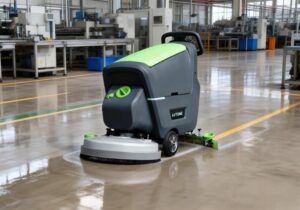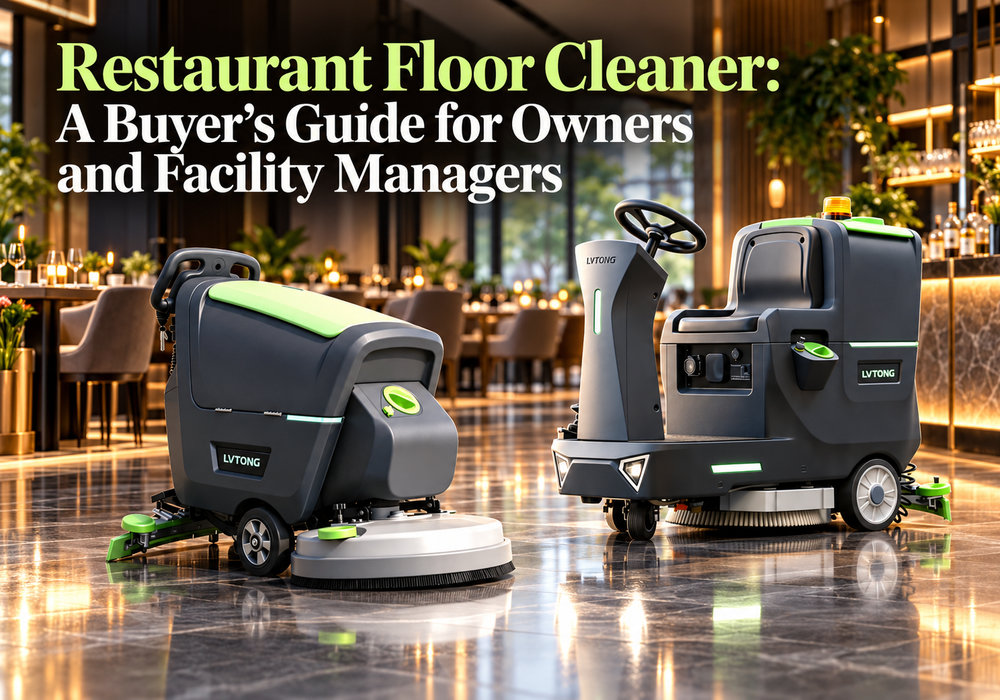
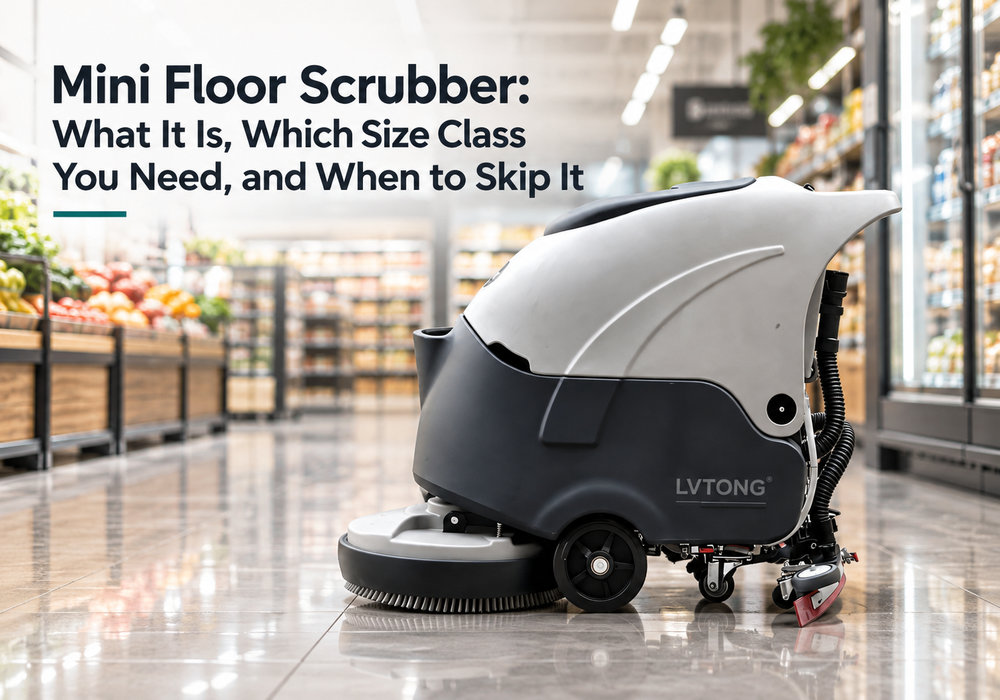
Restaurant floors take more abuse per square meter than almost any other commercial surface: cooking oil drifts onto tile, drinks and grease track in from the bar, and every service ends with a floor that must be safe to walk on within minutes. A mop spreads grease into a thin film and leaves the floor wet — the exact condition that causes slips and fails health inspections. A restaurant floor cleaner — a compact scrubber that lays down solution, agitates, and vacuums it back in one pass — replaces that cycle with a dry-immediately result.
QUICK ANSWER
The right restaurant floor cleaner is a compact walk-behind scrubber sized to your dining room and back-of-house aisles, run daily after close on the full floor and spot-run during service where grease accumulates.
- Match the zones, not the building. Dining room, entrance, bar, and the kitchen edge each need different brush, pressure, and frequency settings.
- Grease decides the spec. Degreasing detergent, medium brush pressure on sealed tile, and squeegee pickup wider than the brush — that combination, not machine size, does the work.
- Compact beats ride-on. Most restaurants under 800 m² are served by one 500–530 mm walk-behind machine; ride-on equipment belongs to malls and logistics, not dining aisles.
- Test before you buy. Run a 2×2 m trial at your worst section during close-down; if the floor is dry in five minutes and the grout lines lift, the machine fits.
The sections below break down each zone, the cleaning logic specific to restaurant floors, and the specs worth comparing before you request quotes.
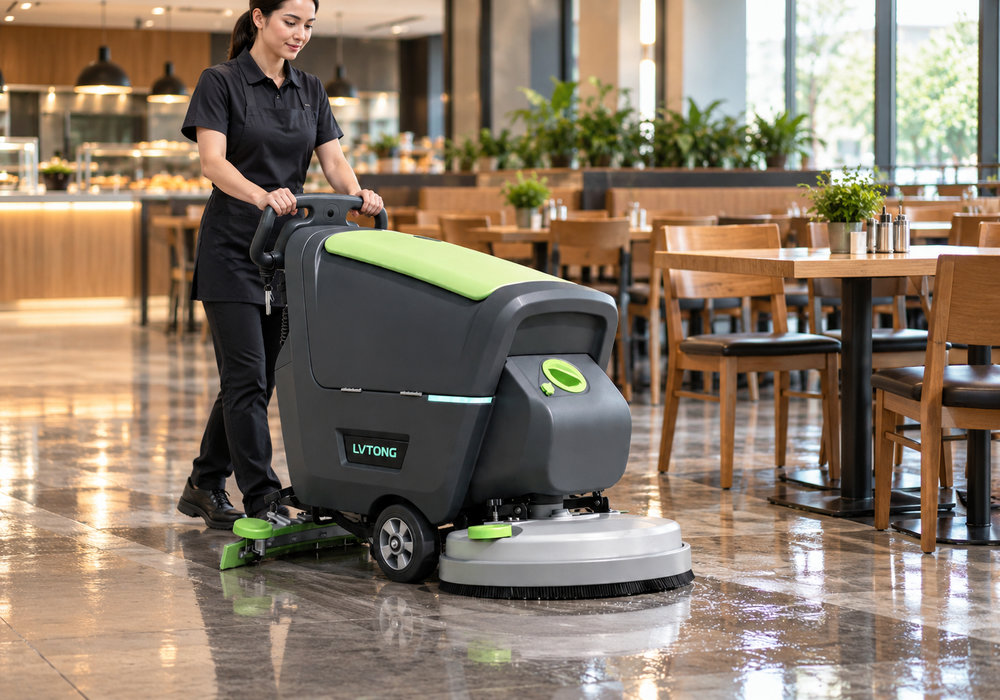
Why Restaurant Floors Break Standard Cleaning Routines
Grease plus foot traffic plus a tight service window is the combination that defeats mopping — and it is the defining condition of every restaurant floor.
Three forces work against a restaurant floor at once. Grease from the kitchen line becomes airborne and settles across the dining room, not just near the pass. Guests and staff grind it into grout lines, where a mop head cannot reach. And the schedule compresses everything: serviceable before doors open, walk-safe during service, no drying window.
Mopping fails on all three counts. It moves soil rather than removing it, leaves a wet film that extends the slip window, and depends entirely on the operator’s technique. Health inspectors read the same physics from the other side: a greasy, damp floor is a documented hazard, and the OSHA walking-working surfaces rules treat wet and contaminated walking surfaces as a fall hazard the employer must control. A machine that recovers its own water shortens that exposure from an hour to minutes.
Restaurant Floor Cleaner vs. Mop: Where the Machine Actually Pays
For any restaurant cleaning more than about 150 m² daily, a compact scrubber pays back in labor hours and slip-risk reduction within the first year; below that threshold, the mop is genuinely adequate.
The economics verify on your own floor. Count your daily wet-cleanable area. A two-person mop routine on 300 m² consumes one to two labor hours and leaves the floor wet for most of the closing window; a compact scrubber-dryer covers the same area in under 45 minutes and hands back a dry floor.
The hygiene argument matters as much as the hours. A mop bucket is dirtiest at the end of the routine — the water that touched the restroom floor spreads across the dining room last. A scrubber runs clean solution onto the floor and vacuums it into a separate recovery tank, so the soil leaves the building in the tank. For the labor and hygiene math in full, see our guide to moving beyond the mop.
Matching the Machine to Restaurant Zones
One compact walk-behind machine covers all four restaurant zones; what changes by zone is the setting — brush, detergent, frequency — not the machine.
| Zone | Soil profile | Machine setting | Frequency |
|---|---|---|---|
| Dining room | Grease film, foot traffic, spilled drinks | Soft brush or pad, low-to-medium pressure, neutral detergent | Daily after close |
| Entrance & waiting area | Tracked-in grit, rain, dust | Medium brush, dry-sweep first on rainy days | Daily; twice on peak days |
| Bar & service stations | Syrup, alcohol, ice melt, sticky residue | Medium pressure, degreaser dilution per label | Daily + spot runs during service |
| Kitchen edge & pass | Heavy grease, food debris | Higher pressure on sealed quarry tile, alkaline degreaser | Daily deep pass; see kitchen guide for the line itself |
The kitchen line itself is a separate discipline with its own machine class and safety rules, and it gets a dedicated guide. For the dining-side floor, the pattern above is the whole job: same machine, four setting changes.
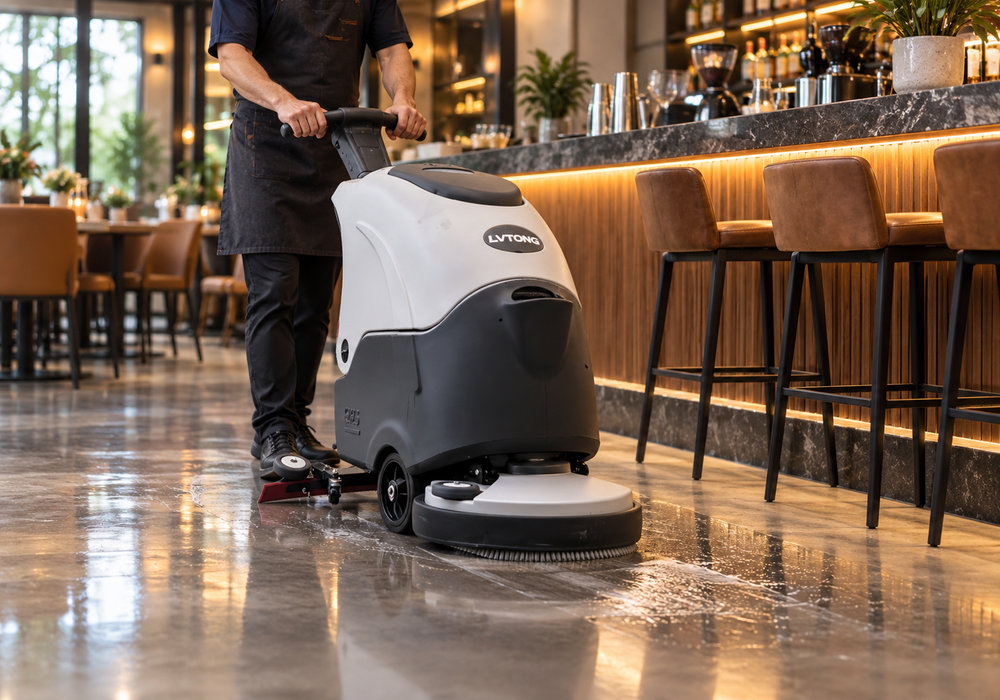
The Boundary With the Kitchen: What This Guide Does Not Cover
Dining-side equipment fails inside the kitchen line; if your problem is the fryer alley and floor drains, you need the commercial kitchen playbook, not a bigger dining-room machine.
Buyers searching for floor scrubber kitchens usually mean two different rooms. The dining room and its adjacent aisles are closed-space, light-to-medium soil — the compact class above. The kitchen line is open grease, standing water, and drain hygiene, where machine choice interacts with drainage and inspection expectations. Running a dining-room machine into the fryer alley transfers grease onto its squeegee and contaminates the next dining-room pass.
Keep the boundary clean: one machine for front-of-house, a dedicated routine and water-handling plan for the line. Our upcoming commercial kitchen floor guide covers the line itself — drainage-first layout, degreaser chemistry, and the acceptance tests that matter at inspection.
Which Machine Class Fits: Compact Scrubber, Micro, or Ride-On
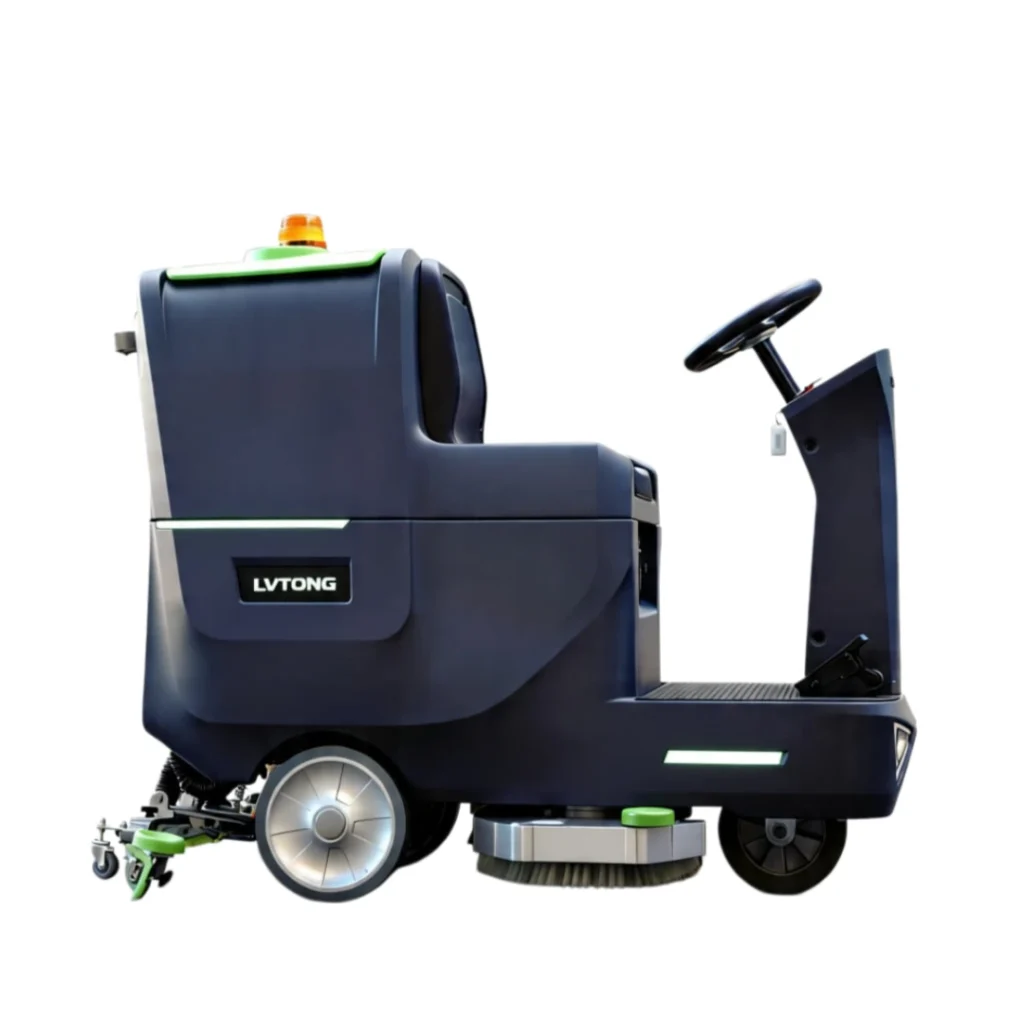
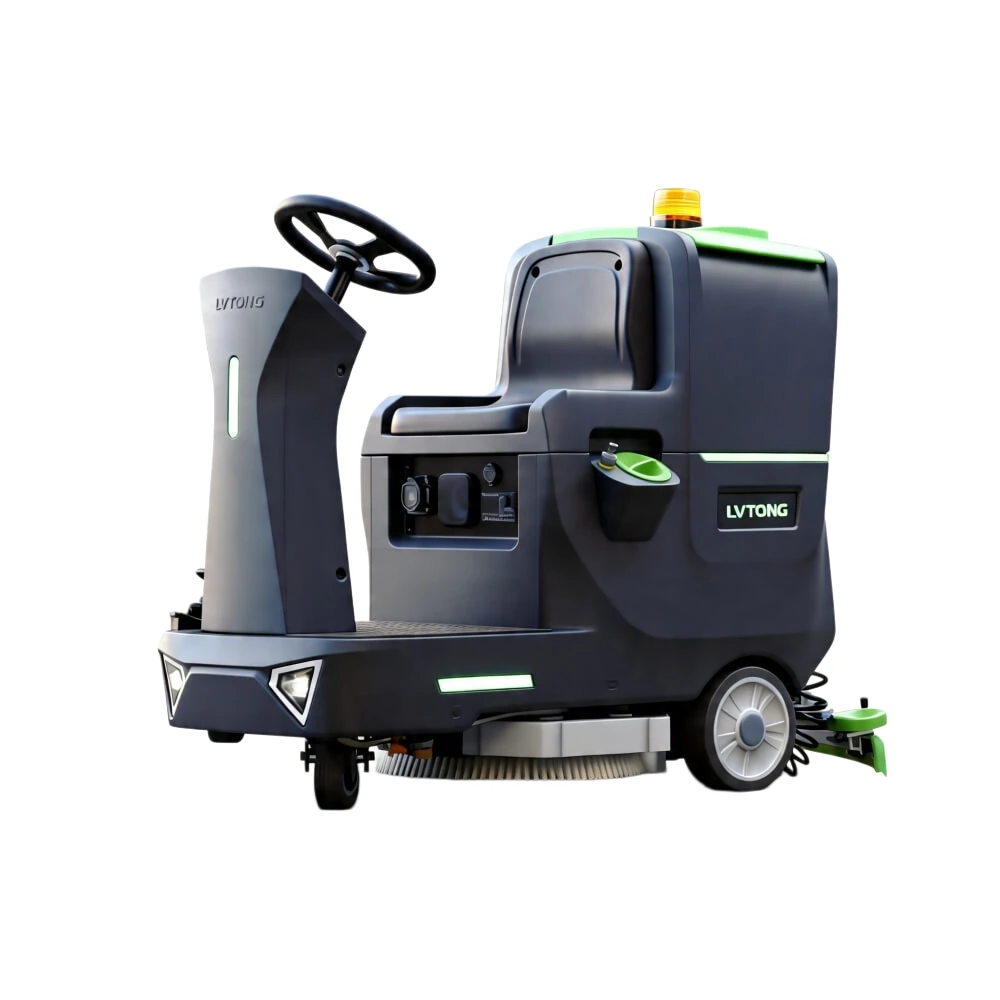
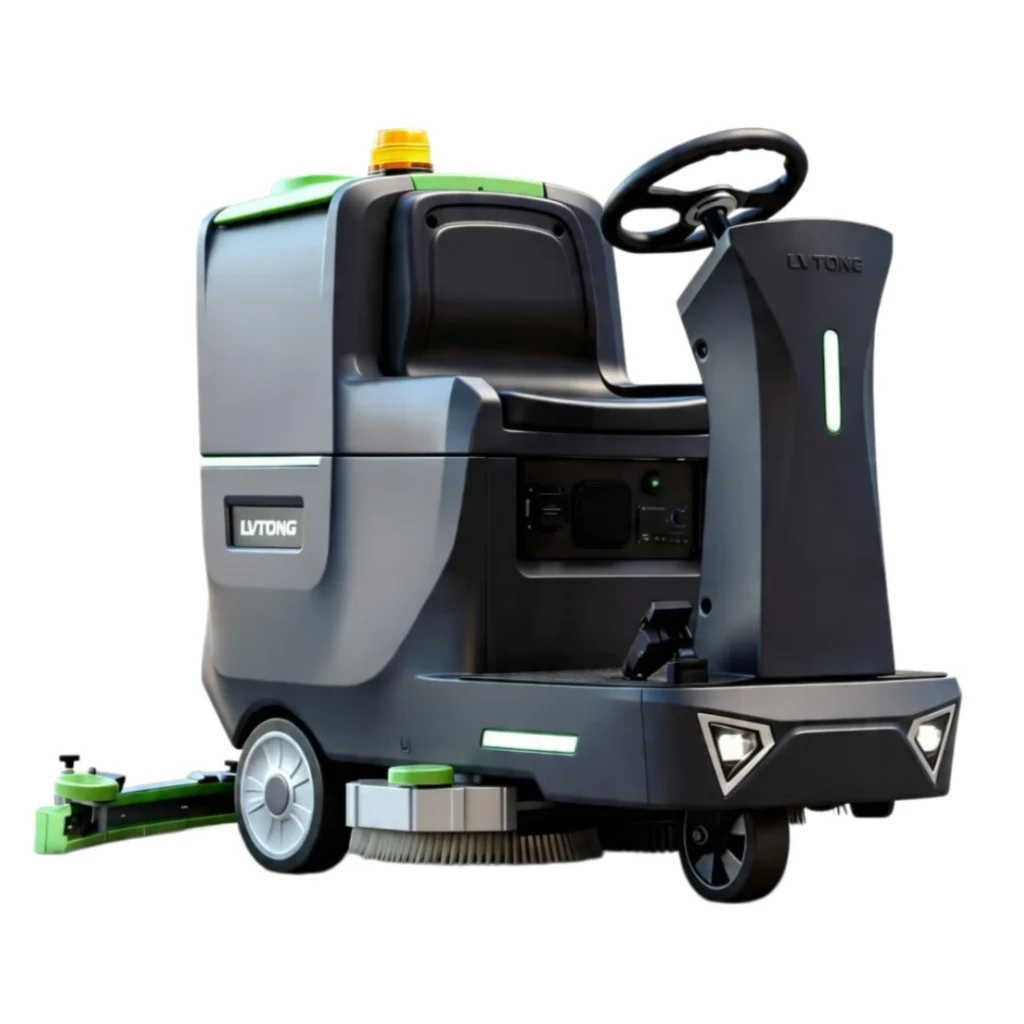
For the vast majority of restaurants, a compact walk-behind scrubber in the 500–530 mm class is the correct answer; micro units serve restrooms and corners, and ride-on machines belong to facilities ten times this size.
A restaurant floor scrubber in the compact class balances three restaurant-specific constraints: it must turn in aisles between tables, it must store in a back hallway rather than a machine room, and it must finish the full floor inside one closing window. Machines in the 500–530 mm scrub-path class meet all three — the Q5 industrial walk-behind scrubber runs a 500 mm path at about 2,100 m²/h on lithium power, and the LT-S530X extends the format with a 530 mm path, 62+65 L tanks, and a 24V 100Ah battery for venues that run longer closes or two floors. Both are listed with full specifications on the cleaning equipment range page.
Micro machines — scrub paths under 250 mm — earn their place on restroom floors and behind the bar counter, not on the dining room. Ride-on equipment needs open runs measured in hundreds of meters; a restaurant that large is a food court or plant cafeteria. For venues between a café and a full-scale restaurant, the sizing logic in our walk-behind scrubber guide for small and medium facilities applies directly.
Grease, Grout, and Slip Resistance: The Specs That Matter Here
Spec-sheet numbers that decide restaurant performance are degreaser compatibility, grout-scale brush agitation, squeegee pickup, and dry-pass time — not tank size alone.
- Brush agitation at grout scale. Restaurant tile is textured; grease seats in the grout. Cylindrical brushes or high-RPM disc brushes with medium pressure lift it; a machine that only wets the surface will fail the white-cloth test in a week.
- Squeegee pickup wider than the scrub path. If the pickup lags the brush, the machine lays wet film behind itself — the exact slip condition it exists to remove.
- Detergent system. Confirm the solution tank and pump tolerate alkaline degreasers at label dilution. Sealed surfaces need the dilution discipline written on the degreaser label, not eyeballed.
- Dry-pass time. The working definition of a floor scrubber-dryer: walkable within roughly five minutes of the pass. Ask the supplier to demonstrate it on your worst 2×2 m, not in a clean showroom.
- Run time vs. your close window. A 45–90 minute effective run covers most single-floor restaurants; lithium packs hold that window across daily cycles better than aging lead-acid.
A Cleaning Schedule That Survives Service Hours
One full close-down pass plus targeted spot runs is the schedule that holds; anything heavier collapses within a month, anything lighter lets grease accumulate.
| When | What | Why |
|---|---|---|
| After close, daily | Full-floor pass: entrance → dining → bar → kitchen edge | Removes the day’s grease film before it seats overnight |
| During service, as needed | Spot runs at the bar and pass area | Sticky syrup and fryer drift become slip hazards within one shift |
| Weekly | Lower-speed double pass on grout-heavy sections; recovery tank deep rinse | Grout soil and tank biofilm are weekly problems, not daily ones |
| Monthly | Brush inspection, squeegee blade check, drain flush | Worn squeegees quietly reintroduce the wet-floor problem |
Facilities that discharge wash water to exterior drains should confirm local requirements first; in the United States, industrial stormwater discharges fall under EPA NPDES permits. Most restaurant dumping goes to sanitary drains, but the check costs one phone call and settles the inspection file. For adjacent patios and corridors on concrete, the method in our concrete floor scrubbing guide carries over.
The Buying Checklist for Restaurant Floor Cleaning Machines
Compare candidate restaurant floor cleaning machines on seven points; everything else on the spec sheet is noise here.
- Scrub path 500–530 mm — wide enough for aisles, narrow enough to turn between tables.
- Recovery tank you can dump into a mop sink without lifting.
- Squeegee pickup width exceeds scrub width, with a field-replaceable blade.
- Brush system rated for grout agitation with adjustable pressure for sealed surfaces.
- Detergent compatibility with alkaline degreasers at label dilution.
- Run time that covers your full floor plus spot runs inside one battery cycle.
- Service and consumables available in your market — brushes, blades, and seals are wear items, not accessories.
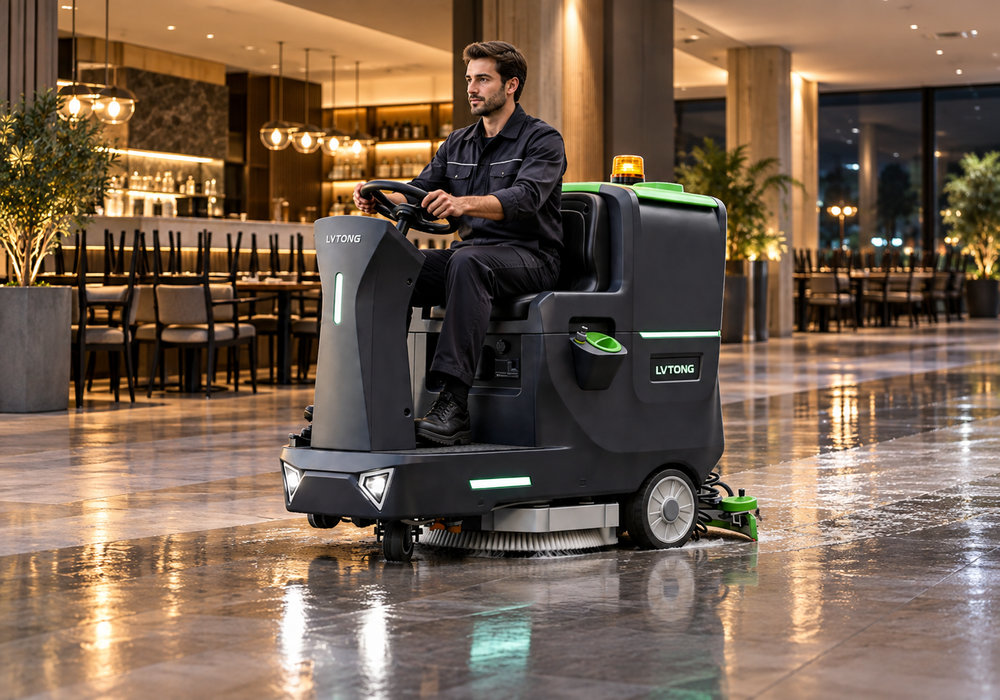
Before You Sign: The In-Store Trial Protocol
Buy on a trial at your worst section, not on a showroom demo — restaurant floors are the hardest cheap test a supplier can be asked to pass.
Run the candidate machine at close-down on the bar and the section nearest the kitchen pass, at your normal detergent dilution. Check four things: the floor is walk-dry within five minutes; grout lines lift on one pass; the squeegee leaves no streaks on the turns; and the recovery tank water is dark, not gray. Repeat across two closes, because tank capacity and battery sag show up in the second hour.
The same protocol doubles as an acceptance script for multi-site groups standardizing restaurant floor cleaning equipment across locations: one trial script, one scoring sheet, comparable machines. Suppliers confident in the class will hand over a demo unit; hesitation is itself a data point.
Frequently Asked Questions
What is the best floor cleaner for restaurant floors?
For the floor itself, a compact walk-behind scrubber-dryer with degreaser-compatible dosing; for the surface film, an alkaline degreaser diluted per label on sealed tile. “Best” is the pairing that leaves your floor walk-dry in five minutes — verify it with the trial protocol above.
Can I use one machine for both the dining room and the kitchen?
Keep them separate. A machine that works the fryer alley carries grease into the dining pass. One front-of-house machine plus a dedicated kitchen routine keeps both areas compliant.
How often should restaurant floors be machine-scrubbed?
Daily after close for the full floor, plus spot runs at the bar and pass during service. Weekly low-speed passes handle grout-heavy sections. Venues with heavy frying drift may need a second full pass midweek.
Will a floor scrubber damage sealed restaurant tile?
Not when pressure is set for the surface — soft brush or pad, medium pressure, and dilution discipline protect the seal; the trial protocol confirms the setting before signing.
What size machine does a typical restaurant need?
Most restaurants under 800 m² are served by one compact walk-behind in the 500–530 mm class with a 45–90 minute run window. Larger food courts and plant cafeterias step up to bigger formats — size from cleanable area, not seat count.