Introduction
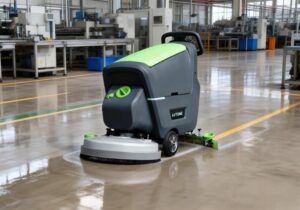
A battery floor scrubber dryer is a cordless commercial cleaning machine that applies cleaning solution, scrubs hard floors, and recovers dirty water in a single pass. It is commonly used in factories, warehouses, workshops, schools, shopping malls, and other indoor facilities where flexible movement, lower operating noise, and no direct exhaust emissions are important.
LVTONG has developed a range of battery-powered floor scrubber dryers for different cleaning areas, aisle widths, floor conditions, and operating schedules. From its first unit to more than 1,000 units sold or delivered as of [Month, Year], the company’s growth has been supported by product development, application-based model selection, spare-parts availability, and technical assistance.
Quick Answer: What Is a Battery Floor Scrubber Dryer?
A battery floor scrubber dryer is a cordless commercial cleaning machine powered by rechargeable batteries. It applies water or cleaning solution to the floor, removes dirt with rotating brushes or pads, and collects the dirty water through a squeegee and vacuum system in one cleaning pass.
Because it does not require a trailing power cable and produces no direct exhaust emissions during operation, a battery floor scrubber dryer is particularly suitable for indoor factories, warehouses, schools, shopping malls, workshops, and other commercial or industrial facilities.
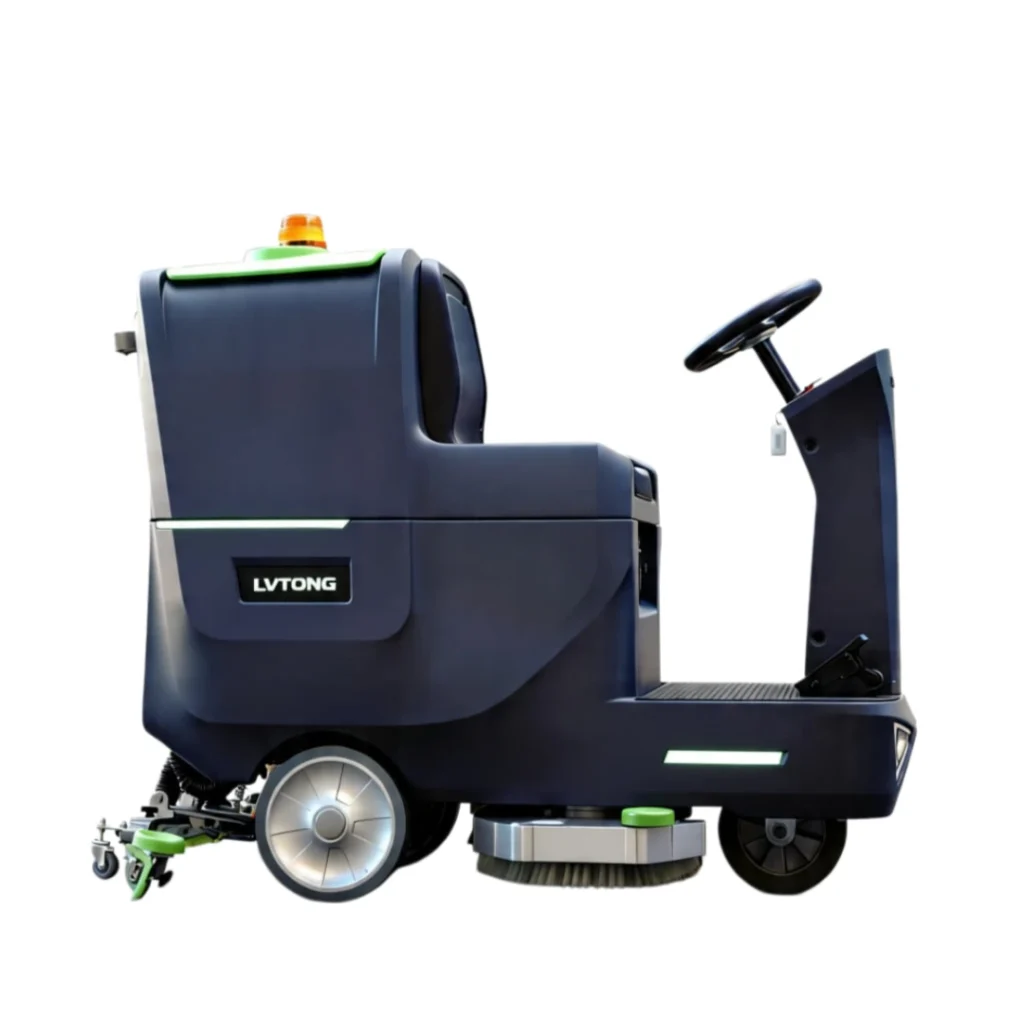
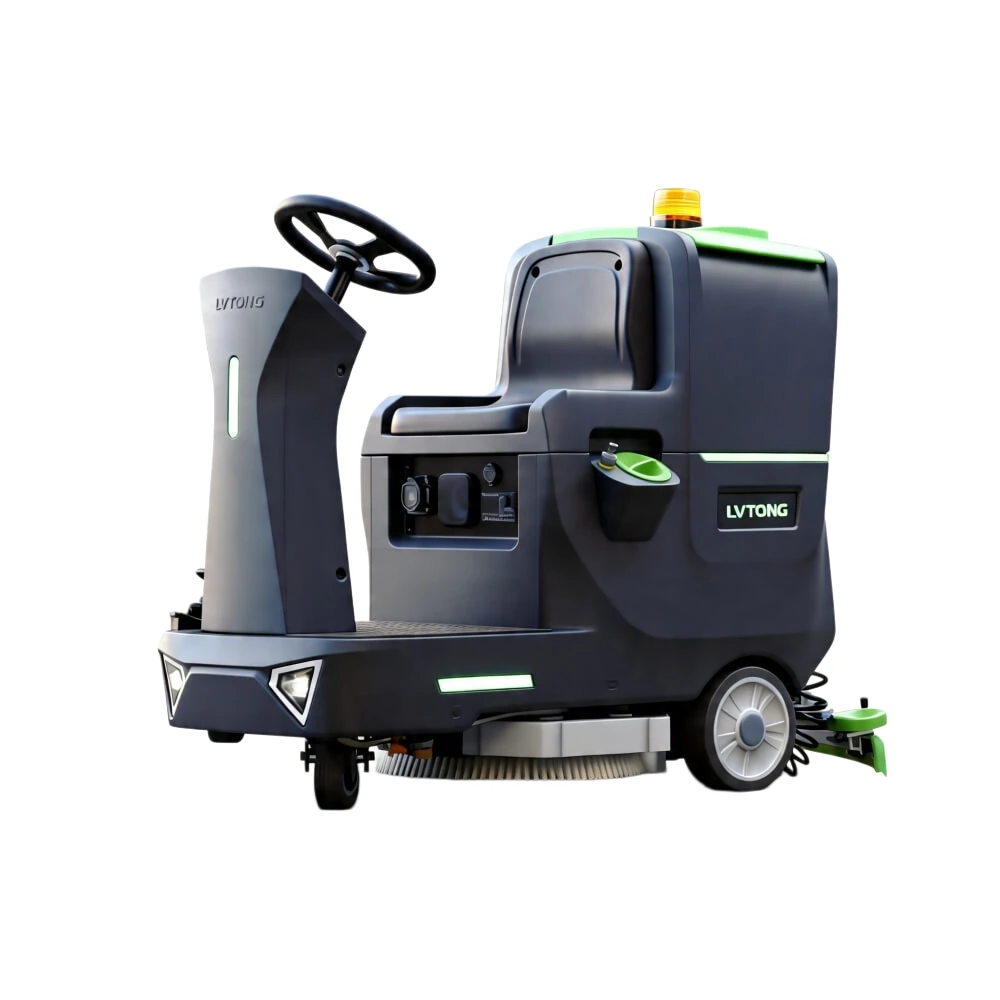
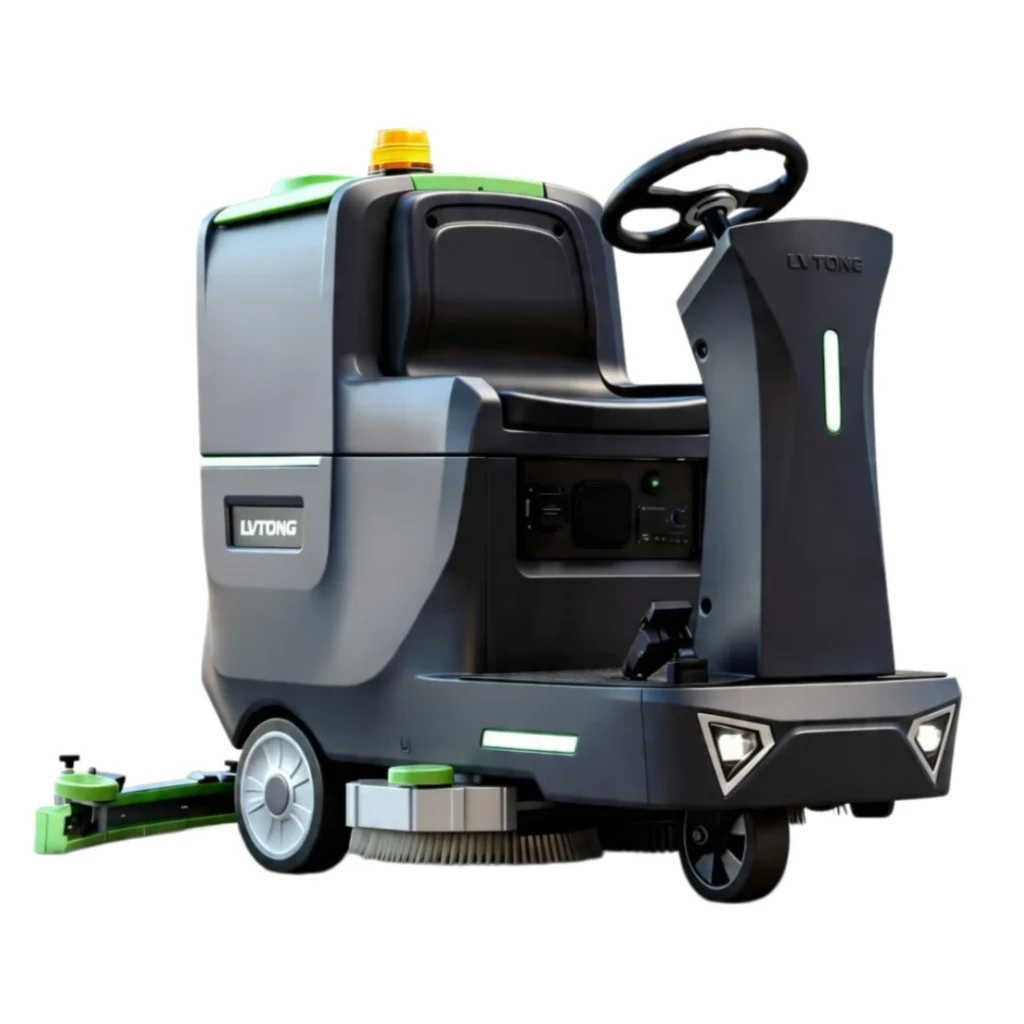
LVTONG offers both walk-behind and ride-on battery floor scrubber dryer models for different cleaning areas, aisle widths, floor conditions, and operating schedules. Before choosing a machine, buyers should compare cleaning width, tank capacity, verified battery runtime, charging time, turning radius, floor type, and spare-parts support.

Why Battery Floor Scrubber Dryers Are Used in Modern Facilities
Large factories, warehouses, and commercial buildings often need to clean extensive floor areas without interrupting normal operations. Manual mopping can be labor-intensive, inconsistent, and difficult to scale, while corded cleaning machines may restrict movement in long aisles or areas with frequent obstacles.
A battery floor scrubber dryer combines cleaning-solution application, mechanical scrubbing, and dirty-water recovery in one pass. Its cordless design allows operators to move between work areas without changing power outlets or managing a trailing cable.
Battery-powered machines also produce no direct exhaust emissions during operation and generally operate more quietly than fuel-powered cleaning equipment. These characteristics make them suitable for many enclosed industrial and commercial environments.
Key Features of a Battery Floor Scrubber Dryer
Cordless Operation
Rechargeable battery power allows the machine to operate without a trailing electrical cable. This improves mobility in warehouses, workshops, production areas, shopping aisles, and other locations with long cleaning routes or frequent obstacles.
No Direct Exhaust Emissions
Unlike fuel-powered equipment, a battery floor scrubber dryer produces no direct exhaust gases during operation. This makes it suitable for many enclosed indoor facilities, subject to the site’s ventilation, hygiene, and safety requirements. Buyers comparing indoor and outdoor power options can read the detailed guide to battery-powered vs diesel floor scrubbers.
Lower Operating Noise
Battery-powered floor scrubber dryers generally operate more quietly than comparable fuel-powered machines. Actual noise levels depend on the model, motor design, brush type, vacuum system, and operating mode.
Scrubbing and Drying in One Pass
The machine applies cleaning solution, agitates dirt with a brush or pad, and recovers wastewater through a rear squeegee and vacuum system. This allows the main cleaning steps to be completed in a single pass.
Rechargeable Battery Options
Depending on the model, floor scrubber dryers may use lead-acid, AGM, gel, or lithium batteries. Battery type affects charging time, maintenance requirements, machine weight, runtime, replacement cost, and suitability for multi-shift operation.
Model-Specific Control Functions
Selected LVTONG models may include electronic controls for functions such as water flow, brush operation, machine status, and operating mode. Available functions vary by model and should be confirmed in the individual product specifications.
How Does a Battery Floor Scrubber Dryer Work?
A battery floor scrubber dryer normally completes three cleaning steps during one pass:
- Solution delivery: Clean water or diluted cleaning solution flows from the solution tank to the brush or pad.
- Mechanical scrubbing: The rotating brush or pad agitates dirt, dust, footprints, and suitable surface residue.
- Dirty-water recovery: A rear squeegee gathers the wastewater, while the vacuum system transfers it into the recovery tank.
The rechargeable battery supplies power to the traction system, brush motor, vacuum motor, and electronic controls. Actual battery consumption depends on the machine size, brush pressure, vacuum power, travel speed, floor resistance, battery age, and operating conditions.

LVTONG Battery Floor Scrubber Dryer Models
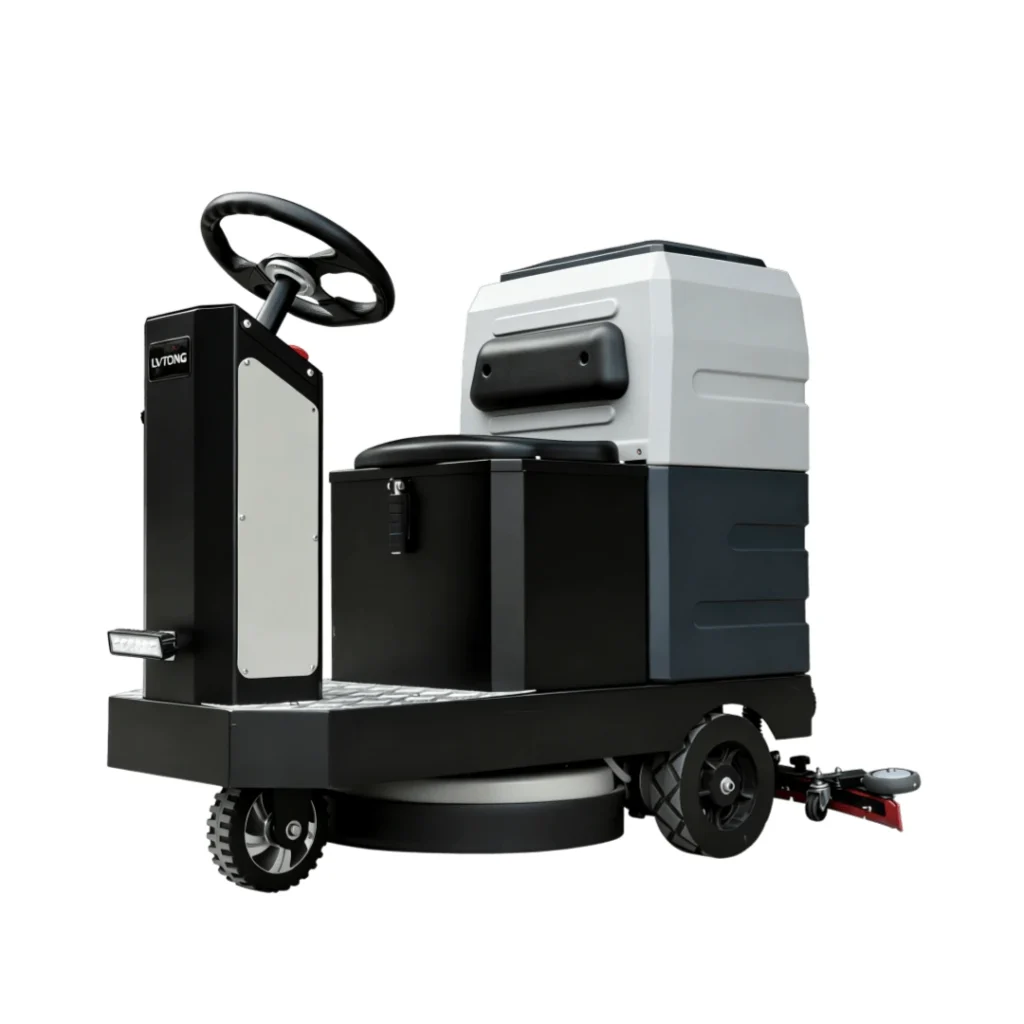
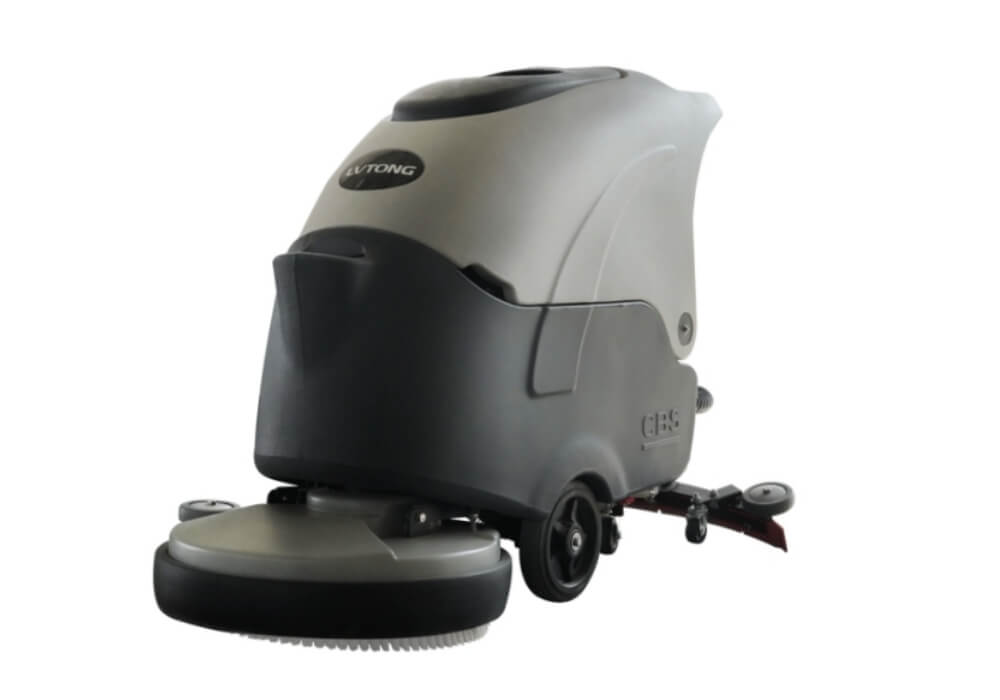
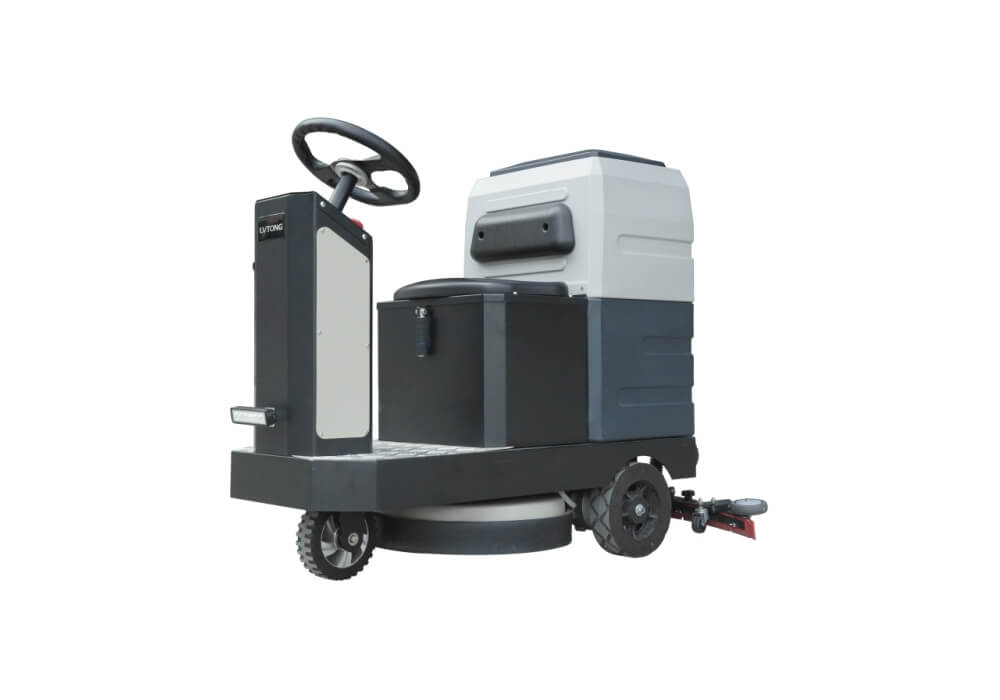
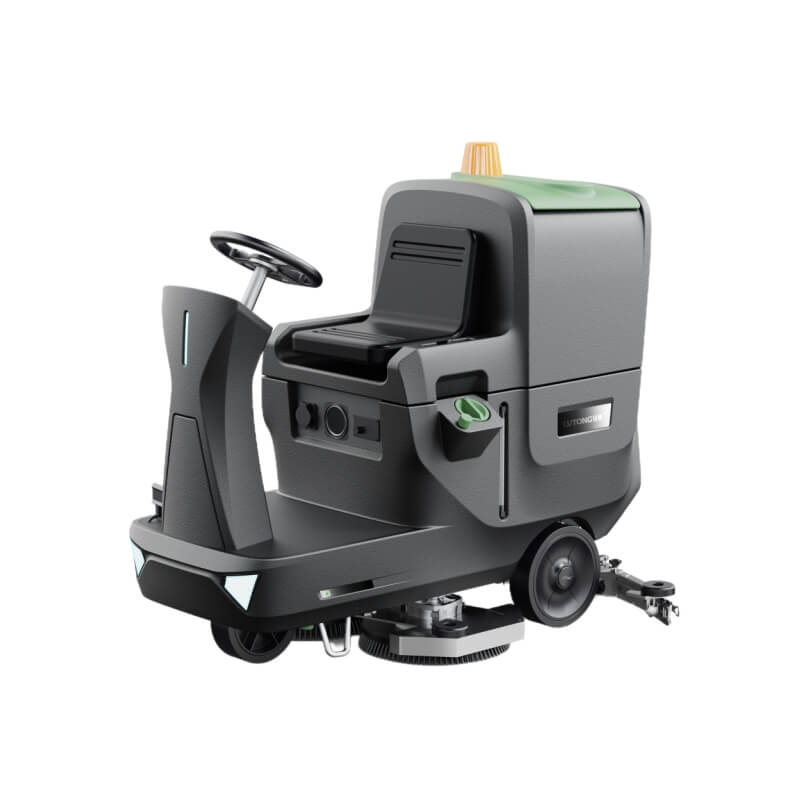
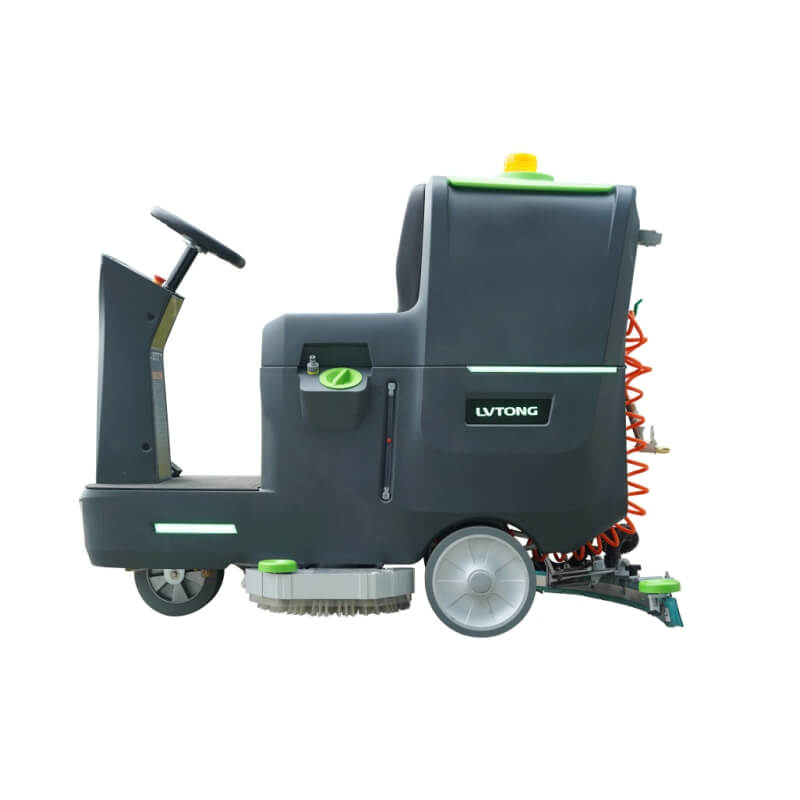
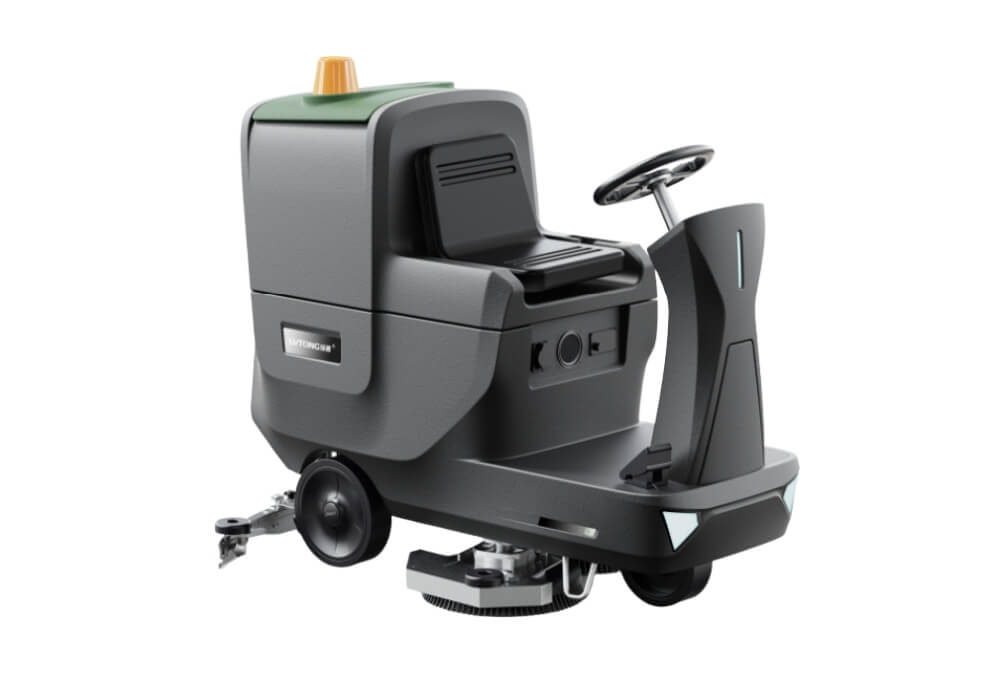
LVTONG offers several battery-powered floor scrubber dryer models, including the Q5, V6, LT-S530X, LT-S560X, LT-S710X, and LT-S860X. These machines are designed for different cleaning areas, aisle widths, productivity requirements, and operating schedules.
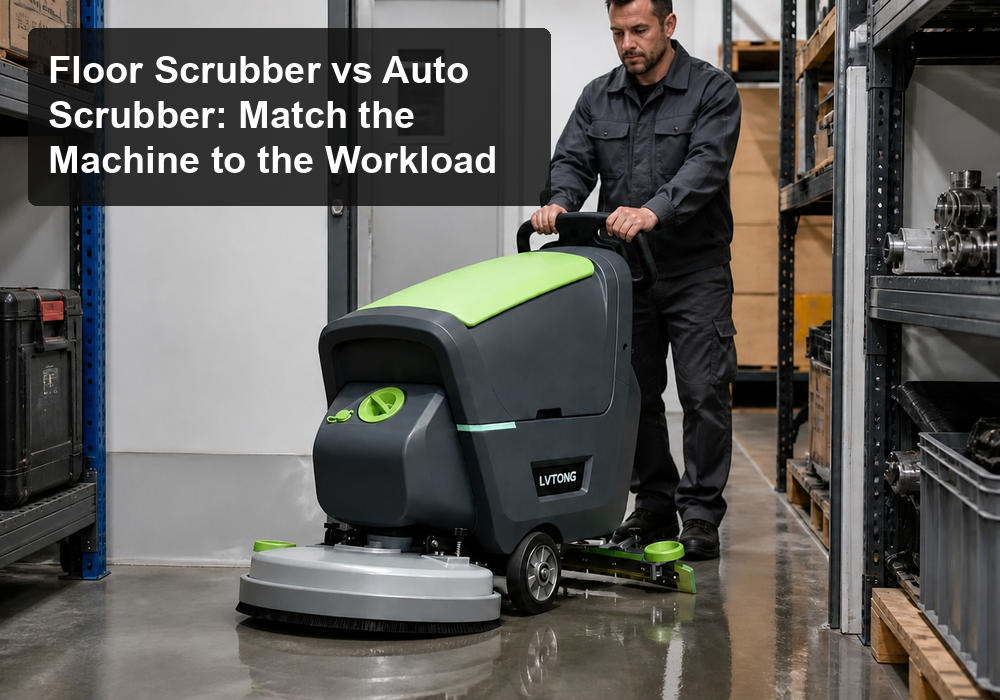
Compact walk-behind models are generally more suitable for narrow aisles, smaller workshops, and areas with frequent turns. Ride-on models are usually more appropriate for larger open facilities where cleaning productivity and operator comfort are important.
Buyers should compare the following published specifications before selecting a model:
| Model | Machine Type | Published Cleaning Width | Solution/Recovery Tank | Published Battery Type | Published Runtime | Recommended Application |
|---|---|---|---|---|---|---|
| Q5 | Walk-behind | Approximately 500 mm | 50 L solution tank / recovery tank not published | Lithium battery | Up to 4 hours | Small workshops, food-processing facilities, small shopping malls, and areas of approximately 500–2,000 m² |
| V6 | Ride-on | Not published on the current product page | Not published on the current product page | Rechargeable battery; chemistry not published | Up to 4 hours | Warehouses, automobile workshops, shopping centers, and medium-to-large indoor floors |
| LT-S530X | Walk-behind | Not clearly published on the current product page | 62 L solution / 65 L recovery | Lead-acid or lithium options | Not published on the current product page | Narrow aisles, workshops, retail spaces, schools, hotels, and cleaning areas up to approximately 4,000 m² |
| LT-S560X | Ride-on | 560 mm | 85 L solution / 90 L recovery | Lead-acid or lithium options; 24 V / 100 Ah configuration published | Approximately 3–5 hours | Shopping centers, manufacturing workshops, quiet areas, and facilities of approximately 1,000–5,000 m² |
| LT-S710X | Ride-on | Wider than the LT-S560X; exact scrubbing width not clearly published | 130 L solution / 135 L recovery | Lead-acid or lithium options | Not published on the current product page | Large warehouses, logistics centers, airports, factories, and cleaning areas of approximately 10,000–15,000 m² |
| LT-S860X | Ride-on | Not clearly published on the current product page | Large-capacity tank mentioned; exact solution/recovery capacities not published on the current product page | High-capacity lithium battery | Up to 5 hours | Large industrial plants, logistics centers, airports, shopping malls, parking areas, and facilities with frequent heavy-duty cleaning |
The correct model should be selected according to the usable cleaning area rather than the total building area alone. Aisle width, turning space, dirt type, floor material, daily cleaning hours, battery configuration, and charging conditions should also be considered.
Because specifications and battery configurations may vary by market or customization requirement, buyers should confirm the latest technical data sheet with LVTONG before placing an order.
What to Compare Before Buying a Battery Floor Scrubber Dryer
A battery floor scrubber dryer should be evaluated according to its suitability for the facility, not only its purchase price. Buyers should compare operating specifications, battery requirements, maintenance access, spare-parts availability, and long-term support.
| Evaluation Factor | What Buyers Should Check | Why It Matters |
|---|---|---|
| Cleaning width | Actual brush or pad working width | Affects productivity and access |
| Tank capacity | Solution and recovery tank volumes | Affects refill and emptying frequency |
| Battery runtime | Runtime under clearly stated test conditions | Determines whether the machine can finish a shift |
| Charging time | Full-charge time and charger specification | Affects machine availability |
| Battery chemistry | Lead-acid, AGM, gel, or lithium | Affects cost, maintenance, and charging |
| Brush pressure | Fixed or adjustable pressure | Influences cleaning performance |
| Turning radius | Machine size and turning space | Important in narrow aisles |
| Spare parts | Availability of brushes, squeegees, motors, and controllers | Helps reduce downtime |
| Warranty | Covered components, duration, and exclusions | Clarifies long-term purchasing risk |
| Technical support | Manuals, training, and troubleshooting channels | Helps operators and maintenance teams |
The most suitable machine is the one that can complete the required cleaning route within the available operating and charging schedule.
Battery Runtime and Charging
Battery Runtime and Charging Time
Battery runtime is one of the most important factors when choosing a battery floor scrubber dryer. Published runtime should always be considered together with the test conditions because brush pressure, vacuum power, travel speed, floor resistance, battery age, and operator behavior can affect actual working time.
Before purchasing, buyers should confirm:
-
Nominal battery voltage and capacity
-
Battery chemistry
-
Runtime under stated operating conditions
-
Full charging time
-
Charger specification
-
Recommended depth of discharge
-
Expected battery cycle life
-
Battery warranty
-
Replacement battery availability and cost
Runtime should be listed separately for each LVTONG model. A runtime figure from one machine should not be applied to the entire product range.
Lithium vs Lead-Acid
Lithium vs Lead-Acid Batteries for Floor Scrubber Dryers
Battery chemistry affects charging speed, routine maintenance, machine weight, initial cost, and expected service life.
| Factor | Lithium Battery | Lead-Acid Battery |
|---|---|---|
| Initial cost | Generally higher | Generally lower |
| Weight | Usually lighter at comparable usable capacity | Usually heavier |
| Charging speed | Often faster | Usually slower |
| Routine maintenance | Usually lower | Depends on battery design |
| Opportunity charging | Commonly more suitable | May be restricted |
| Cycle life | Often longer under suitable conditions | Usually lower |
| Replacement cost | Higher | Lower |
| Typical use | Frequent or multi-shift operation | Predictable schedules and cost-sensitive applications |
Neither battery type is automatically best for every buyer. Lithium batteries may be more suitable for frequent use and shorter charging windows, while lead-acid batteries may offer a lower initial purchase cost. The choice should be based on operating hours, charging facilities, maintenance capability, and total ownership cost.
What Support Should a Battery Floor Scrubber Dryer Supplier Provide?
Application Assessment
A supplier should ask about the cleaning area, floor material, aisle width, dirt type, cleaning frequency, daily operating hours, and charging conditions before recommending a model.
Verified Product Information
Buyers should receive clear specifications for cleaning width, tank capacity, battery capacity, tested runtime, theoretical productivity, charging requirements, and machine dimensions.
Spare-Parts Availability
The supplier should explain the availability of consumable and replacement parts, including brushes, pads, squeegee blades, vacuum motors, chargers, batteries, filters, hoses, and control components.
Warranty and Technical Assistance
Buyers should request written warranty terms, covered components, exclusions, troubleshooting channels, and estimated spare-parts delivery times before placing an order.
Key Design Features of LVTONG Battery Floor Scrubber Dryers
LVTONG firmly believes that technological innovation is the core competitiveness of a brand. In product development, we continuously optimize based on user concerns:
Intelligent Control System: Equipped with independently developed intelligent control chips, it can select LVTONG models use electronic controls to manage functions such as water flow, brush operation, machine status, and operating mode. Available functions vary by model and should be confirmed in the individual specification sheet.
High Performance Power System: Equipped with efficient motors and advanced battery management system, it has stronger power and longer endurance, LVTONG models are available with different battery capacities and configurations. Runtime varies according to the model, battery type, operating mode, brush pressure, floor resistance, and battery condition. Buyers should refer to the verified runtime and charging information for each machine.
Exceptional Cleaning Efficiency: LVTONG floor scrubber dryers combine washing, brushing, and drying in one process. Moreover, its The machines combine solution application, mechanical scrubbing, and dirty-water recovery in one pass. This reduces the need to complete these cleaning steps separately.
Industrial-Grade Durable Construction: Featuring a high-strength, corrosion-resistant aluminum frame and shell design, it can adapt to a variety of complex environments, the machines use components and structural materials selected for commercial and industrial cleaning environments. Actual service life depends on operating conditions, daily workload, maintenance quality, cleaning chemicals, and replacement-part availability.
User-Friendly Design: Depending on the model, usability features may include a clear control panel, adjustable handle or seat, compact turning radius, visible water-level indicators, and accessible routine-service components.
Quick-Maintenance Design: The brush plate, absorbent strip, and battery can all be disassembled and installed without tools, simplifying maintenance and Tool-free or easily accessible components can simplify routine tasks such as replacing brushes, pads, and squeegee blades. Exact maintenance procedures and service access vary by model..
Energy-Saving and Environmentally Friendly Concept: Adopting a low-noise, low-energy-consumption design, coupled with a long-lasting battery, it reduces energy consumption and Battery-powered models produce no direct exhaust emissions during operation. Their total environmental impact still depends on electricity generation, battery production, service life, maintenance, and end-of-life recycling..

Where Are Battery Floor Scrubber Dryers Used?
Manufacturing Facilities
Battery floor scrubber dryers can clean dust, footprints, coolant residue, and general production dirt on suitable sealed floors. The correct brush, pad, and cleaning solution should be selected according to the floor material and contaminant.
Warehouses and Logistics Centers
Cordless operation is useful across long aisles, loading areas, and storage zones. Machine width, turning radius, tank capacity, and usable cleaning area should be matched to rack spacing and traffic patterns. Facilities with narrow aisles or different warehouse zones can use this warehouse floor scrubber selection guide to compare machines according to warehouse size, aisle width, floor type, and cleaning schedule.
Schools and Commercial Buildings
Lower operating noise and the absence of a trailing power cable can make battery-powered machines suitable for cleaning around occupied areas, subject to the facility’s safety procedures.
Food and Electronics Facilities
Machines used in food-processing or electronics environments must meet the facility’s hygiene, contamination-control, and material requirements. Buyers should confirm whether the selected machine and cleaning chemicals are approved for the specific site.
From the First Unit to More Than 1,000
LVTONG’s growth from its first floor scrubber dryer to more than 1,000 units reflects increasing demand from industrial and commercial buyers. According to LVTONG’s published company information, cumulative shipments of its floor scrubber dryers exceeded 1,000 units by November 2025.
These machines have been supplied for applications including manufacturing facilities, warehouses, schools, workshops, shopping malls, and other commercial properties. Buyers in these environments commonly require cordless operation, greater cleaning coverage, reliable battery performance, reduced dependence on manual mopping, accessible replacement parts, and technical assistance.
Reaching more than 1,000 units also demonstrates the importance of matching each battery floor scrubber dryer to the customer’s actual operating conditions. Cleaning area, aisle width, floor type, dirt level, required runtime, charging schedule, and maintenance capability all influence the final model selection.
LVTONG’s battery-powered floor scrubber dryer range includes walk-behind and ride-on machines designed for different facility sizes and cleaning requirements. Models such as the Q5, V6, LT-S530X, LT-S560X, LT-S710X, and LT-S860X provide buyers with options for compact work areas, warehouse aisles, workshops, and large industrial floors.

Why Businesses Choose LVTONG Floor Scrubber Dryer
Buyers evaluating LVTONG can compare several practical factors:
-
Multiple walk-behind and ride-on configurations
-
Battery options for different operating schedules
-
Model recommendations based on floor area and aisle width
-
Availability of consumable and replacement parts
-
Remote technical guidance
-
Product manuals and operator guidance
-
OEM or customization options, where available
The purchasing decision should be based on verified machine specifications, application suitability, warranty terms, battery requirements, and the support available in the buyer’s market.
After-Sales Support and Spare Parts
Routine maintenance generally includes cleaning the recovery tank, inspecting the squeegee blades, checking the brush or pad, cleaning filters, examining hoses, and following the battery manufacturer’s charging instructions. Maintenance intervals should be based on the model manual and actual operating conditions.
- Technical Communication and Response
LVTONG provides technical communication and spare-parts assistance through [Email/WhatsApp/phone/distributor network]. Response times, on-site service availability, and parts delivery times vary by country and market. Buyers should confirm the available support terms before ordering. Initial technical enquiries are normally acknowledged within 24 hours on business days.
- Routine Maintenance Guidance
LVTONG provides customized equipment maintenance plans. From brush replacement cycle and water absorption system inspection to battery performance testing, we have professional standard maintenance procedures.
- Application-Based Model Recommendations
Before recommending a machine, LVTONG should collect information about floor area, surface type, aisle width, contaminant type, cleaning frequency, operating shifts, charging conditions, destination country, and required quantity.

LVTONG Development Timeline
From 0 to 1000 units shipped, LVTONG has taken every step steadily. Since entering the cleaning equipment market, LVTONG has continuously improved product technology and customer service capabilities.
- 2004: Brand established
- 2023: First intelligent industrial floor scrubber launched
- 2024: Launch domestic and international business exports
- 2025: Cumulative sales exceed 1,000 units
Is a Battery Floor Scrubber Dryer Right for Your Facility?
A battery floor scrubber dryer is suitable for facilities that need cordless movement, indoor operation, and combined floor scrubbing and dirty-water recovery. The correct machine depends on usable cleaning area, aisle width, floor type, dirt level, required runtime, charging conditions, and maintenance support.
LVTONG offers several battery-powered models for different operating environments. Before requesting a quotation, buyers should prepare their facility size, floor material, aisle width, daily cleaning hours, contaminant type, destination country, and required quantity.
Contact LVTONG with your cleaning requirements to receive a model recommendation and quotation.

FAQ
What is a battery floor scrubber dryer?
A battery floor scrubber dryer is a cordless machine that applies cleaning solution, scrubs hard floors, and recovers dirty water in one pass. Rechargeable batteries power the brush, vacuum, traction, and control systems.
How long does a battery floor scrubber dryer run?
Runtime varies by model, battery capacity, brush pressure, travel speed, floor resistance, operating mode, and battery condition. Buyers should compare tested runtime under stated conditions rather than relying only on nominal battery capacity.
How long does it take to charge a floor scrubber dryer battery?
Charging time depends on the battery chemistry, battery capacity, charger output, and remaining charge level. Lithium systems often charge faster than conventional lead-acid systems, but the verified charging specification should be checked for each model.
Are battery floor scrubber dryers suitable for indoor use?
Yes. Battery models produce no direct exhaust emissions during operation and do not require a trailing power cable, making them suitable for many indoor factories, warehouses, schools, workshops, and commercial buildings.
Is lithium or lead-acid better for a floor scrubber dryer?
Lithium batteries are often lighter, faster to charge, and more suitable for opportunity charging, while lead-acid batteries usually have a lower initial cost. The better option depends on operating hours, budget, charging conditions, and maintenance capability.
How do I choose the right battery floor scrubber dryer size?
Compare the usable cleaning area, aisle width, turning space, floor type, dirt level, tank capacity, and required runtime. Compact walk-behind machines suit tighter spaces, while ride-on machines are generally more efficient in larger open areas.
What maintenance does a battery floor scrubber dryer require?
Routine tasks include emptying and rinsing the recovery tank, checking brushes and squeegee blades, cleaning filters and hoses, and following the correct battery charging procedure. Always follow the model-specific maintenance manual.
What information is needed to request a quotation?
Provide the cleaning area, floor type, aisle width, contaminant type, daily cleaning hours, destination country, preferred machine type, and required quantity. This helps the supplier recommend a suitable machine and battery configuration.