Introduction
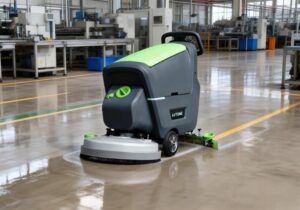
Manufacturing floor scrubber machines should be selected according to the actual factory environment rather than floor area or purchase price alone.
Different manufacturing facilities may have concrete, epoxy, tile, anti-slip, or chemically resistant floors. Their main contaminants may include dust, tire marks, oil, grease, metal particles, food residue, chemical spills, or fine production debris.
The correct machine must match the factory type, floor material, contamination, cleaning frequency, route layout, aisle width, available cleaning time, battery schedule, tank requirements, and required drying result.
This guide explains how to compare manufacturing floor scrubber machines for general production plants, food and beverage factories, electronics manufacturing, pharmaceutical production, metalworking facilities, automotive factories, and chemical plants.
Quick Answer
The best manufacturing floor scrubber machine depends on the factory’s floor material, contamination, route layout, cleaning frequency, hygiene standard, and required drying result.
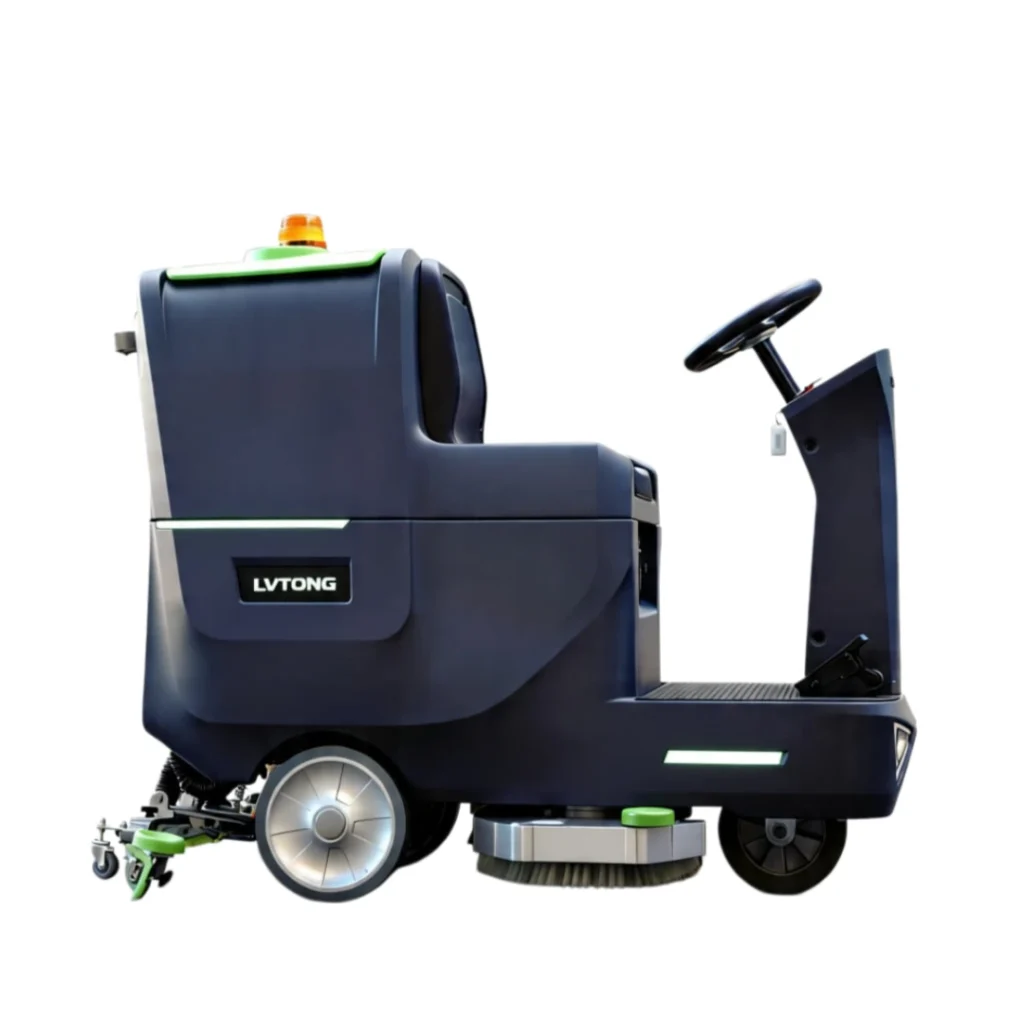
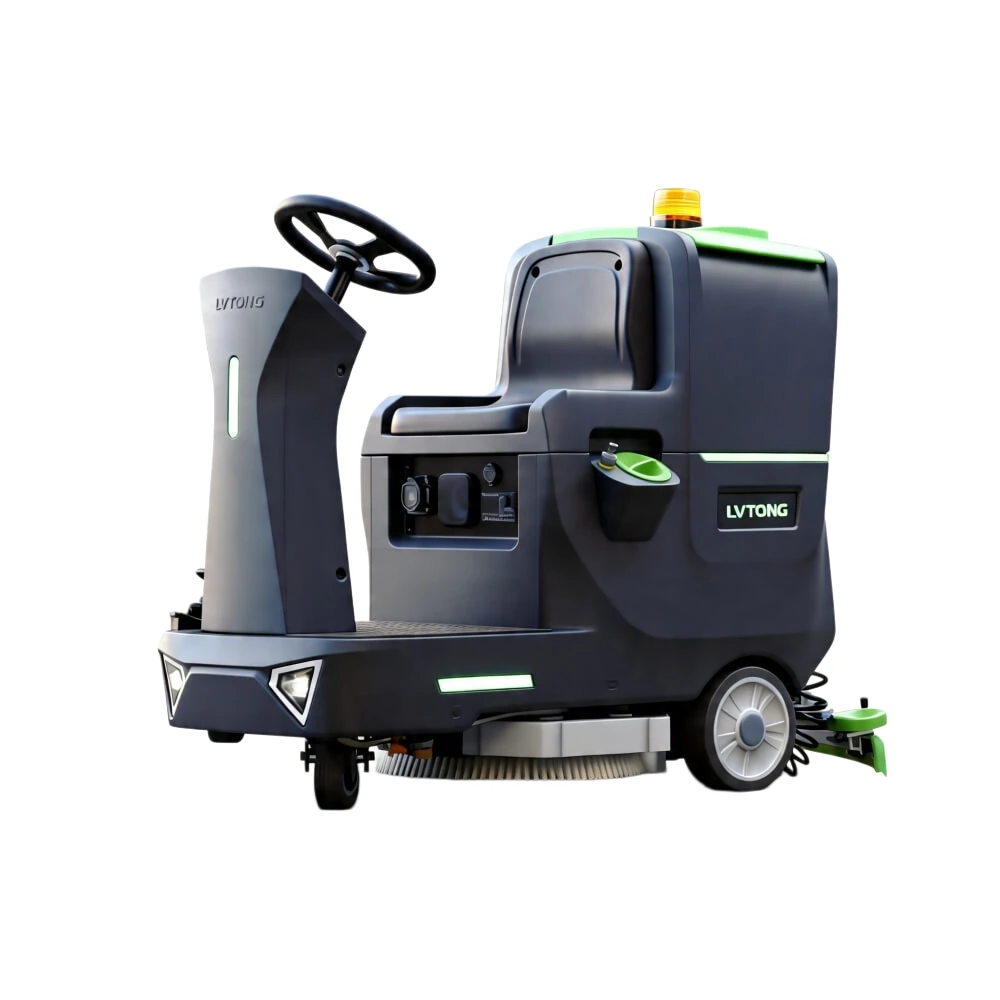
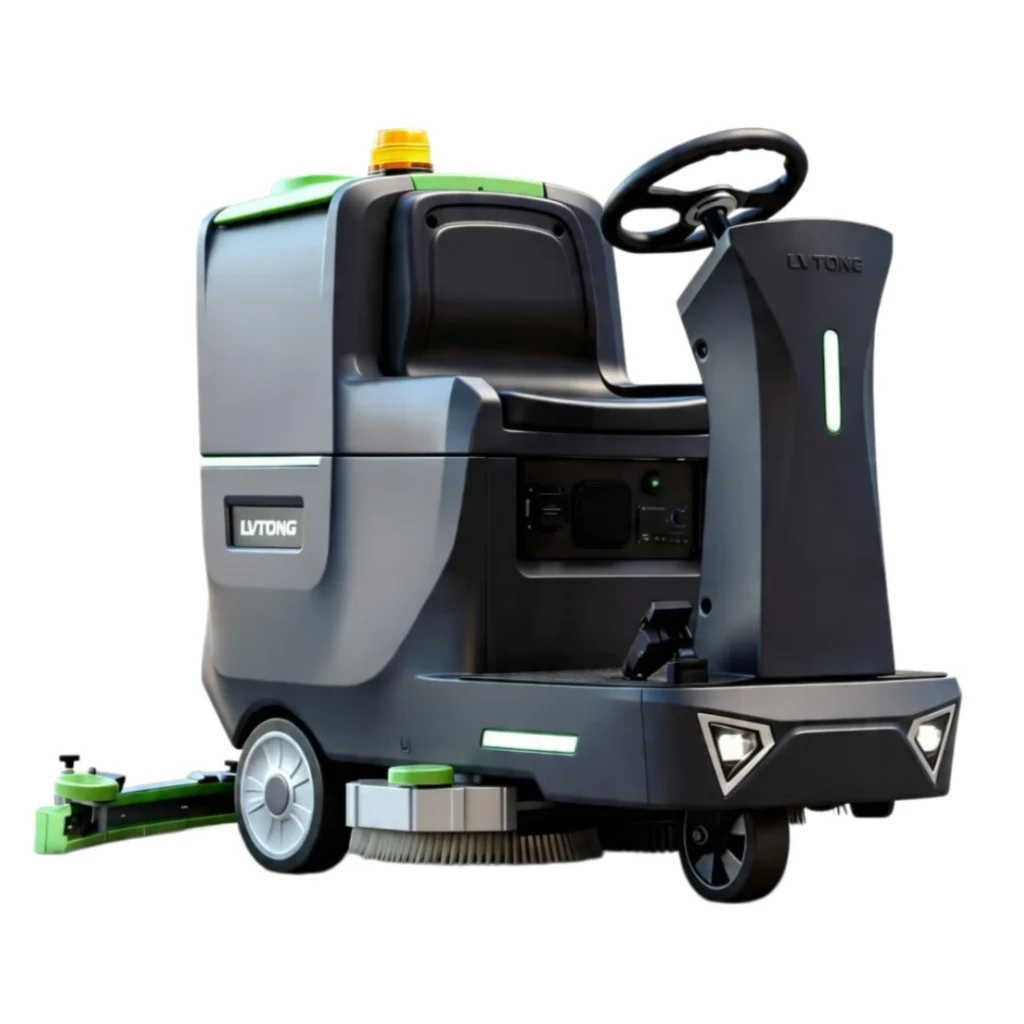
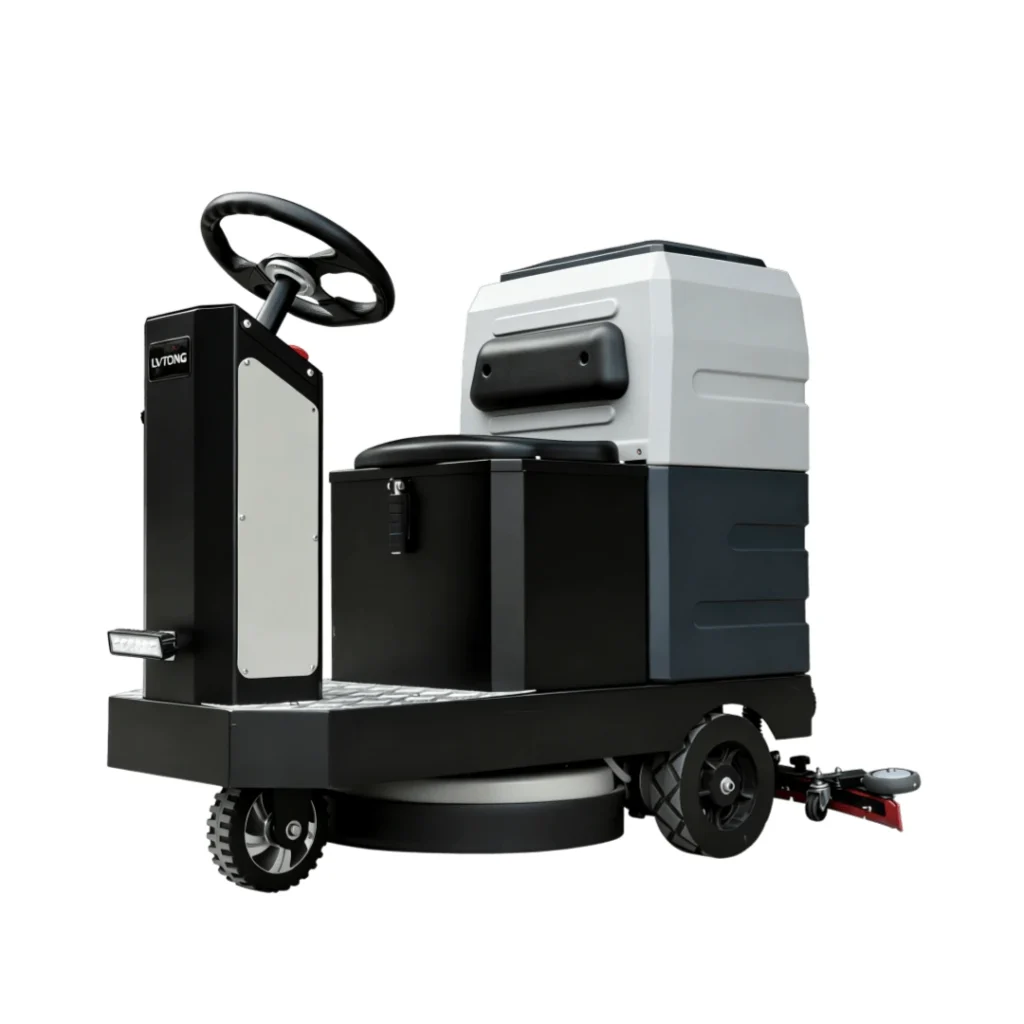
Walk-behind machines generally provide better maneuverability in narrow, divided, or equipment-dense production areas. Ride-on machines may provide better productivity on long, open factory routes.
Food, pharmaceutical, electronics, metalworking, automotive, and chemical facilities may require different brushes, materials, water-recovery systems, battery configurations, and cleaning procedures.
Factory area should be evaluated together with aisle width, turning space, cleaning window, tank capacity, battery runtime, refill distance, wastewater-disposal access, and practical demonstration results.

Manufacturing Floor Scrubber Applications at a Glance
| Factory Application | Common Floor | Main Contamination | Recommended Machine Direction | Priority Features |
|---|---|---|---|---|
| General manufacturing plant | Sealed concrete or epoxy | Dust, tire marks, light oil, and production residue | Walk-behind or ride-on according to route layout | Durability, practical productivity, water recovery, and service access |
| Food and beverage factory | Anti-slip, coated, or hygienic floor | Grease, water, organic residue, and food particles | Easy-to-clean scrubber with reliable wastewater recovery | Hygiene, corrosion resistance, tank access, and controlled drying |
| Electronics manufacturing | Epoxy or clean production floor | Fine dust, light marks, and small production residue | Low-noise walk-behind or compact ride-on machine | Soft brush or pad, low residue, low noise, and controlled water use |
| Pharmaceutical production | Smooth hygienic floor | Fine residue, controlled spills, and sanitation-related soil | Easy-to-sanitize scrubber configuration | Cleanable tanks, compatible materials, documentation, and water recovery |
| Metalworking factory | Concrete or industrial coating | Oil, metal dust, tire marks, and production residue | Durable industrial scrubber after loose debris removal | Suitable brush, pretreatment, structural durability, and parts support |
| Automotive production plant | Concrete or epoxy | Tire marks, oil, dust, and assembly residue | Walk-behind near production lines or ride-on in open areas | Maneuverability, runtime, water recovery, and maintenance access |
| Chemical manufacturing plant | Chemical-resistant flooring | Chemical residue, spills, dust, and corrosive contamination | Compatible heavy-duty scrubber selected after material review | Chemical compatibility, seals, corrosion resistance, and safe recovery |
| Mixed-use manufacturing facility | Multiple floor types | Different contamination across production zones | More than one machine size or brush configuration may be required | Flexibility, brush options, operator training, and route planning |
| Warehouse area inside a factory | Concrete or epoxy | Dust, tire marks, packaging debris, and spills | Sweep loose debris first, then use a suitable scrubber | Cleaning width, runtime, turning radius, and water recovery |
Manufacturing facilities with high cleaning frequency, strict hygiene requirements, long routes, or significant floor-safety risks usually gain the most value from machine-assisted scrubbing and wastewater recovery.
However, the machine should be selected according to the real route and contamination—not the industry name alone.
Why Single-Pass Cleaning and Water Recovery Matter in Factories
Manufacturing facilities with high cleaning frequency, strict hygiene requirements, long routes, or significant floor-safety risks usually gain the most value from machine-assisted scrubbing and wastewater recovery.
However, the machine should be selected according to the real route and contamination—not the industry name alone.
| Water-Recovery Factor | Why It Matters in a Factory | What Buyers Should Check |
|---|---|---|
| Squeegee contact | Determines whether wastewater is collected evenly | Blade condition, adjustment, pressure, and floor contact |
| Vacuum performance | Supports wastewater recovery from the floor | Vacuum motor, hose condition, seals, and filters |
| Floor joints | May leave water in uneven or recessed areas | Test the machine on actual joints and floor transitions |
| Turning performance | Water may remain during sharp turns | Observe recovery during corners and route changes |
| Operating speed | Excessive speed may reduce scrubbing and recovery | Test at a realistic working speed |
| Cleaning chemical | Excess foam can interfere with recovery | Confirm dilution, foam control, and chemical compatibility |
| Floor slope | Water may move away from the squeegee path | Test ramps, slopes, and drainage direction |
| Operator adjustment | Incorrect settings may leave streaks or water | Confirm training for squeegee and water-flow adjustment |
Actual drying performance depends on the complete recovery system, floor condition, operating speed, cleaning chemical, and operator setup—not vacuum power alone.

Factory Floor Scrubber Selection Guide for Different Industries
Floor Scrubbers for General Manufacturing Plants
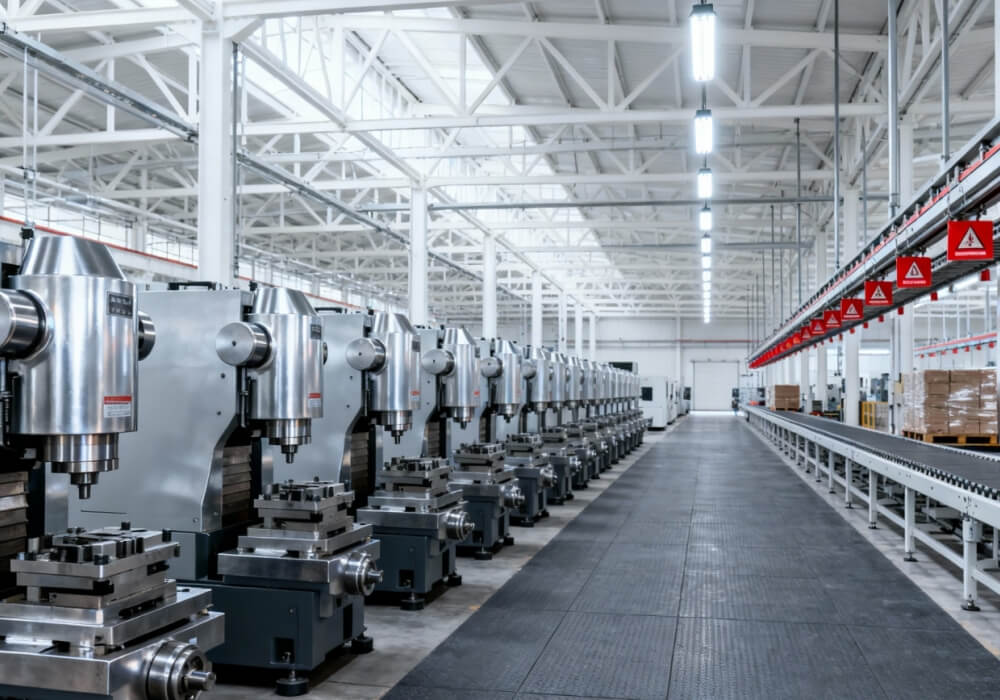
General manufacturing plants commonly use sealed concrete or epoxy floors. Typical contamination includes dust, tire marks, production residue, light oil, and small particles.
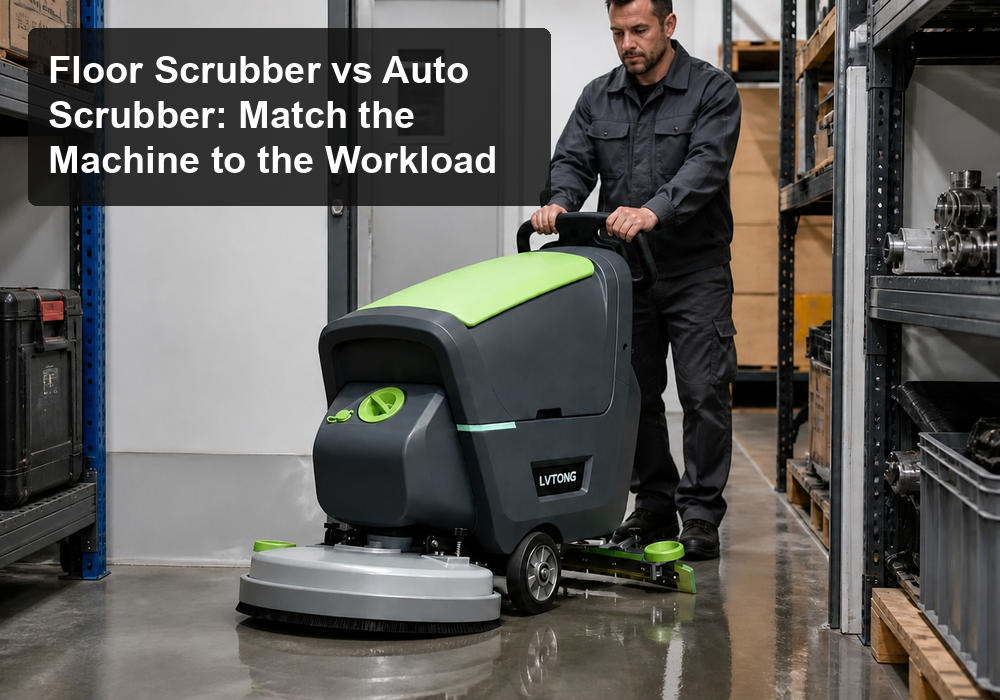
A walk-behind machine may be more suitable around production lines, machinery, columns, and divided work areas. A ride-on machine may provide better productivity on long, open transport routes.
| Selection Factor | Recommended Direction |
|---|---|
| Narrow production routes | Compact or self-propelled walk-behind scrubber |
| Large open production floor | Ride-on scrubber with suitable runtime and tank capacity |
| Mixed open and restricted areas | Separate machine sizes or a versatile mid-sized configuration |
| Tire marks and routine soil | Compatible brush or pad with controlled detergent use |
| Light oil contamination | Pretreatment and suitable brush selected through testing |
| Loose metal particles | Sweep or collect loose debris before wet scrubbing |
| Frequent daily cleaning | Easy maintenance, accessible tanks, and reliable parts supply |
| Short cleaning window | Higher practical productivity and strong water recovery |
The machine should be tested on representative factory soil rather than selected only from motor power or theoretical productivity.
Floor Scrubbers for Food and Beverage Factories
Food and beverage factories often require frequent cleaning and controlled wastewater recovery. Common contamination includes grease, water, organic residue, food particles, and cleaning chemicals.
| Selection Requirement | Why It Matters |
|---|---|
| Easy-to-clean tanks | Reduces residue accumulation inside the machine |
| Accessible filters and hoses | Supports frequent inspection and sanitation |
| Corrosion-resistant materials | Helps protect components exposed to water and chemicals |
| Strong water recovery | Reduces standing water and supports faster reopening |
| Compatible brush system | Matches anti-slip, coated, or textured floors |
| Controlled chemical use | Reduces foam and supports reliable recovery |
| Smooth external surfaces | Makes routine cleaning of the machine easier |
| Documented maintenance | Supports consistent hygiene procedures |
| Operator training | Reduces cross-contamination and incorrect chemical use |
Facilities with strict sanitation requirements can review our guide to floor scrubber hygiene requirements for food-processing and pharmaceutical environments, including contamination control, wastewater recovery, machine cleaning, and operating procedures.
Do not state that a machine automatically meets food-safety standards unless the materials, configuration, cleaning process, and facility requirements have been formally verified.

Factory Warehouses and Internal Logistics Areas
Factory warehouses may contain dry dust, packaging fragments, tire marks, and occasional spills.
Loose debris should normally be swept or collected before wet scrubbing. For long open routes, a ride-on scrubber may reduce operator walking. For narrow rack aisles, a compact walk-behind machine may provide better access.
The main selection factors are aisle width, turning radius, daily cleaning distance, battery runtime, tank capacity, traffic conditions, and water recovery.
Factories with large storage, loading, or material-handling zones can review LVTONG’s logistics cleaning equipment guide for warehouse floors, loading areas, dry debris, packaging waste, tire marks, and oil contamination.

Floor Scrubbers for Electronics Manufacturing
Electronics manufacturing facilities may require low-noise operation, controlled water use, reliable recovery, and brushes or pads that do not damage epoxy or clean production floors.
| Selection Factor | Recommended Direction |
|---|---|
| Fine dust | Use suitable dry-debris control before wet scrubbing |
| Epoxy floor | Select a soft brush or non-aggressive pad |
| Sensitive production environment | Prioritize low noise and controlled water flow |
| Narrow production areas | Use compact and maneuverable equipment |
| Strict drying requirement | Test recovery performance on actual floors and turns |
| Frequent cleaning | Choose tanks, filters, and hoses that are easy to access |

Floor Scrubbers for Pharmaceutical Production
Pharmaceutical production areas may require documented cleaning procedures, compatible machine materials, easy-to-clean tanks, controlled chemical use, and reliable wastewater recovery.
The exact configuration should be reviewed against the facility’s sanitation procedures and applicable internal or regulatory requirements. Do not claim universal compliance without documented verification.

Floor Scrubbers for Heavy Industry and Metalworking
Heavy industrial and metalworking facilities commonly contain dust, oil, tire marks, metal residue, and rough concrete surfaces.
| Cleaning Condition | Selection Priority |
|---|---|
| Loose metal particles | Remove loose debris before wet scrubbing |
| Oil and grease | Use suitable pretreatment, detergent, and brush |
| Rough concrete | Test brush wear and water recovery |
| Long production routes | Evaluate ride-on productivity and battery runtime |
| Tight machine areas | Use maneuverable walk-behind equipment |
| High-frequency use | Prioritize durability, maintenance access, and spare parts |
Floor Scrubbers for Chemical Plants
Chemical facilities require a compatibility review before equipment selection.
| Compatibility Area | What to Confirm |
|---|---|
| Tanks | Compatibility with cleaning chemicals and recovered liquids |
| Hoses | Resistance to chemicals used in the cleaning process |
| Seals and gaskets | Suitability for expected chemical exposure |
| Brushes and pads | Compatibility with floor coating and contamination |
| Machine body | Corrosion resistance in the operating environment |
| Wastewater handling | Facility rules for collection and disposal |
| Electrical components | Protection appropriate to the operating environment |
| Safety procedures | Operator PPE, ventilation, and spill-control requirements |
Do not recommend a standard machine for corrosive or hazardous environments without a technical compatibility assessment.
How to Choose by Factory Layout and Workload
| Selection Factor | Walk-Behind Machine May Be Better When | Ride-On Machine May Be Better When |
|---|---|---|
| Route layout | Routes are narrow, divided, or interrupted | Routes are long, open, and continuous |
| Aisle width | Equipment and production lines limit clearance | Wide transport aisles provide safe turning space |
| Cleaning window | Sufficient time is available for moderate output | High coverage is required within a short period |
| Operator workload | Cleaning routes are short or intermittent | Long routes would create excessive operator walking |
| Turning space | Frequent tight turns are required | Large turning areas are available |
| Door and elevator access | Size or weight restrictions apply | Access points can accommodate a larger machine |
| Daily operating time | Use is limited or divided across small zones | Machine operates for long periods or multiple routes |
| Tank requirements | Refilling points are close and routes are short | Large tanks reduce interruptions on long routes |
| Storage space | Storage and charging space are limited | A dedicated equipment area is available |
| Production traffic | Tight control is needed around employees and equipment | Cleaning can occur in open or controlled routes |
| Factory Data to Record | Why It Is Needed |
|---|---|
| Total cleanable area | Defines the actual machine workload |
| Daily cleaning frequency | Shows how often the route must be completed |
| Narrowest aisle | Limits machine and squeegee width |
| Narrowest doorway | Confirms access between production zones |
| Turning space | Determines maneuverability |
| Floor material | Determines brush, pad, and chemical compatibility |
| Main contamination | Determines cleaning method and pretreatment |
| Available cleaning window | Determines required practical productivity |
| Refill-point distance | Affects tank selection and non-cleaning travel |
| Wastewater-disposal distance | Affects recovery-tank planning |
| Required runtime | Determines battery capacity |
| Charging window | Determines battery and charger suitability |
| Pedestrian and forklift traffic | Affects machine size, visibility, and safety |
Factory area is useful, but it should never be the only selection factor. Two factories with the same floor area may require different machines because their aisles, obstacles, cleaning windows, contamination, refill points, and operating schedules are different.

How Floor Type and Contamination Affect Machine Selection
| Floor Type | Common Factory Contamination | Possible Cleaning Direction | Important Check |
|---|---|---|---|
| Sealed concrete | Dust, tire marks, and light oil | Medium brush or compatible pad | Coating hardness and detergent compatibility |
| Unsealed concrete | Embedded soil and production dust | More aggressive brush selected through testing | Surface wear and dust generation |
| Epoxy floor | Fine dust, marks, and light spills | Soft brush or non-aggressive pad | Avoid scratching or dulling |
| Anti-slip floor | Grease and residue in textured surfaces | Brush able to reach surface texture | Recovery on uneven areas |
| Ceramic tile | General soil and residue | Compatible brush or pad | Grout depth and tile finish |
| Chemical-resistant coating | Chemical residue and spills | Compatible brush, seals, and machine materials | Technical material compatibility |
| Polished concrete | Light marks and traffic soil | Non-aggressive pad | Preserve the intended finish |
| Mixed factory floors | Several contamination types | Different brushes, pads, or machine zones | Changeover procedure and operator training |
Large loose debris, metal fragments, packaging waste, and excessive dry dust should normally be removed before scrubbing.
For factories with sealed, unsealed, polished, or epoxy-coated concrete surfaces, read our guide to scrubbing concrete floors for brush selection, oil pretreatment, detergent use, water flow, wastewater recovery, and common cleaning problems.
Walk-Behind vs Ride-On Manufacturing Floor Scrubber Machines
| Comparison Factor | Walk-Behind Floor Scrubber | Ride-On Floor Scrubber |
|---|---|---|
| Best route type | Narrow, divided, or congested production zones | Long, open production and transport routes |
| Maneuverability | Better in tight areas | Better in wide open spaces |
| Operator position | Operator walks behind the machine | Operator sits or stands on the machine |
| Practical productivity | Low to moderate | Moderate to high |
| Operator fatigue | Higher on long routes | Lower during long cleaning periods |
| Storage requirement | Smaller | Larger |
| Tank capacity | Usually smaller | Usually larger |
| Battery demand | Usually lower | Usually higher |
| Maintenance complexity | Generally simpler | More drive and control components |
| Best application | Production lines, narrow workshops, and divided zones | Large factories, automotive plants, and open manufacturing halls |
A ride-on machine is not automatically the better option for every large factory. Its additional productivity creates value only when the facility has enough open floor area, route continuity, operating time, and safe turning space.
Battery, Tank, Cleaning Width, and Water Recovery
| Technical Factor | What Buyers Should Evaluate | Common Selection Risk |
|---|---|---|
| Battery runtime | Whether one charge can complete the planned route | Cleaning interruption before route completion |
| Charging window | Time available between shifts | Machine unavailable for the next cleaning cycle |
| Charger compatibility | Voltage, plug, current, and battery system | Incorrect or incomplete charging setup |
| Solution-tank capacity | Water required for a practical route section | Excessive refill interruptions |
| Recovery-tank capacity | Wastewater produced during normal cleaning | Recovery tank fills before the solution tank is used |
| Cleaning width | Coverage per pass and access through narrow routes | Machine is too wide or too slow for the facility |
| Squeegee width | Recovery coverage and turning clearance | Water remains during turns or near obstacles |
| Water-flow control | Matching water use to contamination | Excessive water use or poor cleaning |
| Brush or pad | Compatibility with the floor and soil | Floor damage or incomplete cleaning |
| Practical productivity | Output including turns, refill, and disposal | Catalogue figures create unrealistic expectations |
Common Manufacturing Floor Scrubber Selection Mistakes
| Selection Mistake | Possible Result | Better Approach |
|---|---|---|
| Comparing purchase price only | Higher labor, repairs, consumables, and downtime | Compare Total Cost of Ownership |
| Selecting by factory area only | Machine may not fit the actual route | Measure aisles, doors, turns, and cleaning window |
| Ignoring floor material | Brush or pad may damage the surface | Test the cleaning system on the actual floor |
| Ignoring contamination type | Machine may not remove oil, residue, or textured-floor soil | Match brush, detergent, pretreatment, and recovery |
| Choosing the largest machine | Poor access and unused capacity | Select according to practical route productivity |
| Using theoretical productivity | Cleaning time is underestimated | Include turns, overlap, refilling, and disposal |
| Ignoring battery schedule | Machine may be unavailable between shifts | Match runtime and charging window |
| Ignoring water recovery | Residual water may require repeated work | Test squeegee and recovery performance |
| Ignoring spare parts | Repairs may cause long downtime | Request parts list, prices, and delivery times |
| Neglecting operator training | Incorrect operation and premature wear | Provide operation and maintenance training |
| Using one machine for every zone | Some routes or floors may be unsuitable | Consider different machines or brush configurations |
| Skipping a practical test | Actual performance may not match expectations | Conduct a demonstration using representative conditions |
Battery runtime should be evaluated together with the factory’s shift schedule, charging window, cleaning route, brush load, floor condition, and replacement support.
For a detailed comparison of battery type, usable runtime, charging requirements, temperature, maintenance, and replacement planning, read our floor scrubber battery life guide.
Information to Give Your Floor Scrubber Supplier
A supplier can recommend the correct machine only when the factory provides complete application information.
| Information to Provide | Why the Supplier Needs It |
|---|---|
| Factory type | Identifies hygiene, contamination, and operating requirements |
| Daily cleaning area | Determines total workload |
| Floor material | Determines brush, pad, and chemical compatibility |
| Main contamination | Determines cleaning method and pretreatment |
| Narrowest aisle and doorway | Limits machine dimensions |
| Turning space | Determines maneuverability |
| Cleaning frequency | Shows expected usage intensity |
| Available cleaning window | Determines practical productivity requirement |
| Number of shifts | Affects battery and charging selection |
| Refill and drainage locations | Affects tank capacity and route planning |
| Noise limits | Important in active or sensitive production areas |
| Required drying result | Determines water-recovery expectations |
| Delivery destination | Affects freight, power supply, and service planning |
| Maintenance capability | Determines suitable machine complexity |
| Required documentation | Supports training, maintenance, and internal procedures |
| Demonstration conditions | Allows the supplier to prepare an appropriate test |
| Supplier Behavior | Strong Signal | Warning Sign |
|---|---|---|
| Application questions | Requests detailed factory information | Recommends a machine immediately without questions |
| Productivity estimate | Explains assumptions and practical limitations | Provides only maximum catalogue output |
| Brush recommendation | Asks about floor and contamination | Recommends one brush for every application |
| Battery selection | Reviews runtime and charging schedule | Focuses only on battery chemistry |
| Water recovery | Offers test or explains system conditions | Guarantees a dry floor without testing |
| Spare parts | Provides parts list and lead times | Cannot provide part numbers or pricing |
| Warranty | Provides written coverage and exclusions | Uses vague verbal promises |
| Demonstration | Supports representative testing | Refuses to provide performance evidence |
Manufacturing Floor Scrubber Selection Checklist
| Selection Category | What to Confirm | Why It Matters |
|---|---|---|
| Factory application | Manufacturing, food, electronics, pharmaceutical, metalworking, automotive, or chemical | Defines the cleaning environment |
| Daily cleaning area | Actual floor area cleaned per day | Determines workload |
| Cleaning frequency | Number of cleaning cycles | Determines usage intensity |
| Floor material | Concrete, epoxy, tile, anti-slip, or coated floor | Determines brush and chemical compatibility |
| Contamination | Dust, tire marks, oil, grease, residue, or chemicals | Determines cleaning process |
| Loose debris | Type and quantity | Determines whether sweeping is required first |
| Narrowest aisle | Minimum route width | Limits machine width |
| Door and elevator access | Clear dimensions and weight limits | Confirms access |
| Turning space | Available space around equipment | Determines maneuverability |
| Cleaning window | Time available before production resumes | Determines productivity |
| Battery runtime | Time needed for one route | Determines battery capacity |
| Charging window | Time and power available | Determines charging system |
| Tank capacity | Water needed between refill points | Determines interruption frequency |
| Water recovery | Required drying result | Affects safety and reopening time |
| Brush or pad | Compatible material and aggressiveness | Protects the floor |
| Noise | Acceptable sound level | Important in active production |
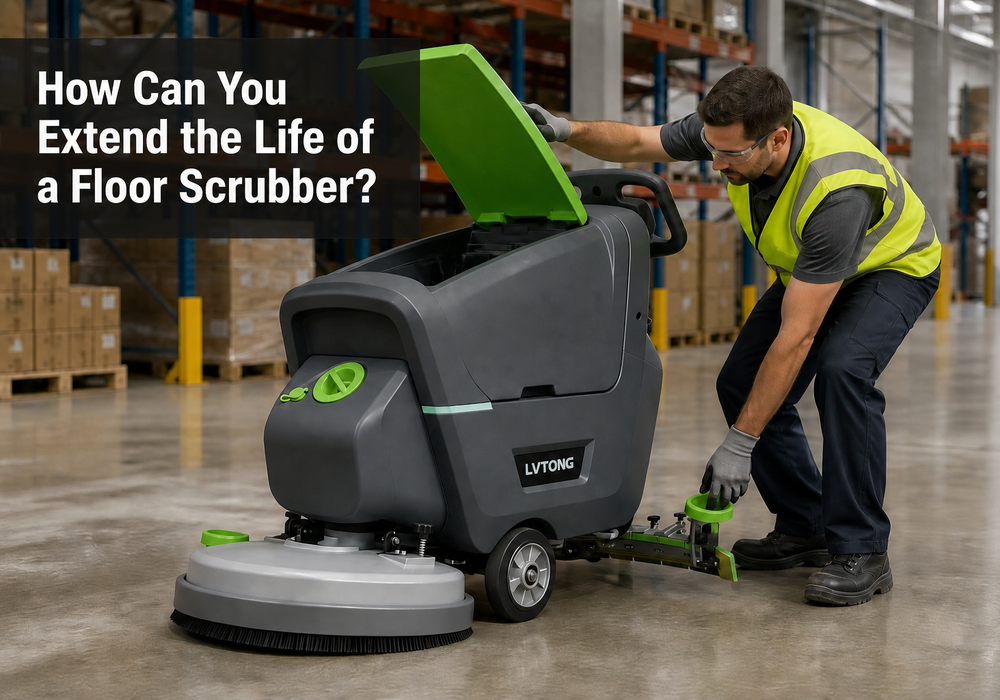
| Maintenance access | Access to tanks, filters, hoses, and brushes | Affects daily service |
| Spare parts | Availability and delivery time | Affects downtime |
| Warranty | Coverage, exclusions, and claim process | Affects financial risk |
| Practical demonstration | Test on representative floor and contamination | Verifies actual performance |

Conclusion
Manufacturing floor scrubber machines should be selected according to the factory type, floor material, contamination, route layout, cleaning frequency, battery schedule, tank requirements, and required drying result.
General manufacturing, food production, electronics, pharmaceuticals, metalworking, automotive, and chemical facilities may require different brushes, materials, machine sizes, and wastewater-recovery systems.
A walk-behind machine may provide better value in narrow or divided production areas, while a ride-on machine may reduce operator time on long, open factory routes. Factory area alone should not determine the final choice.
The best machine is the one that can safely access every required zone, achieve the expected cleaning result, recover wastewater reliably, complete the route within the cleaning window, and remain serviceable throughout its planned operating life.
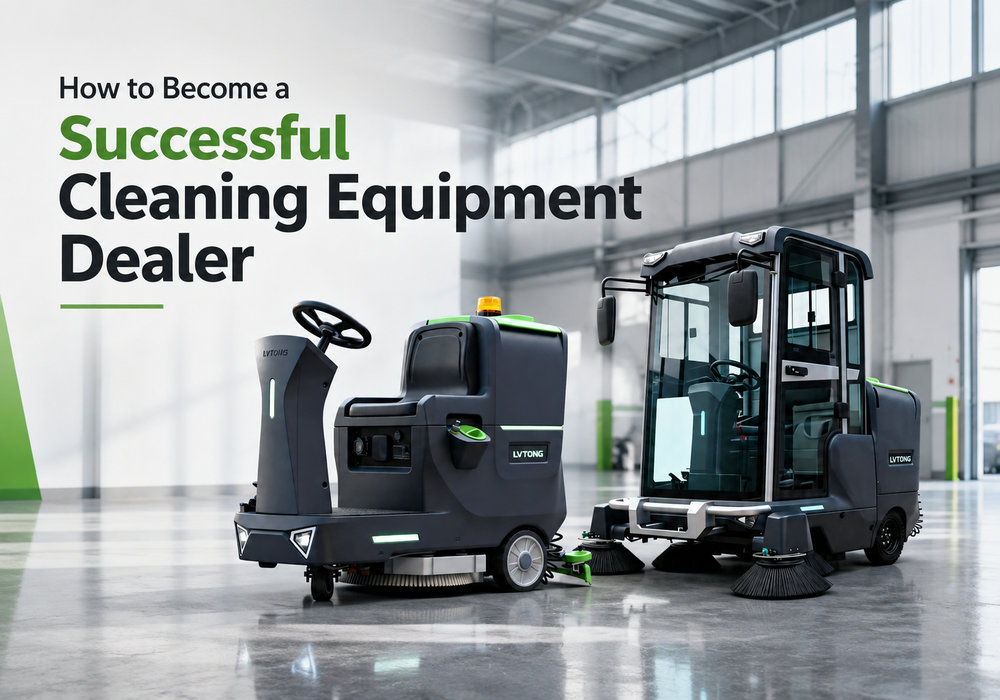
Buyers ready to compare available configurations can explore LVTONG’s commercial and industrial floor scrubber dryers, including walk-behind and ride-on models for different manufacturing layouts and cleaning workloads.
Contact LVTONG with your factory type, floor material, contamination, cleaning area, aisle width, operating schedule, battery requirements, and delivery location to receive an application-based machine recommendation.
FAQ
How do I choose manufacturing floor scrubber machines for different factories?
The best manufacturing floor scrubber machines should be selected based on factory type, floor material, contamination level, cleaning frequency, production layout, and required drying performance. Food factories may prioritize hygiene and corrosion resistance, while automotive and metalworking facilities may require stronger cleaning performance and higher durability.
Should a factory choose a walk-behind or ride-on floor scrubber?
Walk-behind floor scrubbers are usually better for narrow production areas, complex layouts, and factories with many obstacles. Ride-on floor scrubbers are more suitable for large open factories where productivity, long cleaning routes, and operator comfort are important.
Can one floor scrubber clean concrete, epoxy, and tile floors?
Many industrial floor scrubbers can clean multiple floor types when equipped with suitable brushes, pads, cleaning pressure, and chemicals. However, buyers should test the machine on their actual factory floor to ensure effective cleaning without damaging the surface.
What factors affect the performance of a factory floor scrubber?
The main factors include cleaning width, brush system, battery runtime, water recovery performance, floor condition, contamination type, operator experience, and maintenance quality.
What should manufacturers consider before buying an industrial floor scrubber machine?
Manufacturers should evaluate factory size, aisle width, floor material, contamination type, cleaning schedule, battery charging conditions, spare parts availability, warranty support, and total cost of ownership before purchasing.
How can factories reduce cleaning costs with floor scrubber machines?
Factories can reduce cleaning costs by improving cleaning efficiency, reducing manual labor requirements, minimizing repeated cleaning, controlling water and chemical consumption, maintaining equipment properly, and selecting a machine that matches actual working conditions.