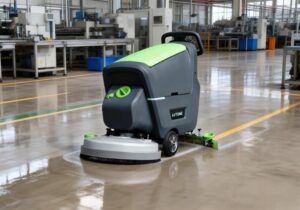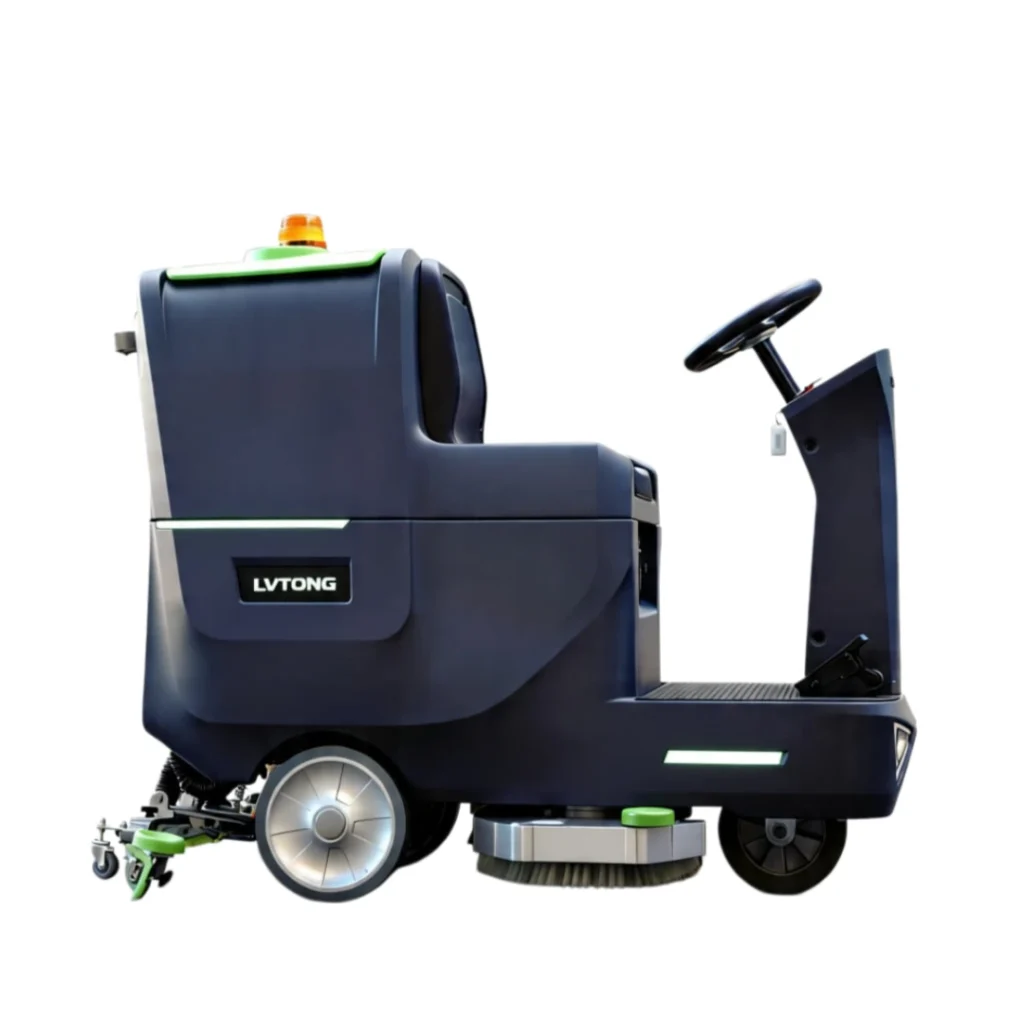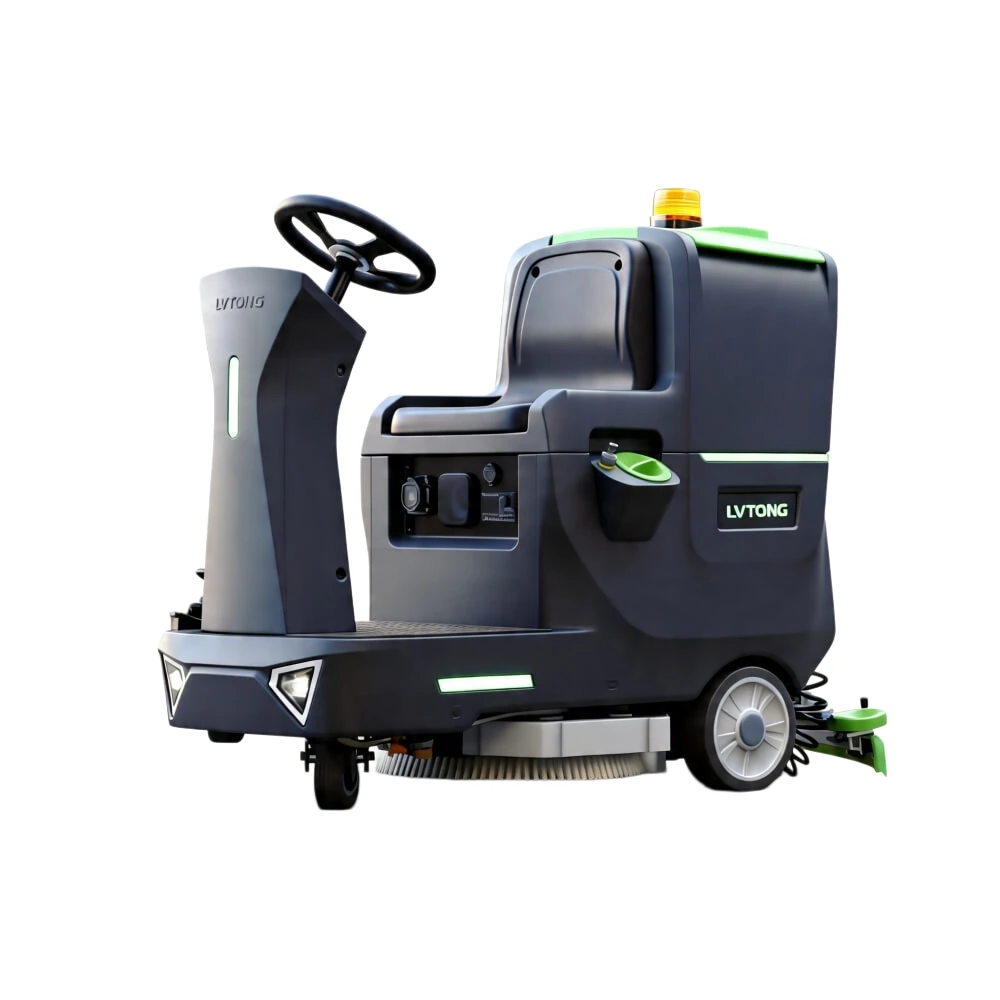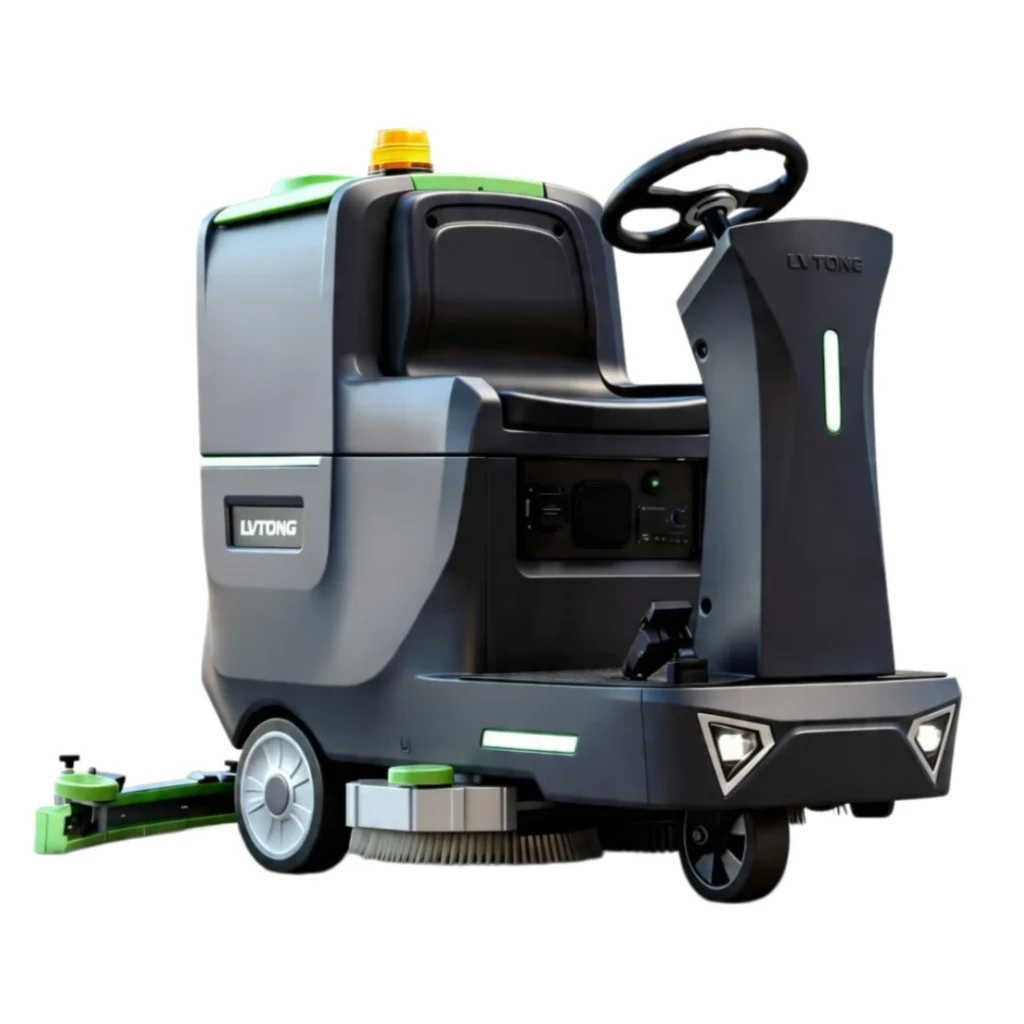
Introduction
Choosing an industrial floor scrubber machine requires more than comparing purchase prices or selecting the model with the highest published productivity.
The correct machine must match the actual floor material, soil condition, daily cleaning area, narrowest aisle, turning space, cleaning window, battery requirements, water-refill points, wastewater disposal location, and operator capabilities.
A purchasing mistake may lead to excessive cleaning time, repeated passes, charging interruptions, poor floor drying, premature brush wear, difficult repairs, or long equipment downtime.
This guide explains seven costly mistakes buyers should avoid when evaluating an industrial floor scrubber machine for factories, warehouses, logistics centers, production facilities, and other demanding environments.
Quick Answer
The most important step when choosing an industrial floor scrubber machine is to match the equipment to the real cleaning route rather than relying only on price, machine size, or catalogue productivity.
Buyers should compare floor type, soil condition, daily cleaning area, narrowest aisle, turning radius, cleaning window, battery runtime, charging time, tank capacity, brush compatibility, water recovery, spare-parts availability, warranty, and practical demonstration results.
The seven most costly mistakes occur when buyers select a machine without calculating Total Cost of Ownership or testing its performance under actual facility conditions.
Industrial Floor Scrubber Machine Buying Mistakes at a Glance
| Costly Mistake | Main Risk | What Buyers Should Verify |
|---|---|---|
| Comparing purchase price only | Higher labor, repair, energy, and downtime costs | Total Cost of Ownership over the same period |
| Choosing the wrong machine type or size | Low productivity or poor maneuverability | Cleaning area, aisle width, turns, doors, and cleaning window |
| Ignoring battery and shift requirements | Charging interruptions and incomplete routes | Required runtime, charging time, charger, and shift schedule |
| Underestimating tanks and cleaning width | Frequent refilling, excessive overlap, or restricted access | Route length, refill points, tank size, and narrowest aisle |
| Using the wrong brush or pad | Floor damage, poor cleaning, and premature wear | Floor material, soil type, chemical compatibility, and test results |
| Ignoring service and parts support | Long repair delays and unpredictable ownership costs | Warranty, parts inventory, response process, and documentation |
| Skipping a practical demonstration | Unexpected noise, poor drying, low operator acceptance, or weak performance | On-site test using actual floor, soil, route, and operator |
A machine should be evaluated as part of a complete cleaning process. The correct result depends on machine configuration, floor conditions, operator behavior, maintenance, and supplier support.
challenges choosing industrial sweeper machines for warehouses
Before comparing industrial floor scrubber machines, confirm whether the facility needs wet scrubbing, dry sweeping, or both.
| Cleaning Condition | More Suitable Equipment | Reason |
|---|---|---|
| Dry dust and loose packaging debris | Industrial floor sweeper | Collects dust, paper, plastic, metal particles, and other loose materials before wet cleaning |
| Tire marks and routine floor soil | Industrial floor scrubber machine | Applies cleaning solution, scrubs the floor, and recovers wastewater in one cleaning process |
| Oil, grease, or sticky contamination | Floor scrubber with a suitable brush and pretreatment | Uses detergent, mechanical scrubbing, and water recovery to remove bonded contamination |
| Packaging waste combined with floor stains | Sweep first, then scrub | Prevents loose debris from entering the suction hose, filter, or recovery system |
| Large quantities of dry manufacturing debris | Industrial floor sweeper | Removes loose industrial materials more efficiently than a wet scrubber |
| Mixed warehouse conditions | Separate sweeper and scrubber or combination equipment | Handles dry debris and wet floor contamination as separate cleaning stages |
| Fine dust on sealed concrete | Sweep first and scrub when required | Removes loose dust before washing away tire marks and embedded soil |
| Wet spills without large loose debris | Floor scrubber or suitable wet-recovery machine | Recovers liquid while cleaning the surrounding floor surface |
| Narrow warehouse aisles with dry debris | Compact walk-behind sweeper | Provides better access and maneuverability in restricted routes |
| Narrow aisles with stains or tire marks | Compact walk-behind floor scrubber | Provides wet scrubbing and water recovery where larger machines cannot operate |
| Large open warehouse with loose debris | Ride-on industrial sweeper | Covers long open routes efficiently while collecting dry material |
| Large open factory with routine floor contamination | Ride-on industrial floor scrubber machine | Provides higher cleaning productivity, larger tank capacity, and reduced operator walking |
| Packaging debris, dust, oil, and floor stains | Sweep first, pretreat oily areas, then scrub | Removes loose debris before applying the correct wet-cleaning process |
| Facility requiring sweeping and scrubbing in one route | Combination sweeper-scrubber | Combines debris collection and wet scrubbing when the facility layout and budget support it |

Mistake 1: Comparing Purchase Price Instead of Total Cost
Choosing a machine based only on the lowest purchase price can create greater long-term expenses.
A low-priced industrial floor scrubber machine may become expensive when it requires more operator hours, frequent repairs, early battery replacement, repeated cleaning passes, or long waits for spare parts.
The initial quotation is only one part of the ownership cost.
Costs Buyers Should Include
| Cost Category | What to Include | Why It Matters |
|---|---|---|
| Initial purchase | Machine, batteries, charger, brushes, accessories, taxes, and optional equipment | Establishes the complete initial investment |
| Delivery and setup | Freight, unloading, assembly, commissioning, and operator training | May not be included in the advertised price |
| Labor | Operator hours, supervision, training, and repeated cleaning | Often represents a major part of long-term cleaning cost |
| Electricity and water | Charging electricity, water, cleaning solution, and wastewater handling | Increases with operating time and repeated passes |
| Consumables | Brushes, pads, squeegees, filters, hoses, seals, and chemicals | Replacement frequency varies by floor and operating conditions |
| Preventive maintenance | Inspection, cleaning, adjustment, lubrication, and scheduled service | Helps reduce unexpected failures |
| Repairs | Motors, controls, batteries, bearings, cables, pumps, and service labor | Can increase quickly when parts are difficult to obtain |
| Downtime | Overtime, manual cleaning, rental equipment, and delayed floor cleaning | Affects production and facility operations |
| Storage and charging | Charging space, electrical supply, ventilation, and storage area | May require facility preparation |
| Residual value | Expected resale or trade-in value | Reduces the net ownership cost |
Preventive maintenance is one of the recurring costs that should be included in every ownership calculation. Use our floor scrubber maintenance checklist to review daily, weekly, monthly, and scheduled maintenance tasks that may affect reliability, parts consumption, and downtime.
Total Cost of Ownership Formula
Total Cost of Ownership = Purchase Price + Delivery and Training + Batteries and Charger + Consumables + Maintenance + Repairs + Electricity, Water, and Chemicals + Labor + Downtime − Residual Value
Different machines should be compared using the same:
- Ownership period
- Daily cleaning area
- Cleaning frequency
- Labor rate
- Required floor result
- Maintenance conditions
- Energy and water assumptions
Illustrative Five-Year TCO Comparison
The following example demonstrates the calculation method only. It is not a product quotation, verified customer case, or guaranteed financial result.
| Five-Year Cost Category | Lower-Price Machine | Better-Matched Machine |
|---|---|---|
| Machine purchase price | US$6,000 | US$9,000 |
| Delivery, setup, and training | US$500 | US$700 |
| Battery replacement | US$2,000 | US$1,500 |
| Brushes, pads, squeegees, and filters | US$4,000 | US$3,000 |
| Preventive maintenance | US$5,000 | US$3,000 |
| Repairs and replacement parts | US$3,500 | US$1,800 |
| Electricity, water, and chemicals | US$2,500 | US$2,200 |
| Operator labor | US$60,000 | US$50,000 |
| Estimated downtime cost | US$4,000 | US$1,500 |
| Less estimated residual value | −US$500 | −US$1,500 |
| Illustrative five-year TCO | US$87,000 | US$71,200 |
| Illustrative annualized TCO | US$17,400 per year | US$14,240 per year |
Although the second machine has a higher purchase price, it produces a lower illustrative TCO because the example assumes lower labor, maintenance, repair, and downtime costs.
Actual results should be calculated using supplier quotations and real facility operating data.

Mistake 2: Choosing the Wrong Machine Type and Size
Each type of industrial floor scrubber has different strengths and limitations.
Selecting a machine that is too small may create:
- Excessive cleaning time
- Operator fatigue
- Repeated shifts
- Frequent refilling
- Incomplete cleaning
Selecting a machine that is too large may create:
- Difficulty entering narrow aisles
- Poor maneuverability
- Storage problems
- Higher transport requirements
- Unused capacity
- Higher purchase and maintenance costs
Machine size should be selected according to the actual cleaning route rather than total building area alone.
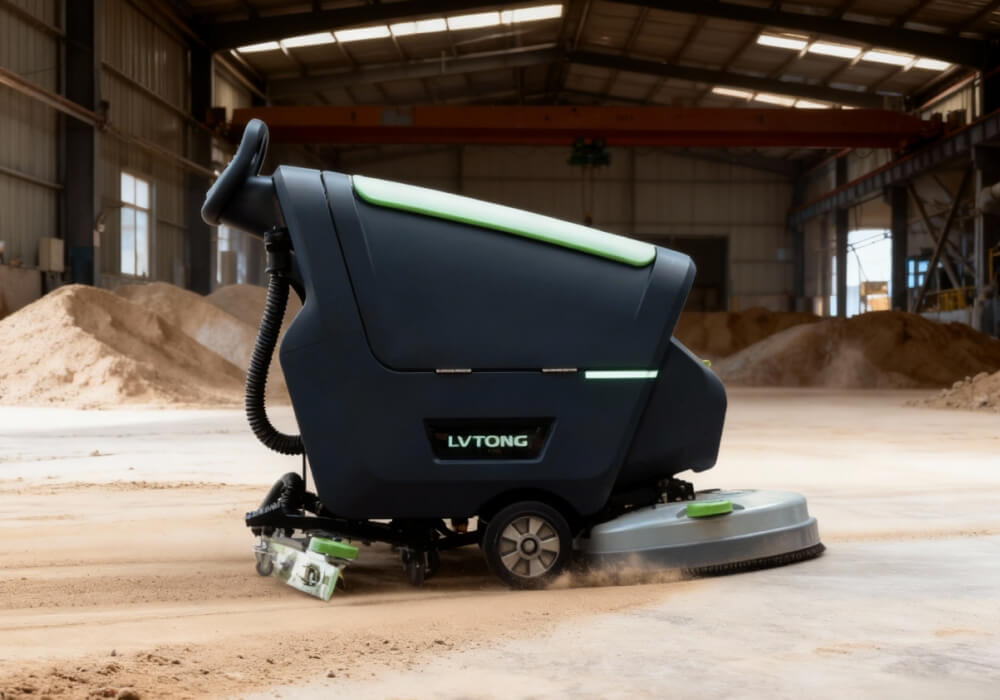
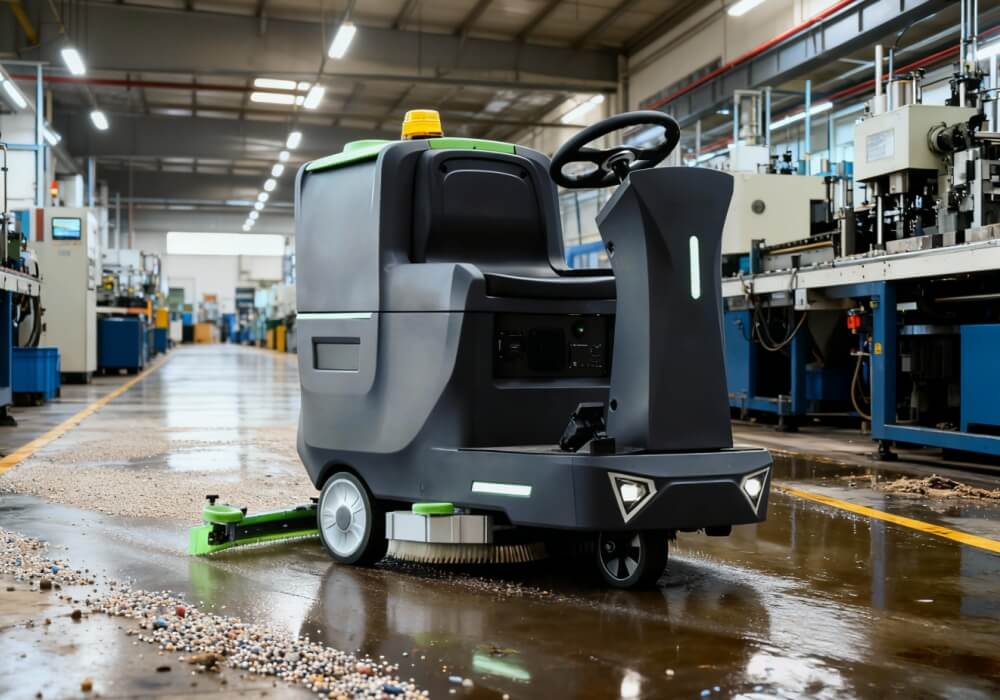
A large facility may still require a compact walk-behind machine when it contains narrow aisles, elevators, production equipment, or frequent turns. A smaller facility with wide open routes and a short cleaning window may benefit from a ride-on model.
A large facility may still require a compact walk-behind machine when it contains narrow aisles, elevators, production equipment, or frequent turns. A smaller facility with wide open routes and a short cleaning window may benefit from a ride-on model.
Before comparing walk-behind and ride-on configurations, review the main types of floor scrubbers and how they differ in maneuverability, productivity, operator position, tank capacity, and suitable applications.
Walk-Behind vs Ride-On Selection Factors
| Selection Factor | Walk-Behind Machine May Be Better When | Ride-On Machine May Be Better When |
|---|---|---|
| Route layout | Routes are narrow, divided, congested, or interrupted | Routes are long, open, and continuous |
| Aisle width | Space around racks or production equipment is limited | Wide aisles provide safe passing and turning space |
| Turning space | Frequent tight turns are required | Large turning areas are available |
| Cleaning window | Cleaning demand is moderate and sufficient time is available | Higher productivity is required within a shorter window |
| Operator workload | Cleaning routes are short or intermittent | Long routes would create excessive operator walking |
| Doors and elevators | Size and weight restrictions apply | Access points can accommodate a larger machine |
| Storage area | Storage and charging space are limited | A dedicated storage and charging area is available |
| Daily utilization | The machine operates for shorter periods | The machine is used frequently across large areas |
| Transport | The machine must move between floors or buildings | The machine remains in one large facility |
| Edge access | Cleaning close to machinery and walls is important | Most cleaning takes place in open central areas |
| Operator visibility | Tight routes require close control around obstacles | Open routes provide clear forward visibility |
| Initial investment | A lower initial investment is required | Labor-saving potential justifies a higher investment |
Facility Measurements Buyers Should Record
| Facility Measurement | What Should Be Measured | Why It Is Required |
|---|---|---|
| Total cleanable area | Floor area that actually requires machine cleaning | Defines the real workload |
| Narrowest aisle | Minimum clear space between racks, walls, or equipment | Limits machine and squeegee width |
| Narrowest doorway | Clear width and height of required access points | Determines whether the machine can enter each zone |
| Elevator dimensions | Door width, cabin size, and weight capacity | Determines multi-floor compatibility |
| Turning space | Available radius near racks, corners, and equipment | Affects maneuverability |
| Storage dimensions | Available storage length, width, and height | Confirms safe storage |
| Charging area | Available space, ventilation, and power supply | Determines battery and charger suitability |
| Ramp and slope | Gradient, width, length, and surface condition | Affects traction and stability |
| Refill distance | Travel distance from the cleaning route to the water source | Affects non-cleaning time |
| Disposal distance | Travel distance to wastewater drainage | Affects tank planning and productivity |
| Cleaning window | Time available before production or traffic resumes | Determines required practical productivity |
| Pedestrian traffic | Number and location of people during cleaning | Affects machine size, visibility, and safety |
Published productivity should be treated as a reference rather than a guaranteed result.
Practical productivity is affected by:
- Turning
- Overlapping
- Obstacles
- Refilling
- Wastewater disposal
- Floor condition
- Operator experience
- Pedestrian or vehicle traffic
Mistake 3: Ignoring Battery Runtime and Shift Requirements
Choosing a battery system without understanding the operating schedule can delay cleaning and disrupt production.
Battery selection should begin with the required cleaning route and shift plan.
A battery may appear suitable on a specification sheet but still be unsuitable if it cannot complete the planned area, recharge during the available window, or receive local replacement support.
Battery Requirements Buyers Should Verify
| Battery Factor | Questions Buyers Should Ask | Buying Risk if Ignored |
|---|---|---|
| Required runtime | Can one charge complete the planned cleaning route? | Cleaning may stop before the route is completed |
| Daily operating hours | How many hours will the machine work each day? | Battery capacity may be insufficient or unnecessarily large |
| Number of shifts | Is the machine required for one shift or several shifts? | Charging may interrupt production schedules |
| Charging window | How much time is available between cleaning periods? | The battery may not recharge before the next shift |
| Battery capacity | Is usable capacity suitable for brush, vacuum, and traction loads? | Runtime may be shorter than expected |
| Charger compatibility | Is the approved charger included and correctly matched? | Charging performance and battery condition may be affected |
| Electrical supply | Does the charging area have the required voltage and plug? | Additional electrical work may be required |
| Working temperature | Is the battery suitable for the facility environment? | Extreme temperatures may affect usable performance |
| Replacement availability | Is a compatible battery available locally? | Battery failure may create extended downtime |
| Battery warranty | What operating conditions and capacity changes are covered? | Replacement claims may be rejected |
| Battery monitoring | Does the machine display state of charge and warnings? | Operators may misjudge the remaining runtime |
| Maintenance requirements | What inspection or maintenance is required? | Neglect may reduce reliability |
| Ownership cost | What are the initial, maintenance, replacement, and downtime costs? | A lower initial price may create higher long-term cost |
Lead-Acid vs Lithium-Ion Evaluation
| Evaluation Factor | Lead-Acid System | Lithium-Ion System |
|---|---|---|
| Initial investment | Often lower depending on configuration | Often higher depending on battery and management system |
| Charging behavior | Usually requires a defined charging process | May offer more flexible charging on compatible systems |
| Routine maintenance | Depends on sealed or flooded design | Usually requires less routine battery maintenance |
| Weight | Generally heavier for comparable usable capacity | Generally lighter for comparable usable capacity |
| Charging area | May require additional ventilation or handling procedures | Requirements depend on system design and local rules |
| Replacement availability | Often available in standard industrial formats | Availability may depend more strongly on model and supplier |
| Machine compatibility | Must match voltage, capacity, and charger | Must match voltage, charger, battery-management system, and machine controls |
| Suitable application | Appropriate when charging time and maintenance can be managed | Appropriate when the operating schedule justifies the higher investment |
| Main buying question | Is the maintenance and charging process practical? | Is the complete battery system supported throughout ownership? |
Neither battery type should be selected by chemistry alone.
Buyers should compare:
- Runtime
- Charging window
- Facility temperature
- Machine compatibility
- Warranty
- Replacement availability
- Maintenance requirements
- Total Cost of Ownership
Neither battery type should be selected by chemistry alone.
Buyers should compare runtime, charging window, facility temperature, machine compatibility, warranty, replacement availability, maintenance requirements, and Total Cost of Ownership.
For a more detailed battery evaluation, read our floor scrubber battery life guide covering battery type, charging conditions, runtime planning, operating temperature, maintenance, and replacement cost.

Mistake 4: Underestimating Tank Capacity and Cleaning Width
Choosing a machine with a tank that is too small or a cleaning width that does not match the facility can reduce productivity.
A small tank may force the operator to spend more time refilling and disposing of wastewater than cleaning.
A machine that is too wide may be unable to enter narrow routes, turn around equipment, or clean close to walls and production machinery.
Tank and Cleaning-Width Evaluation
| Selection Factor | Why It Matters | What Buyers Should Confirm |
|---|---|---|
| Cleaning-route length | Longer routes may require more solution capacity | Distance covered before returning to the refill point |
| Water-flow setting | Higher water flow increases solution use | Expected setting for the floor, soil, brush, and speed |
| Refill-point location | Distant water points increase non-cleaning travel | Actual travel distance and refill procedure |
| Disposal-point location | Long disposal routes reduce productivity | Drainage access and wastewater restrictions |
| Solution-tank capacity | Determines how long the machine can scrub before refilling | Whether one tank supports a practical route section |
| Recovery-tank capacity | Must accommodate recovered water and soil | Whether recovery capacity matches normal water use |
| Narrowest aisle | Limits machine and squeegee width | Safe clearance around racks, walls, and equipment |
| Door and elevator width | Determines access between cleaning zones | Clear opening dimensions and machine width |
| Obstacles and turns | Wide machines may lose productivity in congested areas | Number of turns, pillars, racks, and fixed machines |
| Required overlap | Excessive overlap reduces practical coverage | Recommended overlap between cleaning passes |
| Floor slope | Affects water movement and recovery | Ramp gradient and drainage direction |
| Edge-cleaning requirement | Affects how close the brush can reach walls and equipment | Brush-deck offset and squeegee position |
| Storage limitations | Larger tanks increase overall machine dimensions | Storage and charging-space compatibility |
Practical Selection Principles
| Buying Decision | Recommended Principle |
|---|---|
| Selecting cleaning width | Choose a machine that can safely pass through the narrowest required route and complete cleaning within the available time |
| Selecting tank capacity | Base capacity on route length, water-flow requirement, refill distance, disposal access, and operating time |
| Comparing published productivity | Adjust for turns, overlap, obstacles, refilling, disposal, and traffic |
| Comparing two machines | Use the same floor, route, cleaning result, operator, and workload assumptions |
| Selecting the largest available machine | Avoid paying for width or capacity that cannot be used effectively |
Two facilities with the same total floor area may require different machines because their routes, access points, contamination levels, water use, and cleaning windows are different.

Mistake 5: Using the Wrong Brush or Pad for the Floor
| Floor Type | Typical Soil Condition | Possible Brush or Pad Approach | Important Verification |
|---|---|---|---|
| Sealed concrete | Dust, tire marks, and routine industrial soil | Medium brush or suitable scrubbing pad | Confirm coating hardness and chemical resistance |
| Unsealed concrete | Embedded dirt and heavy industrial soil | More aggressive brush selected through testing | Check surface wear and dust generation |
| Epoxy floor | Light dirt, marks, and spills | Softer brush or non-aggressive pad | Avoid scratching or dulling the coating |
| Ceramic tile | General traffic soil | Medium brush or compatible pad | Check tile finish and grout depth |
| Terrazzo | Routine commercial dirt | Suitable pad with controlled pressure | Protect polish and surface appearance |
| Anti-slip floor | Dirt trapped in textured surfaces | Brush able to reach the floor texture | Test cleaning and water recovery on uneven surfaces |
| Food-processing floor | Organic residue and frequent washing | Hygienic brush system and compatible chemical | Confirm sanitation and material requirements |
| Oily factory floor | Oil, grease, and tire marks | Suitable brush combined with detergent pretreatment | Test detergent, contact time, and wastewater recovery |
| Polished concrete | Light soil and traffic marks | Non-aggressive pad or suitable soft brush | Avoid changing the intended floor finish |
| Rubber flooring | Marks and routine soil | Manufacturer-compatible soft brush or pad | Confirm chemical and abrasion compatibility |
Problems to Check Before Increasing Brush Pressure
| Cleaning Problem | Check Before Increasing Pressure | Why |
|---|---|---|
| Dirt remains after one pass | Brush type, detergent, contact time, and speed | Higher pressure may not correct the actual cause |
| Uneven cleaning | Brush wear, deck adjustment, and floor level | Uneven contact may require adjustment or replacement |
| Excessive battery use | Brush pressure, surface resistance, and component condition | Additional pressure increases motor load |
| Scratches appear | Brush hardness, pad type, trapped debris, and chemical | Continued operation may damage the floor |
| Brush wears quickly | Floor roughness, pressure, speed, and brush material | The wrong setup increases replacement cost |
| Water remains behind | Squeegee, hose, filter, seals, and vacuum system | The problem may not involve the brush |
| Excessive foam develops | Chemical type, dilution, and recovery-tank condition | Foam can reduce water recovery |
| Cleaning requires repeated passes | Pretreatment, detergent contact time, brush selection, and speed | A process change may be more effective than added pressure |
Ask the supplier to test the proposed brush, pad, detergent, pressure, and operating speed on the actual floor using representative contamination.
Mistake 6: Ignoring Service, Warranty, and Spare-Parts Support
Do not choose a supplier with weak service support simply to save a small amount on the initial purchase.
The financial value of a machine depends partly on how quickly it can return to operation after a fault.
A low purchase price may provide little value when batteries, motors, controllers, hoses, squeegees, filters, or other parts are unavailable.
Supplier Support Evaluation
| Support Category | What Buyers Should Confirm | Warning Sign |
|---|---|---|
| Warranty duration | Start date, coverage period, and required maintenance | Warranty terms are not provided in writing |
| Covered components | Batteries, charger, motors, controls, tanks, and structural parts | Coverage is described only as a general machine warranty |
| Warranty exclusions | Wear parts, misuse, chemicals, water damage, and transport damage | Exclusions are unclear or unavailable |
| Claim procedure | Required photos, videos, serial numbers, and service records | No defined claim process exists |
| Technical response | Contact method and diagnostic procedure | No dedicated technical contact is provided |
| Spare-parts inventory | Common parts normally available and standard lead time | Supplier cannot provide a parts catalogue |
| Parts pricing | Prices for brushes, blades, filters, hoses, batteries, and motors | Common parts prices are unavailable before purchase |
| Service documents | Manuals, diagrams, parts lists, and maintenance schedules | Documentation is incomplete or only promotional |
| Remote support | Video guidance and troubleshooting assistance | Support is limited to general sales communication |
| Local service | Technician or service-partner availability | No repair option exists in the buyer’s region |
| Operator training | Operation, charging, cleaning, and daily inspection | No training material or process is provided |
| Repair turnaround | Diagnosis, shipping, parts supply, and repair process | Repair steps and expected lead times cannot be explained |
| Software support | Updates, licences, access, and remote diagnostics where applicable | Ongoing software requirements are not disclosed |
| Backup plan | Rental, replacement, or temporary cleaning option | The effect of downtime is ignored |
Before accepting a supplier’s spare-parts commitment, review our industrial floor scrubber parts guide to understand the brushes, pads, squeegee blades, filters, hoses, batteries, motors, and other components that may require inspection or replacement during ownership.
Documents to Request Before Purchase
| Required Document | What It Should Contain |
|---|---|
| Product specification sheet | Exact model, dimensions, cleaning width, tanks, battery, motors, and included equipment |
| Operator manual | Safe operation, controls, charging, cleaning, and daily inspection |
| Maintenance schedule | Daily, weekly, monthly, and periodic maintenance requirements |
| Parts catalogue | Part numbers, diagrams, common consumables, and replacement components |
| Warranty terms | Covered components, exclusions, claim process, and warranty duration |
| Battery documentation | Battery type, charger, operating limits, maintenance, and warranty |
| Troubleshooting guide | Common faults, warning codes, checks, and escalation process |
| Service contact list | Technical contacts, communication channels, and service regions |
| Quotation inclusions | Battery, charger, brushes, delivery, training, taxes, and accessories |
| Demonstration report | Machine configuration, test conditions, settings, runtime, and cleaning result |
Request these documents before signing the purchase agreement rather than after a machine fault occurs.
Mistake 7: Skipping an On-Site Demonstration
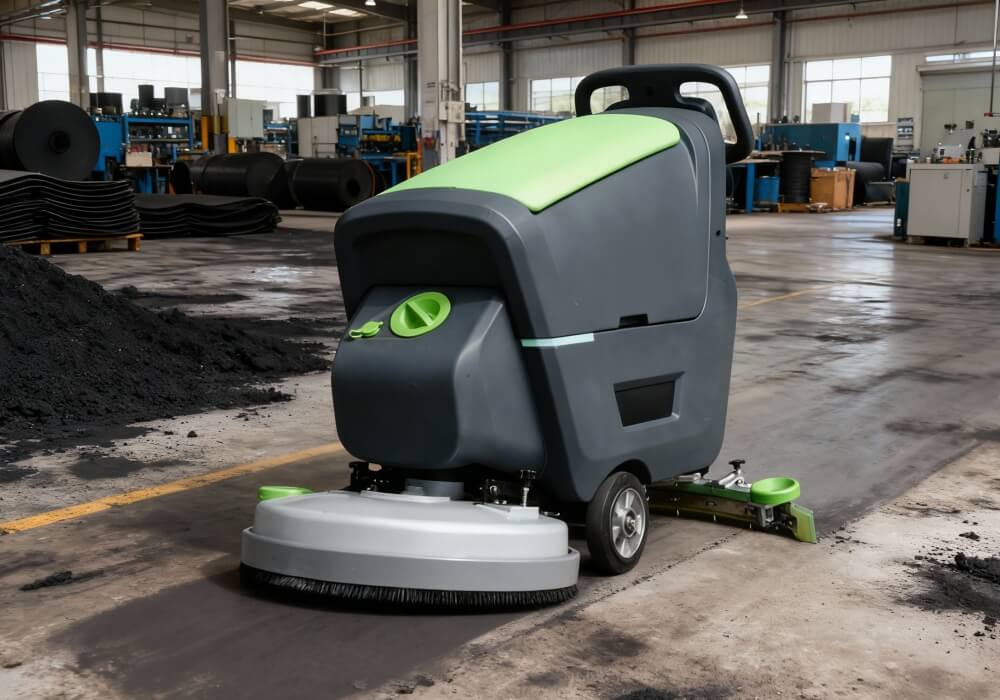
Catalogue specifications and promotional videos cannot fully show how a machine will perform inside the buyer’s facility.
Whenever practical, test the machine on the actual floor, route, contamination, and cleaning schedule.
For remote purchases, request a live video demonstration using similar floor conditions and representative contamination.
Industrial Floor Scrubber Demonstration Checklist
| Test Item | What to Observe | Acceptable Result |
|---|---|---|
| Machine access | Doors, elevators, aisles, ramps, and restricted routes | Machine reaches all required zones safely |
| Turning performance | Racks, pillars, corners, and production equipment | Operator can turn without repeated repositioning |
| Brush performance | Actual floor and representative contamination | Required cleaning result is achieved without excessive passes |
| Water recovery | Straight routes, turns, joints, and uneven surfaces | Floor is recovered consistently without excessive streaks |
| Edge cleaning | Walls, racks, and machine bases | Remaining edge area meets the facility standard |
| Noise | Normal operating mode in the real facility | Noise does not create unacceptable disruption |
| Operator visibility | Front, sides, rear, and tight areas | Operator can identify people and obstacles |
| Operator comfort | Controls, seating or handle position, steering, and vibration | Operator can use the machine safely for the planned shift |
| Battery performance | Representative route or documented test | Battery use supports the required cleaning window |
| Tank operation | Filling, draining, rinsing, and access | Tanks are practical to use and maintain |
| Brush replacement | Brush or pad removal and installation | Routine replacement can be completed safely |
| Squeegee adjustment | Blade removal, reversal, and alignment | Adjustment and replacement are practical |
| Daily cleaning | Filters, hoses, tanks, and recovery system | Components are accessible and easy to clean |
| Ramp handling | Approved facility ramps and slopes | Machine remains stable and controllable |
| Emergency stop | Machine response during a controlled test | Machine stops safely and predictably |
| Final floor condition | Cleanliness, streaking, residual water, and damage | Result meets the documented facility standard |
Demonstration Record Example
The following table shows how a demonstration record may be completed. Replace the example information with actual test data.
| Test Data | Illustrative Record |
|---|---|
| Machine configuration | Battery-powered ride-on scrubber with disc brush and standard squeegee |
| Test area | 1,200 m² representative production-floor route |
| Floor material | Sealed concrete with joints and several turning areas |
| Soil condition | Dust, light tire marks, and localized oily residue |
| Cleaning mode | Normal brush pressure, medium water flow, and stable operating speed |
| Test duration | 48 minutes including turns and route transitions |
| Starting battery level | 100% indicated charge |
| Ending battery level | 78% indicated charge |
| Water used | Approximately one-third of the solution tank |
| Number of passes | One pass for routine soil and two localized passes for oily areas |
| Water-recovery result | Floor recovered effectively with minor adjustment required during one turn |
| Operator feedback | Controls were easy to understand and visibility was acceptable |
| Maintenance feedback | Tanks, filter, brush, and squeegee were accessible |
| Final decision | Configuration suitable pending confirmation of parts pricing and warranty |
This table is an illustrative record and does not represent a claimed performance result for a specific LVTONG model.
A supplier’s willingness to demonstrate a machine does not automatically guarantee product quality. However, refusing to provide specifications, test evidence, or reasonable performance verification should be treated as a purchasing risk.

Industrial Floor Scrubber Machine Selection Checklist
| Selection Category | Information Buyers Should Confirm | Why It Matters |
|---|---|---|
| Daily cleaning area | Actual floor area requiring machine cleaning | Determines total workload |
| Cleaning frequency | Cleaning cycles per day or week | Determines usage intensity |
| Floor material | Concrete, epoxy, tile, terrazzo, rubber, or other surface | Determines brush, pad, and chemical compatibility |
| Main soil type | Dust, tire marks, oil, grease, food residue, or chemicals | Determines cleaning system and pretreatment |
| Loose debris | Type and amount of dry debris | Determines whether sweeping is required first |
| Narrowest aisle | Minimum clear route width | Limits machine and squeegee dimensions |
| Narrowest doorway | Minimum required access width and height | Confirms access to every cleaning zone |
| Turning space | Available space around racks and equipment | Determines maneuverability |
| Elevator access | Door size, cabin size, and weight capacity | Determines multi-floor compatibility |
| Ramp and slope | Gradient, width, and surface condition | Affects traction and stability |
| Cleaning window | Time available to complete cleaning | Determines required practical productivity |
| Refill point | Distance from the cleaning route | Affects non-cleaning time |
| Wastewater disposal | Distance, drainage, and disposal restrictions | Affects tank and route planning |
| Required runtime | Operating time required for one route | Determines battery capacity |
| Charging window | Available time, location, and electrical supply | Determines battery and charger suitability |
| Brush or pad | Material matched to the floor and contamination | Prevents damage and poor cleaning |
| Water recovery | Required drying and safety result | Affects repeated work and pedestrian safety |
| Noise requirement | Acceptable operational noise | Important in active factories and public facilities |
| Operator requirements | Training, visibility, comfort, and safety | Affects productivity and operator acceptance |
| Maintenance access | Access to tanks, filters, hoses, motors, and batteries | Affects service time |
| Spare-parts supply | Availability and expected delivery time | Affects downtime |
| Warranty terms | Covered parts, duration, conditions, and exclusions | Affects financial risk |
| Demonstration | Test on representative floor and contamination | Confirms practical performance |
| Total Cost of Ownership | Purchase, labor, energy, consumables, service, and downtime | Supports long-term comparison |
| Supplier evidence | Manuals, test records, specifications, and references | Supports verification of supplier claims |
Questions to Ask an Industrial Floor Scrubber Supplier
| Supplier Question | Why Buyers Should Ask | Strong Supplier Response |
|---|---|---|
| Which configuration matches our cleaning route? | Confirms the recommendation is based on actual conditions | Supplier asks for area, floor, contamination, aisle, schedule, and access details |
| What practical productivity should we expect? | Separates realistic output from catalogue maximums | Supplier explains route conditions, speed, overlap, and interruptions |
| What battery and charger are included? | Prevents hidden configuration costs | Exact battery and charger specifications are listed |
| Can one charge complete our planned route? | Confirms runtime suitability | Supplier calculates runtime from route and operating conditions |
| Which brush or pad should be used? | Reduces floor-damage and poor-cleaning risk | Supplier recommends testing based on floor and contamination |
| What consumables are included? | Clarifies the delivered configuration | Brushes, blades, filters, and accessories are itemized |
| What do common replacement parts cost? | Supports TCO calculation | Supplier provides a spare-parts price list |
| Which components are covered by warranty? | Clarifies financial protection | Written coverage and exclusions are provided |
| What conditions invalidate the warranty? | Prevents future disputes | Operating and maintenance conditions are clearly stated |
| How are technical problems diagnosed? | Shows whether a service process exists | Supplier explains remote and on-site diagnostic steps |
| Which spare parts are normally available? | Helps estimate downtime risk | Supplier provides inventory and lead-time information |
| Can you provide manuals and diagrams? | Supports future operation and maintenance | Documents are available before purchase |
| Can the machine be demonstrated? | Confirms practical suitability | Supplier offers a representative or on-site test |
| Can you provide a test report or live video? | Supports remote purchasing verification | Test conditions and settings are documented |
| What operator training is provided? | Reduces misuse and avoidable damage | Training covers operation, charging, cleaning, and inspection |
| What maintenance schedule is required? | Supports annual cost planning | Supplier provides a written maintenance schedule |
| What is excluded from the quotation? | Identifies hidden costs | Exclusions are clearly itemized |
| Can the machine pass through our narrowest route? | Prevents access problems | Supplier compares machine dimensions with facility measurements |
| What are the machine and parts lead times? | Supports operational planning | Delivery and parts times are documented |
| What data do you require for a correct quotation? | Tests whether the supplier follows a professional selection process | Supplier requests detailed facility and application information |
FAQ
What is the most important factor when choosing an industrial floor scrubber machine?
The most important factor is whether the machine matches the actual cleaning route and required result. Buyers should evaluate the floor material, contamination type, aisle width, turning space, cleaning window, battery runtime, tank requirements, water recovery, and service support together.
How do I choose the right size industrial floor scrubber?
Measure the actual cleaning area, narrowest aisle, doorways, elevators, turning spaces, storage area, and distance to refill points. Select a machine that can safely reach every required zone and complete the work within the available cleaning window.
Should a warehouse use a floor scrubber or a sweeper?
A sweeper is more suitable for dry dust and loose debris. A floor scrubber is used for tire marks, stains, oil, grease, and wet cleaning. Warehouses containing both loose debris and floor contamination may need to sweep first and scrub afterward.
How does aisle width affect floor scrubber selection?
The machine body, brush deck, and squeegee must fit through the narrowest required route with enough clearance for safe operation. Buyers should also consider turning space, rack protection, pedestrians, edge access, and reverse movement.
How much battery runtime does an industrial floor scrubber need?
The battery should support the complete planned route, including cleaning, travel, turns, and normal interruptions. Required runtime depends on the area, floor condition, machine settings, operator behavior, and available charging window.
Conclusion
Choosing an industrial floor scrubber machine should begin with the facility’s actual cleaning conditions, not the lowest purchase price or the highest catalogue specification.
All seven costly mistakes are usually connected to short-term thinking. Buyers can reduce purchasing risk by calculating Total Cost of Ownership, measuring the cleaning route, confirming battery and tank requirements, matching the brush to the floor, verifying warranty and spare-parts support, and conducting a practical demonstration.
A walk-behind machine may provide better value in narrow or divided facilities, while a ride-on machine may reduce operator time across large open routes. The correct choice depends on practical productivity, access, cleaning quality, maintenance requirements, and long-term support.
The best industrial floor scrubber is the one that can safely reach every required area, complete the cleaning within the available time, produce the required floor result, and remain serviceable throughout its planned ownership period.
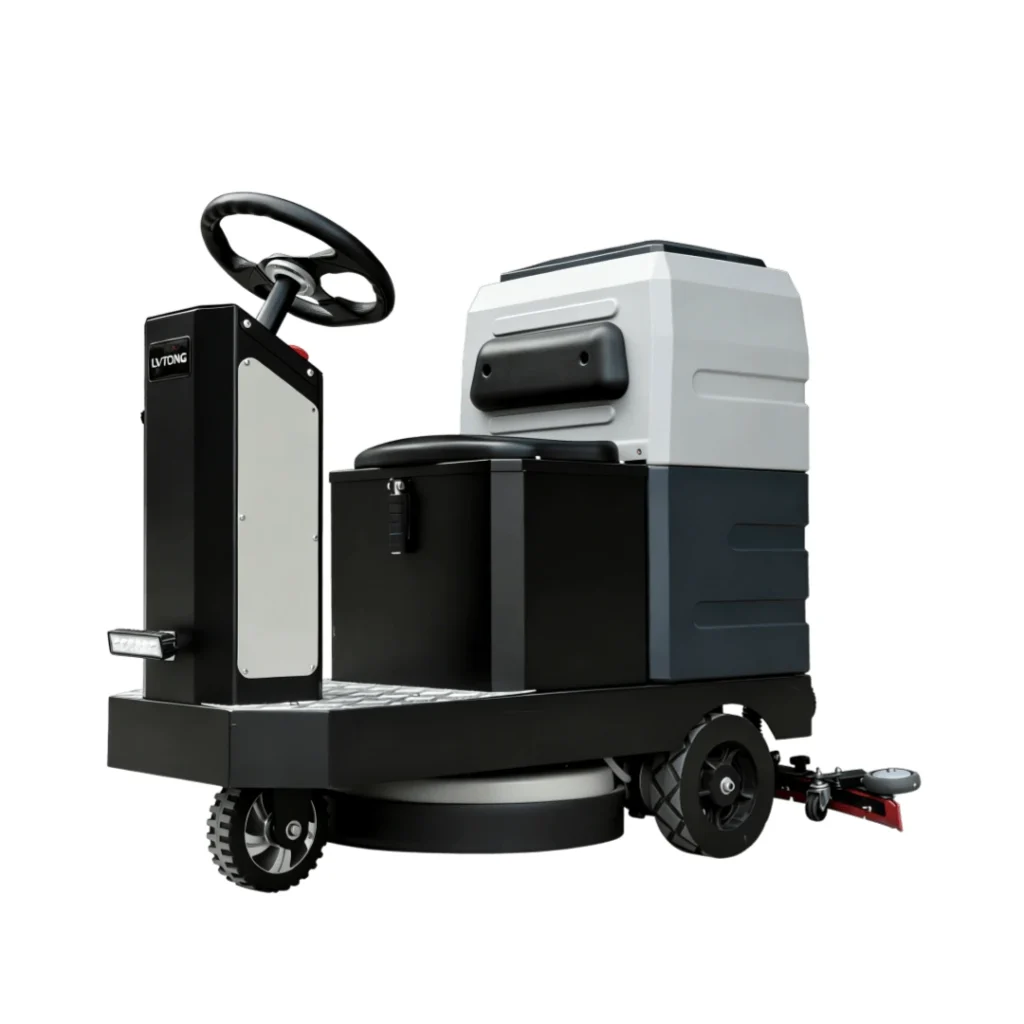
Buyers ready to compare available configurations can explore LVTONG’s commercial floor scrubber dryers, including walk-behind and ride-on models for factories, warehouses, logistics centers, and other commercial or industrial facilities.
Contact LVTONG with your cleaning area, floor material, contamination type, aisle width, operating schedule, charging requirements, and delivery location to receive an application-based floor scrubber recommendation.