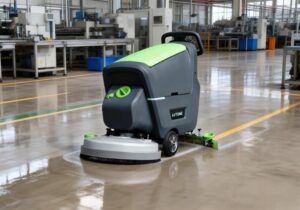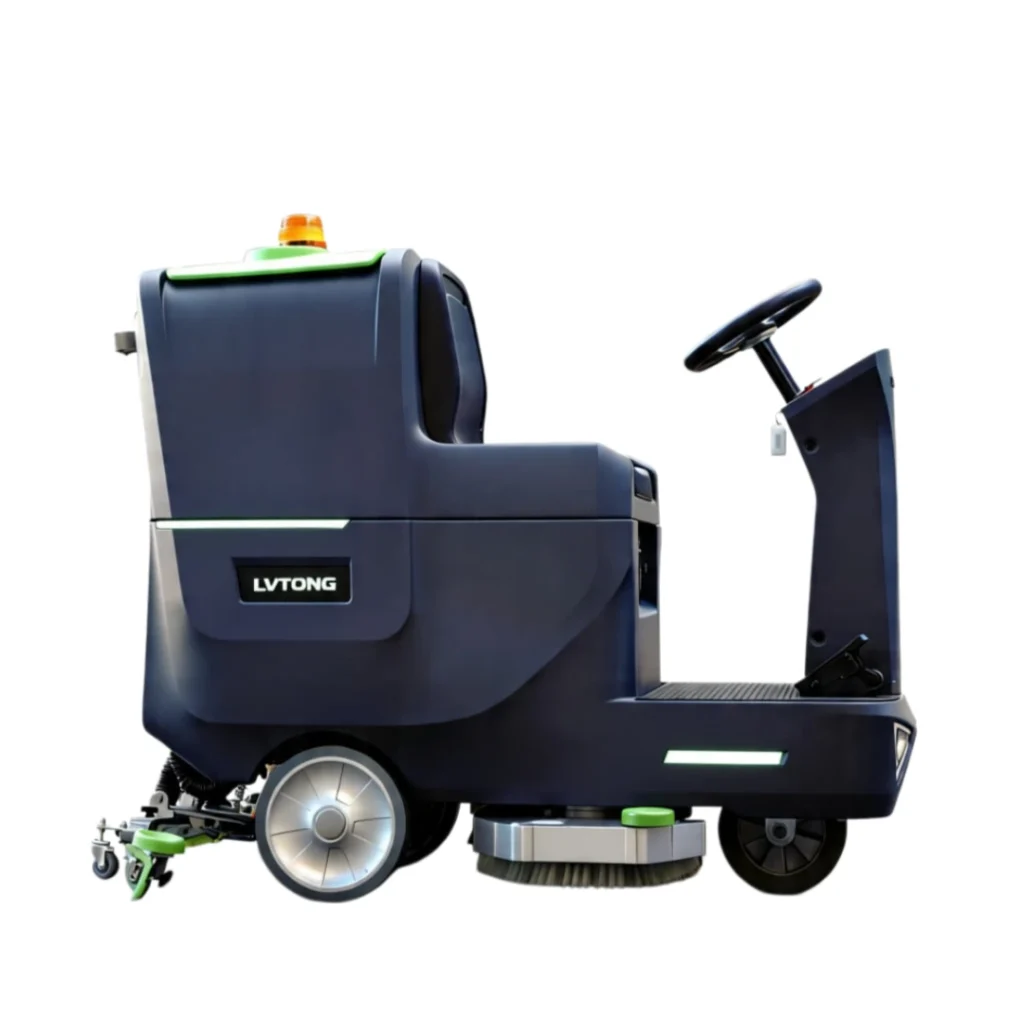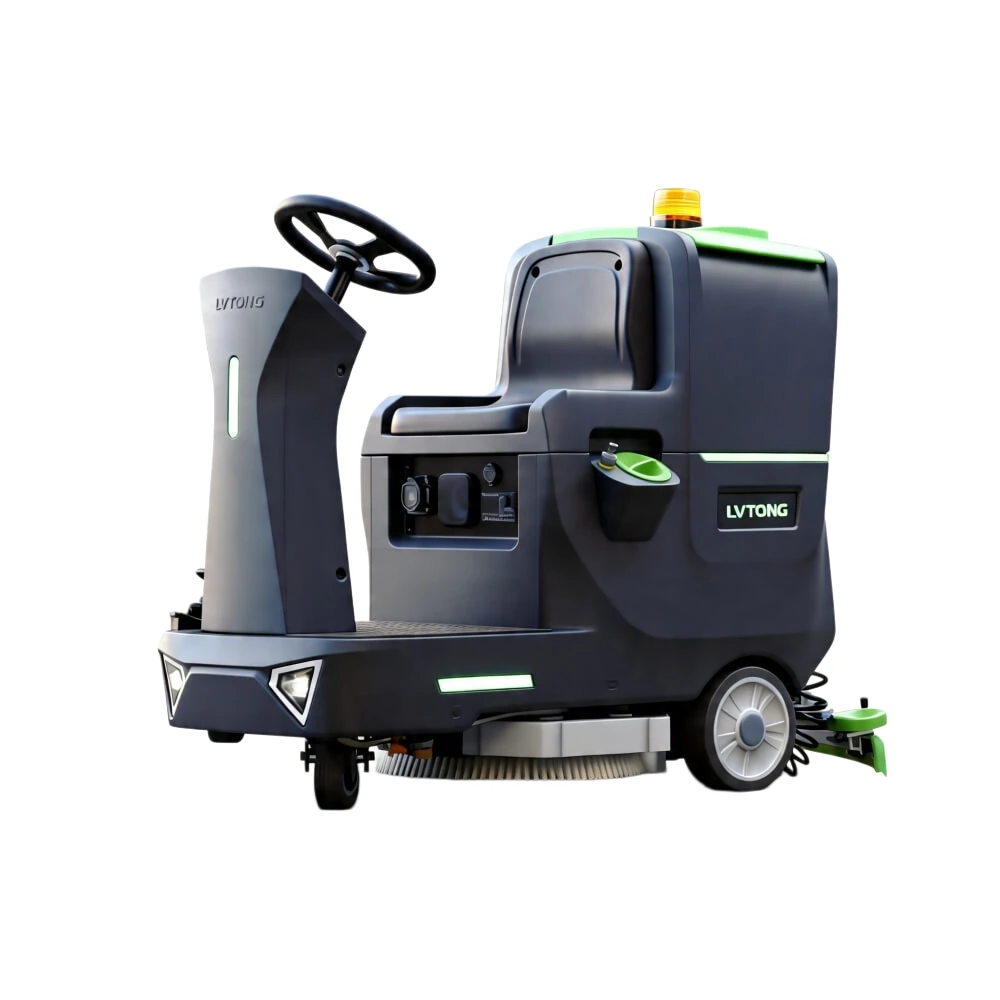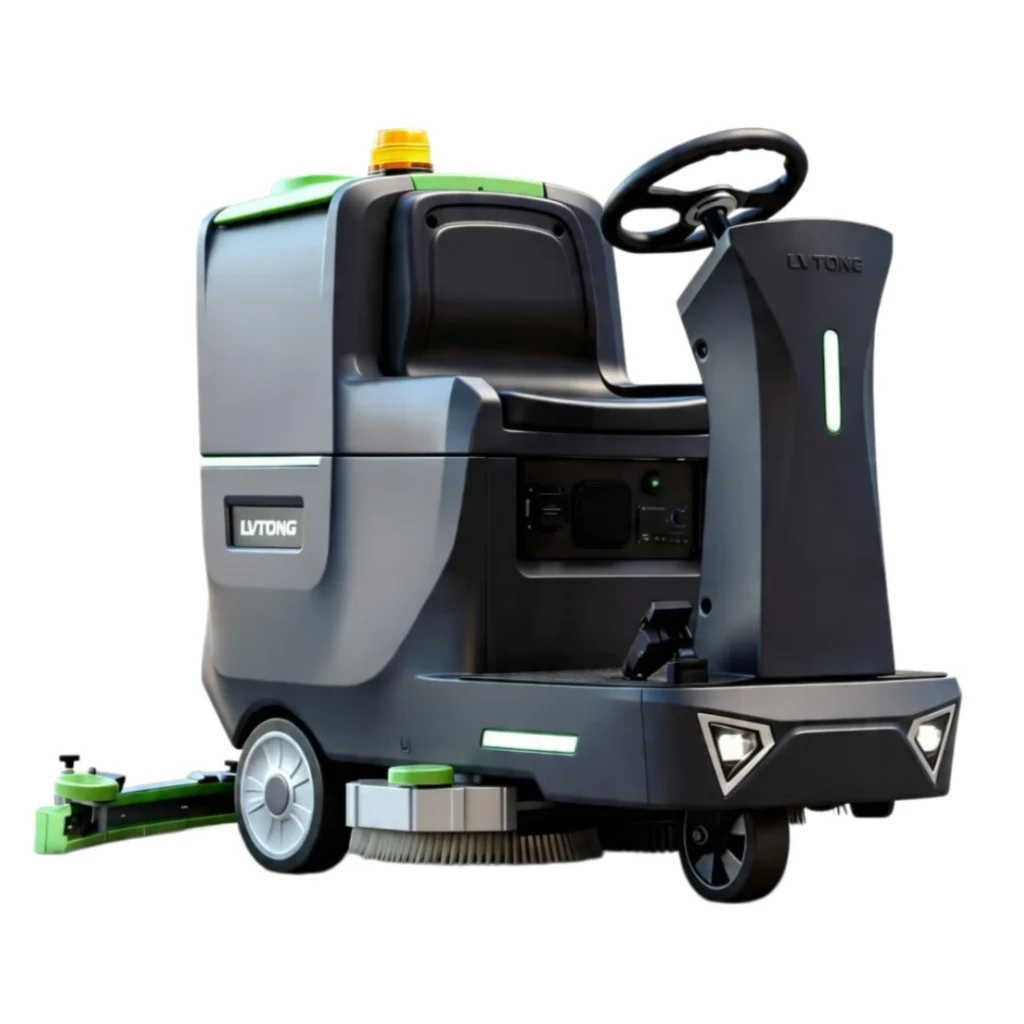
A floor scrubber inspection checklist used before shipping is different from a daily pre-operation checklist. Daily inspections mainly help operators confirm that a machine is ready for use. A factory inspection focuses on whether the completed machine meets quality, safety, and performance requirements before delivery.
Before a floor scrubber leaves the factory, its motor, brush system, vacuum recovery system, electrical components, battery, cleaning performance, operating condition, and shipment details should all be checked.
This guide explains the main inspection points and why each test matters to buyers.
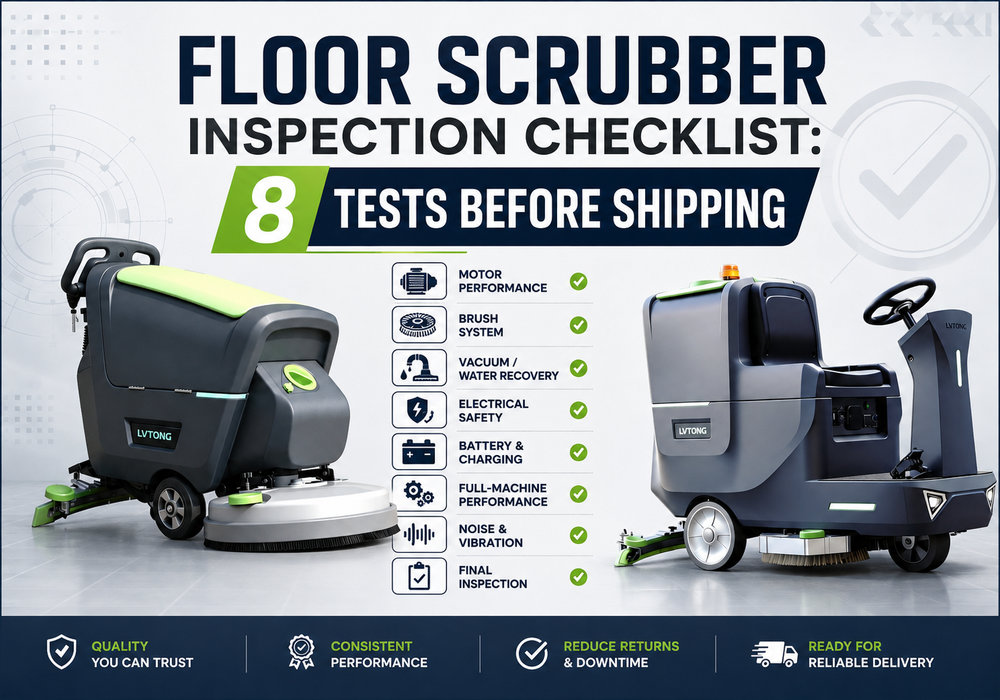
Floor Scrubber Inspection Checklist at a Glance
A pre-shipment floor scrubber inspection normally covers the following areas:
| Inspection Area | Main Items to Check | Purpose |
|---|---|---|
| Motor and drive system | Power output, operating current, load performance, overheating protection | Confirm stable operation |
| Brush system | Brush speed, pressure, balance, continuous operation | Check cleaning consistency |
| Vacuum and water recovery | Suction, sealing, water pickup, residual water | Verify drying performance |
| Electrical system | Insulation, protection functions, emergency stop, controls | Check electrical safety |
| Battery system | Capacity, charging, runtime, BMS functions where applicable | Verify power reliability |
| Whole-machine performance | Cleaning results, continuous operation, water recovery | Confirm overall performance |
| Noise and vibration | Operating noise, vibration, steering and controls | Check operating condition |
| Final shipment inspection | Appearance, accessories, serial number, documents | Confirm delivery completeness |
The exact inspection procedure may vary by machine model and configuration, but these eight areas provide a practical framework for evaluating a floor scrubber before shipment.
1. Raw Materials and Core Components
Quality inspection begins before the complete machine is assembled.
Key components should be checked against the design and production requirements before they enter final assembly. This reduces the risk of discovering basic component problems only after the machine has been fully built.
Typical checks may include the condition and specification of motors, electrical parts, brush components, vacuum components, battery systems, and other critical assemblies.
After assembly, these components are tested again as part of the complete machine.
2. Motor and Drive System Testing
The motor and drive system directly affect how reliably a floor scrubber operates under load.
During factory inspection, the motor and drive system should be checked for:
- Motor power and operating condition
- Performance under simulated working loads
- Stability of operating current
- Overheating protection
- Continuous running performance
- Drive response and movement where applicable
The purpose is not simply to confirm that the motor starts. The inspection should verify that the machine can maintain stable operation during actual cleaning work.
Inspection requirements may vary between ride-on and walk-behind floor scrubber machines, particularly for drive, steering, operator controls, and battery configuration.
3. Brush System and Cleaning Pressure Testing
The brush system is one of the main components that determines cleaning performance.
A floor scrubber inspection checklist should therefore include the following brush-related items:
- Brush or brush-disc speed stability
- Uniformity of brush pressure
- Balance during rotation
- Abnormal vibration or noise
- Performance during continuous operation
- Brush lifting and lowering functions where applicable
Uneven pressure or unstable brush rotation can reduce cleaning consistency and may cause unnecessary wear.
The test should confirm that the brush system operates smoothly and maintains suitable contact with the floor during cleaning.

4. Vacuum and Water Recovery System Testing
A floor scrubber must not only scrub the floor. It must also recover dirty water effectively.
Poor water recovery can leave excessive moisture or visible water behind the machine. For this reason, the vacuum and recovery system is an important part of the factory inspection.
The main inspection points include:
- Vacuum motor operation
- Suction performance
- Recovery-water efficiency
- Residual water after the machine passes
- Sealing of suction hoses and pipelines
- Stability during continuous water recovery
- Squeegee and recovery-system operation where applicable
The machine should be tested under working conditions rather than by checking the vacuum motor alone.
This allows the inspector to evaluate how the complete recovery system performs during actual floor cleaning.
5. Electrical System and Safety Testing
Electrical functions should be checked before a floor scrubber is approved for shipment.
Typical inspection items include:
- Electrical circuit insulation
- Short-circuit protection functions
- Emergency stop operation
- Control-panel response
- Switches and operating controls
- Warning indicators and alarms where fitted
- Wiring and connector condition
Some machine configurations may also require additional checks for operation in wet or humid working environments.
The exact electrical test procedure depends on the machine design and destination-market requirements. The important point is that safety-related functions should be verified before the machine is released for delivery.
6. Battery Capacity, Charging, and Runtime Testing
Battery performance is particularly important for cordless commercial and industrial floor scrubbers. Buyers who want to evaluate runtime, charging requirements, and battery technology in more detail can also review our floor scrubber battery life guide.
The inspection method depends partly on the type of battery installed.
Lithium Battery Floor Scrubber Inspection
For lithium-battery models, inspection may include:
- Charging and discharging performance
- Battery capacity
- Actual operating runtime
- Battery Management System (BMS) protection functions
- Charging stability
- Abnormal temperature or warning conditions
The BMS is particularly important because it monitors and protects the battery system during charging and operation.
Lead-Acid Battery Floor Scrubber Inspection
For lead-acid battery models, typical checks include:
- Battery capacity
- Charging stability
- Voltage changes during operation
- Battery connections
- Actual operating performance
Battery testing should evaluate the battery as part of the complete machine rather than relying only on rated battery specifications.
This helps confirm whether the floor scrubber can provide stable power during continuous cleaning work.
7. Whole-Machine Cleaning Performance Testing
After assembly and individual system checks are completed, the floor scrubber should undergo a complete operating test.
This is one of the most important parts of the floor scrubber inspection checklist because it evaluates how all systems work together.
Whole-machine testing may include:
- Cleaning under simulated real-world conditions
- Continuous operation for 1–2 hours or longer, depending on the test requirement
- Cleaning performance on dust and common floor contamination
- Water pickup performance
- Recovery of dirty water
- Brush operation during extended use
- Battery and electrical stability
- Abnormal noise, vibration, warning messages, or leaks
A machine may perform normally during a short startup test but develop problems after extended operation. Continuous testing helps identify issues that may not appear during a brief functional check.
8. Noise, Vibration, Controls, and Ergonomic Checks
Cleaning performance is not the only factor that should be evaluated.
Unusual vibration or excessive operating noise may indicate improper assembly, imbalance, or component problems.
Inspection may therefore include:
- Operating noise
- Abnormal mechanical sounds
- Machine vibration
- Control-panel response
- Handle or joystick operation
- Steering performance
- Seat and driving controls on ride-on models
The inspector should also confirm that the main operating controls respond correctly and that the machine can be operated normally during an extended test.

Final Floor Scrubber Inspection Before Shipping
After all functional tests have been completed, the machine should undergo a final pre-shipment inspection.
The final inspection should check:
- Machine appearance
- Assembly and workmanship
- Functional modules
- Accessories supplied with the machine
- Operation manuals and other required documents
- Product model
- Serial or identification number
- Inspection and test records
- Packaging condition before shipment
This final stage connects the quality-control process with the actual delivery.
A machine may pass its operating tests but still have missing accessories, incorrect documentation, cosmetic damage, or identification errors. These issues should be found before the equipment is packed and shipped.
What Should Be Included in a Floor Scrubber Inspection Report?
For buyers, the inspection report can provide useful information about what was checked before shipment.
A practical report may include:
- Machine model
- Machine serial number
- Inspection date
- Motor and drive-system result
- Brush-system result
- Vacuum and water-recovery result
- Electrical and safety check
- Battery test result
- Whole-machine operating result
- Final appearance inspection
- Accessories and documentation check
- Pass/fail result
Where test data, photographs, or videos are available, they can also help buyers verify that the inspection record corresponds to the machine being delivered.

Factory Inspection Checklist vs. Daily Floor Scrubber Checklist
It is important to distinguish a factory inspection from a daily operator inspection.
A daily floor scrubber checklist normally focuses on whether an existing machine is safe and ready to use. Operators may check battery charge, brushes, squeegees, solution and recovery tanks, visible damage, and basic controls.
For routine care after delivery, operators can follow a structured floor scrubber maintenance checklist covering daily, weekly, monthly, and scheduled maintenance tasks.
A factory pre-shipment inspection has a different purpose.
It evaluates the completed machine before delivery and may include deeper testing of motor load, electrical protection, battery performance, suction efficiency, continuous operation, and overall cleaning performance.
In simple terms:
Daily inspection: Is the machine ready to work today?
Factory inspection: Is the machine ready to be delivered to the customer?
Understanding this difference helps buyers use the correct checklist for procurement and acceptance.
Why a Pre-Shipment Floor Scrubber Inspection Matters
A structured inspection helps identify problems before the equipment reaches the customer.
The main benefits include:
- Detecting assembly or component problems before shipment
- Reducing the risk of early equipment failure
- Confirming cleaning and water-recovery performance
- Verifying battery and electrical functions
- Checking that accessories and documentation are complete
- Creating a record for shipment and customer acceptance
For buyers, the value of an inspection is not simply that a supplier says a machine has been tested. The more useful question is which systems were tested, how they were checked, and whether the results can be documented.
Inspection results are only one part of the purchasing decision. Buyers should also compare machine type, facility size, brush system, battery runtime, tank capacity, total cost of ownership, and service support in a complete floor scrubber buying guide.

How Can Buyers Check a Floor Scrubber After Delivery?
Factory inspection does not replace incoming inspection after transportation.
When a floor scrubber arrives, buyers can carry out several basic checks before putting it into regular service.
1. Inspect the Machine for Shipping Damage
Check the body, wheels, brush deck, squeegee assembly, controls, cables, connectors, and other visible components for damage or looseness.
2. Confirm the Model, Accessories, and Documents
Compare the machine model and identification information with the order.
Check that the required accessories, charger, manuals, and other supplied items are present.
3. Perform a Basic Functional Test
Add clean water as required, power on the machine, and check the main functions.
Confirm that:
- The brush system operates normally
- Water is supplied correctly
- The vacuum motor works
- Dirty water is recovered
- No obvious leakage is present
- Controls respond correctly
4. Run the Machine Under Working Conditions
Where practical, operate the machine for at least 30 minutes and monitor it for abnormal noise, vibration, warning indicators, leaks, or unexpected changes in performance. If the machine shows weak suction, short battery runtime, unusual vibration, reduced cleaning power, or other abnormal behavior, refer to our guide to common floor scrubber issues before deciding whether professional service is required.
If a factory inspection report is supplied, the incoming inspection can also be compared with the recorded pre-shipment results.

Floor Scrubber Inspection Checklist FAQ
What should be included in a floor scrubber inspection checklist?
A factory floor scrubber inspection checklist should cover the motor and drive system, brush system, vacuum and water recovery, electrical safety, battery, whole-machine cleaning performance, noise and vibration, and final shipment inspection.
The final check should also confirm the machine model, identification number, accessories, documentation, and packaging.
Is a factory floor scrubber inspection checklist the same as a daily checklist?
No.
A daily checklist is mainly used by operators to confirm that a machine is safe and ready for use. A factory inspection is performed before delivery and includes more detailed quality and performance testing of the complete machine.
What battery tests should be performed before shipping?
For lithium-battery machines, testing may include charging and discharging performance, operating runtime, capacity, and BMS protection functions.
For lead-acid batteries, inspection typically focuses on capacity, charging stability, voltage behavior during operation, and overall power delivery.
How is the water recovery system tested?
The inspection should check the vacuum motor, suction performance, recovery efficiency, hose and pipeline sealing, squeegee operation where applicable, and the amount of residual water left after cleaning.
Testing the complete machine under actual cleaning conditions gives a more useful result than checking the vacuum motor independently.
How long should a floor scrubber be tested before shipping?
The required duration depends on the machine and the factory test procedure.
Whole-machine testing may include continuous operation for 1–2 hours or longer to evaluate cleaning performance, water recovery, electrical stability, battery operation, and abnormal noise or vibration.
What should buyers ask for before accepting a floor scrubber?
Buyers should confirm the machine model and serial number, inspection status, accessories, documentation, and relevant test records.
Where available, inspection reports, photographs, videos, or recorded test results can provide additional evidence that the machine was checked before shipment.

Conclusion
A useful floor scrubber inspection checklist should cover more than a simple startup test.
Before shipment, the machine should be evaluated as a complete system, including the motor, brush deck, vacuum recovery system, electrical functions, battery, cleaning performance, noise and vibration, and final shipment condition.
For buyers, understanding these inspection points makes it easier to evaluate equipment quality and verify what has been tested before delivery.
A documented pre-shipment inspection also provides a clearer basis for incoming inspection when the floor scrubber arrives at its destination.
For procurement projects, buyers can also evaluate the production capability, product range, quality-control process, and technical support of the floor scrubber manufacturer before placing an order.