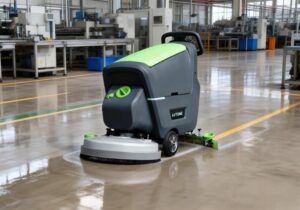
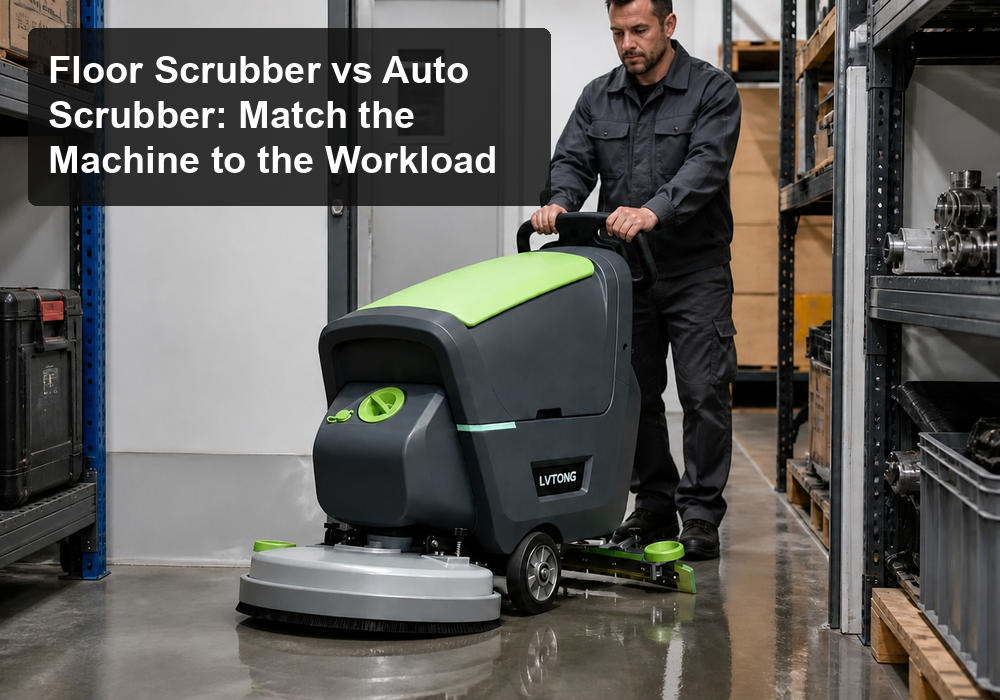
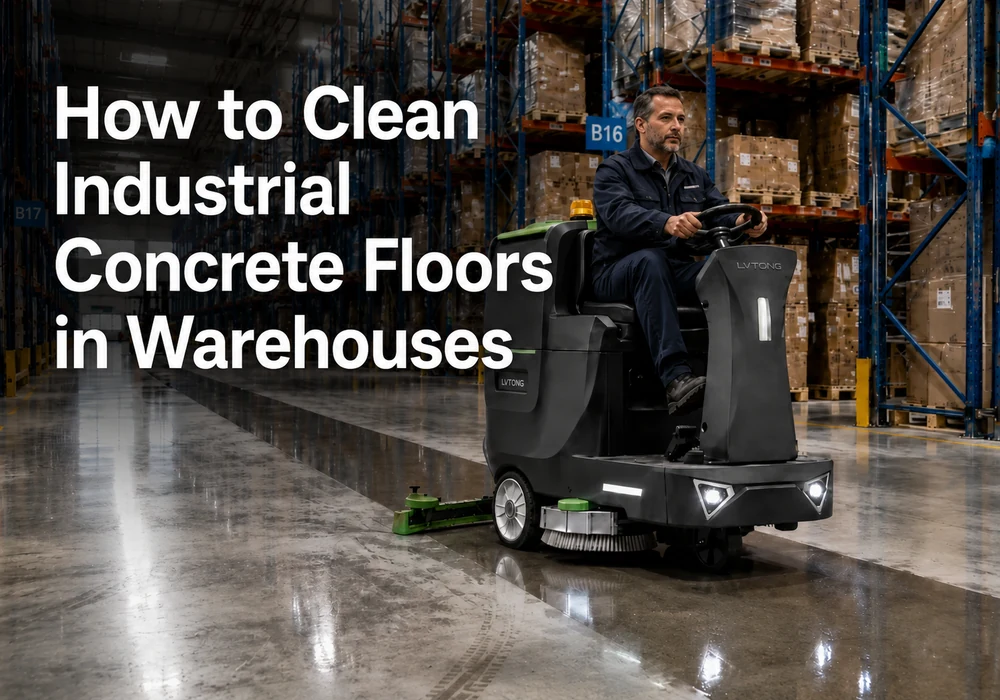
How do we clean industrial concrete floors in warehouses without turning dust into slurry, leaving water behind, or damaging the floor finish? At LVTONG, we approach this question as a floor cleaning equipment manufacturer, starting with the job site rather than the machine catalog. The first decision is not whether to use a larger scrubber or a stronger chemical. It is to identify the concrete surface, the main soil type, and the way forklifts and other traffic move through the warehouse.
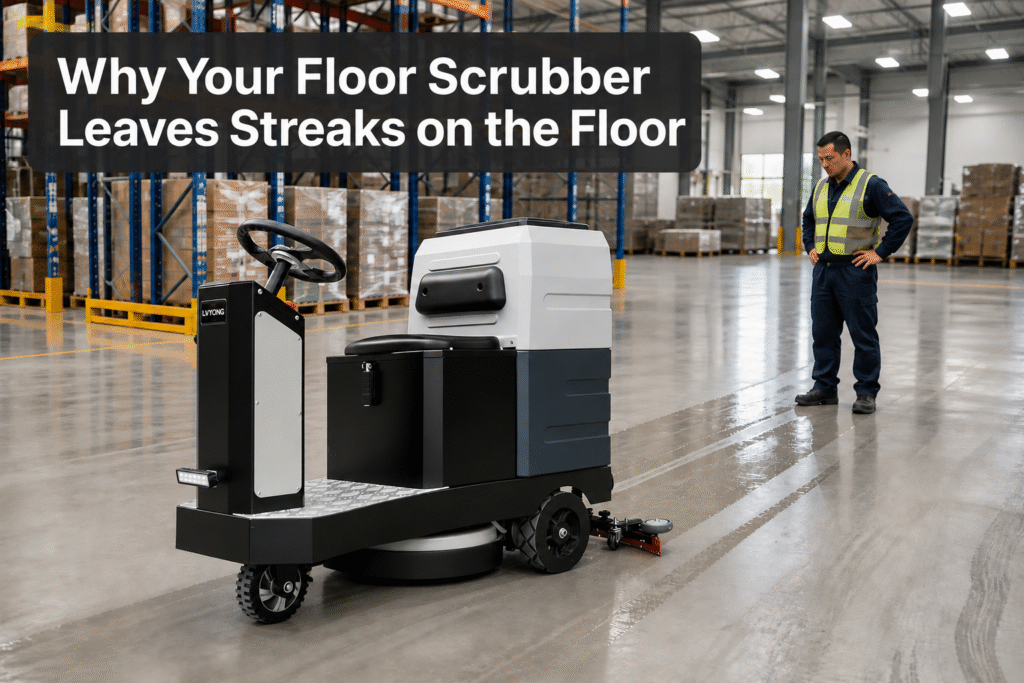
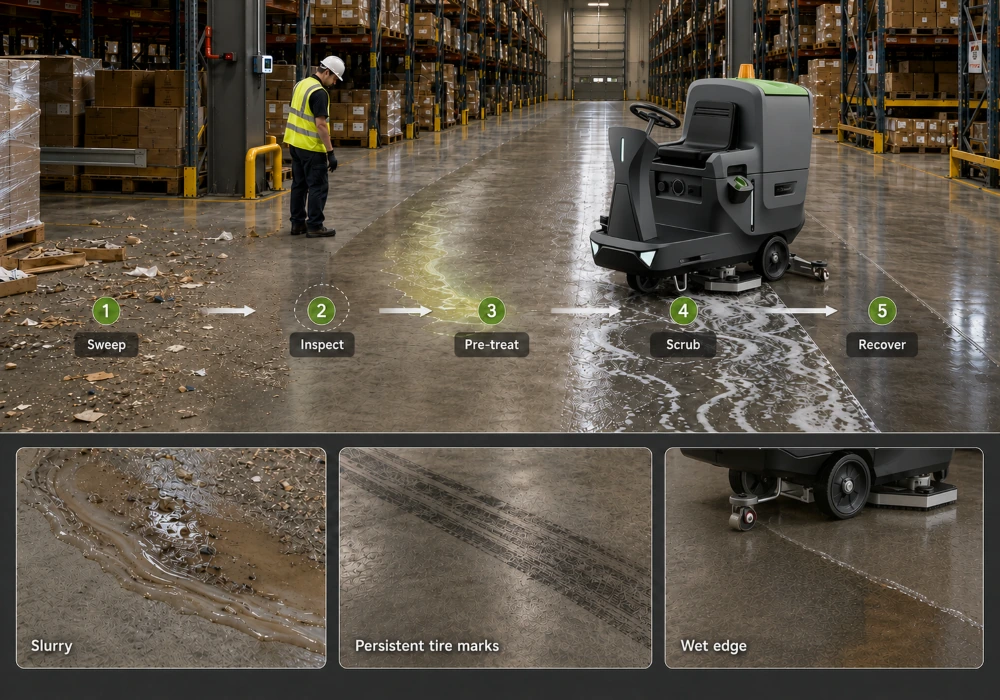
A warehouse floor carries forklifts, pallet jacks, packaging waste, dust, oil, tire marks, and sometimes metal particles every day. When all of that sits on concrete, a quick mop pass can spread the dirt and create another cleaning problem a few hours later. On a test pass, we check three immediate warning signs: dust turning into slurry, tire marks remaining after one pass, and a wet edge behind the squeegee.
Before full-area scrubbing, we remove loose debris and run a short test pass in a representative problem zone. Slurry indicates that more dry removal is needed; persistent tire marks call for changes to the pad, detergent, dwell time, or travel speed; a wet edge points to the squeegee, vacuum path, water flow, or operating speed. The setup is extended to the full route only after it loosens the soil and consistently recovers the dirty water.
Why Warehouse Concrete Floors Get Dirty So Fast
Warehouse concrete floors get dirty quickly because the traffic is constant and the soil is mixed. Forklifts bring in dust and outdoor dirt. Pallets drop wood chips and packaging scraps. Loading docks collect tire marks and oil spots. Production or repair areas may add grease, metal shavings, chemical residue, or sticky dirt.
Concrete also holds dirt differently from smoother commercial floors. Fine dust settles into pores and joints. Oil can soak into unsealed areas. Tire marks can bond to sealed floors where forklifts turn every day. That is why we first ask what is on the floor, where it comes from, and how fast the cleaned area needs to return to service.
Identify Your Concrete Floor Type Before Cleaning
Unsealed concrete is porous, so it can absorb oil, dirty water, and cleaning solution. It needs controlled water flow and fast recovery.
Sealed concrete is easier to clean, but harsh chemicals, abrasive pads, or too much brush pressure can wear the coating.
Densified concrete has greater surface hardness and reduced dusting compared with untreated concrete, but it still requires compatible cleaning chemicals and controlled brush pressure.
Polished concrete needs careful dust control and softer pads because abrasive dust can dull the finish.
Epoxy-coated concrete is smoother and more stain-resistant, but the wrong brush or detergent can still leave haze, scratches, or residue.
Rough or uneven concrete usually needs a grit brush or flexible pad driver that can reach into the surface texture, together with a slower cleaning pass.
Dusting or damaged concrete should be cleaned dry before water is introduced. If fine powder keeps returning after cleaning, inspect the slab condition instead of increasing detergent strength.
The Correct Cleaning Sequence
-
Sweep. Remove loose dust, sand, pallet chips, paper scraps, stretch wrap, and other debris before using water. If these materials go under the floor scrubber brush, they can block the squeegee, scratch the floor, or leave muddy streaks.
-
Inspect contamination. Walk the route before cleaning. Loading docks, forklift turning points, entrances, battery charging areas, and maintenance corners show the real problem first.
-
Pre-treat stains. Oil, grease, tire marks, and chemical residue need targeted treatment before the full scrub. Use a compatible cleaner, allow short dwell time, and do not let the chemical dry on the floor.
-
Scrub. Use overlapping passes and a steady travel speed. Heavily soiled areas often need a slower pass instead of more detergent.
-
Recover water. A good cleaning pass should leave the floor close to dry. In real warehouses, especially during peak seasons, the goal is not always a perfectly dry floor immediately. The priority is removing standing water and keeping traffic safe. If streaks or puddles remain, check the squeegee blade, recovery hose, vacuum system, or recovery tank.
Match Cleaning Method to Different Warehouse Contaminants
Use the contaminant—not a fixed machine setting—to choose the next step:
-
Fine dust: Sweep or vacuum before adding water; otherwise, it can spread across the concrete and dry into a haze.
-
Oil and grease: Pre-treat with a compatible low-foam alkaline degreaser, then scrub and recover the dirty solution promptly.
-
Forklift tire marks: Combine compatible chemistry with controlled friction and a slower cleaning pass.
-
Packaging debris: Sweep first to keep plastic wrap, straps, and pallet fragments away from the brushes and recovery path.
-
Chemical residue: Identify the substance first. Check the SDS and the facility’s spill-response procedure for PPE and cleanup requirements; escalate unknown or hazardous residue to the site EHS or safety lead before using a scrubber.
Choose the Right Brush and Cleaning Solution
For daily dust and light soil, a neutral low-foam detergent is usually enough. For oil, grease, and forklift tire marks, a low-foam alkaline degreaser is usually more suitable. We avoid dish soap and high-foam cleaners because foam can reduce suction, leave water behind, enter the recovery system, and create downtime.
Before applying stronger chemicals, always check compatibility with sealed concrete, epoxy coating, or polished surfaces. A cleaner that removes oil quickly can still be the wrong choice if it damages the finish or leaves the floor sticky.
Match the brush to both the surface and the soil. Smooth sealed concrete generally works with a disk brush or compatible pad. Rough or uneven concrete may need a grit brush or flexible pad driver to maintain contact with the surface. On epoxy-coated or polished floors, test a small area before increasing pressure or moving to a more aggressive pad.
Use a cylindrical scrub deck when small loose debris must also be collected during scrubbing. Where debris volume is high, sweep first rather than relying on the scrub deck to handle all material.
Brush pressure also matters. Light dust does not need heavy pressure. Oily lanes and tire marks may need more pressure, but too much pressure can wear coatings and shorten brush life.
Different Warehouse Zones Need Different Cleaning Methods
Warehouse floors are not equally dirty, so we do not clean every zone in the same way.
Loading docks collect the mixed soil first: outdoor dust, rubber marks, packaging debris, and occasional oil. Start with dry debris removal, isolate and pre-treat oil spots, then verify water recovery before reopening the lane.
Forklift turning zones tell us more than straight aisles. If a test pass leaves a dark arc, oily film, or wet edge behind the squeegee, adjust the pad or brush, travel speed, and recovery setup before increasing chemical strength.
Inside storage aisles, the problem shifts to packaging waste, fine dust, and restricted turning space. A compact machine that completes the full route consistently can be more useful than a wider model with a higher rated output.
Battery charging areas may contain dust, chemical residue, or corrosion-related contamination. We identify the spill type first and follow the facility’s safety procedure before choosing detergent or scrubbing pressure.
Choosing Between Sweeper, Scrubber and Sweeper-Scrubber
When loose debris is the main problem, we start with sweeping. Bonded oil film, grime, sticky soil, and tire marks require scrubbing plus wastewater recovery. Where both conditions exist, and the cleaning window is tight, a sweeper-scrubber can help; however, many warehouses still benefit from a controlled two-step route because dry debris is removed before it reaches the scrub deck or recovery system.
Walk-Behind vs Ride-On Scrubbers
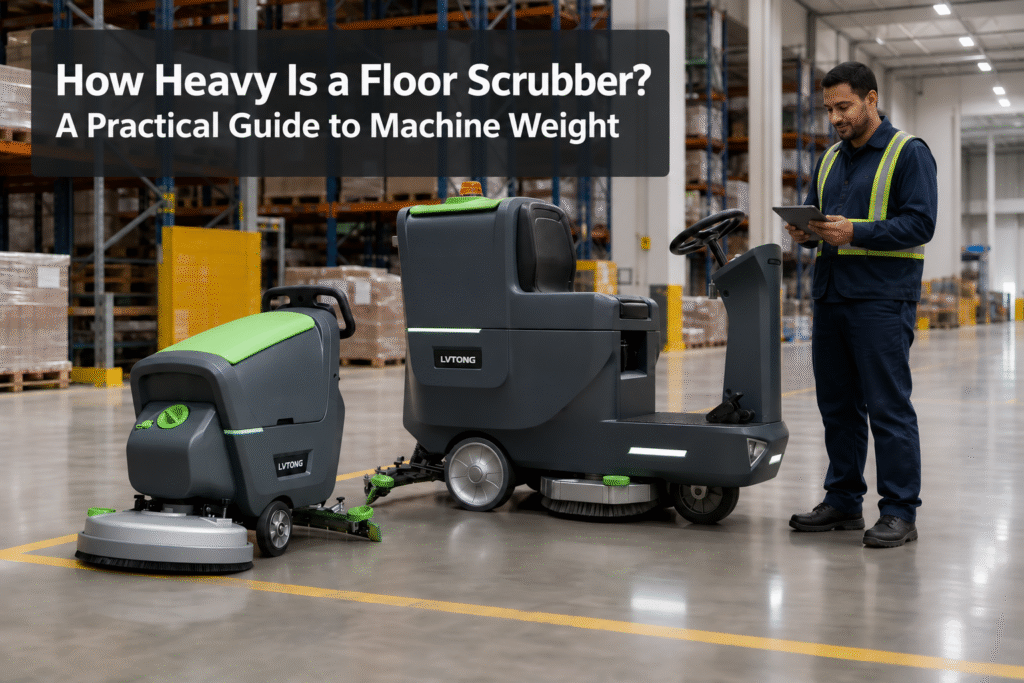
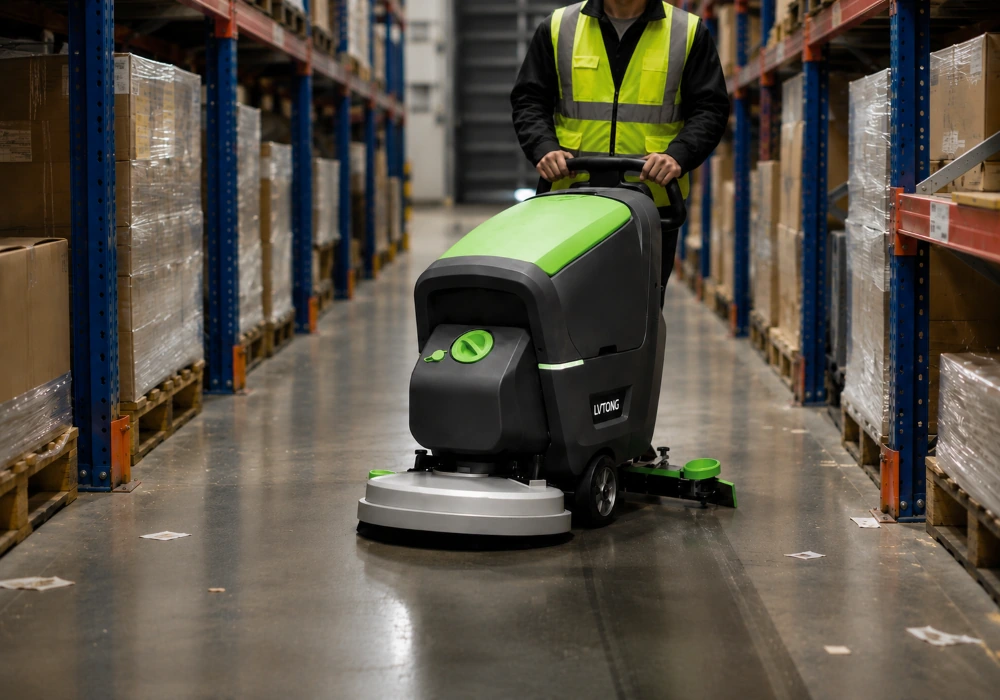
For many warehouses in the 5,000–20,000 sq ft range (about 465–1,860 m²), a walk-behind scrubber can be practical when aisles are narrow or the layout is complex. Treat floor area as a starting point rather than a fixed cutoff; aisle width, soil level, and the available cleaning window still determine the final choice.
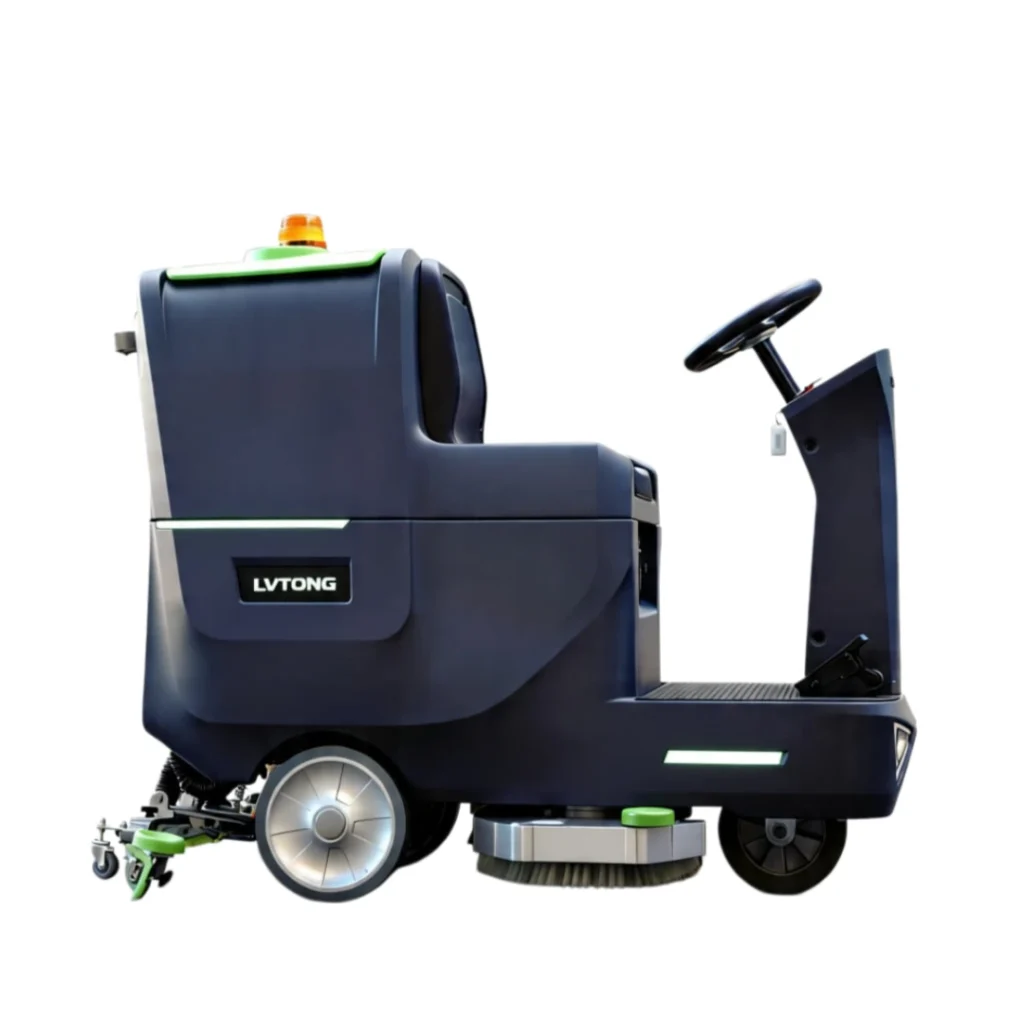
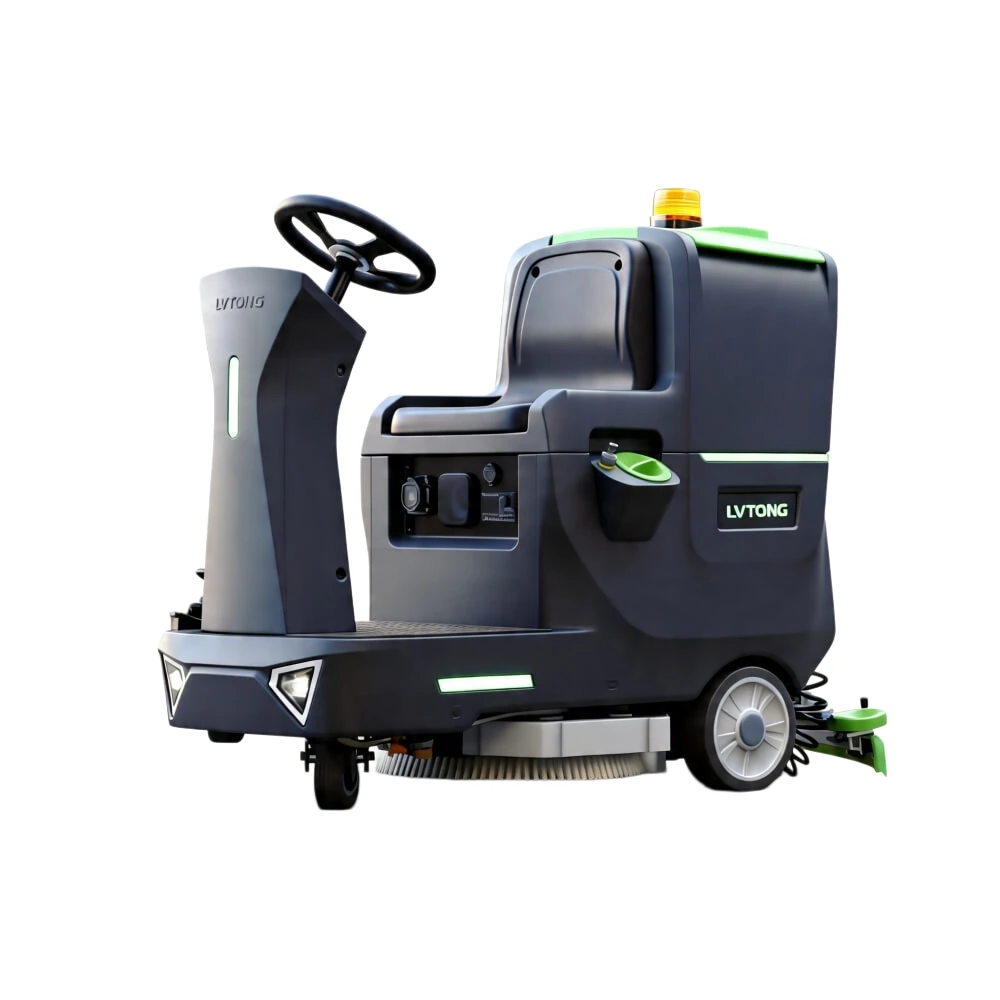
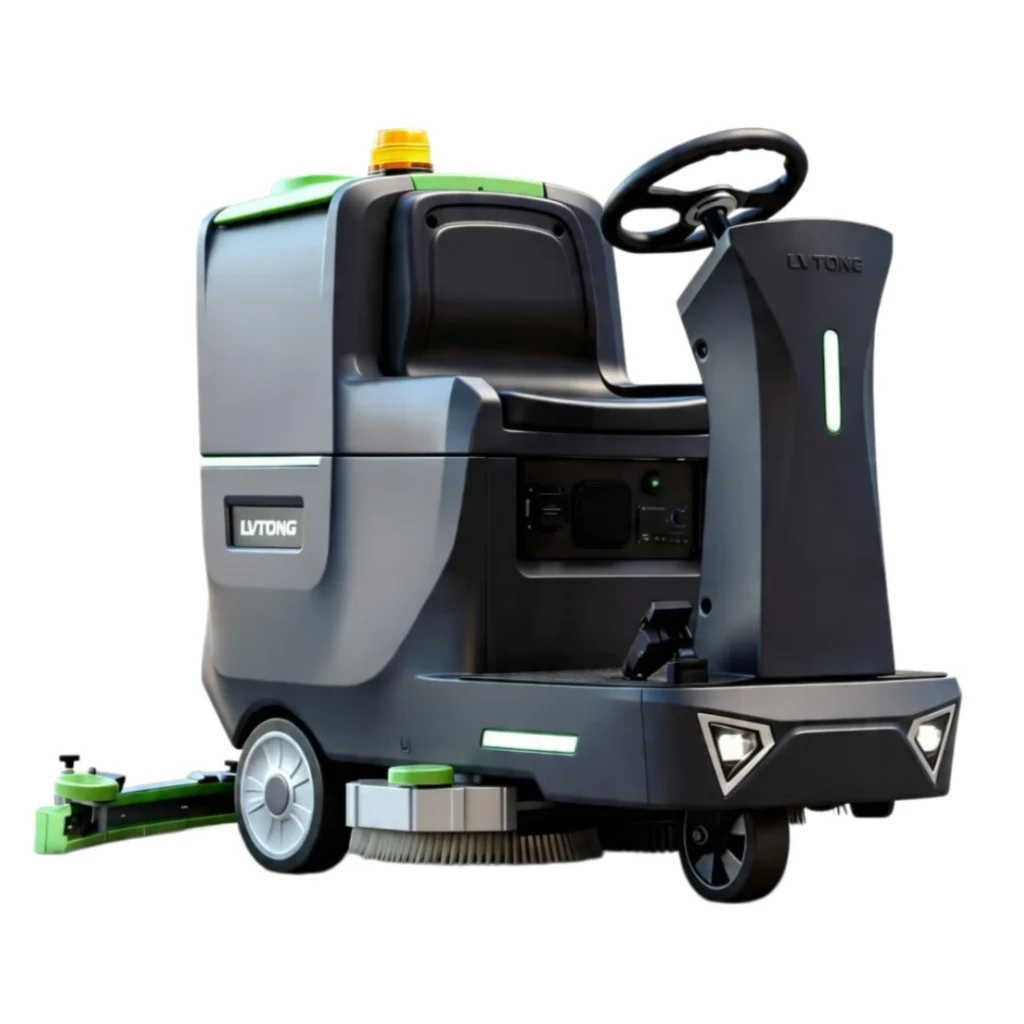
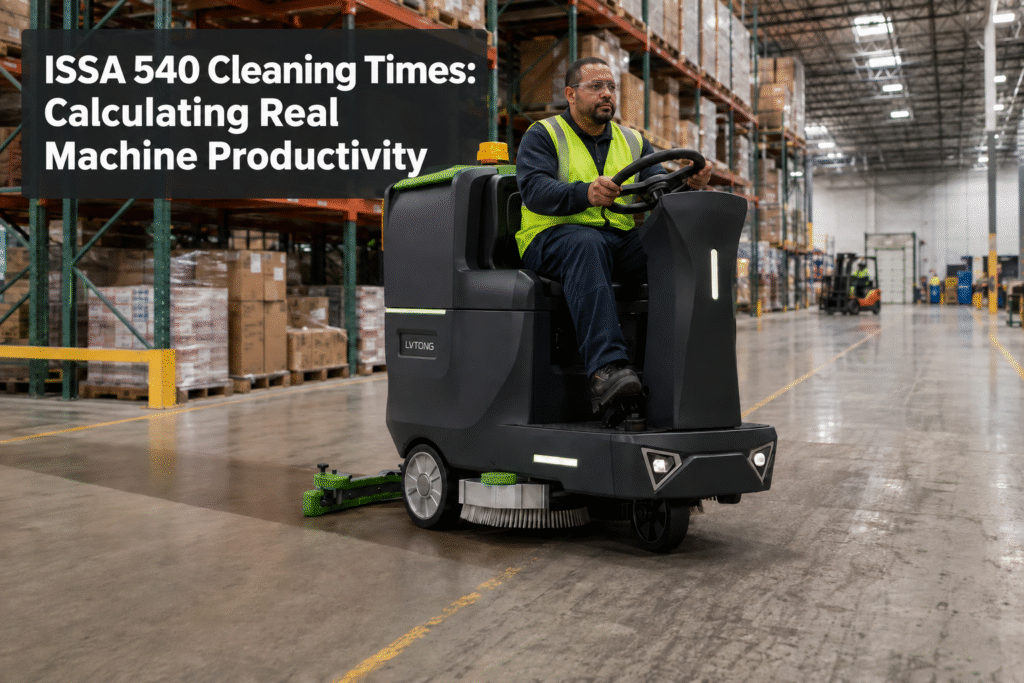
A ride-on scrubber is usually considered when the floor area is larger, the route is more open, or the cleaning team needs to reduce operator fatigue. Larger tanks and wider cleaning paths can reduce stop time, but they only help if the machine can move through the real route without constant turning problems.
We separate rated productivity from finished-route productivity. Turns, aisle obstacles, overlapping passes, refilling, wastewater disposal, and spot treatment all reduce actual output. That is why we calculate the route instead of simply multiplying the rated productivity by the shift length. The narrowest aisle, turning points, the distance to refill and wastewater-disposal points, and available cleaning window all affect the final result.
Before You Buy: A Quick Equipment Selection Guide
Before choosing a machine, we usually narrow the decision by floor condition first. This simple check prevents the most common buying mistake: choosing by machine size before understanding the floor.
|
Warehouse condition |
What we check on site |
Recommended approach |
|---|---|---|
|
Dry dust and packaging debris |
Loose dust, paper scraps, pallet chips, straps |
Sweep first, then scrub if stains remain |
|
Oil and forklift tire marks |
Smearing, black turning marks, oily film |
Pre-treat, use low-foam degreaser, scrub slower |
|
Narrow aisles |
Turning space, edge access, rack clearance |
Walk-behind or compact scrubber |
|
Large open routes |
Route length, refill distance, recovery needs |
Ride-on scrubber with larger tanks |
|
Epoxy or polished concrete |
Gloss, haze risk, coating sensitivity |
Softer pads and controlled pressure |
|
Dusting or damaged concrete |
Fine powder returns after cleaning |
Dry removal first; avoid flooding |
Real Warehouse Equipment Examples
Real warehouse cleaning decisions become clearer when we match the machine to the floor condition instead of starting with the model name.
When loose debris dominates—such as dust, sand, metal shavings, paper scraps, or plastic particles—we start with sweeping before introducing water. The LT-S1350S ride-on sweeper has an 80 L water tank, a 100 L trash hopper, and a rated cleaning efficiency of up to 10,000 m²/h. Actual route productivity depends on turning, debris volume, operator speed, inspection time, and hopper emptying.
In rack aisles, clearance and turning space matter more than headline capacity. The LT-S530X walk-behind floor scrubber has a body width of approximately 50 cm, can access 0.8 m aisles, and has a rated cleaning efficiency of up to 2,100 m²/h. Before choosing it, measure the narrowest clear width at rack uprights, end caps, and turning points—not only at the aisle center.
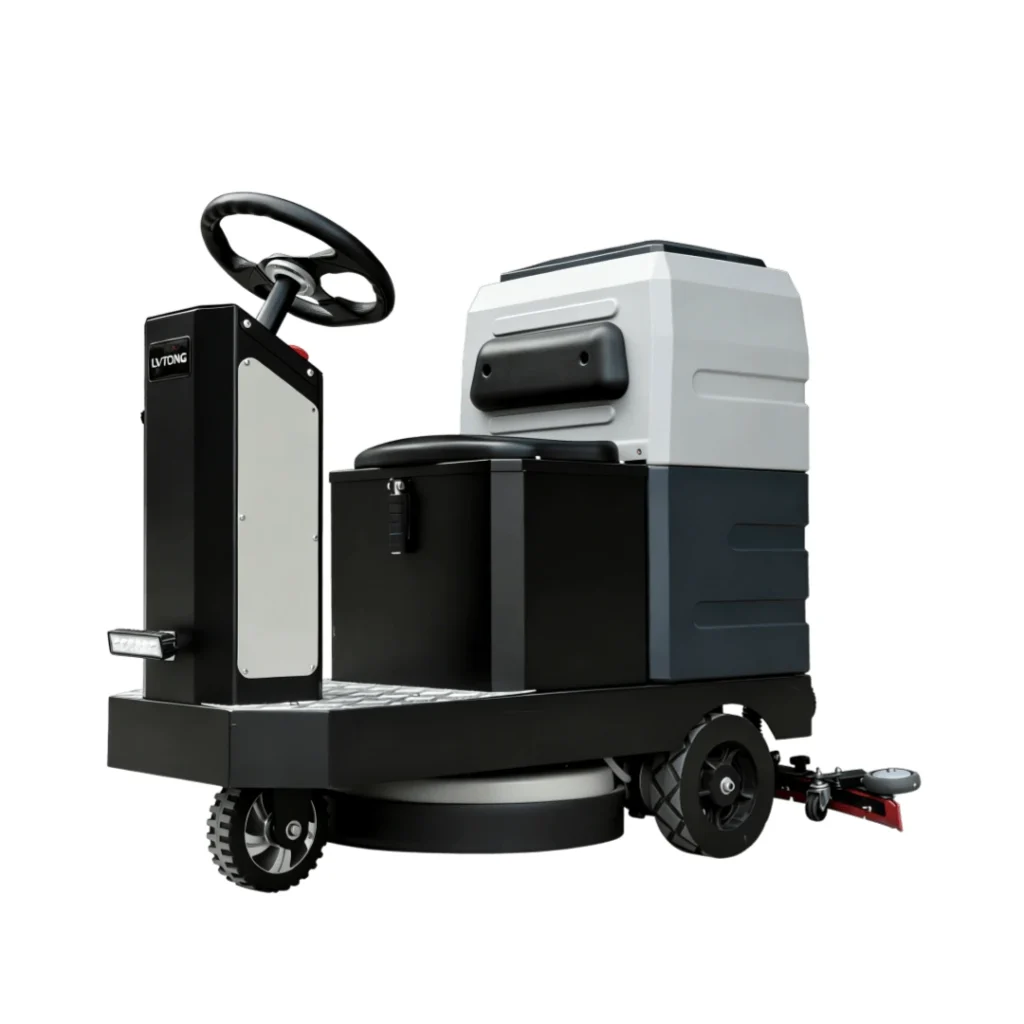
On long, open routes, we shift attention to solution capacity, wastewater recovery, and the distance to refill and dump points. The LT-S710X ride-on floor scrubber has a 130 L solution tank and a 135 L recovery tank. These capacities can reduce refill frequency on suitable routes, although actual uptime still depends on water-flow settings, soil level, and the distance to service points.
On epoxy floors marked by forklifts, floor area alone is not enough to select the machine; the setup should also be tested in a representative turning zone. The V6 ride-on floor scrubber page presents a 10,000 m² epoxy-floor warehouse scenario in which two units were used to address forklift tire marks and dust, and it reports a two-hour reduction in cleaning time. For a comparable site, we would still validate the pad or brush, detergent, travel speed, and water recovery before finalizing the route.
Build a Warehouse Cleaning Schedule
A warehouse cleaning schedule should follow traffic and soil level, not habit. Spot-clean docks and forklift turning points as conditions require, scrub main routes on a defined schedule, and sweep lower-traffic storage aisles more often than they are wet-cleaned.
For most facilities, we plan around three rhythms: immediate response to spills and wet spots, daily dry-debris removal in active areas, and scheduled scrubbing where tire marks or grime accumulate.
Early control of dust and oil reduces compacted soil and helps maintain more consistent results between full scrubbing cycles.
FAQ
How often should warehouse concrete floors be cleaned?
High-traffic warehouse floors may need daily sweeping and spot cleaning, especially around docks, forklift lanes, and entrances. Full-area scrubbing depends on soil level, traffic, and inspection standards.
Can I use the same brush on all concrete floors?
No. Unsealed concrete, polished concrete, epoxy-coated floors, and rough concrete require different brush pressure and pad selection. The brush should match the surface and the soil, not just the machine.
What cleaning solution should I use on warehouse concrete floors?
For daily dust and light soil, use a neutral low-foam detergent. For oil, grease, and forklift tire marks, use a compatible low-foam alkaline degreaser. Always check the floor finish before using stronger chemicals.
Why does my warehouse floor get dirty again after cleaning?
Usually because the cleaning removes visible dirt but not the source. Fine dust may still come from racks, doors, pallets, or outdoor traffic. Oil may not have been pre-treated. Detergent residue can also attract dirt if the wrong solution or too much chemical was used.
Is a ride-on scrubber always better than a walk-behind scrubber?
No. A ride-on scrubber is useful for large open routes, but a walk-behind scrubber can be better in narrow aisles, compact storage zones, and areas with many obstacles. The better choice is the machine that fits the route and cleans the floor in the available time.
Can I clean concrete floors every day?
Yes, but daily cleaning should match the floor condition. Daily sweeping and spot cleaning are common in high-traffic warehouses. Daily wet scrubbing may be suitable for heavy-use lanes, but brush pressure, detergent strength, and water flow should be controlled to avoid unnecessary surface wear.