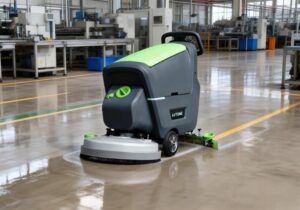
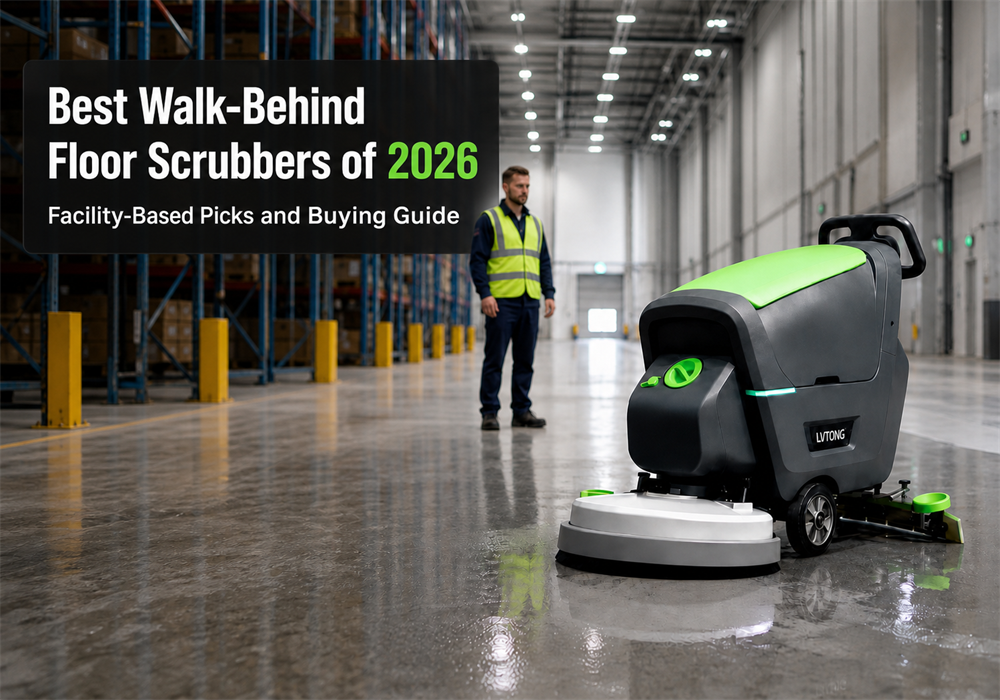
At LVTONG, we define the best walk-behind floor scrubber by how well it fits the facility’s real cleaning route, including cleanable area per shift, narrowest aisle, turning space, floor condition, refill and drainage access, required runtime, and water pickup. This guide uses facility-based picks, so each recommendation should be confirmed on the actual floor before purchase.
We judge each pick by route fit, working width, tank capacity, water recovery, maneuverability, battery configuration, maintenance access, and the facility type where the machine is strongest.
Quick Answer: Which Walk-Behind Floor Scrubber Is Best?
Start with the measured cleaning path, then shortlist by operating boundary. Q5 is the best fit in this guide for compact, obstacle-heavy areas. LT-S530X is the best fit for medium commercial or industrial layouts that need more tank capacity while retaining walk-behind control. Long, open floors should be compared with a ride-on option before a walk-behind model is selected.
The table below summarizes where each walk-behind scrubber fits best and what boundary should be checked before quoting.
| Use Case | Best Choice | Why It Fits | Boundary to Check |
|---|---|---|---|
| Compact stores, checkout lanes, small workshops, and obstacle-heavy routes | Best for compact, obstacle-heavy areas: Q5 | Published 510 mm cleaning width and listed 500–2,000 m² application range make it the closer fit for smaller, divided routes. | Not the first choice for long open floors; confirm the battery, charger, tank configuration, and brush deck in the quotation. |
| Medium commercial and industrial routes with narrow or divided layouts | Best for medium commercial and industrial routes: LT-S530X | Listed 1,000–4,000 m² application range, 62 L solution tank, 65 L recovery tank, and 2,100 m²/h cleaning efficiency support higher-capacity walk-behind cleaning. | Published efficiency is not the same as completed-route output; turns, drainage stops, soil level, and pre-sweeping still matter. |
For very large, open, repetitive routes, we compare a ride-on scrubber instead of forcing a walk-behind machine into an unsuitable application.
During a site walk-through, we move the machine from storage to the first cleaning zone, make the tightest turn, and check whether the squeegee clears rack ends, door frames, displays, or equipment feet. We also ask the operator to repeat the same path. Repeated reversing, lifted squeegee turns, or water left near a doorway tells us the best model on paper is not the best model for that layout.
What to Compare Before Choosing a Walk-Behind Scrubber
When we review a cleaning route, we look beyond nominal cleaning width. Total machine width, squeegee clearance, turning space, refill and drainage stops, battery configuration, and water recovery determine whether the machine can complete the planned shift efficiently.
Route Width and Turning Space
Cleaning width should match the narrowest usable route. Before choosing a model, measure the narrowest doorway, aisle, end-of-aisle turn, storage entrance, and drain or refill access along the complete route. Our walk-behind scrubber facility-planning guide uses a 36-inch doorway, 4 inches of clearance on each side, and approximately 1.5 machine lengths for a 180-degree turn as planning examples, not universal dimensions. Always compare the actual clear opening with the machine’s total width, squeegee width, length, and turning requirement.
Tank Capacity and Refill or Drainage Points
Review tank capacity together with route time and drainage access. The LT-S530X lists a 62 L solution tank, 65 L recovery tank, 2,100㎡/h cleaning efficiency, and 4,000㎡ cleaning area. Treat the efficiency figure as a listed machine specification, not a promised completed-route output, because turns, refill, and drainage stops, floor condition, and repeat passes change actual productivity.
Battery Configuration
Battery type also matters. Walk-behind floor scrubbers commonly use lead-acid or lithium battery configurations. Confirm the battery and charger included in the quoted configuration rather than assuming every machine uses the same setup. Compare rated runtime, charging time, allowable charging routine, warranty, and the number of cleaning shifts. Lead-acid and lithium are both common floor-scrubber battery types, but the final comparison should follow the battery and charger configuration stated in the quotation and technical sheet.
Brush and Water Recovery
Brush and squeegee selection should follow the floor. Smooth sealed surfaces can work well with disc brushes or pads, while textured tile, grout, rough concrete, and greasy floors need closer attention to brush contact, water flow, and squeegee pickup. Before scrubbing, remove substantial loose debris such as packaging waste, metal fragments, wood chips, stones, or production offcuts. Some cylindrical systems can collect limited light debris, but the Q5 and LT-S530X configurations discussed here should be evaluated on pre-swept hard floors unless the quoted configuration states another brush deck.
Best Walk-Behind Floor Scrubber by Facility Type
Retail and Supermarkets
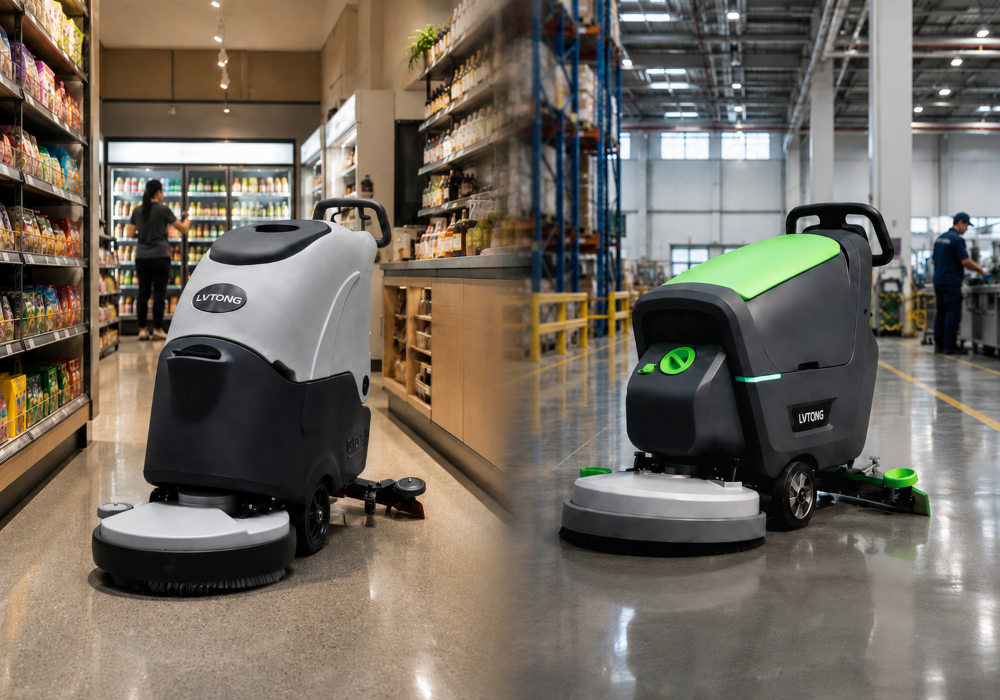
In retail routes, we prioritize compact dimensions, turning control, simple operation, and reliable water recovery around shelves, displays, carts, and checkout lanes. With a published 510 mm cleaning width and a 500–2,000 m² application range, Q5 is the better starting point for smaller stores and obstacle-heavy areas. Its main limitation is lower route productivity on larger, continuous floors.
Warehouses
For warehouse routes, check aisle width, route continuity, floor soil, and loose-debris level before using total building area as the deciding factor. LT-S530X may suit narrow or divided routes within its listed 1,000–4,000 m² application range. For long, open lanes, test a ride-on model as the baseline because operator walking and refill or drainage stops become more significant.
Manufacturing Workshops
Manufacturing workshops put more stress on a scrubber than customer-facing commercial spaces because the floor may include dust, fine particles, oil residue, tire marks, or production debris. Before shortlisting a model, check the quoted brush deck, whether brush pressure or brush adjustment is stated in the technical sheet, and whether the wheel or tire specification suits wet or oily floors. During the site trial, run a normal cleaning pass after the floor has been prepared, then inspect the squeegee contact line, edge pickup, remaining water near equipment bases, and streaking over oily or textured areas.
If the machine leaves wet patches or needs repeated passes, the issue may be the brush, squeegee setup, floor condition, or route type—not simply the model size.
The LT-S530X is a relevant example for this environment. For medium industrial routes, the LT-S530X provides a published 1,000–4,000 m² application range, 62 L solution and 65 L recovery tanks, and a listed 2,100 m²/h cleaning efficiency. Its walk-behind format supports tighter or divided routes, but the disc-brush system is not a substitute for pre-sweeping substantial loose debris. Long, open production routes may still be more efficient with a ride-on model.
Food Processing Facilities
For compact food-processing routes, shortlist Q5 only after checking the plant’s cleaning procedure, wastewater handling, chemical controls, and after-use inspection routine. Buyers should also confirm whether operators can empty and rinse the recovery tank, inspect hoses and filters, and clean the brush and squeegee after each shift.
A general-purpose floor scrubber does not by itself establish sanitation compliance. For U.S. food plants, 21 CFR 117.35 addresses sanitary operations and the safe and adequate use of cleaning compounds, so machine selection should remain one part of the site’s sanitation program.
Schools, Hospitals, and Office Corridors
These buildings need quieter operation and fast-drying floors. Cleaning may happen during working hours, near students, patients, staff, or visitors. A low-noise vacuum system, clear controls, reliable squeegee contact, and safe drying performance should guide the purchase.
Occupied corridors require predictable handling, reliable water pickup, and a noise level that fits the site’s operating schedule. For the LT-S530X, our quiet-area information lists equipment noise at ≤70 dB. Because noise readings can vary by operating mode, surface condition, and measurement distance, we compare that figure with the facility’s permitted cleaning hours, internal noise limits, and on-site measurement requirements before treating it as suitable for schools, hospitals, or office corridors.
When a Walk-Behind Floor Scrubber Is Not the Best Choice
Walk-behind scrubbers provide close control in narrow, divided, or obstacle-heavy routes and generally require less storage space. Their main limitations are operator walking, smaller tanks, and lower route productivity during long shifts. For U.S. workplaces, OSHA 1910.22(a)(2) requires workroom floors to be maintained in a clean and, to the extent feasible, dry condition. This makes consistent water recovery an important site-trial check.
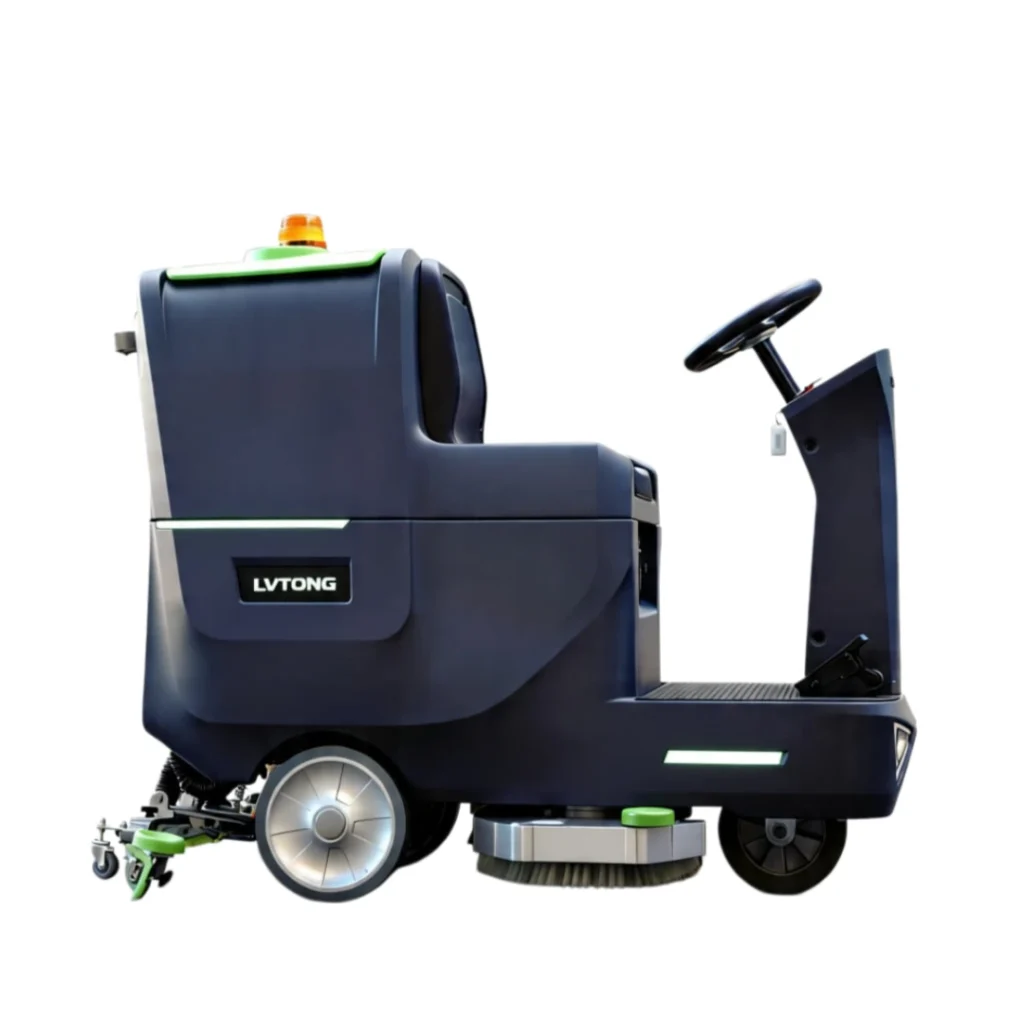
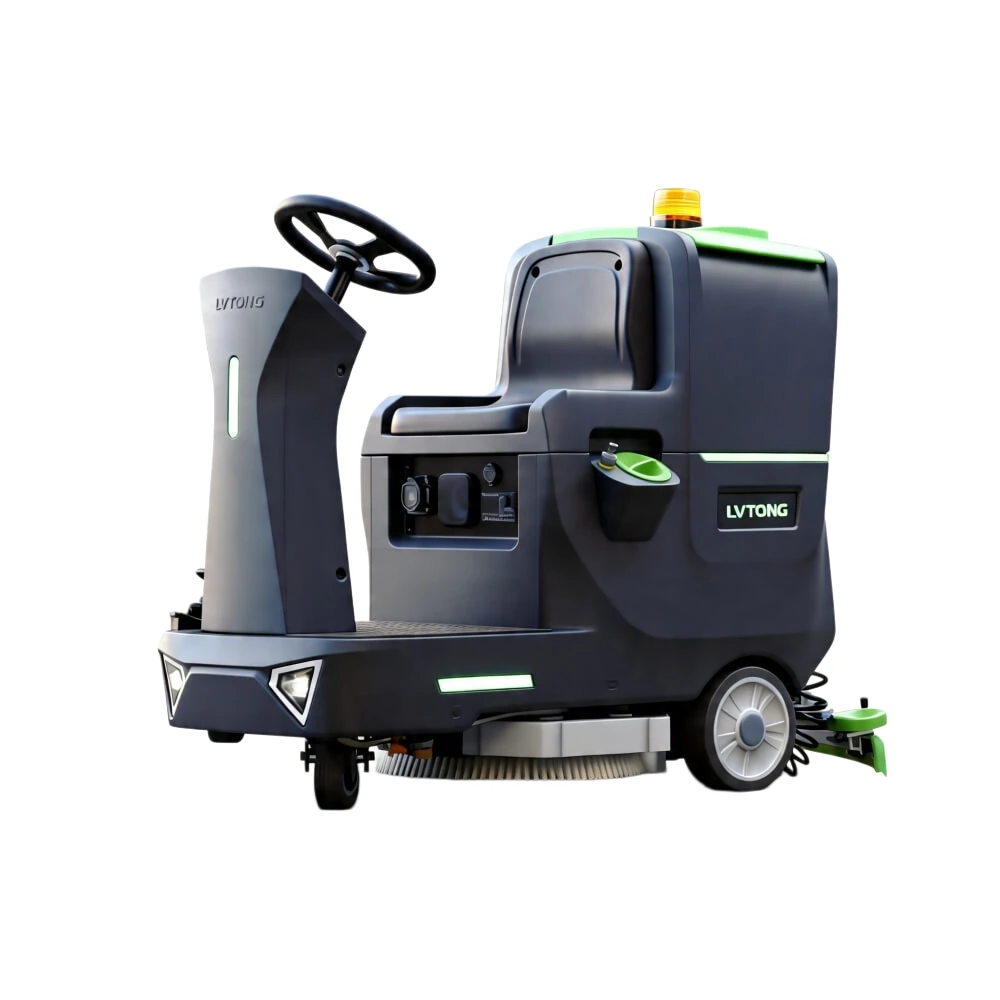
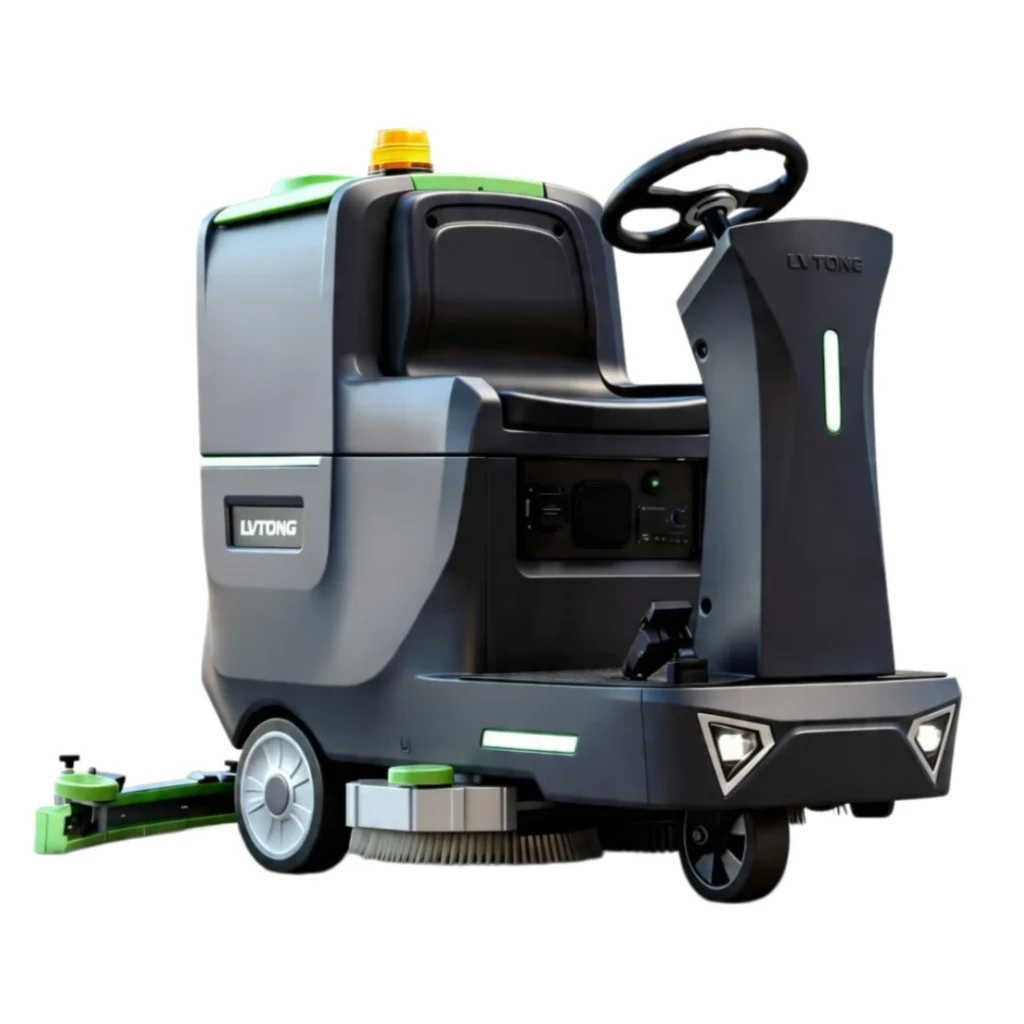
Ride-on equipment is better suited to long, open, repetitive routes, provided the machine can pass through the required doors, turn at aisle ends, and reach the storage and charging area. Mixed facilities may use a ride-on scrubber for open floors and retain a walk-behind model for corridors, rooms, narrow aisles, and congested zones.
What to Check During a Site Trial
Before approving a model, move it through the narrowest route, complete the tightest turn, and confirm that the squeegee clears doors, racks, shelves, and equipment.
Run a normal cleaning pass on the actual floor, then inspect for streaks, standing water, missed edges, brush marks, and loose debris left behind. Do not judge water recovery only on a showroom floor.
Finally, empty and rinse the tanks, inspect the filter, remove the brush, and check how easily the squeegee blades and other consumables can be accessed. A model that looks suitable on a specification sheet may still be inefficient on the actual route.
Final Buying Checklist
Before requesting a final configuration, confirm:
- Actual cleanable area per shift—not only total building area
- Narrowest doorway, aisle, turn, and storage entrance
- Total machine width and squeegee width
- Floor texture, finish, soil type, and loose-debris level
- Required route time and quoted battery configuration
- Solution refill and recovery-tank drainage points
- Water pickup, noise, and maneuverability during a site trial
- Consumable availability, maintenance access, and service support
Select the machine that can complete the real route consistently—not the model with the largest headline specification.
Which Walk-Behind Scrubber Fits Your Route?
Use the shortlist only after measuring the route. Q5 fits compact, obstacle-heavy areas; LT-S530X fits medium commercial and industrial routes that need more tank capacity; long open floors should be checked against a ride-on option before purchase.
For a final check, request a route-based floor scrubber recommendation. Share the cleanable area per shift, narrowest doorway and aisle, floor material, soil condition, required runtime, and route photos so the machine configuration can be checked against the actual layout.
FAQs
What size walk-behind floor scrubber do I need?
Start with the actual cleanable area per shift and the narrowest points on the route. Compare total machine width, squeegee width, length, turning requirement, tank capacity, and required route time—not only nominal cleaning width or total building area.
Is a walk-behind scrubber better than a ride-on scrubber?
A walk-behind scrubber is usually the better fit for narrow aisles, divided rooms, and obstacle-heavy routes. A ride-on model is usually more suitable for long, open routes where higher coverage and lower operator walking are priorities. There is no universal floor-area threshold, so the final choice should follow the measured route.
What floors can walk-behind scrubbers clean?
Walk-behind scrubbers can clean many sealed hard floors, including concrete, epoxy, ceramic tile, marble, vinyl, and wear-resistant industrial flooring. However, the brush, pad, detergent, pressure, and water flow must match the surface and finish. Test the proposed setup on a small inconspicuous area before full use, especially on coated, polished, marble, or vinyl floors.
How often should brushes and squeegees be replaced?
Inspect brushes and squeegee blades by condition rather than replacing both on one fixed schedule. Replace a brush when its bristles become shortened, uneven, soft, or deformed. Replace the squeegee blade—or rotate it if the blade design allows—when it hardens, curls, cracks, or begins leaving streaks and wet patches.
What should I check before asking for a quote?
Share your cleaning area, floor type, narrowest aisle width, cleaning frequency, required runtime, and soil condition. These details help us recommend the right configuration instead of only matching a model name.