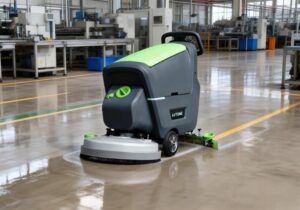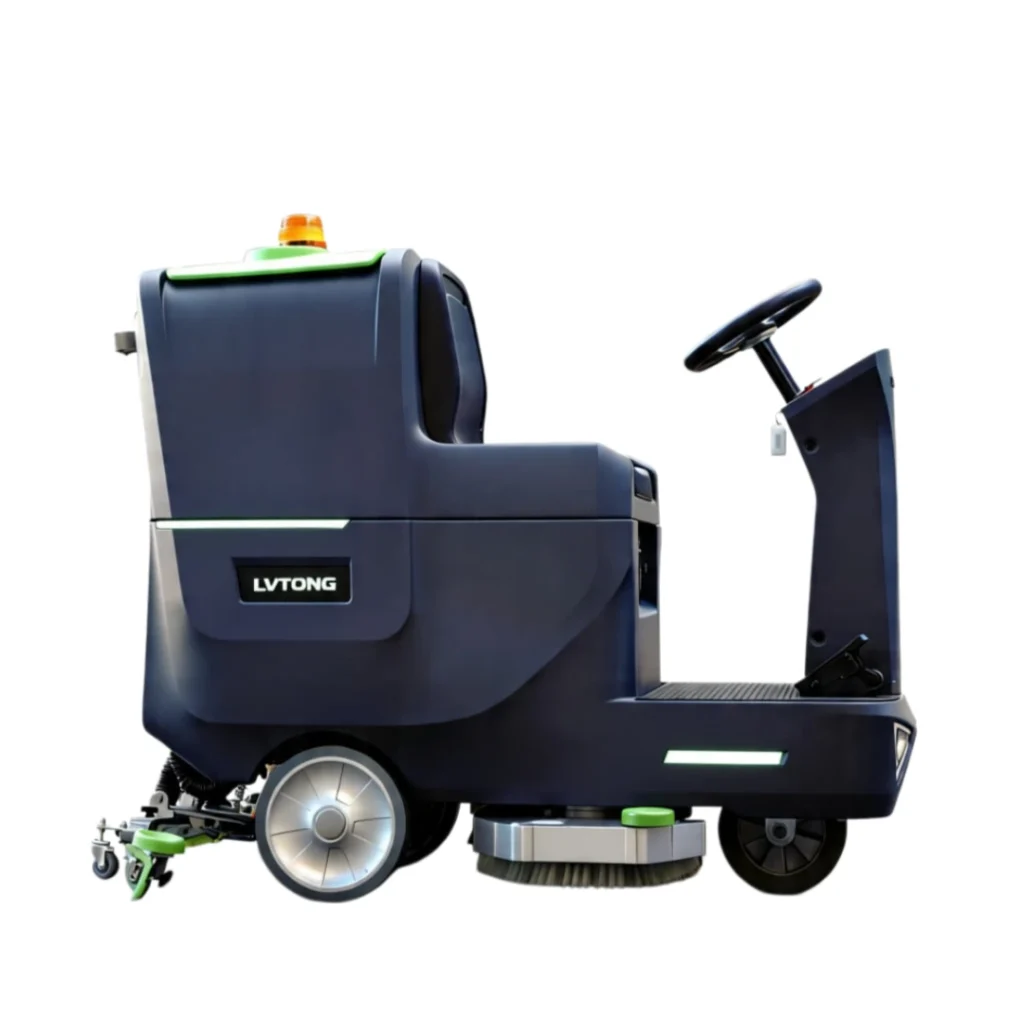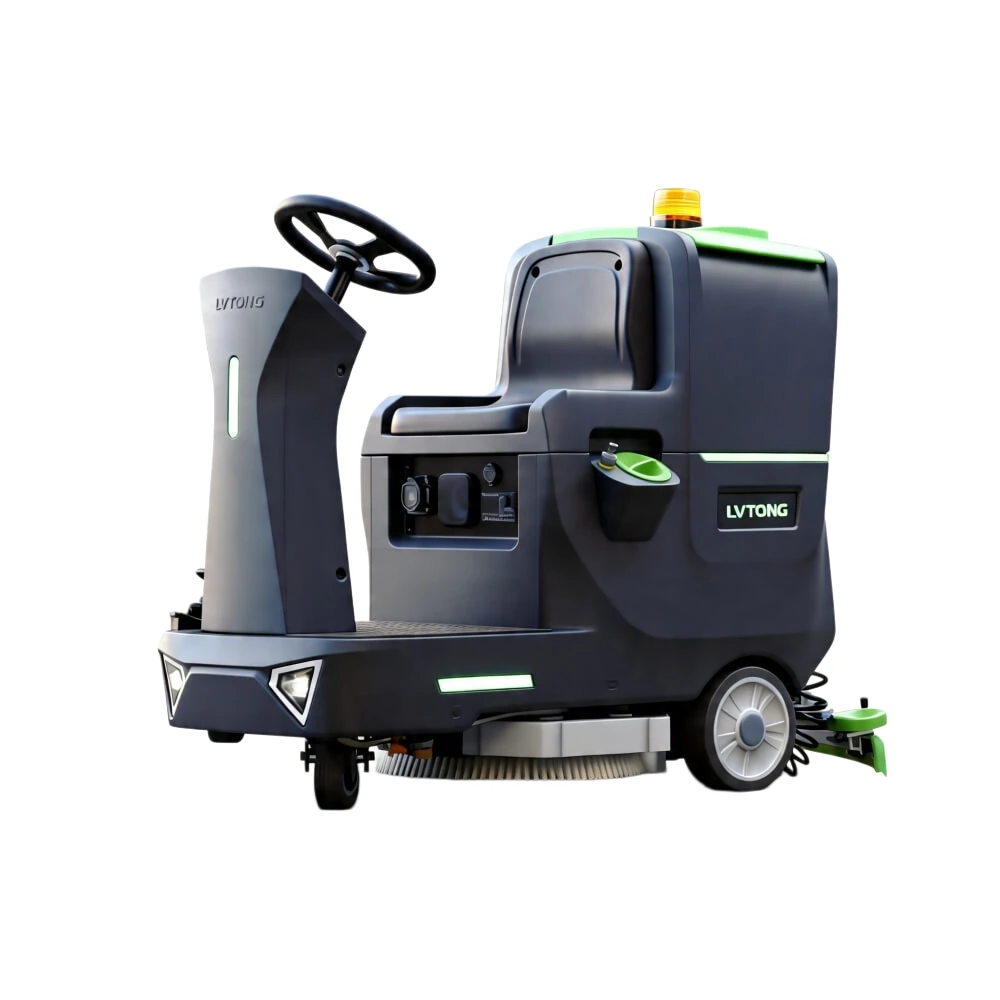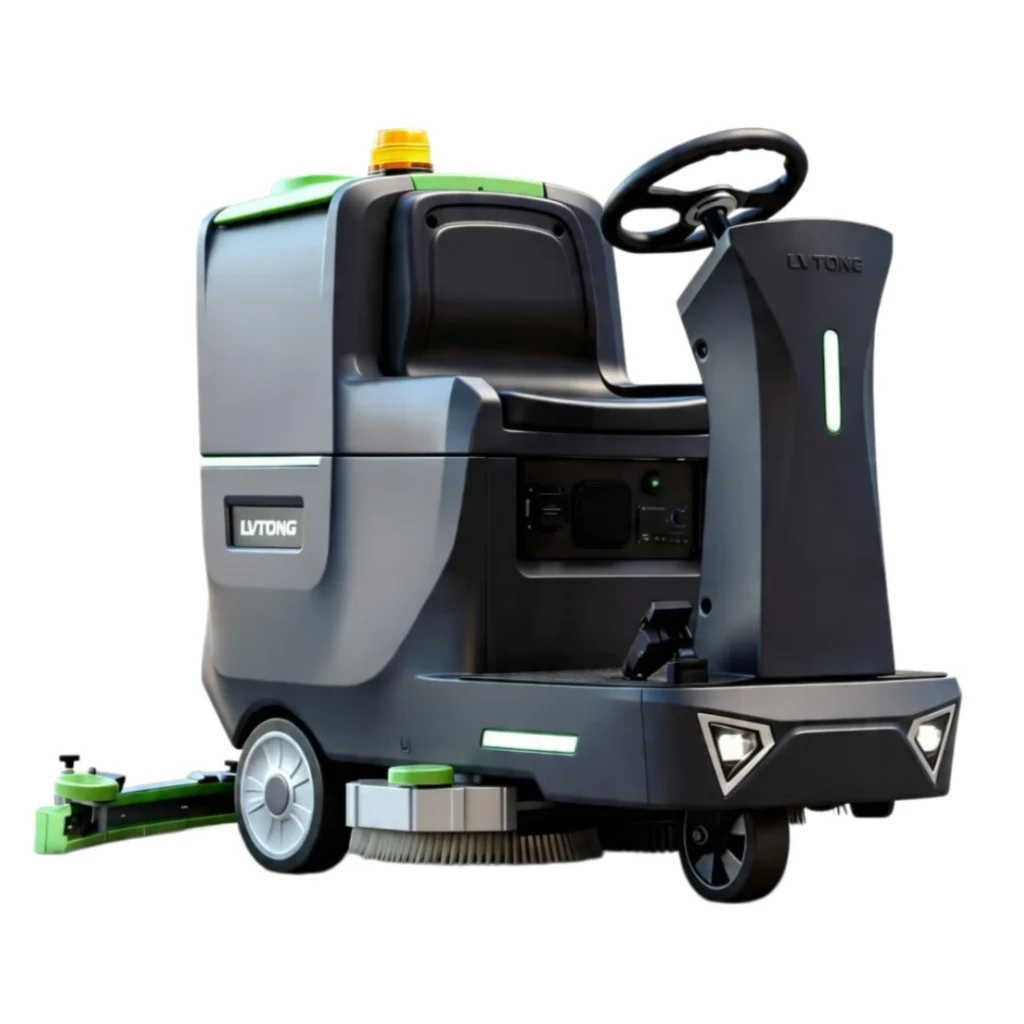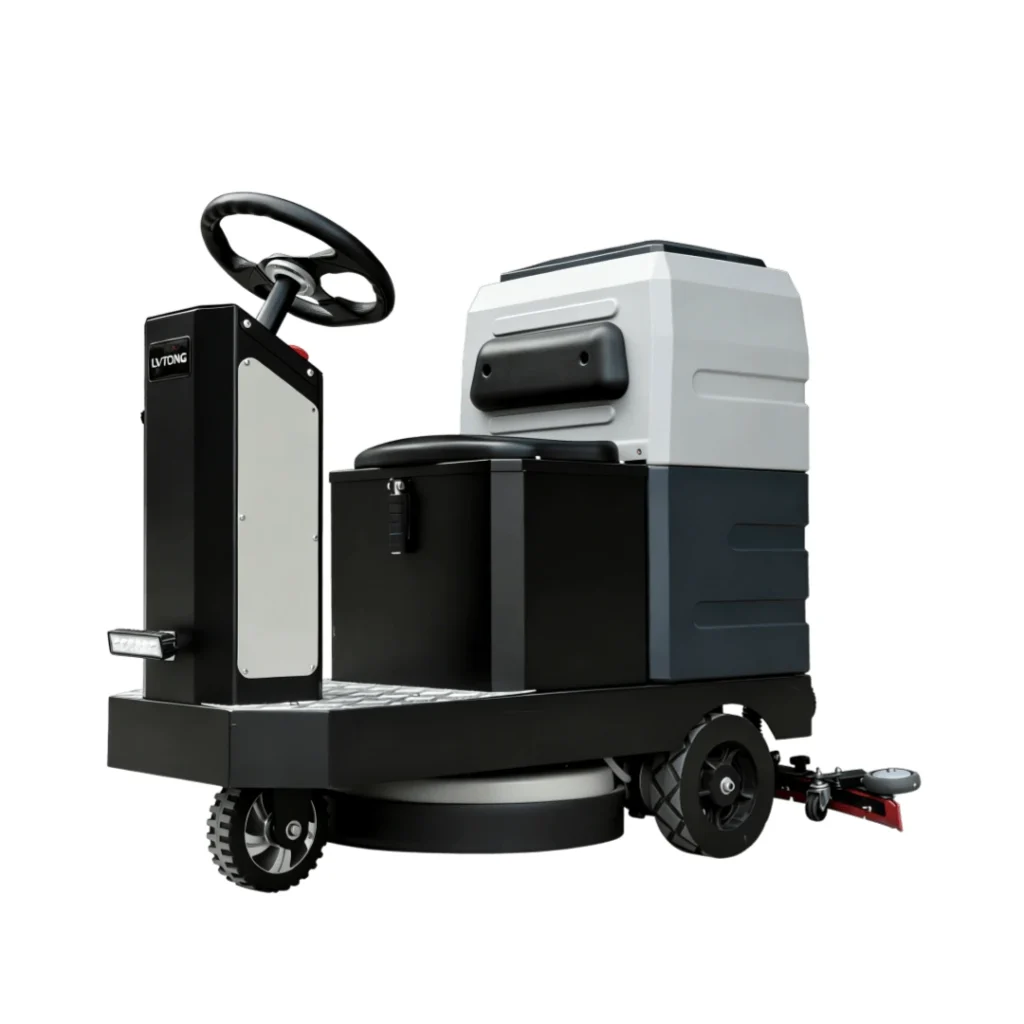
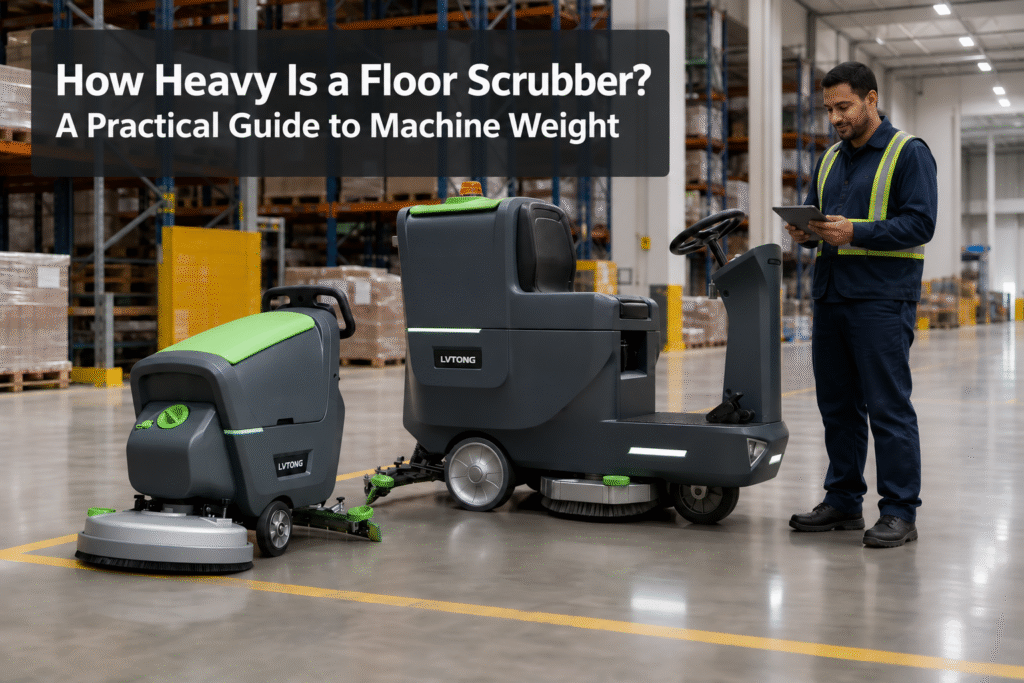
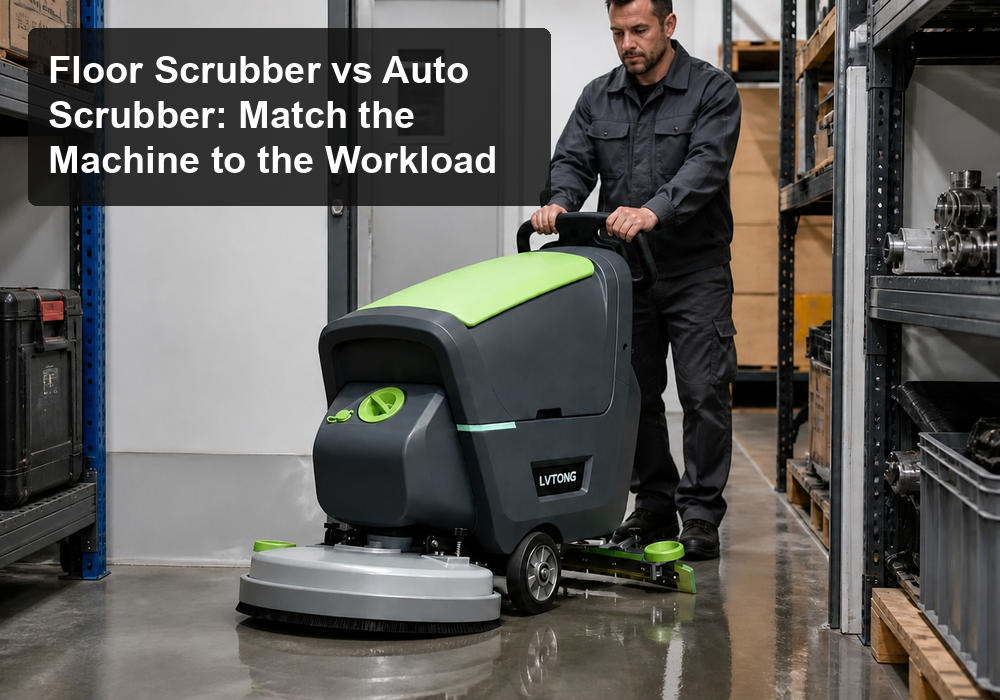
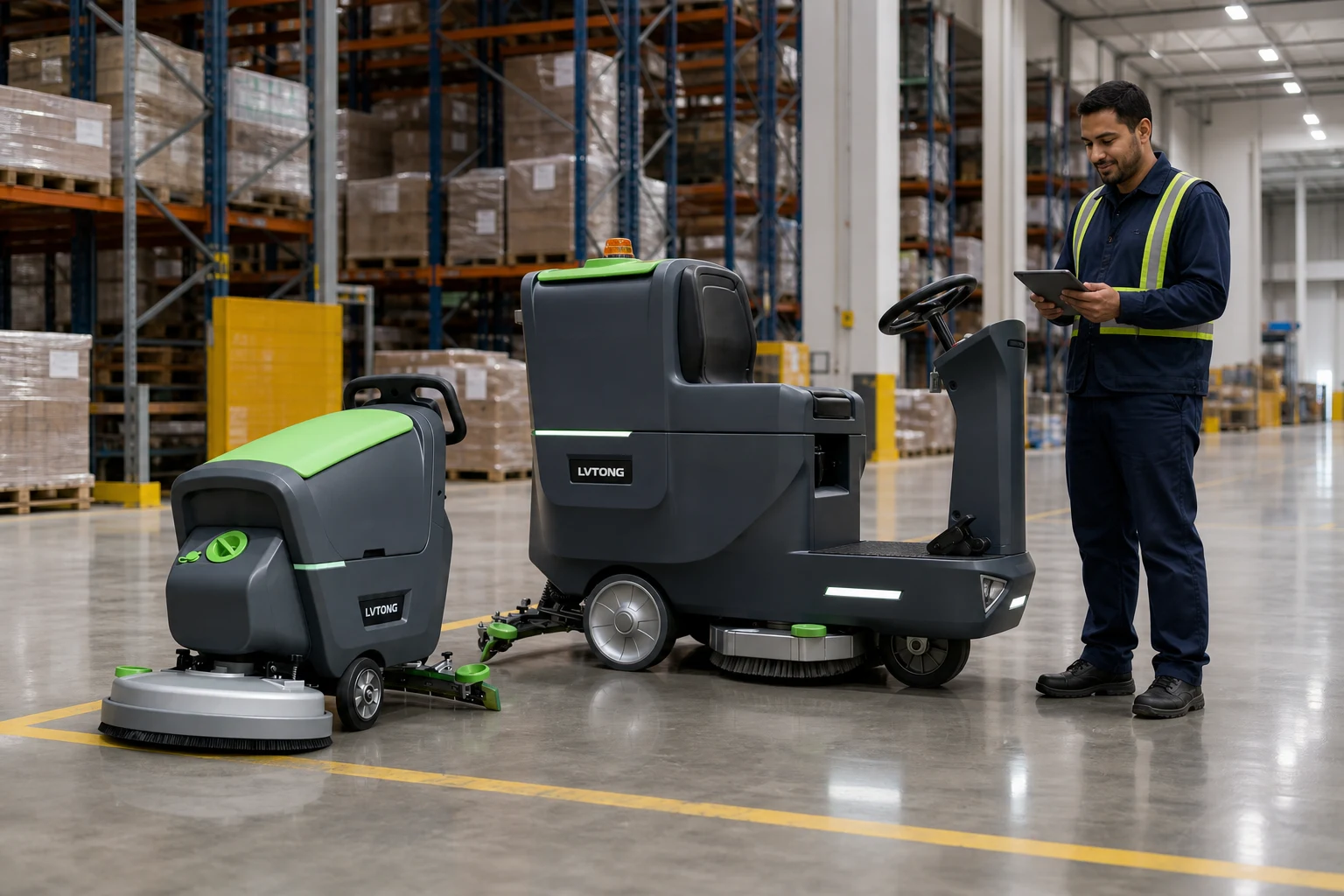
From an industry perspective, commercial floor scrubbers range from about 75 lb for a small walk-behind model to more than 1,500 lb for a large ride-on model. However, the number on a product page may not show the machine’s true working weight. It could mean the machine alone, the machine with batteries, the machine with full tanks, or the machine packed for shipping. Check what the listed weight includes before comparing models.
Water can add a lot of weight. One U.S. gallon weighs about 8.33 lb, so a full 20-gallon tank adds about 167 lb. To estimate the real working load, add anything not included in the listed weight, such as the battery, water, operator, and accessories. Then make sure the total is within the limits of your elevators, floors, ramps, trailers, and loading equipment.
What Does “Floor Scrubber Weight” Actually Mean?
Manufacturers use several types of weight:
Dry or empty weight: usually the machine without water and sometimes without the battery.
Net weight: the meaning varies, so ask whether the battery is included.
Operating weight: usually the machine with the battery and fluids, ready to work.
Shipping weight: the machine plus items such as the pallet, crate, charger, accessories, and packaging.
Use the weight that matches your task. For delivery or transport, use the shipping weight. For elevators and floors, use the maximum operating weight, including the operator when required. For daily use, also check whether the machine is self-propelled, easy to steer, and approved for the ramps on your route.
Before buying, ask the supplier to confirm in writing exactly what the quoted weight includes. Check the battery type and capacity. For a ride-on scrubber, add the operator and any tools or supplies carried on the machine.
Typical Floor Scrubber Weight Ranges
The ranges below are broad industry references, not LVTONG model specifications. A machine can sit outside these ranges because of its design, frame material, tank volume, cleaning deck, traction system, or battery pack. Our guide to the different types of floor scrubbers can also help you see how walk-behind and ride-on formats relate to layout, runtime, tank capacity, and application.
Machine class | Typical reference range | What usually drives the weight | Common setting |
|---|---|---|---|
Compact or micro walk-behind | About 75-125 lb | Small tanks, narrow deck, compact battery | Small retail, restrooms, tight rooms |
Standard walk-behind | About 125-300 lb | Larger battery, traction drive, 17-28 in deck | Schools, clinics, supermarkets |
Compact ride-on | About 400-800 lb | Seat, chassis, drive system, larger tanks | Mid-size warehouses and malls |
Mid/large ride-on | About 800-1,500+ lb | Dual decks, high-capacity batteries, large tanks | Factories, logistics sites, airports |
For each shortlisted LVTONG model, request four weight figures—dry/net weight, battery-installed weight, operating weight, and shipping weight—and record them in your procurement comparison table before making a final decision.
A light machine is not automatically easier to operate, and a heavy machine is not automatically more effective. Powered traction, steering geometry, wheel placement, and brush pressure determine how the weight feels on the floor.
Five Things That Add Weight
Water: the U.S. Geological Survey lists water at about 8.33 lb per U.S. gallon and 1 kg per liter, so tank capacity can change working weight quickly.
Battery: lead-acid packs are commonly heavier than lithium packs of comparable usable energy.
Tanks: more solution and recovery capacity reduces refill stops but increases maximum operating load.
Cleaning deck: wider or dual-brush assemblies need more structure, motors, and squeegee width.
Chassis and drive: ride-on seating, traction motors, brakes, guards, and heavy-duty frames add mass.
Calculate Working Weight Before the Machine Arrives
Here is a straightforward planning equation you can use:
Estimated operating load = published dry or net weight + any battery, solution, operator, and accessories not already included in that published figure.
Suppose your scrubber carries 20 U.S. gallons of clean solution. The water alone can add about 167 lb (20 × 8.33). You should not add the full recovery-tank capacity a second time if the solution is simply moving from one tank to the other during use. For a conservative building or transport check, follow the manufacturer’s stated maximum operating weight and the loading method recommended by your engineer.
For unit conversion, the U.S. National Institute of Standards and Technology publishes authoritative guidance on mass and SI units. Whichever units you use, keep them consistent across the machine specification sheet, elevator plate, ramp rating, and carrier documents.
Why Weight Matters on the Cleaning Route
Elevators and suspended floors
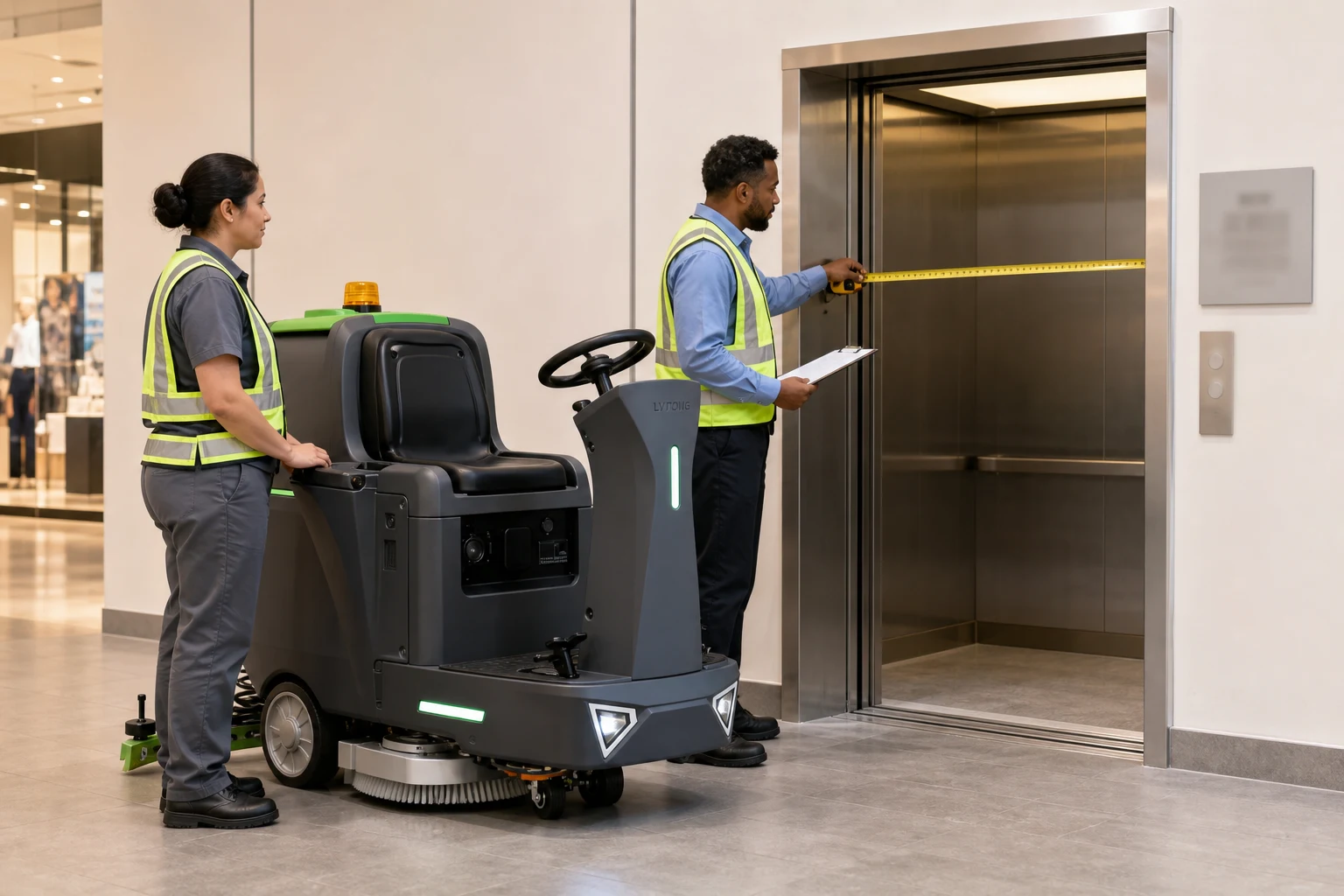
When you check an elevator, include the machine, operator, water, and any accompanying equipment. Capacity is only one part of the check, so measure the door width, cabin depth, and available turning space too. For mezzanines, raised floors, sports floors, and suspended slabs, ask the building owner or a structural professional about both the total load and concentrated wheel loads.
Ramps, trailers, and loading docks
Machine weight affects braking and traction on a grade. Check the scrubber’s approved slope, the ramp’s rated capacity, surface grip, and the transport vehicle’s payload. Securement points matter during transit; the parking brake is not a substitute for rated tie-downs.
Operator effort
A non-traction walk-behind places more demand on the operator than a self-propelled machine of similar mass. Route length, turns, thresholds, and slopes all matter. Before a site trial, use our floor scrubber maintenance checklist to confirm that the wheels, squeegee assembly, hoses, and battery condition are ready; mechanical drag or trapped debris can distort the handling assessment. OSHA’s ergonomics guidance supports reducing forceful exertion and awkward handling during starting, stopping, turning, and loading tasks.
Cleaning contact
Mass can help maintain brush contact, but cleaning performance depends on designed brush pressure, pad or brush selection, chemical, dwell time, and recovery. Adding unauthorized ballast can overload motors, damage floors, and affect warranty coverage.
LVTONG Examples: Public Specs to Check Before Confirming Weight
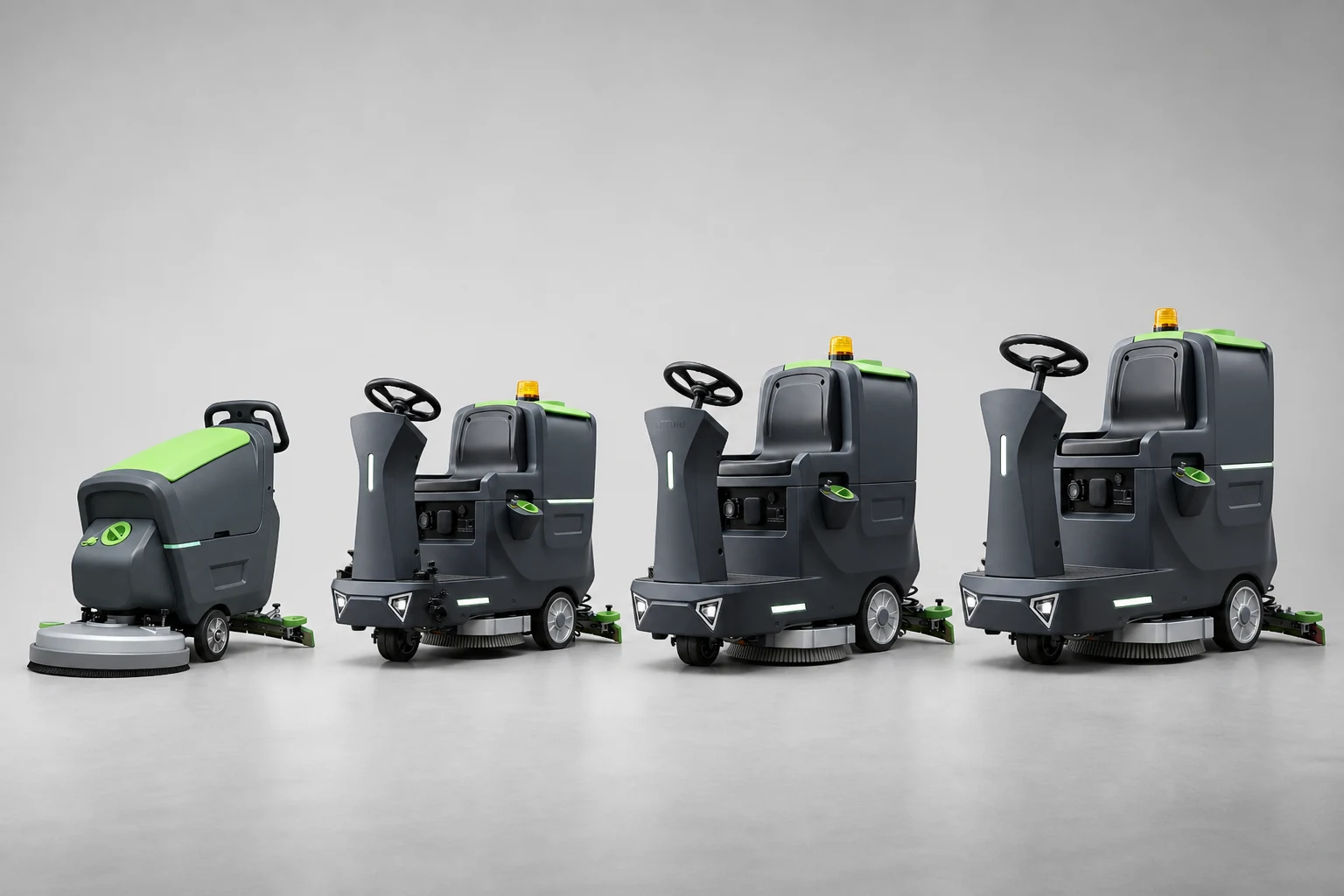
LVTONG does not publish one universal weight for every scrubber configuration, because the final weight can change with the battery type, tank setup, accessories, and shipping package. Instead of comparing only a single number, use the public specifications below to understand which models are likely to create higher operating loads, then request the configured net weight, operating weight, shipping weight, and wheel-load data before purchase.
LVTONG model | Verified public specification | Where it may fit | Weight action |
|---|---|---|---|
530 mm scrubbing width; 62 L solution tank and 65 L recovery tank; listed 2,100 m²/h efficiency | epoxy flooring, ceramic tiles, marble, cement flooring, wear-resistant flooring, and anti-slip floor tiles | Request net and operating weight for the selected battery | |
85 L solution and 90 L recovery tanks; listed cleaning efficiency of 2,100 m²/h | epoxy flooring, ceramic tiles, cement and marble | Add operator load and confirm elevator/ramp limits | |
710 mm listed cleaning width; 10,000-15,000㎡ applicable area | epoxy flooring, ceramic tiles, marble, cement flooring, wear-resistant flooring and non-slip floor tiles | Obtain transport and maximum operating weights | |
860 mm scrubbing width; 130 L water tank; listed 6,800 m²/h efficiency; large-capacity brush head and efficient water absorption system | manufacturing plants, warehouses and logistics centers, food processing plants, parking lots, airports, shopping malls, schools, and large workshops | Review wheel loads, doorway clearance, and charging location |
The larger the tank, deck, battery pack, and ride-on chassis, the more important the configured weight becomes. A compact walk-behind model may mainly require dry weight and battery-installed weight, while a large ride-on scrubber should be checked by maximum operating weight, shipping weight, and wheel load. This is especially important when the route includes elevators, ramps, mezzanines, trailers, narrow doors, or suspended floors.
In practice, we recommend using public specifications to shortlist the right machine class first. After that, confirm the exact weight based on the selected battery and configuration. This gives you a more reliable planning number than comparing broad product-category weight ranges alone.
Battery Choice Changes More Than the Scale
When you choose a battery for your LVTONG floor scrubber, start with your daily schedule. Tell us how many hours the machine will work, how many shifts you run, and how much charging time is available. These details help us match the battery and charger to your actual cleaning route.
For a lead-acid configuration, ask whether the battery is flooded, AGM, or gel. Flooded batteries usually need electrolyte checks, terminal cleaning, ventilation, and a suitable charging area. AGM and gel batteries reduce some maintenance work, but they still need the correct charger and charging cycle. If your team runs more than one shift, we should also confirm whether one pack can cover the schedule or whether you need a spare battery and a safe battery-changing procedure.
A lithium configuration usually needs less routine maintenance and may support charging during planned breaks when the approved battery system allows it. Before choosing it, confirm the compatible charger, expected charging time, operating temperature range, usable runtime, battery-management system, and warranty conditions. If you plan to charge between shifts, share that schedule with us so we can check whether the selected configuration supports it.
Battery shipping arrangements also need attention. Ask whether the battery will be installed in the machine or packed separately, and whether the charger travels in the same shipment. This information affects the transport documents, handling plan, and unloading equipment you may need.
Our industrial floor scrubber battery maintenance guide explains the care requirements for each battery type. Once you have selected the battery, use the buyer’s checklist below to confirm how that exact configuration affects the machine’s published and shipping weights.
A Buyer’s Weight Checklist
Request dry/net, battery-installed, maximum operating, and shipping weights.
Record the battery type and capacity used for the quoted figure.
Add water, operator, tools, and accessories where the published definition excludes them.
Measure doorways, elevators, aisles, turning points, thresholds, ramps, and storage space.
Verify elevator, mezzanine, trailer, liftgate, and ramp ratings with the responsible owner or engineer.
Ask for wheel-load data when the floor has concentrated-load limits.
Test steering, braking, and loading with the intended operator.
Keep the approved datasheet with procurement and safety records.
FAQ
Can a floor scrubber damage vinyl, tile, or polished concrete because of its weight?
Usually, machine weight alone is not the deciding factor. Floor condition, wheel load, brush pressure, pad or brush choice, chemical, and operating technique all matter. Confirm the flooring manufacturer’s limits, use approved accessories, and request wheel-load data when the surface has concentrated-load restrictions.
Do I need a special license or certification to operate a heavy floor scrubber?
Requirements vary by location and workplace. Even when a formal license is not required, employers should provide model-specific training covering controls, pedestrian safety, slopes, battery charging, chemical handling, and loading or transport procedures. Check local rules and your workplace safety policy.
How should a floor scrubber be weighed if the specification sheet is unclear?
Ask the manufacturer for certified net, battery-installed, maximum operating, and shipping weights. If an on-site check is necessary, use a suitably rated industrial platform scale and weigh the exact configuration under controlled conditions. Never exceed the scale capacity, and do not improvise with household scales.
Does floor scrubber weight affect battery runtime?
It can. More mass may increase the energy needed for propulsion, especially on slopes, rough surfaces, and routes with frequent starts and turns. Runtime also depends on battery capacity and condition, drive efficiency, brush pressure, floor resistance, and operator settings, so compare tested runtime for the complete configuration.
What is the safest way to move a floor scrubber between buildings?
Use a vehicle, trailer, ramp, or liftgate rated for the scrubber’s maximum transport load. Follow the manufacturer’s loading instructions, stay within approved slope limits, use designated tie-down points and rated restraints, and account for the battery, accessories, and any liquid left in the tanks. The parking brake alone is not securement.
Conclusion
Floor scrubber machines weigh anywhere from about 75 lb for a compact walk-behind model to more than 1,500 lb for a large ride-on unit. However, the figure that matters most is the weight of the machine in its actual working configuration. Battery type, solution volume, operator weight, accessories, and onboard supplies should all be considered alongside elevator capacities, floor limits, ramps, doorways, and transport requirements.
If you are comparing different configurations, you may wish to explore LVTONG floor scrubber machines and shortlist the models that best match your cleaning area and route. For configuration-specific net, operating, and shipping weights, feel free to contact our team before making your final decision.