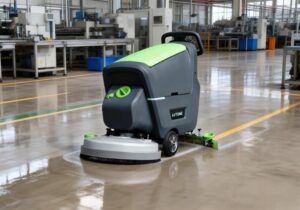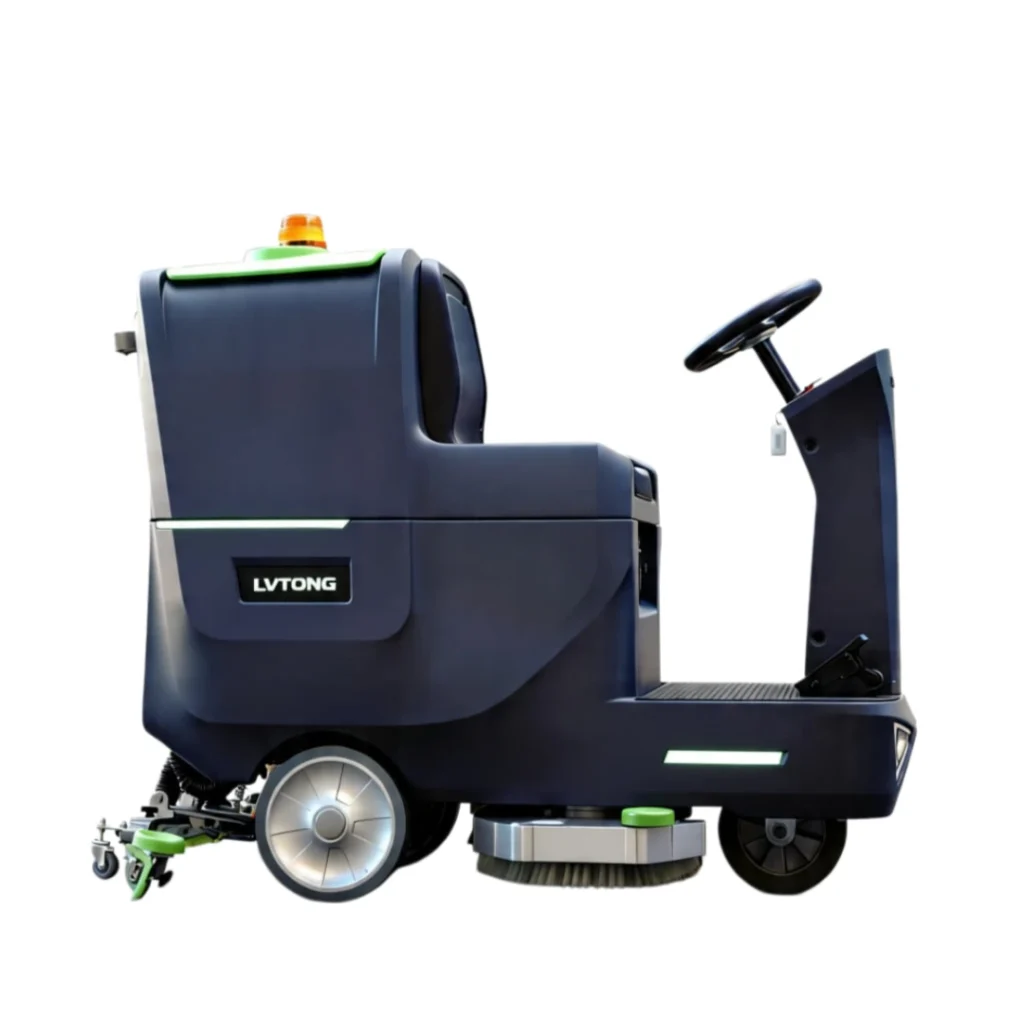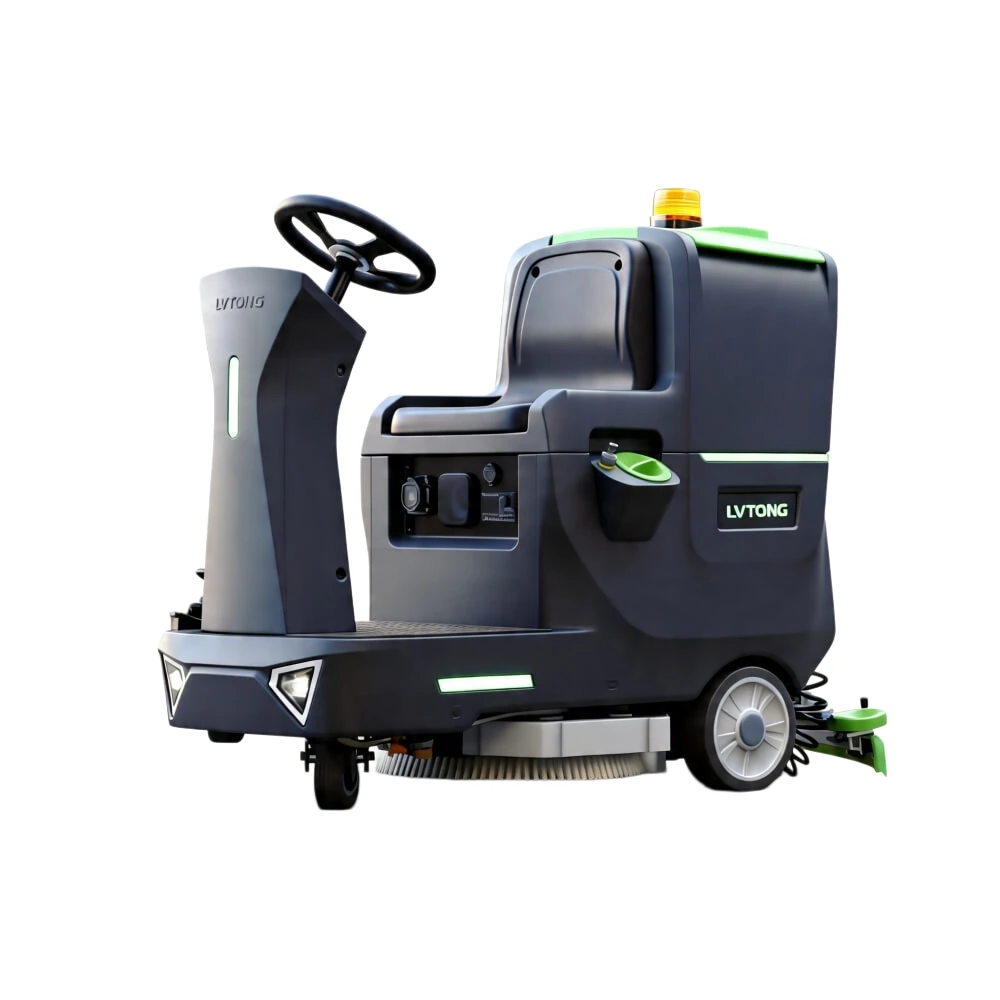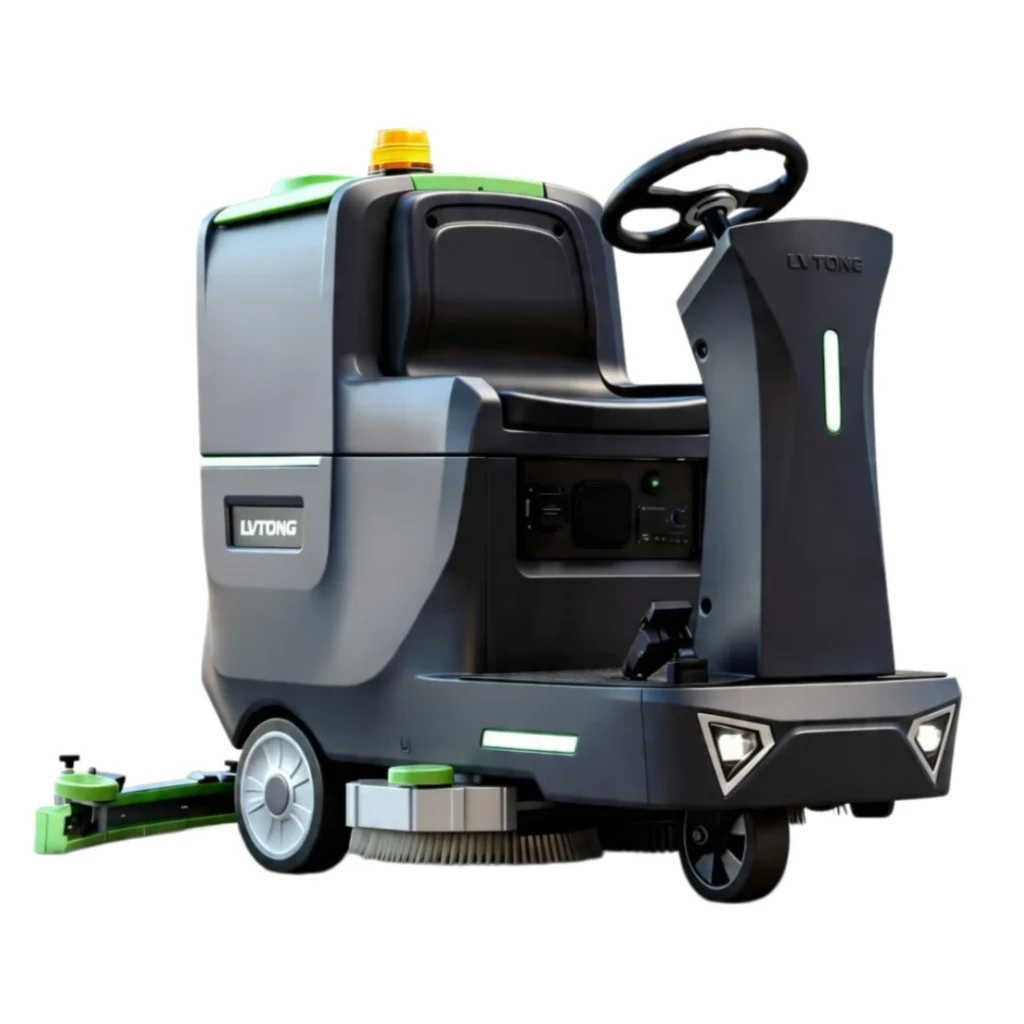
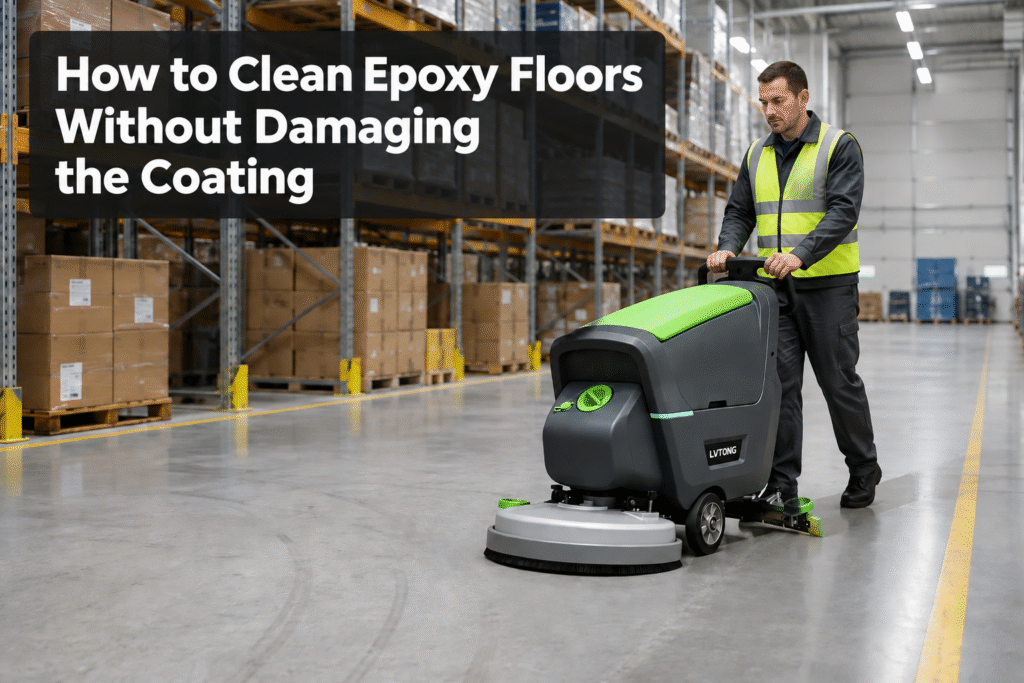

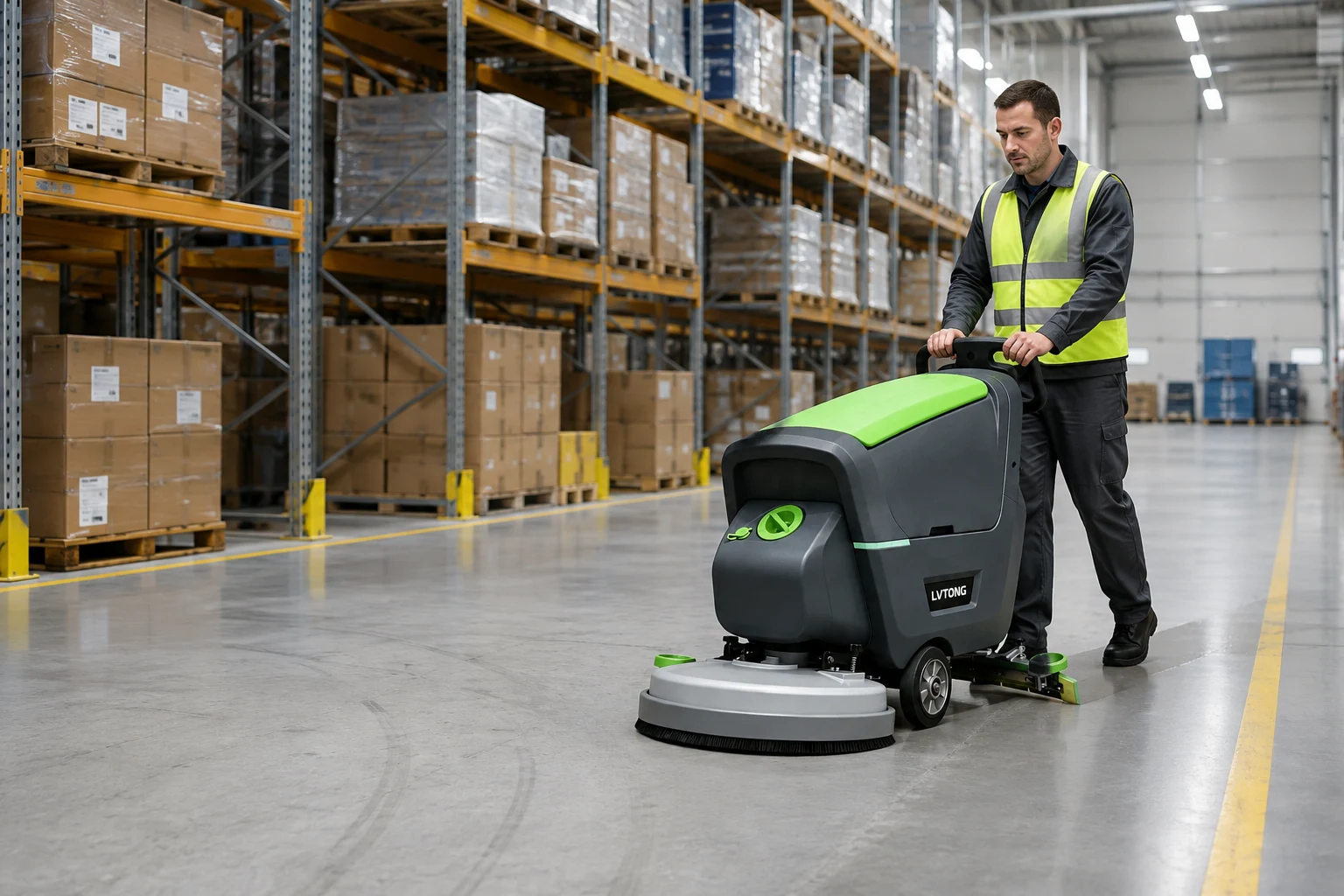
To clean epoxy floors without damaging the coating, remove dry grit first, identify the soil, use a coating-compatible low-foam cleaner, agitate with the least aggressive approved pad, and recover the dirty solution before it dries. For routine soil, begin with a pH-neutral cleaner and warm water. Oil, tire marks, battery residue, or unknown chemicals need separate treatment based on the coating supplier’s instructions and the chemical’s SDS. Keep standing water away from joints and damaged edges. On large areas, an automatic scrubber helps because it controls solution, agitation, and water recovery in one pass.
A short test on an inconspicuous section should come before full production cleaning. If the test leaves haze, scratches, a wet trail, or softened coating, stop and correct the chemical, pad, pressure, speed, or squeegee. The right setup matters more than a stronger chemical. Our working rule is simple: remove the soil, preserve the film, and leave the floor safe for traffic.
Start With the Coating and the Soil
A clean epoxy floor can look straightforward while hiding several variables. The surface may be a pure epoxy finish, an epoxy base with a polyurethane topcoat, a textured broadcast system, or a worn coating with open edges. Each reacts differently to friction, water, and chemistry. Ask the installer or facility record which system is present. When that record is missing, treat the finish conservatively and test a low-visibility area.
Next, identify what made the floor dirty. Dry sand scratches. Oil needs emulsification and complete recovery. Forklift rubber often needs dwell time and controlled agitation. An unknown chemical calls for the facility’s spill procedure before a scrubber enters the area. Our guide to how to clean industrial concrete floors in warehouses explains the same site-first logic for coated concrete, polished slabs, loading docks, and forklift lanes.
Use This Coating-Safe Cleaning Sequence
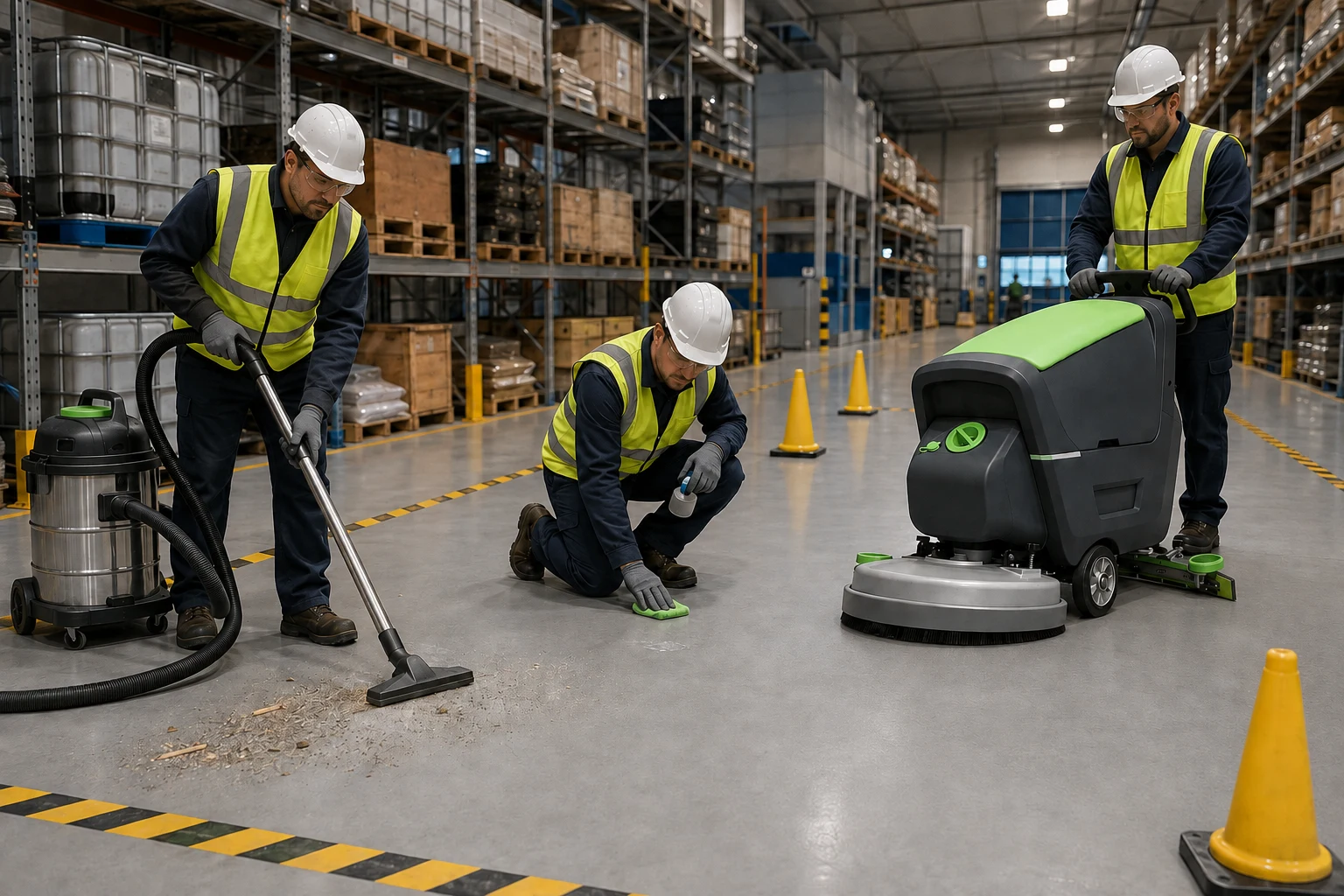
Barricade the area. Keep pedestrians and vehicles away from loose grit, spills, cleaning solution, and the wet recovery path.
Dry-remove debris. Vacuum or sweep sand, metal particles, pallet chips, and stretch wrap. A wet pad can drag grit across the coating like fine sandpaper.
Inspect the film. Mark chips, cracks, bubbles, soft spots, and lifted edges. Excess water can travel into existing defects, so damaged areas need a separate repair decision.
Spot-treat the soil. Apply only a coating-compatible product at the label dilution. Give it the specified dwell time and keep it from drying on the floor.
Agitate gently. Start with microfiber, a soft nylon brush, or the least aggressive pad approved by the coating supplier. Increase pressure only after the test area stays clear and glossy.
Recover the solution. Use a clean squeegee, wet vacuum, or scrubber vacuum system. A thin wet line means the blade, hose, seal, tank, or travel speed needs attention.
Rinse when required and let the surface dry. Inspect from a low angle for haze, streaks, missed soil, or swirl marks before reopening the route.
Choose the Cleaner, Pad, and Dwell Time as One System
For routine epoxy floor cleaning, a pH-neutral, low-foam cleaner is a sensible starting point because it is easier on the coating and on scrubber recovery systems. Product labels and the flooring manufacturer’s instructions still control the final choice. Resinous-floor cleaning recommendations from Sherwin-Williams vary the cleaner and equipment by floor type, traffic, soil, and texture. That is a useful reminder that one universal chemical or pad color cannot cover every resin system.
Measure concentrate instead of pouring by eye. Too much detergent can leave a sticky or dull film, create foam in the recovery tank, and reduce water pickup. For grease or rubber marks, use an approved low-foam degreaser and a brief dwell period. Review the safety data sheet (SDS) for hazards, protective equipment, incompatibilities, spill controls, and disposal information. Unknown, hazardous, or reactive spills belong with trained site personnel.
Match the Machine to the Route
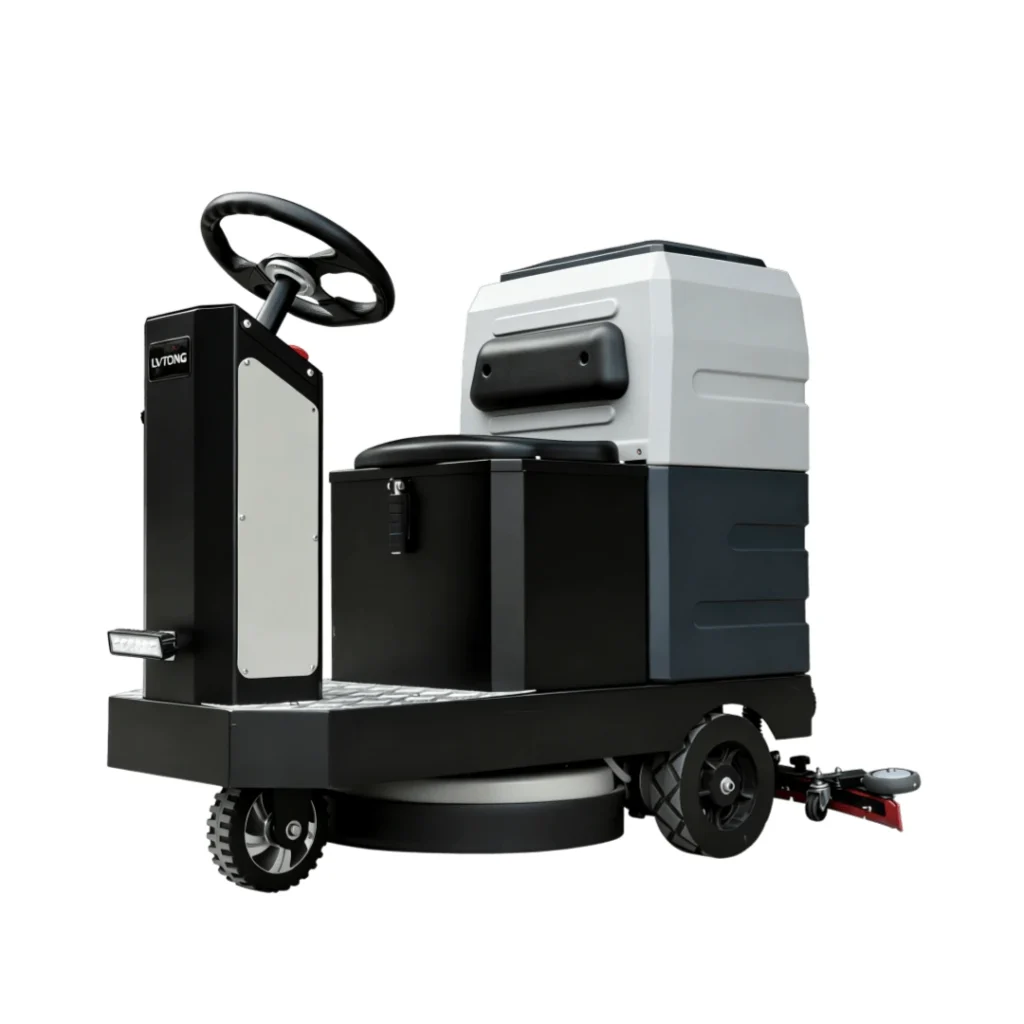
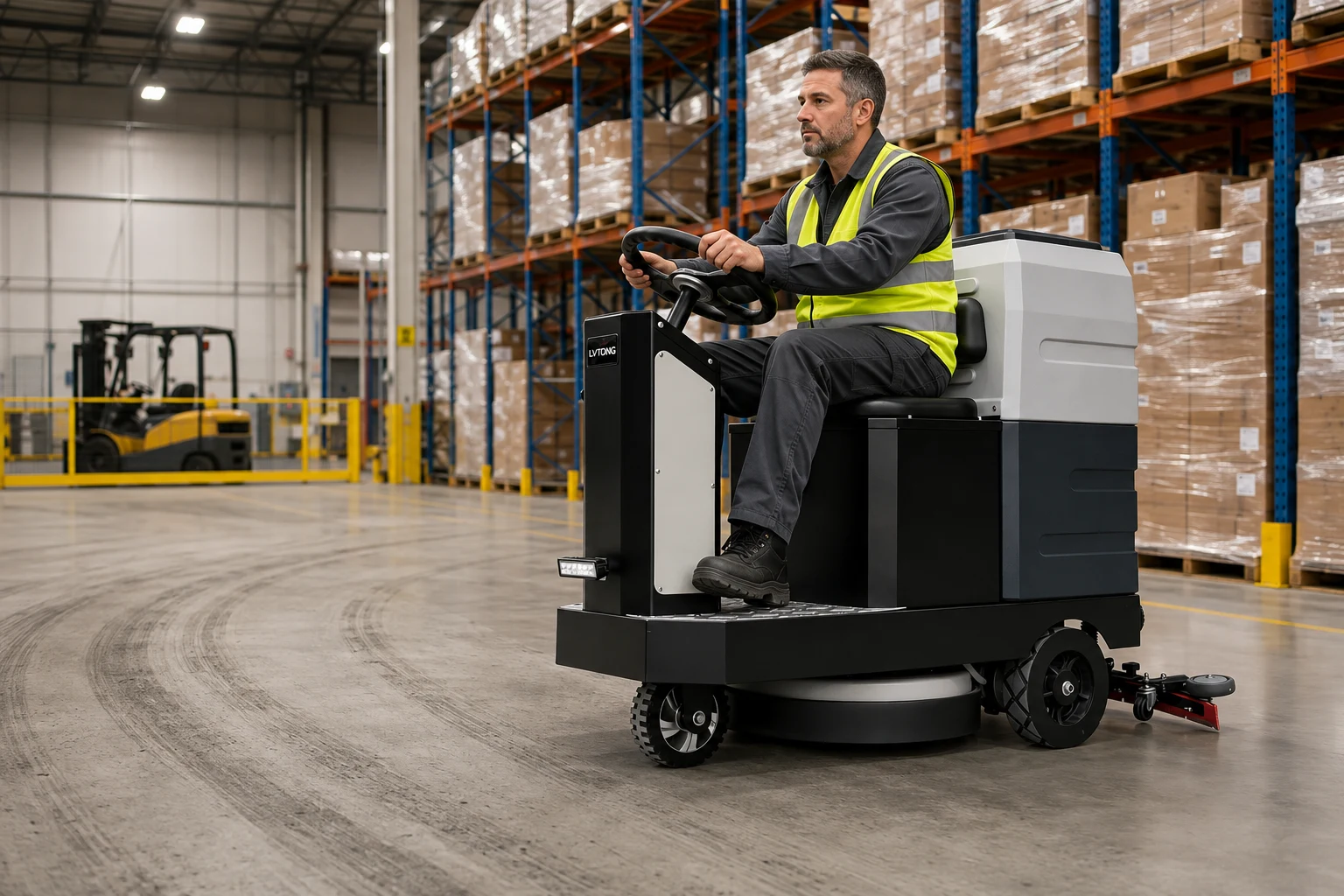
A machine protects the coating only when its pad, pressure, water flow, speed, and recovery system are set correctly. Tight rack aisles favor compact steering and clear sightlines. Long open runs favor tank capacity and consistent water recovery. Rated productivity is a comparison point; turns, overlap, refilling, dumping, inspection, and stain treatment reduce finished-route output.
LVTONG model | Published specification | Best-fit route | Coating-safe setup focus |
|---|---|---|---|
62 L solution and 65 L recovery tanks; up to 2,100 m²/h | Narrow aisles and detailed routes | Low pressure, clean pad, complete pickup | |
Published four-hour battery runtime | Medium to large epoxy warehouse routes | Test forklift turns and monitor recovery | |
130 L solution and 135 L recovery tanks; up to 6,800 m²/h | Large open industrial floors | Control flow and service stops |
What Our Published Epoxy Warehouse Scenario Shows
One project scenario on our V6 page describes a 10,000 m² epoxy-floor warehouse where forklift tire marks and dust were difficult to remove. The published setup used two V6 scrubber dryers and reports a two-hour reduction in cleaning time, along with higher cleaning efficiency and lower labor cost. We treat those figures as a site-specific result, not a universal promise. The lesson that transfers is the method: test the machine in a representative turning zone, confirm soil release, and make sure the squeegee recovers the dirty water before approving the full route.
A separate customer comment published on our site comes from logistics supervisor Robert Wilson. His team used the LT-S530X in warehouse aisles and loading areas and reported effective water pickup, faster drying, and simple daily maintenance. Those observations matter on epoxy because residual water and abrasive debris can turn a routine clean into a coating and safety problem.
Prevent Haze Scratches and Wet Trails
When a clean epoxy floor dries cloudy, first suspect residue, dirty water, an overloaded pad, or an incorrect dilution. When a narrow line stays wet, inspect the squeegee edge for grit, wear, or poor contact. A broad wet trail points toward airflow, hose blockage, tank sealing, the float system, or speed. Our floor scrubber leaving streaks troubleshooting guide gives a symptom-first diagnostic order.
Daily habits do more for coating life than occasional aggressive scrubbing. Remove grit in active lanes, clean spills promptly, keep entry mats serviceable, and place protection under metal stands or heavy equipment. Rinse pads, squeegees, filters, and recovery tanks after use. A dirty recovery path can redeposit soil even when the chemical and brush are correct.
Set a Schedule From Traffic and Soil
During each shift, remove visible grit and respond to spills under the site’s safety procedure.
Daily or as needed, dust-mop or vacuum entrances, loading zones, forklift turns, and production lanes.
Weekly, inspect representative zones and wet-clean where film, tracked soil, or rubber marks have accumulated.
Monthly, review pads, squeegee blades, hoses, filters, dilution control, water flow, and route productivity.
Periodically, inspect the coating with the installer or qualified floor professional for wear, chips, loss of adhesion, and topcoat condition.
This schedule is a starting framework. A quiet showroom and a 24-hour forklift lane should never share the same frequency. Use inspection results, slip risk, soil load, and the coating manufacturer’s maintenance plan to set the interval.
FAQ
Can you use vinegar or bleach to clean an epoxy floor?
We would not use vinegar or undiluted bleach for routine cleaning. Vinegar is acidic, and concentrated bleach is a strong oxidizer; either can dull or discolor some resin-floor finishes over time. Choose a pH-neutral cleaner that your coating supplier approves, follow the label dilution, and test it in a discreet area. If you need a disinfectant, ask the coating manufacturer which product and contact time are compatible with your exact system.
Is steam cleaning safe for epoxy floor coatings?
Only use steam when the coating manufacturer explicitly approves the machine’s temperature and method. Concentrated heat can soften some topcoats, stress repairs, and force moisture into open joints or damaged edges. For most routine cleaning, warm water, a compatible low-foam cleaner, controlled agitation, and prompt recovery give you a safer starting point.
Can you pressure wash an epoxy garage or warehouse floor?
Sometimes, but stay within the pressure, temperature, nozzle, and distance limits supplied by your flooring manufacturer. Keep a wide fan pattern moving, avoid directing the jet at seams, chips, or lifted edges, and recover the water before it enters damaged areas. If you do not have an approved pressure range, use a hose, wet vacuum, or floor scrubber instead. One published epoxy maintenance guide permits pressure washing only under specific distance and pressure limits, which shows why you should check the instructions for your own system.
How do you remove rust stains from epoxy flooring?
First remove the wet metal, leaking container, or corroding equipment that caused the mark. Then test a coating-approved rust remover in a low-visibility spot. Use a short dwell time, a non-abrasive pad or soft brush, and complete rinsing and recovery. Do not jump straight to muriatic acid, abrasive powder, or steel wool. If the rust surrounds a chip, crack, drain, or lifted edge, ask the installer to check whether corrosion or moisture has reached beneath the coating.
Conclusion
Keeping a clean epoxy floor in serviceable condition is less about aggressive cleaning and more about building a controlled, repeatable maintenance process. As traffic, soil levels, surface texture, and coating wear change, cleaning teams should reassess their setup and use the dried test area as the final measure of success. Recording the dilution, pad, pressure, dwell time, and recovery performance that work in each zone can make daily maintenance more consistent while helping the coating remain durable, presentable, and safer for industrial traffic.
If you are unsure which machine settings or cleaning approach will suit your coating, soil type, and facility layout, you can contact us for epoxy floor cleaning advice. Our team can help you review the application and narrow down a suitable solution before you arrange a floor test or make an equipment decision.