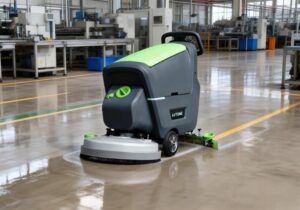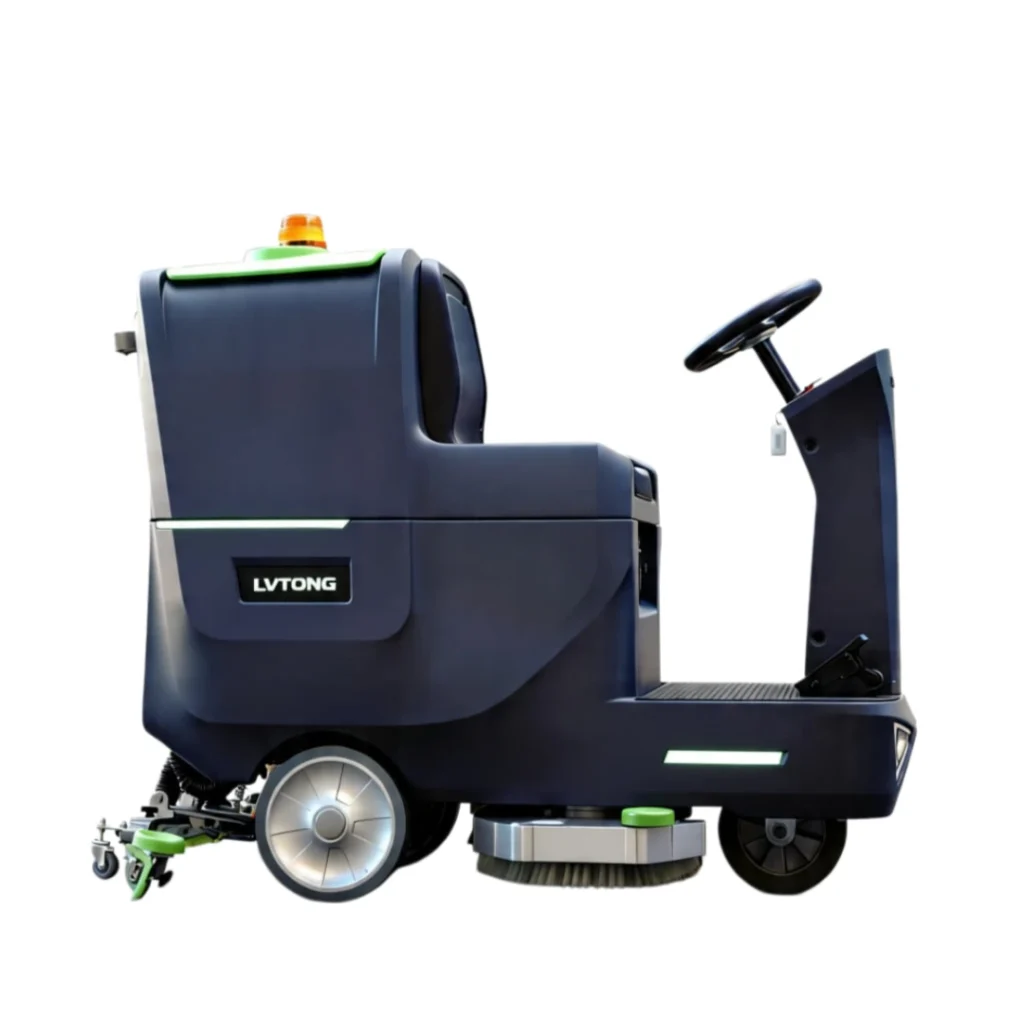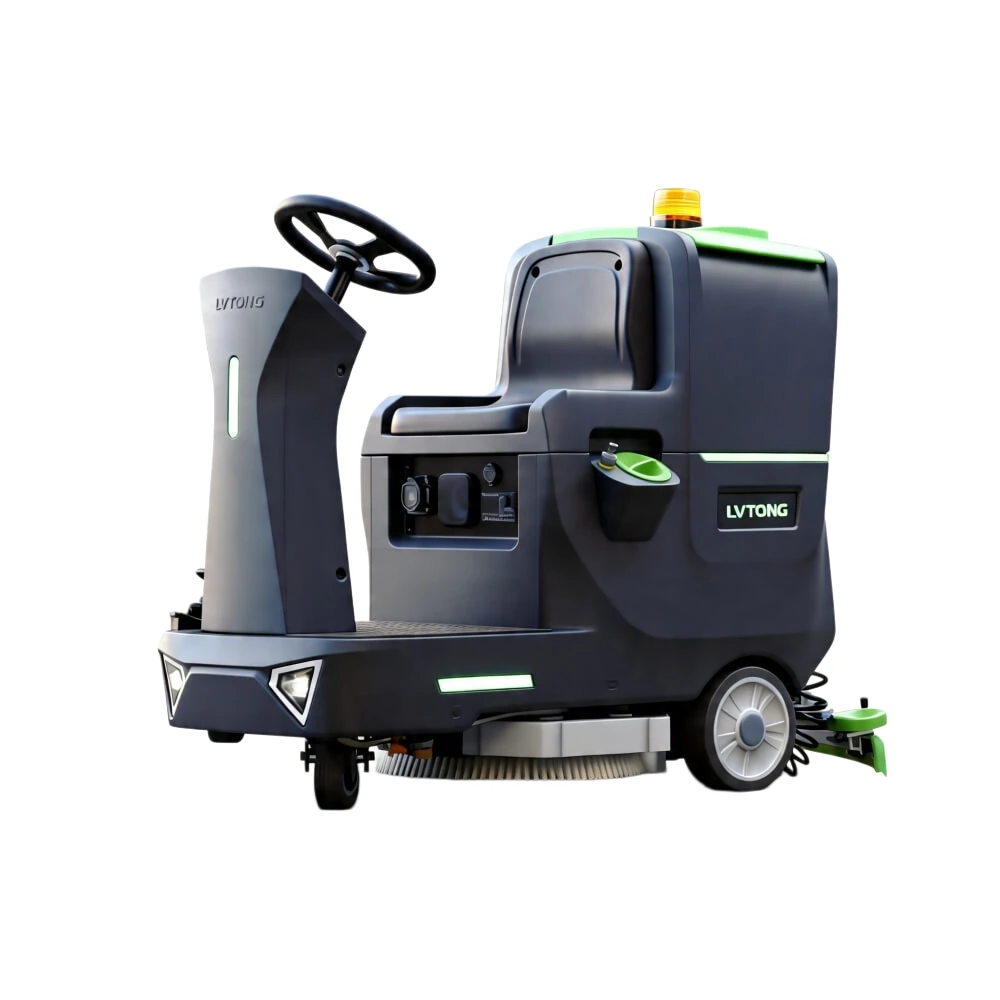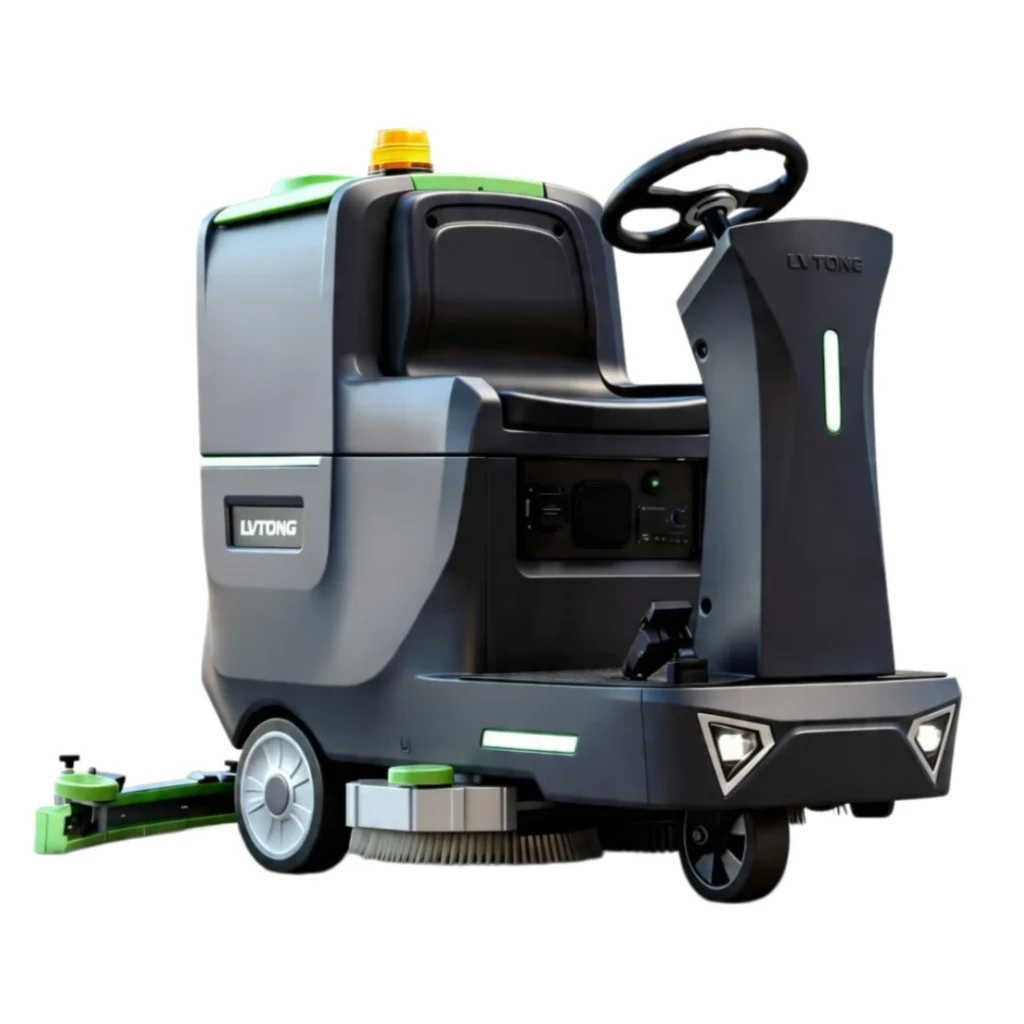

Ask ten facility managers what “stone” means and you get ten answers: polished marble in a bank lobby, honed travertine in a hotel, flamed granite at an entrance, poured terrazzo in an airport concourse. They look different, they are cleaned differently, and they fail in different ways — the stone floor cleaner machine that suits one can quietly ruin another. So the first decision is not tank size or cleaning width; it is the stone itself.
QUICK ANSWER
A stone floor cleaner machine should be chosen for the mineral type first, then the finish, because the same brush that is safe on granite will dull polished marble. Calcite stones — marble, travertine, limestone, onyx — are acid-sensitive and need neutral pH. Silicate stones — granite, quartzite, slate — resist acid but scratch under coarse grit or stiff brushes.
- Identify the mineral — calcite or silicate — before you specify anything.
- Go neutral pH on marble and travertine; acid etches permanently.
- Choose soft brushes or pads and light pressure to protect a polished finish.
- Manage water and grit — trapped grit causes more damage than the brush.
Below: mineral family, damage mechanism, chemistry, brush and pad, then sizing by venue.
Stone Is a Family, Not One Floor
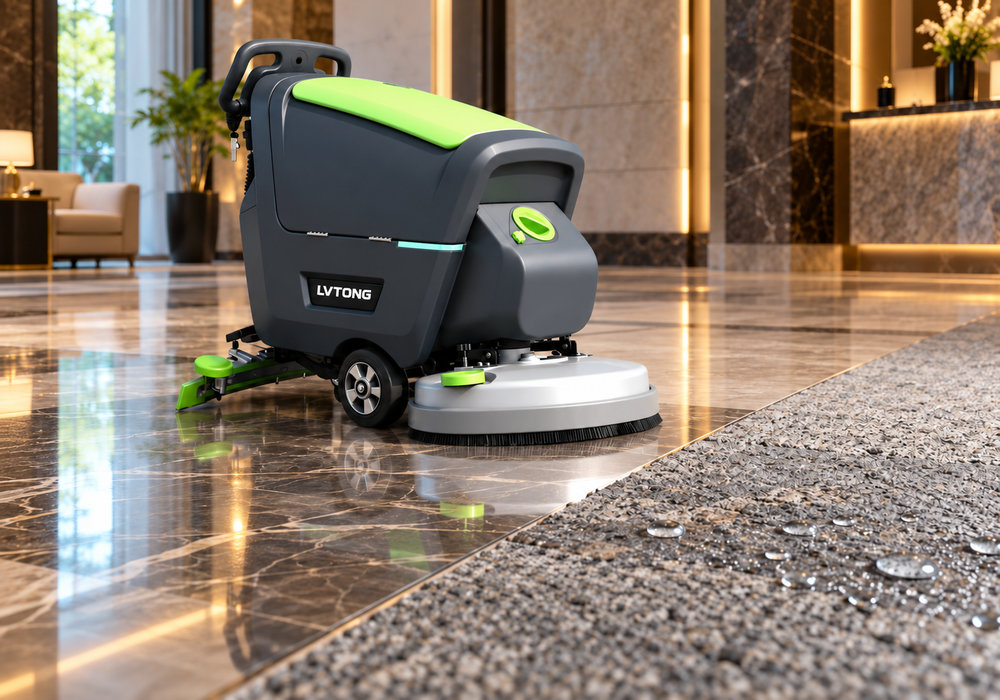
Identify your stone by its mineral family before you buy a machine: calcite stones such as marble, travertine, limestone and onyx are acid-sensitive, while silicate stones such as granite, quartzite and slate resist acid but scratch.
The split comes down to chemistry. Calcite stones are built mainly from calcium carbonate. That mineral reacts with acid, and the reaction is not a stain you can scrub out — it removes a microscopic layer of the surface, leaving a dull, lighter-grey mark. It is called etching, and on polished marble it is permanent. Vinegar, lemon juice, cola, some bathroom cleaners and acidic hard-water deposits all do it. Bodies such as the Natural Stone Institute group stone by mineralogy for exactly this reason.
Silicate stones are built from harder, acid-resistant minerals. A granite floor scrubber rarely needs to worry about a mild acidic spill, but granite, quartzite and slate can still be scratched by grit and by overly stiff brushes, and their sealers can be stripped by harsh alkaline cleaners. Two families, two risks, one conclusion: name the stone before you name the cleaner.
The Two Ways Stone Gets Damaged
Stone fails in two distinct ways: chemical etching dulls calcite surfaces, and physical abrasion scratches grit across any finish. A scrubber programme has to control both at once.
Etching is the chemical path: invisible in the bucket, obvious in the light — a blotchy, matte patch where a polished finish used to reflect. Abrasion is the mechanical path: grit that is not recovered — tracked-in sand, dried debris, loose grout crumbs — rides under the brush or pad and cuts fine lines. On honed or flamed stone those lines blend in; on a polished finish they scatter the reflection and read as a scuff.
For equipment the meaning is the same either way: put down the right chemistry, lift the dirty water reliably, and keep brush and pad aggression adjustable rather than fixed high.
Why Neutral pH Is Non-Negotiable on Marble and Travertine
On calcite stone, use a neutral pH cleaner — around pH 7 to 8 — and never an acid. Any acid strong enough to cut grease is strong enough to etch marble, travertine, limestone and onyx.
This is the most common way a marble floor cleaning machine leaves a floor worse than it found it. An acidic descaler or vinegar-based dilution works well on porcelain and ceramic; on calcite stone it attacks the surface itself, and the clean-water tank becomes the delivery system for the damage.
Neutral pH also protects the sealer. Most stone carries a penetrating sealer that sits inside the pores rather than on top, and aggressive alkaline degreasers wear it back. A pH-neutral stone cleaner lifts everyday soil — traffic film, light oil, dust — without touching the mineral or the sealer underneath. For heavy grease, raise dwell time with a neutral solution rather than a stronger chemical.
Brush, Pad and Pressure: What Will Not Dull a Polished Finish
For polished and honed stone, fit a soft brush or a non-abrasive pad — a white or light-coloured cleaning pad — and run light brush pressure. Stiff brushes and black stripping pads belong on unsealed concrete, not on stone.
Brush aggression is the parameter buyers underestimate. A soft or medium brush lifts soil from the surface while flexing over the stone; a stiff brush grinds grit into it and dulls a polish over months. On polished surfaces many operators skip the brush entirely and run a cleaning pad under the brush deck, which spreads the load and removes soil without scuffing.
Pressure compounds the choice. A machine that lets you reduce brush pressure — or simply rests its own weight — is kinder to stone than one that forces the deck down, and deep-set soil should be handled by longer dwell time, not a harder press. If the shine has gone through traffic wear rather than damage, that is a polishing job, not a scrubbing one — see our floor scrubber polisher guide for that side. Ceramic or porcelain tile with grout lines is a different problem again; our tile and grout scrubber guide covers it.
Water, Squeegee and Dwell: the Mechanics of a Streak-Free Stone Scrub
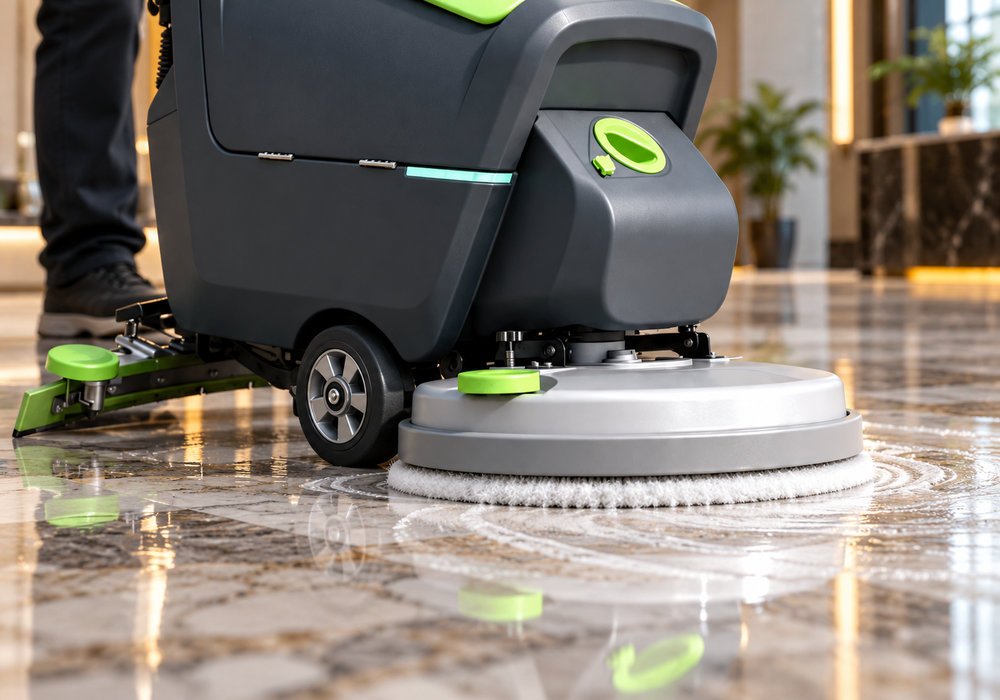
A stone floor scrubber earns its keep through water control: put down enough solution to float the soil, recover it completely with a clean squeegee, and leave nothing behind to dry into streaks or haze.
Stone shows water marks. Where vinyl forgives a patchy dry, polished marble keeps the outline of a puddle all day — so three habits matter more than on other floors. Keep the squeegee blades clean and angled for full recovery. Dump the recovery tank before it reloads the solution with grit. Match water to the surface: sealed, polished stone needs surprisingly little, and unsealed stone or porous grout wants less still.
Dwell is the lever for stubborn soil. Let a neutral solution sit for the contact time on a traffic lane, then scrub and recover, instead of doubling the chemical. The goal is a floor that dries with an even, unbroken gloss.
Polished, Honed or Flamed: Match the Machine to the Finish
The finish decides your brush, pad and drying expectations: polished stone shows every scuff and streak, honed and matte finishes hide fine marks but trap soil in texture, and flamed or brushed stone needs more water and a more textured brush to reach the surface.
Polished stone is the most demanding: it reflects light, so it reflects every mistake — a dull brush, a loaded squeegee, a stray grain of grit. Honed stone, with its satin surface, hides fine marks but its slightly open texture holds soil, so coverage matters more than shine. Flamed or brushed finishes are deliberately rough; they hold grit and need firmer agitation and more water, but they never show a scuff.
The mistake is one brush setting for a building with several stone finishes: a flamed granite entrance and a polished marble lobby want different brush decks on the same machine.
Terrazzo and Engineered Stone: the Exception Cases
Terrazzo and engineered stone break the simple rule: what is safe depends on the binder. Cement-based terrazzo behaves like calcite and is acid-sensitive, while epoxy terrazzo and resin-based engineered quartz resist acid but can be dulled by abrasion and harmed by strong solvents.
Traditional terrazzo binds marble chips in a cement matrix — so a terrazzo floor cleaning machine needs the same neutral-pH discipline as marble, because the cement and the chips are both acid-sensitive. Epoxy terrazzo swaps cement for resin and resists chemicals far better, which is why resin terrazzo and engineered quartz dominate heavy-traffic commercial work. Both still respond badly to abrasive pads, and both rely on a sealer or densifier for their finish.
The takeaway is the same as everywhere on stone: confirm the binder, then decide the chemistry — do not assume every mottled stone floor is the same product.
Machine Sizing by Stone Facility
Size the stone floor cleaner machine to the area and the access, not to the stone: a 50 cm walk-behind stone floor scrubber suits tight lobbies and boutique spaces, while a ride-on stone floor cleaning machine covers large atriums, malls and concourses with long, open runs.
| Setting | Typical stone | Machine class | Why |
|---|---|---|---|
| Boutique hotel, bank branch, restaurant entrance | Polished or honed marble, travertine | Compact walk-behind (≈50 cm cleaning width) | Tight geometry, low-gloss risk; the Q5 fits narrow approaches and is gentle to specify |
| Hotel lobby, office atrium, retail mall aisle | Polished marble, terrazzo | Walk-behind or mid ride-on (LT-S530X / V6) | 50 cm body width slips through service doors and 0.8 m aisles while covering the open floor |
| Airport concourse, large mall, convention centre | Terrazzo, granite, large-format stone | Ride-on (V6 and larger) | Long runs reward riding and large tanks; still run a soft brush for the finish |
Is one machine enough for a mixed stone building? Often yes — a walk-behind with two brush decks, one soft for polished areas and one firmer for flamed entrances, covers the whole route, and either deck runs on the same stone floor scrubber machine. For a full walk-through of matching deck, tank and battery to a site, see our facility-level floor scrubber selection guide. At the small end, the Q5 industrial walk-behind floor scrubber and the LT-S530X walk-behind floor scrubber machine; for large open stone, the V6 ride-on floor scrubber.
A Stone Maintenance Cadence: Scrub, Test, Re-Seal
Build a three-step cadence: scrub daily with neutral pH, test the sealer with a water-bead check each quarter, and re-seal before water stops beading — protection is cheaper than restoration.
Daily cleaning keeps the abrasive load down, the cheapest protection a stone floor has. A quarterly water-bead test shows whether the sealer is working: drip a little water on; if it beads and stands, the sealer holds, and if it darkens and soaks in, it is time to re-seal. Catching that early costs a sealer application; missing it costs a honing and re-polish.
Re-seal intervals depend on traffic and stone — a busy entrance may need it yearly, a quiet office far less often; let the water tell you rather than waiting for a visible stain. Slip resistance deserves a parallel check: cleaning should leave the surface no more slippery than its original finish, measured by recognised slip-test practice such as that published by the National Floor Safety Institute. Machine safety is a third baseline — equipment built to a recognised appliance standard such as IEC 60335-2-72, and certified by a body such as UL Solutions, is the sensible minimum.
Frequently Asked Questions
Can I use a normal floor scrubber on marble?
Yes, with two conditions: neutral pH solution and a soft brush or non-abrasive pad. A stone floor cleaner machine is safe on marble as long as the chemistry does not etch it and the brush does not abrade the polish.
What cleans stone floors without etching them?
A pH-neutral stone cleaner, used with adequate dwell time and full water recovery. Avoid acidic descalers and vinegar-based mixes on any calcite stone, including marble, travertine and limestone.
How often should a stone floor be re-sealed?
Test rather than guess: when a water-bead test stops beading, it is time to re-seal. In practice that is roughly yearly in heavy traffic and every few years in light domestic-style use.
Does a stone floor cleaning machine also polish?
No. A scrubber cleans; polishing uses a different machine and pad set to restore gloss. If a floor is simply dirty, scrub it; if it has lost its shine, that is a polishing task, and the two should not be confused.