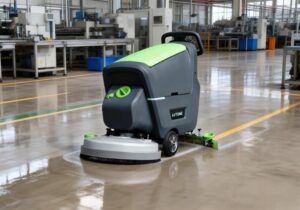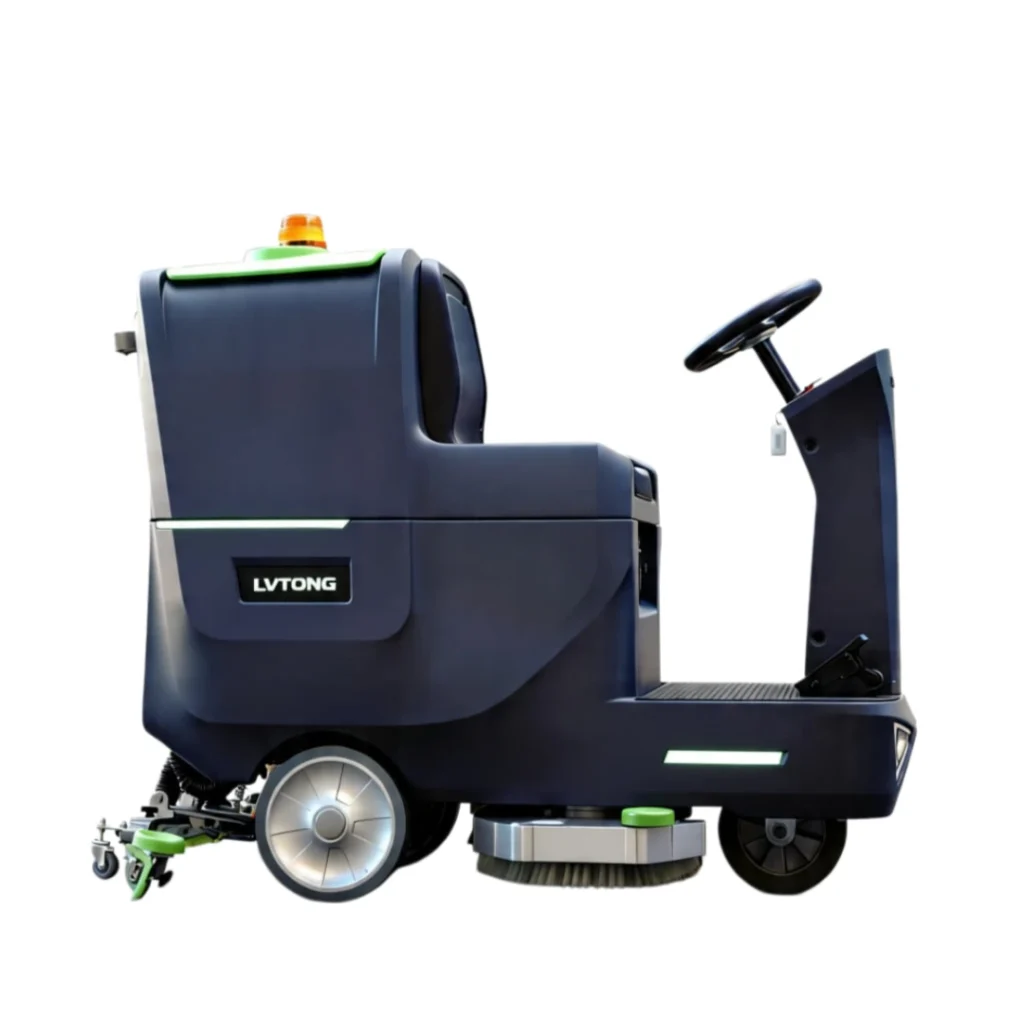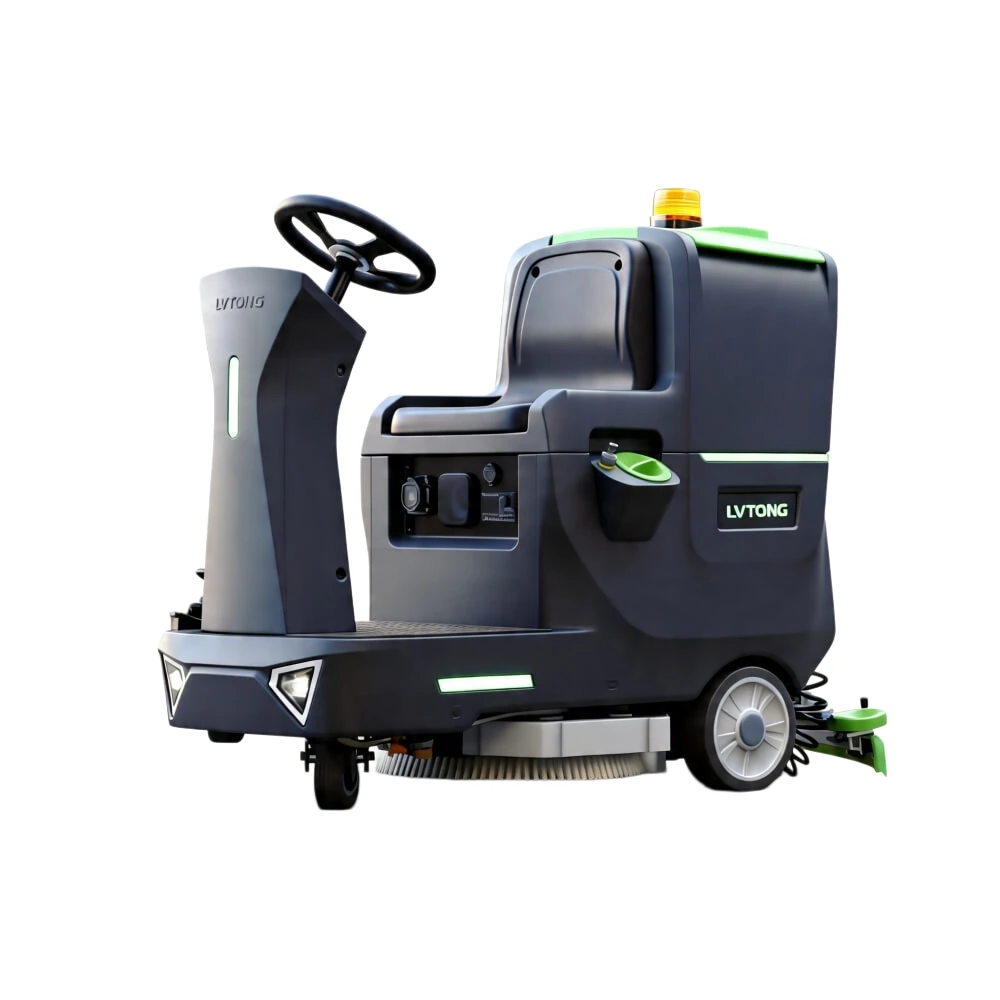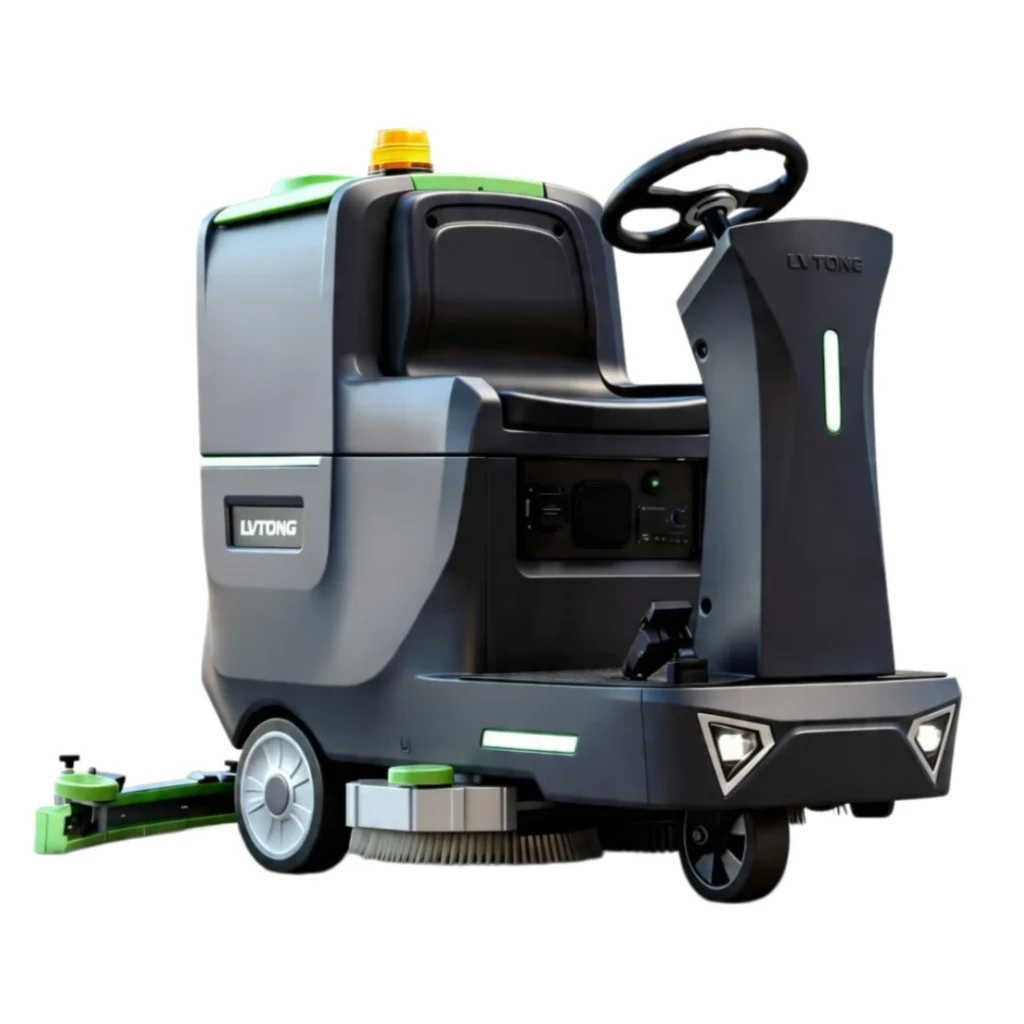
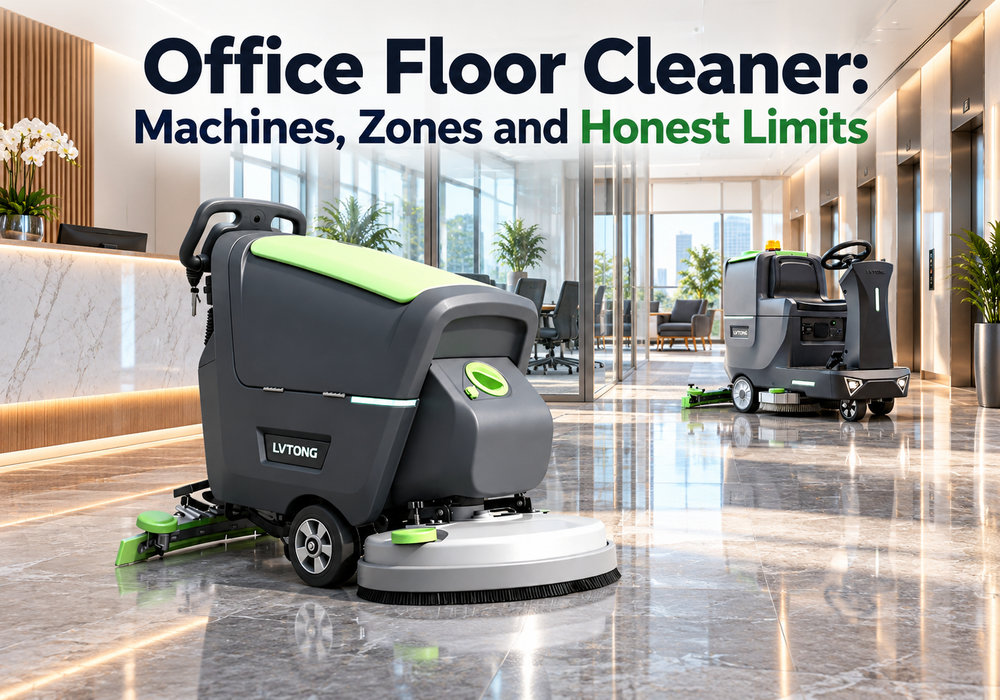
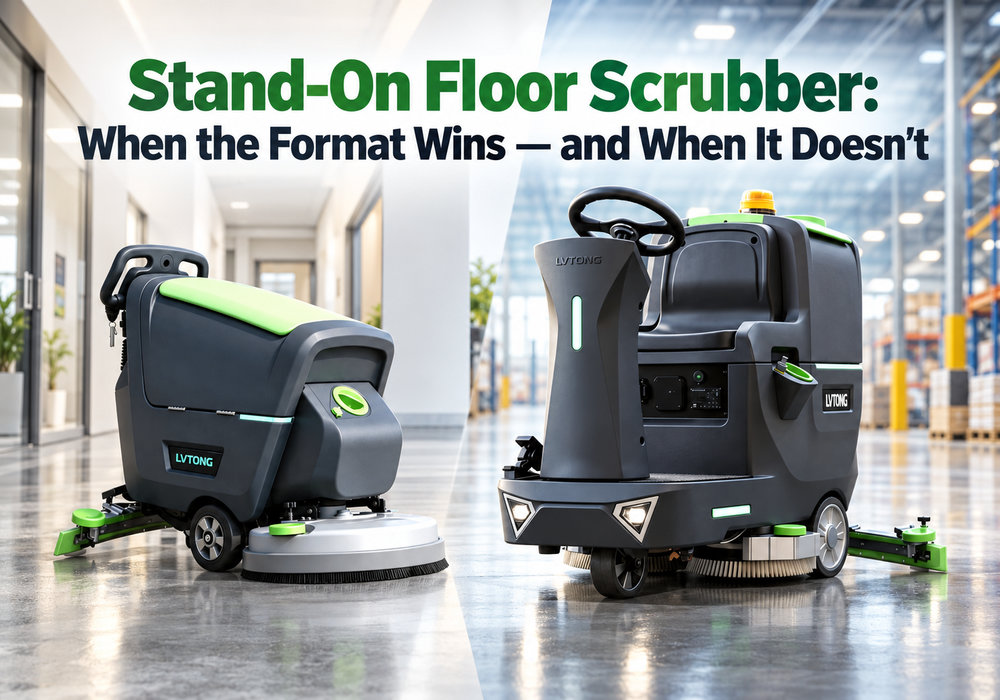
An office floor cleaner has a narrower job than most buyers assume. In a typical office building the tenant areas are carpet, and no scrubber — walk-behind, stand-on or ride-on — belongs there. The machine’s business case lives entirely in the hard-floor share: the lobby, lift lobbies, corridors, washroom approaches, kitchenettes and the podium parking deck. Map that share honestly and the purchasing decision becomes straightforward; skip the mapping and the machine arrives to clean floor it was never meant to touch.
QUICK ANSWER
An office floor cleaner machine earns its keep on the hard-floor zones of an office building — entrance lobby, lift lobbies, main corridors, washroom approaches, kitchenettes and podium parking — while tenant carpet is cleaned by other methods entirely. Size and schedule the machine around those zones.
- Start with the hard-floor share. Measure the machine-cleanable area before comparing machines; it is usually a fraction of the lettable area.
- Build the route around the after-hours window — lifts, security and noise rules shape the route more than floor area does.
- Compact walk-behinds fit most office geometry; a small ride-on only pays where podium or garage hard floors run long and open.
- Decide who the machine serves: building management cleans common areas; tenants clean their own demise — the fleet follows the contract.
Below: the zone map, the business case, the after-hours route, daytime-cleaning rules, machine matching, and the buyer’s checklist for towers.
What Does a Floor Scrubber Actually Cover in an Office Building?
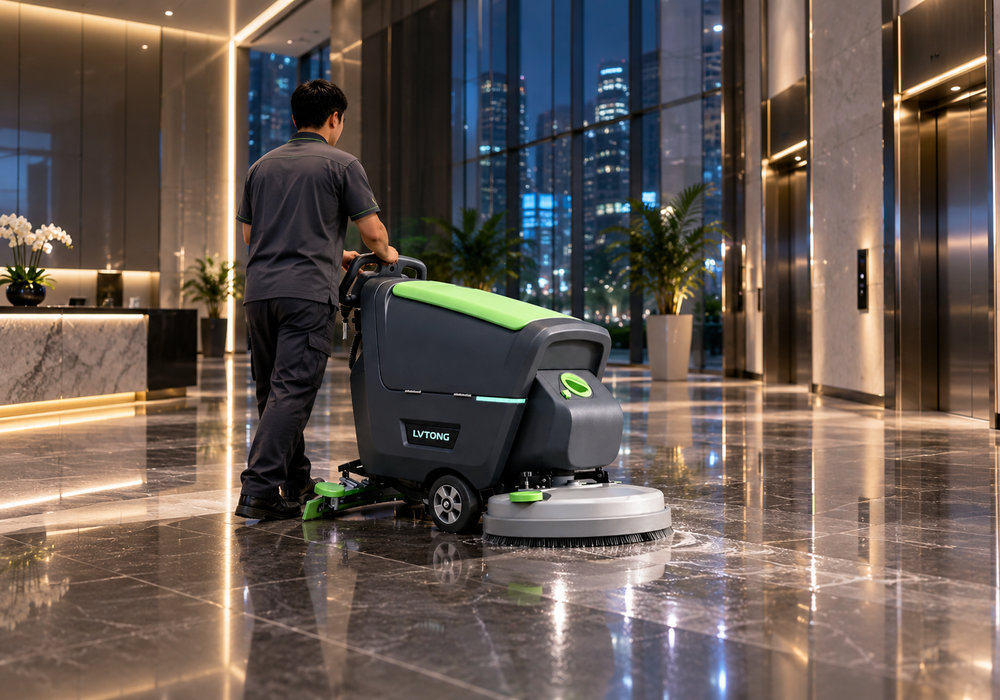
Only the hard-floor common areas and hard-floored tenancies — a floor scrubber never touches carpet, and in most office buildings carpet holds the majority of the lettable area.
This is the first conversation to have, because it reframes the budget. A 15,000 m² office tower might carry 9,000–10,000 m² of carpeted tenant floors and 5,000–6,000 m² of hard common-area flooring: entrance lobby, lift lobbies on every floor, connecting corridors, washroom approaches, kitchenette and break areas, back-of-house service corridors, and the podium or basement parking deck. The floor scrubber cleans that second number, not the first.
Stating the boundary plainly prevents two common failures: buying a machine sized to the full lettable area (overspend) and discovering mid-contract that the machine spends its shifts idle because the routes it was bought for are carpet (wrong tool). A floor scrubber for office buildings is a common-area machine first and a tenancy machine only where tenants hold hard-floored floors.
Which Office Zones Are Machine-Cleanable — and Which Aren’t?
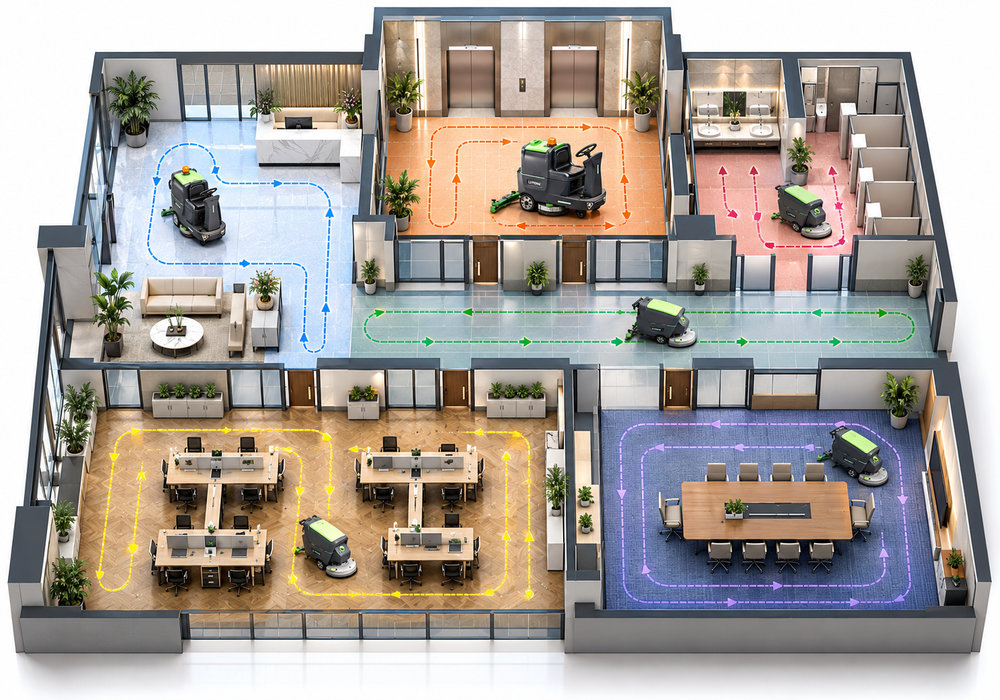
Six zones carry the machine’s work; everything carpeted stays out of scope.
| Zone | Typical surface | Machine fit | Typical frequency |
|---|---|---|---|
| Entrance lobby | Stone, terrazzo, polished porcelain | Compact walk-behind; ride-on only in very large lobbies | Daily, often twice |
| Lift lobbies / lift cars | Stone, tile | Walk-behind or micro machine for cars | Daily |
| Main corridors | Carpet in tenancy, hard in core | Walk-behind on the hard core runs | Daily |
| Washroom approaches | Tile, porcelain | Compact walk-behind, tight turning | Daily, spot as needed |
| Kitchenettes / break areas | Vinyl, tile | Small walk-behind or manual where rooms are tiny | Daily |
| Podium / basement parking | Concrete, coated concrete | Ride-on where area justifies; sweeper-scrubber logic applies | Weekly to daily by soil |
An office lobby floor cleaning machine faces the most demanding brief of the six: highest visibility, heaviest entrance-borne soil, and often natural stone that narrows the chemical and pad choice. It is the zone that justifies the machine; the parking deck is the zone that justifies the ride-on.
Why the Hard-Floor Share Decides the Business Case
Machine cost should be sized against the hard-floor share, not the building — the ratio explains why identical towers can justify different fleets.
Two towers with the same lettable area can hold very different hard-floor shares: one with stone cores and a large podium garage, another with carpeted corridors and basement parking on a different title. The first might justify a compact walk-behind plus a small ride-on; the second might justify one walk-behind and a careful weekly route. This is the same discipline used across our facility-level floor scrubber selection guide — machine follows measured area and route, never the address.
Machine-cleanable area = lobby + lift lobbies + hard corridors + washroom approaches + kitchenettes + parking deck
Convert the area into a route time budget using realistic coverage — the adjustment method in our note on cleaning times and machine productivity applies directly, because office routes are short, interrupted and turn-heavy, which is exactly where nominal coverage figures overstate reality.
How to Build the After-Hours Office Cleaning Route
The after-hours window — not the floor area — is the binding constraint: every route must fit between security lock-up and first occupation, across lifts that serve the whole building.
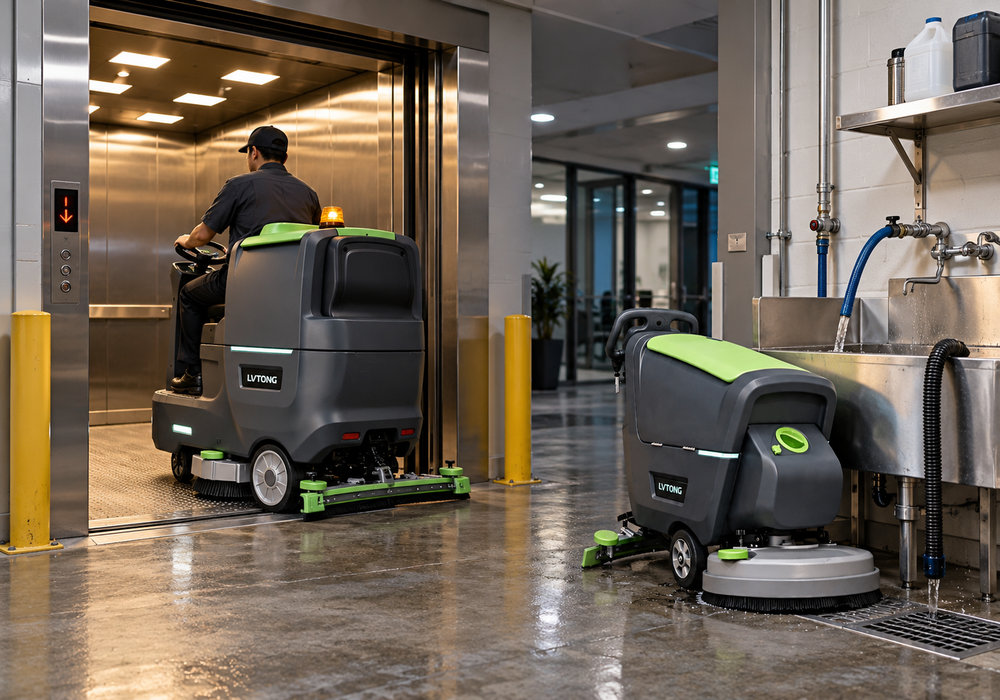
An office route has a fixed envelope: typically two to four hours between the last tenants leaving and the first cleaners finishing ahead of early arrivals. Inside that window the machine must travel from its storage point, be filled, run the route across multiple floors via passenger or goods lifts, be dumped, cleaned and recharged or swapped. Build the route backwards from the window: fill and dump points first, then lift sequence, then zone order from the farthest floor back toward storage.
Three practical rules keep the route honest. Dedicate the goods lift where one exists — sharing passenger lifts with the route is the most common source of missed zones. Store the machine on a floor with a floor drain or plan the dump point into the route. And sequence the lobby last or first by security preference, since it is the one zone where a wet floor is visible to the public and needs either a dry pass or coning per the building’s walkway safety practice (NFSI publishes widely used guidance on managing wet walkways).
Can You Machine-Clean an Office During Working Hours?
Yes for selected zones and machine types — daytime cleaning works where the machine is quiet-running, the zone can be sectioned, and the route avoids meeting-driven traffic peaks.
Daytime cleaning has moved into office operations because building owners want visible cleaning and extended services without extending the night crew. It suits the lobby and entrance zones — high visibility, continuous light soil, and a route that a compact walk-behind can cover in segments between pedestrian waves. It does not suit every building: listed-machine electrical safety conventions (IEC 60335-2-72) and third-party listing programmes such as UL Solutions are the baseline signals to check on any machine that will share floor with the public, and the building’s own rules on cordoned zones and wet-floor signage apply during occupation.
The workable split for most towers: daytime covers the lobby and entrance zone in light passes; the after-hours route covers everything else. Splitting the work this way shortens the night window, which is often the real reason a route fails to fit.
Which Office Floor Cleaning Machine Fits Which Zone?
Compact walk-behinds cover nearly every office zone; a small ride-on earns its place only where podium or garage hard floors run long and open.
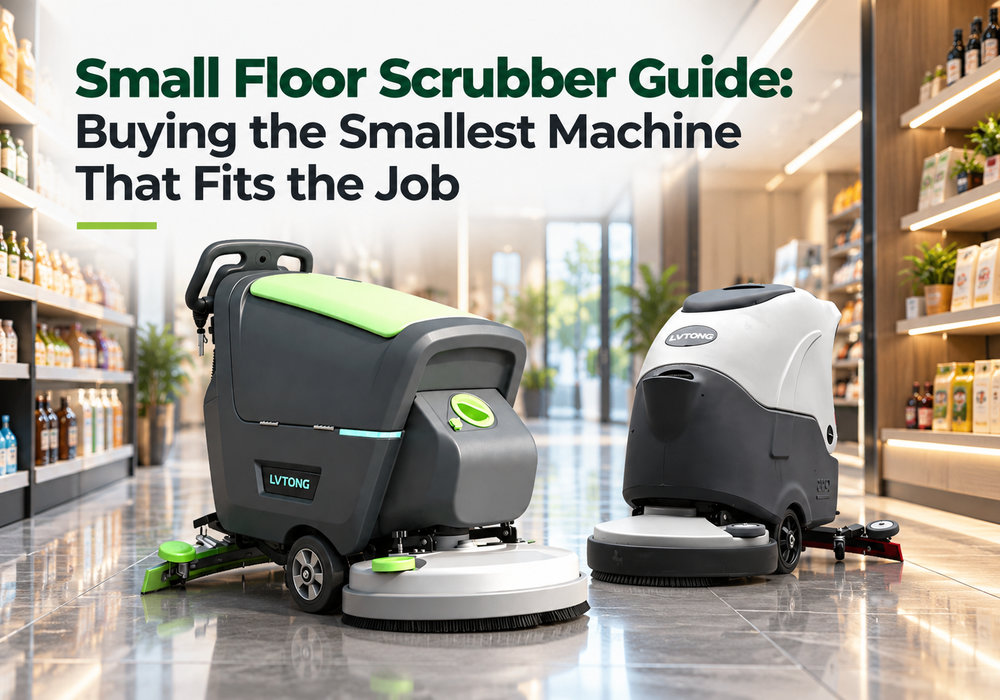
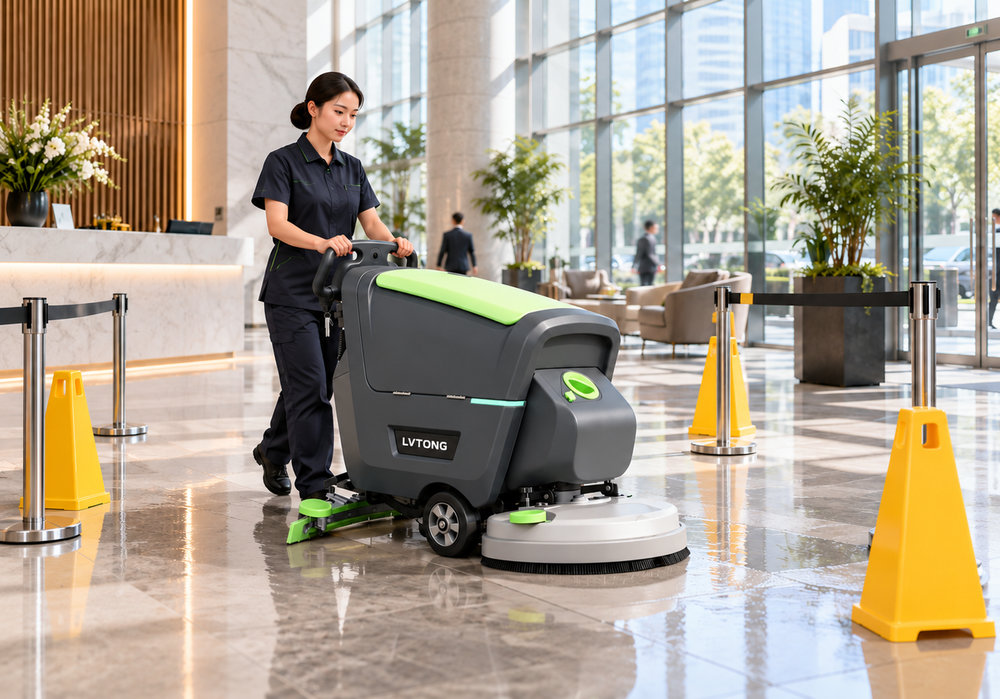
Office geometry — lift lobbies, corridors, washroom approaches — favours the smallest machine that still meets the coverage budget. A compact walk-behind such as the LT-S530X walk-behind floor scrubber is built for exactly this case: a 50 cm body width that enters 0.8 m aisles and tight washroom approaches, with 62 L clean and 65 L recovery tanks sized for multi-floor routes without mid-route refills. Where the kitchenettes are tiny and numerous, the same machine handles them as route stops rather than buying a second micro unit.
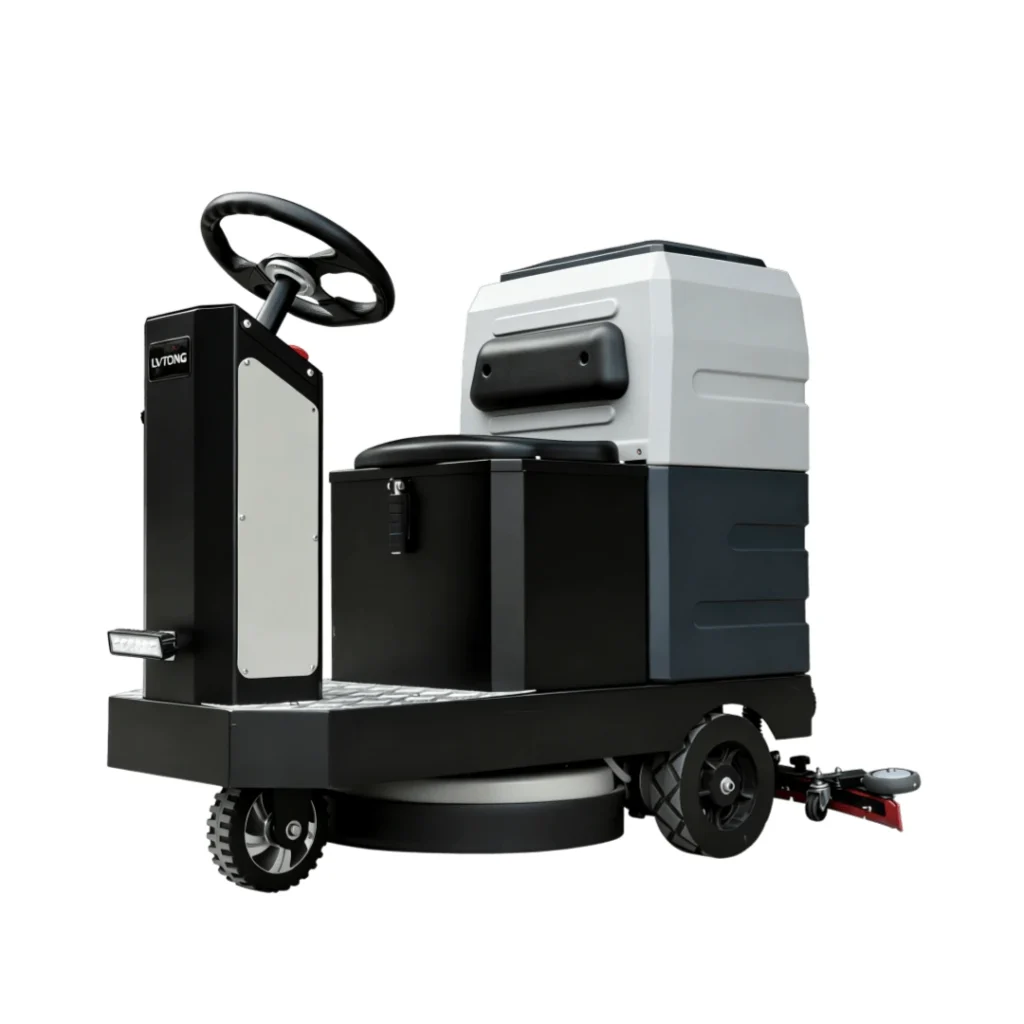
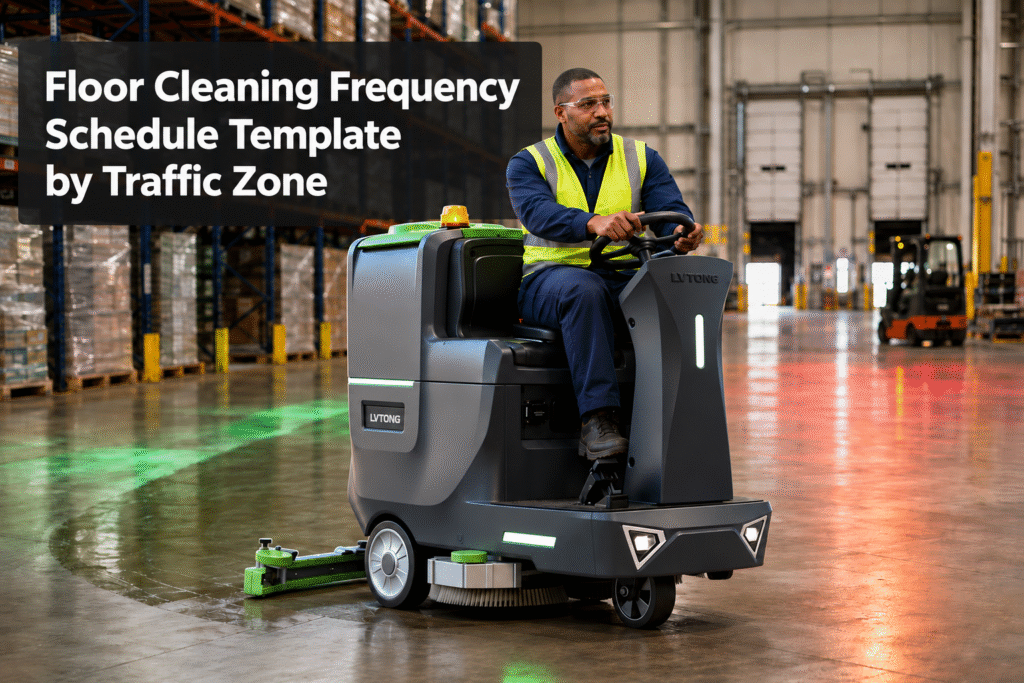
A small ride-on only enters the office picture where the podium or parking deck is large, open and heavily soiled — the ride-on class starts at models like the LT-S560X for those decks. If that describes your building, our compact floor scrubber guide covers the small-format decision in depth.
Building Manager or Tenant: Who Buys, Who Benefits?
The machine belongs to whoever holds the common-area cleaning contract — the fleet follows the service agreement, not the floor plate.
In multi-tenanted towers the building manager or FM contractor cleans common areas and buys the machine; tenants clean their own demise, usually with their own contractors. In single-tenant or owner-occupied buildings the split disappears and one fleet serves the whole floor plate. The distinction matters commercially: an FM contractor bids the machine into the contract as part of the service rate, so the hard-floor share calculation above becomes part of the tender maths, while a building owner buying for common areas needs the machine to justify itself in service quality and complaint reduction on the most visible zones.
For procurement teams assembling the wider equipment set around the machine — vacuum care for the carpet share, washroom kit, consumables storage — our commercial cleaning equipment list covers the full checklist by facility type.
What to Check Before Committing a Machine to an Office Tower
Four site checks decide feasibility: lift car dimensions, storage and drain location, water access per floor, and the after-hours security envelope.
Measure the goods lift car and door opening against the machine — most tower constraints are vertical transport, not corridor width. Confirm a storage point with drainage, or plan the dump point into the route. Check water access on the floors where filling would happen. And walk the after-hours window once with security: doors, alarms, and lift access hours are the facts that turn a route plan from paper to shift. Run one supervised trial night on the real route before signing, and judge the machine on zones completed within the window, not on area per hour.
Frequently Asked Questions
Can a floor scrubber clean office carpet?
No. Floor scrubbers are hard-floor machines; carpet in tenant areas is maintained with vacuuming and periodic extraction, which are different equipment categories. Count only the hard-floor zones when sizing an office floor cleaning machine.
What is the best machine for office lobby floors?
A compact walk-behind scrubber for most lobbies — quiet enough for daytime passes, agile enough for lift lobbies and entrance matting edges, with tanks sized for a multi-floor route. Very large podium-style lobbies can justify a small ride-on.
How often should office hard floors be machine-cleaned?
High-visibility zones like the entrance lobby and lift lobbies take daily cleaning, often twice; corridors and washroom approaches daily; kitchenettes daily or by soil; podium and basement parking weekly to daily depending on traffic and season.
Who provides the machine in a multi-tenanted office building?
Usually the building manager or FM contractor holding the common-area cleaning contract. Tenants arrange their own cleaning within their demise, so the machine scope follows the service agreement’s common-area definition.
An office floor cleaner succeeds when it is bought for the zones it can actually serve — and the honest zone map is the first deliverable, before any machine comparison. If you are sizing machines for a tower’s common areas or bidding an FM contract, talk to our team about matching compact formats to office geometry.