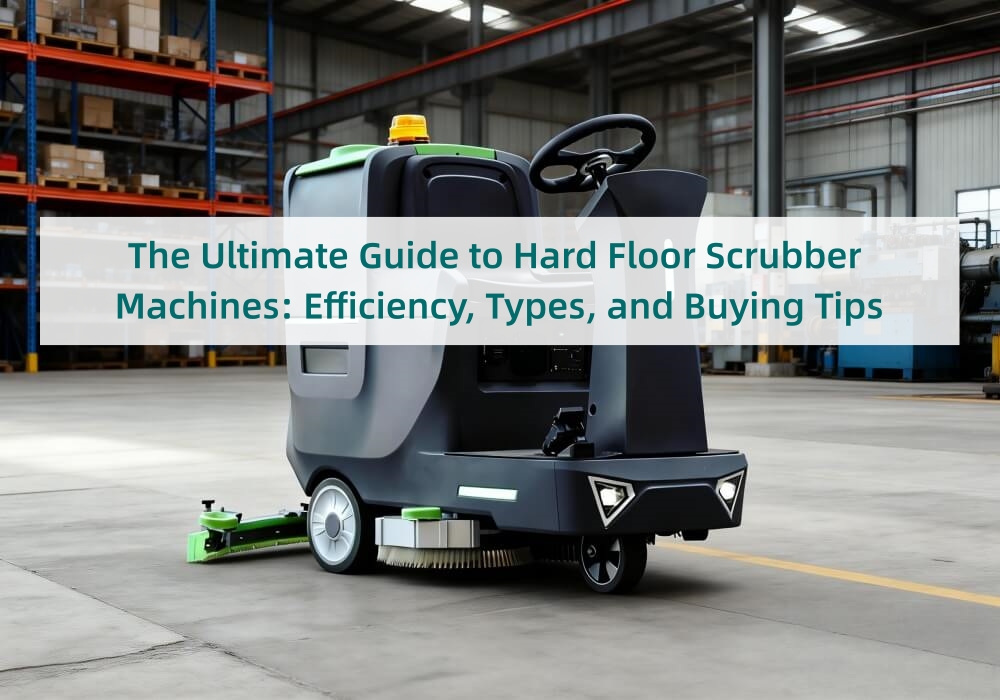
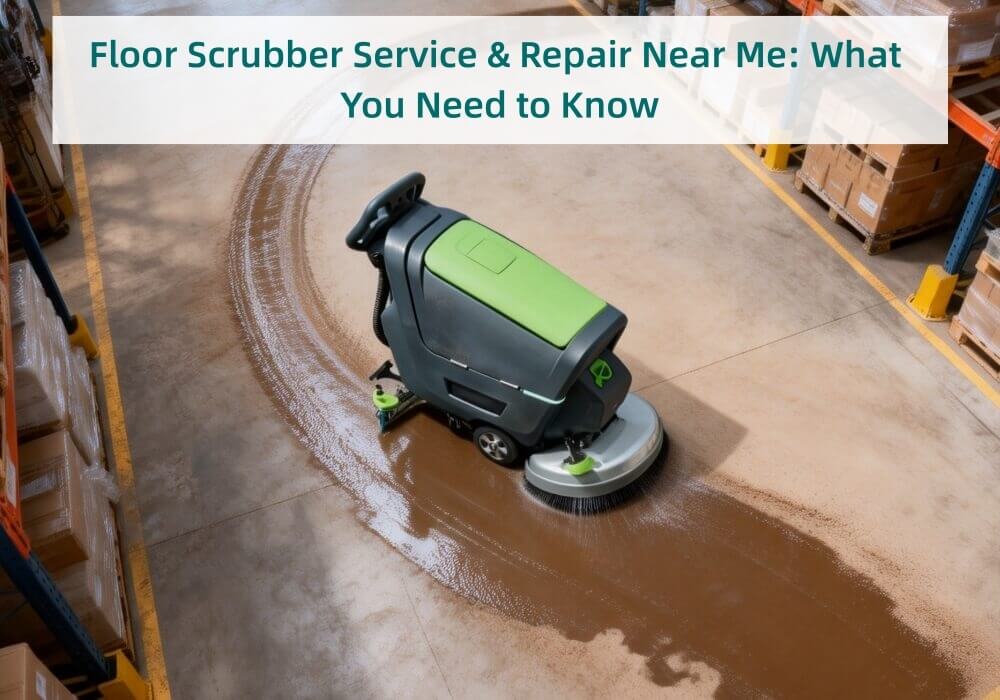
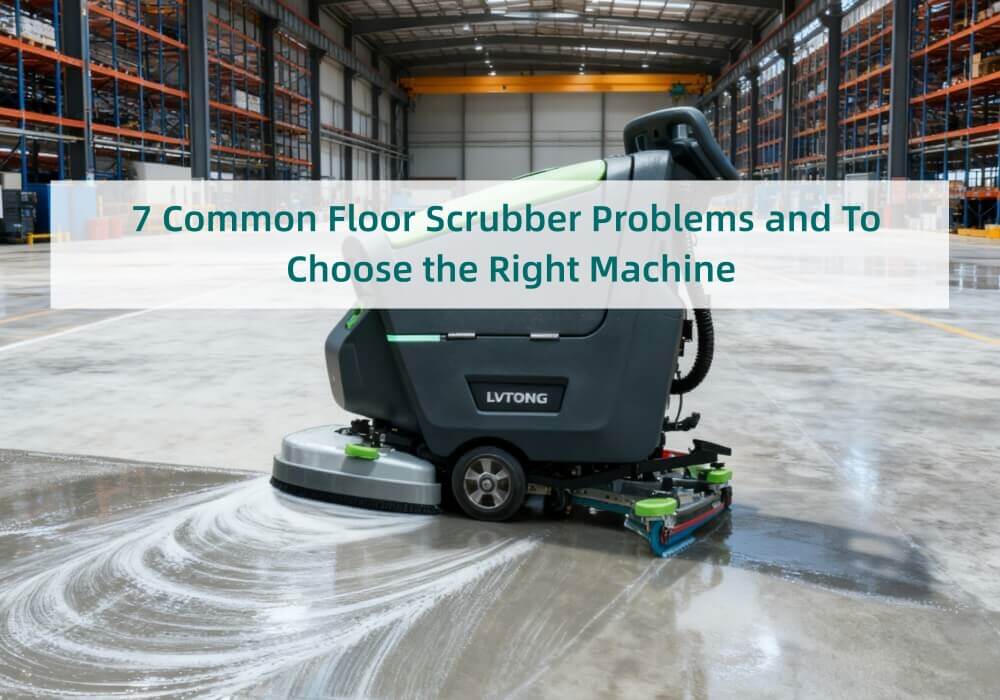
Industrial floor scrubbers tackle large areas quickly since they wash and dry in a single pass. To pick the best option, go for either the walk-behind or the ride-on versions based on your cleaning needs. Rather than using mops, these machines rely on various brushes - like circular pads, flat rotating heads, or orbital units - for more effective results.
In this full article, we’ll check out the differences between walk-behind and ride-on scrubbers - then see which brush types work best on different floors.
Understanding Industrial Floor Scrubber Types and Technology
A floor scrubber uses brushes along with squeegees and vacuums to clean and dry floors in one go. You’ll mostly find them in two main types:

- Compact machines for spots smaller than 5,000 m²
- You will find these floor scrubbers working in tighter spaces while still providing powerful cleaning. For example, models like the Lvtong Q5 walk-behind scrubber are popular choices for schools and retail shops.
- Ride-on machines suit big places over 5,000 m²
- They maximize operator comfort and cleaning speed for warehouses and airports. A workhorse like the Lvtong LT-S560X Industrial Ride-on Floor Scrubber Machine is designed for this kind of large-scale task.

Every setup uses particular brush types built for various messes - some tackle dirt better, others handle grime more easily
- Cylindrical brushes spinning at 600 to 800 RPM work well on bumpy floors, pulling dirt along as they go
- Spin pads (~300 turns/min) on slick surfaces or heavy-duty tasks
- Spin units - max 2,250 turns per minute - for scrubbing without chemicals, also tidy up corners
A Real-World Example: Choosing the Right Brush
Imagine a food processing plant. Their challenges are:
- Grout gaps: Tiles on the floor hold bits of food in their deeper seams because they're hard to clean out.
- Bits of trash: tiny pieces from wrappers or dirt floating around.
- Greasy Buildup: Oily leftovers around production spots.
The Solution:
- On regular days, they clean with a round brush machine. Fast-spinning bristles push dirt out of cracks - funneling it into a bin while wiping down tiles at the same time.
- On tough, oily spots, they could switch to a Lvtong disc scrubber like the LT-S710X Ride On Floor Scrubber. Heavy pressure works great to lift dried gunk off flat concrete right there.
Key Benefits of Modern Floor Scrubbers
Modern industrial floor scrubbers deliver measurable advantages across multiple operational areas:
- Clean gets done way quicker - like 1,400% speed boost compared to doing it by hand
- Water Conservation: Orbital models reduce water usage by 70%
- Labor Savings: Automated operation reduces staff requirements
- Improved Safety: Consistent drying minimizes slip hazards
- Environmental Impact: Reduced chemical and water consumption
- Quality Results: Uniform cleaning without streaks or swirl marks
How Much Faster is a Floor Scrubber Than Traditional Mopping?
A popular saying in the field is that scrubbers work way quicker than mops - up to 1,400% faster. Yet what’s behind that figure? Here’s how it adds up using basic math.
Assumptions:
- With hand mopping, someone might cover around 150 square meters in sixty minutes.
- A compact 24-inch walk-behind cleaner handles around 2,200 square meters each hour - so it’s quick but still easy to steer through tight spots.
The Calculation:
The boost in performance? Work it out using this equation:
Efficiency Increase % = (Scrubber Cleaning Rate ÷ Mop Cleaning Rate - 1 ) ÷ 100%
Putting our figures into the equation: (2200m² / hr ÷ 150m²/ hr -1) ÷ 100% ≈1367%
Check it out - speed gains near 1,400% aren't hype; they’re what usually happens. That kind of jump means places stay cleaner without needing more staff time. Want details? Our piece on scrubber ROI shows exactly where cash gets saved.
Comparing Walk-Behind and Ride-On Floor Scrubbers
| Feature | Walk-Behind Scrubbers | Ride-On Scrubbers |
|---|---|---|
| Ideal Facility Size | Under 5,000 m² | Over 5,000 m² |
| Maneuverability | Excellent in tight spaces, aisles, and around obstacles. | Good in open areas, but limited in confined spaces. |
| Operator Fatigue | Higher during shifts longer than 2-3 hours. | Retail stores, schools, hospitals, and small warehouses. |
| Cleaning Speed | Moderate (e.g., 1,500-2,500 m²/hr) | High (e.g., 4,000-7,000 m²/hr) |
| Best for | Retail stores, schools, hospitals, and small warehouses. | Large distribution centers, airports, manufacturing plants, and malls. |
| Initial Cost | Lower investment | Higher investment |
Selecting the Right Scrubber for Your Facility
Choose your floor scrubber based on these key factors:
Floor Type Matching:
- Tile/Grout → Cylindrical scrubbers
- Smooth/Polished → Disc scrubbers
- VCT/Epoxy → Orbital scrubbers
Facility Considerations:
- Size and layout
- Traffic patterns
- Debris type and volume
- Operating hours
- Storage capabilities
If your facility is primarily a large space like a distribution center, reviewing the specifics in the warehouse floor scrubber guide will be highly valuable. If you are debating whether an automatic floor scrubber is the correct general category for your needs, reviewing the fundamentals in choosing an automatic floor scrubber provides a strong foundation.
Performance and Maintenance Requirements
For optimal performance and longevity:
- Select appropriate brush pressure and RPM for your floor type
- Maintain proper battery care for cordless models
- Regular squeegee blade inspection and replacement
- Correct pad selection for specific cleaning tasks
- Scheduled preventive maintenance
The toughness and upkeep these automatic cleaners need usually follow general rules for business-grade gear safety. Staying up to code keeps things running smoothly - rules that groups like NEMA set for electric machines used commercially. On top of that, trade groups share plenty of tips about floor care, covering topics such as weight limits on decks or how to maintain brushes, info you can find through ISSA. Suppose you'd like to learn more about the key components and maintenance guidelines for floor scrubbers. In that case, you can read our article: A Guide to Floor Scrubber Parts: Maintenance, Repair, and Uptime to access the relevant information.
3 Common Mistakes to Avoid When Choosing a Scrubber
Beyond matching the scrubber to your floor type, savvy buyers avoid these costly errors:
1. Ignoring Aisle Width and Doorways: Forgotten aisle space or entry points? You picked a great floor cleaner for that big 10,000 m² warehouse - yet maybe it won’t squeeze through the slim hallway or into where it’s stored.
Pro tip: Get numbers on your trickiest passages, then match them with the unit’s width and how sharp it turns - but do this first, not after buying. On every Lvtong scrubber dryer product page, we clearly list the machine's dimensions and turning radius to help you make an informed choice.
2. Underestimating Battery Needs: A scrubber lasting only two hours will fall short if you need four. Instead of trusting the claimed runtime, think about real-world use - pushing hard or going uphill eats up power quicker. Go for a bigger battery, say lithium, or pick a model where you can swap packs when working long stretches.
3. Choosing the Wrong Brush for the Debris: Picking the wrong brush means messier cleanup - like using a disc pad on big stuff such as nails or splinters, which only shoves them aside. Instead, when you’ve got tiny junk scattered around, go for a roller-style cleaner that scrubs while gathering gunk in one pass.
Conclusion
Picking the correct floor scrubber matters - it boosts how clean and smooth things run at your place. The ideal one matches your room size, flooring material while suiting daily tasks.
At Lvtong, we’re not about selling floor scrubbers- we focus on real cleanup answers. Our team’s set to break down what you need, then point you toward the right scrubber, maybe a compact push unit or a heavy-duty sit-down type.
Looking for the best floor scrubbers? Get in touch now for a no-cost chat - or check out our complete lineup of heavy-duty cleaning machines.