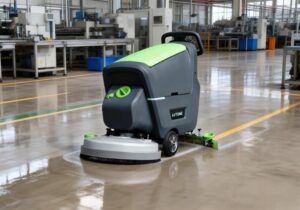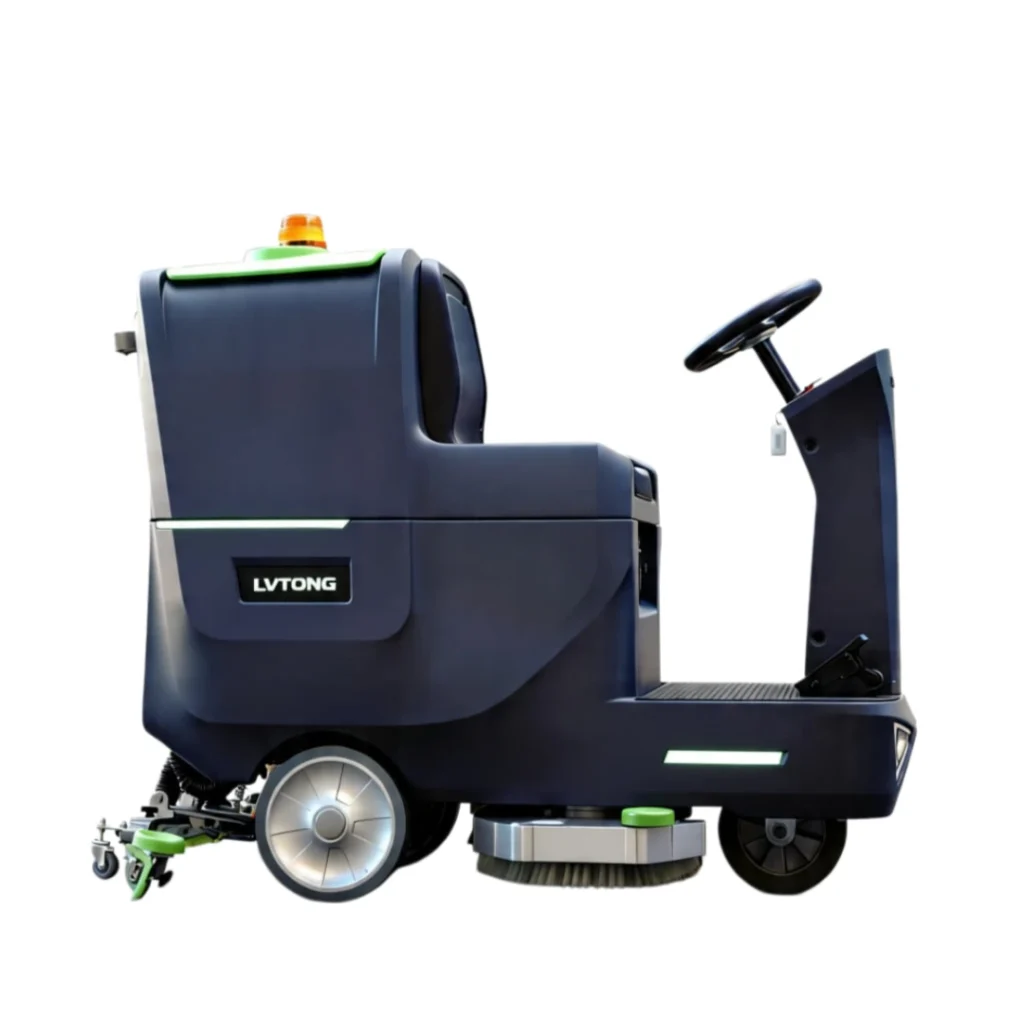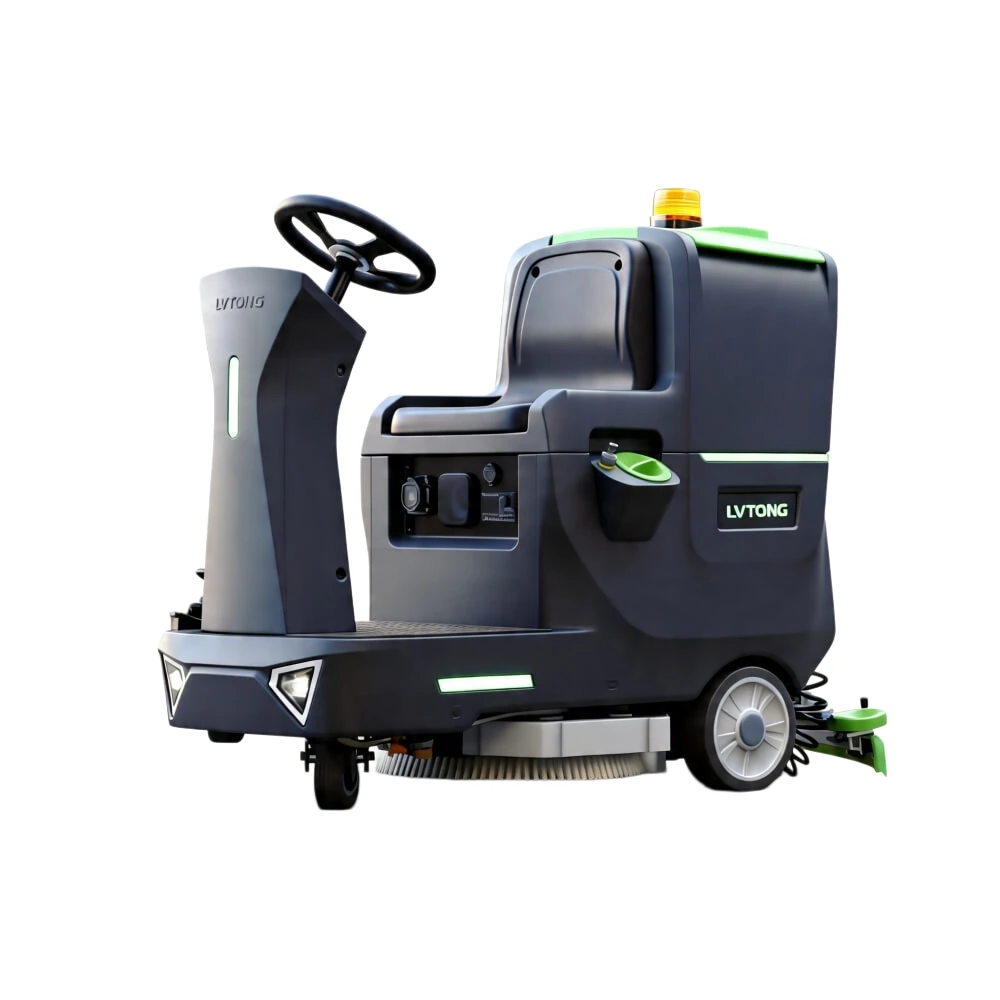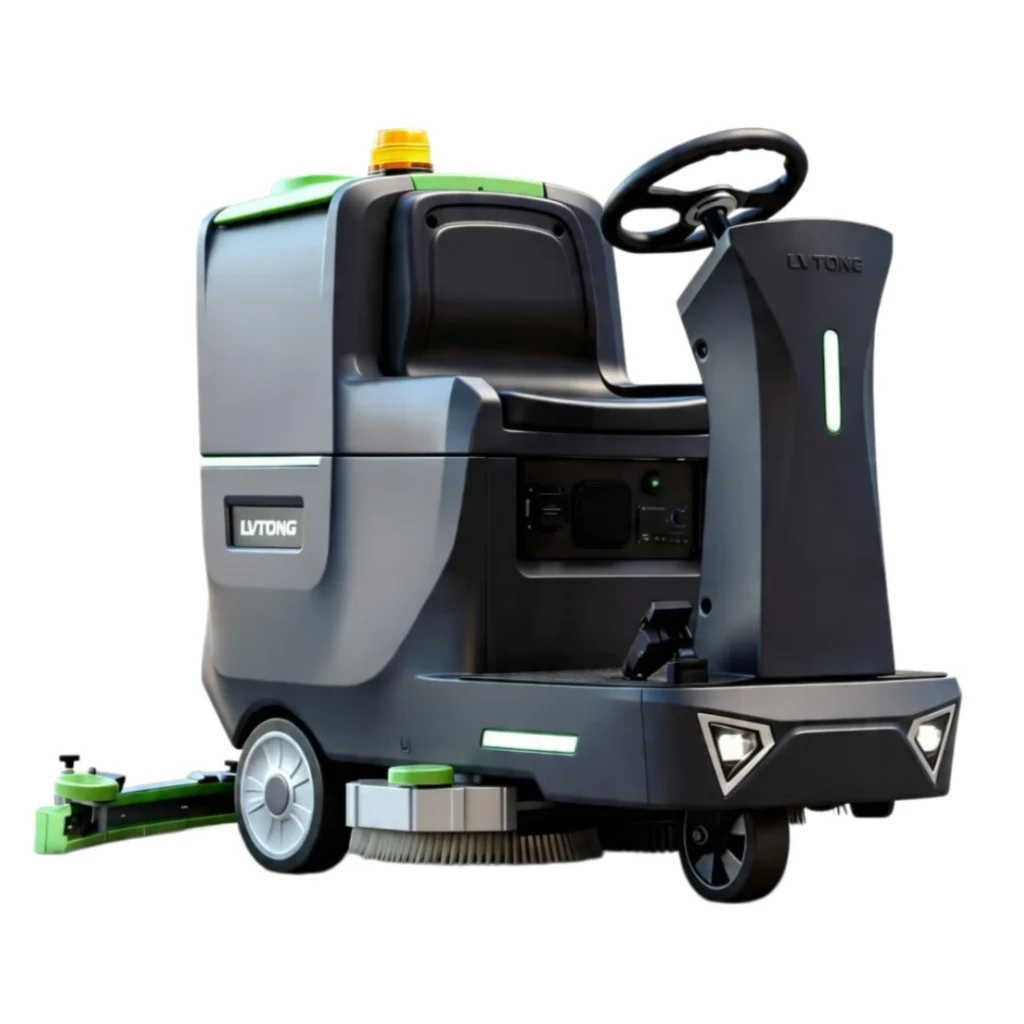
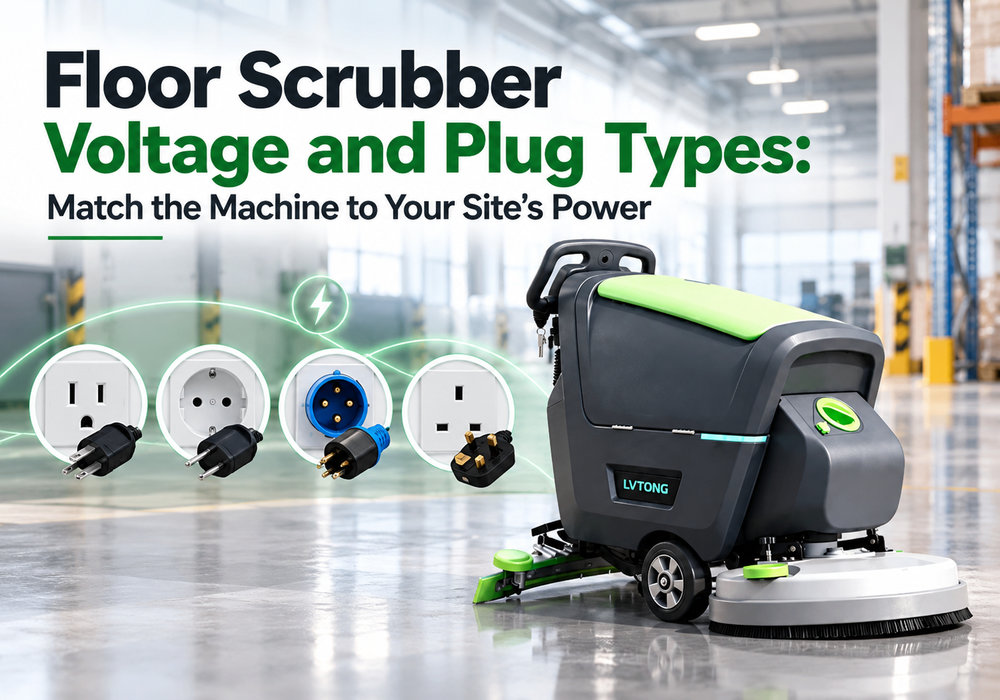
Divided stores, schools, workshops, and narrow aisles often point toward a walk-behind floor scrubber because access and turning control shape the route. In a 5,000 m² warehouse with open travel lanes, the ride-on category deserves early comparison once obstacles, refill points, and drainage access are checked. Factory floors with dry dust, metal particles, packaging debris, tire marks, and wet soil on the same route may need a sweeping plus scrubbing workflow or a separate sweeper plus scrubber dryer.
Site conditions narrow the options. Floor surface, soil type, aisle width, turning space, refill points, drainage access, battery setup, and traffic reopening time all shape the final machine choice. Use these criteria to compare floor scrubber options before selecting a model.
When Floor Area, Soil and Drying Time Require Machine Cleaning
Machine cleaning is worth comparing when crews cannot finish the route before traffic returns, when soil needs repeated passes, or when wet areas stay open too long after cleaning. Mops still handle small spills and corners. Larger commercial and industrial spaces need stronger brush action, cleaner water control, and dirty-water recovery.
Warehouses may deal with forklift marks and concrete dust. Food processing areas may have wet residue and oil. Schools and shopping centers often need quiet cleaning and fast reopening. Factories may face mixed contamination that changes between production areas, storage lanes, and loading docks.
Floor safety also supports the move from manual cleaning to machine cleaning. OSHA 1910.22 requires workplace floors and walking-working surfaces to be kept clean and, as far as feasible, dry. HSE slip and trip guidance notes that cleaning can create hazards when smooth floors stay damp. A scrubber dryer cannot replace signage, barriers, drainage, staff training, or inspection. It can scrub and recover dirty water in the same route, giving facility teams better control over wet cleaning.
At LVTONG, we see better machine matches when buyers describe the cleaning route before asking for a model. Two sites with the same floor area can need different equipment once doorways, ramps, storage racks, columns, drains, and parked equipment are considered.
Hard Floor Cleaner Machine Types and Where Each One Fits
Sweepers, Scrubbers and Buffers: Which Job Each Machine Handles
“Hard floor cleaner machine” can describe several types of floor cleaning equipment. Commercial buyers need to separate the job before choosing the machine.
| Cleaning situation | Best machine direction | Why it fits | Related product line |
|---|---|---|---|
| Narrow aisles, rooms, divided retail areas | Walk-behind floor scrubber | Easier control around doors, shelves, equipment, and turns | Walk-behind floor scrubbers |
| Large open warehouse or supermarket route | Ride-on floor scrubber | Better operator comfort and stronger route coverage on open floors | Ride-on floor scrubbers |
| Dry dust, sand, packaging waste, leaves, and debris | Floor sweeper | Removes loose material before wet cleaning | Commercial ride-on sweepers |
| Dust plus wet soil, oil marks, or tire residue | Sweeping plus scrubbing workflow | Debris pickup and scrubbing need to be planned together | Plan sweeping before scrubbing |
| Finished floors needing shine maintenance | Buffer or burnisher | Maintains appearance after soil has been removed | Use after cleaning |
Pickup, washing, recovery, and finish care are separate jobs, so each area needs to be matched to the task before model names are compared. Sweepers remove dry dust and loose debris before wet cleaning. Scrubber dryers wash the floor and recover wastewater along the route. Buffers belong after cleaning, when finished floors need gloss maintenance. Where loose debris and wet contamination appear together, a sweeping plus scrubbing workflow keeps pickup and washing in the right order.
Walk-Behind Floor Scrubbers for Aisles, Rooms and Mixed Routes
Walk-behind floor scrubbers fit areas where access matters more than travel speed. They work well in narrow aisles, small warehouses, workshops, supermarkets, schools, kitchens, retail back rooms, and buildings split into many cleaning zones.
The operator can move around shelves, pillars, displays, doorways, packaging lines, and equipment without needing the turning space of a ride-on machine. This makes walk-behind machines strong candidates for mixed routes where open space and tight areas appear in the same shift.
The LT-S530X Industrial Walk Behind Floor Scrubber product page shows a narrow-aisle example. The machine body width is listed as 50 cm, with cleaning access into a 0.8 m aisle. In a facility with shelves, pallets, and tight turns, that compact body can increase the amount of reachable floor and reduce leftover manual work.
For smaller commercial areas, our Q5 Walk Behind Auto Scrubber product page lists a 50L water tank and suitability for cement, ceramic tile, epoxy flooring, and marble. The published application examples include small food processing plants, hardware production workshops, and small shopping malls. That places Q5 in the compact walk-behind range for divided rooms and smaller daily routes, while the LT-S530X example is more useful when narrow aisle access is the deciding factor.
Ride-On Floor Scrubbers for Open Floors and Long Routes
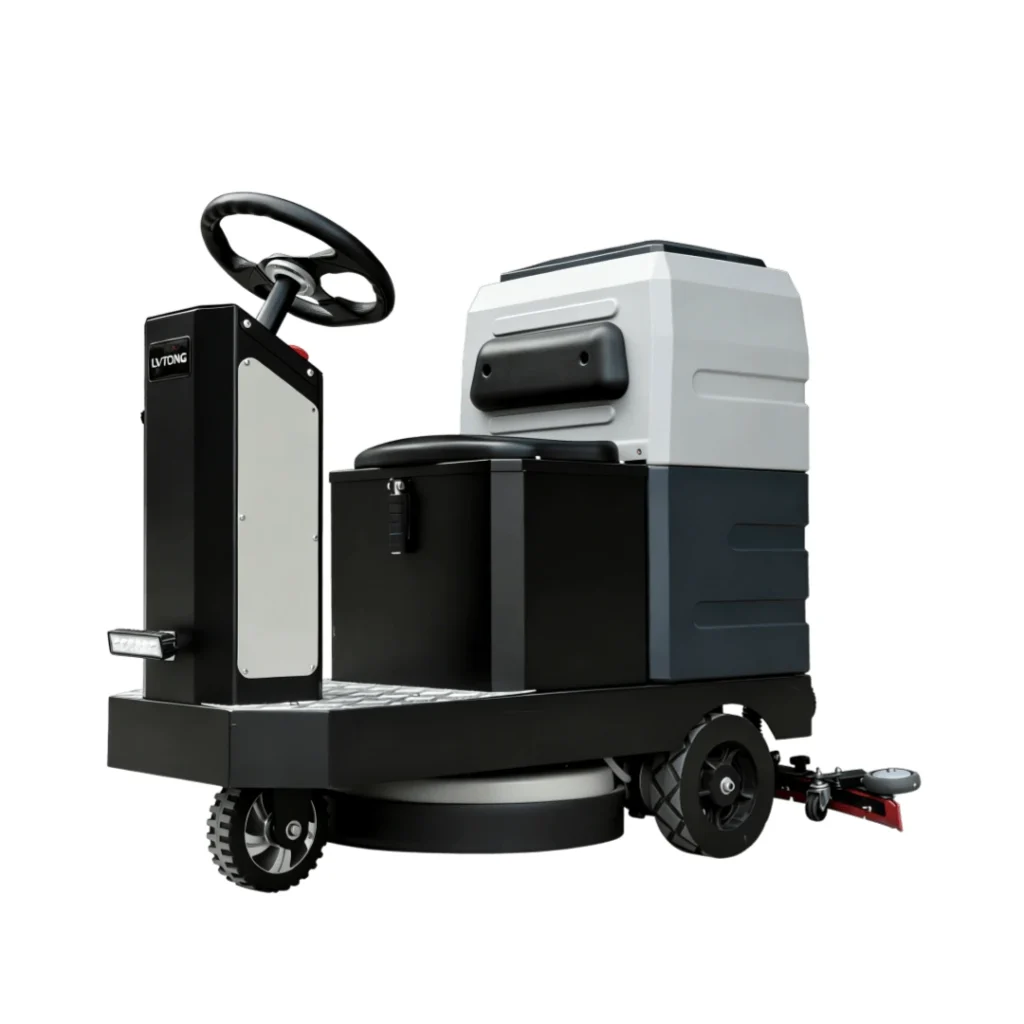
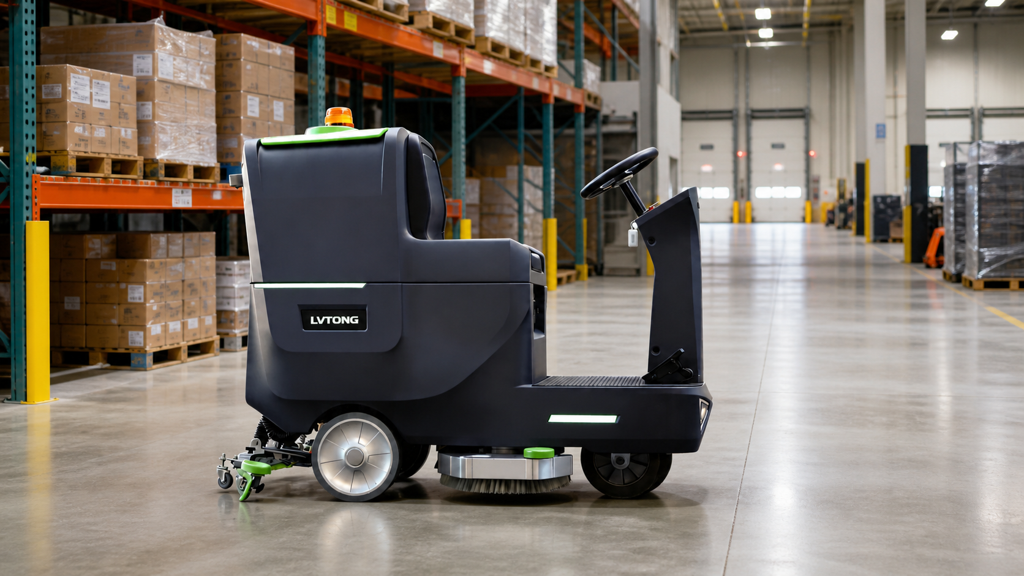
Ride-on floor scrubbers fit routes where one operator needs to clean long open areas without losing time to walking fatigue. Warehouses, logistics centers, factories, airports, supermarkets, parking structures, schools, and large public buildings often fall into this category when the main route has clear lanes and enough turning space.
A large warehouse with clear lanes needs a route-continuity check beyond floor area. Long straight passes, wide turning points, nearby refill and drain points, and a workable charging plan all support ride-on coverage. Tight dock corners or blocked side rooms may still need a walk-behind scrubber, while the ride-on decision rests on how much open floor one operator can finish in the shift.
In our ride-on range, the LT-S560X 560mm Ride On Floor Scrubber product page lists an 85L solution tank, a 90L recovery tank, and suitability for epoxy, ceramic tile, cement, and marble. Those fields are useful for mid-size open routes where refill stops, wastewater recovery, and floor compatibility affect daily output before the headline cleaning rate does.
For larger industrial or public routes, our LT-S860X Ride On Scrubber product page lists 4-6 hours of continuous operation and 65-70 dB operating noise. Its published application examples include a shopping mall, office park, and airport cargo area. These examples show the route type behind the product page, while a quote still needs route width, soil type, drainage access, charging plan, and the cleaning window.
Sweeping Plus Scrubbing for Floors That Need Debris Pickup and Washing
In warehouses, packaging dust, pallet fragments, sand, and forklift marks can reduce brush contact and make squeegee pickup less consistent. Sweeping first helps the scrubber dryer work on the soil that actually needs washing.
Factory routes call for a slightly different check. Metal particles, powder dust, oil residue, mud, and tire marks may appear in separate zones, so the quote needs to separate sweeping before scrubbing, dry-debris and wet-washing areas, and any combined sweeper-scrubber option that is available and suitable.
Mixed routes need quote details that show where loose debris ends and wet washing begins. Route photos and site notes let our team recommend a scrubber dryer, a ride-on sweeper, or a two-step cleaning plan.
Specifications That Confirm the Right Fit
Floor Surface and Soil: Brush, Pad Pressure and Water Control
Surface and soil set the brush, pad, pressure, and recovery checks before model comparison. Light dust on a sealed commercial floor may call for controlled water and a suitable pad. Different surfaces change the contact point: brush reach for textured floors, controlled pressure for sealed floors, and stronger recovery where oily or wet residue appears.
| Surface or soil condition | Cleaning challenge | Specification to check | Machine direction |
|---|---|---|---|
| Concrete floors with fine dust | Loose dust can spread before wet cleaning and reduce recovery quality | Brush contact, sweeping step, recovery performance | Sweeping before scrubbing, or a scrubber dryer after dry pickup |
| Epoxy floors with forklift tire marks | Tire residue needs stronger mechanical contact and controlled water recovery | Brush or pad type, pad pressure, squeegee pickup | Walk-behind or ride-on scrubber, chosen by route size |
| Ceramic tile and grout | Grout lines need contact below the smooth tile surface | Brush type, down pressure, water flow control | Walk-behind scrubber for divided rooms, ride-on scrubber for open tiled routes |
| Marble or sealed commercial floors | Surface finish needs controlled pressure and compatible pads | Pad softness, pressure setting, water control | Scrubber dryer with suitable pads and a test area before routine use |
| Food-area oil and water residue | Wet residue needs detergent compatibility and full dirty-water recovery | Detergent plan, dwell time, tank hygiene, recovery tank capacity | Compact walk-behind scrubber for small rooms, larger scrubber dryer for open processing routes |
| Loose debris plus wet soil | Debris can interfere with brush contact and squeegee pickup | Dry pickup plan, brush protection, recovery path | Sweeping plus scrubbing workflow or separate sweeper plus scrubber dryer |
Model comparison comes after this surface and soil filter. In a small food processing room, wet residue near drains or prep lines can narrow model comparison to a compact walk-behind scrubber with controlled recovery. Long open concrete routes and loose-debris areas then move into the route and workflow checks below.
Cleaning Route: Machine Width, Turning Space and Practical Productivity
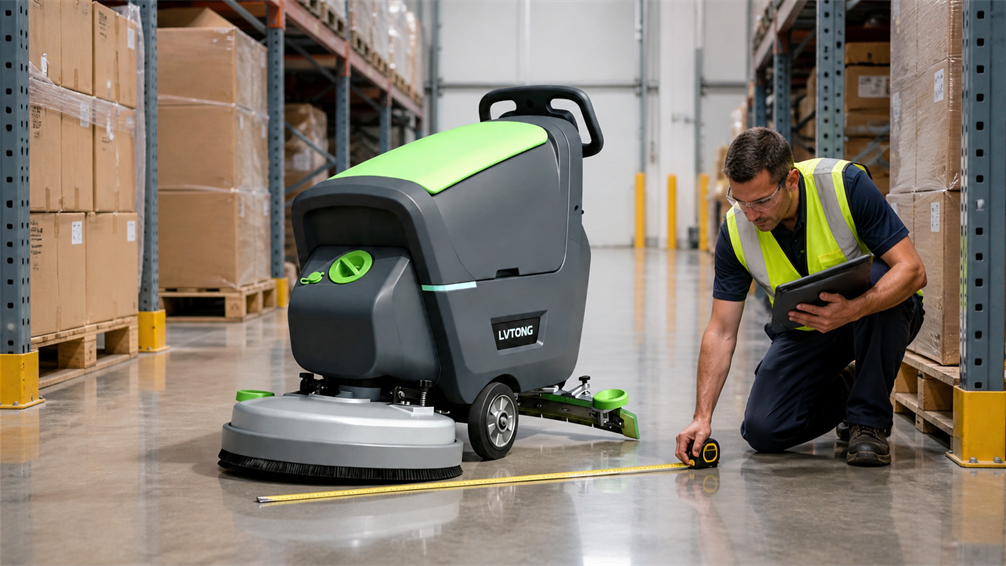
The tightest useful point in the route sets the practical machine width. Doorways, drain areas, storage corners, ramps, elevators, and turning zones determine reachable floor area and remaining manual follow-up.
During pre-quote review, our team asks buyers to send route photos, aisle measurements, turning points, and drain locations. Total floor area alone cannot show whether a ride-on scrubber can pass rack ends, pallet staging areas, dock corners, or wastewater drains without leaving manual follow-up work.
Real output shows up in the route the operator can finish without repeated backing up, detours, or manual touch-up cleaning. Open lanes support ride-on coverage; narrow rack aisles or divided rooms push the quote back toward walk-behind coverage or a mixed fleet.
Water and Power Workflow: Tank Capacity, Recovery, Runtime and Charging
A suitable scrubber still loses output when refilling, draining, or charging interrupts the shift. Long refill walks, distant wastewater discharge, limited charging access, or a fast-filling recovery tank can consume the cleaning window before the route is finished.
Runtime has to cover the planned route inside the cleaning window. Incomplete routes force a choice between schedule changes, a different tank setup, or another machine class.
Recovery performance also affects how soon the floor can reopen. In areas that reopen quickly after cleaning, standing water can delay traffic after scrubbing. Squeegee pickup and dirty-water recovery become quote-level checks for shorter reopening time.
After the refill, drain, and charging path is clear, our team can judge the figures listed on each LVTONG product page against the real route. Tank capacity, runtime, floor compatibility, refill distance, wastewater discharge, charging time, and soil load all need to match the site before we confirm a machine range.
Pre-Quote Checklist Before Buying a Hard Floor Cleaner Machine
Our team can match the machine more closely when the route, floor surface, soil type, refill and drain points, charging plan, and cleaning window are clear. Enough site detail supports a route-based recommendation, rather than a product-category estimate.
- Cleanable area and route access: daily cleanable floor area, narrowest aisle, doorway, ramp, elevator, turning point, and areas that still need manual follow-up.
- Floor and soil condition: floor type, coating condition, grout depth, slopes, cracks, drainage, and main soil such as dust, oil, tire marks, food residue, mud, sand, metal particles, or packaging waste.
- Water, power, and shift limits: refill point, wastewater discharge point, charging area, storage space, cleaning window, reopening time, traffic control, and noise limits.
- Operation and support needs: operator skill level, maintenance capacity, spare parts needs, and training requirements.
- Site evidence: photos or video of tight areas, heavy-soil zones, open cleaning routes, drain points, and storage areas.
When buyers send us floor details, our team can compare walk-behind scrubbers, ride-on scrubbers, sweepers, and suitable configurations with fewer assumptions. That gives the buyer a clearer path from scenario to machine class, model range, and quote.
FAQ
What is the best hard floor cleaner machine for commercial use?
Divided routes create access and turning limits. Doorways, shelves, checkout areas, back rooms, and edge cleaning points often decide whether the machine can complete the route without manual follow-up. That points toward a walk-behind floor scrubber. Open floors shift the question to route length, operator fatigue, refill points, and turning space, which often makes a ride-on floor scrubber the stronger class. Loose debris mixed with wet soil adds another step. Dry pickup needs to happen before wet scrubbing can work well.
Is a floor scrubber better than a mop for industrial floors?
Manual mopping reaches its limit when soil returns during the shift, dirty water needs recovery, or the cleaned floor has to reopen quickly. Mops still belong on spills, corners, edges, and detail areas. Tire marks, dust, oil residue, and heavy traffic call for mechanical scrubbing and controlled dirty-water pickup.
Can one machine cover a mixed commercial or industrial site?
One machine works when the route, floor surface, and soil load stay fairly consistent. Mixed sites need a closer check: a ride-on scrubber may handle the main floor, while a walk-behind scrubber covers side rooms, tight aisles, or dock corners. Dry debris areas may also need sweeping before wet scrubbing begins.
What information should I send before requesting a quote?
Send the cleanable area, floor surface, main soil, narrowest route point, refill and drain access, charging location, cleaning window, and reopening requirement. Route photos or short videos of tight areas and heavy-soil zones help our team compare machine width, tank setup, runtime, recovery, and suitable machine class with fewer assumptions.
Conclusion
Route shape, floor surface, soil load, water recovery, and the shift window set the practical machine range. Tight commercial and industrial routes make the strongest case for a compact walk-behind scrubber. Open floors and longer shifts favor a ride-on scrubber. Loose debris mixed with wet soil may require sweeping before scrubbing, separate machine coverage, or a two-step cleaning route.
Share your cleanable area, floor surface, soil type, narrowest aisle, refill and drain access, and daily cleaning window with our team. We compare those details with walk-behind scrubbers, ride-on scrubbers, ride-on sweepers, and suitable configurations before recommending a machine range for your real cleaning route. Send us your floor details to request a practical quote.