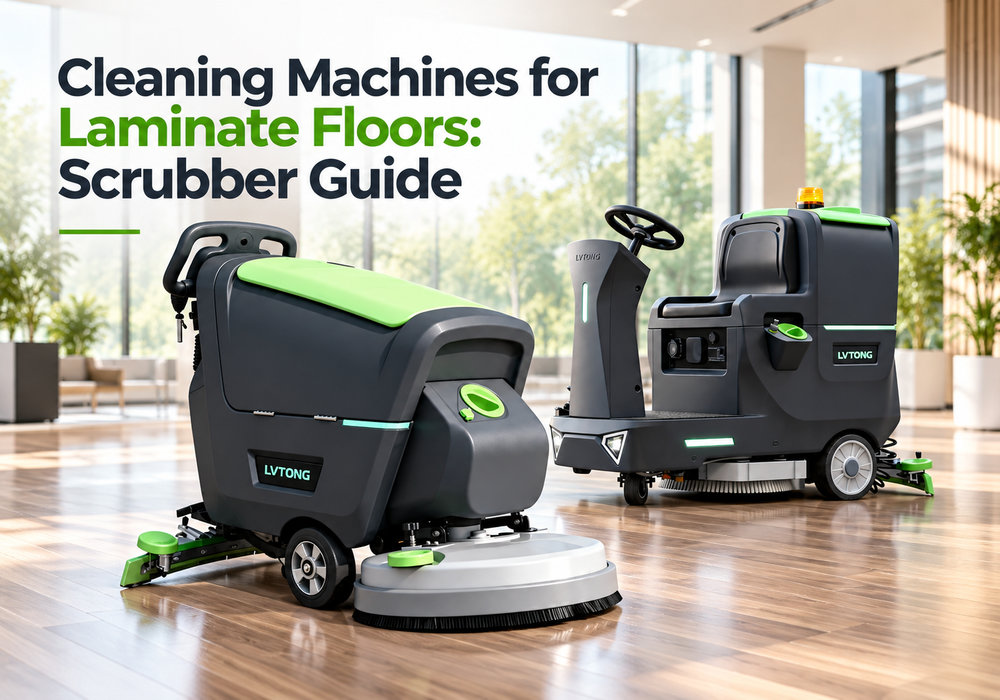
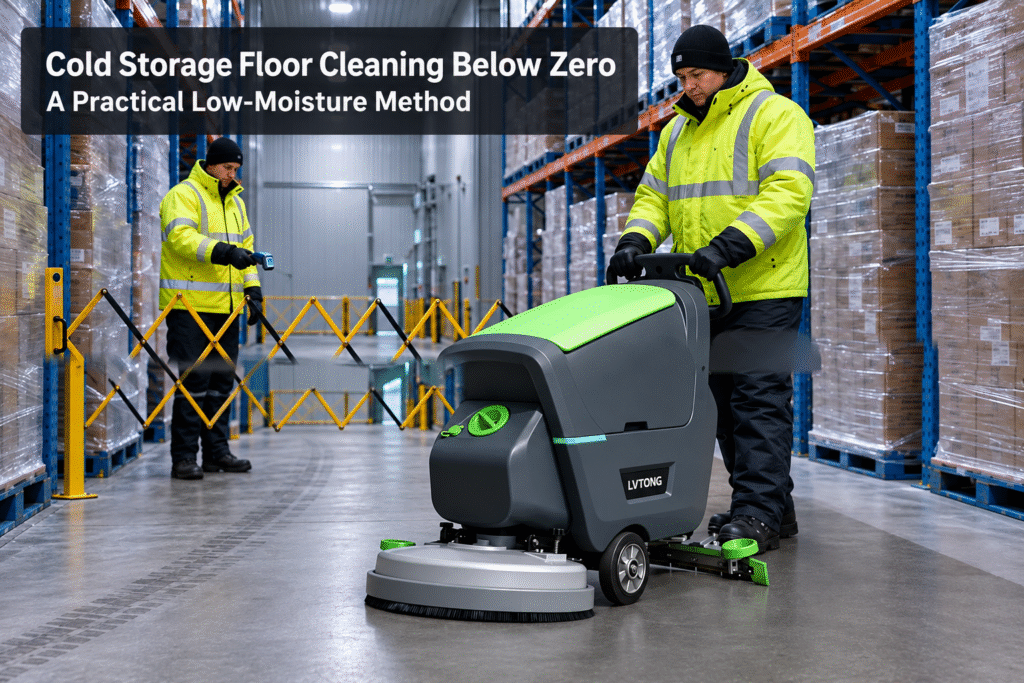
Laminate can be machine-cleaned, but only inside limits most scrubber specifications never mention. The surface is a melamine wear layer over a printed décor film, bonded to a high-density fibreboard core, so the floor is neither wood nor vinyl — and the layer that fails is not the one you can see. Water reaching the core swells it permanently. This guide sets out what decides whether cleaning machines for laminate floors are safe in your building, and the settings that keep them so.
QUICK ANSWER
Commercial laminate can be machine-scrubbed if the boards are rated AC4 or above and the machine runs at very low water volume with full recovery; residential-grade laminate should be damp-cleaned by hand.
- Check abrasion class before anything else. The AC rating, or the European use class, decides whether the floor is rated for commercial cleaning at all.
- Water-resistant is not waterproof. Sealed edges and treated cores tolerate a spill that is wiped up, not standing water or a flooded deck.
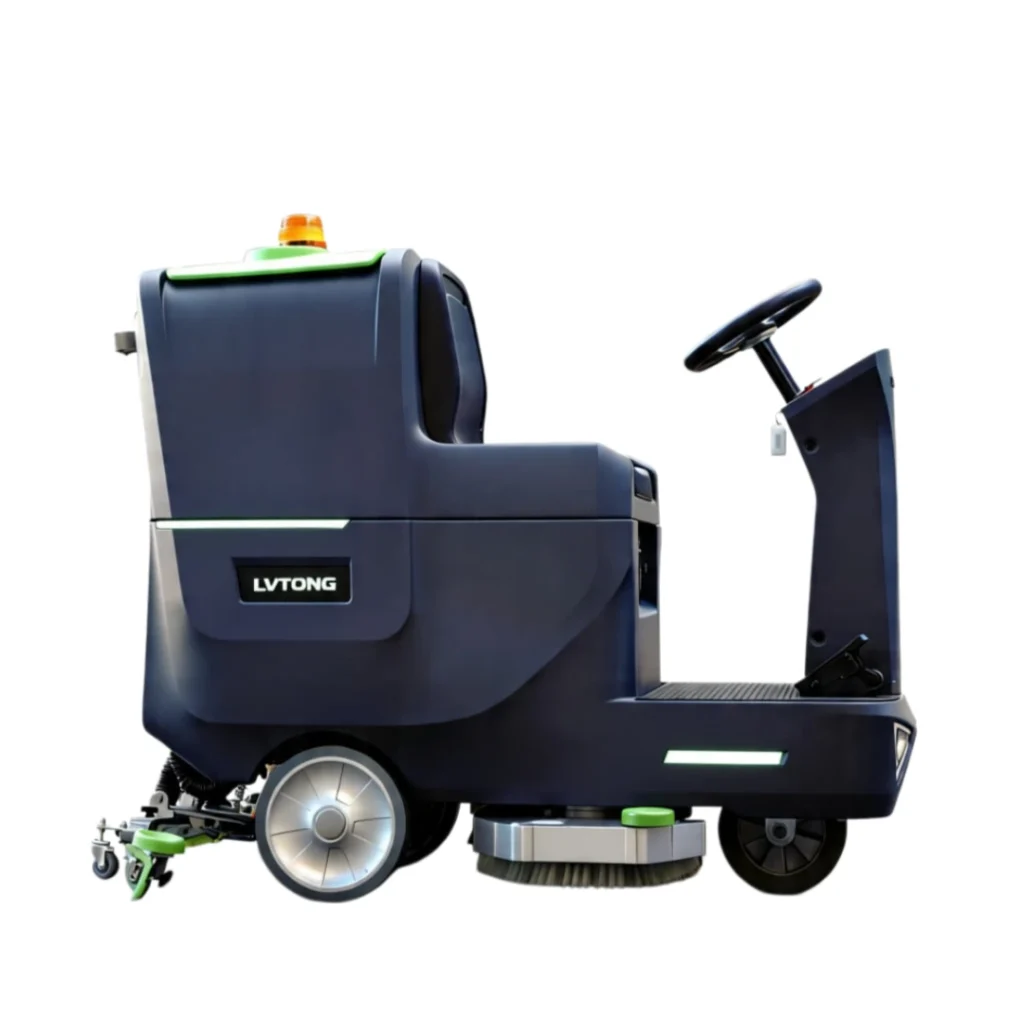
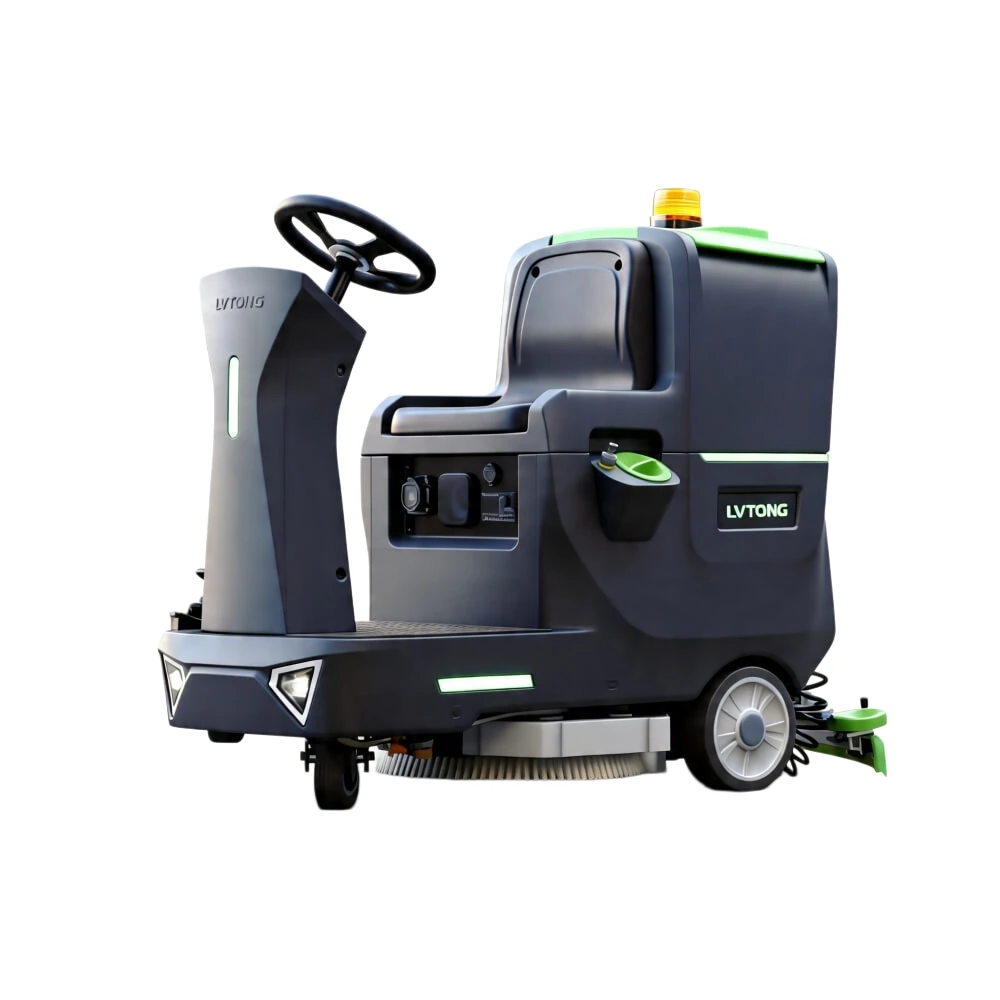
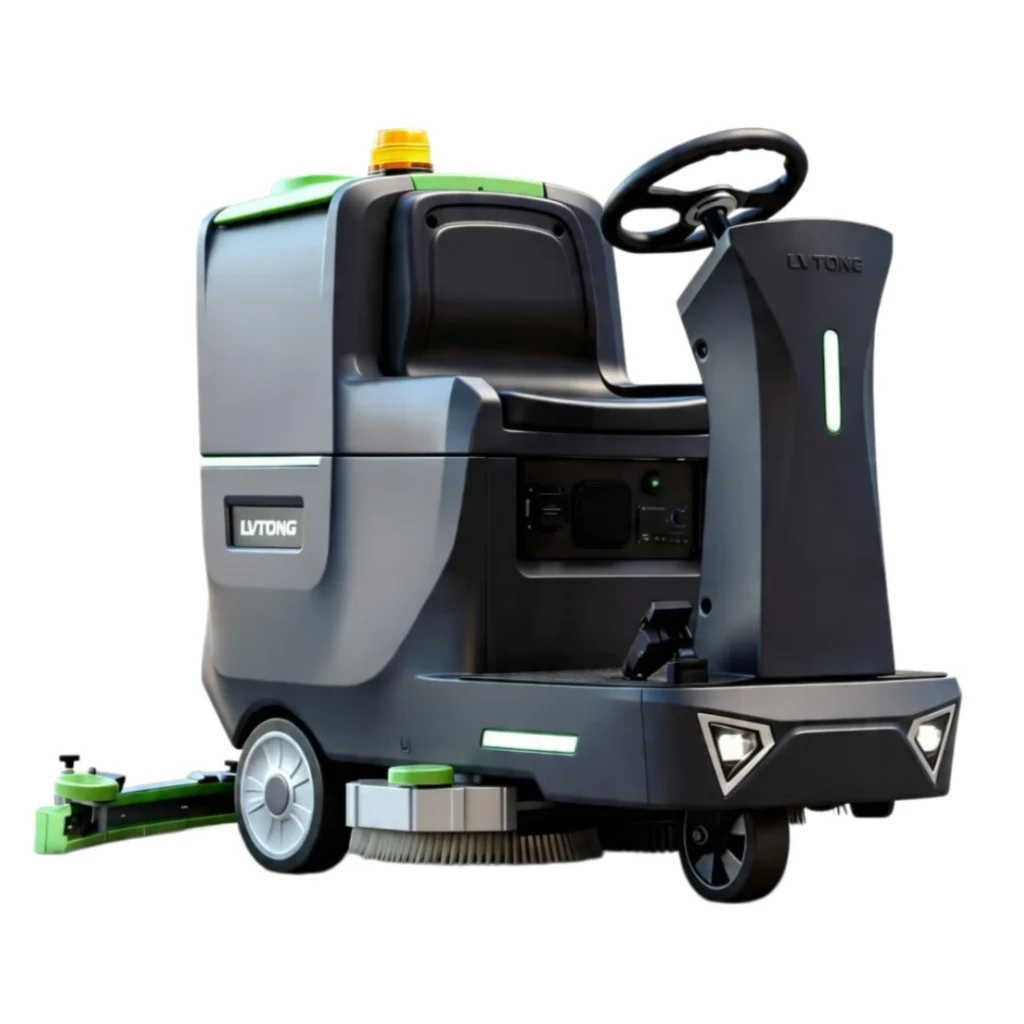
- Ride-on machines are usually ruled out by wheel point load against the floor’s published static load limit, not by cleaning width.
- Squeegee condition matters more than brush pressure. The failure point is water left sitting at the joint, not cleaning power on the surface.
The sections below cover construction, abrasion class, core types, point load, settings, what never to apply, and how to specify.
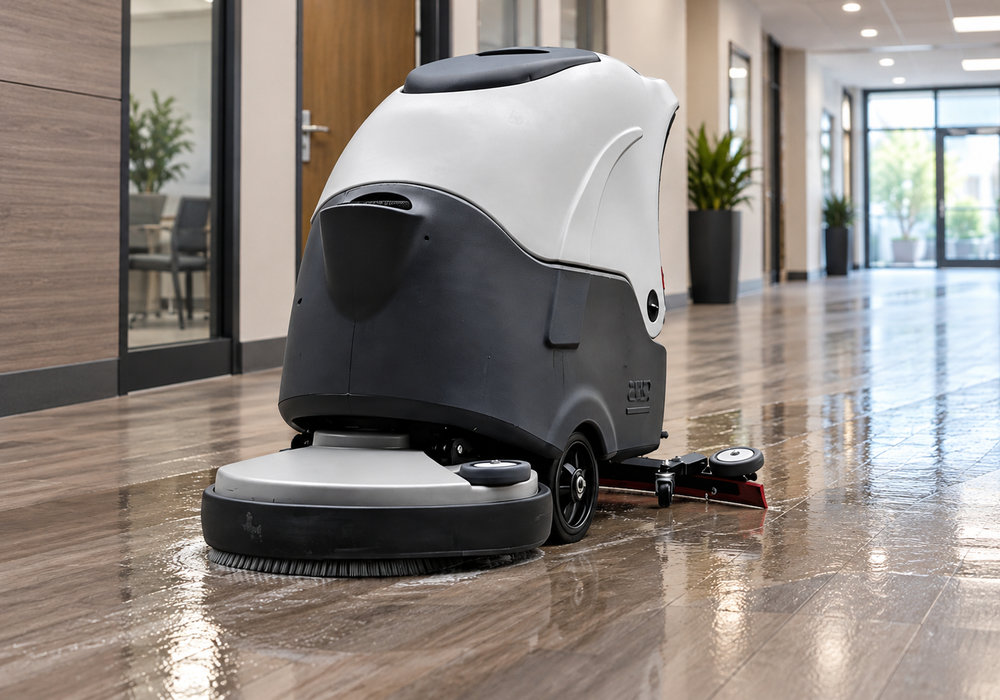
Can You Use a Floor Scrubber on Laminate Floors?
Yes, on commercial-grade laminate — AC4 and above — using a low-moisture scrubber-dryer with a squeegee in good condition. No, on residential grades, or where the installer’s instructions prohibit wet cleaning.
The distinction is not brand or thickness but rating. A laminate floor sold for retail, office or hospitality use is built to take commercial traffic and the cleaning that comes with it; a floor rated for residential rooms is not. A laminate floor scrubber run across the wrong grade cleans the surface and quietly damages the core; the damage shows weeks later as swollen edges along the joints, not as an obvious scratch.
Two checks settle it: the abrasion class and core type from the flooring supplier, and the cleaning method the flooring manufacturer specifies. If the two conflict, follow the manufacturer.
What Laminate Is Made Of — and Which Layer Fails
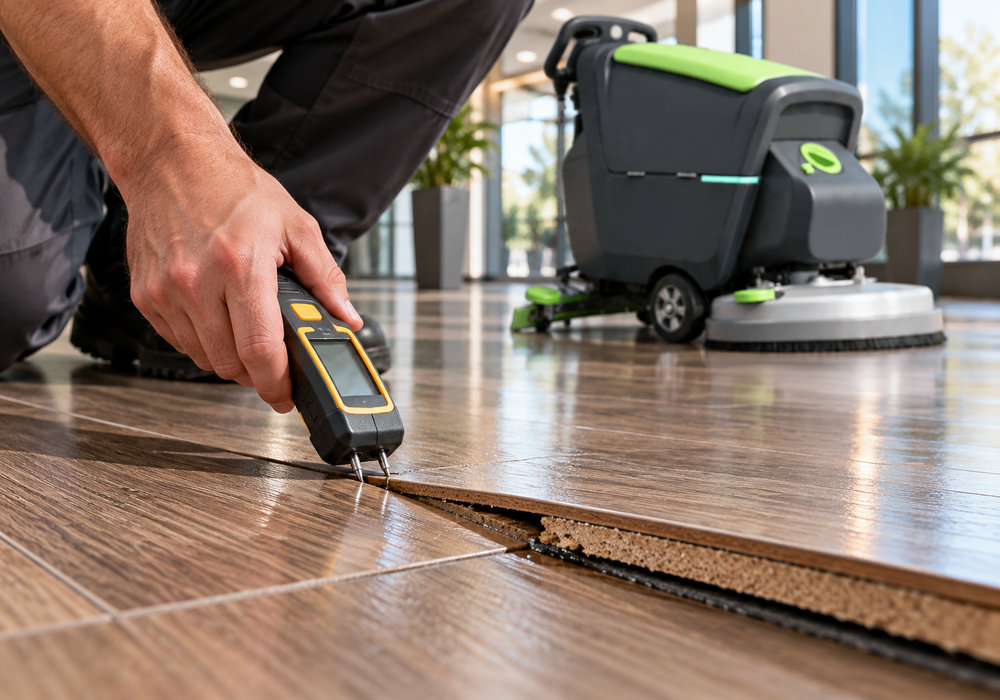
Laminate is a printed décor layer and a melamine wear layer bonded to an HDF core. The wear layer resists abrasion; the core swells irreversibly once water reaches it.
The stack is consistent: an overlay that takes the traffic, a décor film carrying the wood or stone pattern, a high-density fibreboard core that gives the plank stiffness, and a balancing layer underneath. In direct-pressure and high-pressure construction the décor sits below the wear layer, so laminate floor cleaning machines work against a plastic-like surface, not a wood surface.
That surface is tough, but moisture behaviour is set by the core — the core is where a laminate floor either survives machine cleaning or does not. Unlike wood, laminate cannot be sanded and refinished, and once the core has swelled the only repair is replacement of the affected planks.
Abrasion Class Decides Whether You Can Machine-Clean
Machine cleaning is permitted from the commercial abrasion classes upward — AC4 and above on the North American AC scale, roughly use class 32 and above in the European scheme. Below that, the floor is not rated for it.
| Rating | Typical setting | Machine cleaning |
|---|---|---|
| AC1–AC2 | Light to general residential | Not rated for it — damp clean by hand |
| AC3 | Heavy residential / light commercial | Borderline; follow the flooring manufacturer’s written instruction |
| AC4 | General commercial | Low-moisture machine cleaning permitted |
| AC5 | Heavy commercial | Low-moisture machine cleaning permitted |
The AC scale is a Taber abrasion measure and maps onto the European use classes 21 to 43. Most commercial laminate for retail, offices and hotels lands at AC4 or AC5. If a floor is AC3 or below, machine cleaning is a decision for the flooring manufacturer.
Water-Resistant vs Waterproof Laminate
On most “waterproof” laminate, the protection covers the surface and the joint edges rather than the whole core. It tolerates a spill that is wiped up — not standing water, and not a flooded scrubber deck.
Water-resistant boards use a treated or sealed core, and many add a wax or polymer treatment at the click profile. That makes the joint far more forgiving than untreated HDF. It does not make the board a bathtub: water held in the joint under pressure, or left standing, will still find its way in.
Establish this before specifying a laminate floor cleaning machine. If the floor sits where spills are routine — food service, clinics, entrances — confirm whether the core itself is treated or only the surface; the two are sold under nearly the same wording.
Point Load: Why Ride-On Machines Are Usually Out
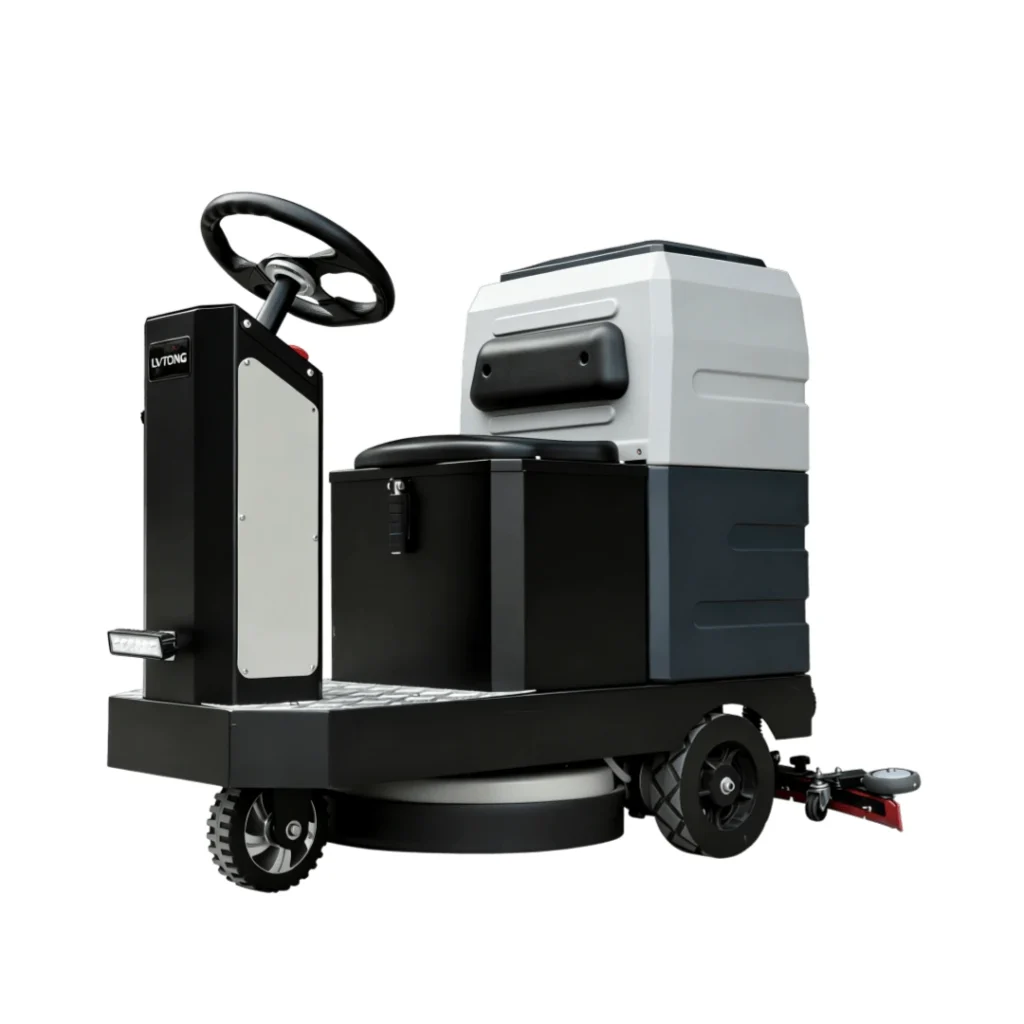
A ride-on scrubber concentrates the machine and the operator on four small contact patches. Laminate manufacturers publish static point-load limits, and that limit — not cleaning width — is what rules ride-on machines out of most laminate areas.
A laminate floor scrubber spreads its weight across wheels and, on some decks, a brush or pad. On a floating floor the load path runs through the click joints, the weakest part of the assembly. Even where the average load looks modest, a single wheel can exceed the point-load figure the flooring manufacturer publishes for equipment.
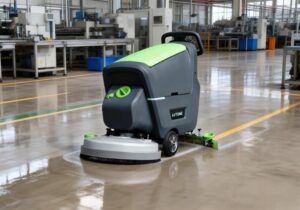
Walk-behind machines usually sit on the right side of that line: lighter, and without a battery bank sized for a full shift. Where a building genuinely needs ride-on productivity on laminate, check the floor’s rating first, then the machine’s axle loads.
Water, Brush and Squeegee Settings for Laminate
Set the machine for minimum water and maximum recovery: lowest usable solution flow, soft brush or pad, light deck pressure, and a squeegee in good condition, replaced at the first sign of a dry streak.
The goal is a floor visibly wet for seconds, not minutes. Reduce solution flow until the deck cleans without the surface glistening behind it, and let the squeegee — not evaporation — do the drying. A worn or hardened blade turns every pass into a thin film of water over the joints — exactly what the floor cannot tolerate.
Use a pH-neutral product diluted to the manufacturer’s instruction; alkaline and solvent-heavy chemistry attacks the joint sealant rather than the floor surface. Whatever the brand, floor cleaning machines for laminate floors share that requirement, and where a route crosses into another floor type, change settings at the threshold.
What Never Goes on Laminate
No polish, no wax, no abrasive pads, no steam and no flooding. Each either builds a film that traps dirt or drives water into the core.
- Polish and wax — most laminate is not intended to take them; the film dulls the print and can void the manufacturer’s instructions.
- Abrasive pads and aggressive brushes — these cut the wear layer, which cannot be restored.
- Steam cleaners — heat plus moisture under pressure at the joint is the worst combination for an HDF core.
- Flooding or wet mopping — the classic cause of edge swelling, and why “damp only” appears in nearly every laminate instruction sheet.
- Acid or strong alkaline cleaners — they degrade the joint treatment that gives a water-resistant board its margin.
Machine Options for Commercial Laminate
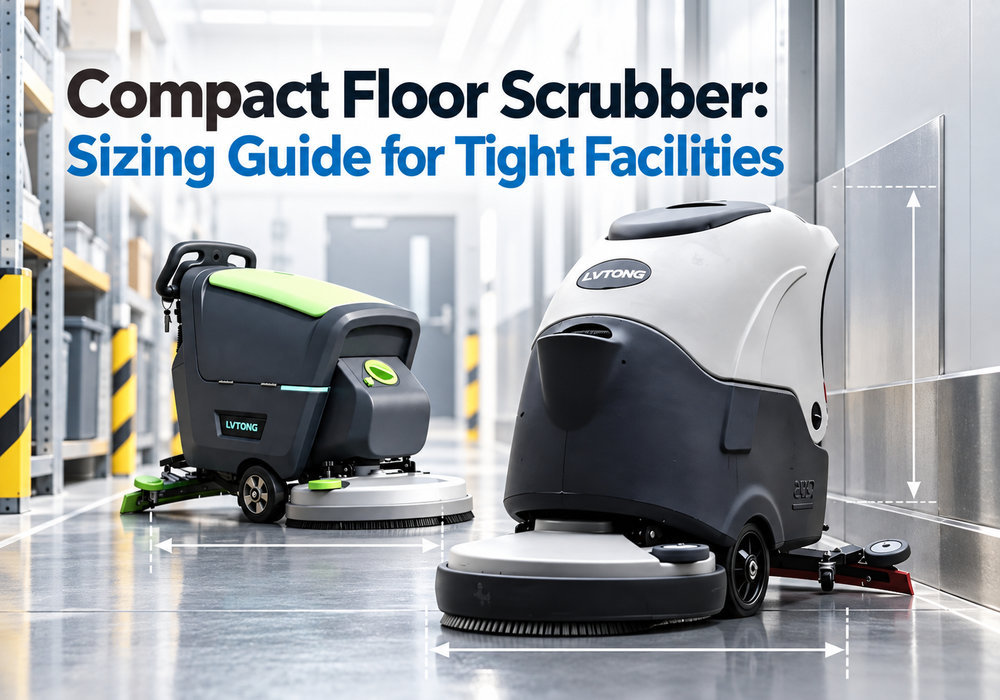
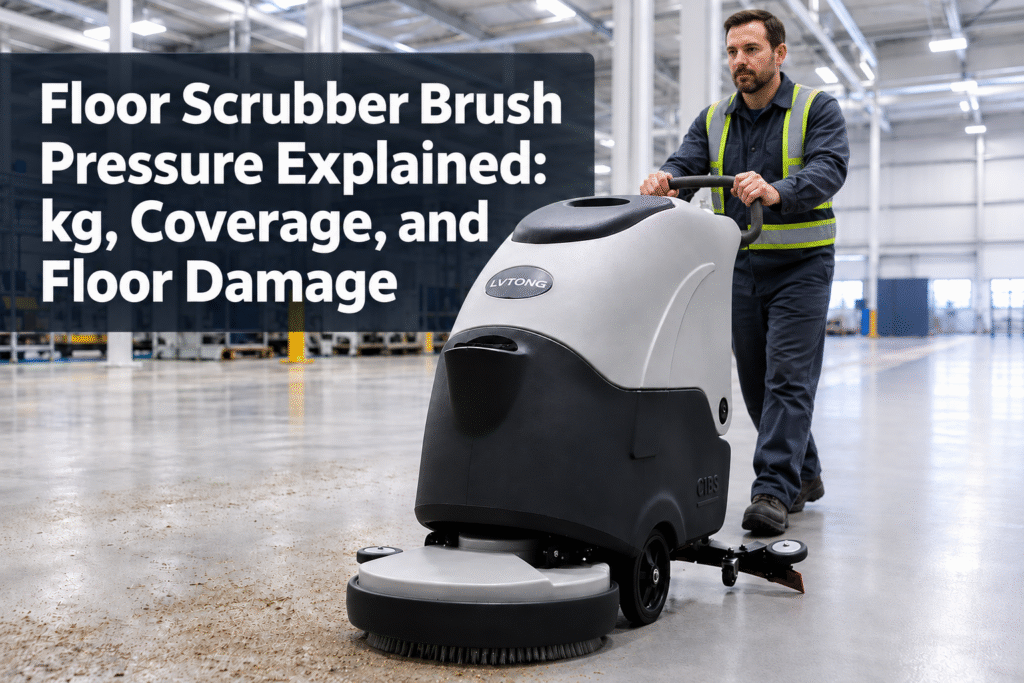
A compact walk-behind scrubber-dryer is the practical choice: recovery capacity large enough to leave the floor dry on one pass, and a footprint light enough to stay inside the floor’s point-load limit.
For cleaning machines for laminate floors, the specification that matters is recovery, not scrub width. A wider deck only helps if the squeegee lifts everything it loosens; where water is the hazard, a weak squeegee is worse than a narrower pass.
| Item | Q5 | LT-S530X |
|---|---|---|
| Scrub path / body | 50 cm cleaning width | 530 mm class scrub path, 50 cm body width |
| Tanks | 50 L solution | 62 L solution + 65 L recovery |
| Water control | Adjustable disc brush, angle and height | High-density disc brush, LED work light |
| Runtime | Up to about 4 hours | About 3–5 hours, chemistry dependent |
| Suits laminate where | Obstacle-heavy corridors where low deck pressure is the priority | Longer routes needing fewer refills and matched recovery capacity |
Both are walk-behind scrubber-dryers on lithium power. Where a route is tight and interrupted, the Q5’s adjustable deck lets an operator dial the deck down for laminate; where the area is a long corridor or a continuous retail floor, the LT-S530X walk-behind scrubber pairs a larger recovery tank with the same 50 cm body class.
Specifying and Protecting: Spare Stock and the Damage Budget
Laminate is a floating floor, so a damaged plank can be replaced on its own — provided you hold spare cartons from the same production batch and the design is still in production.
That is the quiet advantage laminate holds over glued vinyl and sheet flooring: a swollen plank does not condemn the whole area, provided the replacement matches on décor print, gloss level and batch. Buy spare cartons when the floor is installed and record the batch code — a discontinued design is the one condition under which a small repair becomes a full replacement.
When specifying a commercial laminate floor cleaner, hand the supplier the floor data: abrasion class, core type, point-load limit, the flooring manufacturer’s cleaning instruction, route length and cleaning window. Two further items belong in the same conversation: where recovered water can be discharged, since floor-cleaning wastewater falls under the same rules as other industrial sources (see the EPA stormwater programme), and the appliance safety standard the machines are built to, IEC 60335-2-72.
Where the flooring supplier publishes a use class under the European scheme, the classes above map onto it; the European Producers of Laminate Flooring sets out how the classes are defined, and the North American Laminate Flooring Association publishes the AC rating system used on North American products.
Frequently Asked Questions
Can you use a floor scrubber on laminate flooring?
On commercial-grade laminate rated AC4 or above, yes — using a low-moisture scrubber-dryer and keeping water volume to the minimum the deck needs. On residential grades, or where the flooring manufacturer’s instruction says damp clean only, no. The deciding factor is the floor’s rating, not the machine.
Is laminate flooring waterproof?
Most “waterproof” laminate protects the surface and the joint edges rather than the entire core. It tolerates spills wiped up promptly, but standing water or a flooded deck can still reach the core, which swells irreversibly. Confirm whether the core itself is treated before relying on the claim.
What cleaning machine is best for laminate floors?
A compact walk-behind scrubber-dryer with precise solution-flow control and a squeegee in good condition. Recovery capacity matters more than scrub width, because water left on the surface is the hazard. Ride-on machines are normally excluded by point-load limits.
Can you use a ride-on scrubber on laminate?
Usually not. Ride-on machines concentrate their weight on four small contact patches, and laminate manufacturers publish static point-load limits that a ride-on scrubber can exceed. Check the floor’s published limit against the machine’s wheel loads first.
How often should laminate be machine-cleaned?
As often as the facility’s traffic and cleaning plan requires, provided each pass leaves the floor dry. Frequency is not the risk; a single pass that leaves water sitting at the joints is. A squeegee check before each shift is more useful than a fixed interval.
Next Step: Match the Machine to the Floor Rating
Send the abrasion class, core type, point-load limit, the flooring manufacturer’s cleaning instruction, your longest route and your cleaning window. We will map a walk-behind scrubber-dryer whose solution flow, deck pressure and recovery capacity fit them, with a first-pass test protocol so the result is checked on your own floor. Scrubber-dryers for hard and resilient surfaces are listed through the floor scrubber supplier page, and a sealed wood floor under the same roof is covered by our guide to cleaning sealed hardwood floors.