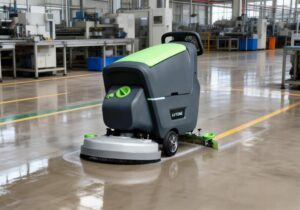


Yes. Floor scrubbers can remove coolant film, light oil residue, tracked-in soil, and fine production dust from concrete floors. The best results come from a clear cleaning sequence. Your team removes pooled coolant and metal chips first, then the scrubber washes the remaining film and recovers the dirty water. Sealed concrete may come clean in one controlled pass. Porous or worn concrete usually needs more agitation and a second pass. With the right brush, detergent, water flow, and squeegee setup, floor scrubbers help you clean production aisles faster and leave them ready for the next shift.
Why Coolant Spills and Debris Are Difficult to Clean on Concrete Floors
Coolant on a machine-shop floor rarely stays in one place. It mixes with tramp oil, metal fines, and everyday production dirt. Forklift tires then spread the mixture across the aisle, while swarf collects around machine bases, joints, and wheel tracks. This is why a floor can look dry and still feel slippery underfoot.
The condition of the concrete also affects the result. A dense sealer keeps most contamination near the surface, where a floor scrubber can reach it easily. Unsealed or worn concrete holds coolant and fine soil in its pores. In that case, the surface may feel clean after scrubbing even though an older dark stain remains in the slab. Better agitation and complete water recovery are more useful than simply adding more water.
Coolant cleanup is also part of daily industrial housekeeping. OSHA walking-working surfaces requirements call for workroom floors to be maintained in a clean and, where feasible, dry condition and for surfaces to remain free of hazards including leaks and spills. For a production facility, the goal is clear: remove the slip hazard, recover the dirty liquid, and return the aisle to service.
Can Floor Scrubbers Effectively Remove Coolant Spills?
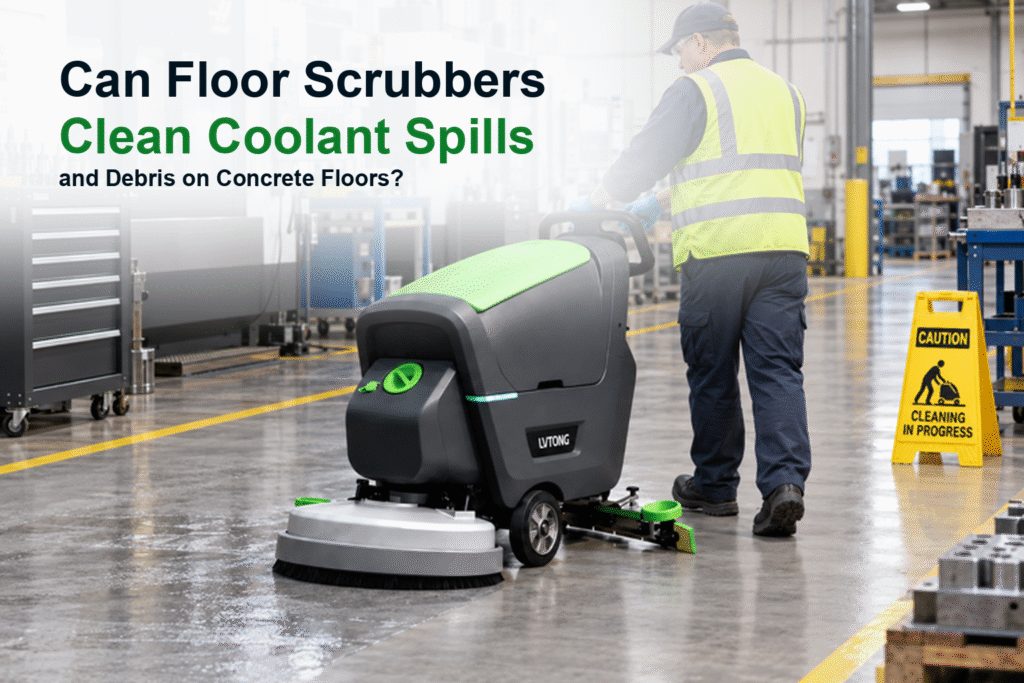
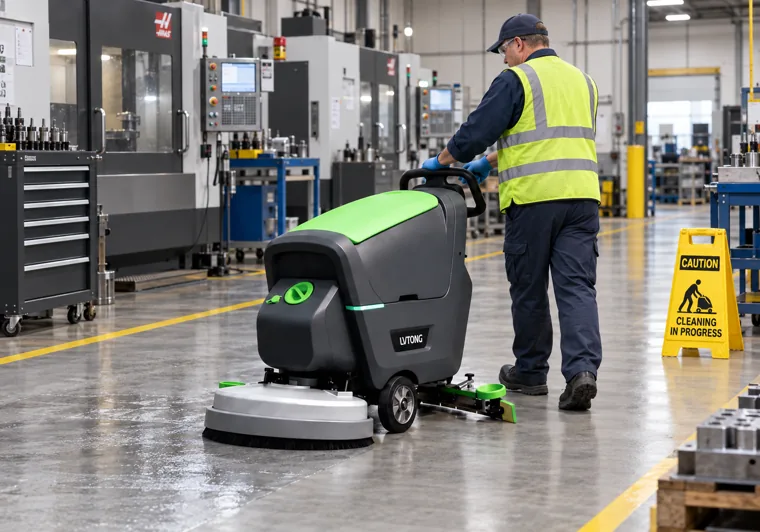
Floor scrubbers are well suited to the thin residue left after pooled coolant has been removed. The brush loosens the oily film from the concrete, while the cleaning solution keeps the soil suspended. The rear squeegee and vacuum system then collect that liquid in the recovery tank. Your team can wash the floor and recover the dirty water in the same pass.
A large pool should be contained before the scrubber enters the area. Otherwise, the machine may spread coolant beyond the original spill and fill the recovery tank too quickly. Once the pooled liquid has been removed, the scrubber can focus on the film that makes the concrete slippery. Warning signs keep the lane closed while the floor is being cleaned.
A light, fresh coolant film may come away with clean water. A persistent oily layer usually needs a low-foam industrial cleaner that suits the concrete finish. Low-foam chemistry matters because excess foam weakens water recovery and can leave the aisle wet. For a heavily soiled patch, a double-scrub gives the cleaner and brush more time to work: the first pass loosens the film, and the second pass collects the dirty solution.
The recovery tank keeps the dirty solution contained after it leaves the floor. EPA material on metalworking-fluid wastewater describes treatment or managed disposal pathways rather than uncontrolled discharge. The recovered liquid can then follow the facility’s established wastewater process.
How Floor Scrubbers Handle Dirt, Metal Chips, and Industrial Debris
A floor scrubber works best on bonded soil and fine residue, including coolant film, light grease, tire tracks, and dust caught in the concrete texture. Metal chips need a different approach. Long chips can cut a squeegee blade, curled swarf can wrap around the brush, and hard fragments may scratch a coated floor. Sweeping or vacuuming these materials first protects both the machine and the concrete.
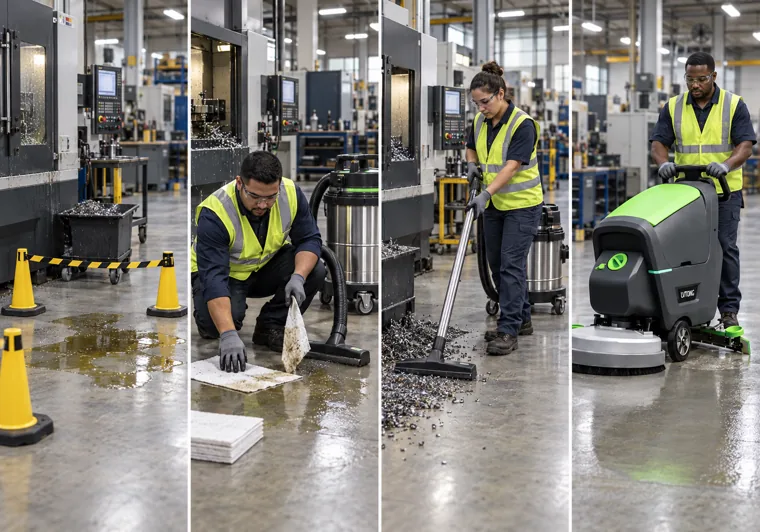
A practical machining-floor routine follows this order:
Stop and contain the leak; keep people and lift trucks out of the affected lane.
Remove pooled coolant with approved absorbents or a suitable recovery vacuum.
Sweep or industrial-vacuum metal chips, fasteners, packaging fragments, and abrasive grit.
Pretreat the remaining film with compatible, low-foam chemistry when water alone will not release it.
Scrub at a slow, steady pace with overlapping passes; recover the solution immediately or after approved dwell time.
Inspect the floor from two directions, then clean the recovery tank, brush, and squeegee before residue dries.
Giving each machine the right job protects the equipment and improves the cleaning result. Facilities with recurring swarf or packaging debris may pair a sweeper with a scrubber. Our published guide to choosing a manufacturing floor scrubber for metalworking areas likewise recommends removing loose debris before wet scrubbing and matching the brush, pretreatment, and recovery setup to the actual contamination.
How to Choose the Right Floor Scrubber for Concrete Floors
The right floor scrubber depends on both the concrete and the cleaning route. Smooth sealed concrete usually responds well to a medium brush or a compatible pad. Rough, unsealed concrete needs bristles that can reach into the surface texture. Polished concrete calls for a softer pad that preserves the finish. A small trial area shows how well the setup removes soil, recovers water, and leaves the surface.
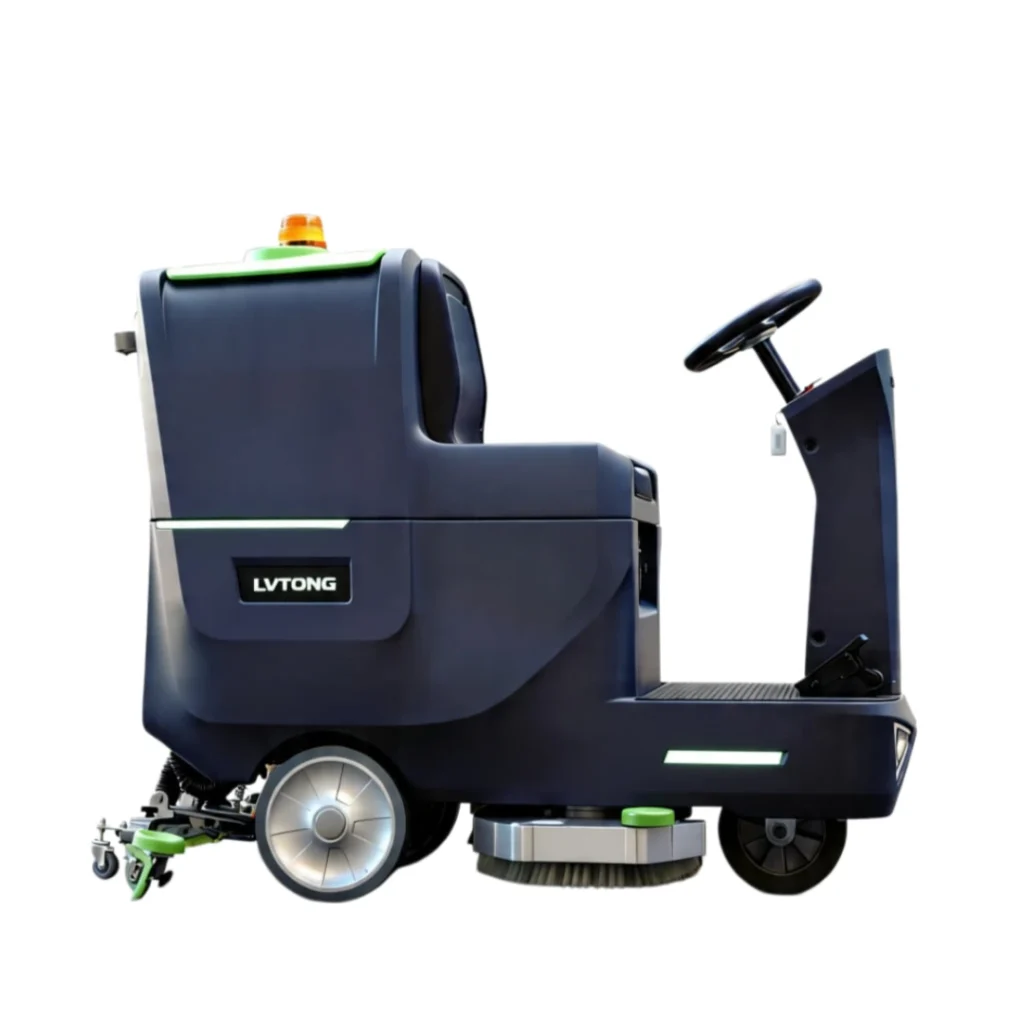
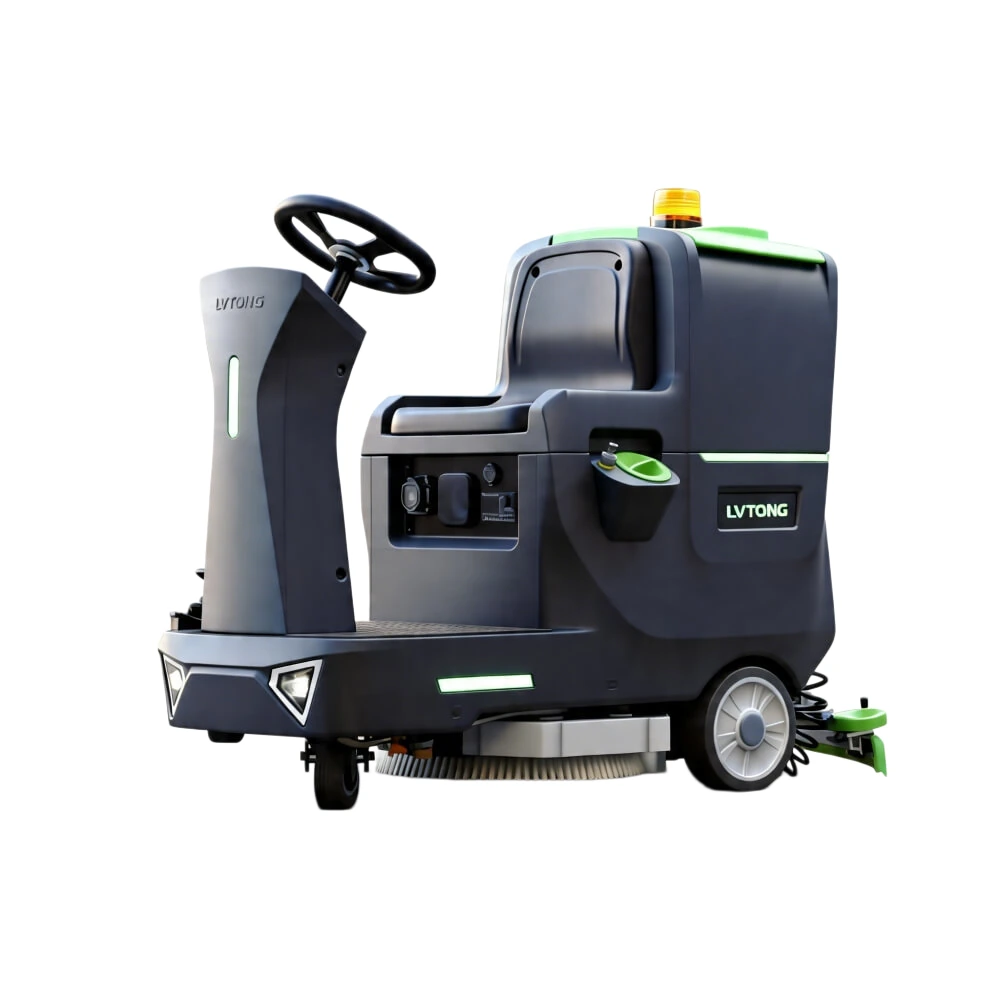
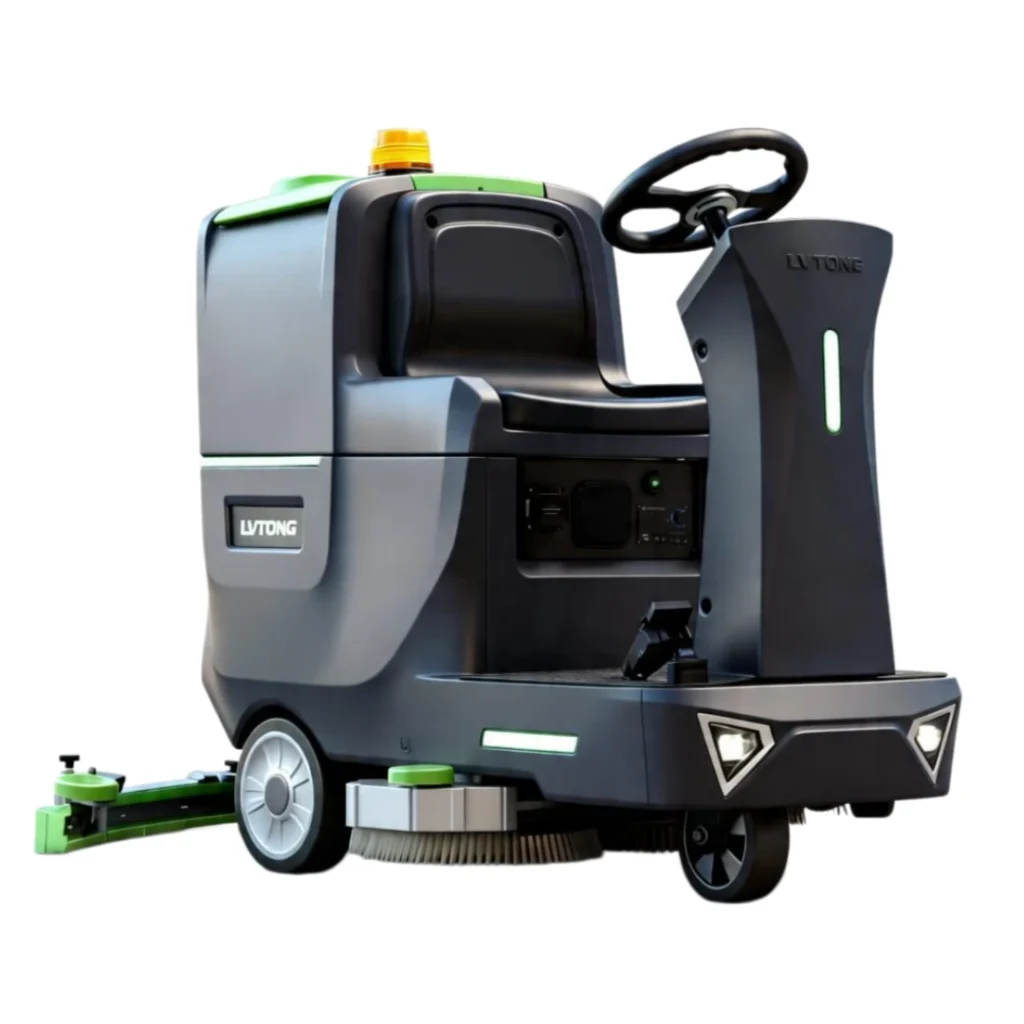
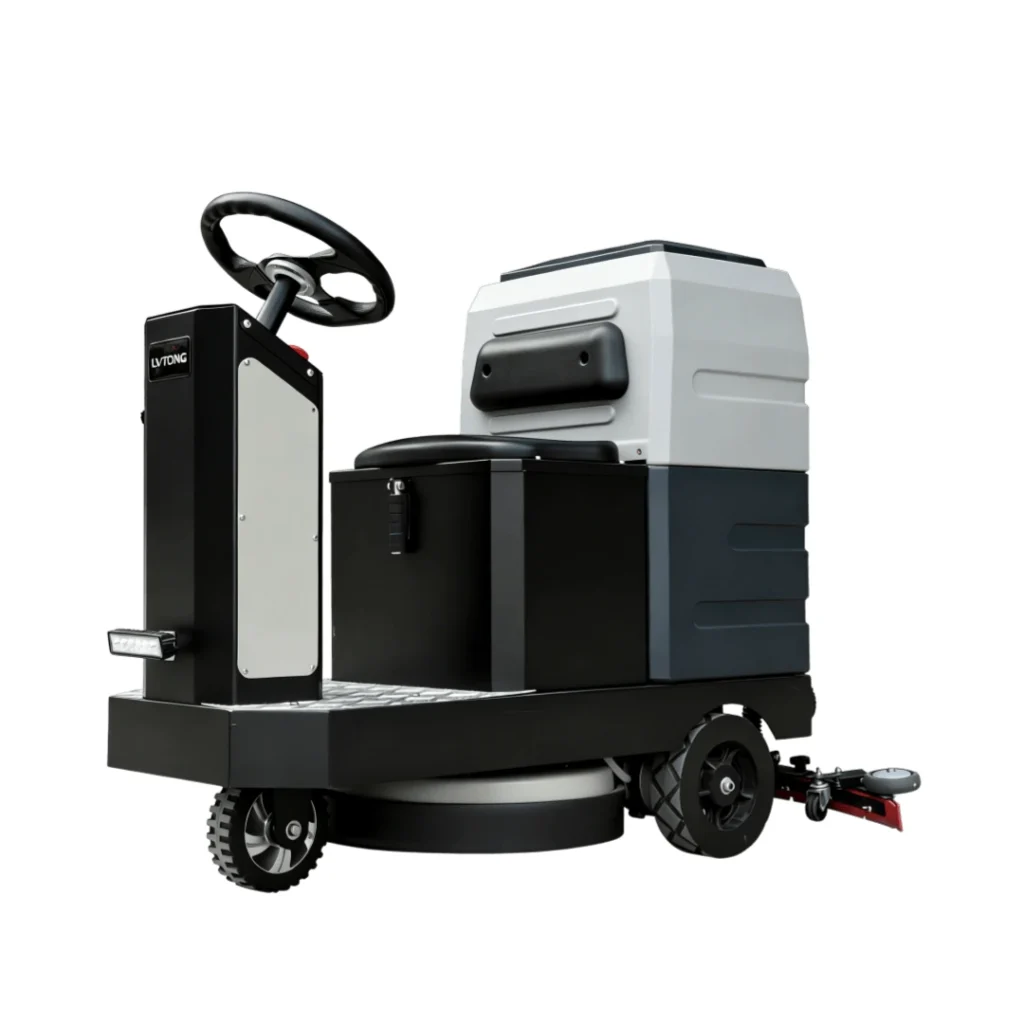
Aisle layout determines the most practical machine size. Walk-behind floor scrubbers move easily around machine cells, narrow lanes, and local spill areas. Ride-on models cover long, open production routes with less operator fatigue and fewer tank stops. The working route, number of turns, refill distance, and daily cleaning window matter as much as the catalogue productivity figure.
These LVTONG models show how cleaning width, tank capacity, and machine format match different production routes.
LVTONG model | Useful fit for this task | Published specification |
|---|---|---|
Narrow aisles and cleaning around production equipment | 530 mm scrubbing width; 62 L solution and 65 L recovery tanks; up to 2,100 m²/h | |
Mixed routes that need a compact ride-on format | 560 mm scrubbing width; 85 L water tank; up to 4,400 m²/h | |
Large, open factory or warehouse routes | 860 mm scrubbing width; 130 L water tank; up to 6,800 m²/h |
Step-by-Step Guide to Cleaning Coolant Spills with Floor Scrubbers
A good cleanup begins with a quick look at the work area. Your team identifies the spill source, concrete finish, traffic path, and nearby production equipment. Warning signs close the lane, and the operator confirms that the recovery tank has enough capacity for the job.
Pooled coolant and loose chips come off the floor before wet scrubbing begins. The area around drip trays and machine bases deserves extra attention because swarf often collects there. A quick brush and squeegee inspection also prevents an old chip from scratching the floor or leaving a recovery streak.
The solution tank needs the correct amount of low-foam detergent. Too much chemical creates foam and residue without improving the result. Moderate water flow and a slow test pass will show whether one pass is enough. A visible oily film usually responds better to a controlled double-scrub on the affected strip.
Slightly overlapping passes prevent missed strips along the cleaning route. The floor behind the squeegee should look evenly dry. Water fans or repeated streaks often come from debris under the blade, a worn squeegee, too much speed, or excessive foam. Cleaning the blade or adjusting the pace usually restores an even recovery line.
After the final recovery pass, the operator checks the aisle for oily sheen, sticky residue, remaining chips, and wet edges. The walk-behind floor scrubber operating procedure covers pre-use checks, overlapping routes, tank cleaning, brush care, squeegee care, and charging in more detail.
Safety Tips and Maintenance Best Practices for Industrial Floor Scrubbers
A consistent spill routine makes floor cleaning easier to manage across shifts. The cleaning team should know which detergent, absorbent, and PPE belong with each plant fluid. Operators also need to recognize when a spill requires bulk-liquid recovery before a floor scrubber is used.
Machine care is part of the cleanup. The recovery tank and float screen should be rinsed after each coolant job, with metal fines removed from the brush and both sides of the squeegee wiped clean. Coolant left in the machine overnight can create odor, foam, blocked hoses, and hardened deposits. Recording blade, hose, or vacuum issues at the end of the shift also makes the next maintenance check faster.
One of our application cases shows what the right floor scrubber can achieve across a large commercial site. An 80,000 m² shopping mall in Shanghai needed a more efficient way to clean floors affected by oil and dust. The LT-S860X combined synchronized water spraying with dust suction for rapid floor cleaning, increasing daily cleaning efficiency by approximately 400%. Faster, more consistent cleaning also helped the mall maintain a better customer experience.
For most manufacturing facilities, floor scrubbers provide an efficient way to remove coolant residue and recover dirty water from concrete floors. Once pooled liquid and sharp debris are cleared, the machine can wash the remaining film and leave a cleaner, drier aisle. The right brush, low-foam detergent, and machine size help your team complete the work reliably from one shift to the next.
FAQ
How often should floor scrubbers be used in a machine shop?
Cleaning frequency depends on coolant leakage, production volume, vehicle traffic, and the condition of the concrete. High-traffic machining areas may require daily scrubbing, while lower-risk zones can follow a scheduled weekly routine. Localized spills should always be addressed promptly rather than left until the next planned cleaning cycle.
Can coolant damage a floor scrubber?
Coolant residue can affect hoses, seals, brushes, filters, and recovery components if it remains inside the machine for extended periods. Rinsing the recovery system after each coolant-cleaning task and following the manufacturer’s maintenance instructions can help prevent odors, buildup, and premature component wear.
Can a floor scrubber operate safely near CNC machines?
A floor scrubber can be used near CNC machines when the route provides adequate clearance and electrical equipment is protected from splashing. Compact walk-behind models are often easier to control in confined production cells. Operators should also avoid directing cleaning solutions beneath machinery or toward exposed cables and connections.
What pH cleaner should be used with floor scrubbers on concrete?
The correct pH range depends on the concrete finish, floor coating, coolant formulation, and machine manufacturer’s recommendations. A compatible low-foam cleaner is generally preferred. Before cleaning the full area, test the solution on a small section to check for discoloration, coating damage, or unwanted residue.
Conclusion
Floor scrubbers can clean coolant residue and fine debris from concrete floors after pooled liquid and metal chips are removed. The right brush, low-foam detergent, and water-recovery system help remove oily film without spreading it to nearby areas. This leaves the concrete floor cleaner, drier, and safer for daily use.
If you are evaluating equipment for a machining area, factory aisle, or another demanding concrete surface, please contact us for a professional solution based on your floor condition, contamination type, cleaning route, and operating schedule.