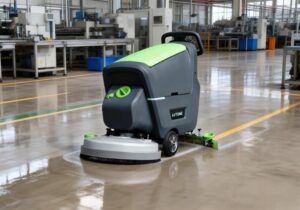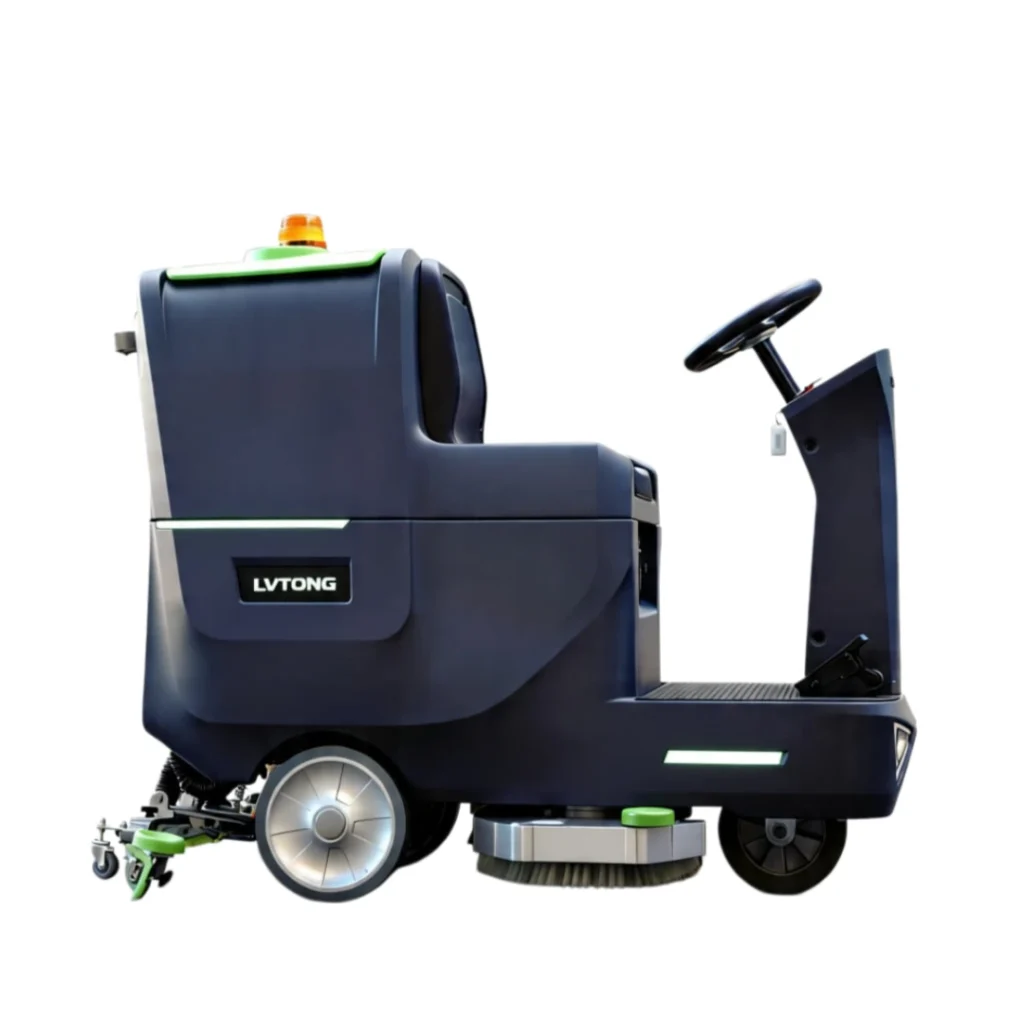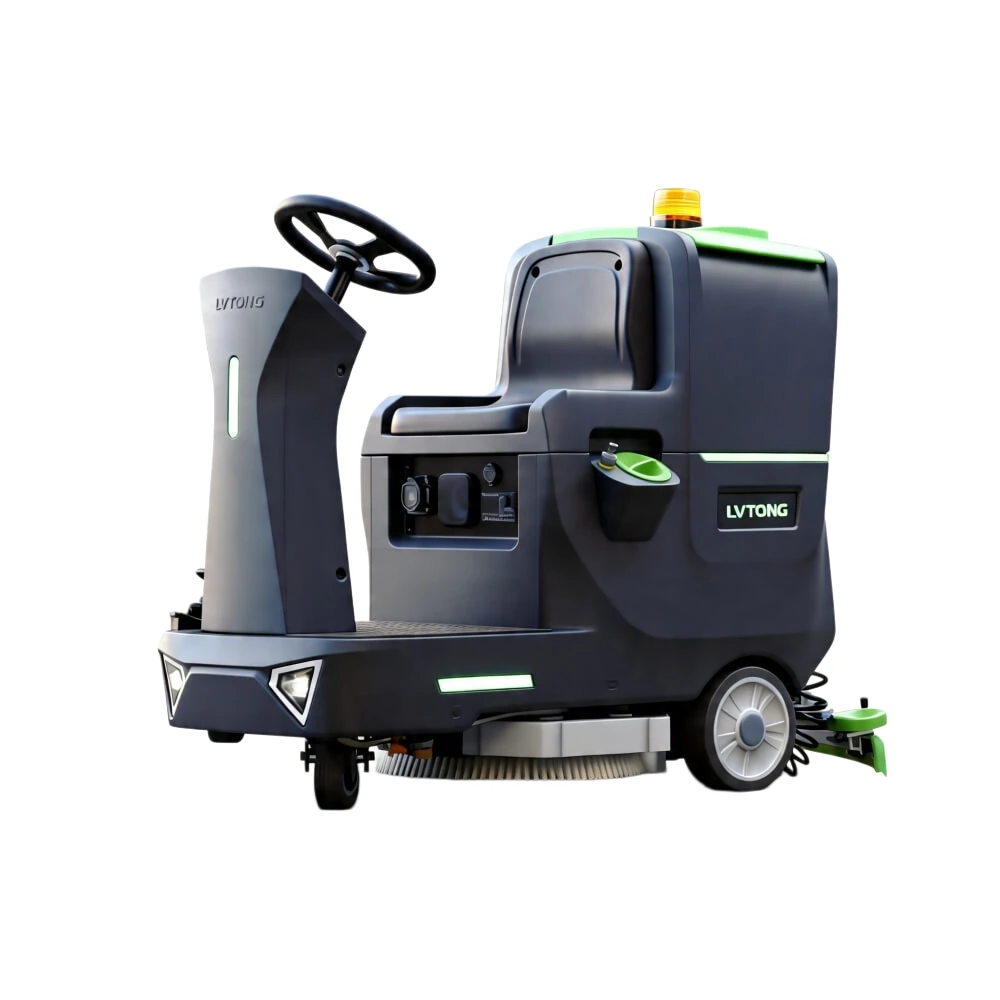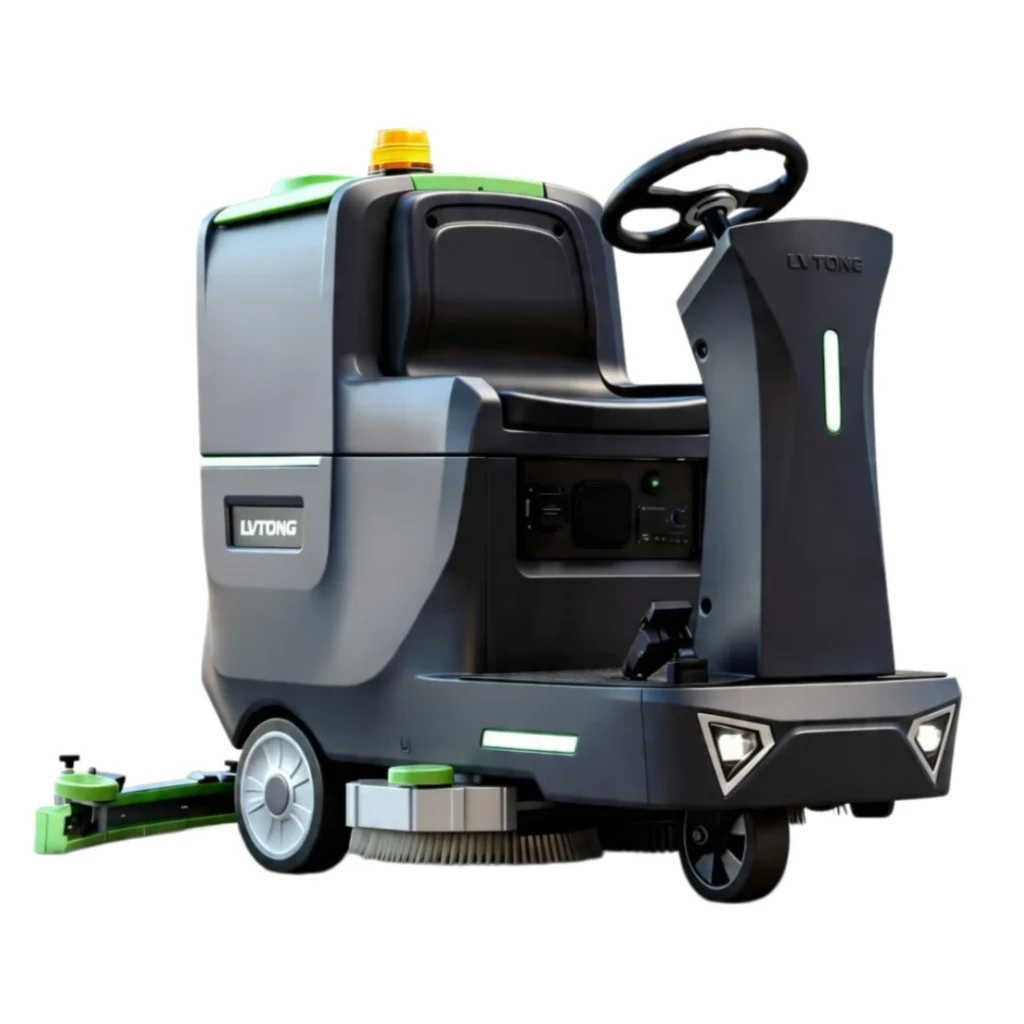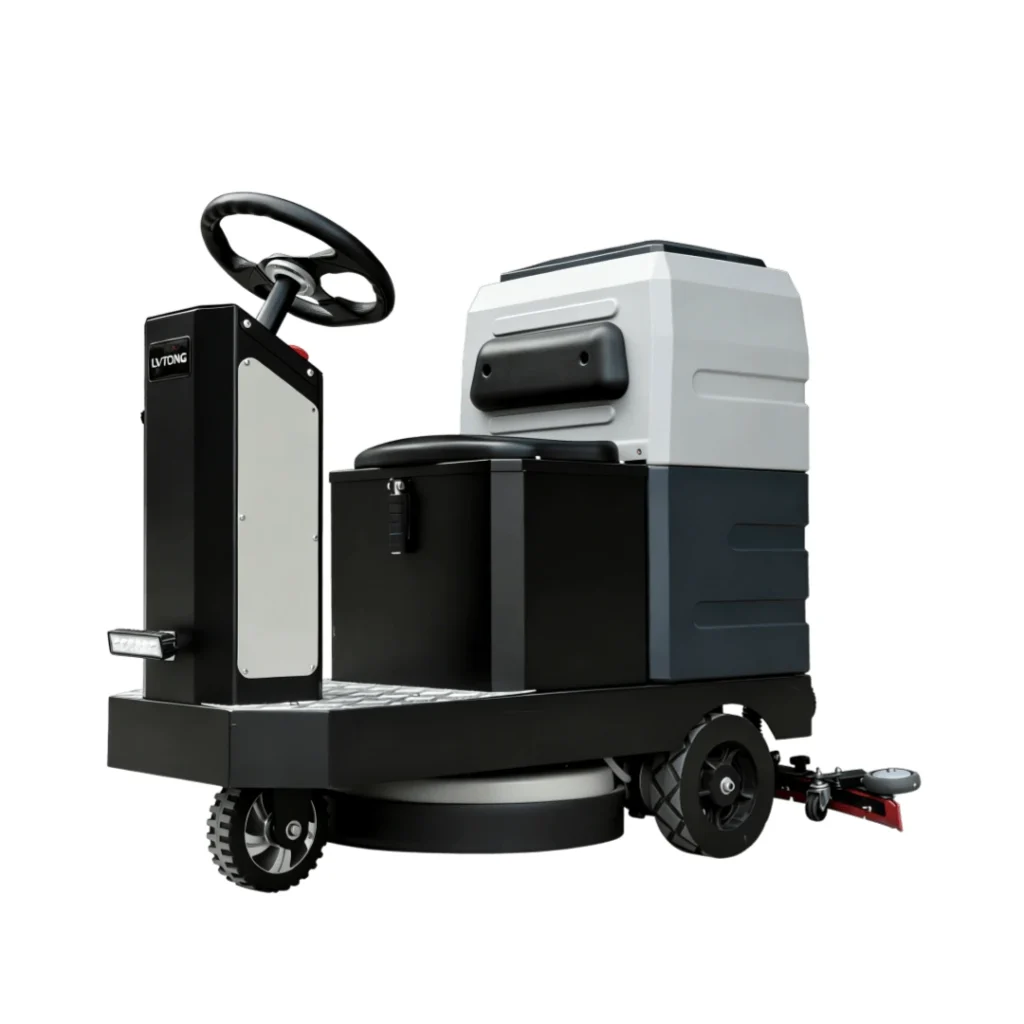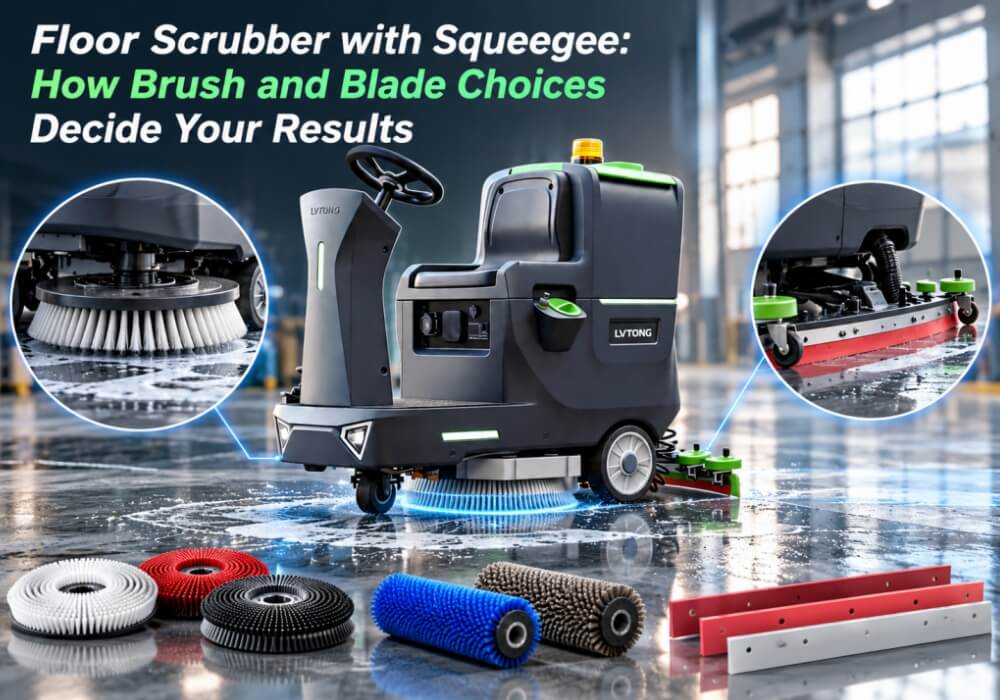
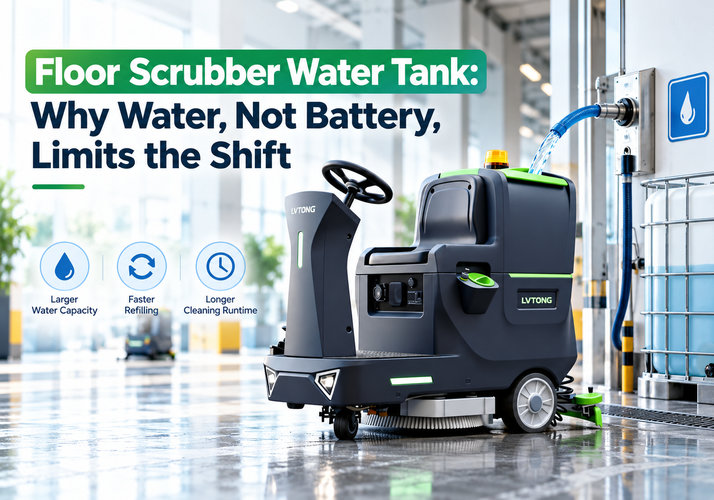
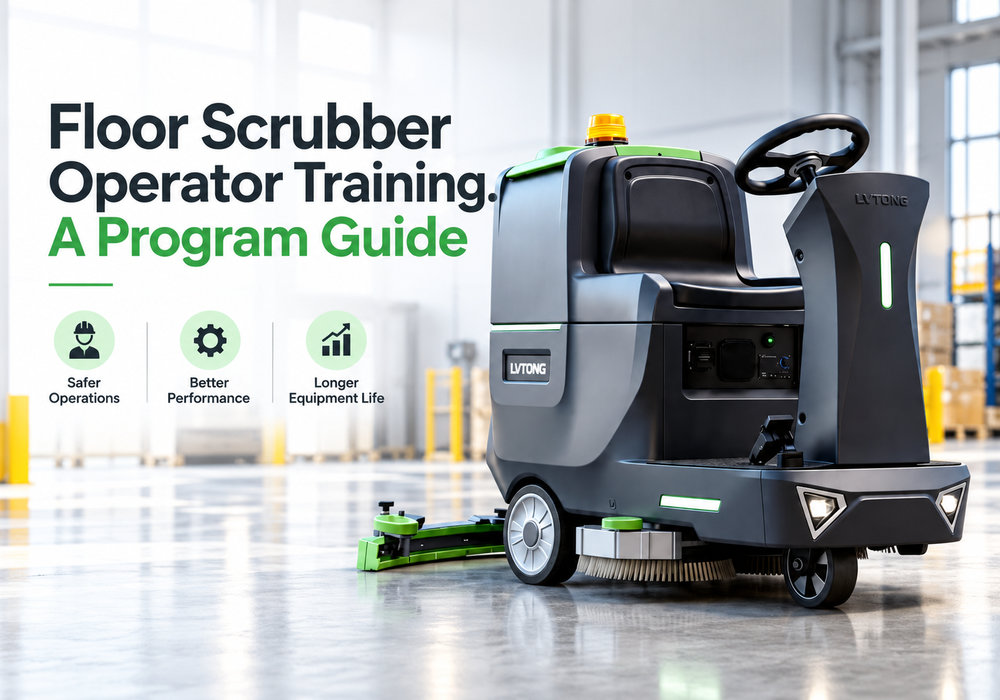
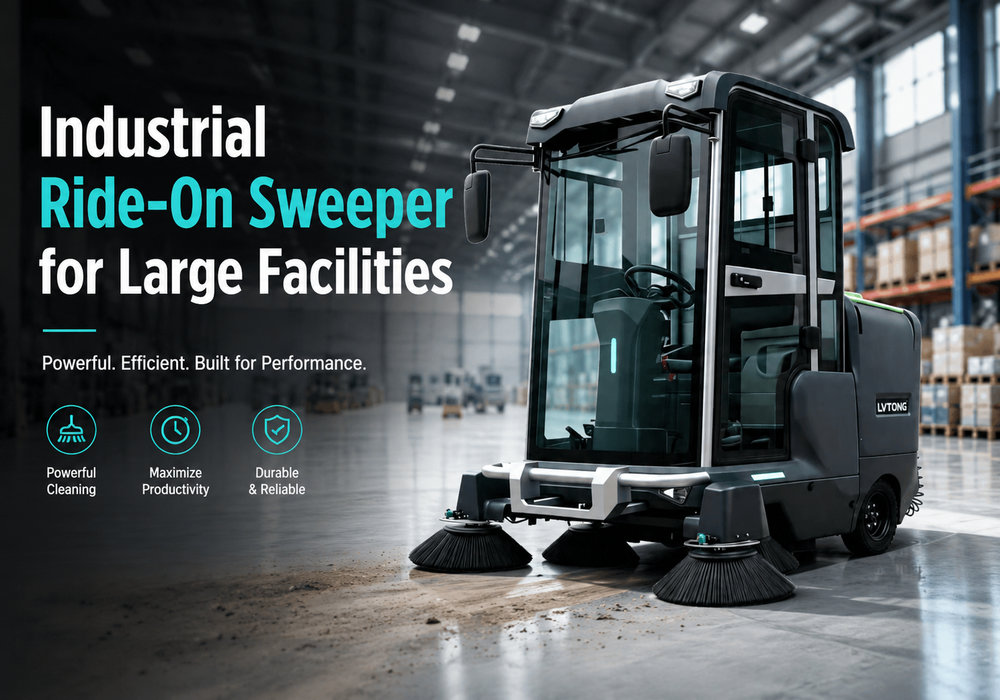
Un balayeuse autoportée industrielle Cette machine de nettoyage de sols est conçue pour les grandes installations nécessitant un dépoussiérage et un élimination des débris rapides, efficaces et constants. Elle est couramment utilisée dans les entrepôts, les usines, les parkings, les centres de distribution et les grands bâtiments commerciaux ou industriels.
Comparée au balayage manuel, la balayeuse autoportée permet de réduire la pénibilité du travail, d'améliorer l'efficacité du nettoyage, de contrôler la poussière et de garantir un environnement de travail plus sûr. Au lieu de pousser un balai ou de marcher derrière une petite balayeuse, l'opérateur est assis sur la machine et la conduit sur le sol ; les brosses, l'aspiration, les filtres et le bac à poussière assurent le nettoyage.
Ce guide explique ce qu'est une balayeuse autoportée industrielle, comment elle fonctionne, où l'utiliser, comment la faire fonctionner et comment choisir le modèle adapté à votre installation.
Réponse rapide
Un balayeuse autoportée industrielle Il s'agit d'une autolaveuse à conducteur opérateur conçue pour éliminer la poussière, les débris et les fines particules des grandes surfaces. Elle utilise des brosses latérales, une brosse principale, un système d'aspiration, des filtres et un bac à poussière pour collecter la saleté plus rapidement qu'un balayage manuel. Elle est particulièrement utile dans les établissements où le nettoyage quotidien ou fréquent des sols est trop lent ou trop laborieux avec les méthodes traditionnelles.
Qu'est-ce qu'une balayeuse autoportée industrielle ?
Une balayeuse autoportée industrielle est une machine de nettoyage de sols motorisée qui permet à l'opérateur de rester assis et de conduire pendant le nettoyage. Elle est conçue pour les travaux de nettoyage de sols à grande échelle où le balayage manuel ou les petites balayeuses poussées ne sont pas suffisamment efficaces.
La machine comprend généralement :
- Brosses latérales pour les bords et les coins
- Une brosse principale pour ramasser la poussière et les débris
- Un système d'aspiration pour le contrôle des poussières fines
- Filtres pour réduire les particules en suspension dans l'air
- Une trémie à débris pour la collecte des déchets
- Une position de conduite assise pour le confort de l'opérateur
En résumé, une balayeuse autoportée permet à un seul opérateur de nettoyer une surface beaucoup plus grande en moins de temps. Pour les installations commerciales et industrielles, une balayeuse autoportée professionnelle représente un choix judicieux lorsqu'un dépoussiérage et un ramassage quotidien des débris sont nécessaires. Il est particulièrement utile dans les installations comportant de larges allées, de grands espaces ouverts, une accumulation fréquente de poussière, des débris d'emballage, un trafic important de chariots élévateurs ou de la saleté extérieure.
Comment fonctionne une balayeuse autoportée industrielle ?
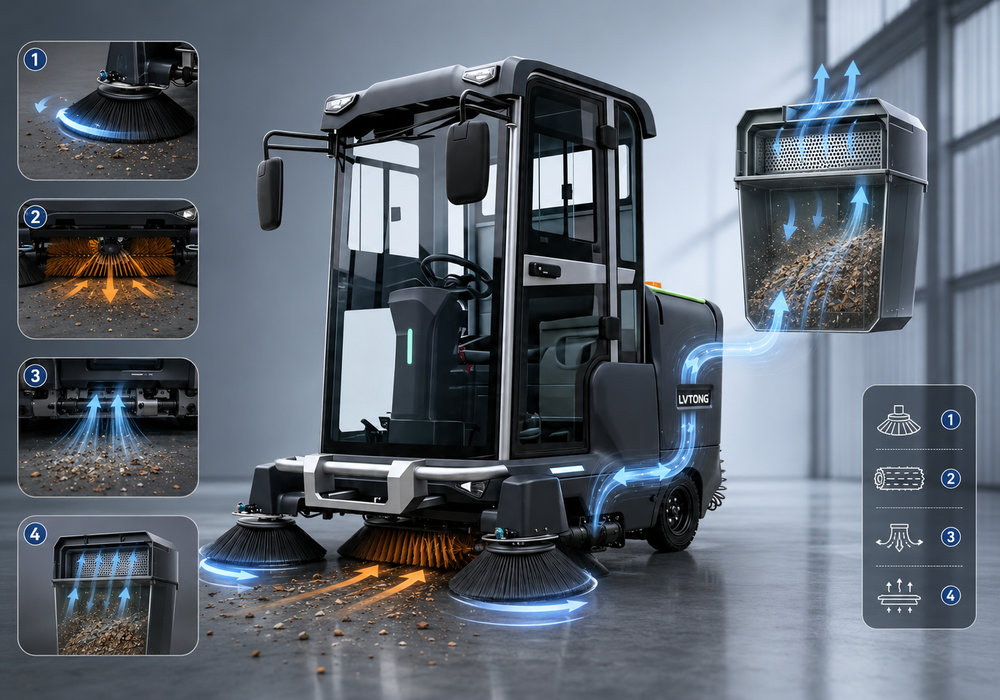
Bien qu'une balayeuse autoportée industrielle puisse paraître imposante, son principe de fonctionnement est simple. La machine combine le brossage mécanique, le contrôle de la poussière et la collecte des débris en une seule opération de nettoyage.
| Étape | Ce qui se produit | Pourquoi c'est important |
|---|---|---|
| Brosses latérales | Déplacez la poussière et les débris des bords vers l'intérieur. | Permet de nettoyer les coins, les murs et les bords des allées. |
| Brosse principale | Balayez les débris vers le chemin de collecte | Améliore l'efficacité du nettoyage sur les grandes surfaces |
| système de vide | Capture les poussières fines lors du balayage | Réduit la poussière en suspension dans l'air |
| Système de filtration | Piège les particules fines avant que l'air ne soit libéré. | Contribue à maintenir un air intérieur plus sain |
| Trémie | Les magasins ont accumulé de la poussière et des débris. | Permet un nettoyage continu sur de grandes surfaces |
| Système de vidange | Les déchets sont éliminés après le nettoyage. | Réduit les temps d'arrêt et simplifie la maintenance |
Dans des environnements de travail réels, ce procédé permet de nettoyer le sol plus rapidement, avec moins de poussière dispersée dans l'air et moins d'efforts physiques de la part de l'opérateur.
Comment utiliser une balayeuse autoportée industrielle en toute sécurité
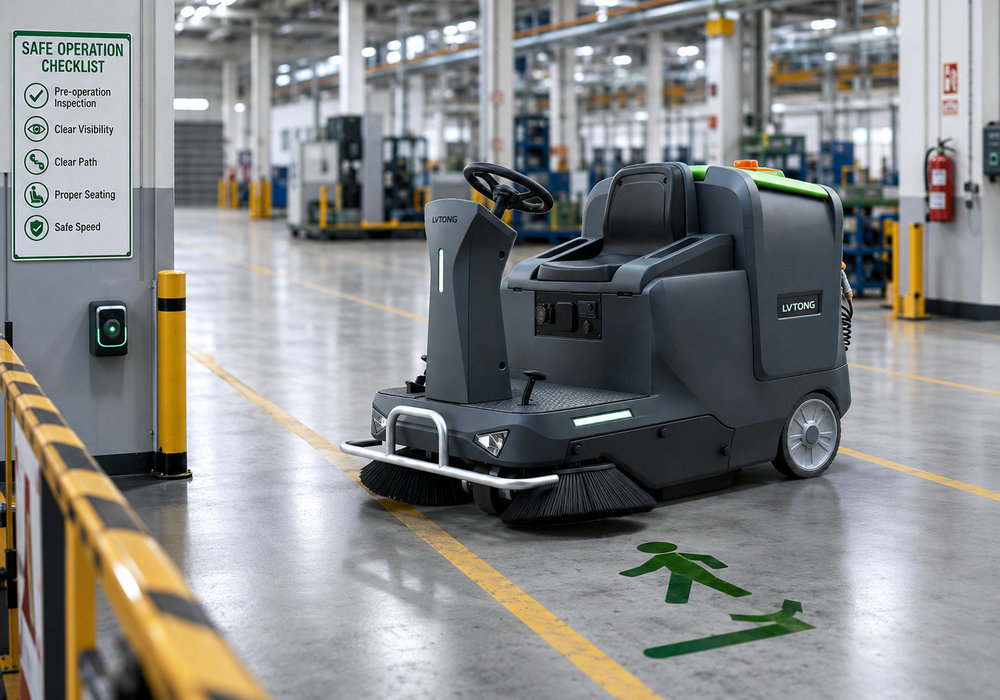
De nombreux utilisateurs recherchent comment utiliser une balayeuse autoportée, Il est particulièrement important de bien comprendre le fonctionnement des autolaveuses avant toute formation. Bien que les commandes puissent varier d'un modèle à l'autre, le principe de fonctionnement reste généralement similaire. Si les opérateurs ont besoin d'une démonstration plus claire avant la formation, des vidéos de démonstration peuvent les aider à appréhender le fonctionnement de base, le mouvement des brosses, la vidange de la trémie et les étapes d'inspection quotidienne.
1. Inspecter la zone de nettoyage
Avant de commencer, vérifiez que le sol ne comporte pas de gros objets, de câbles dénudés, de débris pointus, de liquides renversés ou d'obstacles susceptibles d'endommager les brosses ou de bloquer la machine.
Les balayeuses autoportées sont principalement conçues pour les poussières et débris secs. Si le sol est gras, taché ou sale, les autolaveuses-sécheuses commerciales peuvent être plus appropriées car elles utilisent de l'eau, du détergent, la pression de frottement et des systèmes de récupération pour laver et sécher le sol.
2. Vérifiez la machine
Avant l'opération, inspectez :
- Niveau de batterie ou niveau de carburant
- État de la brosse principale
- condition de brosse latérale
- Condition de filtre
- État des pneus
- Capacité de la trémie
- Feux de freinage et de sécurité
Une inspection rapide avant utilisation permet d'éviter les temps d'arrêt pendant le nettoyage.
3. Réglez le siège et les commandes
L'opérateur doit s'asseoir confortablement, ajuster son siège si nécessaire et se familiariser avec la direction, l'accélérateur, le frein, les commandes de la brosse et la fonction d'arrêt d'urgence.
Pour les nouveaux opérateurs, une formation de base est recommandée avant toute utilisation régulière.
4. Commencez à balayer à une vitesse contrôlée
Conduisez la balayeuse à une vitesse constante. Une vitesse trop élevée peut réduire l'efficacité du nettoyage, notamment dans les zones poussiéreuses ou encombrées de débris.
Utilisez les brosses latérales près des murs, des coins, des étagères et des bords d'allée. Utilisez la brosse principale pour les zones centrales au sol.
5. Surveiller la collecte de poussière et de débris
Pendant le fonctionnement, surveillez les signes de baisse d'efficacité de nettoyage, tels que les fuites de poussière, les résidus ou les bruits inhabituels. Ces signes peuvent indiquer que le filtre, la brosse ou la trémie nécessitent une intervention.
6. Vider la trémie
Après le nettoyage, videz le bac à poussière conformément aux instructions du fabricant. Veillez à ne pas trop le remplir, car cela pourrait réduire l'aspiration et l'efficacité du nettoyage.
7. Nettoyer les filtres et vérifier les brosses
Après utilisation, vérifiez les filtres et les brosses. Un entretien régulier permet un fonctionnement optimal de la balayeuse et prolonge sa durée de vie.
Avantages des balayeuses autoportées industrielles
Les balayeuses autoportées industrielles sont largement utilisées car elles résolvent plusieurs problèmes pratiques de nettoyage dans les grandes installations.
Une efficacité de nettoyage supérieure
Le balayage manuel de grandes surfaces est long et fastidieux. Une balayeuse autoportée couvre une plus grande surface en moins de temps, ce qui la rend idéale pour un nettoyage quotidien ou fréquent.
Pour les entrepôts, les usines et les parkings, cela peut réduire considérablement le temps de nettoyage par rapport aux méthodes traditionnelles.
Intensité de travail réduite
La conception du poste de conduite assis réduit la fatigue de l'opérateur. Un seul opérateur formé peut nettoyer une grande surface sans avoir à pousser un équipement lourd ni à balayer manuellement de façon répétée.
C'est particulièrement utile pour les longues journées de travail ou les installations qui nécessitent un nettoyage quotidien.
Meilleure maîtrise de la poussière
Les balayeuses autoportées industrielles sont équipées de systèmes d'aspiration et de filtres. Ces derniers permettent de capturer les poussières fines au lieu de simplement les déplacer sur le sol.
Un meilleur contrôle de la poussière est important dans les entrepôts, les usines, les ateliers et les environnements industriels intérieurs où les particules en suspension dans l'air peuvent affecter la propreté et la sécurité.
Convient à différentes surfaces de sol
Les balayeuses autoportées peuvent souvent être utilisées sur :
- sols en béton
- sols en époxy
- sols carrelés
- Revêtement de sol en PVC
- surfaces de stationnement
- surfaces pavées extérieures
Le modèle le plus adapté dépend du type de sol, du type de débris et de la fréquence de nettoyage.
Amélioration de la sécurité au travail
La poussière, les débris, le sable, les déchets d'emballage et les petites particules peuvent créer des risques de glissade, réduire la visibilité ou perturber les activités sur le lieu de travail. Un balayage régulier contribue à maintenir un environnement plus propre et plus sûr.
De nombreuses balayeuses autoportées sont également équipées de feux de sécurité, de freins, de dispositifs d'avertissement et d'une meilleure visibilité pour l'opérateur.
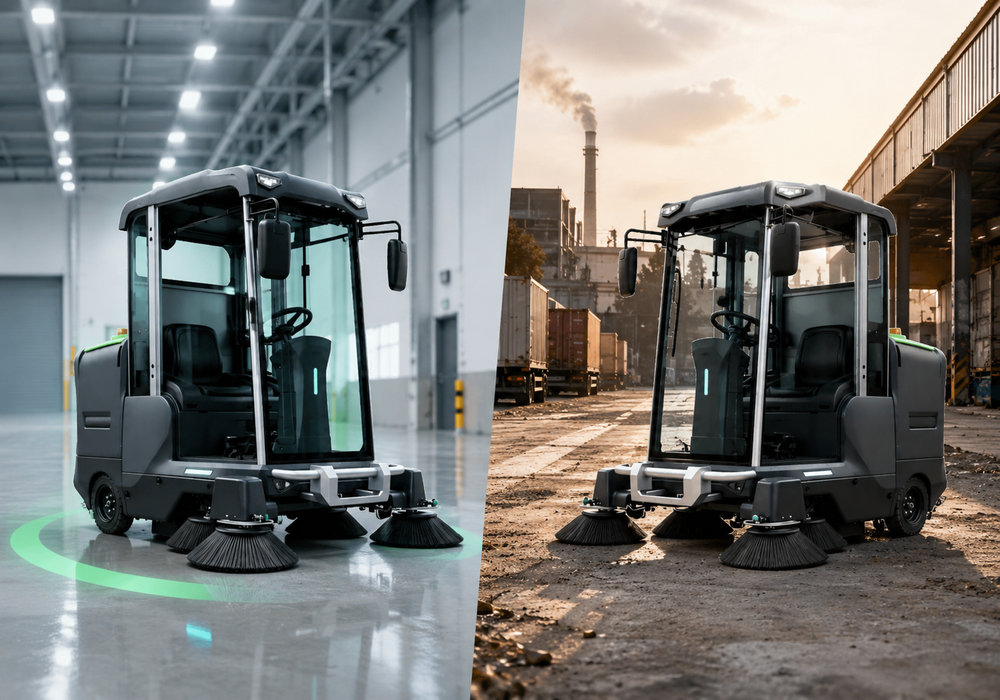
Meilleurs endroits pour utiliser une balayeuse autoportée
Les balayeuses autoportées sont particulièrement adaptées aux grands espaces où le nettoyage manuel est inefficace. Voici quelques exemples d'utilisation courante.
Entrepôts
Les entrepôts présentent souvent de larges allées, des débris d'emballage, de la poussière de palettes, un trafic important de chariots élévateurs et de vastes zones de stockage. Une balayeuse autoportée permet de nettoyer rapidement ces espaces tout en réduisant l'accumulation de poussière.
usines de fabrication
Les usines et les zones de production peuvent contenir de la poussière, des particules métalliques, des résidus de matériaux et divers débris issus des opérations quotidiennes. Une balayeuse autoportée contribue à maintenir un environnement de production plus propre.
Centres de distribution
Stationnement
Les aires de stationnement accumulent souvent du sable, de la poussière de pneus, des feuilles, des petits cailloux et des débris extérieurs. Une balayeuse autoportée est utile aussi bien pour les parkings intérieurs que pour les surfaces pavées extérieures.
Centres commerciaux et grands immeubles commerciaux
Les grands espaces commerciaux peuvent nécessiter un balayage régulier avant ou après les heures d'ouverture. Les balayeuses autoportées permettent d'accélérer le nettoyage des espaces publics ouverts, des couloirs et des zones de service.
Écoles et établissements publics
Les grands halls, les couloirs, les allées extérieures et les zones d'activité peuvent bénéficier du balayage autoporté lorsque la zone de nettoyage est trop grande pour les méthodes manuelles.
Aéroports et infrastructures de transport
Les installations de transport nécessitent souvent un nettoyage fréquent de grandes surfaces. Les balayeuses autoportées peuvent contribuer à améliorer l'efficacité dans les halls ouverts, les voies de service, les parkings et les zones de maintenance.
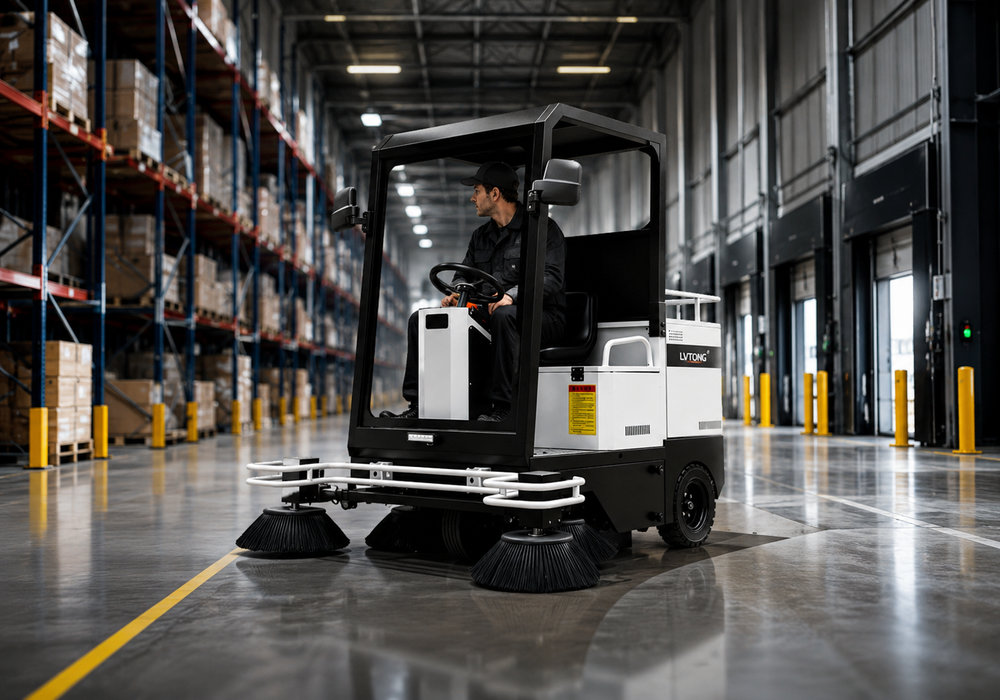
Balayeuse autoportée vs balayeuse à conducteur marchant
Le choix entre une balayeuse autoportée et une balayeuse à conducteur marchant dépend principalement de la surface au sol, de la largeur du parcours, du niveau de débris et de la charge de travail de l'opérateur.
| Fonctionnalité | Balayeuse autoportée | Balayeuse à conducteur marchant |
|---|---|---|
| Idéal pour | Grands espaces, larges allées, longs circuits de nettoyage | espaces de petite à moyenne taille, espaces étroits |
| Efficacité du nettoyage | Couverture plus étendue et nettoyage plus rapide | Couverture réduite mais bonne flexibilité |
| Fatigue de l'opérateur | Plus bas, car l'opérateur est assis | Plus haut, car l'opérateur marche |
| Manœuvrabilité | Moins flexible dans les virages serrés | Plus facile dans les espaces étroits ou encombrés |
| Entraînement | Nécessite une formation à la conduite et à la sécurité | Plus facile à apprendre |
| coût initial | Plus élevé | Plus bas |
| pouvoir nettoyant | Plus adapté aux zones fortement poussiéreuses et aux gros débris. | Convient pour la saleté courante et les petits débris |
| Utilisation idéale | Entrepôts, usines, parkings | Petits entrepôts, boutiques, couloirs, espaces restreints |
Une balayeuse autoportée est généralement le meilleur choix pour les grandes surfaces dégagées. Une balayeuse à conducteur marchant sera plus adaptée aux petites surfaces, aux espaces étroits ou aux zones très encombrées.
Balayeuse autoportée industrielle à batterie ou diesel : laquelle choisir ?
Le type d'alimentation est un facteur important lors du choix d'une balayeuse autoportée industrielle. Le choix approprié dépend de l'utilisation prévue de la machine : intérieur, extérieur ou environnements mixtes.
| Type d'alimentation | Idéal pour | Avantages | Limites |
|---|---|---|---|
| Balayeuse autoportée à batterie | Entrepôts intérieurs, usines, écoles, centres commerciaux | Fonctionnement silencieux, sans échappement, convient aux espaces clos | Nécessite une recharge, autonomie limitée |
| Balayeuse autoportée diesel | Cours extérieures, parkings, grandes zones industrielles | Autonomie prolongée, performances robustes en extérieur | Évacuation des gaz d'échappement, bruit, peu adapté aux espaces intérieurs clos. |
Choisissez une balayeuse autoportée à batterie si :
- La machine sera utilisée à l'intérieur.
- Un faible niveau sonore est important
- Les émissions d'échappement doivent être évitées
- Le programme de nettoyage permet le temps de charge
- L'établissement dispose de circuits de nettoyage quotidiens stables.
Choisissez une balayeuse autoportée diesel si :
- La machine sera principalement utilisée en extérieur.
- La zone de nettoyage est très grande.
- Une durée d'exécution plus longue est nécessaire
- Les restrictions concernant le bruit et les émissions sont moins importantes.
- La surface est recouverte de débris extérieurs plus importants.
Pour les espaces intérieurs clos, les modèles à batterie sont généralement plus pratiques. Pour les sites industriels extérieurs ou les grands parkings, les modèles diesel ou à essence peuvent être plus adaptés.
Comment choisir la balayeuse autoportée industrielle adaptée
Avant d'acheter une balayeuse autoportée, évaluez les conditions de nettoyage réelles de vos locaux. Les facteurs suivants sont particulièrement importants.
1. Taille de la zone de nettoyage
Les installations de plus de 1 858 m² (20 000 pi²) tirent généralement davantage profit d'une balayeuse autoportée. Pour les très grands entrepôts, usines ou parkings, une grande balayeuse autoportée industrielle peut s'avérer plus appropriée grâce à sa capacité à couvrir une plus grande surface et à fonctionner en continu plus longtemps. Pour les petites surfaces, une balayeuse autoportée peut s'avérer plus économique.
Posez ces questions :
- Quelle surface en pieds carrés faut-il nettoyer ?
- À quelle fréquence faut-il balayer la zone ?
- Les voies sont-elles suffisamment larges pour une machine autoportée ?
- Y a-t-il beaucoup de virages étroits ou d'allées bloquées ?
2. Type de débris
Différents environnements produisent différents types de débris.
Voici quelques exemples courants :
- Poussière
- Sable
- Feuilles
- déchets d'emballage
- particules métalliques
- copeaux de bois
- poussière de pneus
- Débris industriels divers
Si le sol est principalement recouvert de poussière et de débris secs, une balayeuse convient. En revanche, si le sol présente des résidus humides, de l'huile, de la graisse ou des déversements de liquides, une autolaveuse sera peut-être nécessaire.
3. Utilisation intérieure ou extérieure
L'utilisation en intérieur requiert généralement un fonctionnement silencieux et l'absence d'émissions polluantes, ce qui rend les balayeuses à batterie plus adaptées.
Une utilisation en extérieur peut nécessiter une puissance accrue, une autonomie plus longue et de meilleures performances sur les surfaces accidentées.
4. Fréquence de nettoyage
Un bâtiment nécessitant un balayage quotidien peut justifier un investissement plus important dans une balayeuse autoportée plus performante. Pour un nettoyage occasionnel, une machine plus petite ou plus simple peut suffire.
5. Largeur de l'allée et espace de manœuvre
Les balayeuses autoportées nécessitent un espace de braquage suffisant. Avant d'acheter, vérifiez :
- Largeur de l'allée
- Dégagement de porte
- Rayon de braquage
- espacement des racks
- Agencement de stockage
Si l'établissement comporte des allées étroites ou des obstacles fréquents, une balayeuse plus petite peut s'avérer plus pratique.
6. Exigences en matière de contrôle de la poussière
Si les poussières fines constituent un problème majeur, choisissez un modèle doté d'une forte puissance d'aspiration et d'un système de filtration efficace. La maîtrise des poussières est particulièrement importante dans les entrepôts, les ateliers et les usines.
7. Confort de l'opérateur
Pour les longues journées de nettoyage, le confort de l'opérateur est primordial. À prendre en compte :
- Confort d'assise
- Visibilité
- Commande de direction
- niveau sonore
- Configuration des pédales
- Facilité de vidage de la trémie
Un opérateur à l'aise est plus susceptible de nettoyer efficacement et en toute sécurité.
8. Maintenance et assistance technique
Avant d'acheter, tenez compte de la disponibilité de :
- brosses de rechange
- Filtres
- Batteries
- Pneus
- assistance technique
- Conseils d'entretien
- Service après-vente
Erreurs courantes à éviter avant d'acheter
Choisir une balayeuse uniquement en fonction du prix
Un prix initial bas ne signifie pas toujours un coût total inférieur. L'autonomie de la batterie, la qualité des brosses, le contrôle de la poussière, la capacité du réservoir et le service après-vente sont autant d'éléments qui influent sur la valeur à long terme.
Ignorer l'état réel du sol
Une machine performante sur les sols lisses d'intérieur peut ne pas l'être à l'extérieur ou sur les surfaces rugueuses. Choisissez toujours votre balayeuse en fonction du type de sol.
Choisir le mauvais type d'alimentation
Les balayeuses à batterie sont généralement plus performantes en intérieur, tandis que les balayeuses diesel sont généralement plus adaptées à l'extérieur. Choisir le mauvais type d'alimentation peut engendrer des problèmes d'autonomie, de bruit, d'émissions ou de sécurité.
Sous-estimation du rayon de braquage
Une balayeuse autoportée nécessite un espace suffisant pour manœuvrer. Si votre établissement comporte des allées étroites, des virages serrés ou de nombreux obstacles, vérifiez les dimensions de la machine avant l'achat.
Utilisation d'une balayeuse sur sols mouillés ou gras
La plupart des balayeuses autoportées sont conçues pour les débris secs. Les débris humides, l'huile ou la graisse peuvent obstruer le système ou réduire ses performances. Dans ces conditions, une autolaveuse est généralement plus adaptée.
Points clés à retenir
- Une balayeuse autoportée industrielle est conçue pour l'élimination de la poussière et des débris sur de grandes surfaces.
- Il convient aux entrepôts, usines, parkings, centres de distribution et grandes installations.
- Des brosses latérales, des brosses principales, un flux d'air aspiré, des filtres et une trémie fonctionnent ensemble pour collecter les débris.
- Les modèles à piles sont plus adaptés à une utilisation en intérieur.
- Les balayeuses autoportées diesel sont plus adaptées aux espaces extérieurs ou aux grandes zones industrielles.
- Le modèle approprié dépend de la surface au sol, du type de débris, du type d'alimentation, de la fréquence de nettoyage et du service après-vente.
- Les balayeuses autoportées ne sont pas idéales pour les déversements importants de liquides, d'huile ou de résidus humides.
FAQ
À quelle fréquence dois-je utiliser une balayeuse autoportée industrielle ?
La plupart des installations utilisent une balayeuse autoportée industrielle quotidiennement ou plusieurs fois par semaine, selon le niveau de poussière, la circulation piétonne, le trafic de chariots élévateurs et l'activité de production. Les entrepôts, les usines et les parkings fortement jonchés de débris peuvent nécessiter un balayage quotidien.
Les balayeuses autoportées industrielles peuvent-elles être utilisées à l'extérieur ?
Oui. Les balayeuses autoportées industrielles peuvent être utilisées en extérieur, notamment sur les parkings, les cours industrielles, les zones de chargement et les itinéraires d'entrepôts extérieurs. Pour une utilisation en extérieur, les modèles diesel ou à essence offrent une plus grande autonomie, tandis que les modèles à batterie sont généralement plus adaptés aux espaces intérieurs ou clos.
Les balayeuses autoportées sont-elles difficiles à conduire ?
La plupart des balayeuses autoportées sont conçues pour des opérateurs formés et sont plus faciles à utiliser que le balayage manuel sur de grandes surfaces. Cependant, avant une utilisation régulière, les opérateurs doivent maîtriser la conduite en toute sécurité, le rayon de braquage, le contrôle de la vitesse, le réglage des brosses et la vidange de la trémie.
Quelle est l'autonomie de la batterie d'une balayeuse autoportée ?
L'autonomie de la batterie dépend de la taille du modèle, de sa capacité, de l'état du sol, de la vitesse de nettoyage et de la pression de la brosse. Pour les espaces intérieurs, il est conseillé de comparer l'autonomie, le temps de charge et la surface de nettoyage quotidienne avant de choisir une balayeuse autoportée à batterie.
Les balayeuses autoportées peuvent-elles traiter des débris humides ?
La plupart des balayeuses autoportées industrielles sont conçues principalement pour les poussières et débris secs. Les débris humides risquent d'obstruer les brosses, les filtres ou la trémie. En cas de déversements de liquides, de graisse ou de résidus humides importants, une autolaveuse sera plus appropriée qu'une balayeuse.
Quel est le meilleur endroit pour utiliser une balayeuse autoportée ?
Les meilleurs endroits pour utiliser une balayeuse autoportée sont les grands espaces ouverts et fréquemment nettoyés, tels que les entrepôts, les usines, les parkings, les installations logistiques, les centres de distribution, les écoles, les centres commerciaux et les bâtiments industriels.
Quelle est la différence entre une balayeuse et une autolaveuse ?
Une balayeuse élimine la poussière sèche, les débris, le sable et les petites particules du sol. Une autolaveuse utilise de l'eau, du détergent, des brosses et un système de récupération pour laver et sécher le sol. Si le sol est principalement recouvert de débris secs, utilisez une balayeuse. S'il est gras, taché ou sale, utilisez une autolaveuse.
Conclusion
Un balayeuse autoportée industrielle Cette solution est efficace pour les grandes installations nécessitant un dépoussiérage et un enlèvement régulier des débris. Elle contribue à réduire les coûts de main-d'œuvre, à accélérer le nettoyage, à contrôler la poussière et à créer un environnement de travail plus propre.
Le choix optimal dépend de la superficie de vos locaux, du type de débris, de la fréquence de nettoyage, des besoins en énergie et de l'environnement d'utilisation. Les modèles à batterie sont généralement plus adaptés aux espaces intérieurs, tandis que les balayeuses autoportées diesel conviennent mieux aux zones industrielles extérieures et aux grands parkings.
Si votre établissement comporte de grandes surfaces au sol, de larges allées, une accumulation fréquente de poussière et des besoins de nettoyage réguliers, une balayeuse autoportée peut constituer une solution de nettoyage pratique et économique.
Vous recherchez la balayeuse autoportée industrielle idéale ?
Le choix d'une balayeuse adaptée ne se limite pas à sa taille. Il faut également tenir compte de la surface à nettoyer, du type de débris, de l'utilisation (intérieur ou extérieur), de l'autonomie de la batterie, des exigences en matière de contrôle de la poussière et des services d'entretien.
LVTONG propose des solutions de balayeuses autoportées pour les entrepôts, les usines, les parkings, les centres de distribution et les grands sites commerciaux. Contactez-nous pour comparer la balayeuse autoportée industrielle la mieux adaptée à votre environnement de nettoyage et à vos besoins opérationnels quotidiens.