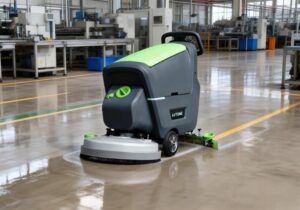
Introduction
Choisir le bon type de brosse pour autolaveuse est l'un des facteurs les plus importants qui influencent les performances de nettoyage.
Une brosse efficace sur du béton rugueux peut s'avérer trop agressive pour les sols en époxy, PVC ou autres revêtements. De même, une brosse souple peut ne pas assurer un brossage mécanique suffisant pour les surfaces texturées, les sols très sales ou les sols industriels huileux.
Les résultats du nettoyage dépendent également de la pression de la brosse, de la vitesse de fonctionnement, du choix du détergent, de l'état de la raclette et de l'entretien régulier de la machine.
Ce guide explique comment comparer les types de brosses pour autolaveuses, adapter les brosses et les tampons aux différentes surfaces de sol et régler la machine pour obtenir de meilleurs résultats de nettoyage commercial et industriel.
Réponse rapide : Quelle brosse de nettoyage de sol devez-vous utiliser ?
Pour les sols lisses ou revêtus tels que l'époxy, le vinyle ou le PVC, commencez par une brosse en nylon souple ou un tampon à récurer non abrasif.
Pour le nettoyage courant des sols durs, une brosse moyenne en nylon ou en polypropylène constitue souvent un bon point de départ. Les sols rugueux, texturés ou très sales peuvent nécessiter une brosse plus rigide ou abrasive, à condition que la surface supporte une abrasion supplémentaire.
Utilisez toujours la brosse la moins agressive qui enlève efficacement la saleté, et testez la brosse ou le tampon choisi sur une petite zone discrète avant un nettoyage à grande échelle.

Aperçu des types de brosses pour autolaveuses
Différents types de brosses pour autolaveuses sont conçus pour différentes textures, finitions et types de saleté de sols.
Le meilleur choix n'est pas forcément la brosse la plus agressive. Une brosse de lavage de sol adaptée doit offrir une action mécanique suffisante pour éliminer les saletés sans user inutilement le revêtement de sol.
| Type de brosse/tampon | Idéal pour | Niveau de nettoyage | Considération principale |
|---|---|---|---|
| Brosse en nylon souple | Revêtements de sol en époxy, PVC, vinyle et lisses | Léger à moyen | Contribue à protéger les finitions délicates |
| Brosse moyenne en nylon/polypropylène | Carrelage, terrazzo et sols durs en général | Moyen | Équilibre entre nettoyage et protection des surfaces |
| Brosse rigide | Sols rugueux et texturés | Moyen à lourd | Vérifiez d'abord la compatibilité du sol. |
| Brosse à grains | surfaces rugueuses durables et sol incrusté | Lourd | Plus agressif ; tester avant utilisation |
| Coussinet non agressif | sols lisses, revêtus ou polis | Lumière | Convient pour l'entretien courant |
| Tampon à récurer ultra-résistant | sols durs résistants et sols plus lourds | Moyen à lourd | Éviter sur les finitions délicates |
Brosses en nylon souple
Les brosses en nylon souple conviennent aux surfaces de sol lisses, revêtues ou relativement délicates où une abrasion excessive pourrait altérer la finition.
Les applications typiques comprennent les sols en époxy, en PVC, en vinyle et certains sols commerciaux lisses.
Elles constituent un point de départ pratique pour le nettoyage régulier lorsque le niveau de saleté est modéré et que la protection du revêtement de sol est importante.
Brosses en polypropylène
Les brosses en polypropylène sont couramment utilisées pour le nettoyage des sols commerciaux et industriels à usage général.
Selon la conception et la rigidité des poils, ils peuvent assurer une agitation mécanique efficace sur de nombreuses surfaces de sols durs et résistants.
Le choix de la brosse appropriée doit toujours se faire en fonction de la finition du sol, de sa texture, de son niveau de saleté et des recommandations d'entretien du fabricant.
Brosses à grain
Les brosses de lavage de sol imprégnées de grains abrasifs offrent une action mécanique plus agressive et peuvent être utiles sur les surfaces rugueuses ou texturées durables où la saleté s'est incrustée.
Ces brosses étant plus abrasives, elles ne doivent pas être utilisées systématiquement sur des sols revêtus, polis ou délicats.
Testez d'abord la brosse sur une petite surface et vérifiez que le revêtement de sol supporte le niveau d'abrasion sélectionné.
Tampons à récurer
Les tampons à récurer sont souvent utilisés pour l'entretien courant et les applications où un tampon plat assure un contact adéquat avec une surface de sol lisse.
Les différents tapis de souris ont différents niveaux d'agressivité.
Le choix du tampon doit donc suivre le même principe que celui des brosses de lavage de sol : utiliser une action mécanique suffisante pour enlever la saleté sans endommager inutilement le sol.

Comment choisir la brosse de lavage de sol adaptée au type de sol
Il n'existe pas de brosse de nettoyage de sol idéale pour toutes les surfaces.
Le choix de la brosse appropriée dépend de plusieurs facteurs :
- dureté du sol;
- Texture du sol ;
- Revêtement de surface ;
- Type de contamination ;
- Niveau du sol ;
- Fréquence de nettoyage ;
- Aspect du sol requis.
En cas de doute, commencez par l'option la moins agressive et n'augmentez la rigidité de la brosse que si le résultat du nettoyage l'exige.
| Type de sol | Point de départ recommandé | Préoccupation principale |
|---|---|---|
| Époxy | Brosse en nylon doux / tampon non abrasif | Revêtement protecteur |
| PVC / Vinyl | Brosse douce / tampon compatible | Évitez de vous gratter |
| Terrazzo | Brosse douce à moyenne | Évitez les ennuis inutiles |
| Carrelage en céramique | Brosse en nylon moyenne | Élimination efficace du sol |
| Carrelage texturé | Brosse moyenne ou plus ferme | Atteindre la texture en retrait |
| Béton brut | Brosse en nylon rigide / à grain compatible | Enlever la terre incrustée |
| Sol industriel huileux | Brosse ou tampon compatible + dégraissant | Enlever l'huile sans abîmer le sol |
Brosse de nettoyage pour sols époxy
Les sols en époxy nécessitent généralement une approche de nettoyage plus douce, car les brosses ou les tampons abrasifs peuvent endommager le revêtement.
Une brosse en nylon souple ou un tampon non abrasif constituent généralement un point de départ plus sûr pour le nettoyage courant.
N’augmentez l’action mécanique qu’après avoir confirmé que le revêtement époxy peut supporter la brosse, le tampon et la pression sélectionnés.
Brosse de nettoyage pour sols en PVC et vinyle
Les sols en PVC et en vinyle bénéficient généralement de brosses douces ou de tampons non abrasifs compatibles.
Évitez toute abrasion inutile, en particulier sur les sols dotés de finitions ou de revêtements protecteurs.
Avant de nettoyer une grande surface, testez la brosse ou le tampon choisi sur une petite partie du sol.
Brosse de nettoyage pour carrelage et terrazzo
Pour les carreaux de céramique lisses ou le terrazzo, une brosse en nylon ou en polypropylène souple à moyenne peut constituer un point de départ pratique.
Les carreaux texturés peuvent nécessiter des poils plus fermes, car la saleté peut s'accumuler dans les zones en retrait où un tampon plat offre un contact moindre.
Le choix de la brosse appropriée doit néanmoins se faire en fonction de la finition de la surface et du niveau de contamination.
Brosse de nettoyage pour sols en béton rugueux
Le béton rugueux nécessite généralement un contact mécanique plus important que les revêtements de sol lisses.
Une brosse en nylon rigide ou une brosse à grain compatible peut améliorer le nettoyage des surfaces texturées, mais l'agressivité de la brosse doit être adaptée à l'état du béton et au type de contamination.
Pour les huiles lourdes ou les salissures industrielles incrustées, le choix des brosses doit être associé à un prétraitement et à des produits de nettoyage appropriés.
Pour un processus de nettoyage complet incluant la préparation des surfaces, le choix des brosses, la pression, le détergent et la récupération des eaux usées, consultez notre guide. nettoyage des sols en béton.

Brosse ou tampon de nettoyage de sol : lequel choisir ?
Une brosse de nettoyage de sol est généralement plus adaptée lorsque le sol présente une texture, des zones en retrait ou une surface irrégulière, car les poils peuvent maintenir le contact avec les profils de sol irréguliers.
Une éponge à récurer peut être efficace sur de nombreuses surfaces lisses et planes nécessitant un contact uniforme.
Choisissez un pinceau lorsque :
- Le sol est texturé ou irrégulier ;
- La saleté s'accumule dans les zones en retrait ;
- La surface nécessite une agitation mécanique plus importante ;
- Le contact des poils est nécessaire pour atteindre les profils de sol irréguliers.
Choisissez une serviette hygiénique lorsque :
- Le sol est lisse et plat ;
- L'entretien régulier des sols est la tâche principale ;
- Une approche de nettoyage moins agressive est nécessaire ;
- Un contact régulier avec une surface plane est souhaitable.
Ni une brosse de nettoyage de sol ni un tampon à récurer ne sont universellement meilleurs.
Le choix approprié dépend de la texture du sol, de sa finition, de son état de salissure et de l'objectif de nettoyage.
Comment l'état des brosses influence les performances de nettoyage d'une autolaveuse
Choisir le bon type de brosse pour autolaveuse n'est utile que si la brosse reste en bon état.
Avec l'usure, les poils des brosses d'autolaveuse peuvent devenir plus courts, plus mous, tordus ou irréguliers. Cela réduit le contact régulier avec le sol et peut rendre l'élimination des saletés tenaces plus difficile.
Les tampons à récurer peuvent également perdre leur texture de surface efficace au fil du temps.
Inspectez régulièrement les brosses et les tampons et envisagez leur remplacement dès que vous constatez :
- Poils raccourcis ;
- Usure irrégulière des brosses ;
- Sections de brosse déformées ;
- Usure excessive des protections ;
- Contact au sol réduit ;
- Plus de passages de nettoyage sont nécessaires pour une même contamination ;
- Constance de nettoyage nettement inférieure.
Les intervalles de remplacement réels dépendent des heures de fonctionnement, du matériau des brosses, de la texture du sol, de la pression des brosses et du niveau de contamination.
C’est pourquoi l’état d’usure réel est plus utile que de se fier à un intervalle de remplacement fixe pour chaque autolaveuse.
Comment la pression des brosses affecte les performances de nettoyage
La pression exercée par la brosse influe directement sur le degré d'agitation mécanique appliqué au sol.
Une pression insuffisante peut réduire l'enlèvement de terre car la brosse risque de ne pas maintenir un contact mécanique suffisant avec la surface.
Une pression excessive peut accélérer l'usure des brosses ou des tampons, augmenter la consommation d'énergie et potentiellement affecter les finitions de sols sensibles.
Une approche pratique consiste à commencer par la pression la plus basse permettant d'obtenir un résultat de nettoyage acceptable et à augmenter la pression uniquement lorsque l'état du sol et le degré de saleté nécessitent une action mécanique plus importante.
En principe général :
- Sols lisses ou revêtus : pression plus basse ;
- Contamination de routine : pression faible à moyenne ;
- Contamination plus importante : pression modérée ;
- Sols rugueux ou fortement contaminés : Une pression plus élevée uniquement lorsque la surface peut la supporter.
Une pression plus élevée n'implique pas automatiquement un meilleur nettoyage.
L'objectif est de trouver un équilibre entre l'élimination des saletés, le contact des brosses, la protection des surfaces et l'efficacité de la machine.
Comment la vitesse de fonctionnement influence les résultats de nettoyage
La vitesse de fonctionnement influe sur la durée de contact entre la brosse de l'autolaveuse et la solution de nettoyage avec le sol.
Si la machine se déplace trop rapidement sur une zone fortement contaminée, la brosse risque de ne pas avoir suffisamment de temps de contact pour ameublir et éliminer efficacement la terre.
Réduisez votre vitesse de déplacement lors du nettoyage :
- Huile ou graisse épaisse ;
- Traces de pneus ;
- Saleté incrustée;
- Sols rugueux ou texturés ;
- Zones localisées fortement sales ;
- Surfaces nécessitant un contact supplémentaire avec la brosse.
Pour un nettoyage léger de routine, une vitesse de travail plus élevée peut s'avérer pratique.
Respectez toujours la plage de fonctionnement spécifiée pour chaque machine plutôt que d'utiliser une vitesse de déplacement fixe pour chaque autolaveuse et chaque application.
Utilisez un itinéraire de nettoyage constant
Un itinéraire de nettoyage régulier permet de réduire les zones oubliées et les chevauchements inutiles.
Pour les grands espaces ouverts, nettoyez d'abord le périmètre, puis effectuez des passages parallèles systématiques sur toute la surface principale.
Veillez à maintenir un chevauchement suffisant pour éviter de laisser des zones étroites non nettoyées, mais évitez un chevauchement excessif qui engendrerait un travail répétitif inutile.
Les zones fortement contaminées peuvent nécessiter un second passage de nettoyage plus lent.
Comment le choix du détergent influence le frottement
L'agitation mécanique exercée par la brosse ne représente qu'une partie du processus de nettoyage.
Le détergent de nettoyage doit être adapté à la fois au matériau du sol et au type de salissure.
Pour le nettoyage courant, utilisez un produit compatible. solution de nettoyage pour autolaveuse de sol avec une formule à faible mousse conçue pour les autolaveuses automatiques.
Pour les sols industriels huileux, un dégraissant adapté peut être nécessaire.
Suivez toujours les instructions de dilution du fabricant du produit chimique et vérifiez que le produit est compatible avec :
- Le revêtement de sol ;
- Le revêtement ou la finition du sol ;
- Le système de solution du laveur ;
- Le système de récupération ;
- Exigences de nettoyage du site.
Évitez d'utiliser une concentration excessive de détergent.
Une trop grande quantité de détergent ou une mousse excessive peuvent laisser des résidus et nuire à la récupération efficace des eaux sales.
Pourquoi la préparation de la raclette est importante après le nettoyage
La brosse de l'autolaveuse déloge les saletés, mais c'est la raclette et le système d'aspiration qui déterminent l'efficacité avec laquelle l'eau sale est éliminée du sol.
Cette distinction est importante :
La brosse détermine l'efficacité du nettoyage. Le système de raclette et d'aspiration détermine l'efficacité de la récupération de la solution sale.
Si de l'eau ou des traces persistent après le nettoyage, inspectez :
- Usure de la lame de la raclette ;
- contact de la lame avec le sol ;
- Angle de la raclette ;
- État du tuyau d'aspirateur ;
- Débit d'air de récupération ;
- Débris coincés sous la lame ;
- Blocages sur le chemin du rétablissement.
Une raclette usée ou mal réglée peut donner l'impression qu'un sol correctement frotté est mal nettoyé, car de l'eau contaminée reste sur place.
Comment nettoyer les huiles et graisses tenaces avec une autolaveuse
Les huiles et graisses épaisses nécessitent généralement plus qu'une simple augmentation de la pression des brosses.
Les ateliers d'usine, les cuisines commerciales, les installations de traitement mécanique et les aires de stationnement peuvent contenir des traces d'huile nécessitant une préparation supplémentaire.
Un processus de nettoyage pratique peut comprendre :
- Éliminer les contaminants épais, meubles ou accumulés avant de frotter.
- Appliquez un dégraissant compatible en suivant les instructions du produit.
- Respectez le temps de contact approprié lorsque les instructions du produit chimique le permettent.
- Choisissez une brosse ou un tampon adapté à la fois à la surface du sol et à son niveau de contamination.
- Réduisez la vitesse de déplacement pour augmenter le contact mécanique.
- Utilisez une pression de brosse adaptée sans dépasser ce que le sol peut supporter.
- Répétez le passage de nettoyage si nécessaire.
- Récupérer intégralement la solution souillée afin de réduire le risque de redistribution du pétrole.
N’utilisez pas systématiquement la brosse la plus agressive disponible.
Si la brosse est trop agressive pour le sol, des dommages superficiels peuvent survenir avant que la contamination par l'huile ne soit efficacement éliminée.
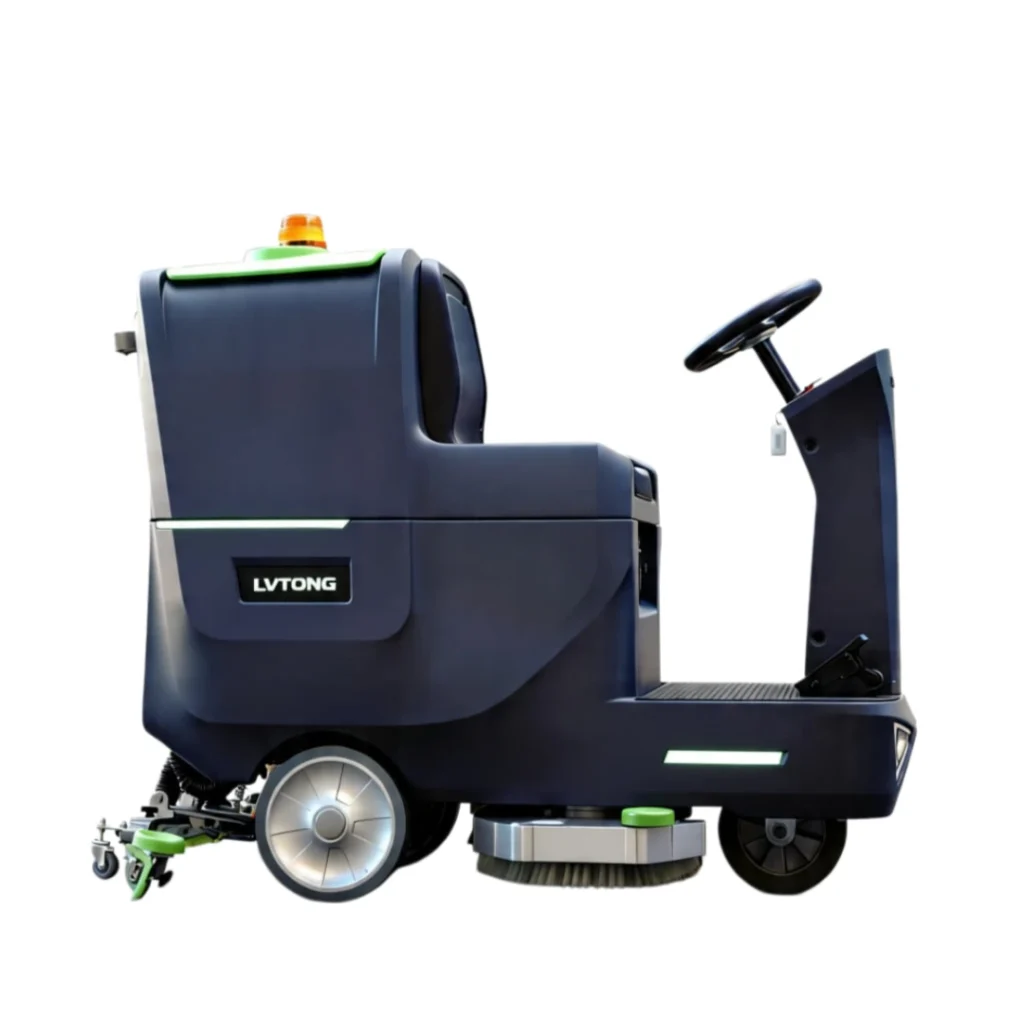
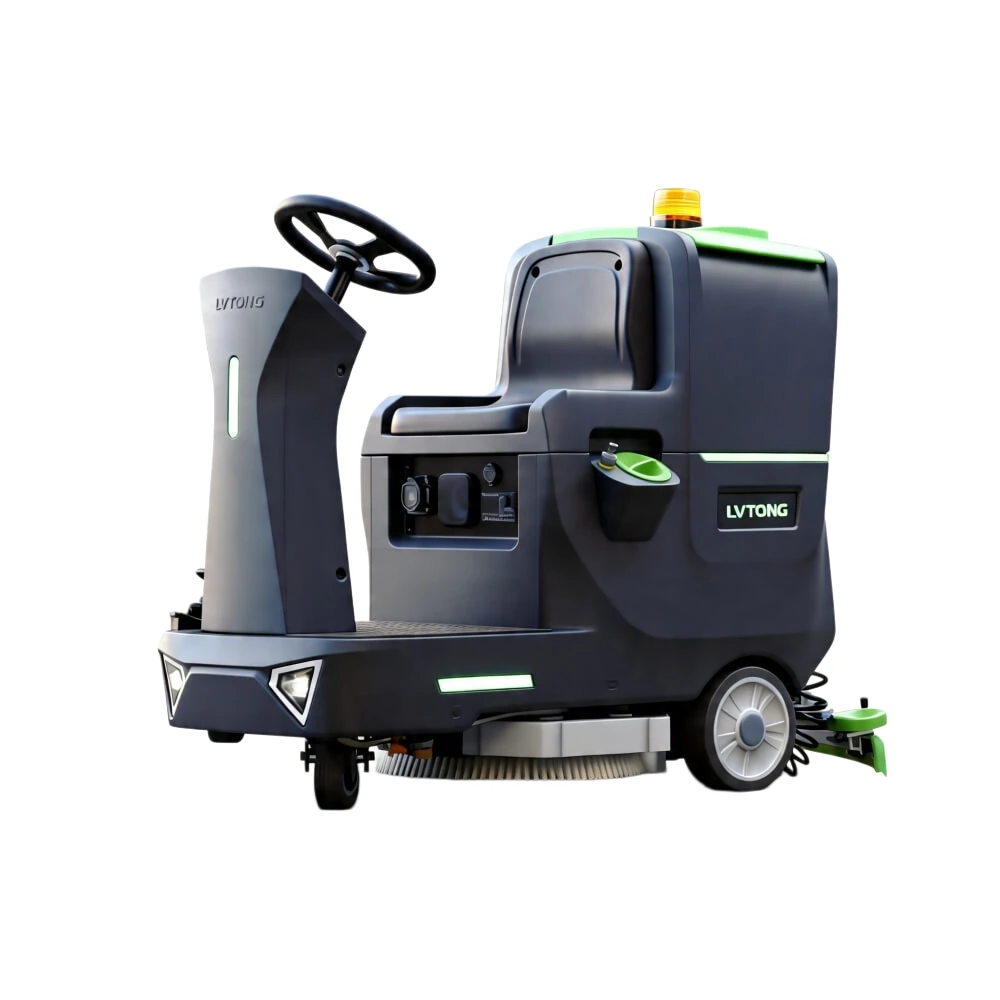
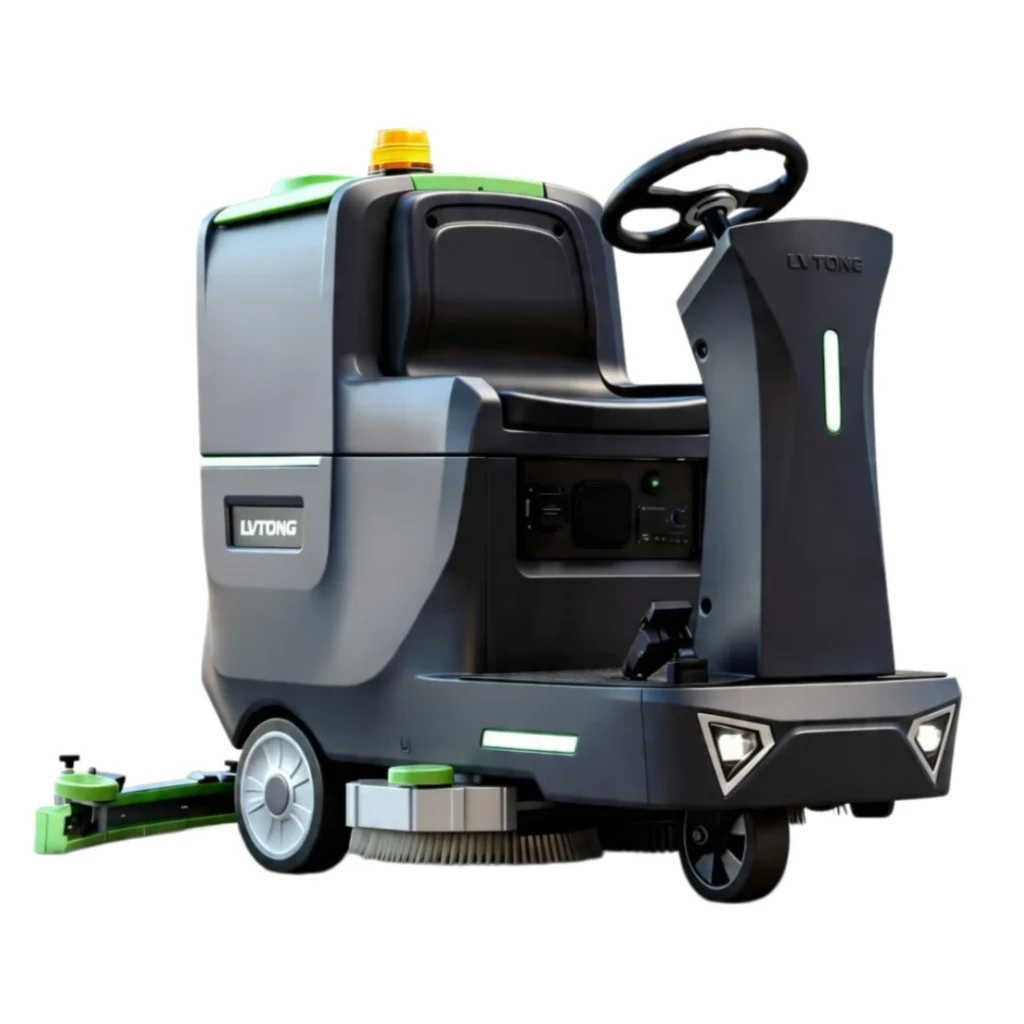
Les grandes usines et les ateliers dont les circuits de nettoyage sont longs peuvent également évaluer un autolaveuse autoportée pour le nettoyage industriel des sols lorsque le choix des pinceaux à lui seul ne suffit pas à assurer la productivité requise.
Sélection des brosses pour autolaveuses en fonction du type d'établissement
Les autolaveuses sont exposées, selon les installations, à différentes combinaisons de matériaux de sol, de contamination et de programmes de nettoyage.
Le choix des brosses doit donc prendre en compte l'application réelle et non pas seulement la taille de l'installation.
Ateliers d'usine
Les sols des usines peuvent contenir de la poussière, des résidus de production, de l'huile, des traces de pneus ou d'autres contaminants industriels.
Utilisez une brosse de nettoyage de sol adaptée à la fois à la surface du sol et à son degré de salissure.
Les sols industriels rugueux peuvent nécessiter un brossage mécanique plus vigoureux, tandis que les sols d'usine revêtus d'époxy ou d'autres matériaux doivent être nettoyés avec des brosses ou des tampons moins agressifs.
Pour les taches d'huile épaisse localisées, un prétraitement peut s'avérer plus efficace qu'une simple augmentation de la pression des brosses.

Installations de transformation des aliments
Les installations de transformation alimentaire nécessitent des procédures de nettoyage et des produits chimiques de nettoyage conformes aux exigences d'hygiène et d'exploitation du site.
Choisissez une brosse ou un tampon adapté au revêtement de sol et utilisez un produit de nettoyage compatible à faible mousse, conformément aux procédures de nettoyage de l'établissement.
Les brosses, les tampons, les réservoirs et les composants de récupération doivent également être maintenus propres conformément au programme d'assainissement du site.

Écoles et bâtiments publics
Les écoles et les bâtiments publics nécessitent généralement un nettoyage régulier et constant tout en minimisant l'usure inutile des sols.
Les brosses de nettoyage de sols souples à moyennes conviennent à de nombreuses applications sur sols durs et lisses.
Une récupération efficace des eaux usées est également importante dans les zones à fort trafic, car les eaux résiduelles peuvent retarder la réouverture de la zone nettoyée.

Garages de stationnement
Les parkings souterrains contiennent souvent un mélange de poussière, de traces de pneus, de résidus routiers et de contamination localisée par des hydrocarbures.
Utilisez une brosse adaptée à la surface du sol en béton ou revêtue.
Prétraiter les zones localement contaminées par les hydrocarbures si nécessaire et réduire la vitesse de déplacement sur les sections très sales afin d'augmenter le temps de contact des brosses.
Les grands parkings peuvent également nécessiter des configurations de machines à productivité plus élevée lorsque les trajets de nettoyage deviennent trop longs pour les équipements plus petits.

Liste de contrôle quotidienne des performances de l'autolaveuse
Avant et après le nettoyage de routine, inspectez les composants qui influent directement sur les résultats du nettoyage.
Utilisez cette simple liste de contrôle :
- La brosse ou le tampon est-il en bon état ?
- La brosse est-elle bien fixée et tourne-t-elle correctement ?
- La brosse sélectionnée est-elle adaptée au type de sol ?
- La pression de la brosse est-elle appropriée au niveau de contamination ?
- Le flux de la solution est-il normal ?
- Le détergent est-il compatible et correctement dilué ?
- Les lames de la raclette sont-elles propres et correctement positionnées ?
- Les tuyaux et filtres de l'aspirateur sont-ils exempts d'obstruction ?
- Le réservoir de récupération est-il propre ?
- La batterie est-elle suffisamment chargée pour la tâche de nettoyage ?
- Y a-t-il des fuites visibles, des obstructions ou des composants endommagés ?
Des inspections régulières peuvent aider les opérateurs à identifier les petits problèmes de performance avant qu'ils n'entraînent des résultats de nettoyage incohérents.
Pour les procédures d'inspection quotidiennes, hebdomadaires et à plus long terme, utilisez notre liste de contrôle d'entretien des autolaveuses vérifier l'état des brosses, des tampons, des raclettes, des réservoirs, des tuyaux, des filtres et de la batterie.
Que faut-il remplacer en premier si les performances de nettoyage diminuent ?
Un faible rendement de nettoyage ne signifie pas toujours qu'il faille remplacer l'ensemble de l'autolaveuse.
Avant d'acheter une nouvelle machine, inspectez les consommables et les pièces d'entretien qui ont le plus grand impact direct sur le nettoyage.
Commencez par :
- État de la brosse ou du tampon – Les brosses usées réduisent le contact mécanique.
- Lames de raclette – Les lames endommagées peuvent laisser des traces d'eau et des traînées.
- Filtres et tuyaux d'aspirateur – les blocages peuvent réduire la récupération d'eau.
- Flux de solution – Un débit insuffisant peut affecter le processus de nettoyage.
- État de la batterie – Une faible performance de la batterie peut réduire l'autonomie disponible ou la disponibilité de la machine.
Si ces composants sont en bon état mais que la machine ne répond toujours pas aux exigences en matière de surface de nettoyage, de niveau de contamination ou de fréquence d'utilisation quotidienne, une configuration d'autolaveuse différente peut être justifiée. Les acheteurs peuvent comparer les modèles de LVTONG. autolaveuses sécheuses commerciales pour des installations de tailles différentes et des exigences de nettoyage variées.
Points clés à retenir
Pour améliorer les performances de nettoyage des autolaveuses :
- Choisissez la brosse ou le tampon adapté à la surface du sol.
- Utilisez la brosse la moins agressive qui élimine efficacement les contaminants.
- Tenez compte de la texture et du matériau du sol.
- Ajustez la pression de la brosse en fonction du type de revêtement de sol et du niveau de saleté.
- Réduire la vitesse de fonctionnement dans les zones fortement contaminées.
- Utilisez un produit nettoyant compatible à faible mousse.
- Prétraiter les huiles ou graisses épaisses si nécessaire.
- Veillez à ce que la raclette, le conduit d'aspiration et le système de récupération restent propres.
- Inspectez les brosses et les tampons en fonction de leur usure réelle plutôt que selon un calendrier de remplacement universel.
- Testez d'abord les combinaisons de brosses, de tampons et de produits chimiques que vous ne connaissez pas sur une petite surface.
Questions fréquemment posées
Quel type de brosse dois-je utiliser sur une autolaveuse ?
Choisissez la brosse en fonction du matériau du sol, de sa texture et de son niveau de saleté.
Les brosses en nylon souple conviennent à de nombreux sols lisses ou revêtus, tandis que les brosses moyennes ou plus rigides peuvent assurer un brossage mécanique plus important sur les surfaces dures ou texturées résistantes.
Commencez toujours par l'option la moins agressive permettant d'obtenir le résultat de nettoyage souhaité.
Quelle est la différence entre une brosse de lavage de sol et un tampon de nettoyage ?
Les brosses de lavage de sol sont généralement plus efficaces pour atteindre les surfaces texturées, en retrait ou irrégulières, car leurs poils peuvent suivre les profils irréguliers du sol.
Les tampons assurent un contact uniforme sur les surfaces lisses et planes et sont couramment utilisés pour l'entretien courant des sols.
Le choix approprié dépend de la texture du sol, de sa finition et de la tâche de nettoyage.
Quelle brosse de nettoyage convient aux sols en époxy ?
Pour les sols en époxy, une brosse en nylon souple ou un tampon non abrasif constituent généralement un point de départ plus sûr.
Évitez d'utiliser une brosse inutilement agressive car cela pourrait endommager le revêtement de sol.
Testez l'outil de nettoyage sélectionné sur une petite surface avant d'augmenter l'agressivité ou la pression de la brosse.
Quelle brosse dois-je utiliser sur du béton rugueux ?
Le béton rugueux peut nécessiter une brosse en nylon plus rigide ou une brosse abrasive compatible pour atteindre les contaminants incrustés.
Toutefois, l'agressivité de la brosse doit toujours être adaptée à l'état du béton et au type de sol à enlever.
Quelle pression de brosse doit exercer une autolaveuse ?
Utilisez la pression de brosse la plus faible permettant d'obtenir un résultat de nettoyage acceptable.
N’augmentez la pression que lorsque les conditions du sol nécessitent une action mécanique supplémentaire et que la surface du sol peut la supporter.
Une pression excessive peut accroître l'usure des brosses et endommager les finitions de sols sensibles.
À quelle vitesse une autolaveuse doit-elle se déplacer ?
La vitesse de déplacement dépend de la machine, de l'état du sol et du niveau de terre.
Réduisez la vitesse sur les surfaces très sales, huileuses, grasses, présentant des traces de pneus ou texturées afin de donner à la brosse un temps de contact plus long avec le sol.
Suivez les instructions d'utilisation spécifiques à la machine au lieu de vous fier à une vitesse universelle.
Pourquoi mon autolaveuse laisse-t-elle de l'eau derrière elle ?
Les causes courantes incluent des lames de raclette usées ou mal alignées, des débris coincés sous la lame, des tuyaux d'aspiration obstrués, un mauvais contact de la lame ou un débit d'air d'aspiration insuffisant.
Inspectez le système de récupération avant de supposer que la brosse est responsable du problème.
Quand faut-il remplacer les brosses d'une autolaveuse ?
Remplacez la brosse de votre autolaveuse lorsque les poils deviennent excessivement courts, inégaux, déformés ou ne permettent plus un contact adéquat avec le sol.
La fréquence de remplacement réelle dépend de l'utilisation, de la texture du sol, du matériau de la brosse, de la pression et des conditions de nettoyage.
L'inspection est plus fiable que l'utilisation d'un intervalle de remplacement fixe pour chaque application.
Conclusion
Choisir le bon type de brosse pour autolaveuse est l'un des moyens les plus simples d'améliorer les performances de nettoyage sans avoir à remplacer immédiatement la machine.
Commencez par choisir la brosse ou le tampon adapté au matériau du sol, à sa texture et à son degré de salissure. Ajustez ensuite la pression de la brosse, la vitesse de fonctionnement et la quantité de détergent en fonction de l'utilisation.
Une bonne récupération de l'eau est tout aussi importante ; il convient donc d'inspecter la raclette, le système d'aspiration et le réservoir de récupération dès l'apparition de traces ou d'eau résiduelle.
Pour les sols difficiles, testez toujours la brosse, le tampon et le processus de nettoyage sélectionnés sur une petite surface au préalable.
La meilleure configuration de nettoyage est celle qui élimine la contamination requise avec le moins d'abrasion inutile, de temps d'arrêt et de nettoyages répétés.
Obtenez une recommandation pour l'installation d'une autolaveuse.
Vous ne savez pas quelle brosse, quel tampon ou quel réglage de machine autolaveuse convient à votre établissement ?
Veuillez envoyer les informations suivantes à LVTONG :
- Matériau du revêtement de sol ;
- Photos du sol ;
- Texture du sol ;
- Principal type de saleté ou de contamination ;
- Surface de nettoyage approximative ;
- Modèle actuel d'autolaveuse ;
- Type de brosse ou de tampon actuel ;
- Problème principal de nettoyage ;
- Heures d'ouverture quotidiennes ;
- Marché national ou de destination.
LVTONG peut vous recommander une brosse de lavage de sol adaptée, un système de nettoyage ou une configuration de machine en fonction de vos besoins spécifiques. Contactez LVTONG pour obtenir une recommandation personnalisée concernant la configuration de votre autolaveuse. et envoyez-nous les informations concernant votre revêtement de sol, le type de contamination, la zone de nettoyage et votre machine actuelle.