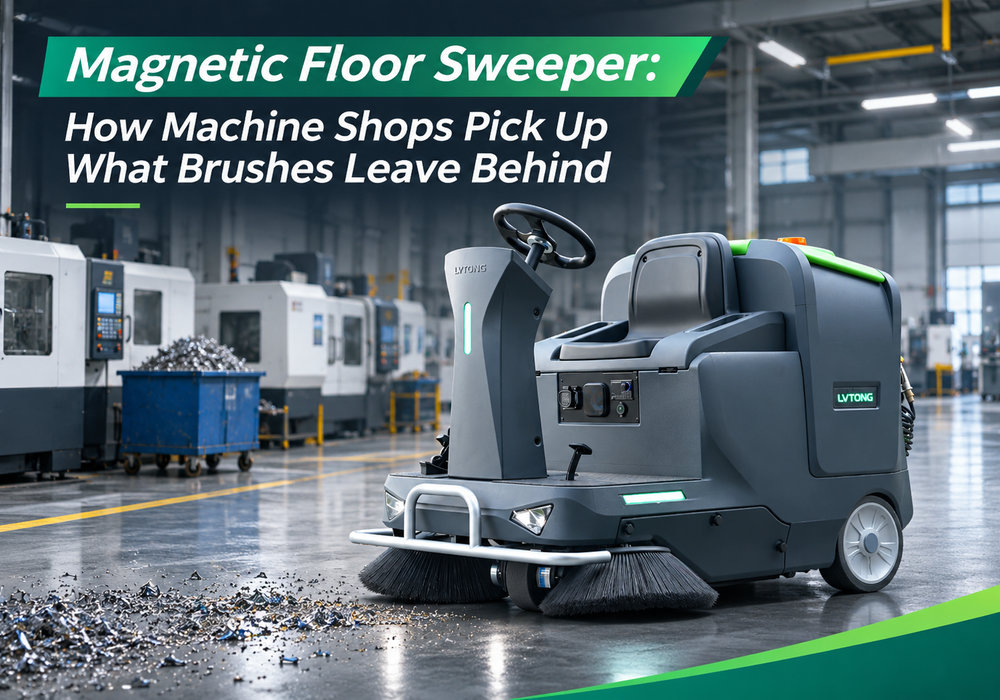

A machine shop floor collects the one debris class a standard sweeper is worst at: ferrous metal. Screws flick away from the brush, swarf slips past the vacuum lift, and every shift the residue works into forklift tires and machine bases. A magnetic floor sweeper — whether that means a dedicated magnetic tool, a machine with a real vacuum-and-filter system, or a magnetic accessory confirmed with the supplier — is how shops close that gap. This guide explains why brushes leave screws behind, compares the three collection routes, and gives you an SOP and a six-line checklist to specify the right setup.
Quick Answer: Metal shavings are the debris class standard sweeping handles worst, and the fix is a planned collection route rather than a stronger brush.
- Light screws flick away from main brushes; dense steel defeats vacuum lift alone.
- Three routes exist: handheld magnetic tools, ride-on machines with vacuum and filtration, and magnetic accessories you confirm with the supplier.
- The published route on today’s ride-on machines is vacuum plus a large filter area — 1250 states 6 m² of filtration for metal debris.
- Oil-contaminated swarf changes the job: dry metal to the sweeper, coolant film to the scrubber, and wash water to a legal drain.
Start with the residue survey below first, then work through the six-line selection checklist before you request a written quote.
Why Standard Sweeping Leaves Screws Behind
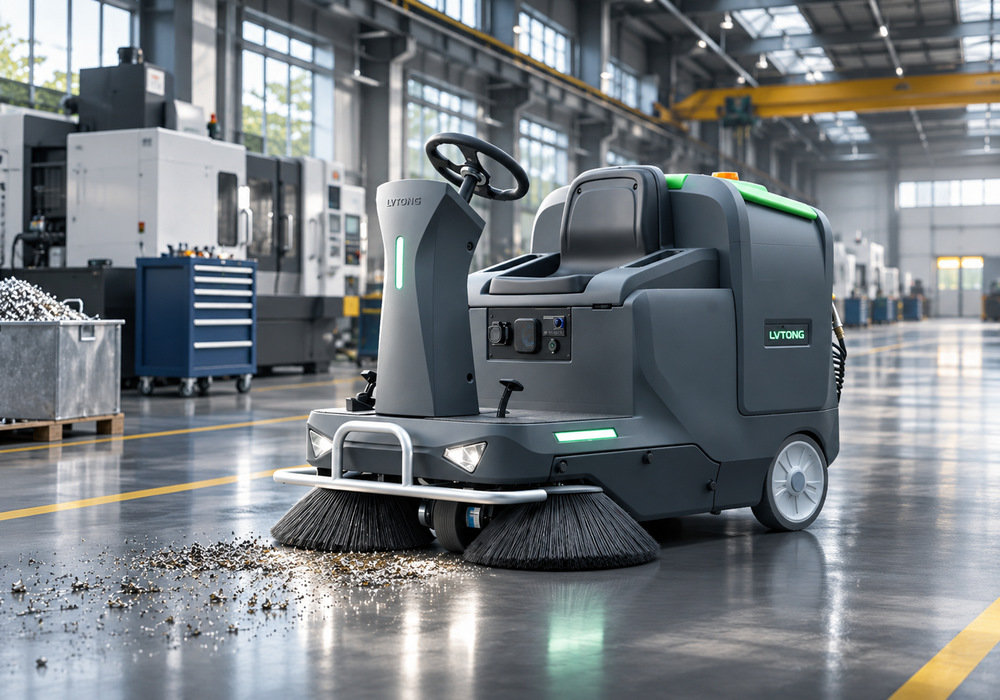
Brush sweepers flick light fasteners and vacuums stall on dense steel — ferrous debris fails both collection mechanisms at once.
A main brush lifts debris by contact: bristles grab and throw material into the hopper. A 20 mm screw is too light for the throw to carry it cleanly and too smooth for the bristles to grip, so it skips ahead of the brush or bounces into the dust shadow behind it. Vacuum pickup has the opposite failure. Steel turnings are dense, so the airspeed that lifts paper scraps and dust drops a screw before it reaches the hose. The residue that survives both mechanisms is exactly the debris that hurts you: it punctures tires, rides into machine bases, and packs under conveyor legs. Ferrous debris also hides — it settles into floor joints and weld seams where a passing brush never reaches, which is why floors that look clean still flatten forklift tires.
What a Magnetic Floor Sweeper Actually Is
The phrase covers three different products — a handheld magnetic tool, a magnetic accessory for a machine, and a sweeper whose vacuum-and-filter system is specified for metal debris.
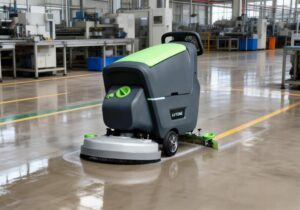
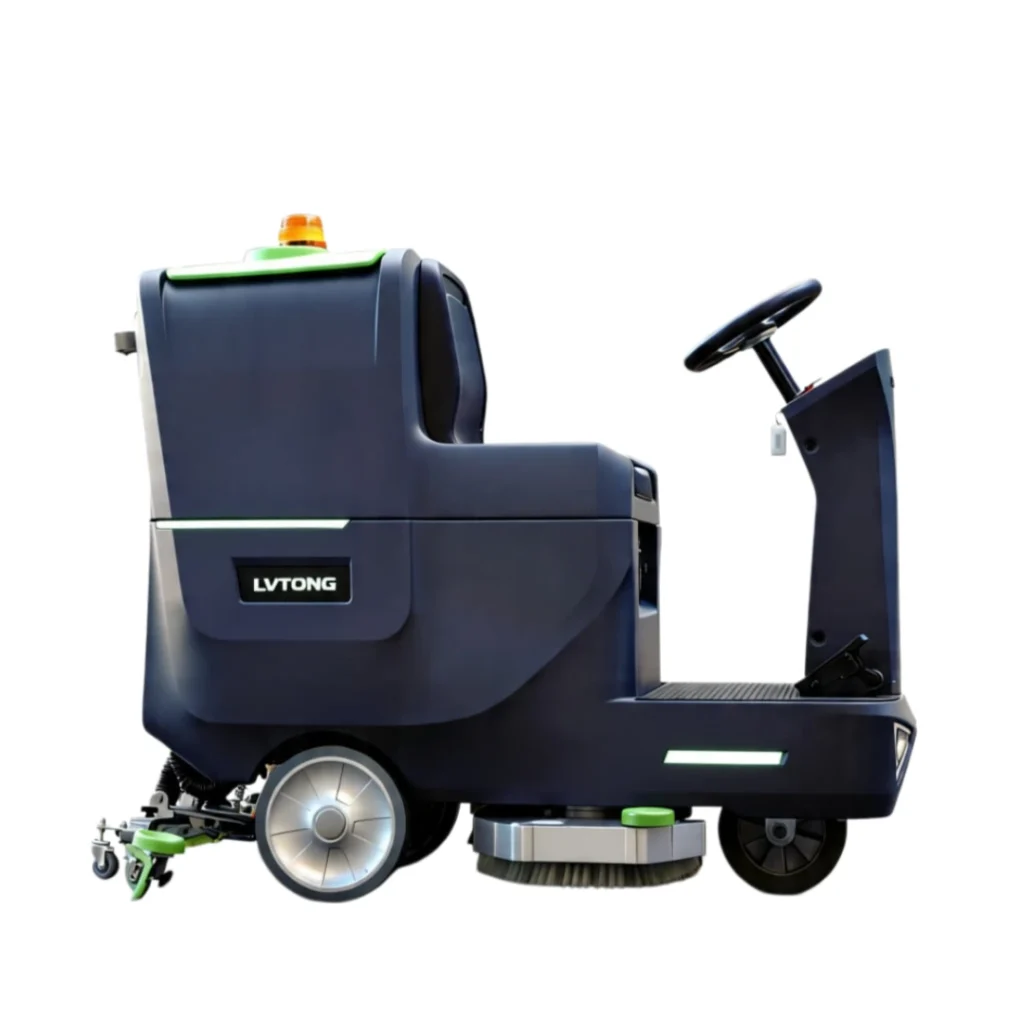
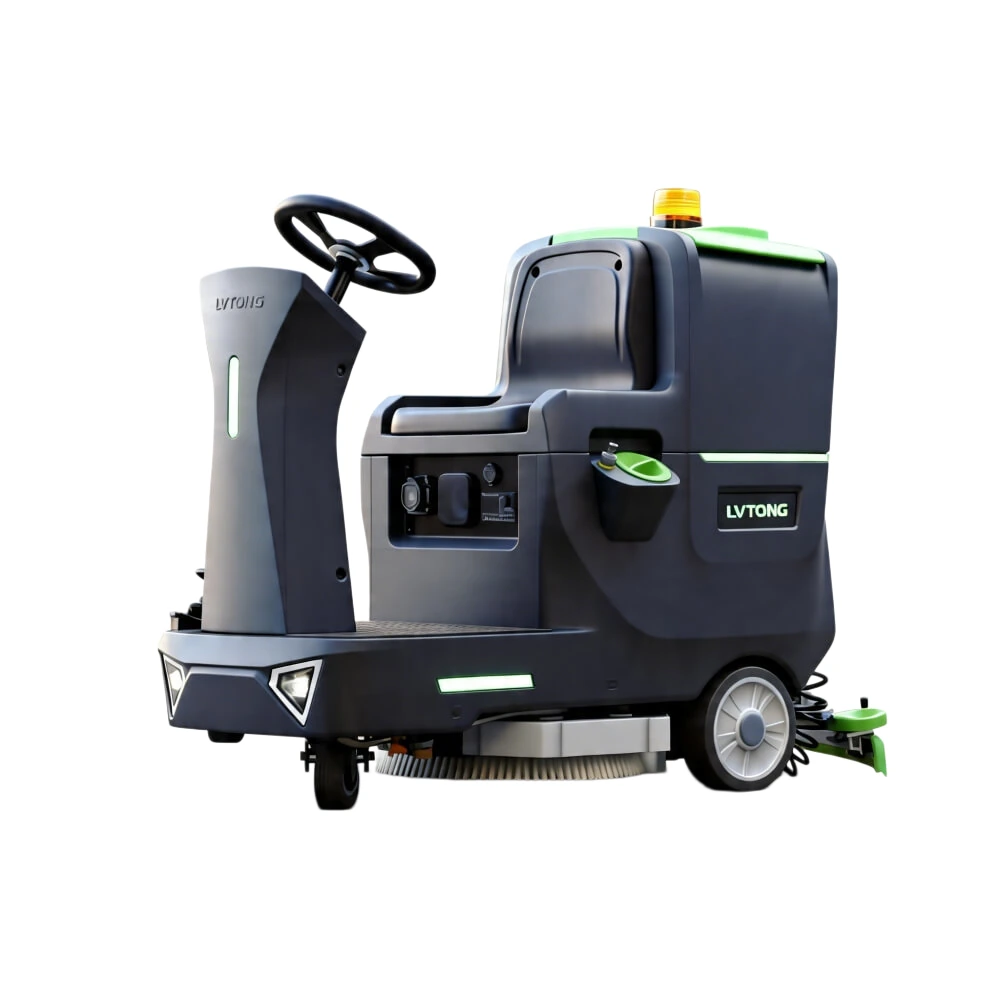
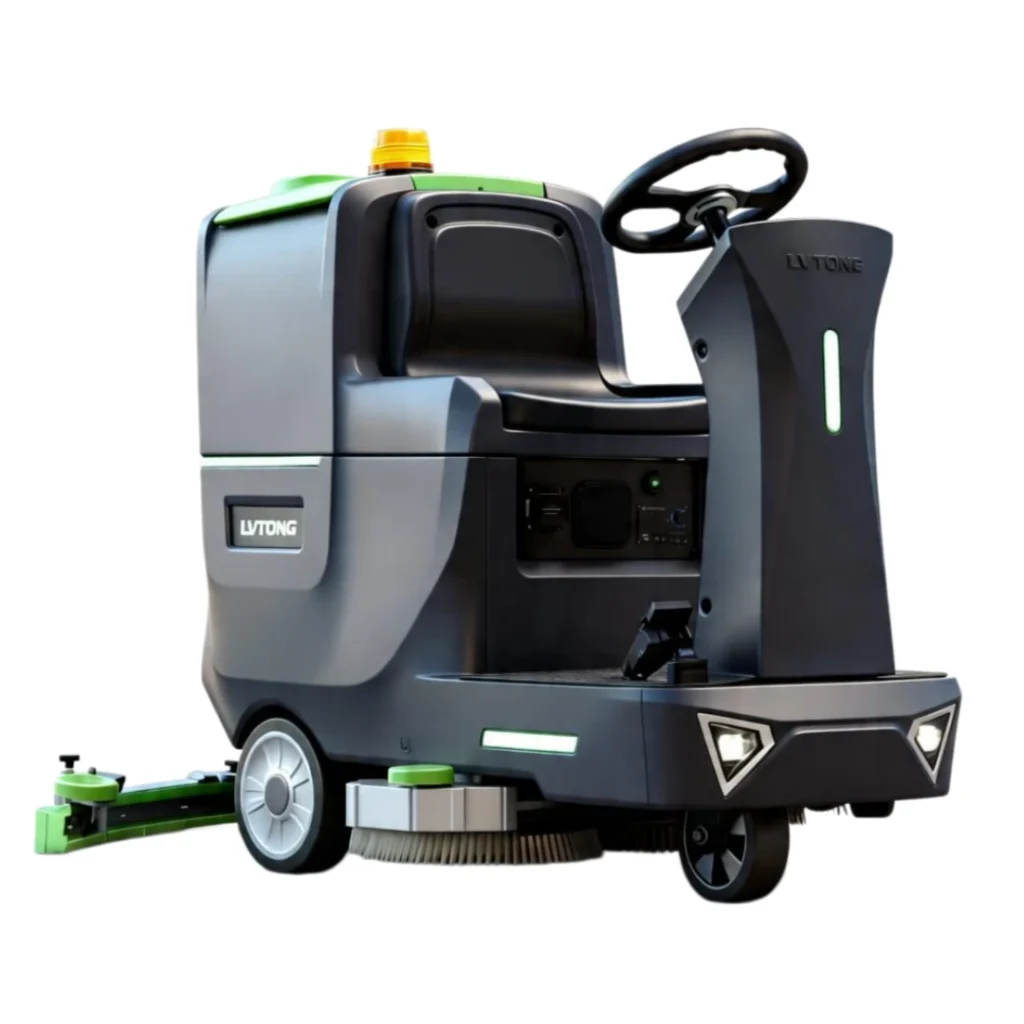
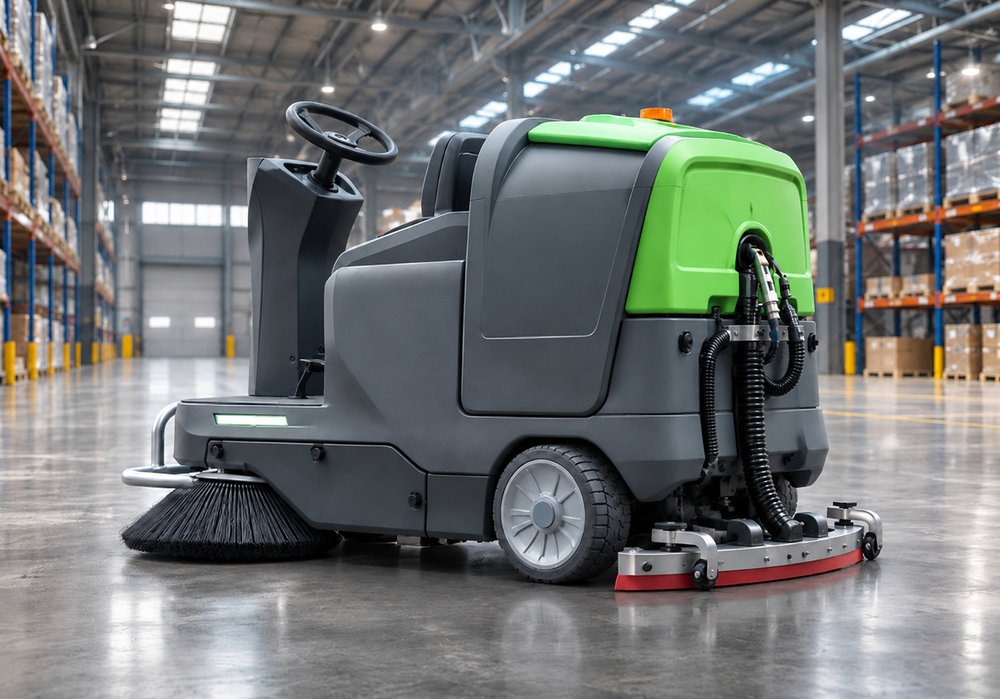
Search the term and most results are handheld push tools: a wheeled magnet bar you walk behind, often sold with a quick-release handle to drop the collected steel into a bin. Those tools are real and cheap, and for spot cleanup they work. But a magnetic floor sweeper in an industrial buying decision usually means one of two machine-scale answers. The first is a ride-on floor sweeper whose vacuum and filtration system is published as capable of metal shavings — the route LVTONG machines document. The second is a magnetic attachment or magnetic bar fitted to a machine, a route most suppliers treat as a configuration question. A floor magnetic sweeper comparison is only honest when it separates these three classes, because their costs, capacities and failure modes are different.
Three Magnetic Floor Sweeper Routes Compared
Handheld magnetic tools cover spot work; vacuum-filter machines cover square meters; magnetic accessories need written confirmation before you count on them.
| Route | What it collects | Best fit | Limit |
|---|---|---|---|
| Handheld magnetic push tool | Loose ferrous items on open floor | Spot checks, bays between CNC cells | No dust control; operator walks every meter |
| Ride-on sweeper with vacuum + filter | Swarf, chips, mixed dry debris at scale | Full-shift shop floors, aisles, hangar-style bays | Dense steel needs filter support, not magnet alone |
| Magnetic accessory on machine | Ferrous items in the machine’s path | Confirmed cases where debris density is extreme | Not a published standard feature — confirm per configuration |
Buyers searching for a heavy duty magnetic floor sweeper often arrive at the first row when the floor actually needs the second. A magnetic bar only collects what its field reaches; it does nothing for dust or the oil film a shop sweeper meets daily. The published machine route costs more per unit but sweeps the whole floor on a schedule, which is what protects tires and machine bases over a year.
The Damage Ledger: Tires, Machine Bases and Static
Unrecovered steel costs appear as tire punctures, seized slides and — in fuel-service bays — static ignition risk, not as a line item on the cleaning budget.
Left on the floor, metal shavings collect interest. A screw through a forklift solid tire costs a tire and a downtime window. Swarf tracked into a machine base or a linear rail becomes abrasive slurry under lubrication. The aviation case on the 1250 product page states the stakes directly: in an aircraft maintenance hangar, oil and metal shavings mixed with dust pose a static electricity risk. That is why hangar and maintenance-bay floors justify a ride-on metal shaving ride-on floor sweeper with documented filtration rather than a walk-around magnet. Price the ledger honestly: one punctured solid tire plus one seized spindle typically exceeds the annual consumables budget of the machine that would have prevented both.
What the Machines Already Publish
Two claims are published and quotable: the 1250’s 6 m² filter area for metal debris, and the LT-S1350S debris list that includes metal shavings.
The 1250 product page documents a hangar scenario where oil and metal shavings mix with dust, and states that its filter area reaches 6 m² to handle metal debris, with 8,500 m²/h of coverage and a 3–5 hour runtime. The LT-S1350S page answers the debris question in its FAQ: it sweeps dust, sand, metal shavings, paper scraps, plastic particles, fallen leaves and mild oil stains, at 10,000 m²/h with a 100 L trash hopper. Read together, the published route for metal shavings is vacuum plus large filter area plus hopper volume — not a magnet. What is not published on either page is a magnetic field strength or a magnetic accessory option, so any magnetic attachment requirement belongs in your RFQ as a confirm-per-configuration line, and the full spec comparison lives in our professional floor sweeper buying guide.
A Machine-Shop Sweeping SOP
Sweep on a fixed frequency and route, collect into metal-only bins, and treat the magnet walk as a spot check — not the main collection system.
Frequency follows debris generation, not the calendar. A machining cell that produces a bin of swarf per shift needs a pass at shift end, before the forklifts run. The route runs from the wet-processing end toward the stock area so chips are swept in one direction, and collection goes into labeled steel-only bins so scrap value is recovered and bin weight stays predictable. Keep a handheld magnetic floor sweep tool at the charging station for spot checks after maintenance jobs. Around electrical cabinets and wrapped stock, sweeping is a constraint, not a preference — water-based cleaning is excluded there, which is the same dry-pass logic our shop floor cleaner guide develops: dry chips to the sweeper, coolant film to the scrubber, and never one machine doing both in the same pass.
Coolant-Mixed Swarf and the Wet Boundary
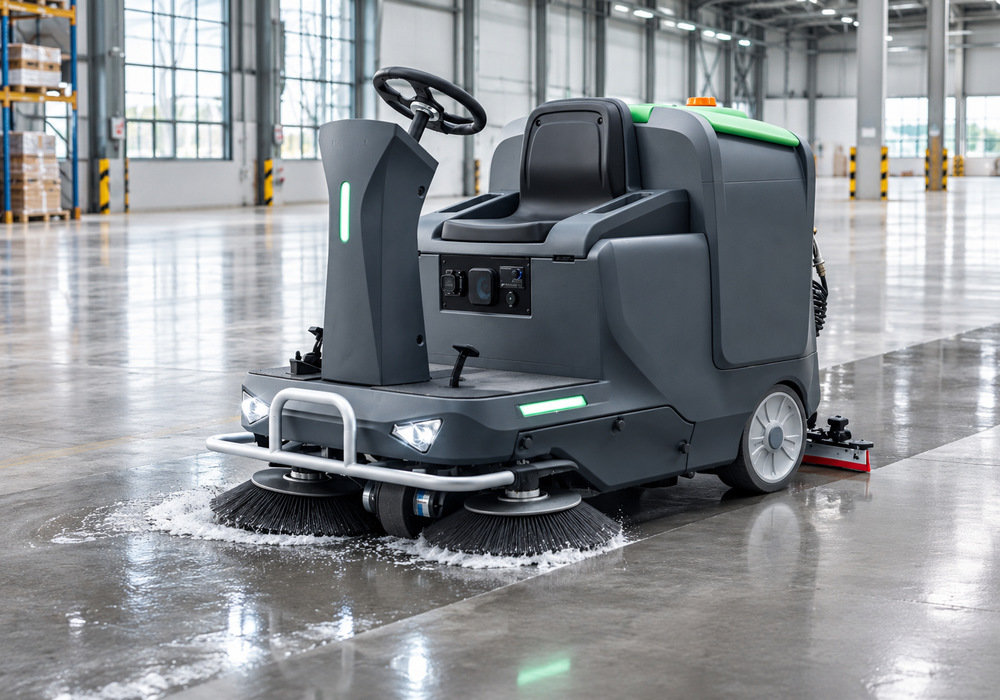
Dry swarf belongs to the sweeper; the moment coolant enters the pile, the job changes from sweeping to controlled collection and legal disposal.
Swarf that drips through coolant is a different waste stream from dry chips. Wash-down water carrying oil and fines is process wastewater, and US-bound operations reference the EPA’s NPDES program for discharge routes — many sites need settling or a licensed hauler before anything reaches a drain. A sweeper pushed through wet slurry packs its filter early and smears the residue instead of lifting it, so the wet pass belongs to the scrubber side of a factory cleaning plan with a legal drain, and the sweeper keeps the dry lanes. Shops that blur this boundary pay twice: consumables wear fastest, and the wastewater question surfaces only after an inspection.
Electrical Safety and Certification Paperwork
Metal dust plus electrical cabinets is a safety pairing — ask for the machine’s safety standard files the same day you ask about magnetic options.
Machine shops concentrate two hazards in the same room: conductive dust and energized equipment. Electrical safety for floor care machines in this class sits in the IEC 60335-2-72 family, and a supplier who can name the standard when you request documentation is easier to audit than one who cannot. Certification evidence — test reports or a UL listing where the destination market requires it — belongs in the RFQ alongside the magnetic-attachment question, because both are configuration facts, not brochure claims. Where grinding produces fine metal dust, fire risk follows: the NFPA publishes guidance on combustible metal dusts, and facilities handling magnesium or titanium alloys should treat floor debris as a fire-safety topic as much as a housekeeping one.
Six-Line Selection Checklist
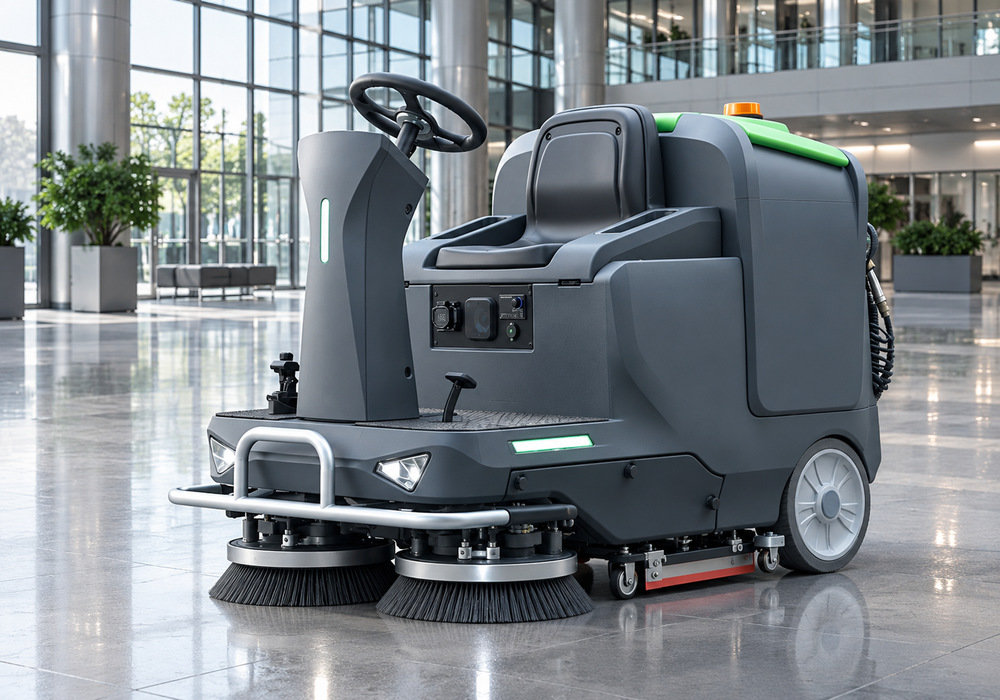
Six lines separate a machine that collects metal debris from one that spreads it — put numbers on every line before you accept a quote.
| # | Line | What to specify |
|---|---|---|
| 1 | Debris profile | Dry chips vs coolant-wet swarf; max particle size; steel vs aluminum share |
| 2 | Collection route | Vacuum + filter as published route; magnetic accessory as a confirm-per-configuration line |
| 3 | Filter area and hopper | Published reference: 1250 = 6 m² filter; LT-S1350S = 100 L hopper |
| 4 | Clearance and width | Aisle widths around CNC cells and cabinet overhangs the frame must clear |
| 5 | Runtime and coverage | Shift length × area; published references 8,500 and 10,000 m²/h |
| 6 | Disposal plan | Steel-only bins, bin weight, and the wastewater route for any wet swarf |
Lines 1 and 6 decide the machine type; lines 3–5 decide the model. A supplier who answers all six with published numbers or a written confirmation is quotable; one who answers with adjectives is not.
Five Buying Mistakes
Most failed magnetic-sweeping purchases fail on route selection, not on magnetic strength.
- Buying the magnet for the whole floor. A handheld magnetic floor sweep tool spot-checks; it does not cover 10,000 m² per shift.
- Assuming the accessory exists. Neither the 1250 nor the LT-S1350S page publishes a magnetic option — write it as a configuration question and get a written answer.
- Sweeping wet swarf. Coolant-wet chips pack filters and smear; split dry and wet lanes instead.
- Ignoring filter area. Dense steel debris loads filtration first; 6 m² on the 1250 is a published reference point, not a generic spec.
- No disposal plan. Steel-only bins recover scrap value; unlabeled mixed bins turn swarf into mixed waste at full disposal cost.
Frequently Asked Questions
- What does a magnetic floor sweeper pick up? Ferrous items only — screws, nails, steel swarf and grinding particles. Aluminum chips and stainless turnings are weakly or non-magnetic and need the vacuum-and-filter route.
- Can a ride-on sweeper handle metal shavings without a magnetic attachment? The published evidence says yes for mixed dry debris: the 1250 documents metal shavings against its 6 m² filter in a hangar scenario, and the LT-S1350S lists metal shavings in its debris FAQ. For extreme ferrous density, ask the supplier about a magnetic accessory as a written configuration line.
- How often should a machine shop sweep for metal debris? Scale the frequency to swarf generation: a pass at shift end per producing cell is the common floor, plus a handheld magnet spot-check after any maintenance job that produced offcuts.
- Does LVTONG offer magnetic sweeping accessories? Product pages do not publish a magnetic option. Treat it as a configuration question — request written confirmation for your model and market through the contact page before you promise it to your own customers.
Ready to match a machine to your debris profile? Send your floor area, shift length and debris mix through the contact page and request the published spec sheet for the 1250 or LT-S1350S with your RFQ.