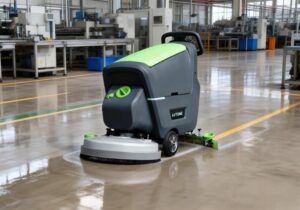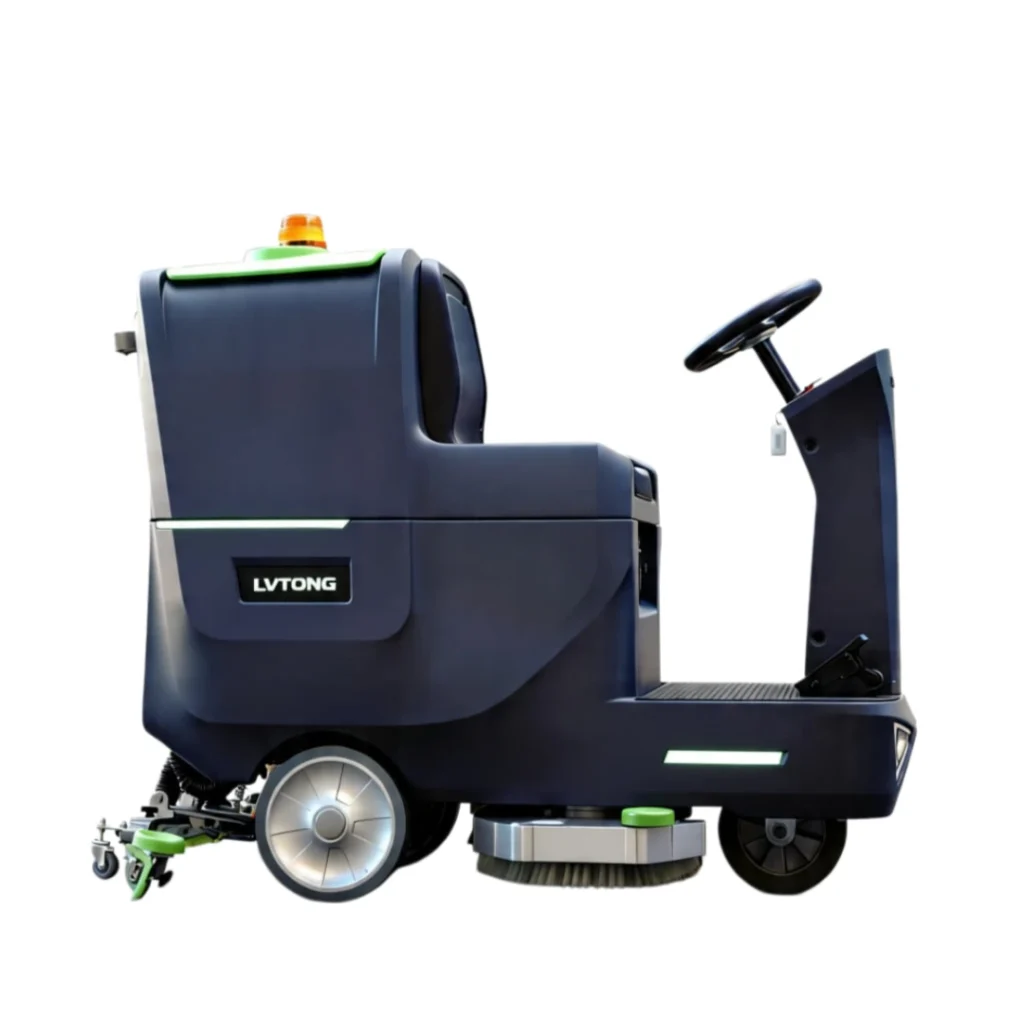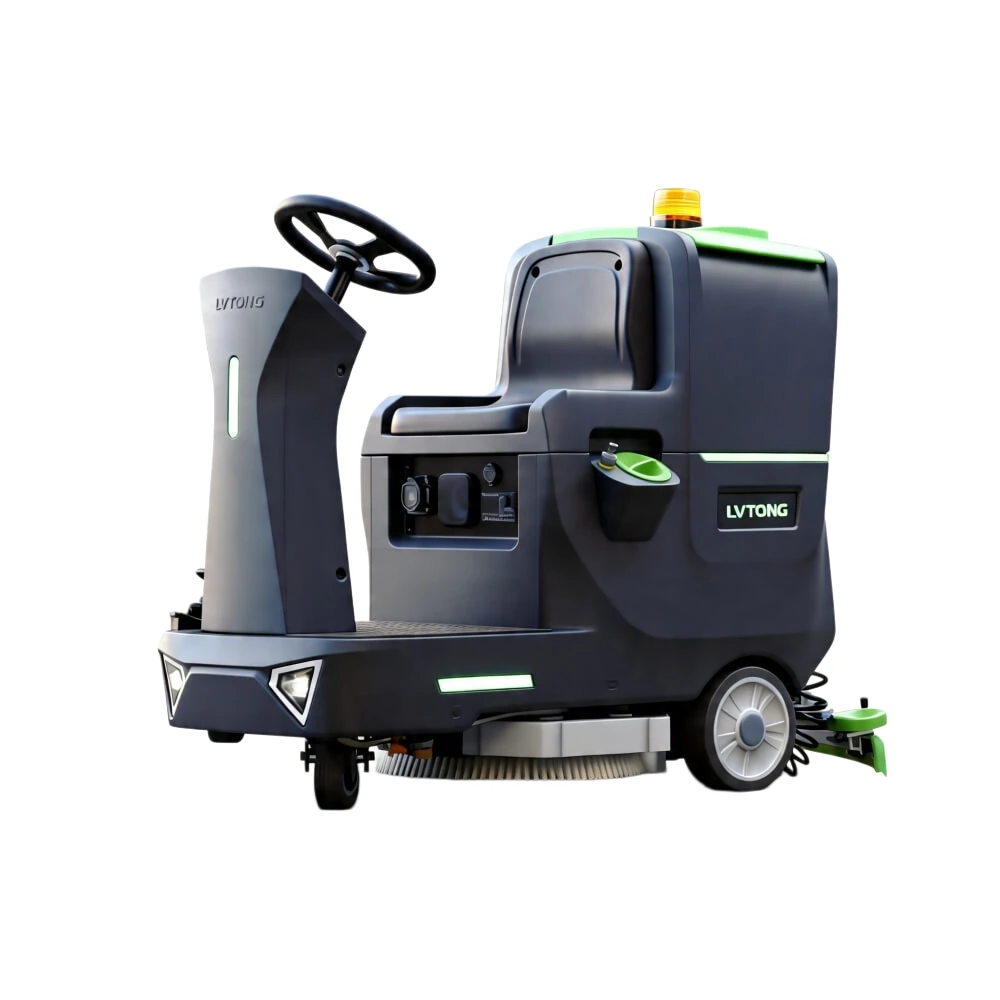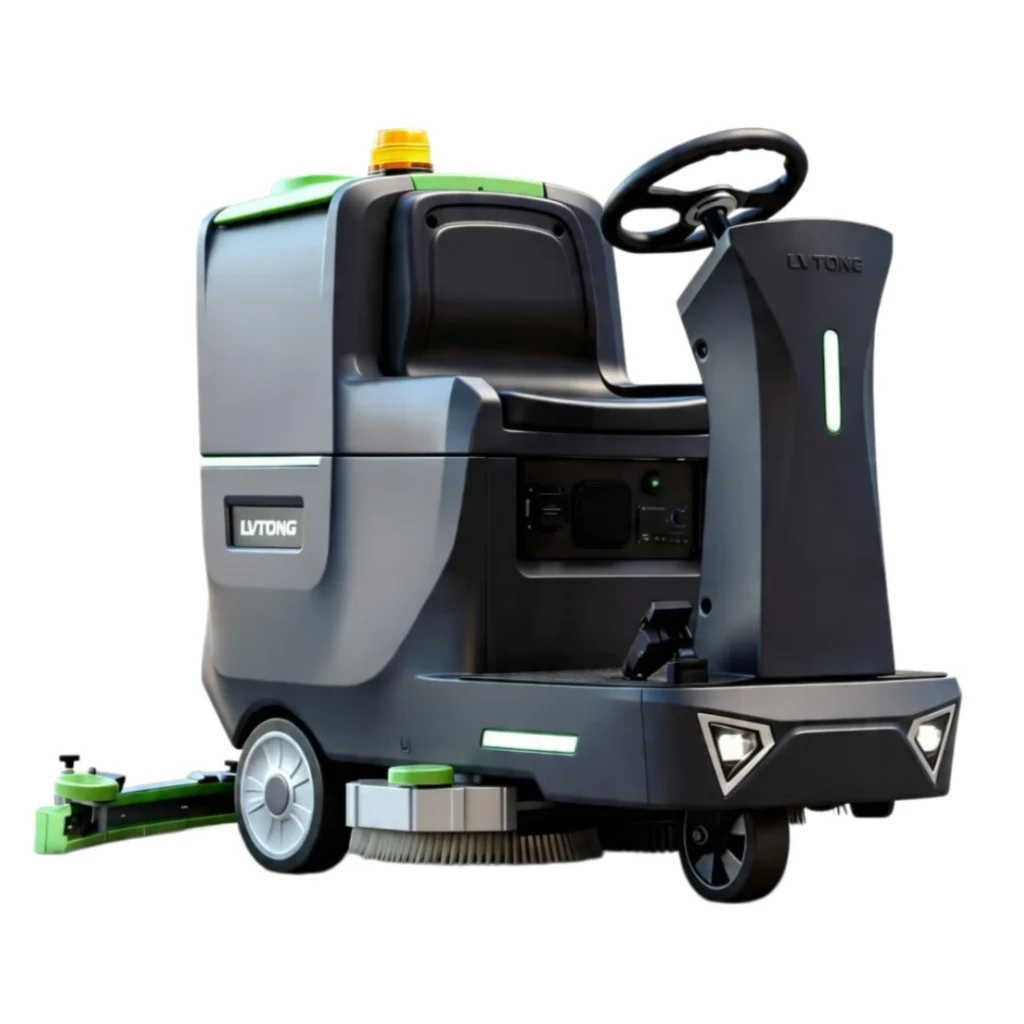
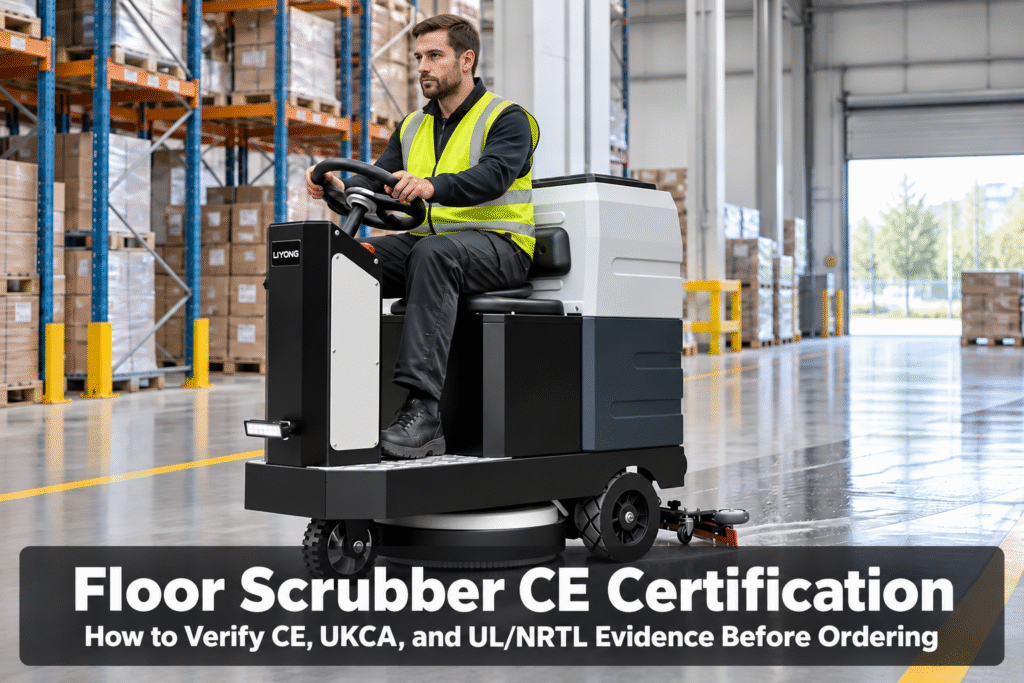
Facility managers searching for a sweeper scrubber usually arrive with one question and leave with a second one they did not expect. The first is whether a single machine can sweep and scrub in one pass. The second decides the specification: what the floor actually contains.
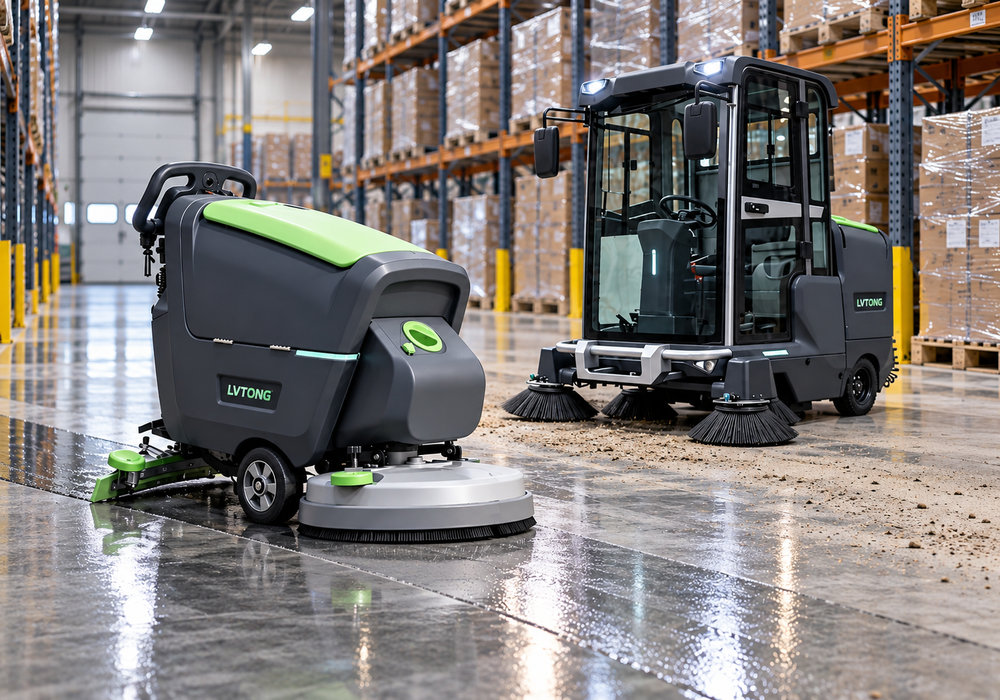
Quick Answer
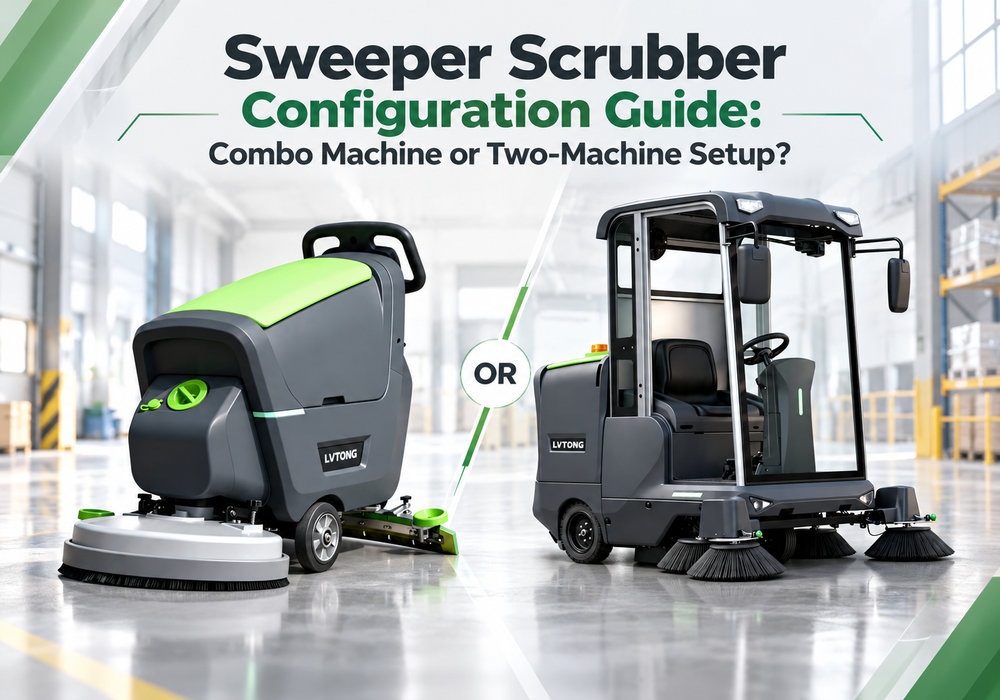
A sweeper scrubber solution can be configured two ways: a one-pass combo machine, or a matched sweeper plus scrubber running in sequence. The debris profile decides which is right.
- Choose a combo machine when the floor carries light, dry debris plus a wet film, the area is open, and one operator handles a single pass per shift.
- Choose two machines when debris is heavy or bulky, when sweeping and scrubbing happen at different frequencies, or when the dry pass must happen before a wet pass can work at all.
- Compare four spec groups either way: sweeping width and deck type, dust filtration, trash hopper vs. tank volume, and battery runtime against the shift length.
- Sizing example: a 20,000 m²/h ride-on sweeper with a 180 L hopper handles wide aisles; a 2,100 m²/h ride-on scrubber with 85 L / 90 L tanks handles the wet pass — two different machine classes, two different jobs.
The decision framework, specification checklist, and pass sequence follow below.
What “Sweeper Scrubber” Means in an Actual Specification
The term covers two different purchases: a combo machine that sweeps and scrubs in a single pass, and a matched pair of an industrial sweeper and a floor scrubber running back to back. Both are valid configurations — they are not interchangeable.
Buyers who specify an industrial floor sweeper scrubber expecting one chassis to do everything often discover that combo machines trade away dry-recovery capacity to make room for water tanks. Sellers who list industrial sweepers and scrubbers as separate line items are usually describing the two-machine route, where each unit is sized for its own job and the passes are scheduled separately.
There is no universal better answer: a 3,000 m² distribution floor with dust and occasional spills is a different problem from a 30,000 m² plant where debris accumulates faster than any wet system can clear.
One-Pass Combo or Two Machines? The Debris Profile Decides
If debris is dry, light, and continuous, a combo machine pays off. If debris is heavy, bulky, or arrives in bursts, sweeping must be its own pass — and the wet cleaning needs a separate machine.
Work down the debris list rather than the equipment brochure. Debris type sets the deck and hopper requirements first; only after that does it make sense to talk about tanks, brushes, and squeegees.
| Debris profile | Typical source | Recommended configuration | Why |
|---|---|---|---|
| Fine dust, light grit | Warehouse aisles, packaging lines | Combo or two machines | Either works; combo saves a pass and an operator |
| Shrink wrap, cardboard, pallet chips | Inbound / outbound docks | Two machines, sweeper first | Bulky debris blocks combo pickup paths |
| Metal chips, wood chips, sand | Fabrication and machine shops | Two machines, sweeper first | Heavy debris must be recovered dry, not as slurry |
| Oil films, tire marks, caked residue | Parking structures, maintenance bays | Scrubber-led, sweeper for dry days | Wet chemistry does the work; sweeping runs on its own frequency |
| Mixed, changing by zone and season | Logistics hubs, multi-tenant plants | Two machines, sequenced by zone | Debris type and frequency shift faster than one machine adapts |
A combo machine earns its cost only when the same debris profile repeats across the whole shift. When the profile changes by zone — dusty inbound docks in the morning, oil-marked loading lanes in the afternoon — two machines matched to those two jobs almost always outperform one machine sized for the average.
Deck, Brush, and Filtration: Where the Two Machine Classes Differ
Sweepers are built around dry recovery — main broom, side broom, and a filter that keeps dust inside the hopper. Scrubbers are built around wet recovery — brush or pad, solution delivery, and a squeegee with vacuum. The parts you compare are almost entirely different.
On the sweeping side, the deck type decides what the machine can lift. A main broom with side brooms handles aisle-width debris and edges; the filter system decides whether fine dust stays in the hopper or returns to the air — the point that matters most in enclosed buildings. On the scrubbing side, brush construction (disc, cylindrical, or pad driver), pressure adjustment, and squeegee shape decide finish safety and water recovery.
This is why the two classes are not judged with one checklist. A sweeper with poor filtration fails on air quality, not floor appearance. A scrubber with a weak squeegee fails on slip risk, not debris removal. Section 6 turns both into a single buying checklist.
Sizing the Two Machine Classes by the Numbers
Size the sweeper on sweeping width, hopper volume, and hourly coverage; size the scrubber on cleaning width, tank pair, and runtime. Match both to the shift, not to each other.
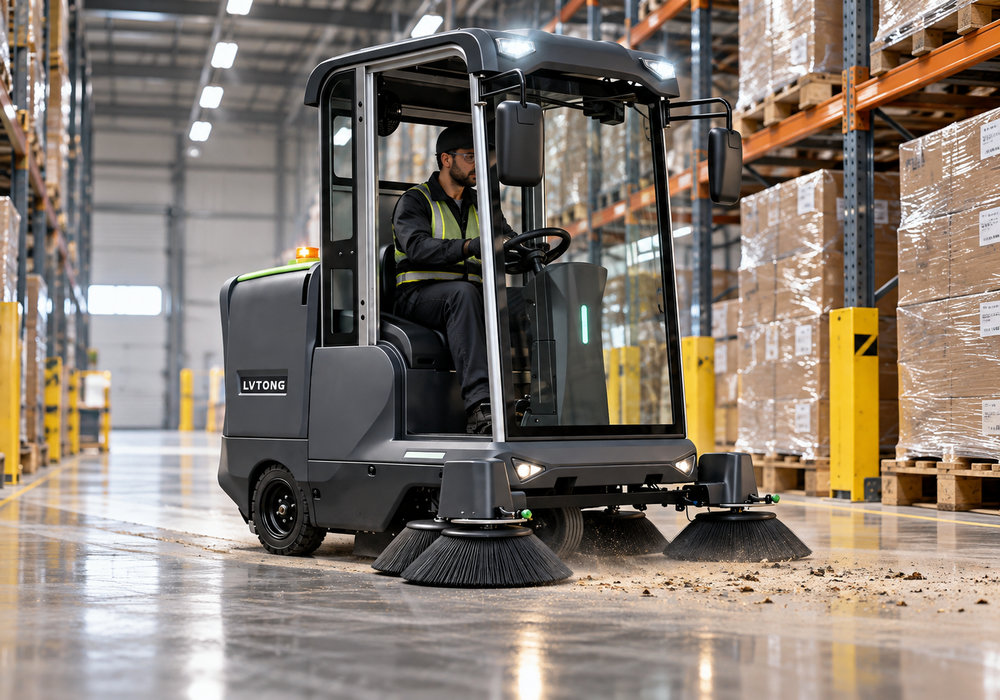
Concrete numbers make the sizing logic easier to see. In LVTONG’s ride-on line, the LT-S1350S ride-on sweeper covers 11,000 m²/h with a 1,350 mm sweeping width, a 100 L trash hopper, an 80 L water tank, and 4–6 hours of battery runtime. For wider aisles and heavier debris loads, the LT-S2050S industrial ride-on sweeper steps up to a 2.05 m sweeping width, 20,000 m²/h coverage, a 180 L hopper, and 6–10 hours on lithium (4–8 hours on lead-acid).
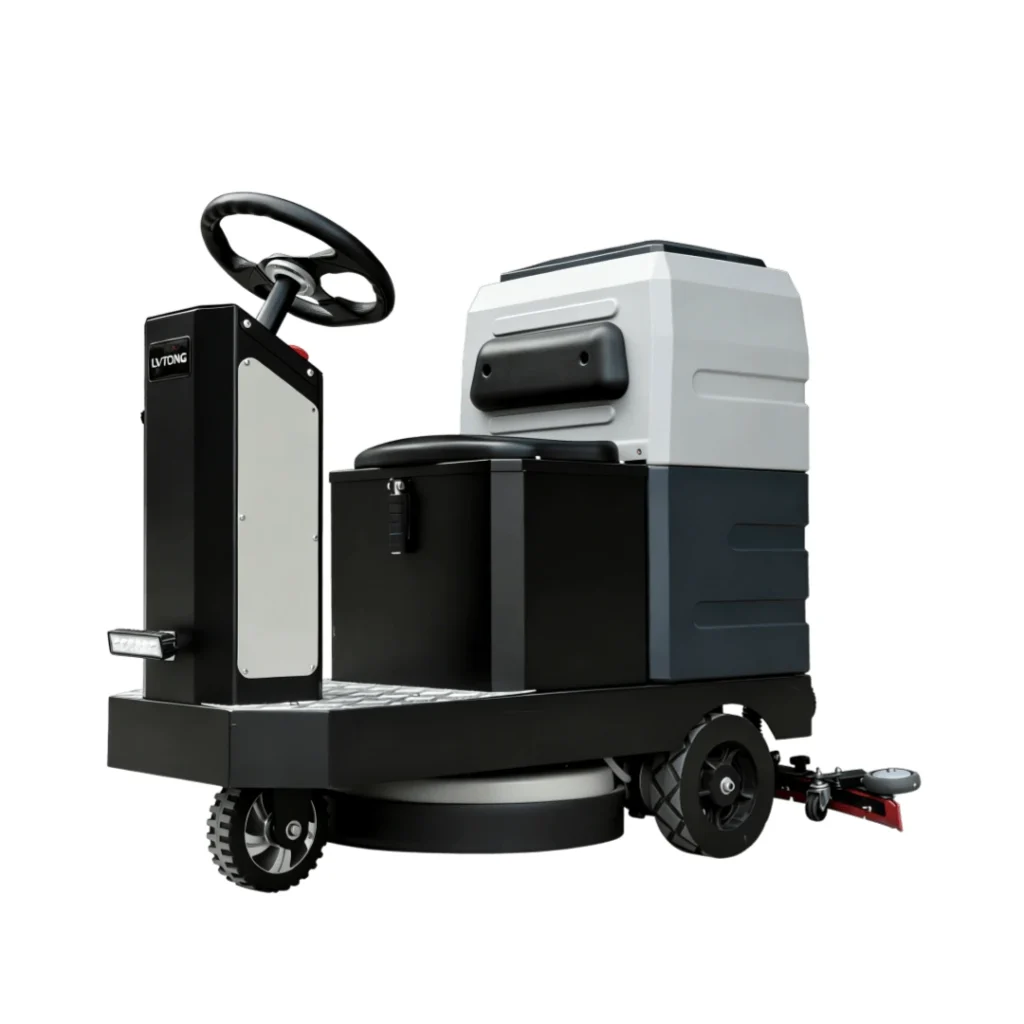
On the wet side, the LT-S560X industrial ride-on scrubber delivers 2,100 m²/h with an 85 L solution tank and a 90 L recovery tank across an applicable area of up to 4,000 m², while the LT-S860X ride-on scrubber runs 4–6 hours per charge and is built around a wash, vacuum, and dry sequence that completes in a single pass.
| Machine | Class | Coverage | Width | Capacity | Runtime |
|---|---|---|---|---|---|
| LT-S1350S | Ride-on sweeper | 11,000 m²/h | 1,350 mm | 100 L hopper + 80 L water | 4–6 h |
| LT-S2050S | Ride-on sweeper | 20,000 m²/h | 2.05 m | 180 L hopper | 6–10 h lithium / 4–8 h lead-acid |
| LT-S560X | Ride-on scrubber | 2,100 m²/h | — | 85 L solution + 90 L recovery | — |
| LT-S860X | Ride-on scrubber | — | — | Wash + vacuum + dry in one pass | 4–6 h |
| LT-S530X | Walk-behind scrubber | 2,100 m²/h | 530 mm | 62 L solution + 65 L recovery | 3–5 h |
Two practical rules fall out of this table. First, coverage rates are not comparable across classes: a sweeper moves faster because dry recovery does not need to dry the floor, so a 20,000 m²/h sweeper and a 2,100 m²/h scrubber can both be right for the same building. Second, recovery capacity should equal or exceed solution capacity on any scrubber — a smaller recovery tank is the specification detail behind wet floors, and wet floors are a slip-risk problem before they are a cleaning problem.
Pass Sequence: Sweep, Scrub, Dry
Dry recovery always precedes wet cleaning. Scrubbing over debris grinds it into the floor and turns grit into slurry that the squeegee then spreads.
- Sweep first, dry. Bring the floor to a debris-free state — including edges and under-rack zones where side brooms do the work.
- Scrub second, wetted. Apply solution at a controlled rate and recover it immediately; the squeegee line should leave a dry floor within seconds.
- Protect transitions. Ramps, dock plates, and floor-level changes concentrate water and debris; slow down and lift the squeegee at these points.
- Sequence by zone, not by convenience. Cleaning the dusty side of a building before the clean side prevents re-contamination and keeps one pass from undoing the other.
On a combo machine the order happens inside one pass — which is exactly why pickup geometry matters more than combo marketing claims. With two machines, scheduling is the whole game: sweep at end of shift, scrub before the next one starts, and let the floor dry in the quiet period.
Specification Checklist for Mixed-Debris Facilities
Nine lines to settle before signing: deck type, filtration class, hopper volume, tank pair, brush/pad options, squeegee type, runtime vs. shift, turning radius vs. aisle width, and battery chemistry.
| Spec line | What to confirm in writing | Failure mode if skipped |
|---|---|---|
| Sweeping deck | Main broom + side broom, adjustable height | Debris left at edges and along racking |
| Dust filtration | Filter type and service interval | Dust recirculated into indoor air |
| Hopper volume | Litres, plus dump method and height | Mid-shift dumping and lost coverage time |
| Tank pair | Solution vs. recovery litres | Wet floors, slip risk, rework |
| Brush / pad options | Disc, cylindrical, pad driver, pressure adjustment | Finish damage on sensitive floors |
| Squeegee | Type, blade material, replaceable sections | Streaking and water trails |
| Runtime | Hours under load, not at ideal draw | Shift interruptions and partial coverage |
| Turning radius | Quoted against your narrowest aisle | Machine cannot reach the areas that matter |
| Battery chemistry | Lithium vs. lead-acid, charging window | Charging conflicts with operating hours |
Ask for the same nine lines in writing for a combo machine if one is under consideration. The distinction that matters is which lines get compromised: combos typically accept less hopper volume for the same footprint.
Dust Control, Water Discharge, and Facility Compliance
Two compliance threads run through every sweeper-scrubber specification: dust captured on the sweeping side, and wash water handled on the scrubbing side.
Dust generated by sweeping is an indoor air quality issue with a filter answer, and the filter specification is the part suppliers most often leave vague. For machinery safety requirements on floor treatment appliances, reference standards such as IEC 60335-2-72 are worth citing in tender documents, particularly on cross-border projects.
On the wet side, facilities that discharge scrubber water to storm drains or exterior areas should confirm local requirements before specifying a machine and a drainage plan. In the United States, industrial stormwater is administered under EPA NPDES industrial stormwater permits; equivalents vary by market, so buyers elsewhere should verify locally. Neither point changes the machine choice — but both surface early in audits.
Where Each Configuration Fits
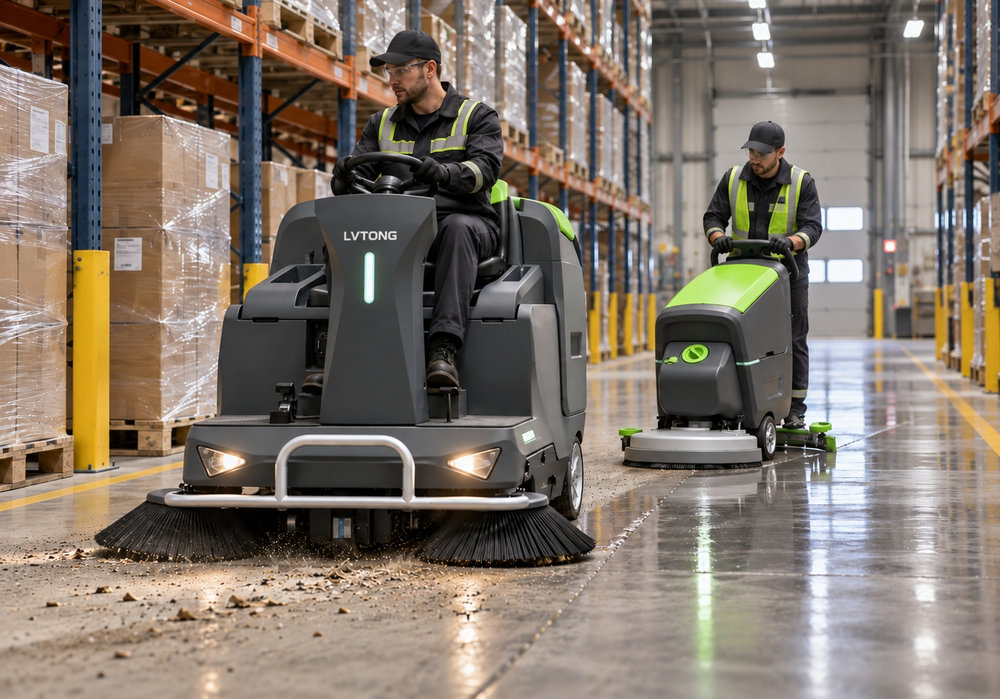
Warehouses and logistics hubs favour sequencing two machines across zones. Factories with mixed debris favour sweeper-led cleaning. Parking structures and paved areas lean on sweepers with scrubbing reserved for stained lanes and ramps.
Facility type is a useful shortcut once the debris profile is known. Large distribution centres typically run a ride-on sweeper for continuous dry recovery plus a ride-on scrubber for scheduled wet passes — the pattern behind the existing guide to industrial sweeper-scrubber decisions in warehouses, which covers the upgrade signals rather than the specification. Paved areas and multi-level structures follow the same logic at a coarser frequency, as in the ride-on parking lot sweeper overview.
Where sweepers and scrubbers are bought as a fleet rather than as single units, standardising battery chemistry, brush types, and service intervals across both classes is the lever that keeps operating costs predictable — one charger profile, one consumable list, one training standard for operators.
FAQ
Does a sweeper scrubber machine exist, or do I need two machines?
Both configurations exist. Combo machines handle light dry debris plus a wet film in one pass; two matched machines handle heavy or bulky debris, different cleaning frequencies, and mixed-debris zones.
Can I scrub a floor that has not been swept?
Not effectively. Scrubbing over dry debris grinds it into the surface and turns grit into slurry the squeegee spreads. Dry recovery always comes first.
What sizing matters most when comparing industrial sweepers and scrubbers?
For sweepers: sweeping width, hopper volume, and filtration. For scrubbers: cleaning width, solution-to-recovery tank ratio, and runtime. Coverage rates are not comparable across the two classes.
How do I decide between a ride-on and a walk-behind scrubber in the same setup?
Match it to aisle width and area. Open areas above roughly 2,000–4,000 m² suit ride-on machines; narrow, racking-dense, or multi-level buildings suit walk-behind units such as the LT-S530X walk-behind scrubber.
What drives operating cost in a two-machine setup?
Operators and pass count first, then consumables (brushes, pads, squeegee blades, filters) and charging windows. Combining both classes under one battery chemistry and one service schedule is the most reliable way to keep costs predictable.
To compare the full sweeper and scrubber lines side by side — widths, capacities, and battery options — start with the floor cleaning equipment range. For facilities configuring a fleet through OEM or private-label programs, the same specification checklist applies to customised builds; confirm that a configuration change for one market has not quietly removed a filtration or brush option your site depends on.