Introduction
Factories are increasingly comparing industrial floor cleaning robots with traditional floor scrubbers as labor costs rise and cleaning standards become stricter. However, these two solutions are not interchangeable. An industrial floor cleaning robot is better for routine, scheduled cleaning in stable and open areas, while an industrial floor scrubber is usually more reliable for heavy oil stains, industrial dust, debris, and changing production layouts.
This guide compares industrial floor cleaning robots and floor scrubbers from the perspectives of cleaning performance, oil stain removal, forklift traffic, route stability, labor requirements, maintenance cost, and return on investment. It is designed to help factory managers, warehouse operators, and facility teams choose the most suitable floor cleaning solution.
Quick Answer
For most factories with heavy oil stains, industrial dust, forklifts, and frequently changing layouts, an industrial floor scrubber is still the more reliable primary cleaning solution. An industrial floor cleaning robot is more suitable for routine maintenance in open, stable, and predictable areas. Many factories can use both: floor scrubbers for deep cleaning and cleaning robots for scheduled maintenance.
The Difference between Factory Floor Cleaning and Ordinary Places
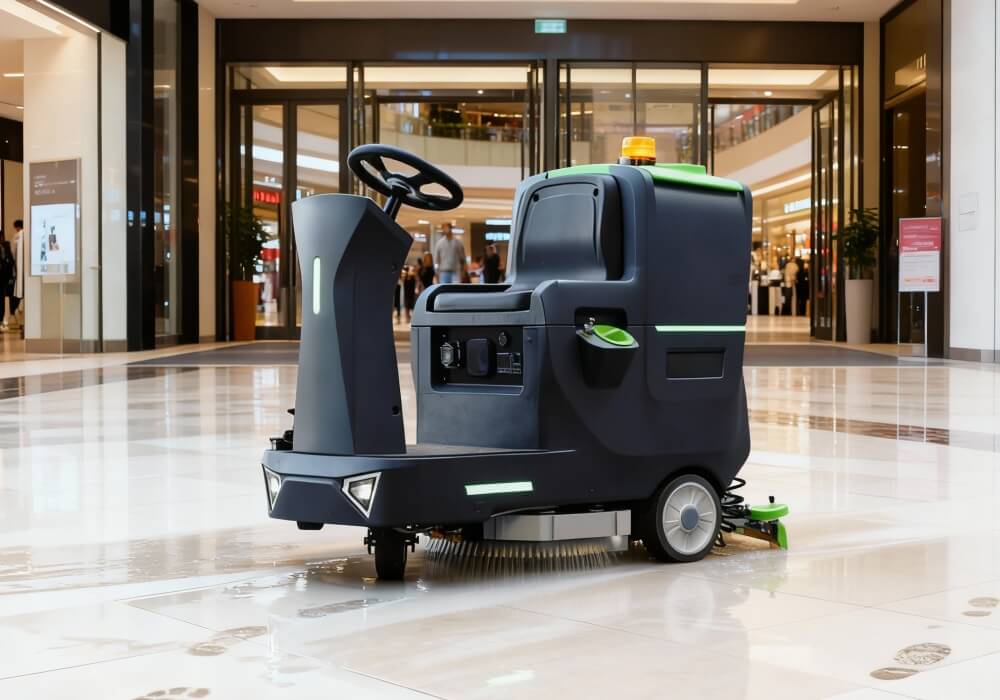
Factory floor cleaning is more demanding than cleaning offices, shopping malls, or other commercial spaces. Manufacturing plants often face heavier contamination, more complex traffic, and stricter safety requirements. This is why choosing between an industrial floor cleaning robot and a traditional floor scrubber should depend on the actual working conditions of the factory.
- Heavy oil stains, tire marks, industrial dust, and debris are common on production floors.
- Forklifts, workers, pallets, and moving equipment often share the same cleaning area.
- Cleaning areas are often large, but routes may be narrow, blocked, or frequently adjusted.
- Factories usually require fast drying, visible cleaning results, and lower slip risks.
- Many factories operate in multiple shifts or continuous production, leaving limited time for floor cleaning.

What Is an Industrial Floor Scrubber?
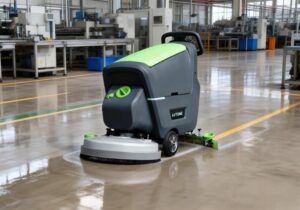
An industrial floor scrubber is a heavy-duty floor cleaning machine designed for factories, warehouses, workshops, parking areas, and production facilities. It uses mechanical scrubbing, water or detergent, and a recovery system to clean and dry the floor in one pass.
How an Industrial Floor Scrubber Works
A floor scrubber usually completes three cleaning steps in one pass:
- A brush or cleaning pad scrubs the floor with mechanical pressure.
- Water or detergent helps loosen oil, dust, tire marks, and other stains.
- The recovery system collects wastewater so the floor can dry faster and reduce slip risks.
Conclusion: This “scrubbing + water recovery” process is why floor scrubbers are still widely used for heavy-duty factory floor cleaning.
修改目的:
Where Industrial Floor Scrubbers Are Commonly Used
- Warehouses and logistics centers with heavy material handling
- Automotive workshops with tire marks, oil, and grease
- Food and beverage factories requiring frequent floor cleaning
- Parking areas with dust, tire marks, and water recovery needs
Floor Scrubbing Machine Types
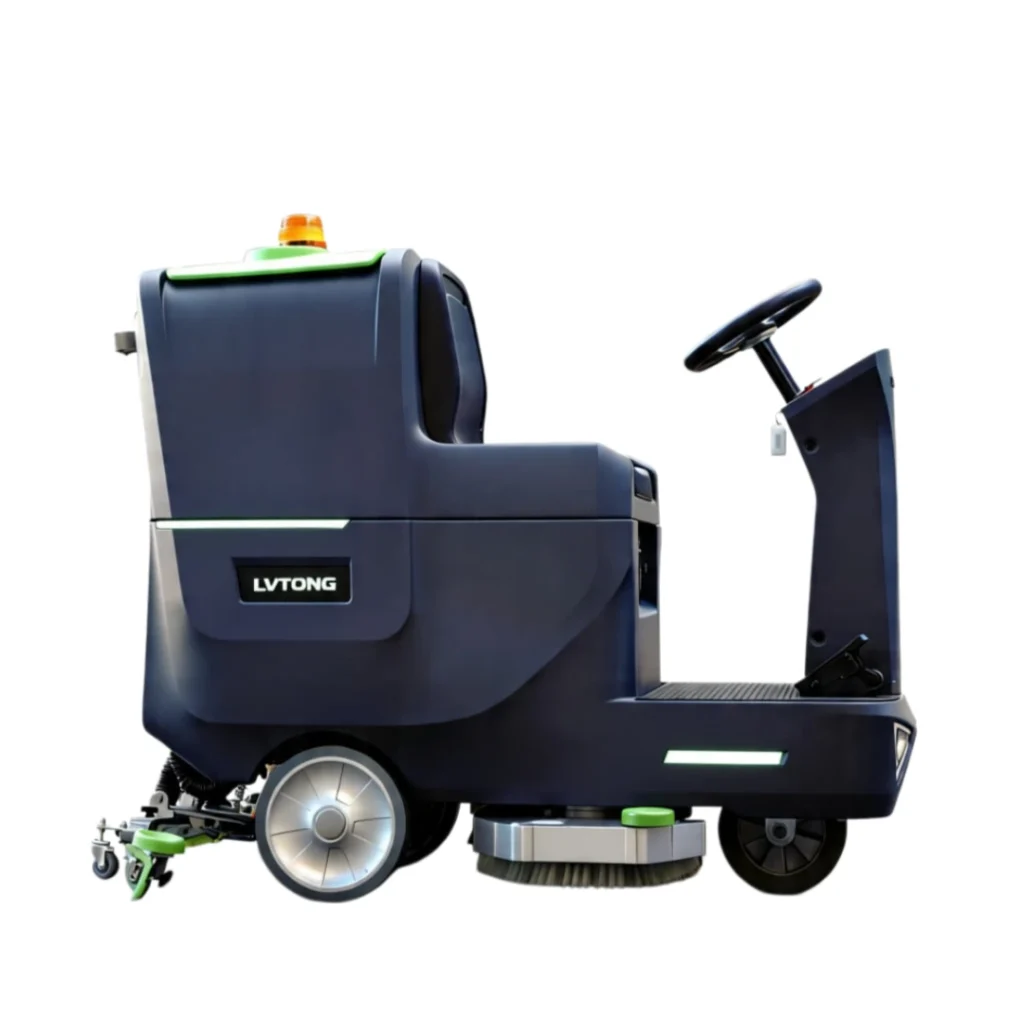
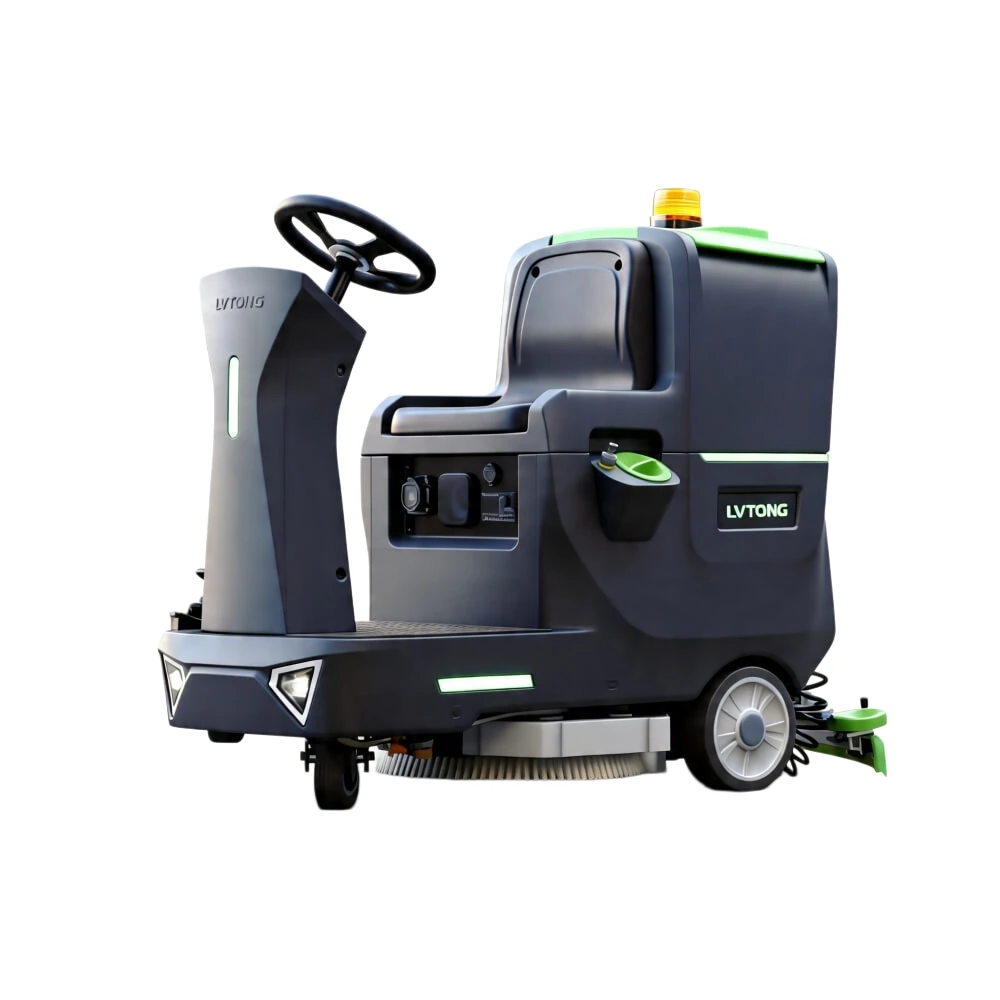
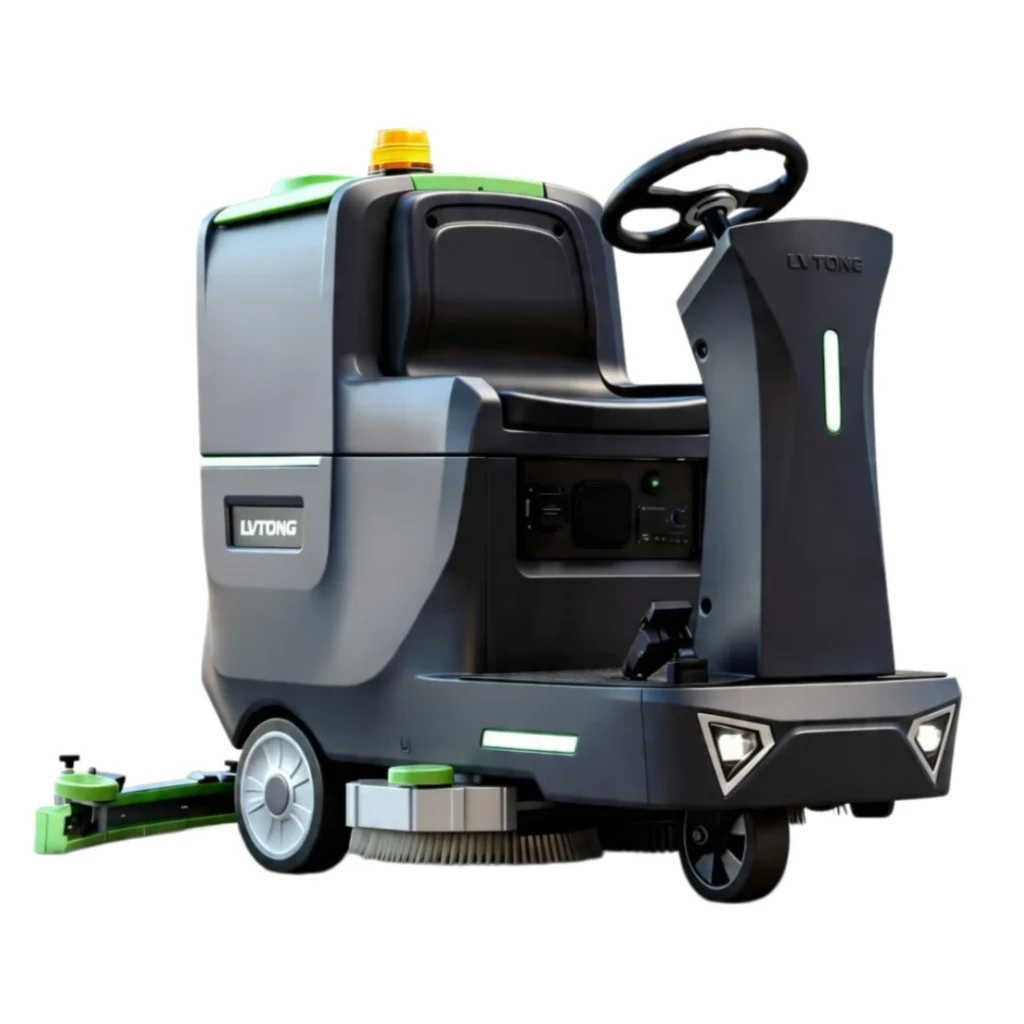
Factories may use walk-behind scrubbers for smaller or narrower areas and ride-on scrubbers for larger cleaning areas. However, this article focuses on the decision between robotic cleaning and traditional scrubber cleaning rather than comparing specific floor scrubber models.

What Is an Industrial Floor Cleaning Robot?
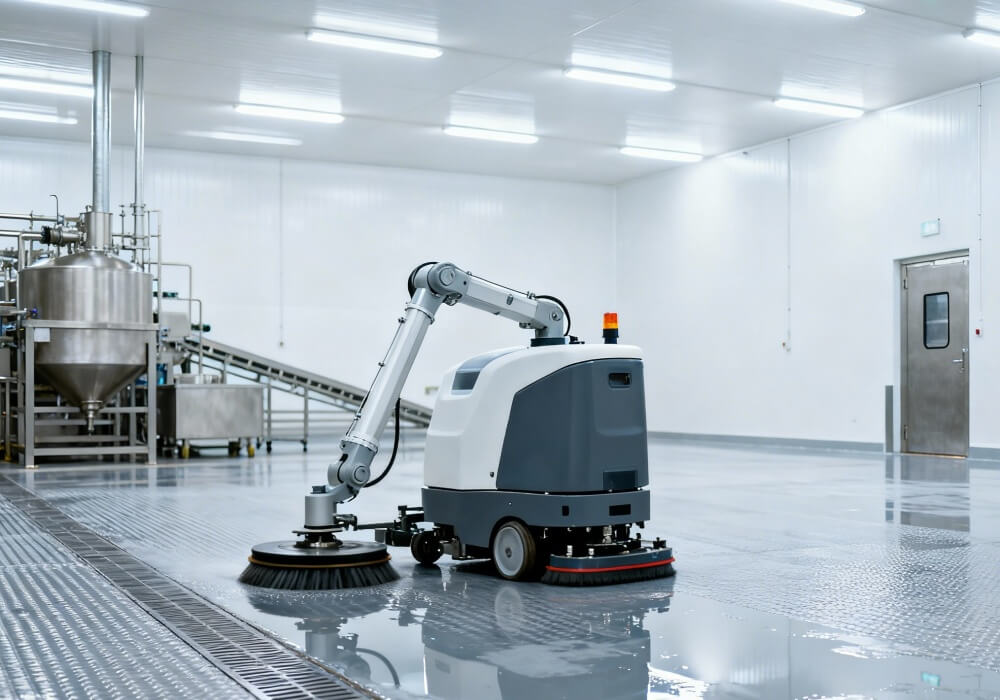
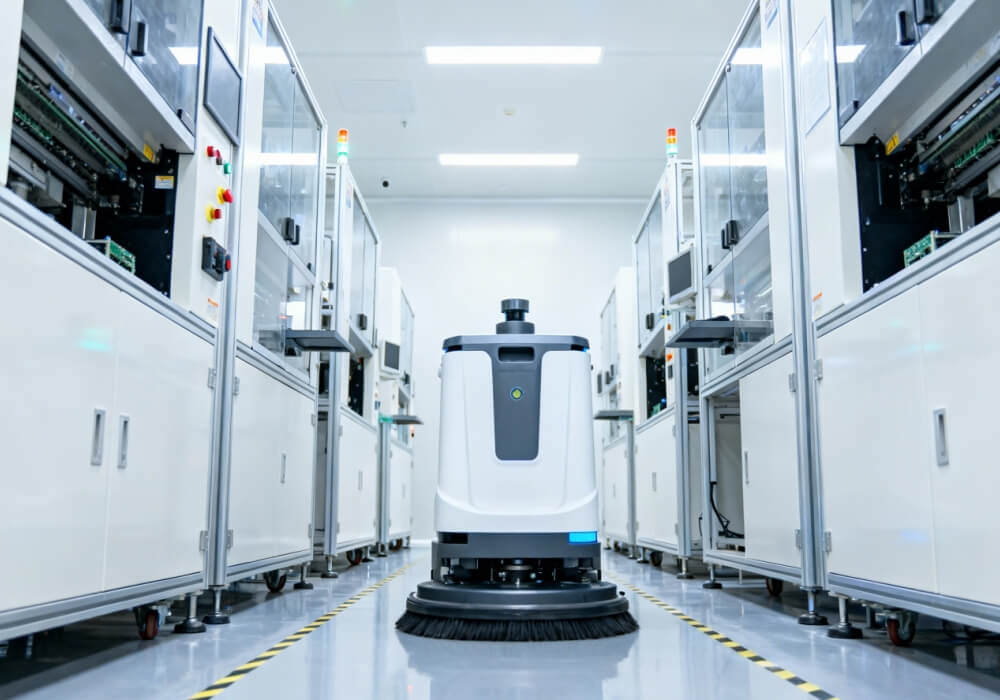
An industrial floor cleaning robot is an autonomous cleaning machine designed to clean large floor areas with limited human operation. It usually uses sensors, mapping, navigation systems, and cleaning programs to follow planned routes and perform scheduled cleaning.
Main Characteristics of Industrial Floor Cleaning Robots
- Autonomous navigation is supported by sensors, mapping, and route planning.
- Scheduled cleaning can reduce repetitive manual work in stable areas.
- It is usually better for routine maintenance cleaning than heavy-duty stain removal.
Where Floor Cleaning Robots Are Commonly Used
- Office buildings with stable and predictable cleaning routes
- Shopping malls with large open public areas
- Hospitals and healthcare facilities requiring routine maintenance cleaning
- Airports, exhibition halls, warehouses, and logistics centers with wide aisles
These environments are usually more suitable for cleaning robots because the floor is relatively clean, routes are more predictable, and obstacles are easier to manage.
How Autonomous Floor Scrubbers Navigate and Operate?
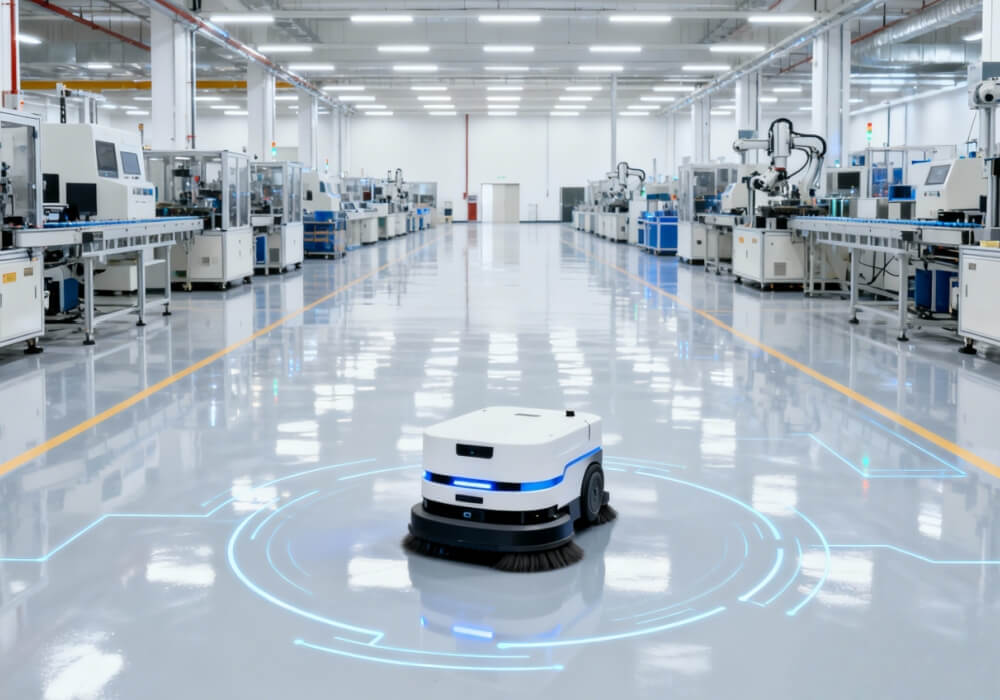
Modern autonomous floor scrubbers use a combination of sensors, digital mapping and route-planning technology to perform scheduled cleaning with limited operator involvement. Depending on the machine, these systems may include LiDAR, SLAM (Simultaneous Localization and Mapping), cameras, ultrasonic sensors and intelligent obstacle detection.
During deployment, the robot first maps the cleaning area and establishes planned routes. Sensors then help it detect walls, racks, pallets, pedestrians, forklifts and other obstacles while operating. Some autonomous systems can also return to a charging station, resume unfinished tasks and generate cleaning reports for facility managers.
However, automation does not eliminate operational requirements. Site mapping, charging locations, route setup, sensor cleaning, software support and occasional troubleshooting are still necessary. The more stable and predictable the facility layout is, the easier it is for an autonomous floor scrubber to maintain consistent coverage.
Industrial Floor Cleaning Robot vs Floor Scrubber: Key Differences
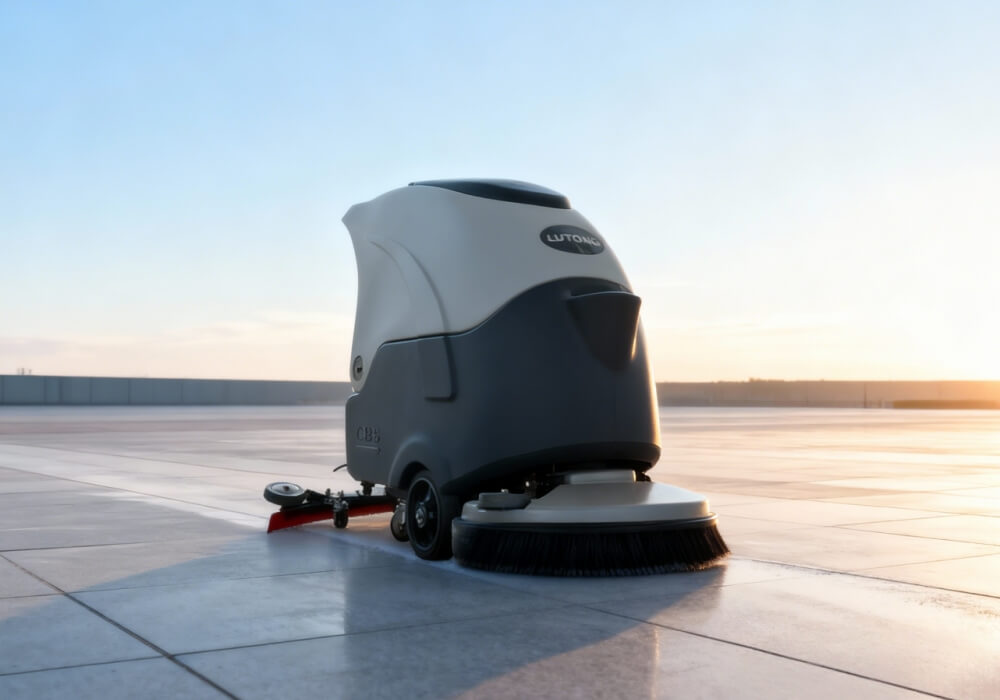
The main difference is not whether one machine is more advanced than the other, but which one matches the factory’s floor condition, traffic pattern, and cleaning goal.
| Factor | Industrial Floor Cleaning Robot | Industrial Floor Scrubber |
|---|---|---|
| Best for | Routine maintenance cleaning | Deep cleaning and heavy-duty cleaning |
| Oil stains | Limited performance on heavy oil | Stronger scrubbing and detergent control |
| Dust and debris | Suitable for light to moderate dust | Better for heavy dust and industrial residue |
| Forklift traffic | Requires stable routes and traffic control | Operator can react immediately |
| Layout changes | Less suitable for frequent changes | More flexible in changing workshops |
| Labor use | Reduces repetitive manual work | Requires an operator but offers high control |
| Initial investment | Usually higher | Usually more controllable |
| Maintenance | May require sensors, software, and mapping support | Usually simpler mechanical maintenance |
| Best environment | Open, stable, predictable areas | Complex, dirty, and changing factory areas |
Cleaning Performance: Oil, Dust, and Industrial Residue
Industrial Floor Scrubber
- Provides stronger brush pressure and more reliable wastewater recovery. absorption
- Works better for heavy oil stains, dust, tire marks, and industrial residue.
- Provides visible cleaning results and faster drying in demanding factory areas.
Industrial Floor Cleaning Robot
- More suitable for routine dust removal and scheduled maintenance cleaning.
- May struggle with thick oil, sticky residue, uneven contamination, or mixed debris.
For factories with heavy contamination, an industrial floor scrubber is usually the safer primary cleaning solution. An industrial floor cleaning robot can be useful after deep cleaning, especially for daily maintenance in stable areas.
Match the Machine to the Contamination: Dust, Debris, Oil and Residue
Before comparing a robotic floor scrubber with a traditional floor scrubber, factories should first identify the type of contamination they need to remove.
Loose dry debris such as dust, sand, packaging scraps, metal chips and wood particles is usually better collected with an industrial floor sweeper before wet scrubbing. In very dusty environments, manual sweeping can also redistribute fine dust into the air instead of fully collecting it.
Oil, grease, tire marks and sticky industrial residue, on the other hand, usually require mechanical scrubbing, detergent control and effective wastewater recovery. This is where an industrial floor scrubber becomes more important.
Light daily dirt in stable, open areas can be suitable for scheduled robotic cleaning after heavy contamination has already been removed.
For factories with mixed contamination, the most effective workflow may therefore be:
Sweep → Deep Scrub → Robotic Maintenance
The goal is not to choose the most advanced machine, but to match each machine to the contamination and cleaning stage it handles best.
Which Option Works Better for Heavy Oil Stains?
For factories with heavy oil stains, machining oil, tire marks, and stubborn industrial residue, an industrial floor scrubber is usually the better primary choice. It provides stronger brush pressure, better detergent application, and more reliable wastewater recovery.
An industrial floor cleaning robot can support daily maintenance after deep cleaning, but it may struggle when oil stains are thick, uneven, or mixed with dust and debris. In these conditions, robotic cleaning should not completely replace heavy-duty scrubbing.
Adaptability to Factory Layouts, Obstacles, and Traffic
Common factory challenges include:
- Narrow aisles and limited turning space
- Temporary obstacles such as pallets, tools, materials, and waste bins
- Frequent layout changes caused by production adjustments
- Workers, forklifts, and cleaning equipment sharing the same routes
Why floor scrubbers can adapt more easily:
- The operator can adjust the cleaning route immediately.
- The operator can avoid unexpected obstacles, forklifts, or blocked areas in real time.
- The machine can be used even when the workshop layout changes frequently.
Limitations of industrial floor cleaning robots:
- Frequent layout changes may require route remapping or manual adjustment. changes
- Sudden obstacles may interrupt cleaning or reduce coverage.
- Complex forklift and pedestrian traffic may require restricted zones, time scheduling, or supervision.
Therefore, in dirty, dynamic, and frequently changing production areas, industrial floor scrubbers are usually more reliable. Industrial floor cleaning robots are more suitable for stable, open, and predictable factory zones.
Are Floor Cleaning Robots Suitable Around Forklifts and Moving Equipment?
Floor cleaning robots can work in factories, but their performance depends heavily on traffic control, route stability, and obstacle management. Forklifts, pallets, moving equipment, workers, and temporary storage areas can all affect robotic navigation.
In factories with frequent forklift traffic, cleaning robots are better used in separated zones, fixed aisles, off-peak hours, or non-production periods. If the floor layout changes frequently, an operator-controlled industrial floor scrubber is usually more reliable.
Cleaning Efficiency and Coverage
Industrial Floor Cleaning Robot
- High actual cleaning efficiency in complex or heavily polluted areas.
- Suitable for extended operation when operators, water supply, and maintenance are properly arranged.
- Provides immediate visible cleaning results, especially on oil, dust, and tire marks.
Commercial floor cleaning robot
- Initial mapping, route setup, and testing are usually required before regular operation.
- Actual coverage may be reduced by obstacles, traffic, blocked aisles, or route interruptions.
- Multiple cleaning cycles may be needed for areas with dust buildup or uneven contamination.
Labor Requirements and Human Supervision
- Industrial floor scrubbers require an operator, but one trained worker can often complete large-area cleaning more efficiently than manual mopping or manual sweeping. The operator can also respond immediately to oil stains, blocked routes, forklifts, and changing production conditions.
- Industrial floor cleaning robots can reduce repetitive manual work, but they are not completely free from human involvement. They may still require supervision, route setup, water refilling, wastewater emptying, sensor cleaning, software support, and troubleshooting.
In complex factory environments, controlled human operation is often more reliable for deep cleaning, while robotic cleaning is more useful for routine maintenance in stable areas.
Cost and ROI: Cleaning Robot vs Floor Scrubber
Industrial Floor Scrubber
- Initial purchase cost is usually more controllable than a robotic cleaning system.
- Maintenance is usually more mechanical and easier to estimate.
- The payback period may be shorter in factories with heavy contamination, complex layouts, or frequent emergency cleaning needs.
Industrial Floor Cleaning Robot
- Initial investment is usually higher because of sensors, navigation systems, software, and automation functions.
- Maintenance may include software updates, sensor calibration, mapping support, and technical troubleshooting.
- ROI depends heavily on route stability, cleaning frequency, labor cost, floor condition, and the amount of manual intervention required.
A cleaning robot is more likely to generate a positive return when it cleans large, open, and repeatable routes every day. If the robot frequently stops because of obstacles, traffic, remapping, or troubleshooting, the expected labor savings may be reduced.
For factories with heavy oil stains, changing layouts, and mixed forklift traffic, a traditional floor scrubber may deliver more predictable operating costs and a more stable payback period.
Buy, Rent or Lease: How Procurement Affects ROI
Purchase price is only one part of the investment decision. Factories should also consider how frequently the equipment will be used and whether the cleaning requirement is permanent, temporary or still being tested.
Renting a conventional floor scrubber can make sense for temporary projects, factory shutdown cleaning, seasonal workloads, emergency replacement or testing a machine before purchase. For equipment that will be used every day throughout the year, purchasing may provide a more predictable long-term cost.
Autonomous cleaning systems may also be available through leasing, subscription or service-based models in some markets. In these cases, buyers should determine whether the agreement includes site mapping, deployment, software access, operator training, technical support, updates and maintenance.
When comparing ROI, evaluate total cost of ownership rather than purchase price alone. Important variables include labor cost, cleaning frequency, equipment utilization, battery and consumables, maintenance, technical support, downtime and the amount of human intervention required.
When Should a Factory Choose Each Option?
Choose an industrial floor scrubber if:
- The floor has heavy oil stains, dust, tire marks, or industrial debris.
- Fast drying, visible cleaning results, and lower slip risks are required.
- The workshop layout changes frequently or routes are often blocked.
- Forklifts, workers, pallets, and cleaning equipment share the same space.
-
The factory needs reliable deep cleaning or emergency cleaning.
Choose an industrial floor cleaning robot if:
- The floor is relatively clean and mainly needs routine maintenance.
- Cleaning routes are stable, open, and predictable.
- Cleaning can be scheduled during non-production periods, off-peak hours, or low-traffic times.
Choose a hybrid cleaning solution if:
- The factory has both heavily polluted production zones and open warehouse areas.
- They adapt better to oil, dust, debris, forklifts, and changing layouts.
- Operator training is usually simpler than robotic route setup and troubleshooting.
- The factory wants to improve cleaning consistency without relying entirely on robotic cleaning.
Factory Floor Cleaning Equipment Selection Checklist
| Evaluate | Why It Matters |
|---|---|
| Cleaning area | Determines whether compact, walk-behind, ride-on or autonomous equipment is practical |
| Aisle width and turning space | Narrow or frequently blocked routes favor more maneuverable equipment |
| Floor material | Concrete, epoxy, tile and coated floors may require different brushes or cleaning settings |
| Contamination type | Dry debris, oil, tire marks and sticky residue require different cleaning processes |
| Obstacle density | Pallets, racks, tools and temporary storage can reduce robotic route efficiency |
| Forklift and pedestrian traffic | High traffic makes route planning and real-time response more important |
| Daily cleaning frequency | Repetitive daily cleaning increases the potential value of automation |
| Battery runtime | Determines whether the required area can be completed within a shift |
| Tank capacity | Larger tanks reduce refill and wastewater-emptying interruptions |
| Brush pressure | More important when removing heavy industrial residue |
| Water recovery | Important where fast drying and lower slip risk are required |
| Labor cost | Higher labor costs may improve the business case for automation |
| Charging and network access | Especially important for autonomous cleaning systems |
| Maintenance and technical support | Affects downtime and long-term ownership cost |
Why Many Factories Still Use Floor Scrubbers as the Primary Cleaning Solution
Although industrial floor cleaning robots are becoming more common, many factories still use floor scrubbers as the primary cleaning solution because they are more predictable in demanding industrial conditions.
- Their cleaning performance is mature, visible, and easy to verify.
- Strongly adaptable to industrial conditions
- Simple operation training
- The risk of route interruption is lower in complex or unstable environments.
- Machine size, brush type, water tank capacity, and cleaning method can be selected according to the factory’s floor condition.
Industrial floor cleaning robots represent an important future direction for automated maintenance cleaning. However, at the current stage, traditional floor scrubbers are still more practical for heavy-duty cleaning in many factories, especially where contamination, traffic, and layout changes are difficult to control.

Which Option Is Better for Warehouses and Logistics Centers?
Warehouses and logistics centers are often more suitable for industrial floor cleaning robots than production workshops because they usually have wider aisles, more predictable routes, and larger open areas. Robots can be useful for scheduled cleaning during low-traffic hours.
However, if the warehouse has heavy forklift movement, pallet congestion, dust accumulation, or frequent route changes, a traditional floor scrubber may still be needed for deep cleaning and emergency cleaning tasks.
Can Factories Use Robots and Floor Scrubbers Together?
Yes. For many factories, the most practical solution is not choosing only one machine, but combining both. Industrial floor scrubbers can handle deep cleaning, oil stains, wastewater recovery, and high-risk production areas. Industrial floor cleaning robots can handle scheduled maintenance in open aisles, warehouses, and low-traffic areas.
This hybrid cleaning strategy can improve cleaning consistency while reducing repetitive labor. It is especially suitable for factories with different floor conditions in production zones, storage areas, and logistics routes.
Conclusion: Which Is Better for Factories?
For most factories, an industrial floor scrubber remains the more reliable primary cleaning solution because it handles oil stains, heavy dust, industrial debris, forklifts, and changing layouts more effectively. An industrial floor cleaning robot is more suitable for routine maintenance in open, stable, and predictable areas.
The best choice depends on the factory’s floor condition, route stability, traffic level, labor cost, and cleaning frequency. In many industrial environments, the most practical solution is a hybrid model: use floor scrubbers for deep cleaning and cleaning robots for scheduled maintenance.
Need help choosing the right floor cleaning solution for your factory? Contact us to compare industrial floor cleaning robots, walk-behind scrubbers, and ride-on scrubbers based on your floor area, oil stain level, forklift traffic, and cleaning schedule.
Which Floor Scrubber Fits Different Factory Conditions?
If a traditional industrial floor scrubber is the better choice for your facility, the next step is to match the machine size and configuration to the actual working environment.
For narrow aisles, smaller production areas and workshops with frequent turns, a walk-behind scrubber generally provides better maneuverability. LVTONG’s LT-S530X is designed for narrow aisles and manufacturing workshops, while the Q5 is another compact option for smaller industrial areas.
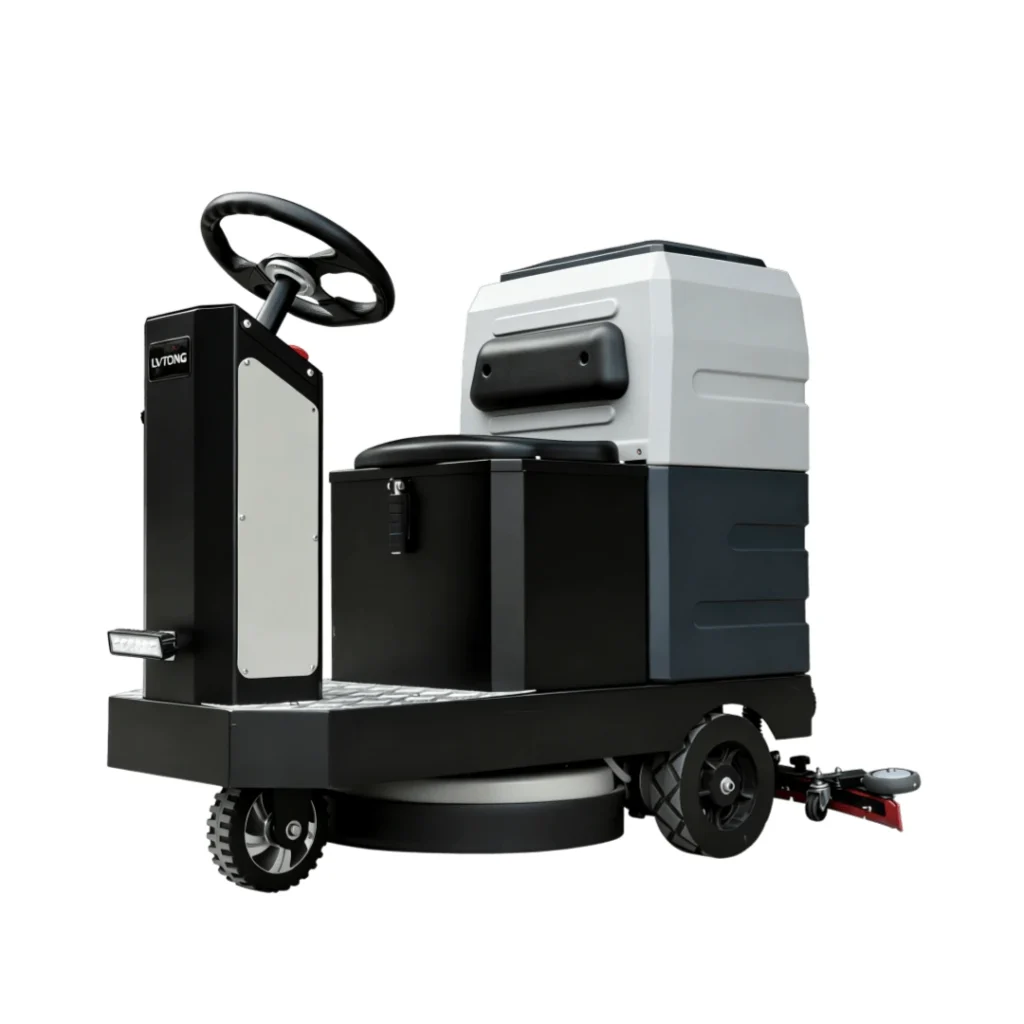
For large factories, warehouses and logistics facilities, ride-on floor scrubbers reduce operator walking and provide higher cleaning capacity. Models such as the V6, LT-S710X and LT-S860X are designed for larger cleaning areas and industrial applications.
Instead of selecting a machine only by purchase price, compare floor area, aisle width, contamination level, tank capacity, battery runtime, scrubbing performance and after-sales support.
FAQ
Can an industrial floor cleaning robot handle heavy oil stains in a factory?
An industrial floor cleaning robot can handle light dust, routine dirt, and some moderate stains, but heavy oil stains usually require stronger brush pressure, detergent control, and reliable water recovery. For factories with machining oil, tire marks, or stubborn industrial residue, an industrial floor scrubber is usually the safer primary cleaning option.
How long does it take to see ROI on an industrial floor cleaning robot?
The ROI depends on cleaning area, labor cost, cleaning frequency, route stability, and maintenance requirements. A robot is more likely to deliver faster ROI in large, open, and predictable areas that require daily cleaning. If the factory layout changes frequently or the robot needs frequent troubleshooting, the payback period may become longer.
Are floor cleaning robots safe in complex factory environments?
Floor cleaning robots can operate safely in controlled environments, but complex factory conditions require careful planning. Forklifts, pallets, workers, temporary obstacles, and moving equipment can affect navigation. Robots are better used in fixed routes, separated areas, off-peak hours, or low-traffic zones.
Which has higher maintenance costs: an industrial floor scrubber or a cleaning robot?
Industrial floor scrubbers usually have simpler mechanical maintenance and more predictable service costs. Cleaning robots may require additional technical support, software updates, sensor maintenance, mapping adjustments, and troubleshooting. However, the total cost depends on the machine model, cleaning frequency, and factory environment.
Can factories use robots and floor scrubbers together?
Yes. Many factories can benefit from a hybrid cleaning strategy. Floor scrubbers are better for deep cleaning, oil stains, and complex production zones, while cleaning robots can handle routine maintenance in open aisles, warehouses, and low-traffic areas. This combination can improve efficiency without relying entirely on automation.