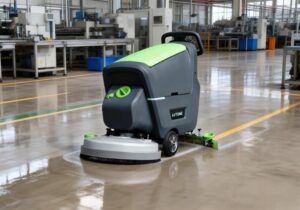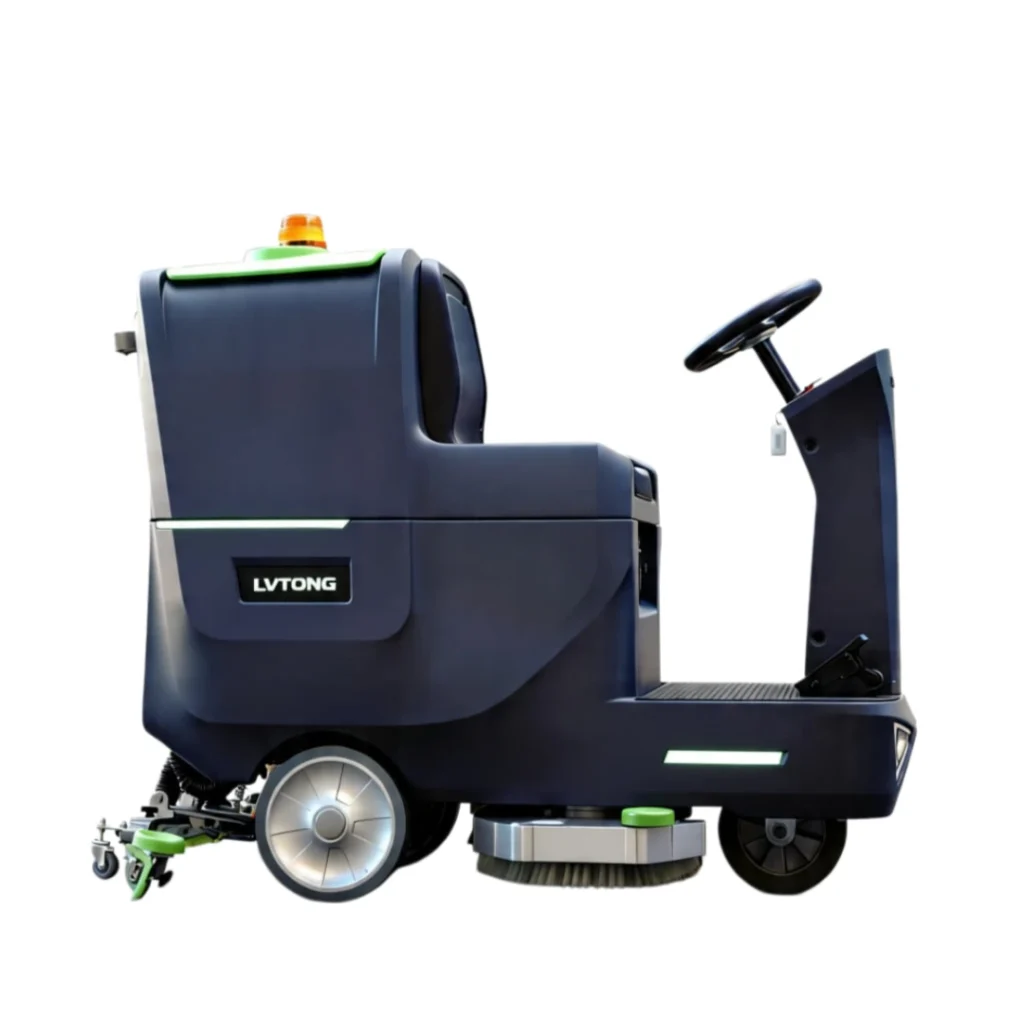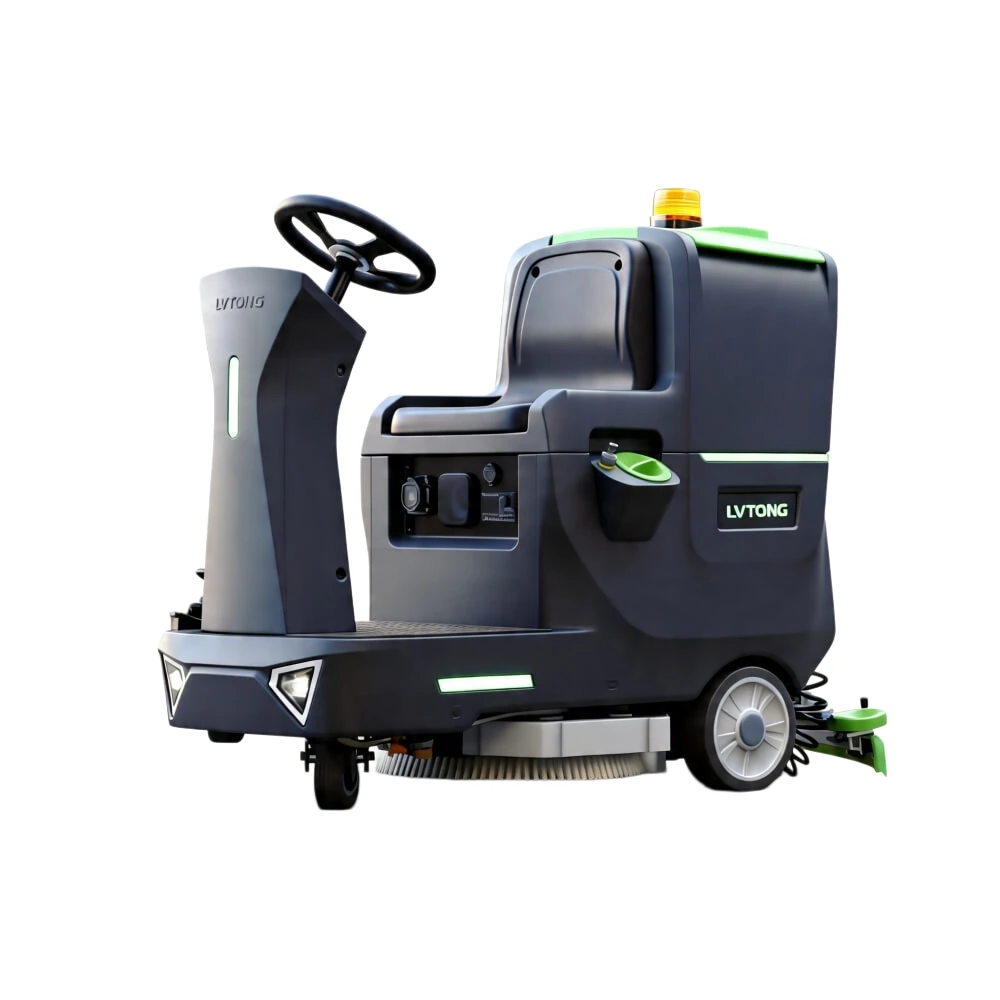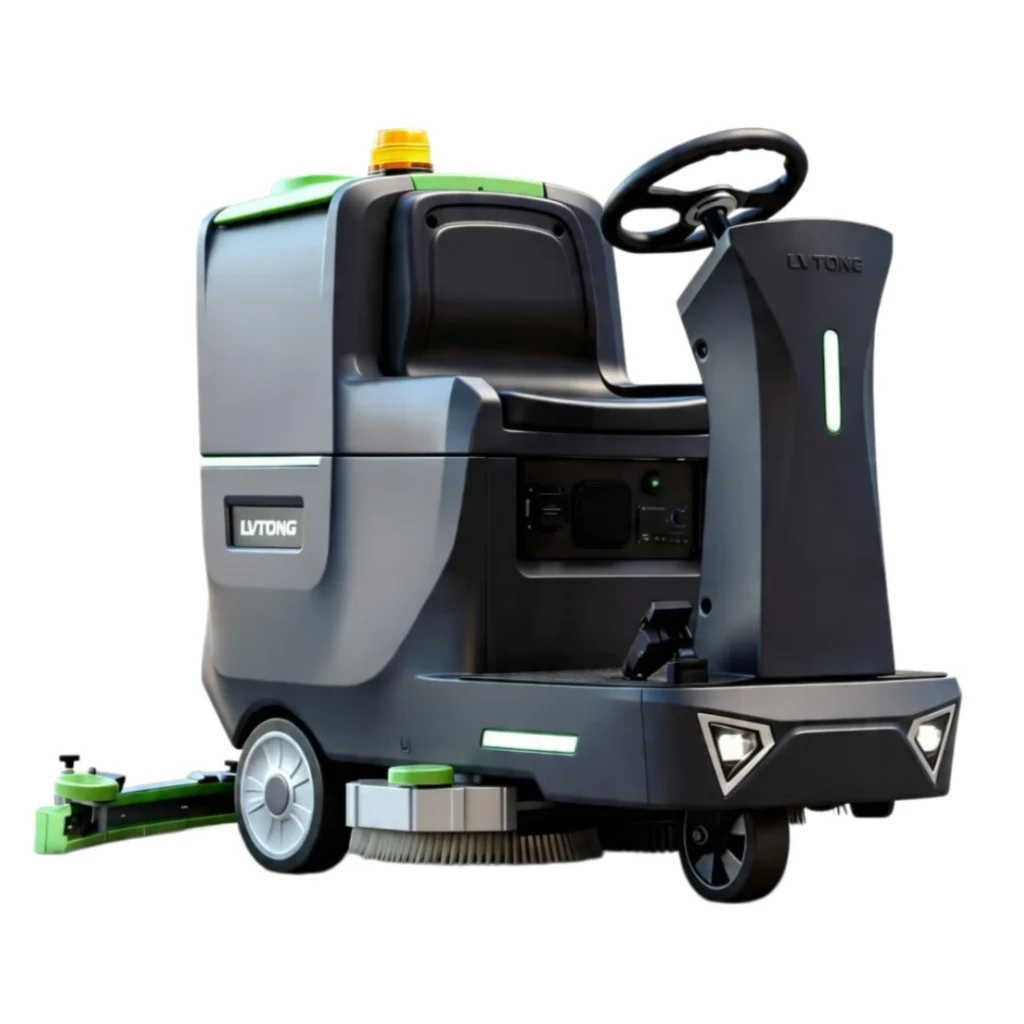
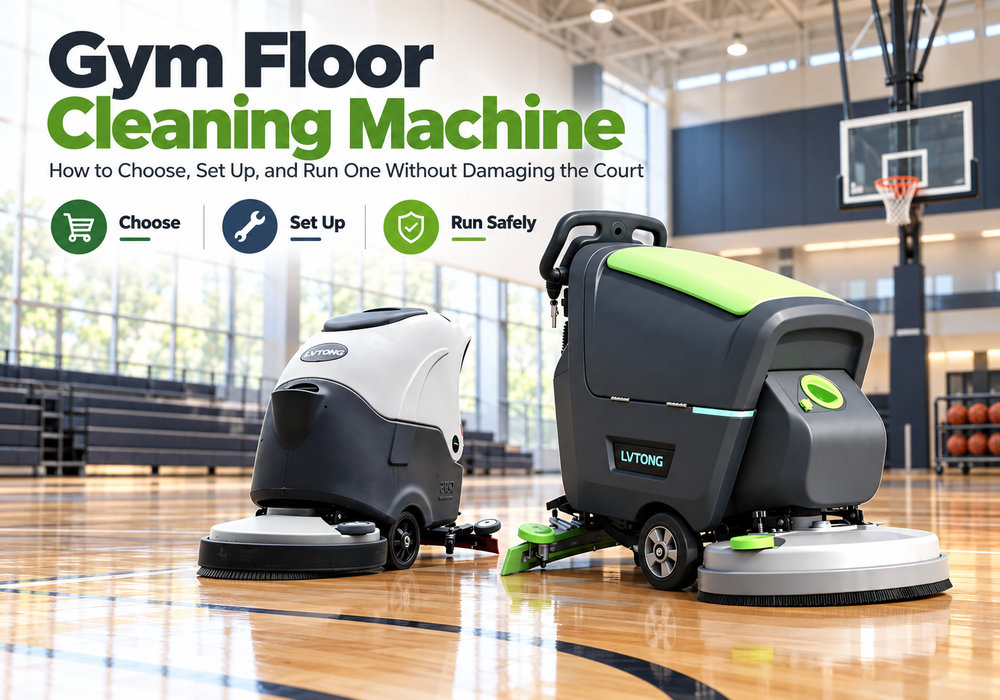
A gym floor cleaning machine is a walk-behind or compact ride-on scrubber configured for sports surfaces — soft brushes or pads, low down-pressure, low water flow, and neutral-pH chemistry — used on maple courts, sport vinyl, rubber tiles, and the concrete around them. The machine matters less than the configuration: gym floors fail from water, pressure, and chemistry long before they fail from hardware.
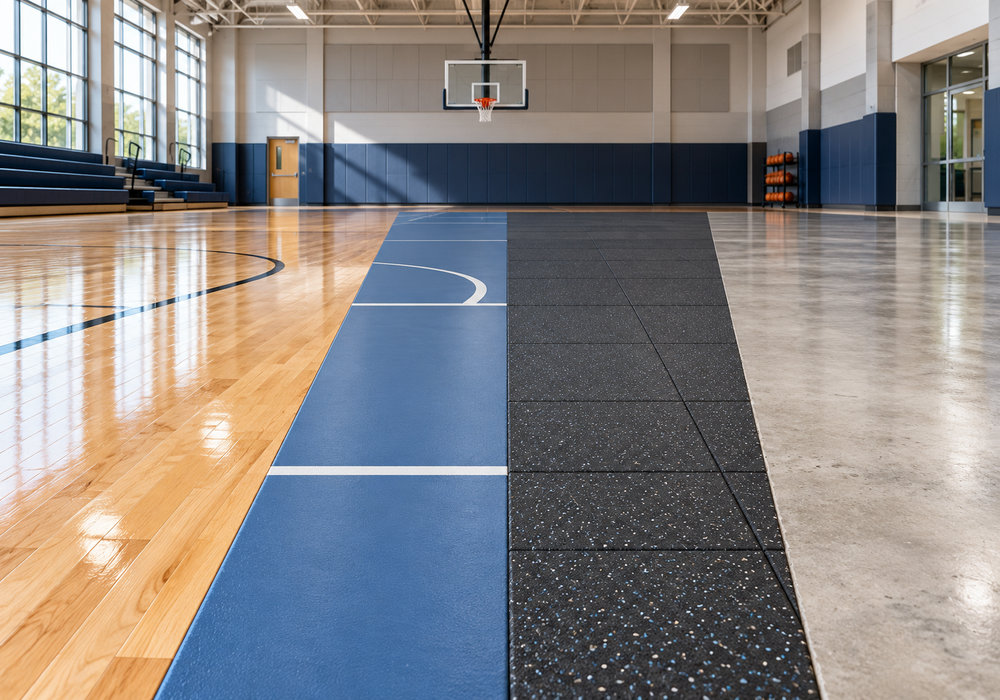
Gyms also mix four surface types under one roof, each with its own limits, which is why this guide is organized by surface first and machine second. Read the surface table, then match a machine class, then lock the setup and schedule that keep the finish, the line markings, and the playing traction intact.
QUICK ANSWER
A walk-behind gym floor scrubber with soft brushes, low pressure, low water flow, and neutral-pH solution is the right gym floor cleaning machine for most school and club gyms; ride-on machines belong on the surrounding concrete, not the court.
- Match surface first: sealed maple, sport vinyl, rubber tiles, and concrete each need different settings — one checklist does not fit all four.
- Machine class: 400–530 mm walk-behind covers a school gym; large fieldhouses add a compact unit for sidelines and concourses.
- Protect the finish: neutral pH, no solvents, dry vacuum pickup, and a 2×2 m trial before full use.
- Schedule: dust-mop daily, machine-scrub 1–2× weekly, deep clean per season.
The surface-by-surface breakdown starts below.
What Does a Gym Floor Cleaning Machine Actually Do?
A gym floor cleaner machine applies measured solution, agitates with a soft brush or pad, and vacuums the water back in one pass — replacing dust-mop-plus-mop routines that leave residue and wet film.
On a sports surface that one-pass logic matters more than anywhere else. Courts carry an engineered finish and painted line markings; standing water or harsh chemistry dulls gloss, lifts paint, and changes ball bounce and player traction. A properly configured gym floor scrubber controls exactly the three variables that cause that damage — water volume, pressure, and dwell time.
The machine also disciplines the routine. Dust mopping remains the daily backbone, but mopping with water spreads soil and leaves a film that collects dust faster — the pattern our guide to moving beyond the mop covers at facility scale. Machine scrubbing on a fixed weekly cadence keeps the finish from ever reaching the point where aggressive restoration becomes the only fix.
Match the Machine to the Surface: Four Floors, Four Playbooks
Sealed maple, sport vinyl, rubber tiles, and concrete tolerate completely different settings — identify the surface before choosing any brush, pad, or chemical.
| Surface | Where it appears | Machine settings | Hard limits |
|---|---|---|---|
| Sealed maple court | School and club basketball/volleyball courts | Soft brush or white pad, lowest pressure, low flow, near-dry pickup | No standing water; finish and lines are the constraint |
| Sport vinyl / PU | Multipurpose halls, training rooms | Red pad or soft brush, low-mid pressure, neutral pH | Seams and welded joints dislike flooding |
| Rubber tiles / rolled rubber | Weight rooms, sprint tracks, functional zones | Medium pressure fine, mild degreaser for skin oils | Harsh solvents swell rubber; porous texture traps dirt |
| Concrete surrounds | Concourses, entries, bleacher zones | Standard scrubbing; this is where ride-on units earn their keep | Dust migration onto the court is the real enemy |
The maple court is the strictest case and the reason most guidance reads cautious. The Maple Flooring Manufacturers Association publishes the care principles — finish-first, moisture-controlled — that any gym floor cleaning machine program should follow, and the floor’s own manufacturer always has the final word on chemistry and recoat intervals.
Which Machine Class Fits Which Gym?
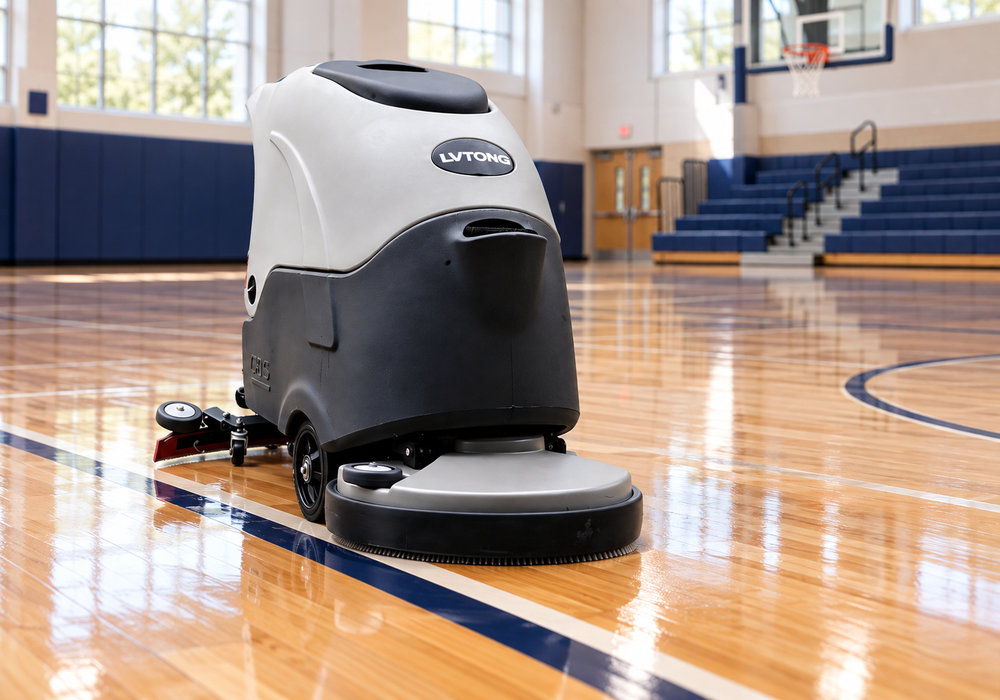
A 400–530 mm walk-behind scrubber covers most school and club gyms in under an hour; fieldhouses and arenas add machines for the concrete, not for the court.
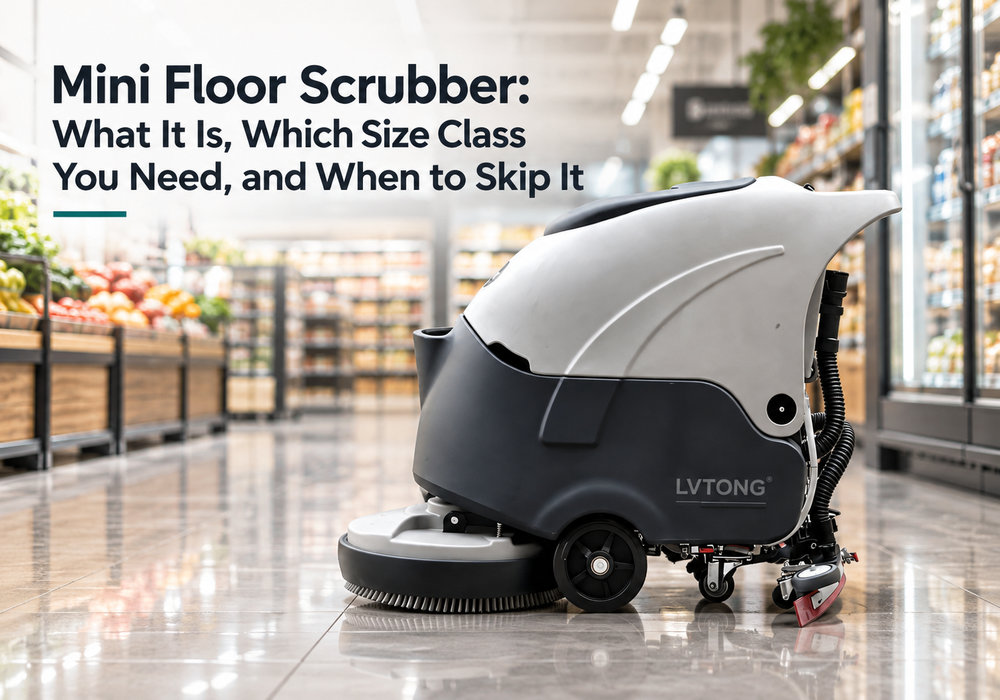
Size the machine to the open floor run, not the building. A school gym with a 28 × 15 m court plus sidelines is roughly 700–900 m² of cleanable area — one pass with a 500 mm walk-behind at a realistic working rate finishes it inside a class period. This is exactly the band where the Q5 industrial walk-behind scrubber sits: a 500 mm scrub path, about 2,100 m²/h of coverage, lithium power for a full shift, and — the detail that matters on courts — adjustable brush angle and height, so operators can run the lowest-contact setting a finish tolerates.
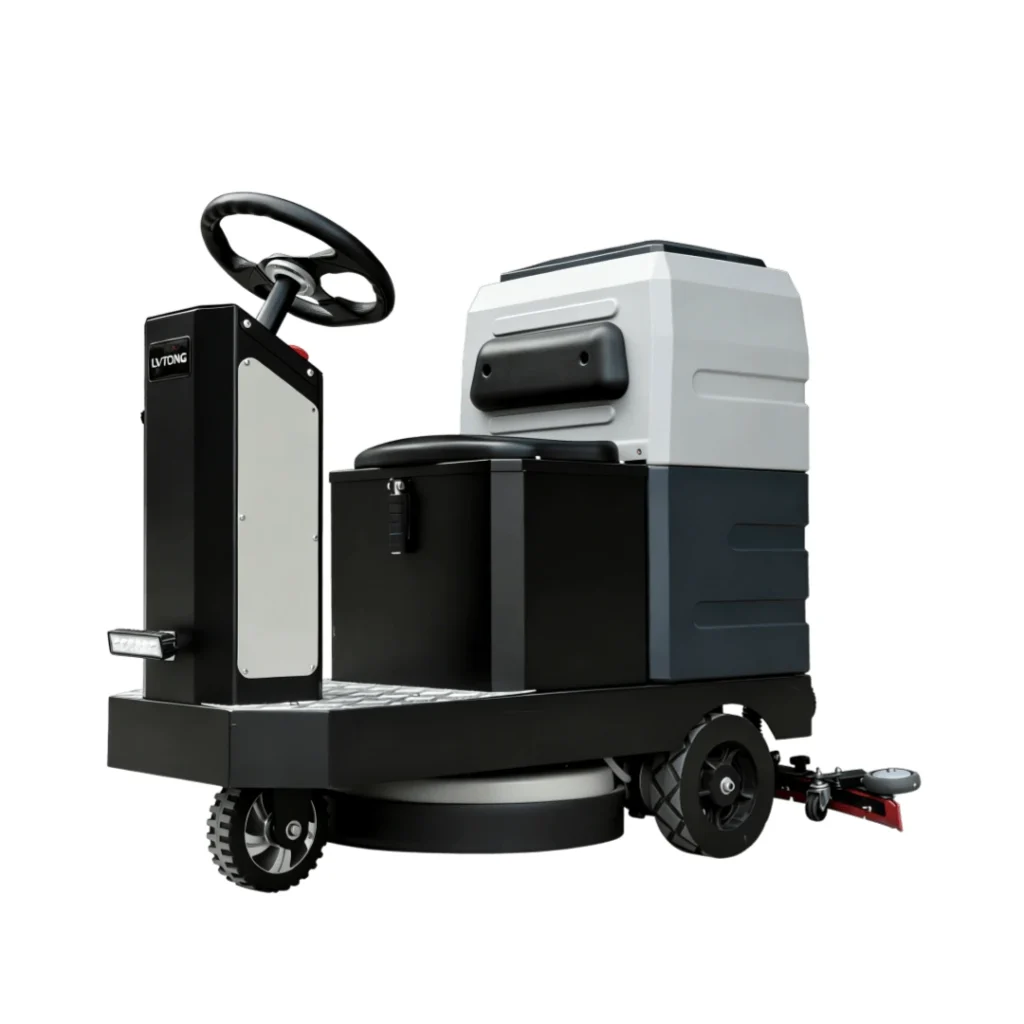
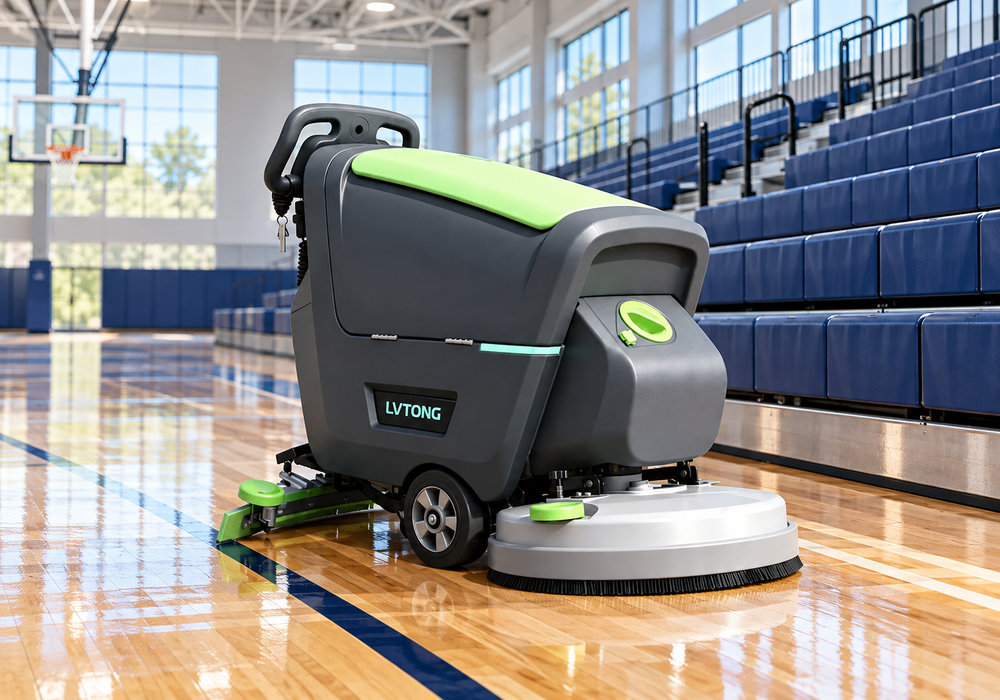
Larger venues split the job by surface: a walk-behind for the court itself and bigger hardware for the surrounds. The LT-S530X carries that role one step up — a 530 mm path, 62+65 L tanks, and a 24V 100Ah battery for double-session days — while compact ride-on machines belong on concourses and parking structures, per our full equipment range. For the 150–500 m² training rooms and weight rooms inside the same building, the small and medium facility guide covers class selection in detail.
The Setup That Protects the Finish and the Lines
Soft brush or white pad, lowest workable pressure, low water flow, immediate vacuum pickup, and neutral-pH solution — five settings, locked and posted.
- Brush or pad: soft nylon brush or white polishing pad on maple and vinyl; medium brush acceptable on rubber and concrete only.
- Pressure: the lowest setting that still lifts soil; on finished wood the machine should polish, not grind.
- Water flow: minimum flow that keeps the brush lubricated; the squeegee line must recover everything — no wet film, no streaking at turns.
- Chemistry: neutral pH only on courts and vinyl; no solvent cleaners anywhere near urethane finishes.
- Vacuum pickup: verify squeegee width exceeds scrub width and blades are sharp — recovery quality is the finish’s only protection.
Facilities that pump recovered water to exterior drains should confirm local rules before establishing a routine; in the United States, industrial stormwater discharges fall under EPA NPDES permits. Most gyms discharge to sanitary drains, but the check is one phone call and audits ask.
Cleaning Schedule: Daily, Weekly, Seasonal
Dust-mop the court daily, machine-scrub one to two times weekly, and deep-clean or recoat per the floor manufacturer’s season calendar.
Daily work is dry: dust-mop the full court with a treated dust-mop head, and keep entrance mats — indoors and out — as the first line against grit, because tracked-in sand is what actually cuts a finish. Weekly, run the machine scrub at the settings above, working along the boards and under the baskets where body soils collect.
Seasonally, gyms typically schedule a deeper clean, and every few years a screen-and-recoat restores gloss. The machine’s role in the recoat cycle is preparation, not chemistry — follow the floor manufacturer’s spec for anything that touches the finish. Wood floor care references such as the National Wood Flooring Association resources give the long-cycle maintenance framework gym operators can hand directly to their contractors.
Wood Gym Floor Cleaning Machine: The Maple-Specific Rules
A wood gym floor cleaning machine must run near-dry, finish-safe, and pressure-light — the floor’s sealed surface is engineered, and water is its main enemy.
Searchers asking specifically for a wood gym floor cleaning machine are usually recovering from one of three failures: cloudiness from excess water, dulling from wrong chemistry, or paint lift along the lines. All three trace back to setup, not hardware. Run the machine only on sealed floors — the water-bead test from any finish inspection settles it — and keep a maintenance log of solution batch, pad type, and pass count so failures are traceable to a change in inputs.
Unfinished or worn-through wood sections take water like a sponge and will cup or blacken. Those areas are a refinishing job first, a cleaning job second; no gym floor scrubber setting repairs a failed finish.
Rubber Gym Floor Cleaning: A Different Playbook
Rubber gym flooring tolerates more pressure and mild degreasers, but its texture traps skin oils and chalk — a rubber gym floor cleaning machine needs agitation and rinsing discipline more than gentleness.
Weight-room rubber is the opposite problem from maple: durable, unfinished, and porous enough to hold body oils, chalk, and sweat salts. Here the machine earns its keep with agitation — a medium brush, mild degreaser, and two-pass routine (agitate, then recover) outperform any dry routine. Avoid solvent-heavy degreasers, which swell rubber and shorten tile life.
Because rubber sheds lint and fiber from pads, inspect brushes after each run and keep a separate brush dedicated to rubber areas — cross-contaminating a court pad with rubber particles is a classic cause of black marks on maple.
First-Pass Test and Acceptance Checks
Test on a 2×2 m section of court: check dryness in five minutes, gloss match, line-paint integrity, and recovery-tank clarity before committing the machine to the full floor.
Run the trial at the settings locked in section 4, in the worst-trafficked lane — typically center court or the free-throw lane. Pass four checks: the floor is dry to walk on within five minutes; gloss matches an untouched reference patch; line paint shows no lift or smear; and the recovery tank shows soil, not finish (a milky tank means the machine is stripping gloss — stop and reduce pressure or chemistry).
Repeat after 48 hours, because moisture-related cloudiness appears late. This same script doubles as the acceptance test we recommend to distributors and facility groups specifying machines across multiple gyms — write the four checks into the purchase order.
Buying Checklist for Gym Operators, Schools, and Distributors
Lock six decisions before comparing quotes: surface map, machine class, pad/brush program, chemistry spec, water-disposal route, and service terms.
- Map every surface in the building and assign each a settings card — courts, vinyl rooms, rubber zones, concrete.
- Size the class to the court run plus sidelines; one walk-behind covers most schools, fieldhouses add a second machine for surrounds.
- Specify the pad/brush program in the contract, not as an afterthought — it is the finish’s life insurance.
- Confirm chemistry with the floor manufacturer in writing (neutral pH, no solvents).
- Confirm voltage, plug, and certification for the destination market before ordering cross-border.
- Lock spare-parts and brush supply terms — availability, not hardware, ends more programs than failures do.
For buyers consolidating multiple gyms — school districts, club chains, government tenders — LVTONG supports OEM, private-label, and fleet specification from its lithium walk-behind and ride-on range, with documentation packages sized for public procurement.
FAQ: Gym Floor Cleaning Machine Questions Buyers Actually Ask
Can you use a floor scrubber on a basketball court?
Yes, on sealed courts with a finish-safe configuration: soft brush or white pad, lowest pressure, low water flow, neutral pH, and full vacuum recovery. Unfinished wood or failed finish areas are refinishing jobs, not cleaning jobs.
What is the best gym floor scrubber for a school gym?
A 400–530 mm walk-behind machine — a class like the LVTONG Q5 or LT-S530X — covers a standard court plus sidelines inside an hour and offers the adjustable, low-contact settings a finish needs. Ride-on machines are for the concrete around the court, not the court.
How often should a gym floor be machine-scrubbed?
Dust-mop daily, machine-scrub one to two times weekly during playing season, and follow the floor manufacturer’s calendar for deep cleaning and recoating. Heavy-event venues shorten the weekly cadence rather than increase pressure.
Does a scrubber damage the court’s line markings?
Not when pressure is low, the pad is soft, and the paint is intact — line paint sits within the finish system. Lift or smear in the first-pass test means pressure or chemistry is wrong, and the setting should be reduced before full deployment.
Can one machine clean rubber gym tiles and the wooden court?
The machine can, the consumables cannot. Use separate brushes and pads for rubber zones and the court — rubber particles transferred onto a court pad leave black marks — and switch chemistry between the two areas.