A floor scrubber with vacuum action cleans hard surfaces by washing them, spreading cleaner, then sucking up the mess right away - all in one go. Doing it this way saves a lot of time; workers finish faster - sometimes cutting effort by nearly half - and floors dry quickly, so places stay open without delay. If you manage buildings or handle upkeep, knowing how these machines work helps pick the best gear without guesswork.
What is a Floor Scrubber and Vacuum System?
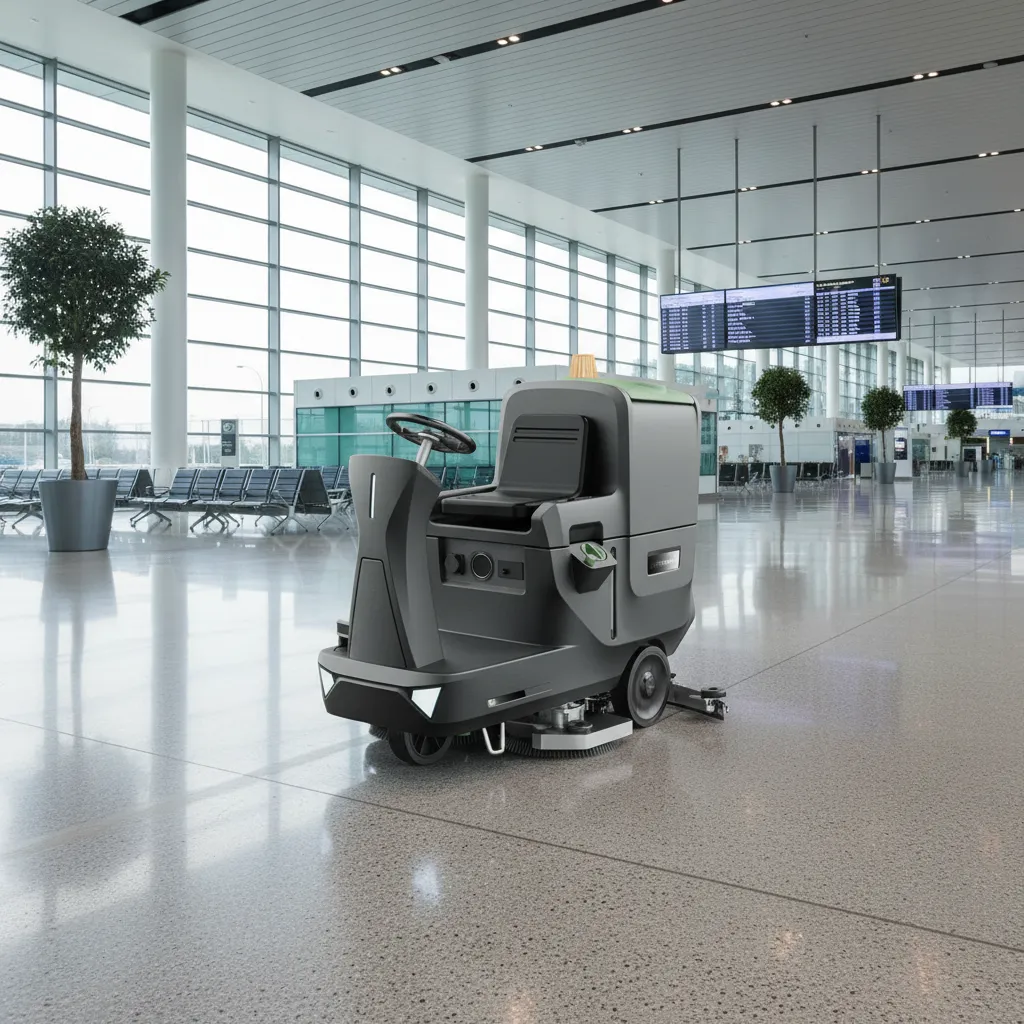
A floor scrubber that vacuums does three main jobs: it spreads cleaner, scrubs with pressure, or pulls up dirty water fast. Unlike simpler models, this one’s got a built-in suck-up tool working with a rubber blade plus strong airflow to haul away gunk and wetness nearly completely. Thanks to this setup, solid surfaces end up not only fresh but also dry right after - and ready for walking on.
These systems are specifically engineered for hard floor surfaces, including:
- Sealed concrete
- Commercial tile
- Vinyl flooring
- Polished stone
- Industrial epoxy floors
Scrubber-Vacuum vs. Traditional Mopping: A Comparative Analysis
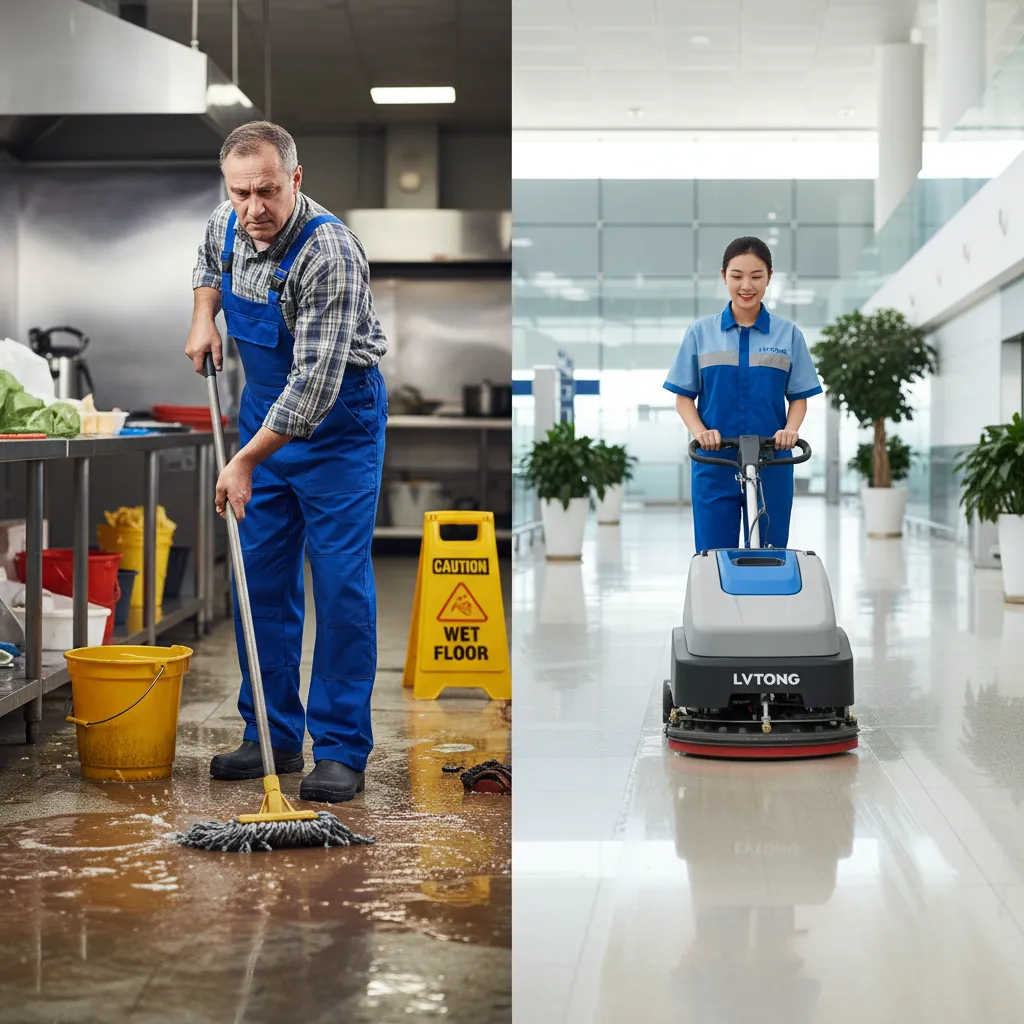
The operational differences are stark. While mopping is familiar, it falls short in efficiency, safety, and hygiene when compared to an automated system.
| Feature | Traditional Mopping | Scrubber-Vacuum System |
|---|---|---|
| Process | Multi-step: Prepare solution, mop, wring, re-mop, wait for drying. | Single-pass: Dispenses, scrubs, and vacuums in one motion. |
| Hygiene | High risk of cross-contamination as dirty water re-soils the floor. | Excellent. Dirty water is isolated in a separate recovery tank. |
| Dry Time | 30-60+ minutes, creating prolonged downtime. | 5-15 minutes, allowing immediate use of the area. |
| Safety | High slip-and-fall risk due to puddles and long drying times. | Low risk. Squeegee system leaves floor nearly dry. |
| Labor | High. Repetitive and physically demanding. | Low. Reduces physical strain and cuts labor time by 40-60%. |
Core Components and Their Functions
Solution Delivery System
- Clean solution tank (8-15 gallon capacity)
- LVTONG's floor scrubbers models offer a large water tank feature with precision flow controls that adjust automatically to walking speed, ensuring consistent cleaning regardless of operator technique.
- Precision dispensing controls
- Adjustable flow rates for different floor types
Scrubbing Mechanism
- Rotating brush decks (disk or cylindrical)
- Adjustable pressure settings
- Interchangeable brush materials
Vacuum Recovery System
What distinguishes these machines is the high-performance suction motor and squeegee assembly, which are essential aspects of any comprehensive industrial floor scrubber.
- High-performance suction motor
- Squeegee assembly with flexible edges
- Dirty water recovery tank
- Advanced filtration system
For more details on selecting the right industrial unit, see Industrial Floor Scrubbers: How to Choose for Max Efficiency & Savings.
Brush Technology Comparison: Disk vs. Cylindrical
The scrubbing deck is the heart of the machine. Choosing between disk and cylindrical brushes depends entirely on your floor type and cleaning needs.
| Feature | Disk Brushes | Cylindrical Brushes |
|---|---|---|
| Rotation | Horizontal spin (like a buffer) | Vertical, counter-rotating sweep (like a reel mower) |
| Best For | Smooth surfaces (VCT, polished concrete, epoxy) | Textured or uneven floors (grouted tile, rough concrete) |
| Pressure | Evenly distributed pressure across the pad/brush area. | Concentrated pressure along the brush's line of contact. |
| Grout Lines | Moderate cleaning ability. | Excellent; bristles dig deep into grout lines. |
| Debris Collection | Pushes debris aside. Requires pre-sweeping. | Superior; can sweep and scrub simultaneously, collecting small debris in a hopper. |
| Best Use Case | Daily cleaning, polishing, stripping finishes. | Environments with grout or light debris, eliminating the need to pre-sweep. |
How much area do various floor scrubber models usually cover?
Walk-behind scrubbers usually handle 500 to 4,000 sq ft each hour - great for compact spaces. Like LVTONG‘s walk-behind floor scrubbers can exceed tight spaces and help you create a cleaning environment. Ride-on versions clean between 8,000 and 15,000 sq ft in that time; some high-end ones even hit 20,000 under perfect conditions. When you’ve got a large floor space, checking real-world numbers from the How to Use a Ride on Scrubber Drier: Easy Steps gives a clearer picture of what to expect.
Performance Benefits
1. Immediate & Verifiable Results
- Rapid Drying Times: Floors are typically dry and ready for foot traffic within 5-15 minutes, a metric verifiable on-site. This time is dependent on ambient humidity and floor porosity.
- High Moisture Recovery (up to 98%): The vacuum and squeegee system can recover over 98% of the cleaning solution.
- Note: This performance is typically measured via a gravimetric moisture test on a non-porous surface, such as sealed concrete, under controlled conditions. Performance may vary on heavily textured or porous floors.
- Reduced Slip-and-Fall Hazards: Faster drying times help facilities comply with OSHA's standards for maintaining safe walking-working surfaces (29 CFR 1910.22).
2. Efficiency Gains
- 40-60% labor time reduction
- Consistent cleaning quality
- Single-pass operation
3. Resource Conservation
- 70-80% water savings
- Reduced chemical usage
- Lower environmental impact
Do scrubber vacs use fewer chemicals?
Today’s floor scrubber machines use 40–60% fewer chemicals than old-school ways. Because they spray just enough cleaner and suck up most of it, nothing gets wasted - yet floors still come out spotless. These systems align with modern environmental stewardship goals. Many are compatible with cleaning solutions certified by organizations like Green Seal, specifically under the GS-37 standard for Industrial and Institutional Cleaners. Following these guidelines ensures responsible chemical management.
Choosing the Right Floor Scrubbers
Consider these key factors when selecting a floor scrubber and vacuum:
- Facility size (square footage) - Smaller spaces might benefit from understanding the selection framework. You can read the article on Compact Floor Scrubbers: The Guide to Efficient Tight-Space Cleaning to learn more information about selecting the right walk-behind floor scrubbers.
- Floor type and texture
- Traffic patterns
- Operating hours
- Storage space
- Maintenance requirements
For data-driven guidance, facility managers can refer to resources from the International Sanitary Supply Association (ISSA). Their "Clean Standard: K-12" provides a framework for measuring cleaning effectiveness and principles that can be applied to any facility to benchmark performance.
Taking the Next Step
To see how this technology can be applied to your facility, explore LVTONG's full range of floor scrubber systems. From compact walk-behinds for tight spaces to powerful ride-on units for large warehouses, the specifications will help you align a model with your needs. If you're unsure, contact the LVTONG cleaning experts for a complimentary consultation. They will help you select the perfect match for your facility size and floor type.
Conclusion
Floor scrubbers with vacuums are a big step up in cleaning floors fast - better performance, safer spaces, cleaner surfaces. Knowing how they work helps managers choose wisely, run cleanings smoothly, and keep floors lasting longer.