
Introduction
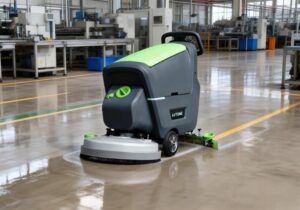
An energy-saving floor scrubber reduces unnecessary power use by matching brush pressure, suction, water flow, operating speed, and cleaning mode to the actual floor condition.
A floor washer scrubber, commonly called a floor scrubber, is widely used in factories, warehouses, logistics centers, shopping malls, hotels, and other large commercial or industrial facilities. Its energy consumption mainly comes from the brush motor, vacuum motor, traction system, water system, control system, and battery charging process.
High power consumption is not always caused by the machine itself. Excessive brush pressure, unsuitable cleaning modes, dirty components, repeated cleaning routes, worn consumables, and poor charging habits can all reduce operating efficiency.
This guide explains where a floor scrubber uses energy, which energy-saving features are useful, how to reduce unnecessary power consumption, and how to measure cleaning efficiency under consistent working conditions.
Quick Answer
An energy-saving floor scrubber reduces unnecessary power consumption by using the correct cleaning mode, brush pressure, suction level, water flow, operating speed, and route plan.
Operators can improve efficiency by using ECO or normal mode for routine cleaning, keeping brushes and filters clean, avoiding repeated passes, replacing worn components, following the approved charging process, and tracking the area cleaned per charge.
The actual energy reduction depends on the machine model, floor condition, dirt level, battery condition, cleaning route, and operator behavior.
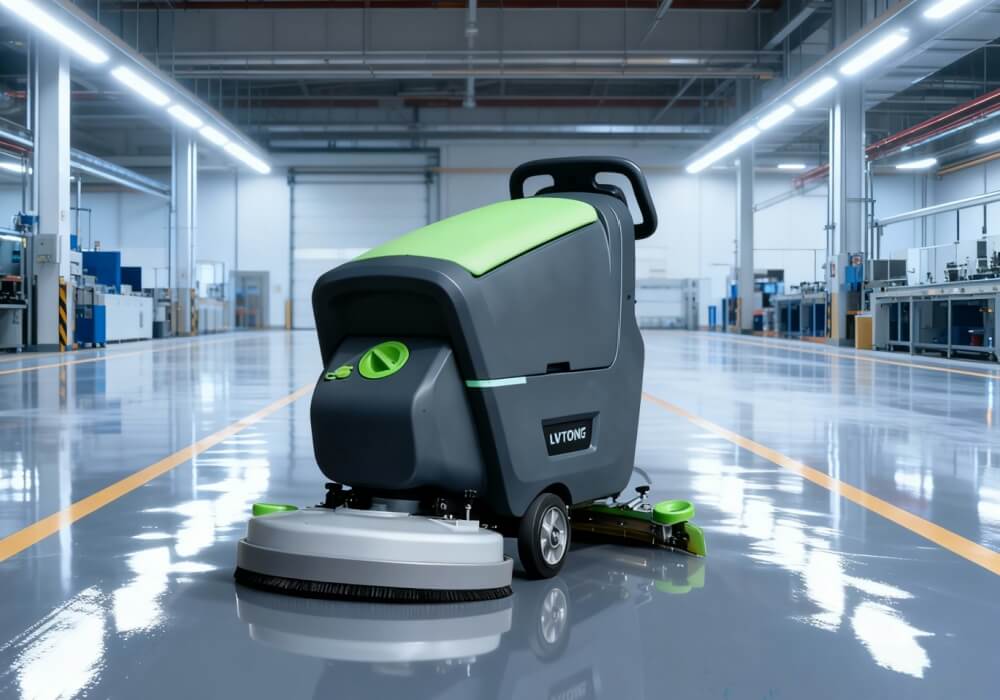
What Is the Most Efficient Way to Reduce Floor Scrubber Power Consumption?
The most effective way to reduce floor scrubber power consumption is to optimize the complete cleaning process rather than only lowering machine power.
Professional operators usually improve efficiency by:
- Selecting the correct cleaning mode
- Using only the required brush pressure
- Maintaining proper water and suction settings
- Planning efficient cleaning routes
- Keeping components in good condition
- Monitoring cleaning output per battery cycle
Energy-Saving Floor Scrubber at a Glance
| Energy-Waste Issue | Recommended Action | What to Monitor |
|---|---|---|
| Excessive brush pressure | Use only the pressure required for the floor condition | Battery use and brush wear |
| Maximum cleaning mode used continuously | Use ECO or normal mode for routine dirt | Runtime per charge |
| Repeated cleaning passes | Divide the site into zones and use direct routes | Area cleaned per shift |
| Dirty brush or filter | Clean components after each cleaning shift | Motor noise and cleaning results |
| Worn brush or squeegee | Replace components before performance declines | Water recovery and repeated passes |
| Unstable operating speed | Maintain a steady cleaning speed | Cleaning time per area |
| Incorrect water flow | Match water flow to floor condition and machine speed | Water consumption and floor-drying results |
| Poor charging habits | Follow the manufacturer-approved charging process | Charging time and usable runtime |
Energy efficiency should be evaluated by cleaning output, not by battery percentage alone. A machine that uses slightly more power but completes the work in fewer passes may be more efficient overall.
Where Does a Floor Scrubber Use Energy?
A floor scrubber uses electrical energy through several major systems. Understanding these systems helps operators identify where unnecessary power consumption may occur.
| Energy-Using System | Main Function | Possible Efficiency Issue |
|---|---|---|
| Brush motor | Rotates the brush or pad to remove dirt | Excessive pressure, worn brushes, or unsuitable pads |
| Vacuum motor | Recovers wastewater and helps dry the floor | Blocked filters, damaged hoses, or unnecessary maximum suction |
| Traction motor | Moves a self-propelled or ride-on machine | Frequent acceleration, uneven speed, or difficult floor conditions |
| Water system | Supplies cleaning water or solution | Excessive water flow or blocked water lines |
| Control system | Operates displays, sensors, and machine functions | Incorrect settings or unnecessary functions left active |
| Battery system | Stores and supplies power | Aging battery, incomplete charging, or unsuitable charging conditions |
| Charging process | Converts input electricity into stored battery energy | Charger mismatch, excessive heat, or inefficient charging practices |
The brush motor and vacuum motor often create significant operating loads, while route planning, battery condition, and cleaning settings affect how long those motors need to run.
What Causes High Floor Scrubber Power Consumption?
High floor scrubber power consumption usually results from a combination of machine condition, operating settings, floor conditions, and operator habits.
| Cause | Why It Wastes Energy | Recommended Correction |
|---|---|---|
| Excessive brush pressure | Increases brush motor load and component wear | Use the lowest pressure that achieves the required result |
| Maximum mode used for light dirt | Uses more suction, water, and brush power than necessary | Use ECO or normal mode for routine cleaning |
| Dirty brushes and filters | Creates resistance and reduces cleaning or recovery performance | Clean brushes, filters, and tanks after use |
| Worn brushes or squeegees | May require repeated cleaning passes | Inspect and replace worn consumables |
| Poor route planning | Causes overlap, backtracking, and idle travel | Divide the facility into zones and use direct routes |
| Unstable operating speed | Creates unnecessary acceleration and inconsistent cleaning | Maintain a steady speed |
| Excessive water flow | Uses more water and may increase recovery demand | Match water flow to the surface and machine speed |
| Low-battery operation | May reduce machine performance and cleaning consistency | Recharge according to the approved operating range |
| Aging battery or damaged motor | Reduces usable runtime and system efficiency | Inspect the battery and electrical system |
| Unsuitable floor conditions | Uneven or heavily contaminated floors increase machine load | Select the correct brush, pad, pressure, and machine type |
If power consumption increases suddenly without a change in the cleaning area or operating method, inspect the battery, charger, motors, cables, brushes, filters, hoses, and water-recovery system.
When higher power consumption appears together with weak suction, poor water flow, abnormal noise, or reduced scrubbing performance, use this guide to common floor scrubber issues and solutions for additional troubleshooting steps.
Energy-Saving Features to Look for in a Floor Scrubber
Energy-saving performance depends on both machine design and operator settings. Not every floor scrubber includes the same functions, so buyers should confirm the specifications of the individual model.
| Energy-Saving Feature | How It Helps | What Buyers Should Check |
|---|---|---|
| ECO mode | Reduces unnecessary motor output during routine cleaning | Which motor, suction, pressure, or water settings are reduced |
| Adjustable brush pressure | Prevents excessive brush motor load | Number of available pressure levels |
| Adjustable suction power | Matches water recovery to floor conditions | Whether low-noise or light-cleaning settings are available |
| Speed-dependent water flow | Reduces excess water when the machine slows down | Whether water flow adjusts automatically |
| Single-pass cleaning | Combines scrubbing and water recovery in one route | Scrubbing and floor-drying performance |
| Battery monitoring | Helps operators estimate remaining runtime | Display accuracy and low-battery warnings |
| Cleaning-mode memory | Reduces incorrect settings between shifts | Whether previous settings can be saved |
| Usage-data reporting | Helps compare runtime and productivity | Whether the machine records area, time, battery use, or service data |
| Automatic standby | Reduces energy use during short idle periods | Standby delay and automatic restart behavior |
| Efficient drive control | Supports smoother acceleration and stable speed | Speed control and operator-adjustable modes |
ECO mode does not automatically produce the best result on every floor. Heavy oil, embedded dirt, or uneven industrial surfaces may still require a stronger cleaning setting. The goal is to use only the power required for the actual cleaning condition.
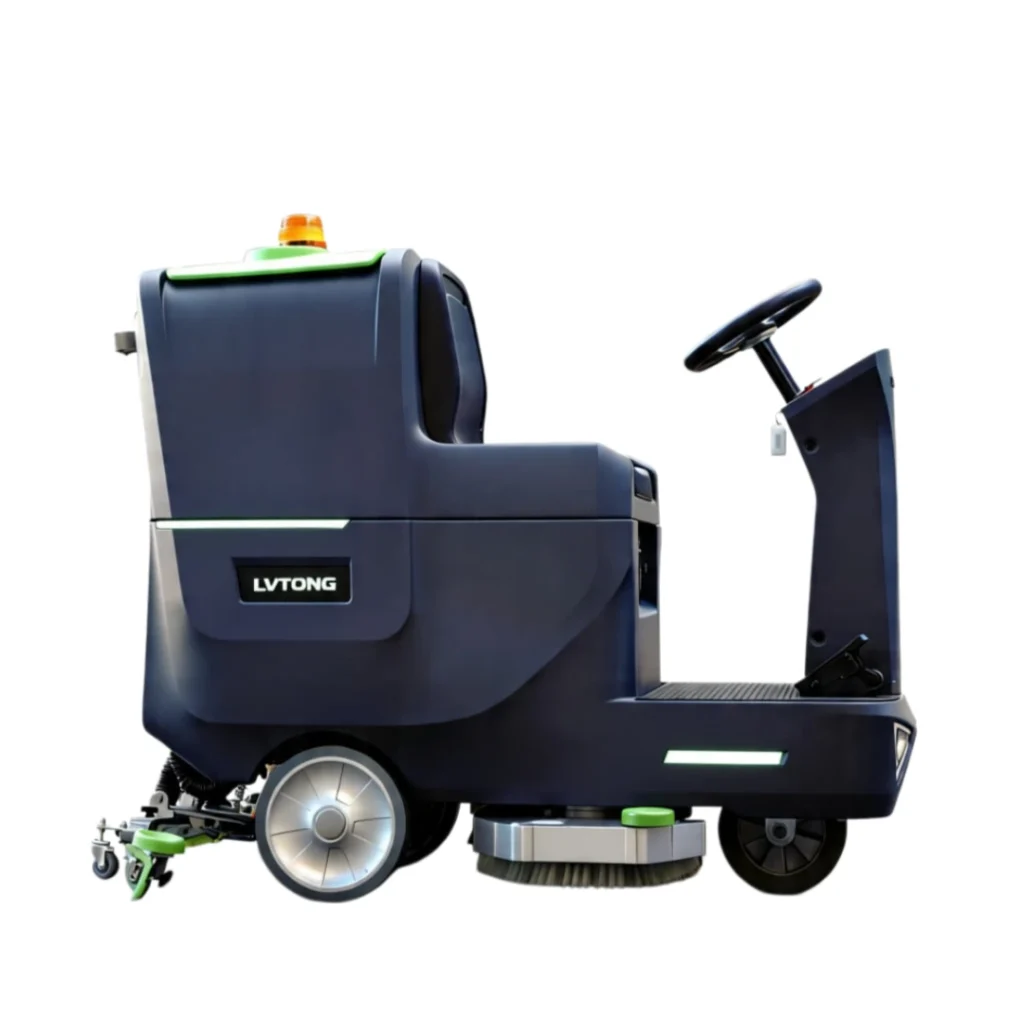
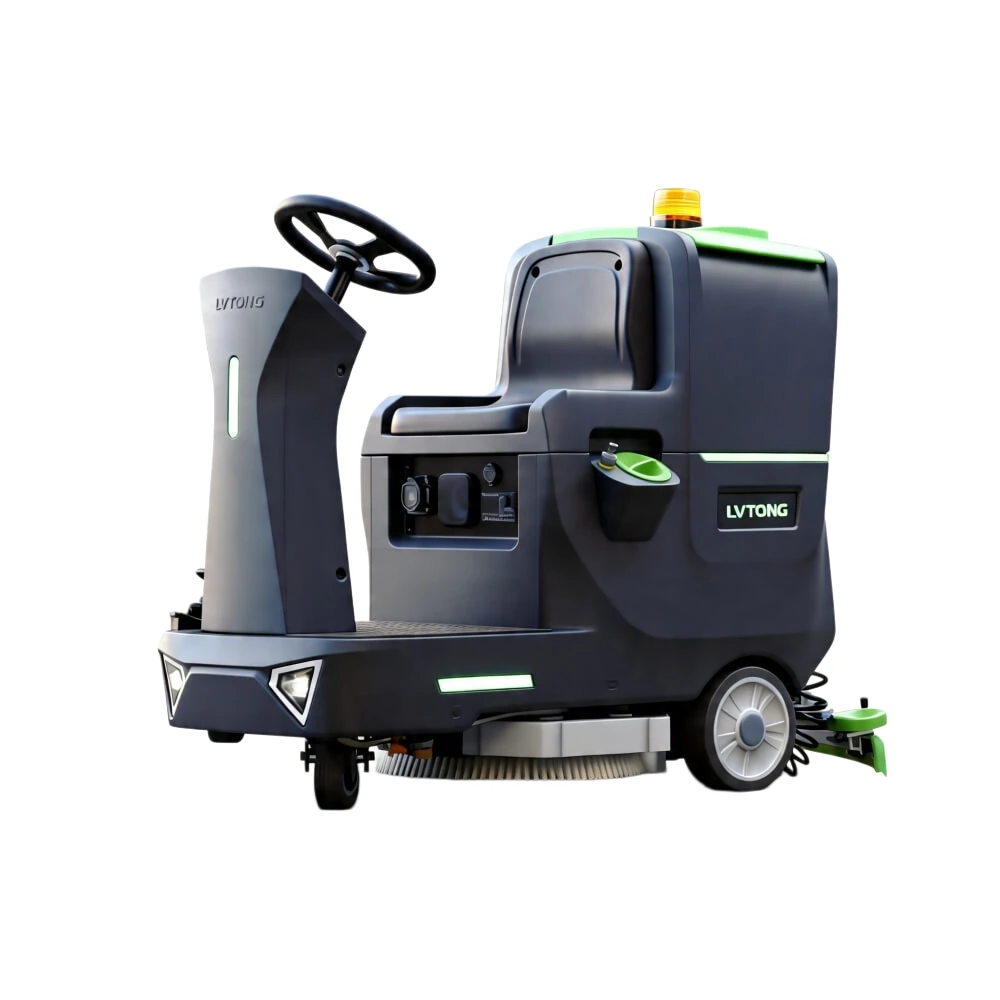
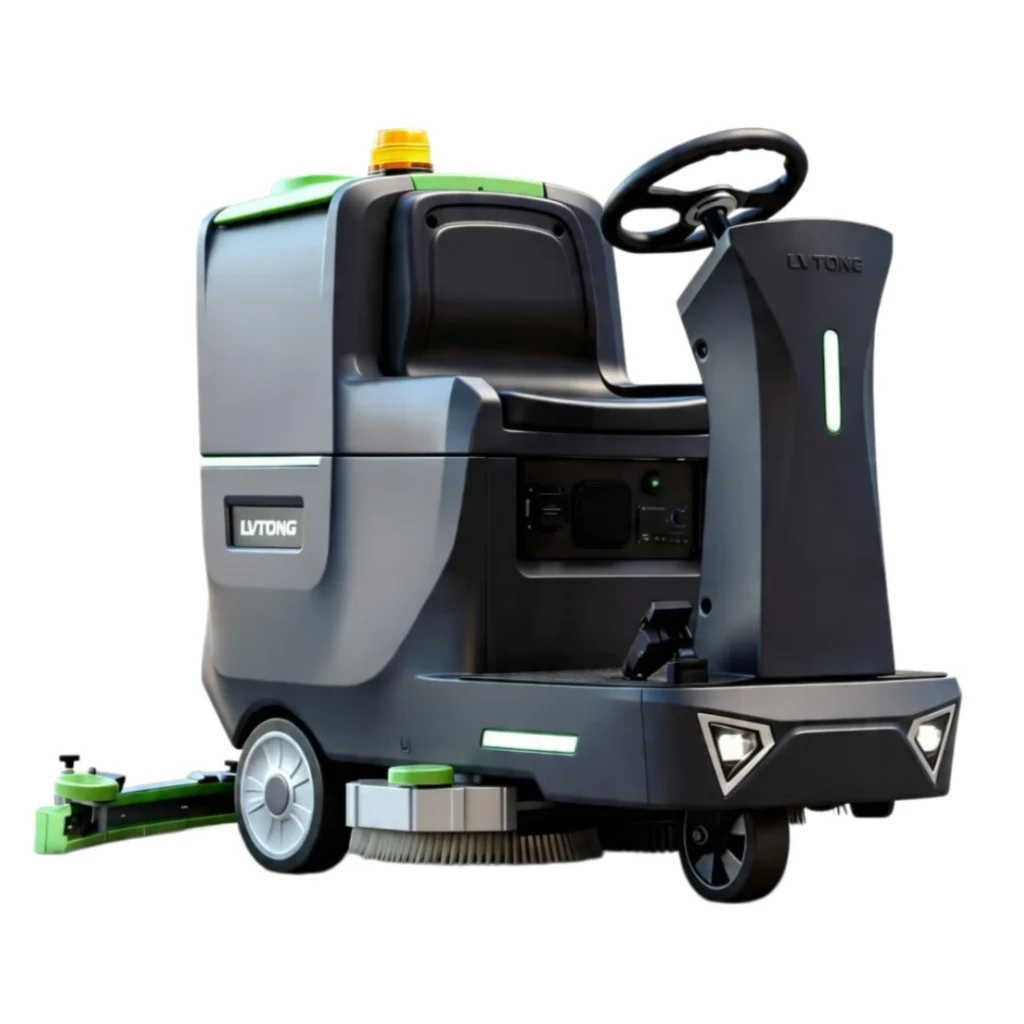
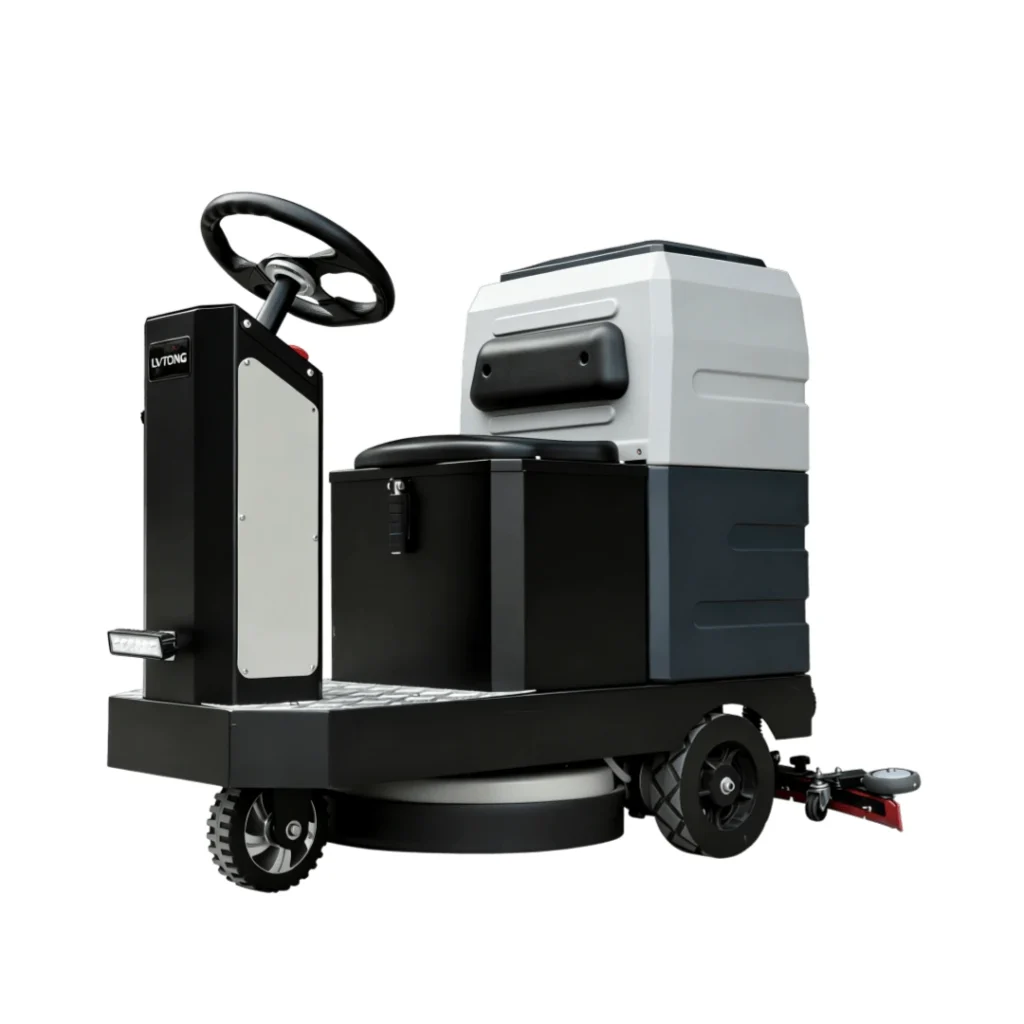
For an example of how multiple cleaning modes, battery-powered operation, and fault-warning functions can be integrated into a commercial machine, review the LT-S560X ride-on floor scrubber.
How to Choose an Energy-Efficient Floor Scrubber
The best energy-efficient floor scrubber depends on the facility type, cleaning frequency, and operating conditions.
| Facility Type | Recommended Floor Scrubber Features |
|---|---|
| Large warehouse | Ride-on floor scrubber, large battery capacity, long runtime |
| Manufacturing factory | High durability, adjustable brush pressure, strong water recovery |
| Shopping mall | Low noise operation, efficient drying, flexible cleaning modes |
| Hospital | Low-noise mode, hygienic design, reliable water recovery |
| Logistics center | Fast charging, stable operation, high productivity |
Before purchasing, buyers should evaluate:
- Cleaning area per day
- Required runtime
- Floor condition
- Dirt level
- Available charging time
- Maintenance capability
- Total cost of ownership
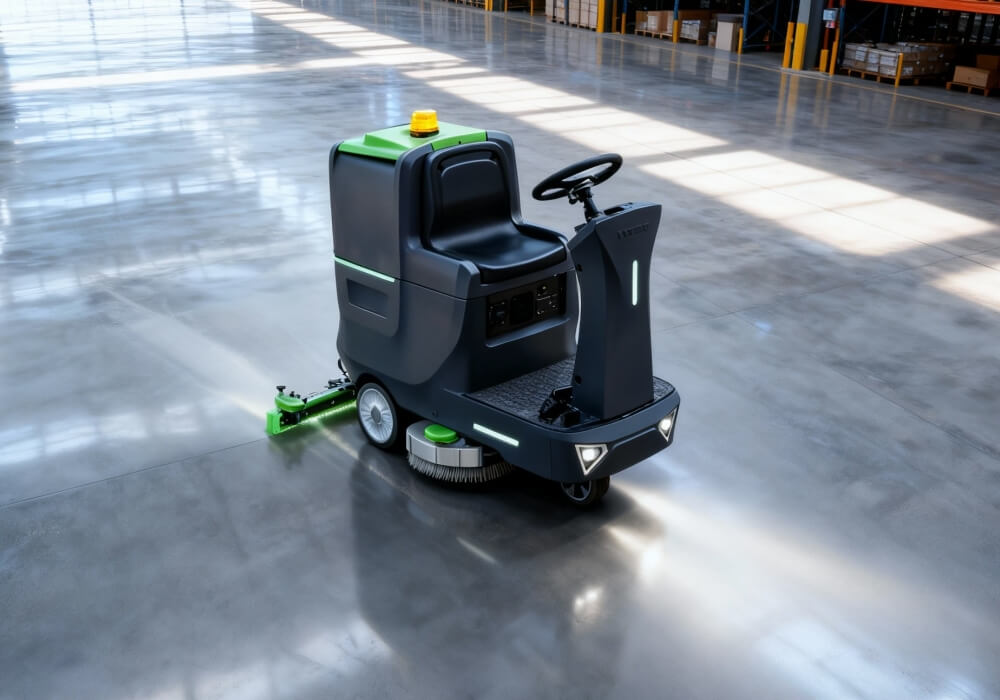
7 Ways to Reduce Floor Scrubber Energy Use
1. Match the Cleaning Mode to the Dirt Level
Using maximum brush pressure, suction power, and water flow for every cleaning task increases power consumption without always improving the result.
Select the cleaning mode according to the dirt level:
| Floor Condition | Recommended Setting |
|---|---|
| Light dust and routine dirt | ECO or low-power mode with low water flow |
| General traffic marks | Normal cleaning mode |
| Localized stubborn stains | Higher pressure only in the affected area |
| Oil or heavy industrial contamination | Suitable detergent, brush type, and stronger cleaning mode |
| Sensitive or polished flooring | Lower brush pressure and controlled water flow |
Start with the lowest effective setting and increase cleaning strength only when the floor condition requires it. This reduces unnecessary motor load, water use, and component wear.
Cleaning efficiency also depends on using a detergent that matches the floor material and soil condition. Review our floor scrubber cleaning solution guide to compare low-foam neutral cleaners, alkaline degreasers, dilution ratios, and machine compatibility.
2. Use the Correct Brush Pressure
Higher brush pressure increases contact with the floor, but it also increases motor load, battery use, brush wear, and the risk of damaging sensitive surfaces.
Use stronger pressure only when required for embedded or stubborn dirt. Routine cleaning on smooth floors usually requires less pressure.
Before increasing brush pressure, check whether the cleaning problem is actually caused by another factor.
| Possible Problem | More Efficient Solution |
|---|---|
| Unsuitable brush or pad | Select a brush or pad designed for the floor and dirt type |
| Insufficient detergent contact time | Allow the cleaning solution enough time to loosen dirt |
| Worn brush | Replace the brush instead of increasing pressure |
| Incorrect machine speed | Reduce speed in heavily contaminated areas |
| Unsuitable cleaning solution | Use a compatible cleaning agent |
| Localized heavy dirt | Pretreat the affected area before scrubbing |
The correct brush type and cleaning process are often more efficient than applying maximum pressure continuously.
3. Keep Brushes, Squeegees, Tanks, and Filters Clean
Dirty or blocked components increase resistance and reduce cleaning performance. The machine may need longer operating time or repeated passes to achieve the same result.
Use the following inspection schedule:
| Component | Recommended Check |
|---|---|
| Brush or pad | Remove hair, string, dirt, and debris after each shift |
| Squeegee blades | Check for dirt, cuts, deformation, and uneven floor contact |
| Recovery-tank filter | Clean after use and remove blockages |
| Vacuum hose | Inspect for obstructions, leaks, or loose connections |
| Clean-water system | Check filters, valves, and water outlets |
| Recovery tank | Empty, rinse, and leave open to dry |
| Wheels and brush deck | Remove wrapped debris that may create resistance |
Clean components support stable motor load, effective water recovery, and consistent cleaning results.
For a complete inspection schedule covering pre-operation checks, after-use cleaning, weekly maintenance, and periodic servicing, follow this floor scrubber maintenance checklist.
4. Plan the Cleaning Route and Maintain a Stable Speed
Poor route planning causes overlap, backtracking, unnecessary turns, and repeated cleaning. These actions increase operating time and battery use.
Improve route efficiency by:
- Dividing large facilities into cleaning zones
- Starting from the farthest point and moving toward the exit
- Using long, straight cleaning routes where possible
- Keeping only a small and consistent overlap between passes
- Avoiding repeated travel through completed areas
- Cleaning around fixed obstacles in a planned sequence
- Maintaining a steady operating speed
- Separating heavy-soil areas from routine-cleaning areas
For large warehouses or factories, record the cleaning route and train operators to follow the same efficient sequence.
Operators who need step-by-step guidance on machine preparation, solution filling, brush operation, speed control, and water recovery can read this walk-behind floor scrubber operating guide.
5. Improve Battery and Charging Efficiency
Battery condition affects usable runtime, charging efficiency, and cleaning productivity. Lithium and lead-acid systems have different operating characteristics, but the best choice depends on the machine design, operating schedule, charging environment, and total cost requirements.
| Battery and Charging Action | Why It Matters |
|---|---|
| Use the approved charger | Helps match the battery voltage, type, and charging profile |
| Avoid excessive discharge | Supports more stable battery performance |
| Complete the approved charging cycle | Helps maintain usable runtime |
| Charge in a ventilated area | Reduces heat buildup during charging |
| Keep terminals and connectors clean | Supports stable electrical contact |
| Allow an overheated battery to cool | Reduces charging stress |
| Monitor charging time | Longer charging may indicate a battery or charger issue |
| Track usable runtime | Declining runtime may indicate battery aging or excessive machine load |
A battery should be evaluated by usable runtime, charging stability, operating schedule, and machine compatibility rather than battery chemistry alone.
Charging efficiency also depends on matching the charger voltage, battery type, charging current, and connector specifications. Read our floor scrubber battery charger guide before replacing a charger or changing the battery system.
6. Replace Worn Components Before Efficiency Drops
Worn brushes, pads, squeegee blades, wheels, bearings, hoses, and seals can reduce cleaning efficiency and increase operating time.
A worn brush may not provide consistent floor contact. A damaged squeegee may leave water behind and force the operator to clean or recover the same area again. Blocked hoses and worn bearings may also increase system resistance.
| Warning Sign | Component to Inspect |
|---|---|
| Uneven cleaning result | Brush, pad, or brush deck |
| Water streaks behind the machine | Squeegee blades and vacuum system |
| Incomplete wastewater recovery | Hose, filter, tank seal, or vacuum motor |
| Abnormal noise | Motor, bearing, brush deck, or wheel |
| Increased vibration | Brush, pad holder, bearing, or drive system |
| Longer cleaning time | Brush, squeegee, route, or machine setting |
| Repeated cleaning passes | Brush condition, pressure, detergent, or water flow |
| Sudden runtime decline | Battery, motor load, brush pressure, or blocked components |
Replacing a low-cost consumable at the correct time may prevent unnecessary energy use and more expensive equipment damage.
7. Track Energy Use and Cleaning Productivity
Energy-saving improvements should be measured under comparable conditions. Record the cleaning area, operating time, battery use, water consumption, and number of repeated passes.
Use the same floor zone, dirt condition, operator, and cleaning requirement when comparing different settings.
| KPI | How to Calculate or Record It |
|---|---|
| Area cleaned per charge | Total cleaned area completed during one charging cycle |
| Cleaning time per 1,000 m² | Operating time ÷ cleaned area × 1,000 |
| Battery use per 1,000 m² | Battery percentage used ÷ cleaned area × 1,000 |
| Electricity per 1,000 m² | Charging electricity consumed ÷ cleaned area × 1,000 |
| Water use per 1,000 m² | Water consumed ÷ cleaned area × 1,000 |
| Repeat-cleaning rate | Repeated area ÷ total cleaned area |
| Downtime per month | Total time lost to charging, repair, or maintenance |
| Consumable life | Operating hours before brush, pad, or squeegee replacement |
Monitoring these indicators helps identify whether a change actually improves efficiency or only reduces cleaning performance.
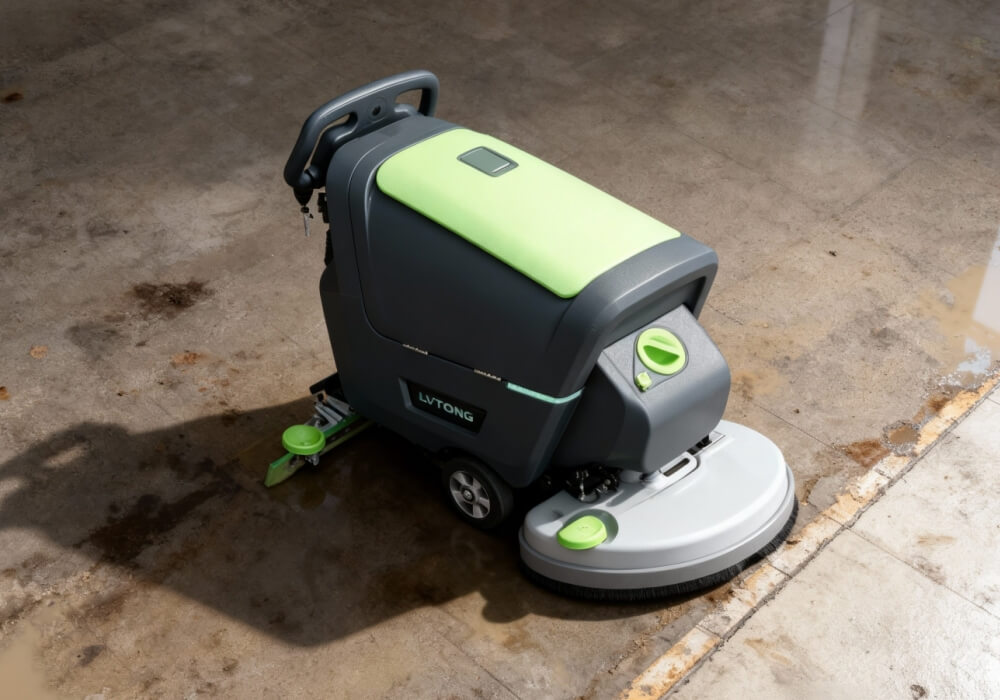
Energy-Saving Features of a Single-Brush Floor Scrubber
A single-brush floor scrubber uses one rotating disc brush or pad to scrub the floor. Its energy efficiency depends on brush size, motor output, pressure control, water flow, suction performance, operating speed, and route design.
| Useful Feature | Energy-Efficiency Benefit |
|---|---|
| Adjustable brush pressure | Prevents unnecessary brush motor load |
| ECO or normal cleaning mode | Reduces unnecessary power during routine cleaning |
| Controlled water flow | Prevents excess water and recovery demand |
| Efficient wastewater recovery | Supports single-pass cleaning and faster floor drying |
| Suitable brush or pad selection | Improves cleaning without excessive pressure |
| Battery and runtime display | Helps operators plan cleaning routes |
| Automatic water shutoff | Stops water flow when the machine is stationary |
| Consistent traction speed | Reduces repeated passes and unstable operation |
| Easy component access | Makes brush and filter cleaning easier |
| Low-resistance wheels and brush deck | Supports smoother machine movement |
A single-brush machine is not automatically more energy efficient than every other configuration. The correct machine depends on the floor type, facility size, dirt condition, required productivity, and number of cleaning passes.
Practical Evaluation Method for Commercial Facilities
In real commercial cleaning environments, energy efficiency should be tested under actual working conditions.
Professional facility managers usually compare:
- Same floor area
- Same cleaning route
- Same operator
- Same dirt condition
- Same cleaning requirement
Then they evaluate:
- Area cleaned per charge
- Cleaning time
- Battery consumption
- Water usage
- Repeat cleaning frequency
This provides a more accurate measurement than comparing battery percentage alone.
How to Measure Floor Scrubber Energy Efficiency
Floor scrubber energy efficiency should be measured by the amount of cleaning work completed for the energy and resources used.
Follow this testing process:
- Select a representative cleaning zone.
- Record the total floor area.
- Use the same operator and machine.
- Record the initial battery level.
- Record the cleaning mode, brush pressure, water flow, and operating speed.
- Measure the total operating time.
- Record the final battery level.
- Record water use and repeated cleaning areas.
- Repeat the test using the alternative setting.
- Compare the cleaning result and resource use.
Do not compare two tests if the floor condition, operator, dirt level, cleaning area, or required result is significantly different.
Buyer Evaluation Checklist Before Purchase
When selecting an energy-efficient Floor Washer Scrubber, commercial buyers should confirm:
✓ Cleaning productivity (㎡/h)
✓ Battery runtime
✓ Charging time
✓ Cleaning width
✓ Water recovery performance
✓ Noise level
✓ Available cleaning modes
✓ Spare parts availability
✓ Maintenance requirements
✓ Warranty and technical support
✓ Total Cost of Ownership (TCO)
Choosing the right machine based on operating requirements can reduce long-term cleaning costs and improve productivity.
Energy-Saving Floor Scrubber Checklist
| Stage | Checklist Item |
|---|---|
| Before cleaning | Select the correct brush or pad |
| Before cleaning | Check brush, squeegee, filter, and hose condition |
| Before cleaning | Confirm that the battery has enough charge for the planned route |
| Before cleaning | Divide the site into efficient cleaning zones |
| During cleaning | Use ECO or normal mode for routine dirt |
| During cleaning | Apply only the brush pressure required |
| During cleaning | Maintain a stable operating speed |
| During cleaning | Use only the necessary water flow |
| During cleaning | Avoid unnecessary overlap and repeated passes |
| After cleaning | Clean brushes, tanks, filters, and squeegees |
| After cleaning | Inspect the machine for abnormal noise or vibration |
| After cleaning | Record runtime, battery use, and cleaned area |
| Charging | Use the approved charger and charging process |
| Scheduled service | Inspect motors, bearings, cables, water lines, and consumables |
Common Floor Scrubber Energy-Saving Mistakes
| Mistake | Why It Can Reduce Efficiency |
|---|---|
| Using minimum power regardless of dirt level | May cause poor cleaning and repeated passes |
| Using maximum mode for every task | Creates unnecessary motor and water demand |
| Reducing water flow too far | May prevent effective dirt removal |
| Using a worn brush to avoid replacement cost | Increases cleaning time and produces uneven results |
| Ignoring squeegee condition | Causes poor drying and repeated water recovery |
| Comparing battery percentage only | Does not measure actual cleaning output |
| Choosing a battery only by chemistry | Ignores machine compatibility and operating conditions |
| Skipping routine cleaning of filters and tanks | Reduces airflow and water-system performance |
| Charging with an unsuitable charger | May reduce charging stability and battery performance |
| Focusing only on electricity cost | Ignores labor, water, consumables, downtime, and cleaning quality |
Benefits of an Energy-Efficient Floor Scrubber Operation
Improving floor scrubber energy efficiency can provide benefits beyond reducing electricity use.
Longer Usable Runtime
Appropriate cleaning settings and efficient routes can help the machine complete more useful cleaning work during each operating cycle.
Lower Consumable Wear
Correct brush pressure and regular inspection can reduce unnecessary wear on brushes, pads, squeegees, bearings, and other components.
More Consistent Cleaning Results
Clean filters, suitable brushes, stable speed, and controlled water flow support consistent scrubbing and water recovery.
Reduced Downtime
Routine inspection can identify battery, motor, hose, filter, and consumable problems before they cause equipment failure.
Better Cleaning Productivity
Efficient routes and fewer repeated passes can reduce the time required to clean the same floor area.
More Accurate Operating-Cost Control
Tracking electricity, water, labor, consumables, and maintenance provides a more complete view of cleaning costs than electricity use alone.
Support for Sustainability Goals
Reducing unnecessary energy, water, and consumable use can support facility sustainability and resource-management programs.
Frequently Asked Questions
1. What is an energy-saving floor scrubber?
An energy-saving floor scrubber is a machine that reduces unnecessary power and resource use through efficient motors, adjustable cleaning settings, controlled water flow, suitable brush pressure, effective water recovery, and accurate battery monitoring. Operator behavior and route planning are also important.
2. What energy-saving features should a floor scrubber have?
Useful features include ECO mode, adjustable brush pressure, adjustable suction, controlled water flow, battery monitoring, single-pass cleaning, automatic water shutoff, standby functions, and usage-data reporting. Available features vary by model.
3. Does higher brush pressure increase floor scrubber power consumption?
Yes. Higher brush pressure generally increases brush motor load and battery use. It can also accelerate brush wear. Operators should use only the pressure required for the floor and dirt condition.
4. Does ECO mode save electricity?
ECO mode can reduce unnecessary motor output during routine cleaning, but the result depends on the machine design and floor condition. Heavy dirt may still require a stronger setting to avoid repeated passes.
5. How does route planning reduce floor scrubber energy waste?
Efficient route planning reduces overlap, backtracking, unnecessary turns, idle travel, and repeated cleaning. Straight routes, defined cleaning zones, and a stable operating speed can improve the area cleaned per charge.
6. How can I measure floor scrubber energy efficiency?
Record the area cleaned, operating time, starting and ending battery level, charging electricity, water use, and repeated cleaning. Compare tests under the same floor, dirt, operator, and cleaning conditions.
Conclusion
An energy-saving floor scrubber is not simply a machine that operates at the lowest power setting. True efficiency means completing the required cleaning result with appropriate energy, water, labor, and consumable use.
Operators can reduce unnecessary floor scrubber power consumption by matching the cleaning mode to the dirt level, controlling brush pressure, keeping brushes and filters clean, planning direct routes, maintaining battery and charging efficiency, replacing worn components, and tracking cleaning output.
The most useful performance indicators include area cleaned per charge, battery use per 1,000 square meters, cleaning time, water consumption, repeat-cleaning rate, and final floor condition.
Because results vary by machine model and working environment, businesses should evaluate energy-saving measures under consistent and documented test conditions.
Contact LVTONG to compare floor scrubber configurations, cleaning widths, brush systems, battery options, and operating features for your facility.