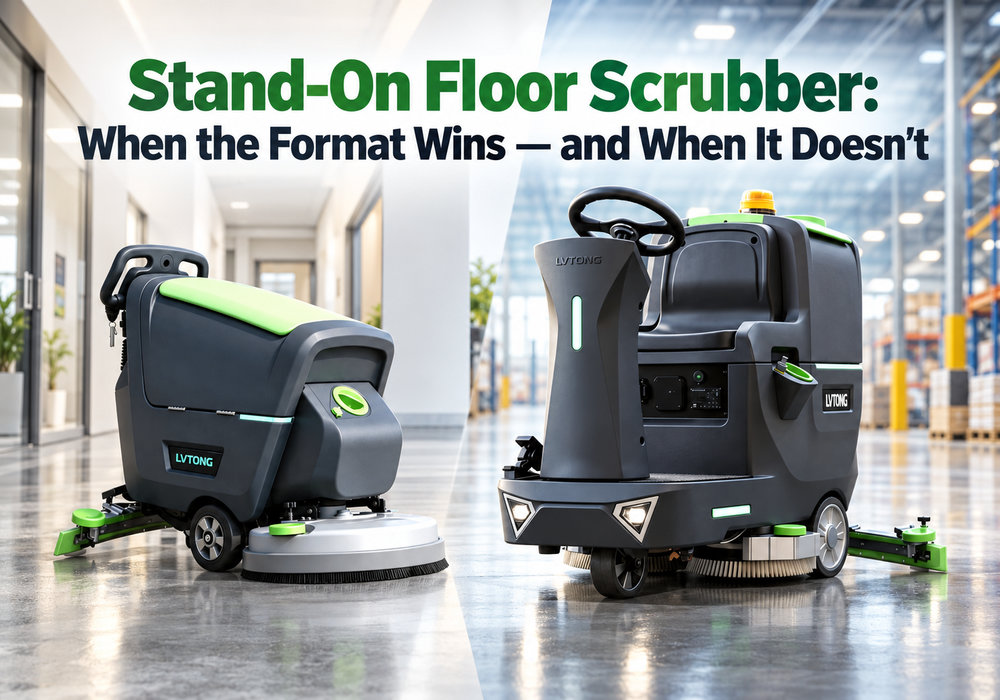
Most buyers who search for a small floor scrubber are trying to solve a size problem — a shop, a clinic, a workshop or a compact facility where a full-size ride-on is wrong and a mop is no longer keeping up. The trap is that “small” gets answered by what fits through the door, when it should be answered by what finishes the floor inside the cleaning window. This guide sizes the machine to the shift, not to the doorway.
QUICK ANSWER
A small floor scrubber is the right choice when your cleanable hard floor is roughly 200–1,500 m², aisles are under about 1.2 m, and one person handles both the machine and the rest of the shift. Size it by three hard limits — cleaning width, tank volume and runtime — not by capital price.
- Oversizing costs more than it cleans: a wider machine adds storage, charging and capital without adding clean floor per shift once turning dominates.
- Undersizing hides in passes and refills: if the floor outlasts the battery or the tank, the machine is too small whatever the spec sheet says.
- Floor type sets the brush, width only sets speed: match the pad or brush to the surface first, then size.
- One operator decides everything: storage, charging and fill/dump points are what make a small machine actually get used.
Below: how to define “small”, the two sizing traps, three facility profiles, the one-operator workflow, and a five-number spec table.
What Counts as a Small Floor Scrubber
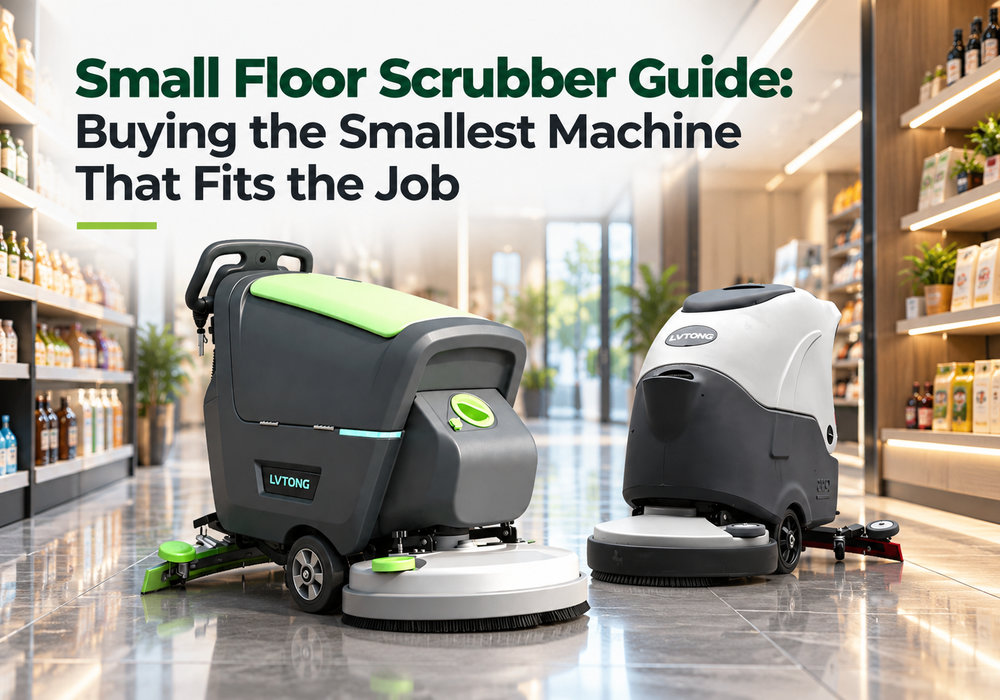
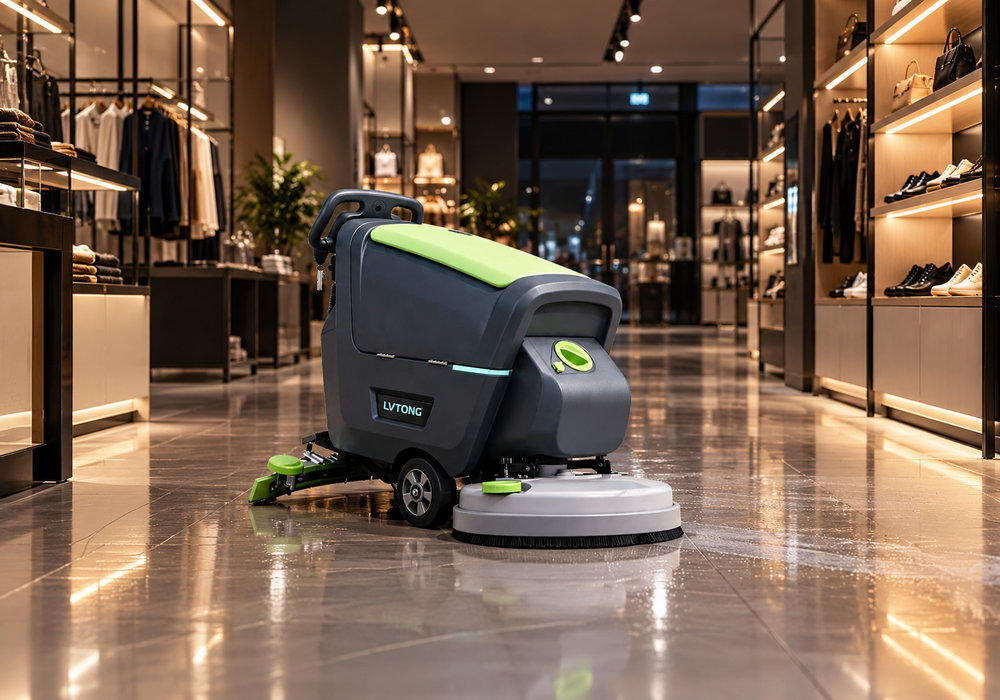
A small floor scrubber is a walk-behind machine with a cleaning width of roughly 350–500 mm, a solution tank around 15–50 L, and a working weight light enough for one person to store and transport — sized for footprints of roughly 200–1,500 m² per shift.
Three measurements define the class, and each answers a different question. Cleaning width sets how many passes a given aisle needs. Tank volume sets how long the machine runs before someone stops to refill and dump. Working weight sets whether one person can lift, store and move it between floors.
“Small” is relative to the floor: a 500 mm machine is small in a 20,000 m² warehouse and large in a 40 m² boutique. So the useful definition is not an absolute size but a fit — a machine whose three limits all sit comfortably inside your area, geometry and cleaning window.
The Oversizing Trap: Why the Biggest Machine That Fits Is Wrong
Buying the largest machine that physically fits is the most common and most expensive mistake in small facilities — it adds capital, storage and charge time, while its coverage advantage disappears as soon as aisle turns dominate the route.
A wider scrubber cleans more per straight pass, so on paper it always wins. But a small facility floor is not one long pass; it is a grid of short runs between shelves, counters, beds or machines, and every turn forces a lift, a reposition or a squeegee trail. A wide machine turns badly exactly there — the coverage you paid for is spent on manoeuvring.
The extra size also carries fixed costs: a bigger storage bay, a longer charge window, often a two-person move. Where the same person cleans, restocks and closes up, those costs land on one operator every day. A small floor scrubber machine that finishes the floor in one comfortable pass beats a large one nobody has time to run.
The Undersizing Trap: When “Small” Stops Covering the Shift
A machine is too small when the shift ends before the floor does — you feel it as extra passes, extra refills and a battery that quits before the last zone, not as a number on a spec sheet.
Undersizing rarely announces itself on day one. It shows up as habits: the back half of the shop gets done “tomorrow”, the tank is topped twice instead of once, or the machine runs on the lowest water setting to stretch a charge. Every habit signals a tank or battery smaller than the floor.
Check the arithmetic before you buy: divide cleanable area by realistic coverage per hour, add refill and squeegee time, and compare the total to your cleaning window. If it only fits when everything goes perfectly, the machine is undersized. The same arithmetic appears in our note on cleaning times and machine productivity. And choose a small floor scrubber with vacuum recovery rather than a spreader — lifting the dirty water in the same pass is what stops a short window turning into two.
Three Small-Facility Profiles and What Changes
A retail shop, a clinic and a light workshop can share the same square metres and still need different machines, because they differ in soil load, traffic and the cleaning window.
Retail shops. Soil is light and mostly dry, but the window is tight and the floor stays visible to customers. The priority is a machine that finishes fast, dries streak-free and works around fixtures; light soil means a modest tank is fine.
Clinics and pharmacies. Soil is light too, but the quiet window is short and hygiene expectations are high, so the machine runs often in small bursts. Quick to fill, quick to dump and easy to store between sessions.
Light workshops and service bays. Soil is heavier and often oily or gritty, which pushes tank size, brush choice and pre-sweep needs. Here “small” still means walk-behind, but a larger tank and a more aggressive brush within the band are justified — the floor, not the footprint, is the constraint.
The One-Operator Workflow: Storage, Charging, Fill and Dump
In small facilities the machine is usually run by one person who also does everything else, so storage footprint, charging access and fill/dump points decide whether the machine gets used at all.
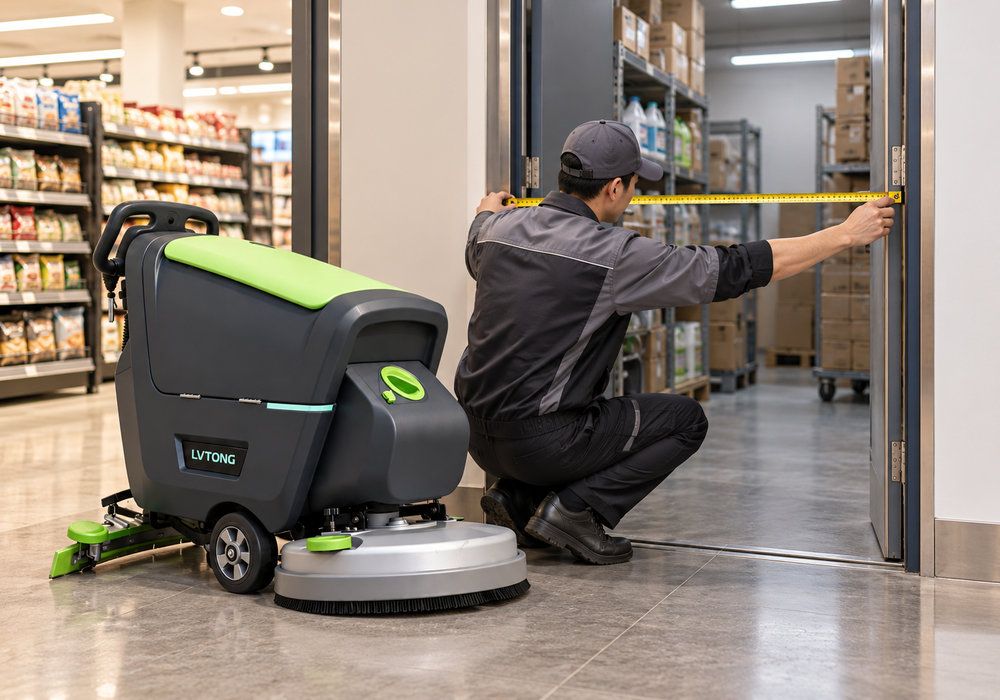
Start with storage. A small scrubber that lives in a corridor or behind a counter gets left out and damaged; one that fits a dedicated closet or a marked floor space gets rolled out daily. Measure the bay before you buy.
Because the machine works around people, safety evidence matters: look for a unit built to the IEC 60335-2-72 floor-treatment standard, tested by a body such as UL Solutions, and pair in-hours use with slip practice from the National Floor Safety Institute.
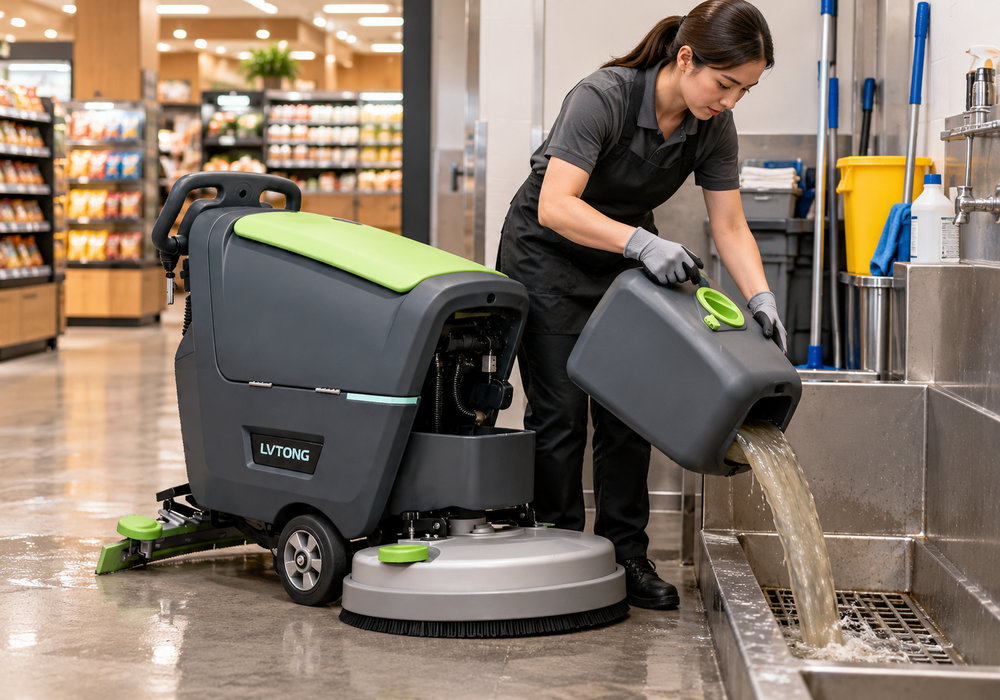
Charging is the next constraint: where is the nearest outlet inside the storage area, and how long can the machine sit on charge between shifts? A long charge time only works if the machine can be plugged in the moment the shift ends. Where wash water is dumped, follow your local discharge rules — for process water the framework is the EPA NPDES stormwater and industrial discharge programme. Place the fill and dump points on the route, not at the far end, or the operator will skip the top-up and cut the floor short.
Small vs Compact vs Mini: Pick the Word That Matches Your Limit
Small, compact and mini answer three different questions — total area, aisle width and machine category — so choose the term that matches your actual constraint before you compare machines.
If the binding limit is cleanable area inside a short window, you need a small machine, and tank and runtime drive the answer. If it is a narrow aisle or tight doorway, you need a compact machine, and cleaning width and turning geometry drive the answer — see our compact floor scrubber guide. If no conventional machine is small enough at all, you are in mini territory, below the compact band entirely; our mini floor scrubber guide draws those lines.
Most buyers who start with “small commercial floor scrubbers” actually have a compact problem disguised as an area problem. Knowing which limit is binding saves a costly mistake.
Matching a Small Floor Cleaning Machine to the Floor Type
Floor type sets the brush or pad and the water budget; width only sets how fast you cover it. Match the cleaning head to the surface first, then size the machine around it.
Sealed hard floors — vinyl, laminate, epoxy, ceramic and polished concrete — each want a slightly different pad or brush, and the wrong one costs more in surface damage or repeat passes than width ever saves. A grit brush on soft vinyl dulls the finish; too soft a pad on a gritty workshop floor needs two passes where one would do.
The water budget follows the floor too. Smooth, sealed surfaces need little solution and dry fast; textured or porous surfaces drink more and slow the squeegee. Set the brush and the water rate for the floor, then let tank size follow from how long that rate must last. Surface first, size second.
Specs That Matter Most on a Small Floor Scrubber
Five numbers decide whether a small scrubber fits your facility: cleaning width, tank volume, runtime, working weight and turning radius. Read them together — each one is a constraint, not a selling point.
| Spec | Why it matters in a small facility | Typical small-band target |
|---|---|---|
| Cleaning width | Sets passes per aisle; too wide turns badly at fixtures | 350–500 mm |
| Solution / recovery tank | Sets refills per shift; undersized tanks drive the “top-up twice” habit | 15–50 L |
| Runtime per charge | Must exceed the cleaning window with margin for a second pass | One full shift or more |
| Working weight | Decides storage, one-person transport and floor loading | Light enough for one operator |
| Turning radius | Determines how much of the route is manoeuvring, not cleaning | Tight enough for your narrowest turn |
Buyers often treat a small auto scrubber as a scaled-down large one and compare only width. The other four numbers are where the fit is won or lost.
Two Walk-Behind Platforms for Small Facilities
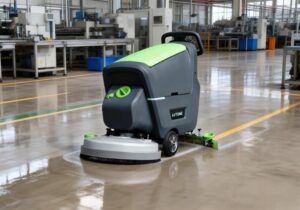
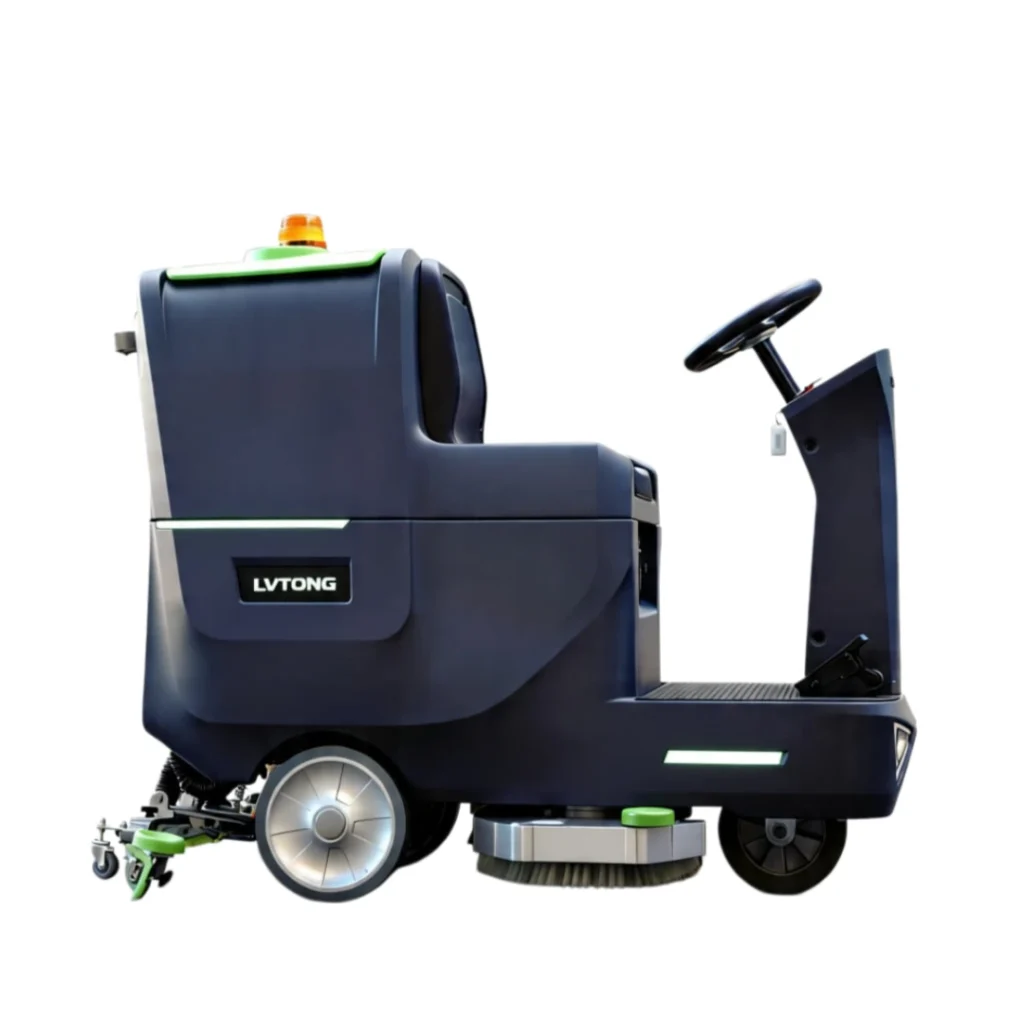
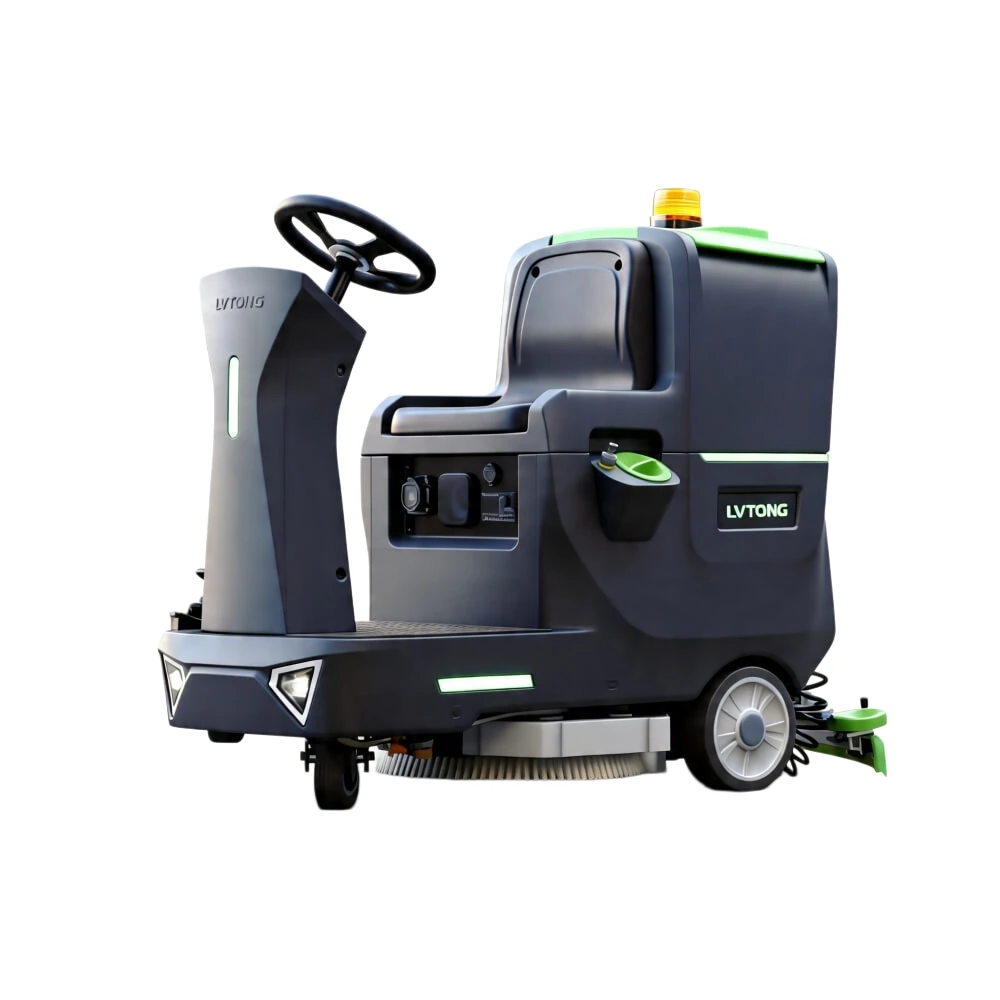
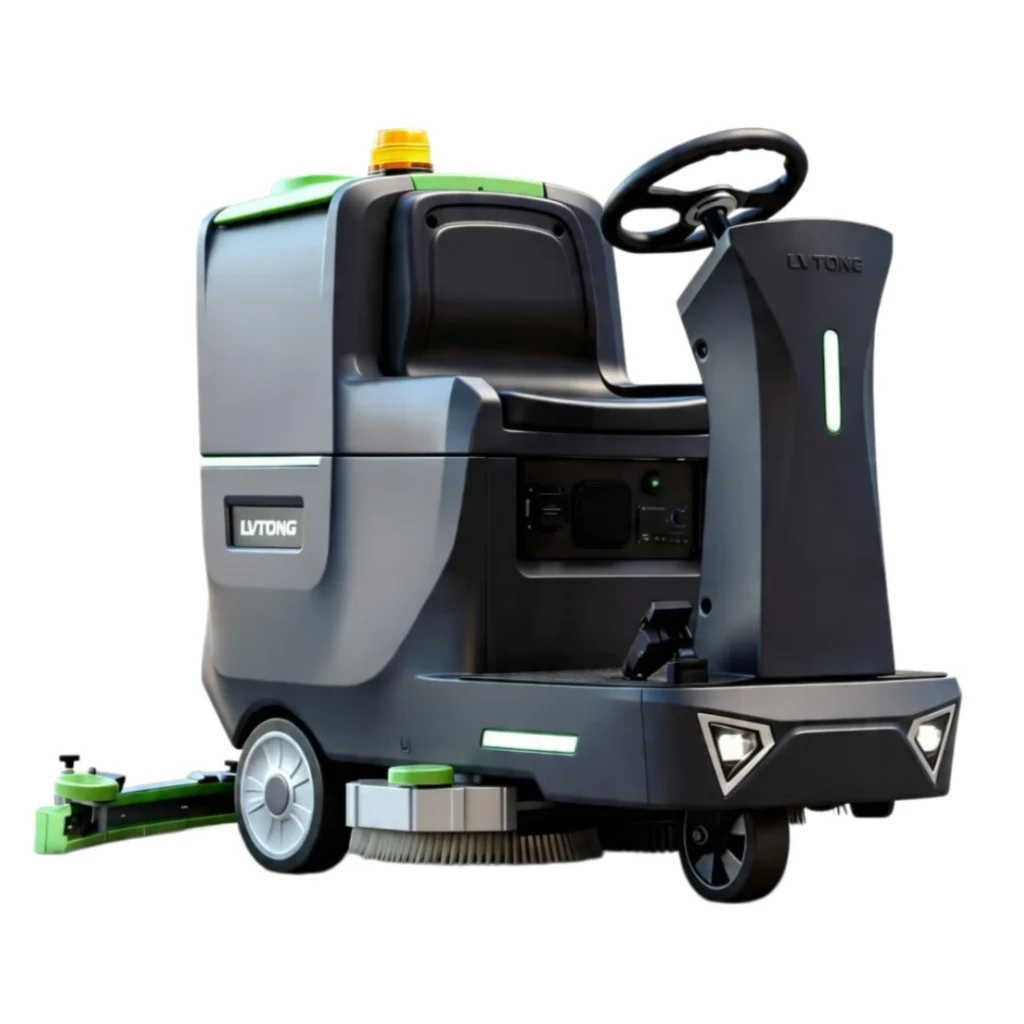
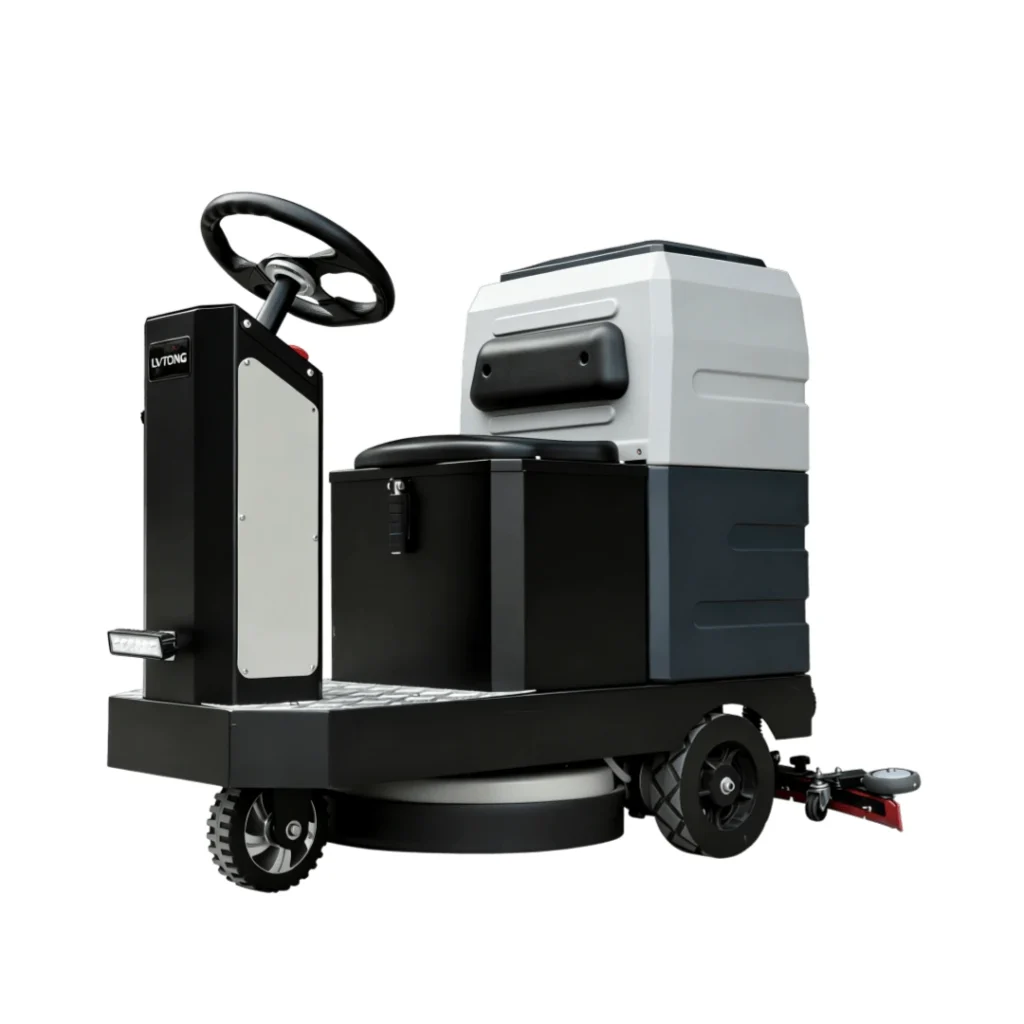
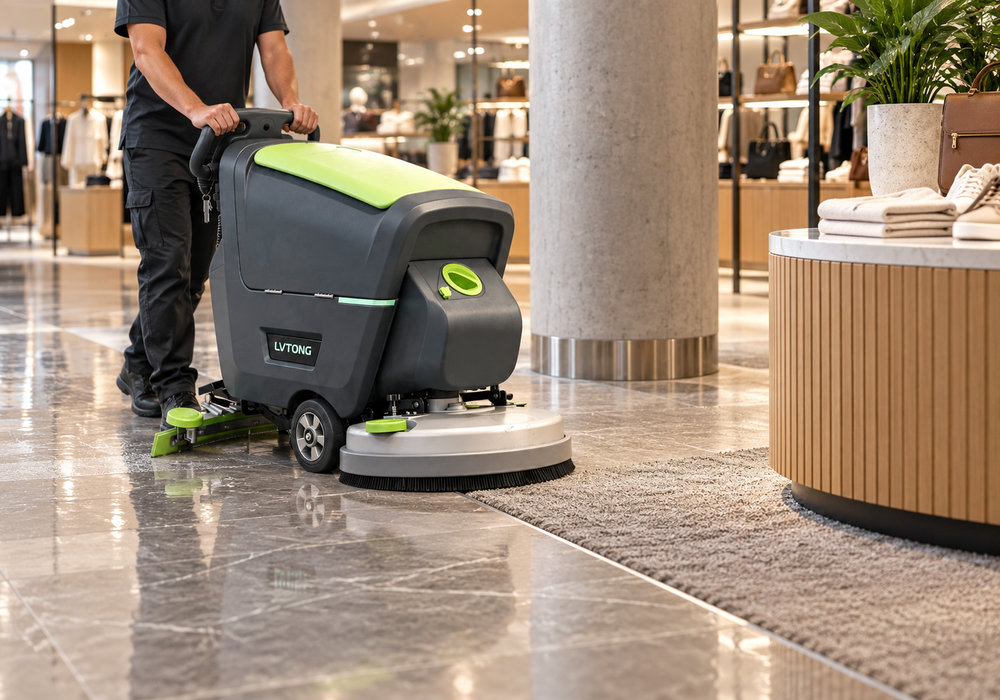
LVTONG’s walk-behind range covers both ends of the small band: the Q5 for the tightest footprints, and the LT-S530X for small-to-medium floors that still need to stay walk-behind.
At the tight end, the Q5 industrial walk-behind floor scrubber pairs a 50 cm cleaning width with a 50 L solution tank and up to four hours of runtime — a fit for shops, clinics and service areas where turning space and storage are the binding limits.
Where the floor is larger but still walk-behind, the LT-S530X walk-behind floor scrubber keeps a 50 cm body width to enter a 0.8 m aisle, with a 62 L solution and 65 L recovery tank — the choice when a small footprint has to cover more area between refills. For the wider walk-behind decision beyond the small band, see our guide to walk-behind scrubbers for small and medium facilities.
Frequently Asked Questions
What is the best small floor scrubber for a small shop?
A walk-behind with a 350–500 mm cleaning width and a tank sized to your shop’s area in one pass. For most shops under about 500 m², a machine that finishes in one pass and stores in a closet is the right answer — extra width mostly adds manoeuvring.
Is a small floor scrubber worth it compared with a mop?
Worth it when the floor is large enough that mopping consumes a real share of labour, and the surface is hard and sealed. Below a few hundred square metres, or on mostly carpeted floors, a mop may still be the honest answer.
What size floor scrubber do I need for around 500 m²?
For roughly 500 m² of cleanable hard floor in one shift, a small commercial floor scrubber in the 350–500 mm band with a 30 L-plus tank is usually enough, if the route has room to turn. Check coverage per hour against your window, not just the area.
Can a small floor scrubber be moved between floors?
Yes, if the working weight and dimensions suit your lift or stairwell and the machine stores near an outlet. Confirm lift capacity and doorway width before you commit.