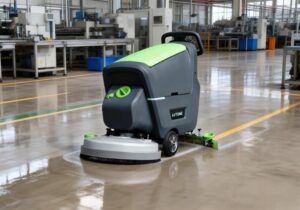
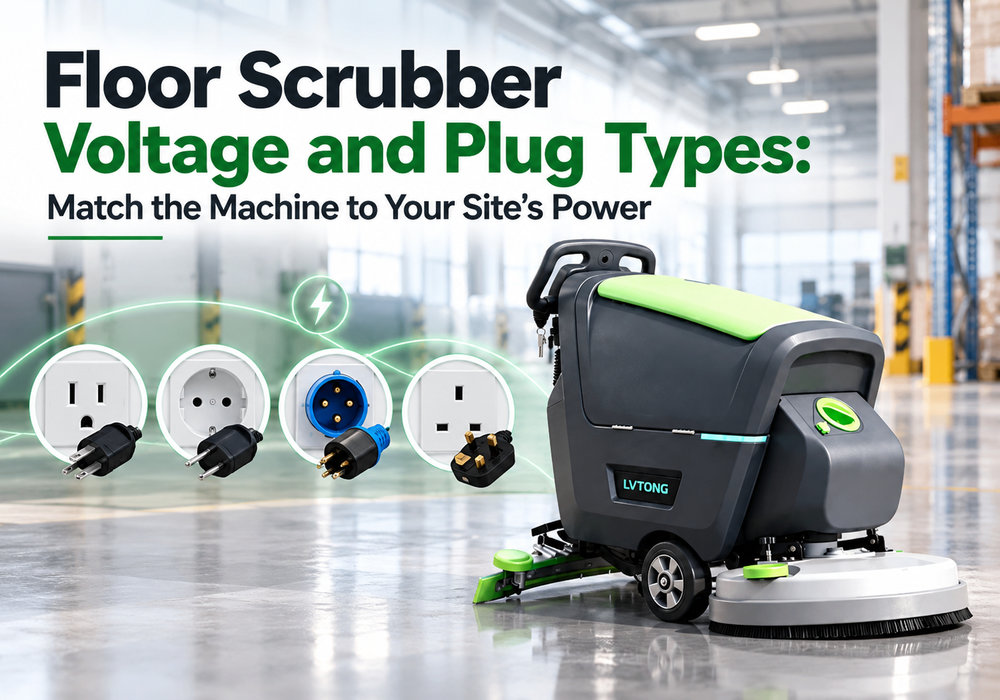
Choosing the right floor scrubber for commercial use is not only about buying a cleaning machine. It is about matching the right scrubber type, cleaning width, brush system, battery runtime, tank capacity, and drying performance to your facility’s real cleaning needs.
For offices, supermarkets, hospitals, warehouses, factories, schools, logistics centers, and other commercial spaces, the wrong machine can lead to slow cleaning, frequent refilling, poor water recovery, operator fatigue, and higher long-term costs. The right machine, however, can improve cleaning efficiency, reduce labor pressure, keep floors safer, and make daily maintenance much easier.
This commercial floor scrubber guide explains how to choose a suitable floor scrubber for commercial use by looking at your floor area, floor type, traffic level, dirt condition, working hours, and cleaning frequency.
What Is a Floor Scrubber for Commercial Use?
A floor scrubber for commercial use is a cleaning machine designed to wash, scrub, and dry floors in larger or high-traffic environments. Unlike a mop, a commercial floor scrubber applies cleaning solution, uses brushes or pads to remove dirt, and then recovers dirty water through a vacuum and squeegee system.
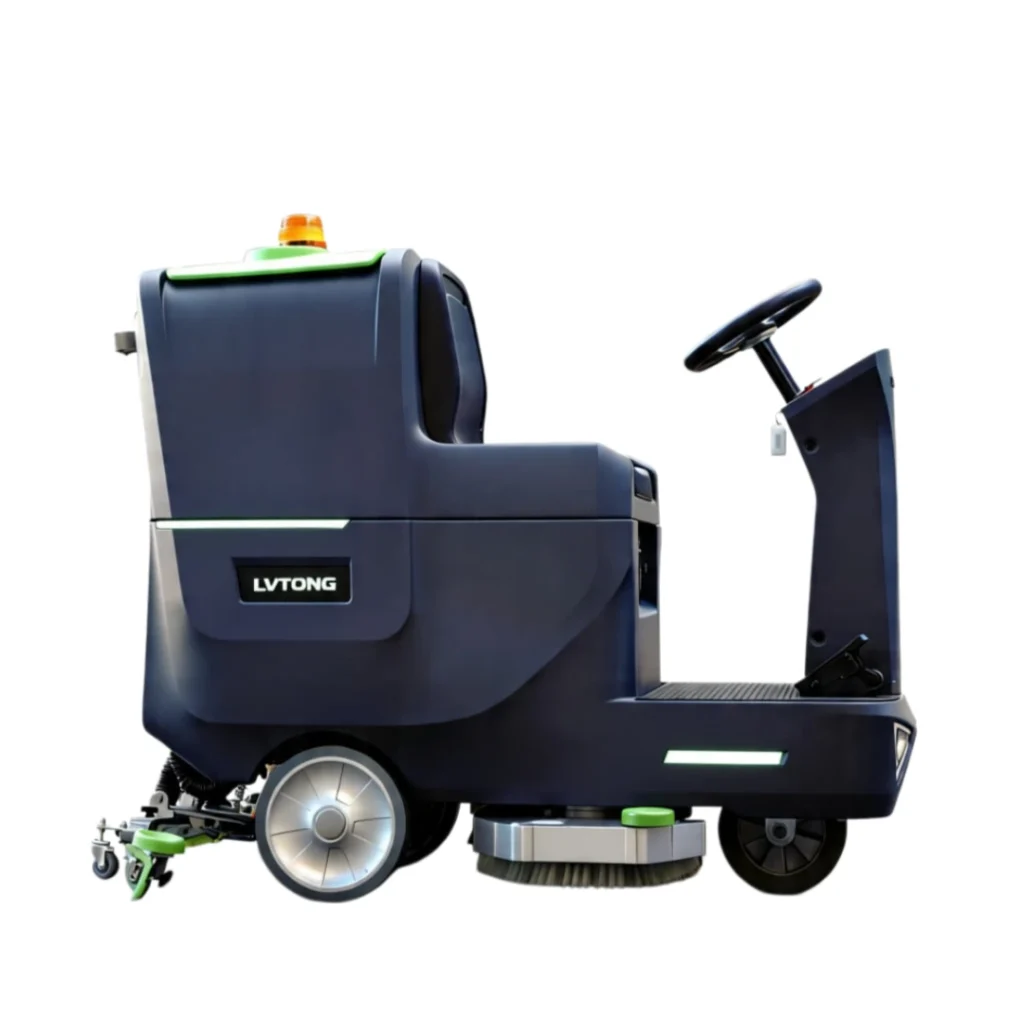
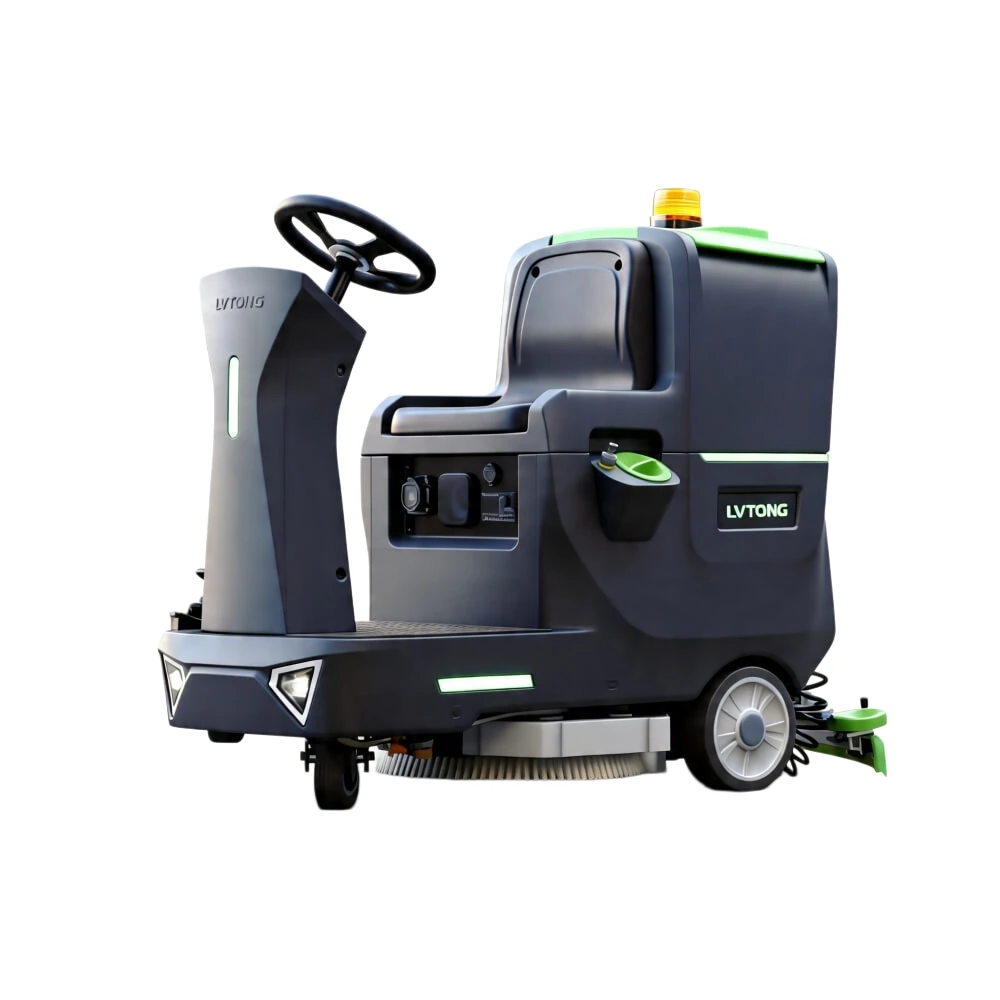
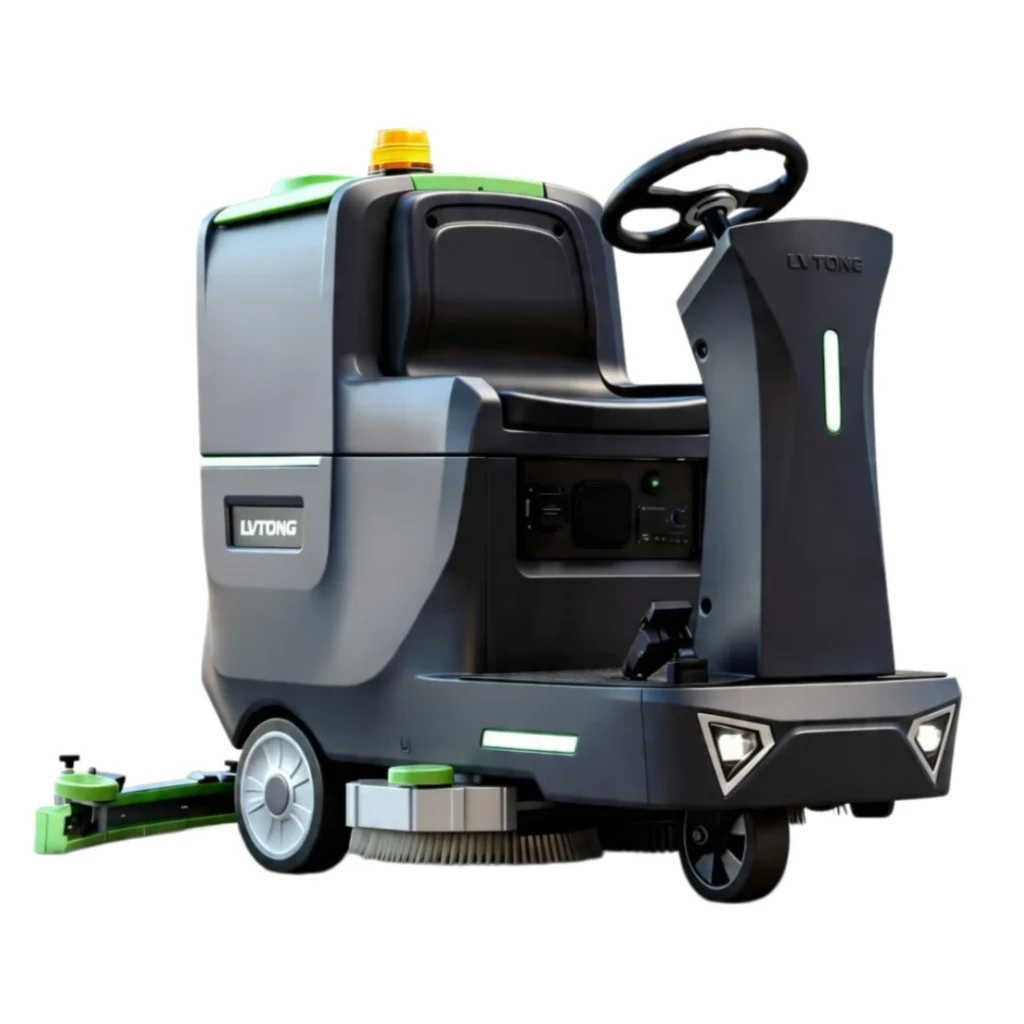
A complete commercial floor cleaning system usually includes a floor scrubber machine, brush or pad system, solution tank, recovery tank, vacuum motor, squeegee assembly, battery system, and daily maintenance process. Businesses can also explore LVTONG’s commercial floor scrubber dryers to compare different commercial and industrial cleaning options.
- A walk-behind or ride-on floor scrubber
- A disc brush, cylindrical brush, or cleaning pad
- A clean water or solution tank
- A recovery tank for dirty water
- A vacuum motor
- A squeegee system for water recovery
- A battery and charger
- Suitable cleaning detergent
- A daily maintenance process
This is why choosing a floor scrubber should not be based only on price. A good floor scrubber for commercial use should fit the size of the space, the floor material, the cleaning schedule, and the type of dirt that appears every day.
Quick Answer: How Do You Choose the Right Floor Scrubber for Commercial Use?
To choose the right floor scrubber for commercial use, start with five key questions:
- How large is the area you need to clean?
- Is the space open, narrow, crowded, or full of obstacles?
- What type of floor do you have: concrete, tile, epoxy, vinyl, rubber, or stone?
- What kind of dirt do you need to remove: dust, footprints, oil, grease, spills, or forklift marks?
- How many hours does the machine need to work each day?
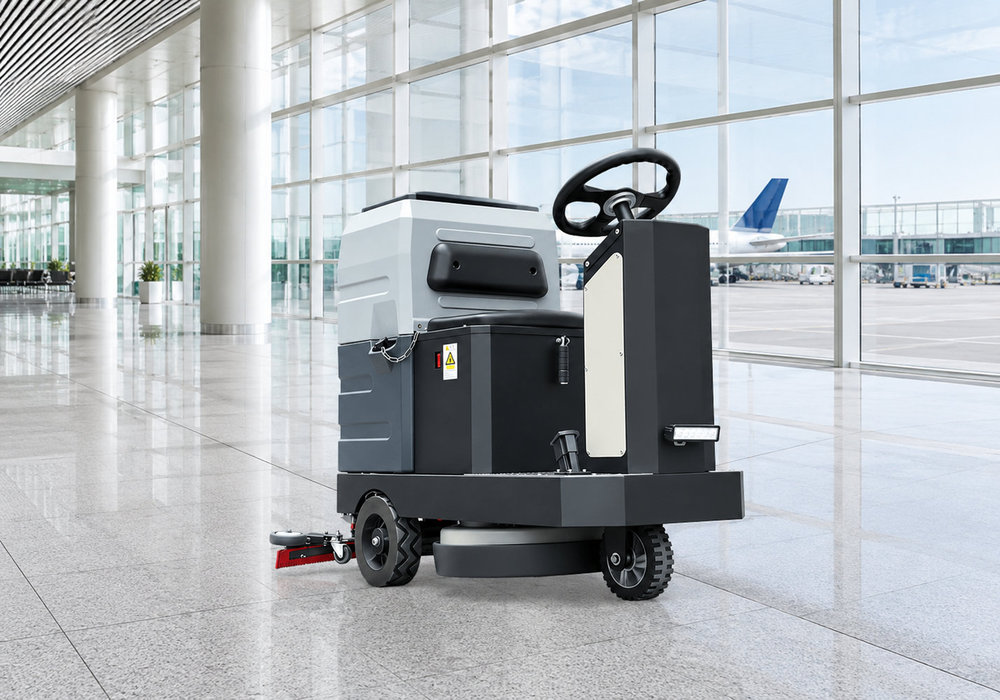
For small and medium-sized commercial areas, a walk-behind floor scrubber is usually easier to control and more cost-effective. For large open areas such as warehouses, logistics centers, airports, and factories, a ride-on floor scrubber can clean faster and reduce operator fatigue.
Expert Recommendation
Based on our experience working with commercial cleaning projects across warehouses, factories, supermarkets, schools, hospitals, and logistics centers, the most common purchasing mistake is selecting a machine based only on cleaning width or price. In practice, facility size, floor type, daily operating hours, battery runtime, brush system, and water recovery performance have a much greater impact on long-term cleaning efficiency and operating cost. Buyers who evaluate these factors before comparing brands usually achieve better productivity and lower maintenance costs.
Commercial Floor Scrubber Selection at a Glance
If you only remember three things when choosing a floor scrubber for commercial use, focus on these priorities:
• Match the machine size to the facility rather than buying the largest model.
• Select the correct brush system based on floor type and soil conditions.
• Compare battery runtime, tank capacity, and water recovery instead of purchase price alone.
For most commercial facilities, these three factors have a greater impact on cleaning efficiency than brand alone.
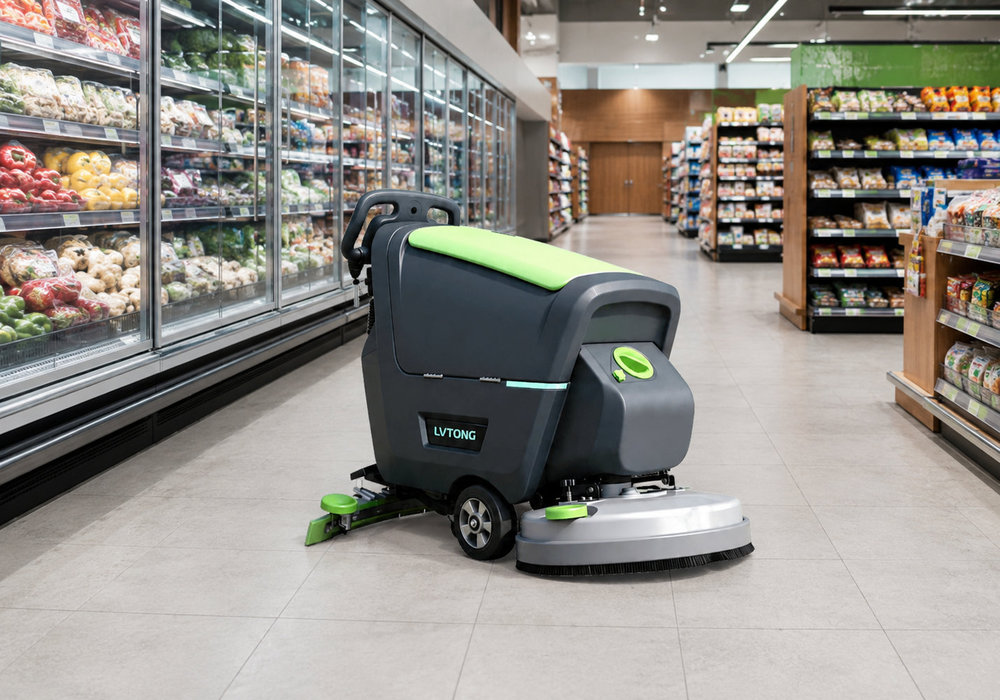
Why Businesses Need a Commercial Floor Scrubber?
Manual mopping may work for very small areas, but it becomes inefficient when the cleaning area is large, the floor gets dirty quickly, or the facility needs consistent cleaning results every day.
A floor scrubber for commercial use can help businesses:
- Clean larger areas in less time
- Reduce manual labor
- Improve floor drying speed
- Lower slip risks caused by wet floors
- Maintain a more professional appearance
- Reduce water and chemical waste
- Improve cleaning consistency
- Handle daily cleaning schedules more easily
For facilities with frequent foot traffic, vehicle movement, dust, oil, or spills, commercial floor scrubbing equipment is often a more practical long-term solution than repeated manual cleaning.
Key Factors to Consider Before Buying a Floor Scrubber for Commercial Use
When selecting a floor scrubber for commercial use, the most important factors are not only machine size or price. You should evaluate the full cleaning workflow.
1. Cleaning Area and Productivity
The first step is to estimate the total floor area that needs to be cleaned each day. A machine with a wider cleaning path can cover more area per hour, but it may not be suitable for narrow aisles or crowded spaces.
For example:
- Small shops, offices, and clinics may need a compact walk-behind scrubber.
- Medium-sized facilities may need a larger walk-behind model with better tank capacity.
- Large warehouses and factories may need a ride-on scrubber with wider cleaning width and longer battery runtime.
When comparing machines, check the estimated cleaning efficiency, usually shown as square feet or square meters per hour. Also consider real working conditions. Obstacles, turns, narrow aisles, and refill time can reduce actual productivity.
2. Walk-Behind vs. Ride-On Floor Scrubbers
One of the biggest decisions is whether to choose a walk-behind floor scrubber or a ride-on floor scrubber.
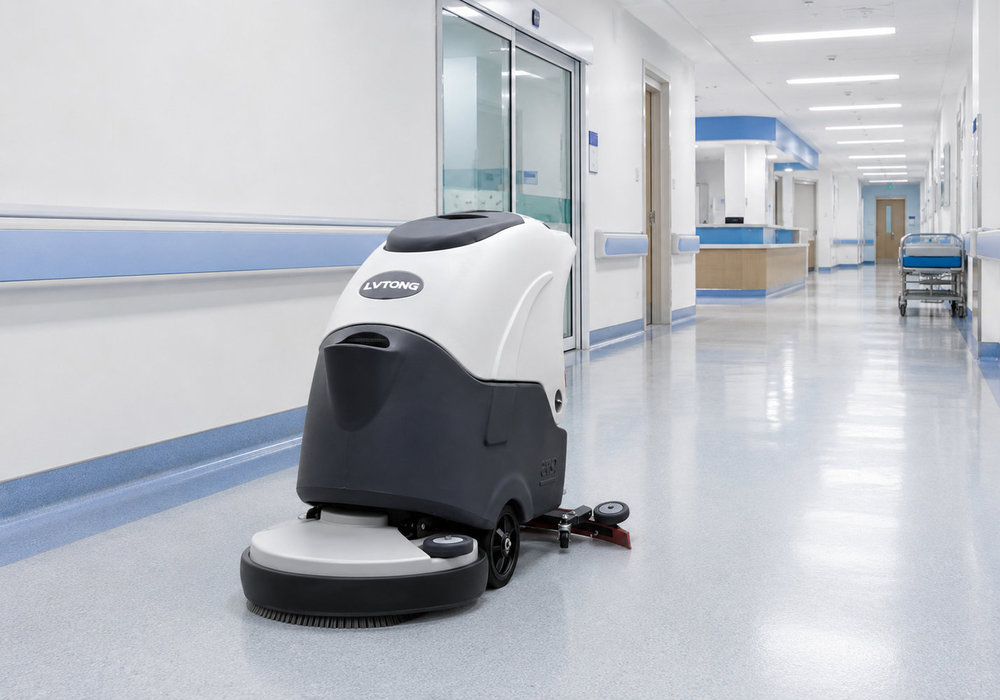
Walk-behind floor scrubbers are usually better for:
- Small to medium-sized areas
- Tight spaces
- Narrow aisles
- Retail stores
- Schools
- Hospitals
- Office buildings
- Areas with many turns or obstacles
If your facility has narrow aisles, many obstacles, or medium-sized cleaning areas, walk-behind floor scrubber machines are usually easier to operate and more flexible.
Ride-on floor scrubbers are usually better for:
- Large open areas
- Warehouses
- Logistics centers
- Airports
- Factories
- Parking areas
- Large supermarkets
- Facilities with long cleaning shifts
For large warehouses, factories, logistics centers, and other open spaces, ride-on floor scrubber machines can improve cleaning speed and reduce operator fatigue.
Walk-Behind vs. Ride-On Floor Scrubber Comparison
| Feature | Walk-Behind Floor Scrubber | Ride-On Floor Scrubber |
|---|---|---|
| Best For | Small and medium spaces | Large open spaces |
| Maneuverability | Better in narrow areas | Better in wide areas |
| Cleaning Speed | Moderate | High |
| Operator Fatigue | Higher during long shifts | Lower during long shifts |
| Initial Cost | Usually lower | Usually higher |
| Tank Capacity | Smaller to medium | Larger |
| Maintenance Complexity | Simpler | More complex |
| Ideal Use | Offices, shops, schools, hospitals | Warehouses, factories, logistics centers |
If your facility has many narrow passages, a compact walk-behind model may be the smarter choice. If your team needs to clean thousands of square meters every day, a ride-on model may save more time and labor in the long run.
H2: Choosing a Floor Scrubber Based on Facility Size
Facility size is one of the easiest ways to narrow down your options.
H3: Small Commercial Areas
For small commercial areas such as convenience stores, small offices, clinics, and restaurants, a compact walk-behind floor scrubber is usually enough.
Recommended features:
- Compact body
- Easy turning radius
- Simple controls
- Fast drying performance
- Low noise level
- Easy tank cleaning
A smaller floor scrubber for commercial use is easier to store, easier to operate, and more suitable for cleaning during or between business hours.
Medium-Sized Commercial Facilities
For medium-sized areas such as schools, supermarkets, shopping areas, workshops, and office buildings, choose a walk-behind scrubber with a wider cleaning path and larger tank capacity.
Recommended features:
- Medium cleaning width
- Larger solution and recovery tanks
- Strong squeegee performance
- Good battery runtime
- Comfortable handle design
- Brush or pad options for different floor types
For example, a walk-behind floor scrubber with a cleaning path around 500–600 mm can provide a good balance between productivity and maneuverability.
Large Facilities
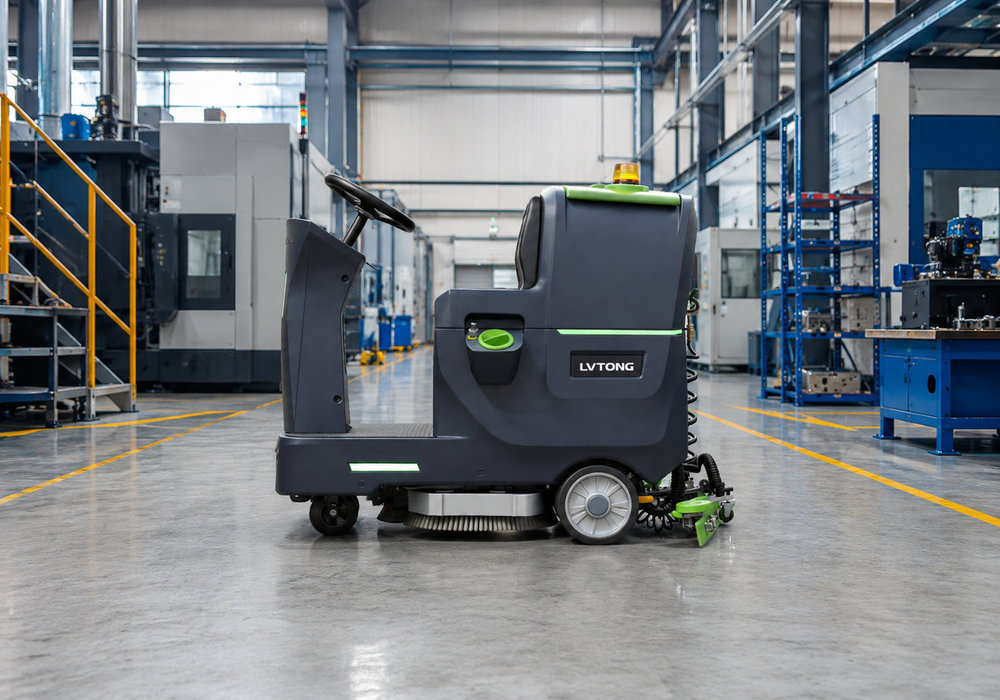
For large commercial and industrial areas such as warehouses, logistics centers, airports, and factories, a ride-on floor scrubber is usually more efficient.
Recommended features:
- Wide cleaning path
- Large solution and recovery tanks
- Long battery runtime
- Strong brush pressure
- Comfortable driving position
- Durable frame
- High water recovery performance
A ride-on floor scrubber can help reduce operator fatigue and improve cleaning speed when the floor area is large and open.
Choosing a Floor Scrubber Based on Floor Type
Different floors require different brush types, pressure levels, and cleaning methods. Using the wrong brush or pad can reduce cleaning results or damage the floor surface.
Polished Concrete Floors
Polished concrete is common in warehouses, factories, retail stores, and logistics centers. It is durable, but dust, tire marks, and oil stains can build up quickly.
Recommended setup:
- Medium or heavy-duty floor scrubber
- Nylon brush or suitable pad
- Good brush pressure
- Strong water recovery system
- Durable squeegee
For large concrete floors, a ride-on floor scrubber is often more efficient.
Ceramic Tile Floors
Ceramic tile is common in supermarkets, schools, hospitals, kitchens, and public buildings. Dirt can collect in grout lines, so brush selection is important.
Recommended setup:
- Walk-behind scrubber for smaller areas
- Cylindrical or disc brush depending on grout depth
- Moderate brush pressure
- Fast-drying squeegee
- Suitable detergent for tile surfaces
If grout cleaning is important, choose a brush system that can reach uneven surfaces more effectively.
Epoxy Floors
Epoxy floors are often used in factories, warehouses, workshops, and garages. They can handle industrial traffic but may collect oil, grease, dust, and tire marks.
Recommended setup:
- Durable commercial or industrial floor scrubber
- Medium-stiff brush
- Oil-resistant squeegee if needed
- Good suction power
- Proper cleaning solution for grease or oil
For facilities with frequent oil stains, brush pressure and detergent selection are especially important.
Vinyl and Rubber Floors
Vinyl and rubber floors are often used in schools, hospitals, gyms, and commercial buildings. These surfaces need effective but gentle cleaning.
Recommended setup:
- Soft brush or suitable cleaning pad
- Lower brush pressure
- Controlled water flow
- Quiet operation
- Good drying performance
Avoid using overly aggressive brushes that may wear down or scratch the surface.
Natural Stone Floors
Natural stone requires more careful cleaning because some surfaces are sensitive to harsh chemicals or abrasive brushes.
Recommended setup:
- Soft or non-abrasive brush
- Neutral or suitable cleaning solution
- Lower pressure setting
- Controlled water use
- Gentle cleaning process
For natural stone, always check the floor manufacturer’s cleaning recommendations before using strong chemicals or abrasive pads.
Battery Runtime and Daily Cleaning Shifts
Battery performance is another key factor when choosing a floor scrubber for commercial use. A machine with short runtime may interrupt cleaning work and require frequent charging.
When comparing battery systems, consider:
- Runtime per charge
- Charging time
- Battery type
- Battery maintenance needs
- Whether one charge can cover a full cleaning shift
- Whether opportunity charging is possible
- Replacement cost over time
For businesses with daily cleaning shifts, battery runtime should match the actual work schedule. A small retail store may only need a short runtime, while a warehouse or factory may require several hours of continuous operation. Battery runtime also affects long-term machine performance and replacement cost. For more details, read our guide on floor scrubber battery life.
Lithium batteries are becoming more common because they usually charge faster, require less maintenance, and provide more stable performance compared with traditional battery options. However, the best choice depends on your budget, workload, and charging schedule.
Brush System and Cleaning Path Width
The brush system directly affects cleaning performance. The right brush or pad helps remove dirt efficiently without damaging the floor.
Disc Brushes
Disc brushes are common and suitable for many smooth floors. They are often used in retail stores, offices, schools, hospitals, and general commercial areas.
Best for:
- Smooth floors
- Daily maintenance cleaning
- General dirt and footprints
- Medium-duty cleaning tasks
Cylindrical Brushes
Cylindrical brushes are useful when the floor has light debris, uneven surfaces, or grout lines. They can scrub and collect small debris more effectively in some environments.
Best for:
- Warehouses
- Tile floors
- Areas with light debris
- Facilities with dust or particles
- Floors with shallow grooves or joints
Cleaning Pads
Pads can be used for different levels of cleaning, from light maintenance to more aggressive scrubbing. The right pad depends on the floor material and dirt condition.
Best for:
- Smooth commercial floors
- Polished surfaces
- Maintenance cleaning
- Specific floor care needs
Cleaning Path Width
A wider cleaning path improves productivity in open areas, but it may reduce flexibility in tight spaces. A narrower cleaning path is easier to control in small areas but may take longer to clean large floors.
Choose a wider cleaning path if:
- The area is large and open
- There are fewer obstacles
- Cleaning speed is important
- Operators clean for long shifts
Choose a narrower cleaning path if:
- The space is crowded
- Aisles are narrow
- There are many turns
- Storage space is limited
Tank Capacity and Water Recovery
Tank capacity affects how often the operator needs to stop, refill clean water, and empty dirty water. Larger tanks can improve productivity in large areas, while smaller tanks are easier to handle in compact machines.
When checking tank design, look at:
- Solution tank capacity
- Recovery tank capacity
- Ease of filling
- Ease of draining
- Tank cleaning access
- Water level visibility
- Recovery performance
Good water recovery is especially important in commercial spaces because wet floors can create slip risks and interrupt normal operations. A strong vacuum and well-designed squeegee system help floors dry faster after cleaning.
Noise Level and Cleaning During Business Hours
Noise level matters in places where cleaning may happen during working hours or near customers, patients, students, or employees.
Low-noise operation is useful for:
- Hospitals
- Schools
- Offices
- Hotels
- Shopping centers
- Supermarkets
- Public buildings
If your team needs to clean during the day, choose a floor scrubber with quiet operation, eco mode, or lower-noise settings. This helps reduce disruption while still maintaining clean floors.
H2: Choosing a Floor Scrubber for Different Commercial Applications
Different facilities have different cleaning challenges. A floor scrubber for commercial use should be selected according to the environment, not only the machine size.
Warehouses and Logistics Centers
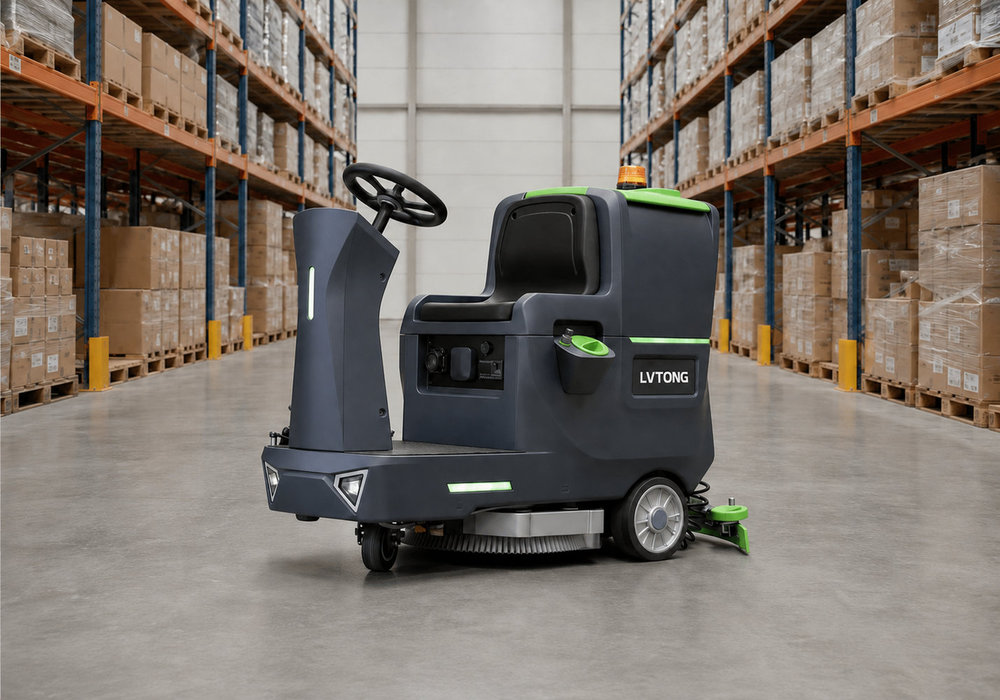
Warehouses often deal with large open floors, concrete dust, forklift tire marks, pallet debris, and high daily traffic.
Recommended floor scrubber setup:
- Ride-on floor scrubber for large areas
- Walk-behind scrubber for smaller aisles or corners
- Wider cleaning path
- Large tank capacity
- Long battery runtime
- Cylindrical brush or suitable brush system
- Strong squeegee for uneven floors
For warehouses, productivity and durability are usually the most important factors. For more detailed warehouse cleaning recommendations, you can read our warehouse floor scrubber guide.
Retail Stores and Supermarkets
Retail stores and supermarkets need clean floors during business hours, often with customers nearby. Fast drying and quiet operation are very important.
Recommended floor scrubber setup:
- Compact walk-behind scrubber
- Low-noise operation
- Fast-drying squeegee
- Easy maneuverability
- Simple controls
- Eco mode if available
A compact floor scrubber helps clean aisles, checkout areas, storage rooms, and entrance zones without disturbing shoppers.
Hospitals and Medical Facilities
Hospitals and medical facilities require consistent cleaning, low noise, and strong water recovery. Machines must be easy to clean and suitable for tight spaces. If your facility is a clinic, hospital, or healthcare building, you can also review our guide to choosing a floor cleaning machine for hospital.
Recommended floor scrubber setup:
- Quiet walk-behind scrubber
- Good water recovery
- Easy-to-clean tanks
- Compact body
- Soft or suitable brush for sensitive floors
- Controlled solution flow
In healthcare environments, drying speed and hygiene-friendly design should be top priorities.
Schools and Universities
Schools have classrooms, hallways, cafeterias, gyms, and entrance areas. The cleaning machine must be flexible enough for different spaces.
Recommended floor scrubber setup:
- Medium walk-behind floor scrubber
- Durable brush system
- Moderate tank capacity
- Low-noise operation
- Easy controls
- Safe drying performance
For large campuses, a combination of walk-behind and ride-on scrubbers may be more efficient.
Factories and Workshops
Factories often deal with oil, grease, dust, metal particles, and heavy dirt. These environments require stronger equipment and more durable components.
Recommended floor scrubber setup:
- Heavy-duty walk-behind or ride-on scrubber
- Strong brush pressure
- Durable frame
- Oil-resistant squeegee if needed
- Suitable brush for industrial floors
- Proper cleaning detergent for grease or oil
For factory floors, choose a machine that can handle tough dirt and long working hours.
Office Buildings
Office buildings usually need regular cleaning for hallways, lobbies, elevators, and shared spaces. The machine should be quiet, compact, and easy to use.
Recommended floor scrubber setup:
- Compact or medium walk-behind scrubber
- Quiet operation
- Soft brush or pad
- Good drying performance
- Easy storage
- Simple maintenance
A smaller floor scrubber is often enough for daily maintenance in office environments.
How Often Should Commercial Floors Be Scrubbed?
Cleaning frequency depends on traffic level, dirt type, floor material, and safety requirements.
As a general guide:
- High-traffic areas may need daily scrubbing.
- Medium-traffic areas may need scrubbing several times per week.
- Low-traffic areas may only need weekly scrubbing.
- Industrial areas with oil, dust, or debris may need more frequent cleaning.
- Retail and public areas may require daily or even multiple cleaning passes.
A good cleaning schedule helps protect the floor surface, improve appearance, and reduce safety risks.
Total Cost of Ownership Matters
The cheapest floor scrubber is not always the most cost-effective choice. When choosing a floor scrubber for commercial use, look at total cost of ownership instead of only purchase price.
Important cost factors include:
- Machine price
- Battery replacement cost
- Brush and pad replacement cost
- Squeegee replacement cost
- Maintenance parts
- Downtime risk
- Operator training
- Labor savings
- Water and chemical usage
- Service support
A higher-quality machine may cost more at the beginning, but it can reduce downtime, improve productivity, and last longer when used correctly.
Commercial Floor Scrubber Selection Checklist
Before buying a floor scrubber for commercial use, use this checklist:
- Measure the total cleaning area.
- Identify the floor type.
- Check whether the space is open or narrow.
- Estimate daily cleaning hours.
- Decide between walk-behind and ride-on scrubbers.
- Compare cleaning path width.
- Check battery runtime.
- Check tank capacity.
- Review brush and pad options.
- Confirm water recovery performance.
- Consider noise level.
- Check spare parts availability.
- Review maintenance requirements.
- Calculate long-term operating cost.
- Choose a supplier that can provide support and guidance.
This checklist helps you avoid choosing a machine that is too small, too large, too weak, or too expensive for your actual cleaning needs.
Common Mistakes When Choosing a Floor Scrubber for Commercial Use
Choosing Only by Price
A low-cost machine may look attractive, but if it cannot clean the area efficiently, it may increase labor costs and downtime.
Ignoring Floor Type
Different floors need different brushes, pads, and pressure levels. Ignoring floor type may lead to poor cleaning or surface damage.
Underestimating Battery Runtime
If the battery cannot support the full cleaning shift, operators will need to stop and recharge, reducing productivity.
Choosing the Wrong Machine Size
A machine that is too large may be difficult to use in narrow areas. A machine that is too small may take too long to clean large spaces.
Forgetting Maintenance Requirements
Brushes, squeegees, tanks, filters, and batteries all need regular care. Easy maintenance helps extend machine life. Regular maintenance helps reduce downtime, extend machine life, and keep cleaning performance stable. LVTONG also provides cleaning equipment maintenance and after-sales support for floor scrubbers and sweepers.
Recommended LVTONG Floor Scrubber Options
LVTONG provides different floor scrubber options for commercial and industrial cleaning needs. The right model depends on your facility size, floor type, and daily workload.
For medium-sized commercial areas, a walk-behind floor scrubber such as the LVTONG LT-S530X can provide a practical balance of cleaning width, maneuverability, and daily cleaning efficiency.
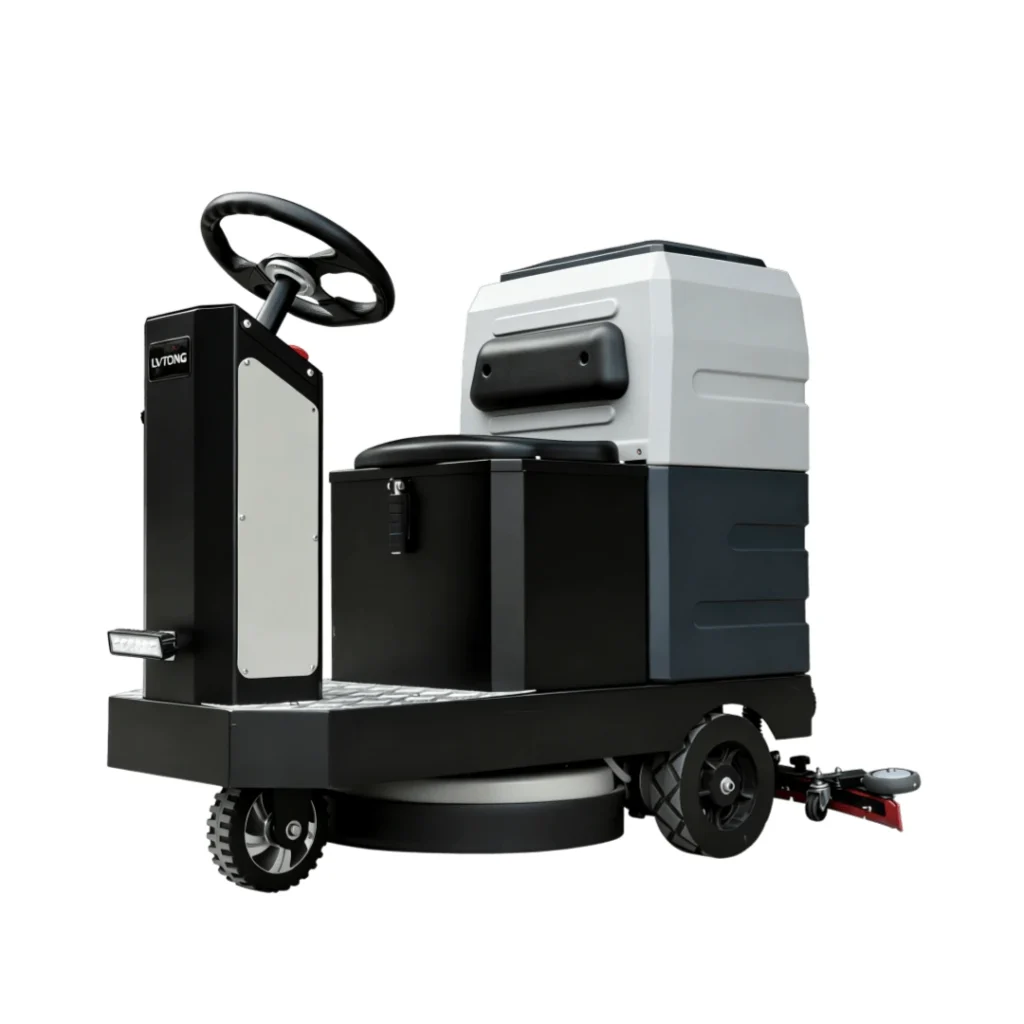
For larger warehouses, logistics centers, and open industrial floors, a ride-on floor scrubber such as the LVTONG LT-S860X can help improve productivity and reduce operator fatigue.
For tighter spaces, compact walk-behind floor scrubbers can be a better fit because they are easier to turn, store, and operate in narrow areas.
If you are not sure which floor scrubber for commercial use is right for your facility, it is best to compare your floor area, dirt condition, daily cleaning hours, and budget before choosing a model.
FAQ: Floor Scrubber for Commercial Use
What is the best floor scrubber for commercial use?
The best floor scrubber for commercial use depends on your facility size, floor type, cleaning frequency, and dirt condition. Walk-behind scrubbers are usually better for small and medium spaces, while ride-on scrubbers are better for large open areas.
How do I choose a floor scrubber for commercial use?
Start by measuring the cleaning area, checking the floor type, estimating daily cleaning hours, and deciding whether your space needs a walk-behind or ride-on machine. Then compare cleaning width, battery runtime, tank capacity, brush type, and drying performance.
Is a walk-behind or ride-on floor scrubber better?
A walk-behind floor scrubber is better for narrow, crowded, or medium-sized spaces. A ride-on floor scrubber is better for large facilities where cleaning speed and operator comfort are important.
What floor scrubber is best for concrete floors?
For concrete floors, choose a durable commercial or industrial floor scrubber with suitable brush pressure, strong water recovery, and a brush or pad that can remove dust, tire marks, and surface dirt effectively.
How long should a commercial floor scrubber battery last?
Battery runtime depends on the model and workload. For daily commercial cleaning, the battery should be able to support the required cleaning shift without frequent interruption. Large facilities usually need longer runtime or faster charging options.
Can a commercial floor scrubber clean oil stains?
A commercial floor scrubber can help remove oil stains when paired with the right brush, suitable cleaning solution, and proper cleaning process. For heavy oil or grease, choose a more durable machine with stronger brush pressure and chemical-resistant components.
How often should commercial floors be scrubbed?
High-traffic commercial floors may need daily scrubbing. Medium-traffic areas may need cleaning several times per week, while low-traffic areas may only need weekly cleaning. Industrial spaces may require more frequent cleaning depending on dirt and safety conditions.
What is the difference between a floor scrubber and a floor sweeper?
A floor scrubber washes and dries the floor using water, detergent, brushes, vacuum, and squeegee. A floor sweeper mainly collects dry dust and debris. Some facilities may need both machines depending on the cleaning environment. For a deeper comparison, read our full guide on floor scrubber vs floor sweeper.
How to Decide Which Commercial Floor Scrubber to Buy
Use the following decision process before comparing brands or prices.
If your cleaning area is under 10,000 sq ft, start by evaluating a compact walk-behind floor scrubber.
If your facility exceeds 15,000 sq ft with long cleaning routes, a ride-on floor scrubber is usually the more productive option.
If the floor includes tile, grout, or textured concrete, prioritize brush type and down pressure.
If daily cleaning exceeds four hours, compare battery runtime, charging time, and replacement cost before purchase.
If local service is important, verify spare parts availability and technical support before placing an order.
Following this process helps buyers avoid selecting a machine based only on purchase price.
Commercial Floor Scrubber Buyer Checklist
Before requesting a quotation, prepare the following information:
• Facility size
• Floor material
• Daily cleaning frequency
• Type of dirt
• Available charging area
• Preferred battery type
• Required operating time
• Door width
• Aisle width
• Budget range
Providing these details allows suppliers to recommend a machine that better matches actual operating conditions.
Conclusion
Choosing the right floor scrubber for commercial use means matching the machine to your real cleaning conditions. Facility size, floor type, brush system, battery runtime, tank capacity, drying performance, and maintenance needs all affect the final result.
For small and medium-sized areas, a walk-behind floor scrubber is often a flexible and cost-effective choice. For large warehouses, factories, airports, logistics centers, and open industrial floors, a ride-on floor scrubber can provide higher productivity and better operator comfort.
Before making a decision, review your cleaning area, daily schedule, floor material, dirt level, and budget. A well-matched commercial floor scrubber can help your business clean faster, reduce labor pressure, improve floor safety, and maintain a more professional facility environment.
If you need help choosing the right floor scrubber for commercial use, contact the LVTONG team for product recommendations based on your facility size, floor type, and daily cleaning requirements.