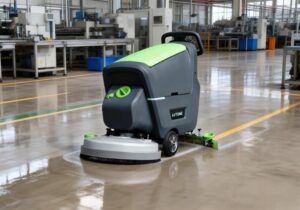
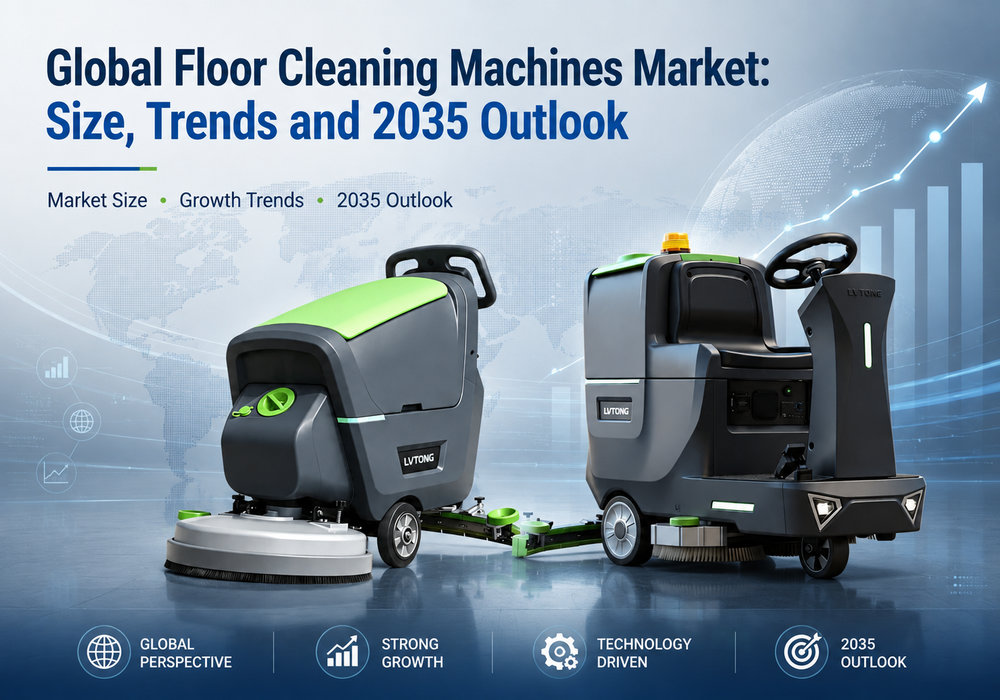
Have you found that cleaning warehouses, airports, or larger areas with traditional cleaning tools is particularly laborious? Do not upset! There is a professional commercial floor scrubber that can help you.
But walking into the world of floor cleaning machines can be a lot to take in. You’re hit with specs, technical jargon, and a dozen different models. How do you find the best floor scrubber without getting lost? This guide cuts through the noise. We’ll break down what you actually need to know to select the right floor scrubber machine for your job, whether you need tough warehouse floor scrubbers or a nimble airport cleaning machine.
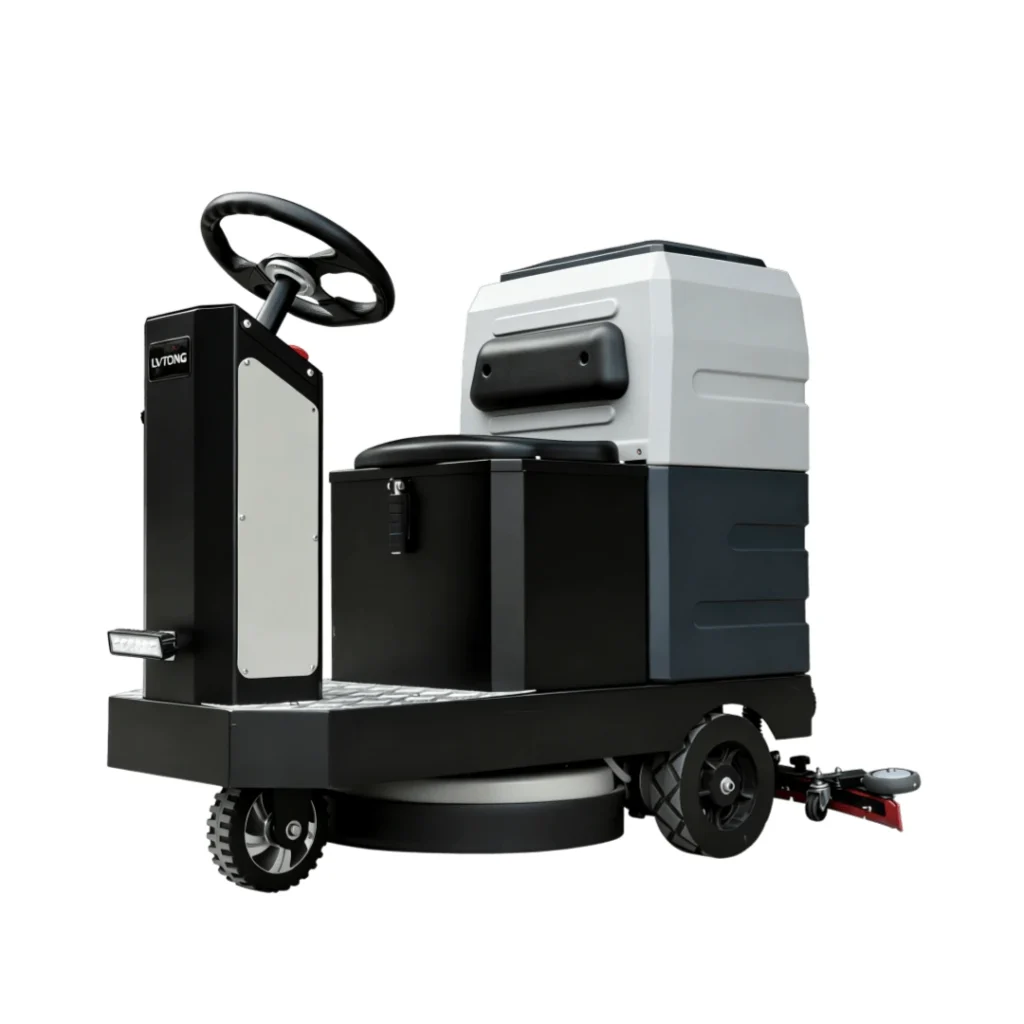
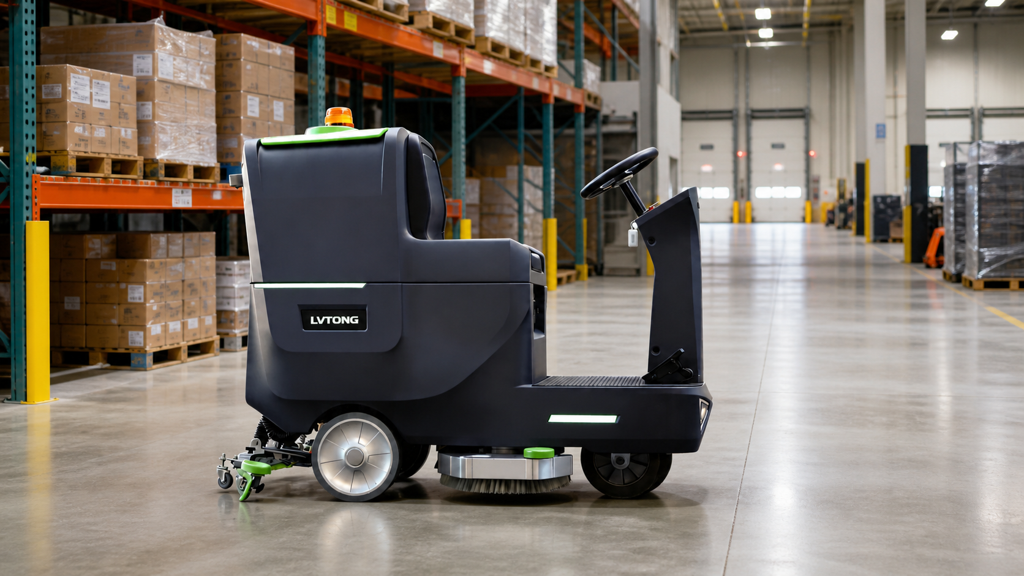
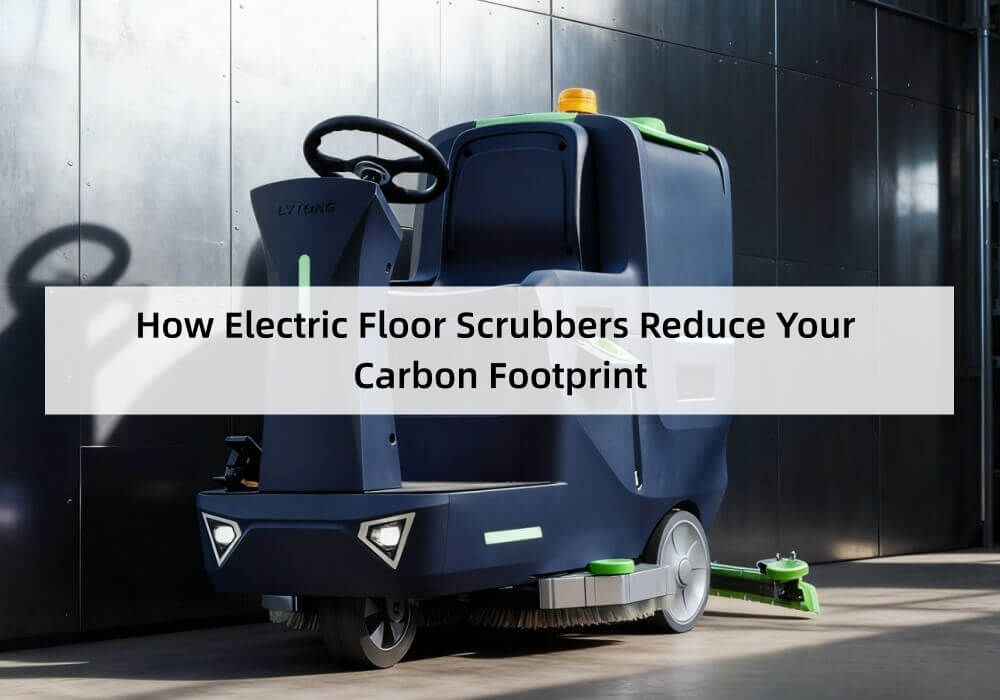
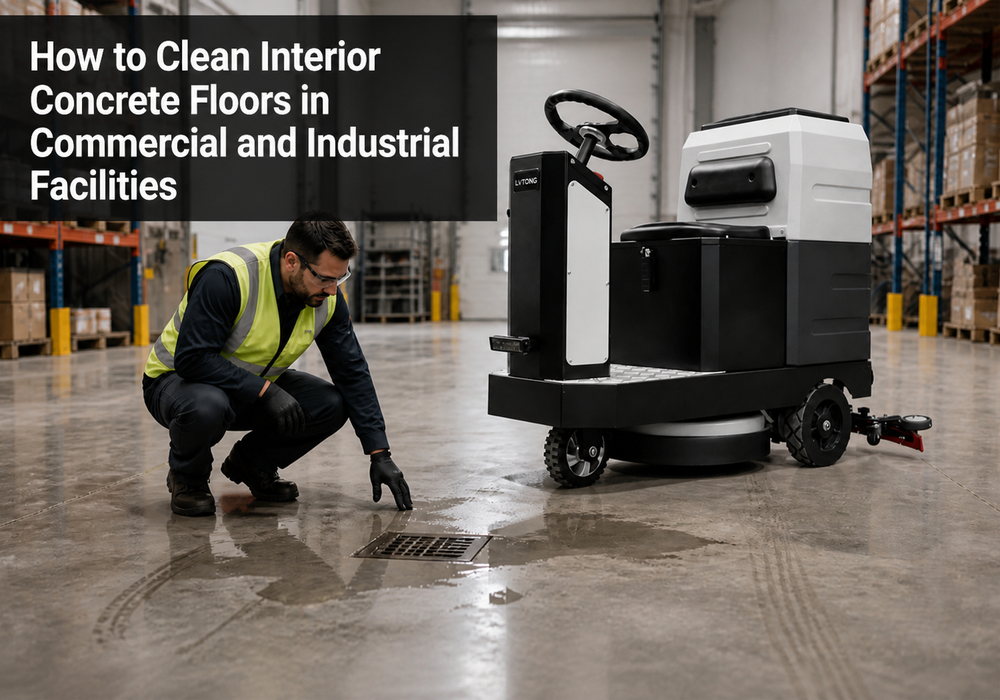
A commercial floor scrubber is a floor cleaning machine designed for commercial and industrial facilities such as warehouses, airports, hospitals, factories, retail stores, schools, and logistics centers.
Quick Answer
A commercial floor scrubber is a powered cleaning machine that scrubs, washes, and dries hard floors in a single pass. Compared with manual mopping, it delivers higher cleaning productivity, more consistent results, and lower labor costs. The right machine depends on facility size, floor type, daily cleaning frequency, and required productivity.
What’s a Floor Scrubber Really Doing Down There?
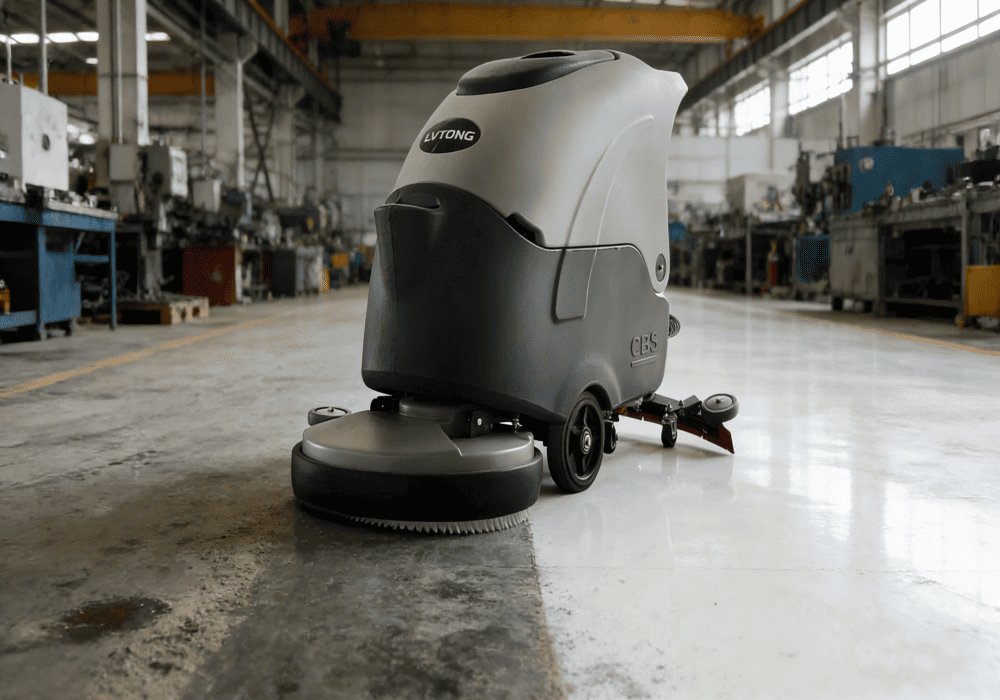
It’s tempting to think a floor scrubber is just a fancy, motorized mop. It’s not. The core of how these machines work is a brilliant one-two-three punch that cleans in a single pass. Forget pushing dirty water around—this is a whole different level of clean.
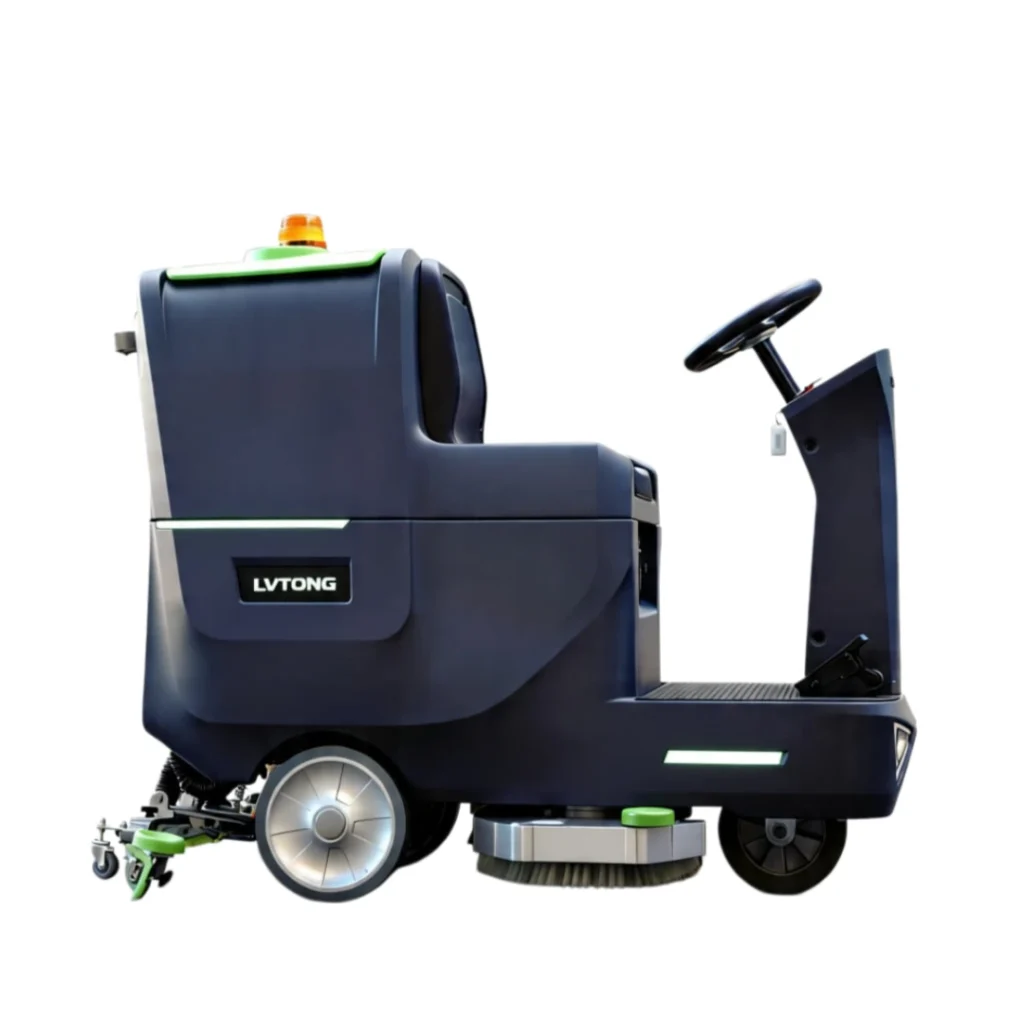
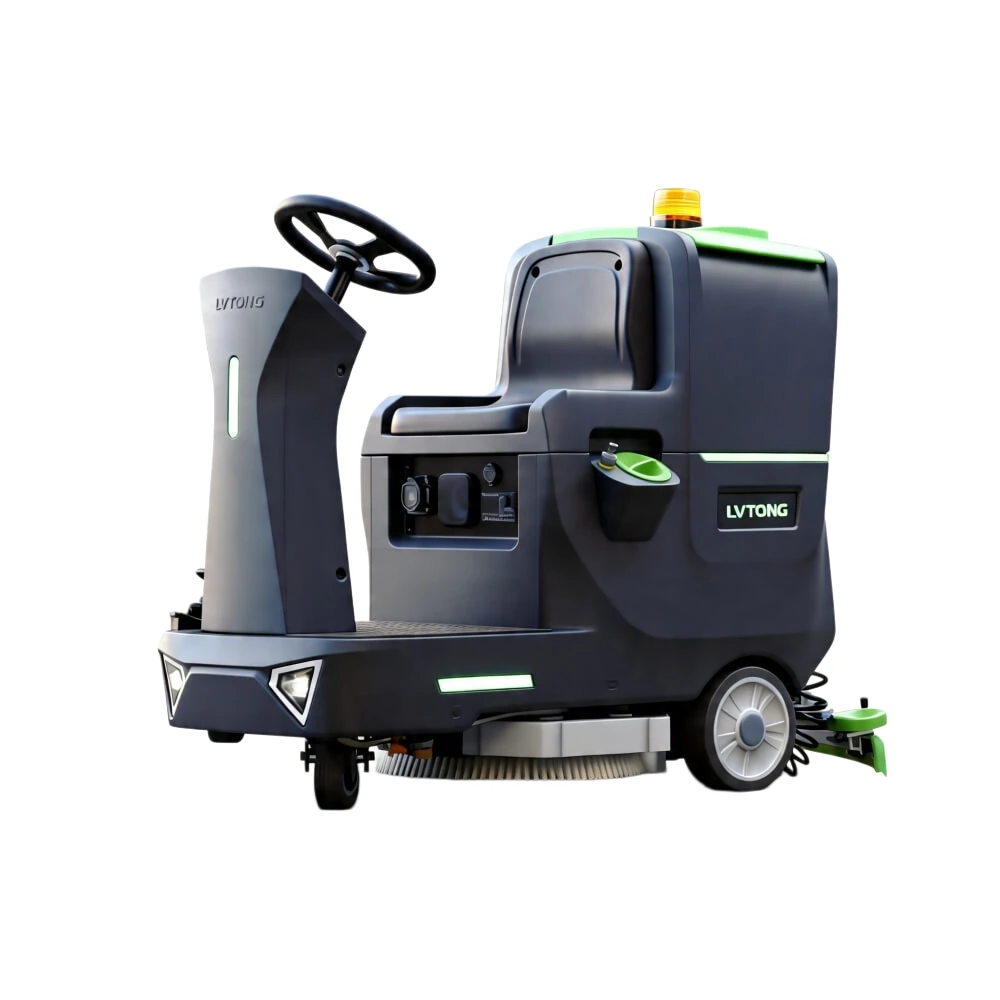
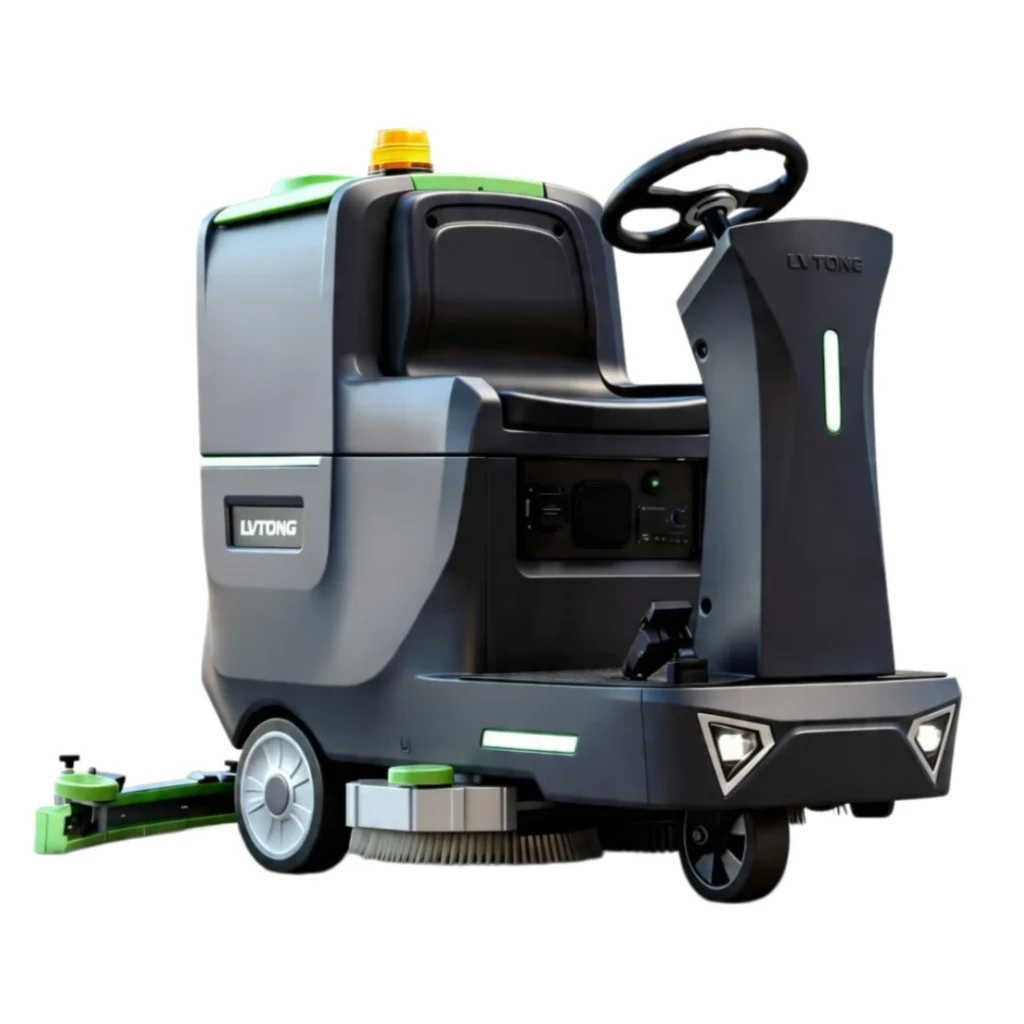
Most commercial floor scrubbers have these basic parts:
- Solution tank (holds your clean water/chemicals)
- Recovery tank (collects the dirty stuff)
- Scrub head with brushes/pads
- Squeegee assembly
- Vacuum system
- Control panel
The cleaning process combines solution application, mechanical scrubbing, and immediate water recovery into a single continuous operation, allowing floors to be cleaned and dried in one pass.
Uniform Solution Application: A tank filled with clean water and a cleaning solution applies a consistent layer of liquid onto the floor right in front of the brushes.
High-Pressure Scrubbing – here’s the real deal. Spinning bristles kick in, shaking up the liquid while going deep to pull out grime and marks that regular mopping ignores.
Right after the floor scrubber brushes do their job, a strong suction setup pulls up all the gunk – so the surface dries fast. Water’s gone in no time, thanks to the combo of pressure and pull. Floor ends up barely damp, ready for steps without delay. No waiting around; it’s clean and usable right away.
This one-go setup lets one person using a walk-behind floor scrubber clean faster, more in sixty minutes than several people with mops manage in hours.
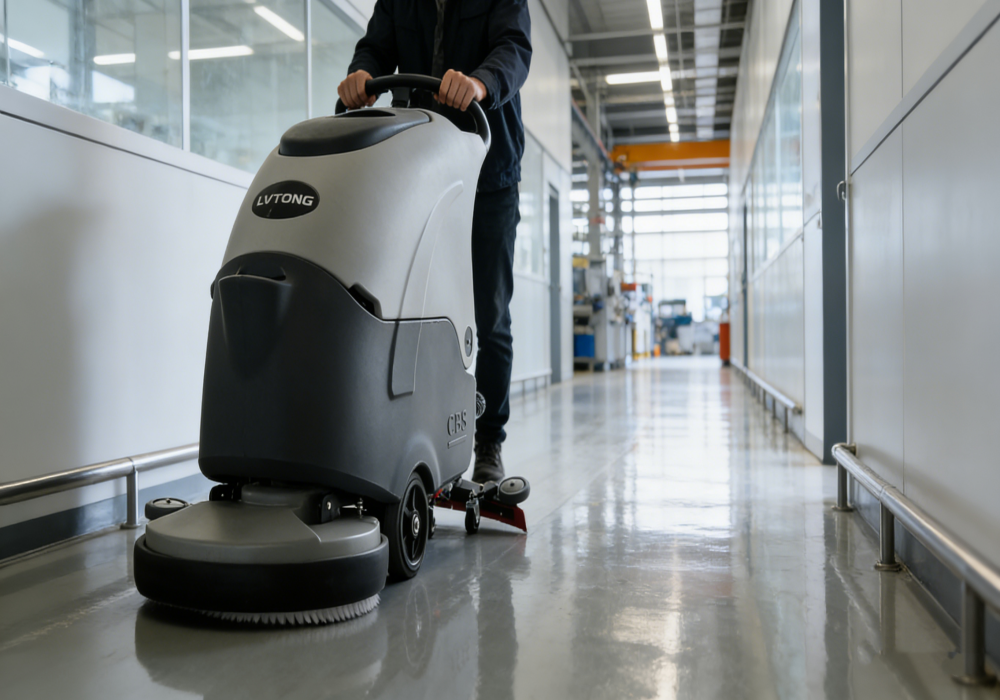
Key Operational Capabilities about automatic floor scrubber:
- Scrub Systems (Disc vs. Cylindrical): Most floor scrubber machines use these two brushes. Disc brushes? Those are the usual circular ones – great for regular cleanup on slick floors such as VCT or shiny concrete. Instead, cylindrical versions resemble rolling pins – they handle bumpy or messy areas better. These also gather tiny trash bits during washing, which is why lots of warehouse cleaners go for them.
- The Two Tanks: Each floor scrubber holds two containers – one for fresh water, another that collects gunk from the floor. When one leads into the next without refilling, you save minutes here and there. On wide-open sites like airports, those pauses add up quickly – so size really shifts how much gets done.
- The squeegee: Yeah, don’t skip it. A solid one turns a wet, risky surface into something clean and dry. Instead of leaving goopy trails, it pulls every bit of grime away smoothly. That’s how you know the job’s actually done right.
What’s the Difference Between Low-Speed Scrubbers and High-Speed Polishers?
This confusion pops up often. While these two machines seem similar, the auto floor scrubber cleans floors; on the other hand, the other shines them.
Imagine cleaning your car compared to giving it a shiny coat.
A floor scrubber cleans really deep. It uses water, detergent, and physical force at lower speeds to remove soil. Its only goal is to make the floor clean.
A floor polisher makes surfaces shine bright – using fast spins with a unique pad to create that slick, just-wetted glow. Before running it, wipe the area down so dirt doesn’t mess up the job. That way, the result comes out smooth without spots or streaks.
You wash to get rid of grime – wax brings the sparkle. That’s it. A polisher won’t tackle filth where an industrial floor scrubber hasn’t been.
Decoding the Spec Sheet of the floor scrubber
Forget about the tech details scaring you. A handful of main figures actually decide how well the cleaning machine works in your place.
| Specification | Why the floor scrubber Matters To You | Ideal for |
| Scrub Path Width | This is the width it cleans in one go. A wider path equals faster work, but it needs more room to maneuver. | Wide, open spaces like gyms, convention centers, or big retailers. A wide airport cleaning machine can help you a lot. |
| Tank Capacity | How many gallons does it holds. Bigger tanks mean fewer trips to the slop sink, which is the biggest time-killer. | Any facility over 20,000 sq. ft. A large-capacity industrial floor scrubber is a good choice. |
| Down Pressure | The force the brushes push down with. More pressure gives you the muscle to remove caked-on grime. | Auto service bays, manufacturing facilities, and heavy-use warehouse floor scrubbers. |
| Power Source | Battery gives you total freedom—no cords to trip over or get tangled. Corded is cheaper, but you’re tethered to a wall. | Battery is the standard for almost every modern walk-behind floor scrubber because it’s safer and more efficient. |
Walk-Behind vs Ride-On Commercial Floor Scrubber
| Feature | Walk Behind | Ride On |
|---|---|---|
| Cleaning Area | Small–Medium | Large |
| Maneuverability | Excellent | Good |
| Productivity | Medium | High |
| Operator Comfort | Moderate | Excellent |
| Initial Cost | Lower | Higher |
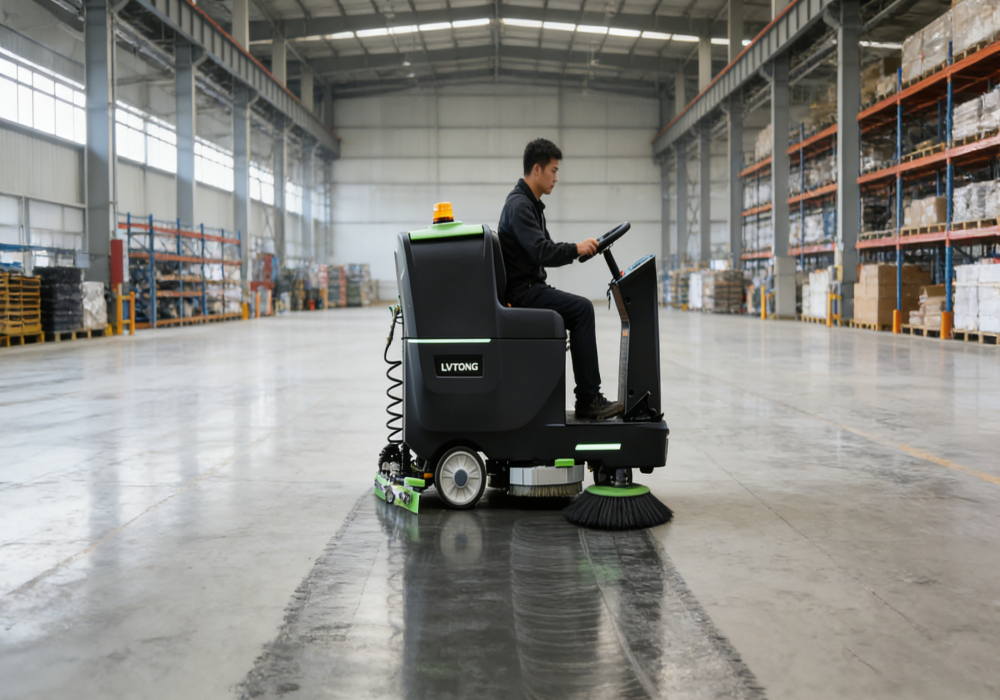
| Best Application | Retail, Schools | Warehouses, Airports |
How Many Square Feet Can a Floor Scrubber Polisher Clean Per Hour?
How much work can you actually get done? There’s a simple formula, but you have to be realistic.
First, you find the theoretical max cleaning rate: Theoretical Rate (sq. ft./hr)=Scrub Path (in)×Operating Speed (mph)×88
But nobody cleans in a perfect, straight line forever. Your auto scrubber has to turn, avoid things, and eventually empty the tanks. So we use a practical efficiency rate, usually around 75% (0.75).
Practical Rate (sq. ft./hr)=Theoretical Rate×0.75
A Real-World Example:
Let’s take a very common 20-inch walk-behind floor scrubber. An operator moves at about 2 mph.
- Theoretical Rate: 20×2×88=3,520 sq. ft./hr
- Practical Rate: 3,520×0.75≈2,640 sq. ft./hr
That shows you how even a smaller commercial floor scrubber can easily outpace any manual method. A larger industrial floor scrubber can achieve rates of 20,000-30,000 sq. ft./hr or more.
For instance, LVTONG’s popular walk behind floor scrubber models like the Q5 (510mm scrub path) or LT-S530X (550mm path) deliver strong practical rates in the 2,000-4,000 sqm range, thanks to large tanks and lithium batteries—no cords needed. Their ride-on floor scrubbers, such as the LT-S560X or LT-S860X, handle bigger spaces like warehouses with wider paths (up to 860mm) and higher efficiency, making them great warehouse floor scrubbers.
Frequently Asked Questions
What floors can a commercial floor scrubber clean?
Commercial floor scrubbers are suitable for concrete, epoxy, vinyl, terrazzo, ceramic tile, sealed stone, and many other hard floor surfaces.
How do I choose the right commercial floor scrubber?
Consider the cleaning area, floor material, brush type, battery runtime, tank capacity, and daily operating hours before selecting a machine.
Are commercial floor scrubbers difficult to operate?
Most modern machines feature intuitive controls and require only basic operator training.
Should I choose a walk-behind or ride-on floor scrubber?
Walk-behind models are ideal for medium-sized facilities, while ride-on machines provide higher productivity for large warehouses, airports, factories, and logistics centers.
Conclusion
Picking the right floor scrubber changes cleaning from slow work to a smooth routine. Instead of wasting hours, you save effort – especially if your space is narrow or huge. For small areas, go for a walk-behind scrubber; when covering big spots like hangars or storage zones, ride-on scrubbers handle it better. If you’re ready to invest, start with a proven manufacturer like LVTONG. They offer everything from nimble walk-behind floor scrubbers to heavy-duty industrial floor scrubbers, all designed for real-world commercial use.
Expert Tip
The best commercial floor scrubber is not always the largest model. Matching cleaning width, tank capacity, battery runtime, and brush configuration to your facility’s actual operating conditions usually delivers the highest return on investment.