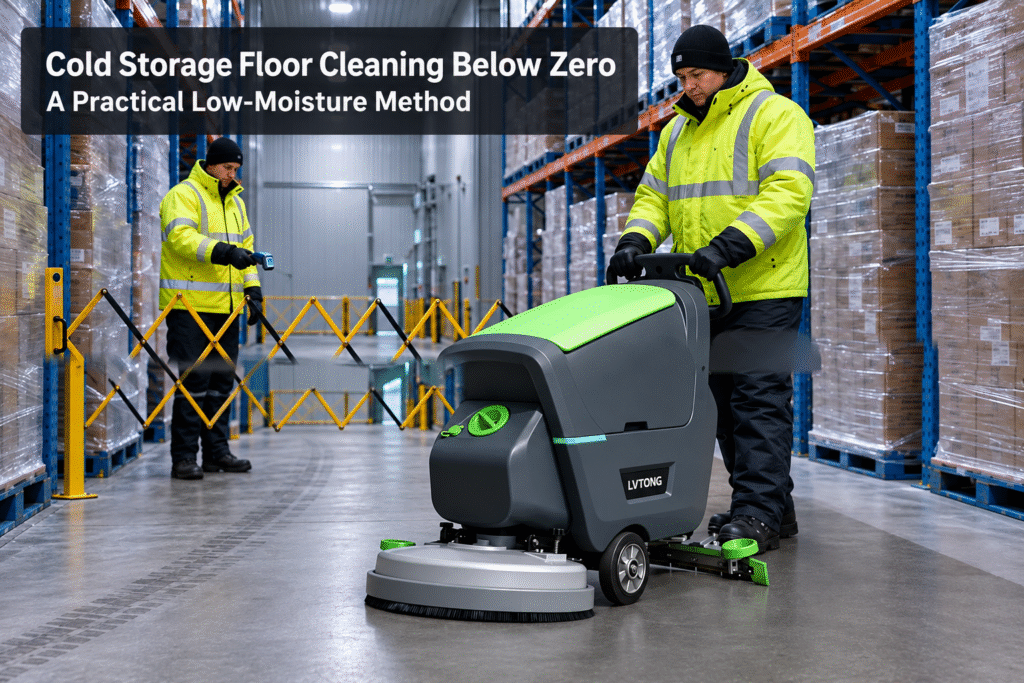

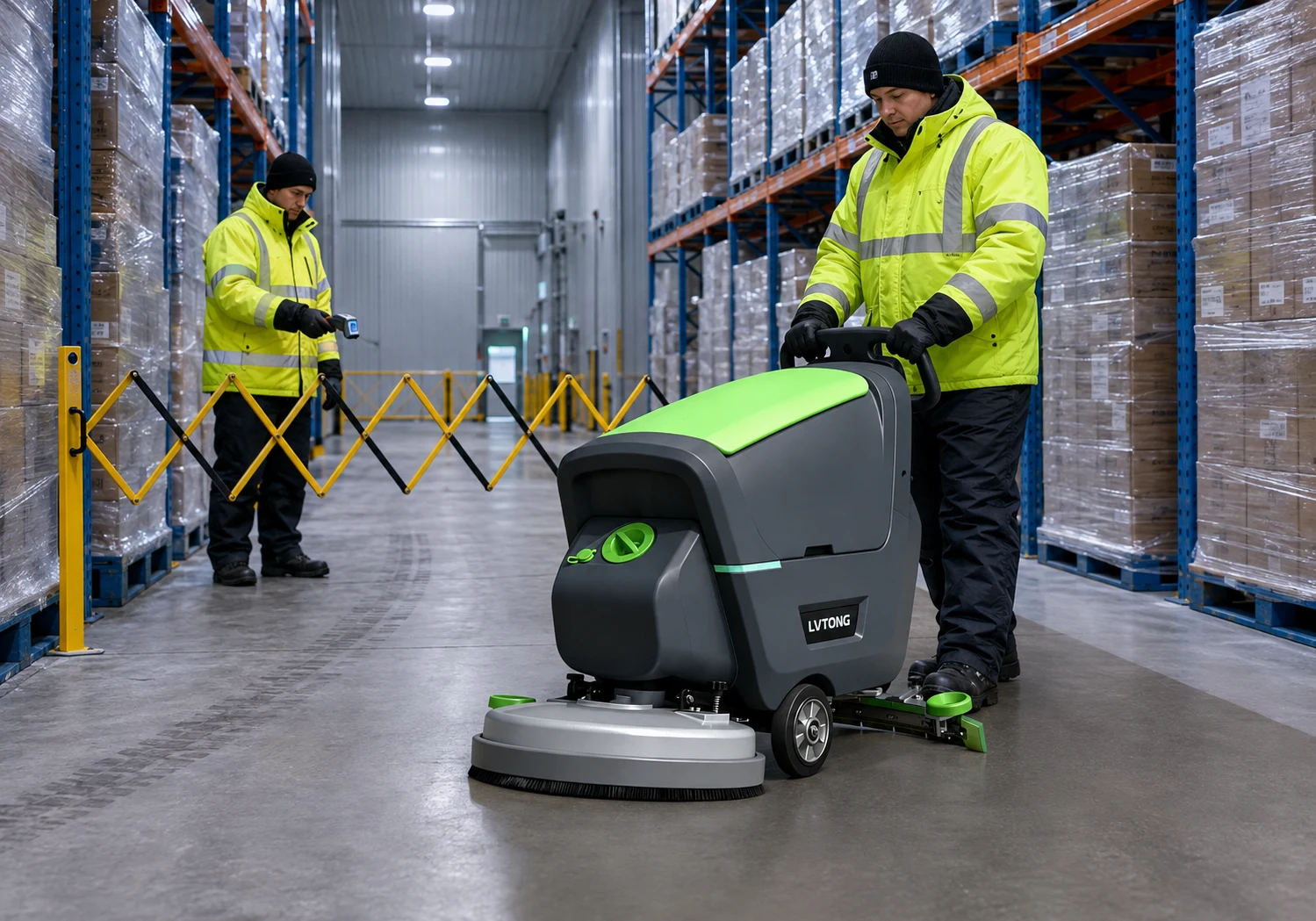
Cold storage floor cleaning below zero is a moisture-control job before it is a scrubbing job. Start by removing dry debris and loose ice, choose a cleaner whose label covers the actual surface temperature, work in small closed zones, and recover all visible or standing liquid immediately, then verify that no trail remains. An operating freezer usually needs a low-moisture process with freezer-rated chemistry; a scheduled defrost window allows a more conventional wash, rinse, and sanitizing cycle once the floor is warm enough.
Never assume a standard floor scrubber, battery, hose, seal, or squeegee will perform safely in a sub-zero room. Confirm the machine’s ambient-temperature rating and chemical compatibility first. For food facilities, protect exposed product, follow the cleaner label and SDS, and reopen the lane only after the floor is visibly dry and traction is verified. The practical goal is a clean floor without creating a new ice layer, damaging the surface, or extending your shutdown.
Why Freezer Floors Behave Differently
Below-zero temperatures change both the soil on your floor and the way your cleaning process works. A water-based solution can freeze before your team completes a pass. Grease becomes harder, tire marks bond to textured concrete, and packaging dust can become trapped in a thin ice layer. Your doorways add another variable: warm, humid air enters the room, condenses, and freezes along the same traffic lanes where your forklifts need dependable traction.
That is why you cannot simply copy a temperate warehouse SOP and use it for cold storage floor cleaning. We recommend recording the air temperature and measuring your floor’s surface temperature with an infrared thermometer. You should also identify your floor and soil type, because each combination calls for a different brush, cleaner, dwell time, and recovery method.
The first equipment decision is also simple: sweep before you scrub. By removing dry material first, you keep sharp debris out of the squeegee path and reduce the amount of liquid needed for the remaining soil. To help you make that choice, our warehouse floor scrubber selection guide explains how your aisle width, debris load, floor type, and practical coverage requirements affect equipment selection.
Choose the Cleaning Route Before You Move Equipment
If you cannot relocate the stored product and the room must remain below freezing, the operating-freezer route is usually the more practical option. In this situation, we would help you plan a short, isolated work zone that limits door-open time and minimizes liquid use. Loose ice is removed first, followed by controlled cleaning and immediate solution recovery. If you are considering a no-rinse product, remember that the claim applies only when the label permits it and you fully remove the dissolved soil and solution. The NSF category you can look for in freezer applications is NSF A5 freezer floor and wall cleaners.
Choose the defrost-window route when you need a deep clean, need to address broad contamination or coating repairs, or must complete sanitation work that requires a conventional wash and verified contact time. Move or protect product, shut down the room under your facility’s refrigeration plan, and confirm the surface has warmed to the chemistry’s labeled range. Clean, rinse if required, sanitize where the food-safety plan calls for it, and dry the floor completely before cooling resumes.
Keep the routes separate. If you introduce warm water into a running freezer, you may create glaze ice and thermal stress. Before using a wet machine, you should also review how the temperature may affect its batteries, seals, electronics, hoses, and recovery performance.
A Seven-Step Cold Storage Floor Cleaning Procedure
Use this list as a framework for developing a site-specific SOP:
Plan the zone. Mark the route, redirect pedestrians and forklifts, confirm the room and surface temperatures, and stage every tool before the door opens.
Protect product. Remove exposed food and packaging from the work zone or cover them according to your sanitation plan.
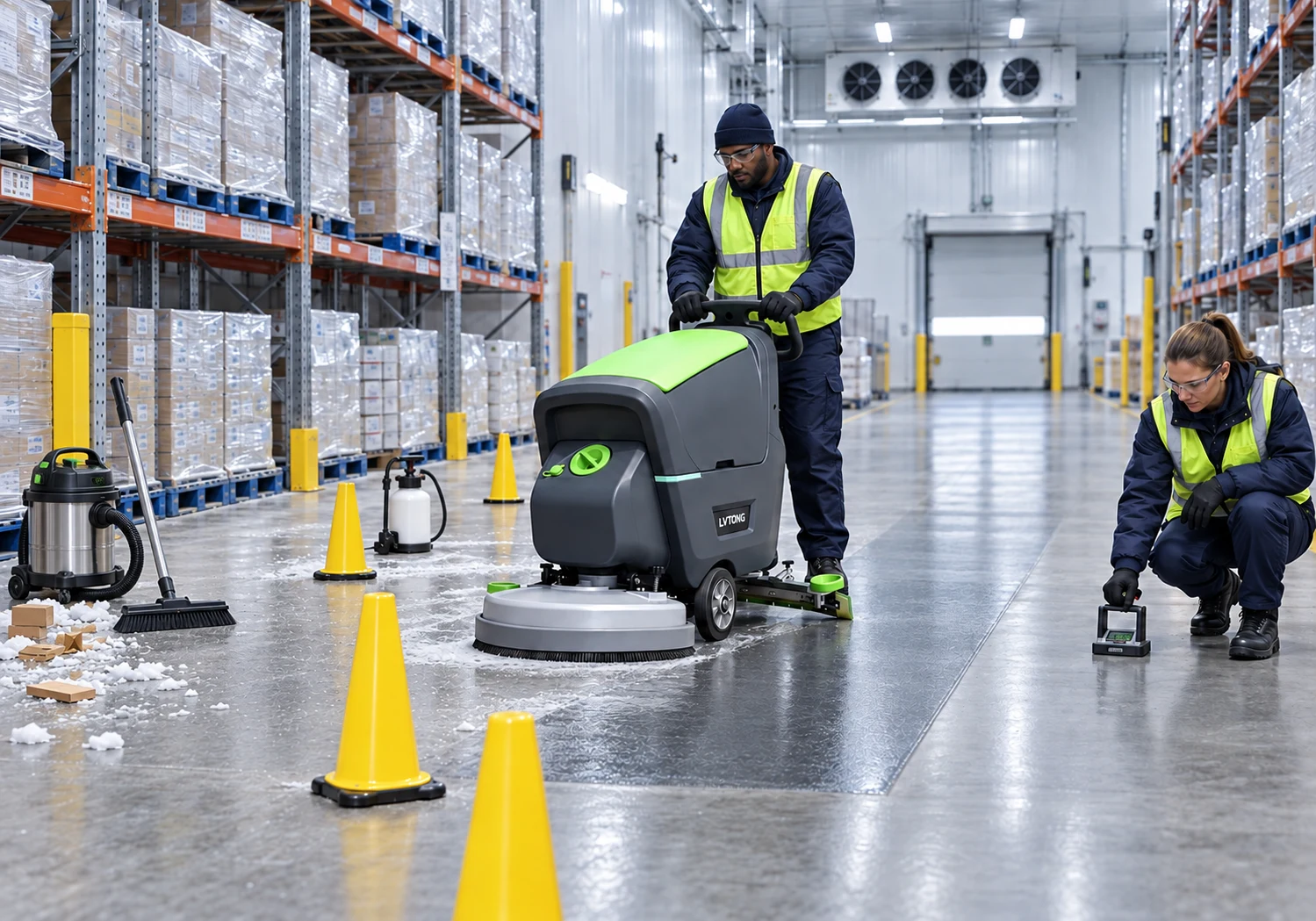
Remove dry debris and loose ice. Sweep or vacuum first, then use a coating-safe scraper on ice that can be removed without liquid.
Test chemistry and traction. Confirm the cleaner’s labeled minimum temperature, floor compatibility, dilution or ready-to-use direction, PPE, and rinse requirement. Test a small patch.
Clean a small section. Apply the minimum effective solution, allow only the labeled dwell time, and agitate with the selected brush or pad. Keep adjacent lanes dry.
Recover immediately. Squeegee or wet-vacuum the solution before it can refreeze. Inspect the recovery path after every pass, especially through turns and joints.
Verify and release. Dry the section, inspect it under good light, check traction, record the result, and reopen the lane only when it is safe.
Match the Method to the Soil and Floor
For loose packaging, pallet splinters, sand, and dry food particles, we recommend that you start with a dry pickup step. Frozen deposits should be reduced with a scraper suitable for the coating; metal edges can gouge epoxy or damage joints. Tire marks usually need controlled mechanical agitation, while oil or protein soils require chemistry selected for both the soil and the operating temperature.
On porous concrete, use the smallest effective liquid volume and recover it quickly so dirty solution does not enter the pores. Coated concrete and epoxy usually need a less aggressive pad or brush to protect gloss and film thickness. Our step-by-step concrete floor scrubbing guide provides a deeper comparison of surface identification, brush selection, water control, overlapping passes, and wastewater recovery.
Run a small test patch before expanding the zone. Check for discoloration, softening, loss of gloss, poor traction, and residue. A freezer floor that looks clean but feels slick has failed the job.
Where LVTONG Equipment Fits
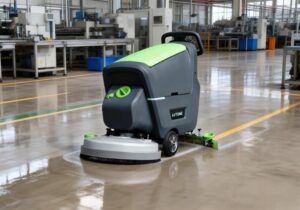
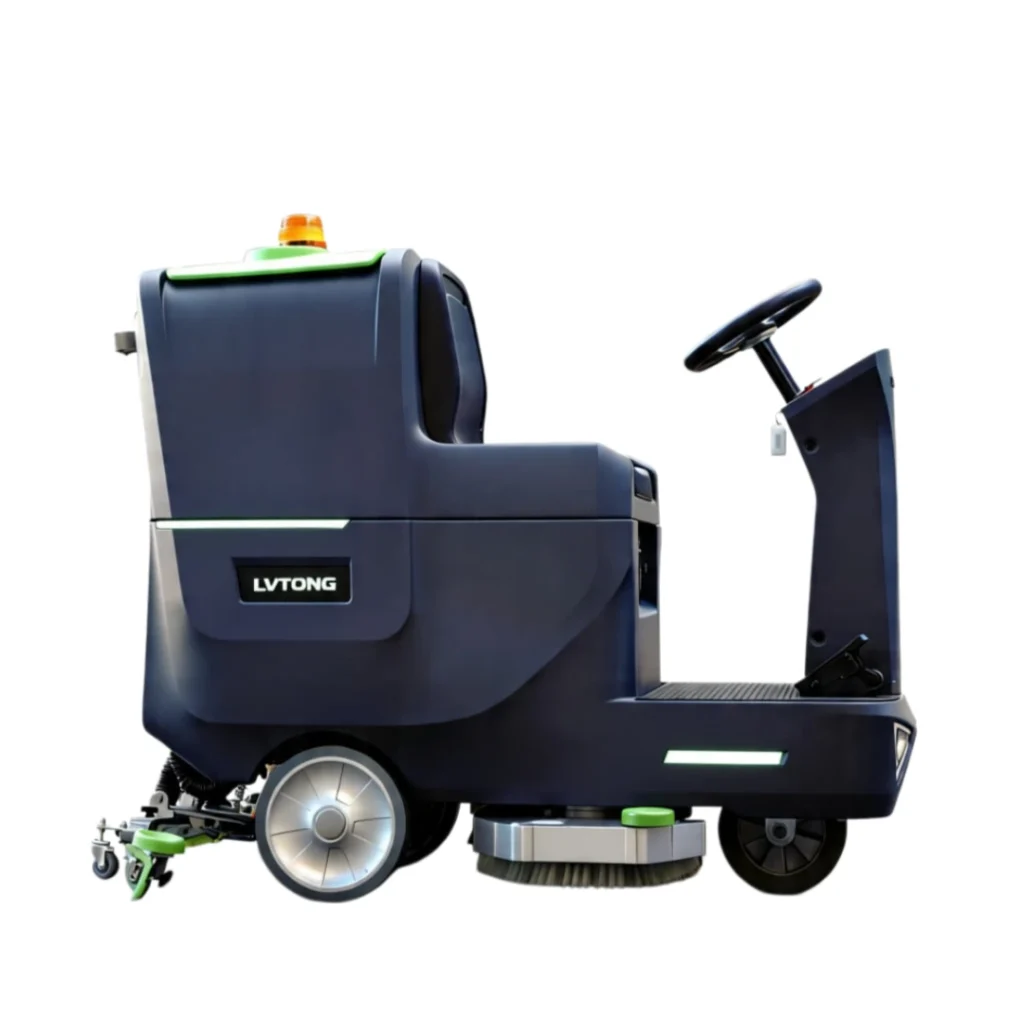
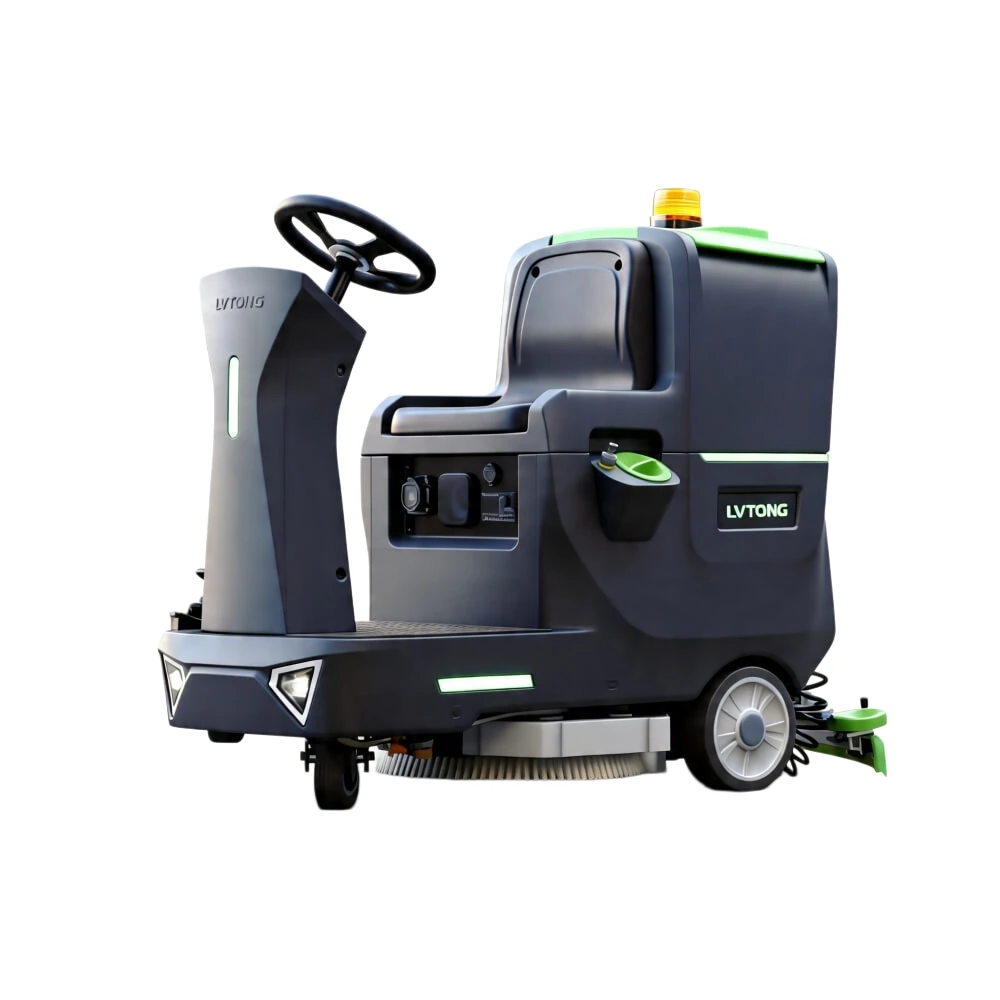
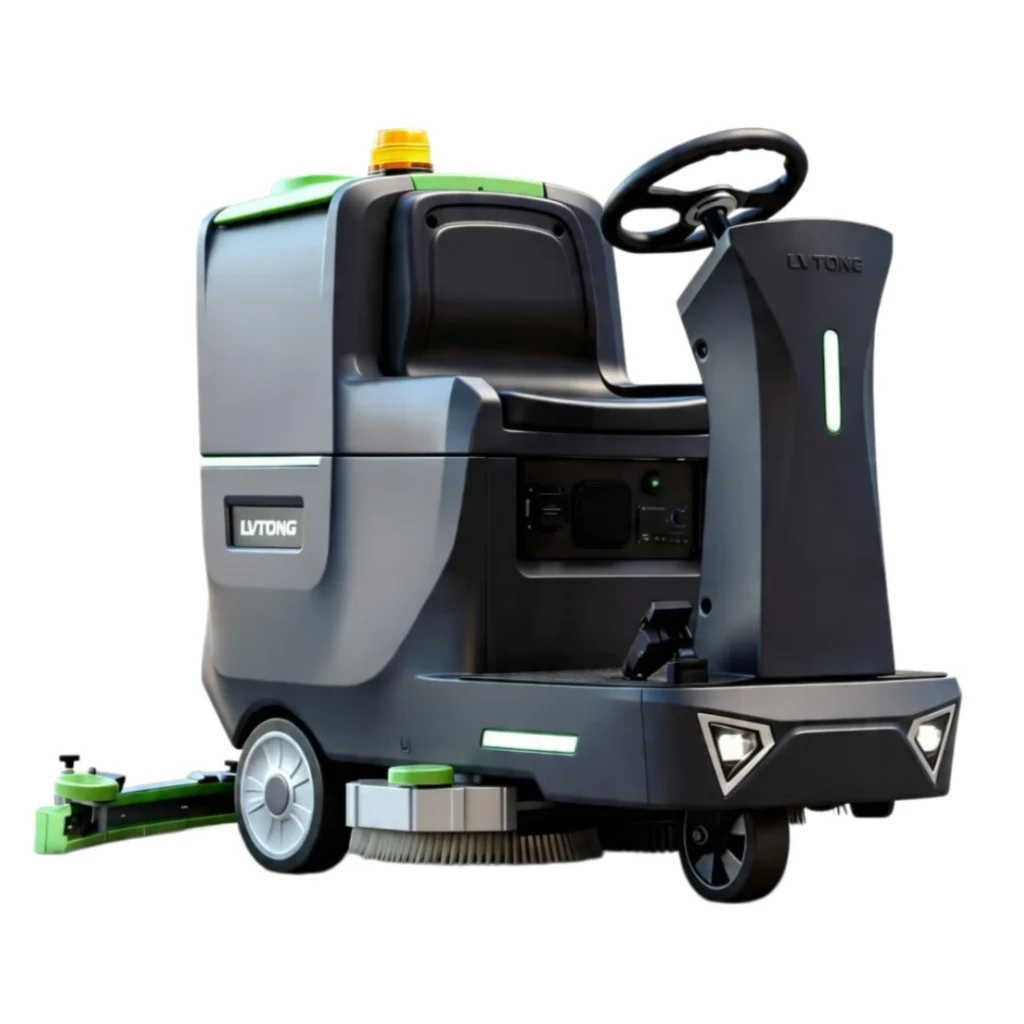
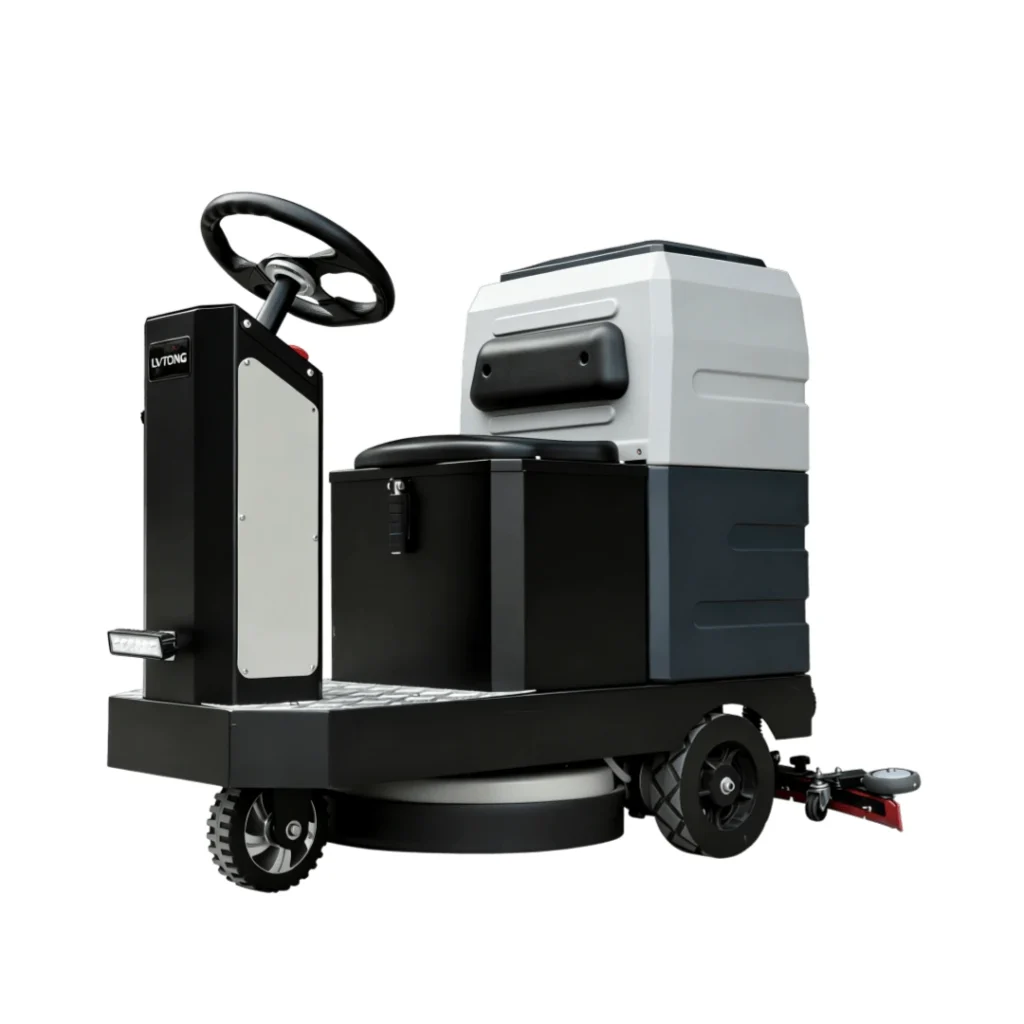
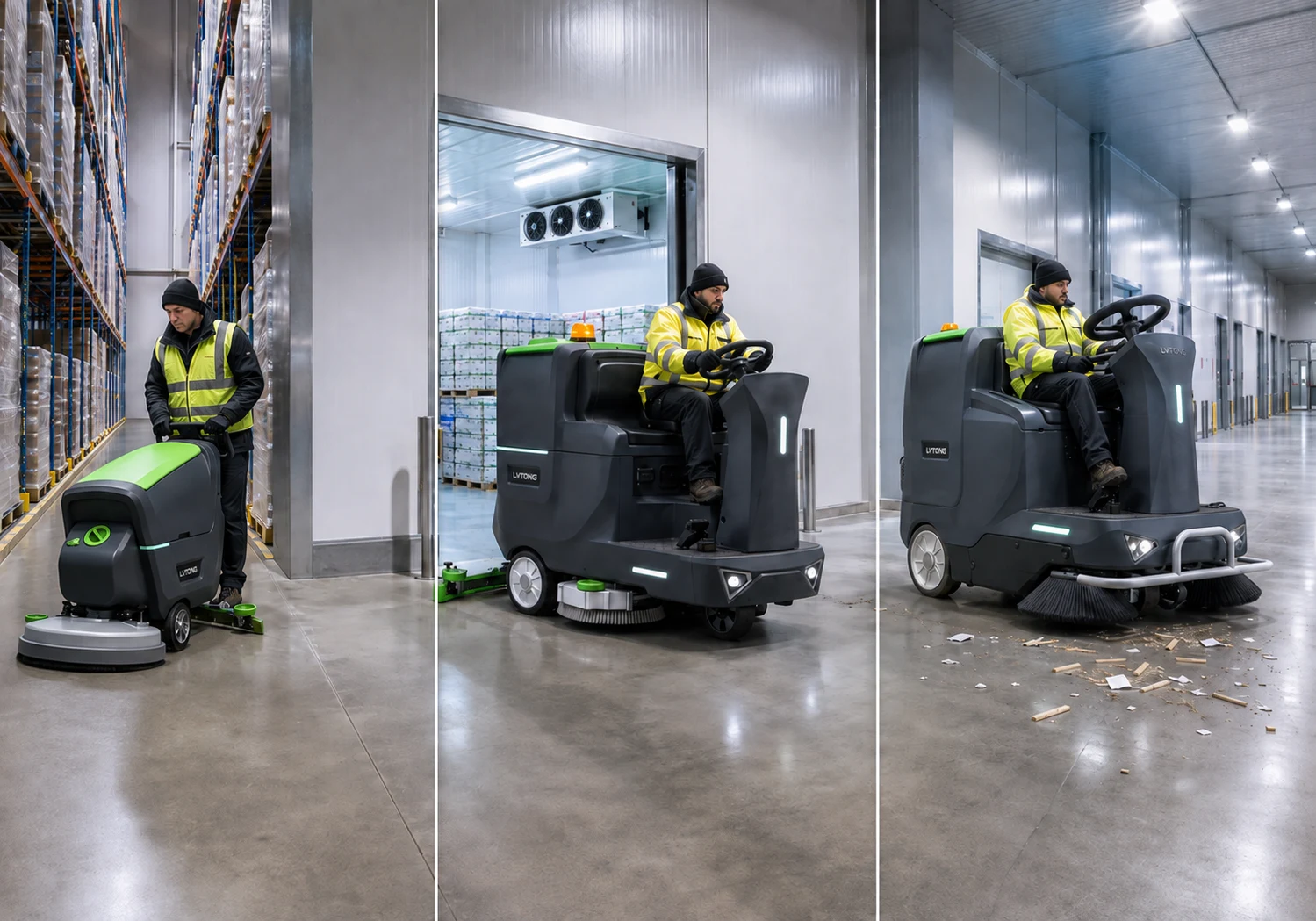
We build sweepers and scrubber dryers for warehouses and logistics centers. Assign each machine by task: a sweeper removes dry debris, a walk-behind scrubber works around racks, and a ride-on scrubber covers open staging areas efficiently.
The published product pages do not state a validated minimum operating temperature for the models below. Before entering a running freezer, ask our technical team to review room temperature, battery type, seals, hoses, squeegee material, chemistry, ventilation, and condensation risk. Use in a dry staging zone or controlled warm window may be the correct plan unless a project-specific assessment confirms another setup.
Model | Published details | Best-fit role | Below-zero decision |
|---|---|---|---|
530 mm cleaning path; 62 L solution tank; 65 L recovery tank; published narrow-aisle case | Tight aisles, rack ends, controlled small-zone scrubbing | Project-specific temperature and chemistry review required | |
860mm Scrubbing Width; 130L Water Tank; 6,800 m²/h stated efficiency; 4–6 hour runtime | Large open staging areas or warm cleaning windows | Use in a running freezer only after technical validation | |
1,350 mm sweeping width; 100 L hopper; up to 10,000 m²/h stated efficiency | Dry debris removal in large warehouse lanes | Confirm battery and component limits for the room temperature |
What Our Existing Cases Can Tell You
Our published scenario examples give useful evidence about layout and throughput. In a narrow-aisle scenario published on our LT-S530X product page, the machine’s 50 cm-wide body fit into a 0.8 m aisle, and cleaning coverage increased from 65% to 90%.That makes the model relevant when freezer racks leave little turning room and the cleaning window is short.
A Guangzhou airport cargo-area case used the LT-S860X on a 200,000 m² site and reports five hours of operation with 60,000 m² cleaned per cycle. A 30,000 m² e-commerce warehouse case reports that the LT-S1350S tripled operating efficiency and saved labor equal to three cleaners each day.
These examples are scenario cases published on our site. They demonstrate maneuverability, dry-debris removal, runtime, and large-area planning, while stopping short of freezer-temperature certification. A cold-storage project still needs a temperature and chemistry review before equipment selection.
Safety and Food-Storage Controls
Block the lane and manage forklift traffic before work begins. Cold rooms can reduce dexterity and make a small slip more serious, so include insulated PPE, slip-resistant footwear, communication, and warm-up breaks in the work plan. NIOSH cold-stress prevention guidance recommends a broader program that includes training, engineering controls, and work-rest practices.
Protect food, packaging, and food-contact surfaces from splash. Follow the label and SDS for dilution, PPE, ventilation, rinsing, and disposal. The FDA Food Code provides a model for retail and food-service operations. Cold-storage and food-processing facilities should also confirm the federal, state, and local rules applicable to their operation.
Verify the Floor Before Reopening the Lane
Verification should be written into the SOP. Inspect for visible soil, standing liquid, streaks, softened coating, and ice at joints or door thresholds. Run a clean white towel over the test area for residue, then use your facility’s approved traction or slip-check method. In a food operation, complete the required sanitation verification and document the lot, concentration, contact time, surface temperature, operator, and release decision.
If water trails remain, stop. Check the squeegee, hose, recovery tank, vacuum path, turns, and travel speed before continuing. A thin trail can freeze across a forklift lane.
FAQ
1. How often should cold storage floors be cleaned?
There is no single cleaning frequency that fits every cold storage facility. You should base your schedule on forklift traffic, soil load, spills, food-safety requirements, and the rate at which ice or residue returns. In high-traffic areas, you may need dry debris removal and inspections every shift, with low-moisture scrubbing scheduled according to actual floor conditions. Record the frequency in your sanitation or facility-maintenance schedule and adjust it when conditions change.
2. How can you prevent ice from building up on a freezer floor between cleanings?
Start by controlling where the moisture enters your freezer. Check door seals, wall and ceiling penetrations, drains, refrigeration leaks, and areas where humid dock air enters the room. You can also reduce ice formation by limiting door-open time, maintaining air curtains or rapid doors, and correcting drainage or dehumidification problems. Cleaning can remove existing contamination, but recurring ice usually requires you to address the moisture source.
3. What size floor scrubber do you need for a cold storage warehouse?
Start with the floor area you must clean per shift, your narrowest aisle, the available cleaning window, floor type, soil load, and room temperature. A wide ride-on machine may suit open staging areas, while a compact walk-behind unit may fit rack aisles more effectively. Do not size the machine from theoretical coverage alone; allow time for turns, refilling, recovery-tank emptying, inspection, and low-temperature operating limits.
4. Does cold temperature reduce floor scrubber battery runtime?
Cold temperatures can reduce available battery performance and may affect charging, controls, seals, and other machine components. The exact change depends on the battery chemistry, battery-management system, machine design, and exposure time. Before you use a scrubber in cold storage, ask the supplier for validated minimum operating and charging temperatures. After use, follow the manufacturer’s transition, condensation-control, inspection, and charging instructions.
5. What should you do if a freezer floor still feels slippery after cleaning?
Keep the area isolated and do not reopen it to pedestrians or forklifts. A slippery surface may indicate excess cleaner, incorrect dilution, incompatible chemistry, incomplete liquid recovery, remaining grease, or a worn squeegee. Check the product label and floor compatibility, correct the cleaning or recovery problem, and test a small area again. Release the lane only after the floor is visibly dry, residue-free, and passes your approved traction check.
Conclusion
Before reopening the lane, complete this go/no-go release check:
The floor is completely dry.
No visible cleaning residue remains.
The surface passes your facility’s approved traction check.
No new ice has formed at joints, drains, or door thresholds.
If any check fails, keep the lane closed and correct the moisture, residue, or recovery issue before testing again.
For help selecting equipment for your operating conditions, contact our technical service team. Send us your room temperature, floor type, aisle width, contamination type, cleaning window, and required daily coverage so we can recommend a suitable sweeper or scrubber dryer.